
Translated material
Autocrats have no future
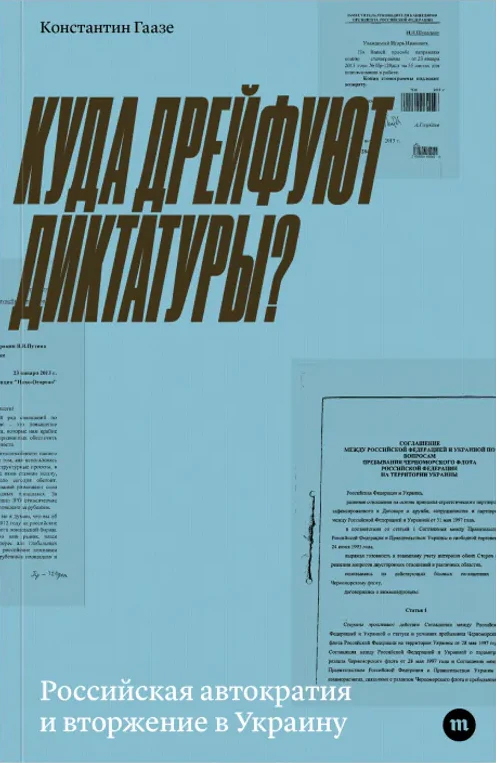
“Where Dictatorships Drift” is a book by Konstantin Haase, published by Meduza. This is another (rather successful) attempt to understand why Putin started the war
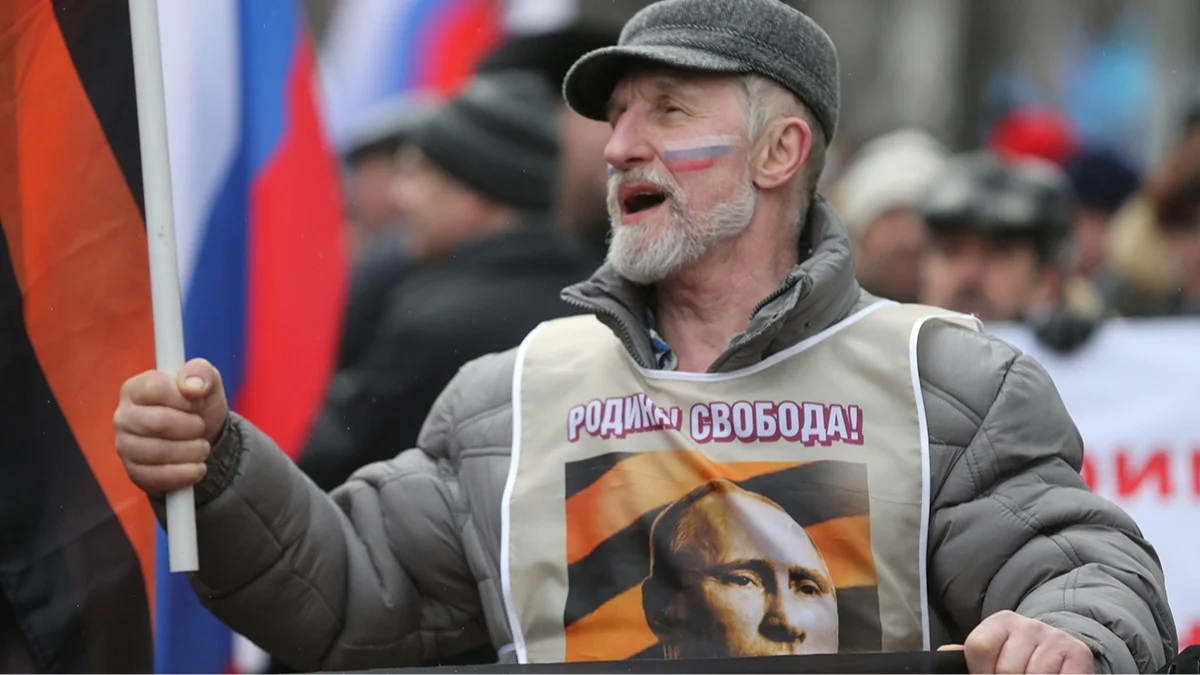
Photo: Sergey Chirikov / EPA
What are dictators afraid of? In 1936, the émigré writer Vladimir Nabokov, who lived in Berlin, decided that it was funny . Having fled one autocracy, he watched the rise of another, and both were united by bestial devotion to the leader, no matter how pathetic he may appear upon close inspection.
90 years later, in early 2026, émigré sociologist Konstantin Gaase, now living in Israel, asked the same question. He was interested not only in what kind of fear dictators project, but also in what this fear leads them to - and how is it that autocracies almost always lead the country to war?
Nabokov never worked from within the system. He left the country, which was still engulfed in the Civil War, and did not want to have anything in common with the nascent Soviet of Deputies, as he later did with Hitler’s Germany.
Haase worked from within the system: as a PR specialist, political scientist, even as an adviser to the minister ( Haase was an adviser to the Minister of Agriculture in 2006–2008 - Ed. ). And I watched the emergence of Putin’s authoritarianism at arm’s length. Apparently, because of this, he incorrectly assessed the aggressiveness of the regime. At the end of 2021 - beginning of 2022, in the popular Meduza podcast “Pertsev and Gaase,” the sociologist, together with political commentator Andrei Pertsev, reassured listeners that there would be no war: it was simply not profitable for Putin’s mature kleptocracy. Elites do not want increased sanctions and loss of access to assets in the West, and the government is concerned about the fate of foreign exchange reserves in European and American banks. The dictator's power is strong, and his main opponent is serving time in a colony. In such conditions, a war of conquest is needed only by a small group of security forces and weapons manufacturers.
That this prediction was not destined to come true, we, alas, know. As well as the fact that the podcast suspended its work after the war finally began. The experience of political analysis has failed the experts (in fairness, like most observers in the world), but why did this happen?
On the Internet or in political statements you can find two groups of answers: the first is conventionally “civilizational” and the second is “personal”.
The first boils down to the fact that attempts to build democracy in Russia are doomed, because Russia has historically been stuck in a rut of autocratic rule and aggression against its neighbors. Whether the people are not the same, or whether geography is pushing Russia onto the path of aggression, it doesn’t matter - it’s just fate. The second group of answers is tied to the figure of Vladimir Putin: they say, the decision to attack Ukraine was predetermined from the beginning, either because of Putin’s machismo character, or because of his insanity after a long Covid quarantine.
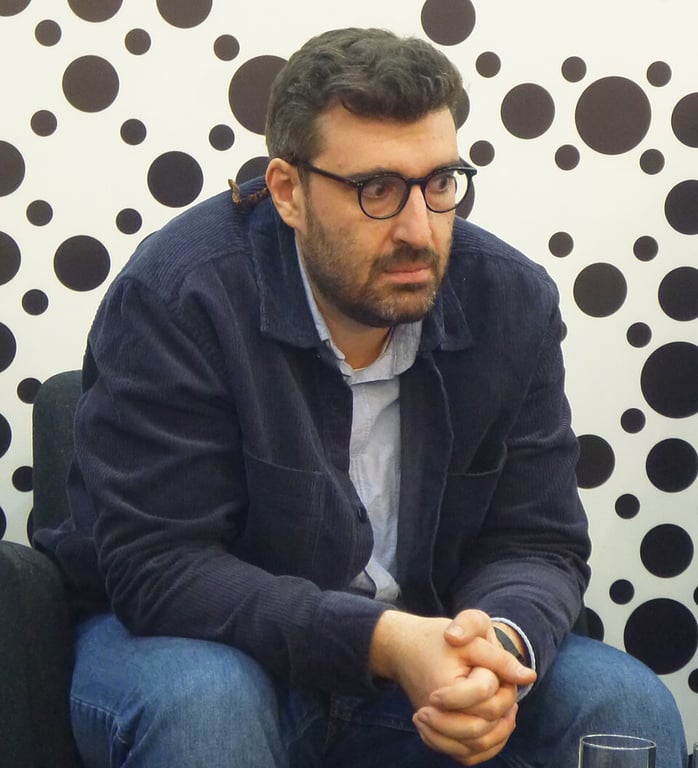
As you might guess, Haase is not satisfied with both groups of answers, and he chooses a third option, a kind of synthesis - within the framework of what he calls “the anthropology of political economy.” The decisions of specific individuals have time and again led to the creation and strengthening of authoritarianism and preparations for war, but this does not mean that Putin planned to become a dictator and conquer Ukraine from his very first term. The key for Haase is the philosophical concept of “contingency,” that is, the randomness of events and the absence of a certain predetermined path of development.
“ Successful autocracies are contingent. This means that they are not completely random, they are not “black swans” of Nassim Taleb (difficult to predict events that have colossal consequences. - Author's note ). They are partly a product of the history that preceded them. But what kind of autocracies they will be, whether they will have repression or television propaganda, whether they will reward security forces with early retirement or food vouchers depends only on them. This is not predetermined. There are no laws here, and even the patterns are very arbitrary .”
If at the very beginning of his reign, Putin and his entourage were concerned primarily with their enrichment and maintaining order, then gradually ideology and fear for their own safety began to increasingly influence the decisions they made. Some milestones along this path have already been well described by journalists and scholars, such as the attempt to interfere in the outcome of the 2004 Ukrainian elections and the consequences of the Orange Revolution, the Munich speech of 2007, the war with Georgia and the political crisis of 2011–2012. Others are much less well known, such as Putin’s acute reaction to the global financial crisis of 2008–2009 (Haase concludes that the Russian leader then first sensed the “weakening” of the West) or the blackmail of Viktor Yanukovych in 2013: Russian authorities sought to persuade the Ukrainian president to join the Customs Union and refuse to sign an agreement with the EU. According to Haase, it was then, even before the Maidan, that Putin decided to annex Crimea - in retaliation for Yanukovych’s deal with the EU, if it did take place.
As we know, in the end, the Ukrainian Revolution of Dignity was a response to Yanukovych’s refusal to cooperate with the EU, and the annexation of Crimea was the first step towards a full-scale war.
In general, for Haase, democracy and autocracy are not just two types of political regimes, they are two types of temporality, a sense of time. Democracies “float into the future with the flow, passively waiting for the next crisis to allow them to emerge from nirvana, win and become stronger.” They are “relaxed, complacent and childishly adventurous. That’s why they are so often caught off guard.” Democracies believe that the future exists, but are extremely slow to recognize the onset of the next crisis and the need to take action. But at the same time, democracies are usually more perspicacious than autocracies.
“Democracies know the most important thing about autocracies. Statistically, there are significantly more dictators torn to pieces by a crowd of compatriots than those who died in their bed, surrounded by children and grandchildren.”
In turn, autocrats, as in Psoy Korolenko’s song, have no future.
“The artificial eternity of autocracy is directly opposed to the uncertain bright future of democracy. Just as there are no developing utopias (utopia is an ideal and therefore complete state of society), so there is no eternity, which is not subject to the future.”
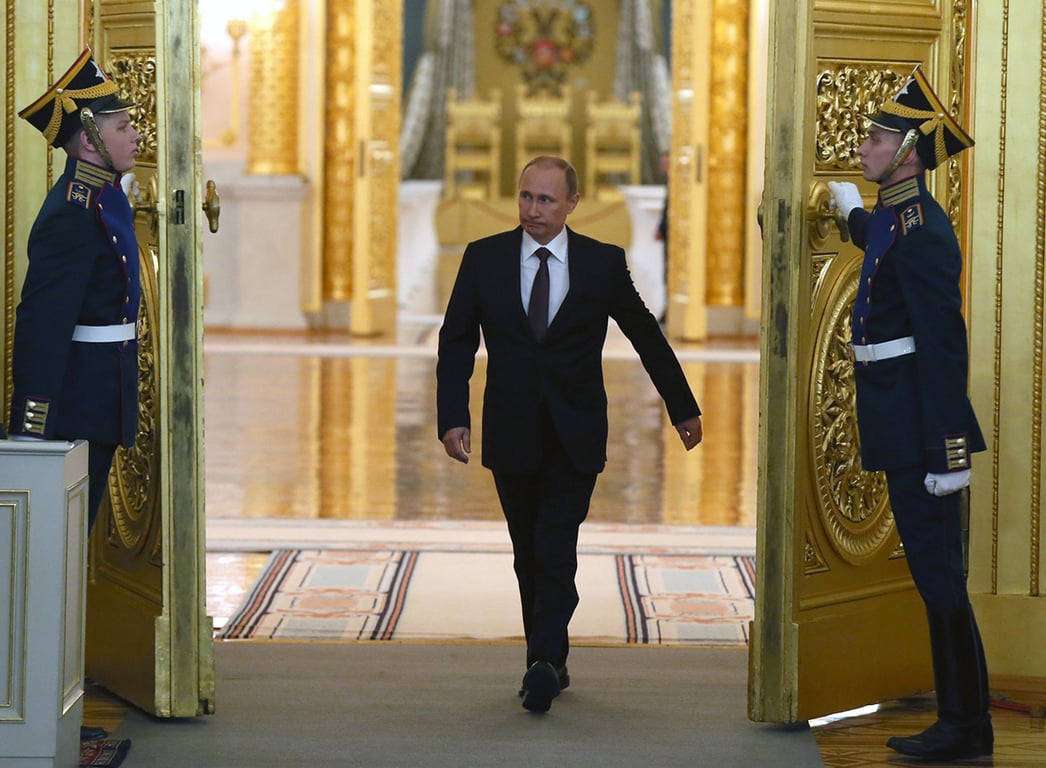
Autocracy imposes a general order on a society where nothing new will happen; the ideal of social order is in some imaginary past, where grandfathers fought and Russia has always been great. There they defeated both the Polovtsians and the Pechenegs. But the autocracy is always gripped by fear for its own existence, which is fueled by the bureaucracy and the security apparatus. In response to an ideological request, the bureaucracy “stamps” these threats, and then laws on “foreign agents”, “LGBT propaganda”, “childfree” and so on appear. And the security apparatus continues to identify Japanese and American spies, prevent an “orange” scenario in Russia, and so on. Because for autocracies there is nothing worse than the lack of a guarantee of their own existence, including physical existence - for the dictator himself. This is why autocracies arm themselves, nervously rattle their sabers and, in the end, attack - because fear always turns out to be stronger than reason.
As a model conflict between democracy and autocracy, Haase turns, however, not to recent history, but - unexpectedly - to the Peloponnesian War of the 4th century. B.C. True, he interprets its events in his own interpretation: according to Haase, the union of cities led by autocratic Sparta started a war with democratic Athens. The reason for this was Corinth's request for protection from Athens. And a hint that two powerful city-states will sooner or later go to war, so Sparta better strike first.
If for Nabokov a hundred years ago the main fear of dictators was to become a laughing stock, then for Haase it was to lose life and power.
It is difficult to live, seeing enemies everywhere and constantly imagining new threats. That's why autocracies arm themselves and go to their deaths.
It is difficult for a sociologist or a political scientist to evaluate Haase’s concept from a scientific point of view. But as a reader, I find it presented logically, albeit with inevitable generalizations. Haase believes that on the path to building a dictatorship, Putin subjugated the intelligentsia, first supporting a kind of mutually beneficial cooperation agreement with them, and then threatening them with reprisals. Then he created an entire class of state employees, dependent and therefore subject to the state. He also made death another commodity in the commodity exchange system, first introducing a single tariff rate for compensation for the death of a relative (as a result of a terrorist attack or emergency), and then introducing an increased rate for the death of a doctor during Covid. Because of this, society was prepared for the introduction of compensation for deaths in war after 2022.
In general, Haase creates a rather harmonious picture of the maturation of Russian authoritarianism. It turns out to be a kind of antipode to “The Whole Kremlin Army” by Mikhail Zygar in the sense that Zygar, introducing the concept of “collective Putin,” used interviews to show careers from individual officials and henchmen of the ruler to himself. Whereas Haase, starting from individual events, builds a political science concept, and does this in accessible language and with the help of understandable analogies.
The only thing that Haase can be accused of is some freedom in interpreting the facts. For example, he presents the war in Syria and the Belarusian protests of 2020 as follows:
“You can build a complex intrigue for the sake of redistributing some market, and as a result provoke a war between the special services and an attempted coup in a friendly country. This is what happened in Syria, when as a result of the games of the Russian special services - their goal was to prevent the construction of a gas pipeline from Qatar to the Mediterranean coast - a revolution began in the country. The then deputy head of the GRU of the General Staff of the Russian Armed Forces, Yuri Ivanov, paid with his life for this (Yuri Ivanov drowned in Syria in 2010, the Arab Spring began in 2011 - Ed. ) . It is possible, on the contrary, to prepare a coup d'etat or at least hint at its possibility, and as a result give rise to an attempt at a peaceful revolution. This seems to be what happened in Belarus in 2020.”
Why Haase interprets these events this way is unclear. They are not supported by anything other than the author's statements, although other facts and interpretations in the book are supported by documents. Because of this, the fragment seems unnecessary in the book or needs confirmation - otherwise the author risks falling into the trap of his own imagination. Fortunately, there are only a few such passages in the book, and they do not affect the overall impression.
It is, of course, premature to sum up Russian authoritarianism: the war continues, power is in the hands of a dictator, the transition period still exists only in the thoughts of the opposition and political scientists. But Haase understands the path to the current war with dignity; but he is not engaged in designing the future and making any forecasts (which, let us remember, failed him in the recent past). And, it seems, this is a deliberate move - after all, democratic Athens ultimately lost the Peloponnesian War, to which the author refers.