
Translated material
“Mr. Nobody against Putin” - an amazing documentary about propaganda, resistance and patriotism
This film not only earned an Oscar nomination, but also caused widespread outrage - even among the anti-war intelligentsia
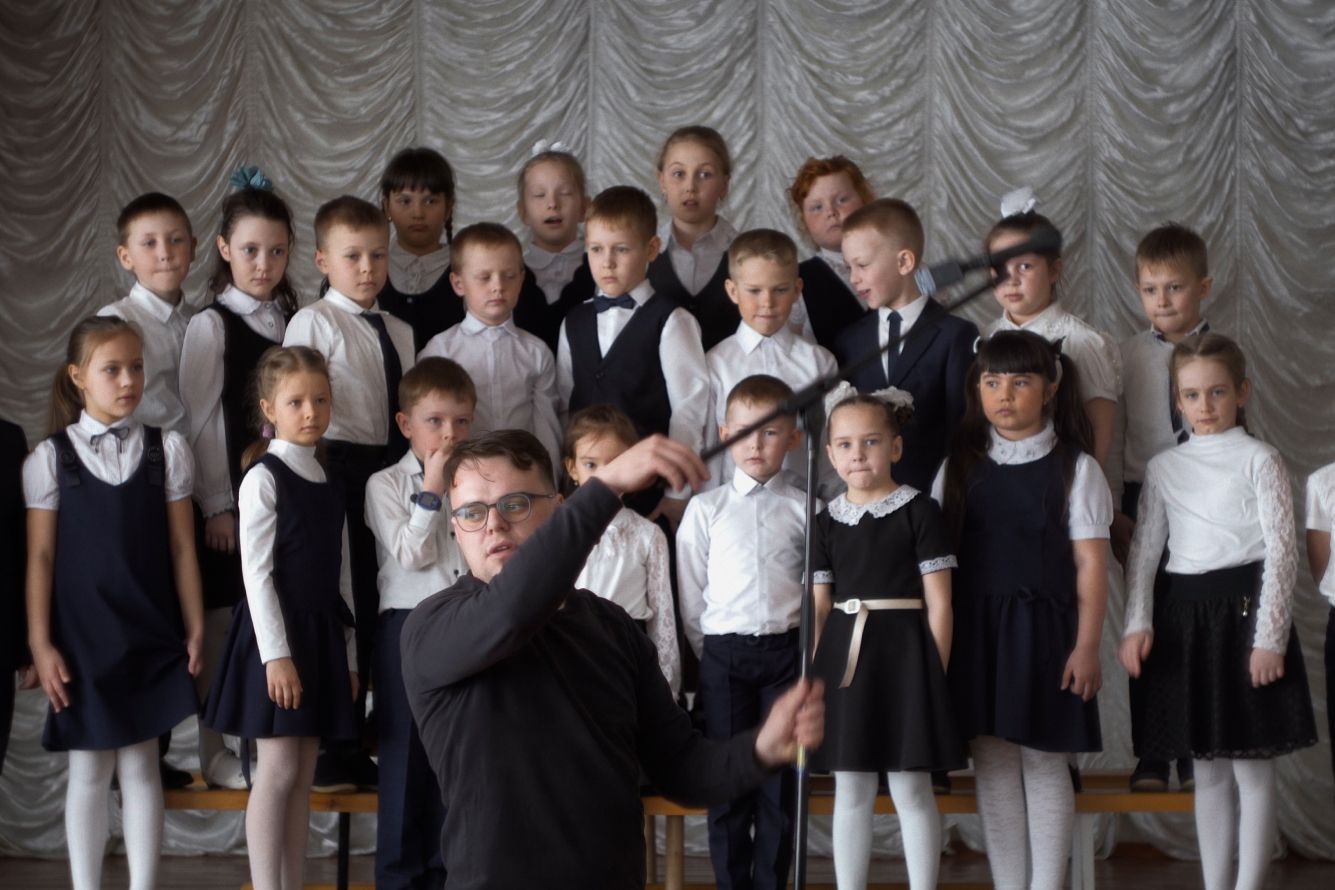
One of the Oscar nominees in the category “Best Documentary Feature Film” this year is the documentary “Mr. Nobody vs. Putin,” which its author, teacher and director from Karabash, Chelyabinsk region, Pavel Talankin, exported from Russia in 2024. American documentarian David Borenstein helped him edit the film. Mr. Nobody vs. Putin is the story of how the Russian state ruthlessly indoctrinates schoolchildren. Talankin tells it using the example of a school where he himself worked. First shown at Sundance in 2025, the film delighted some and angered others just as much. Meduza film critic Anton Dolin talks about the painful questions this film raises—and why, despite the conflicting emotions it may evoke, it should still be treated as an important document about wartime Russia.
The film “Mr. Nobody vs. Putin” was included in the program of the IDFF Artdocfest/Riga documentary film festival. It will take place in Latvia from February 28 to March 8. You can view the entire program on the IDFF Artdocfest/Riga website. Read more about each film in the competition in this Meduza material .
From a Sundance Special Jury Prize a year ago to a recent Oscar nomination, Mr. Nobody vs. Putin is the undoubted sensation of the season. Although even numerous well-wishers do not attribute this to his artistic merits. Assembled into a coherent and fascinating narrative by American documentarian David Borenstein, the bold action of Pavel Talankin, a young videographer from the Ural town of Karabash, made known to the whole world a chronicle of the indoctrination of children and teenagers who are brainwashed in modern Russia during “Conversations about Important Things” and “patriotic” events.
Opinions about the film were sharply divided. The feat of a fearless anti-war activist who collected material undercover (and quite officially: he worked at a school and was obliged to film lessons, meetings and classes), or an immoral provocation, the victims of which could have been (it seems that this year they were not) Talankin’s colleagues and students? The unalloyed truth about the current education system in a totalitarian state or the opportunistic creation of a narcissist from the provinces dreaming of an Oscar? An act of love or a custom-made denigration coming from the hostile West?
Is it really all about the annoying difference between those who “left” and those who “stayed”? The author of this text, being a typical person who left, is closer to the first position. A huge number of commentators living in Russia - not only propagandists and civil servants, but also anti-war intelligentsia - took second, accusing the film of falsehood and its authors of cynicism.
It also seemed to me that “Mr. Nobody against Putin” suffers from some artificiality, especially in terms of Talankin’s monologues - either specially written for him, or overly carefully rehearsed. Background music, designed to maintain the emotional temperature, does not help the story, but hinders it. But the film has fundamental advantages, and they are not connected only with the material - not so shocking for those who lived at least a couple of years in Putin’s Russia and visited small towns - but rather with those pain points that the authors, willy-nilly, touched.
Firstly, no one has ever shown the propaganda mechanism on screen with such chilling clarity. We all monitor these processes, but no one is able to statistically assess their effectiveness. Opinions range from “nobody takes this seriously” to “they’re all crazy.” “Mr. Nobody vs. Putin” is a recording of the cause-and-effect relationships of this process.
Yes, teachers stammer and almost feel embarrassed, trying to pronounce the words “demilitarization” and “denazification” in front of their batting eyelashes. High school students grin and shrug their shoulders while listening to the anti-scientific nonsense of history teacher Pavel Abdulmanov (the antagonist of the film, he admits on camera that among the outstanding figures of the past he would dream of meeting Beria, Abakumov and Sudoplatov ). However, the result is not only an apartment that Abdulmanov receives from the city authorities as a gift for loyalty, but also an uninterrupted supply of cannon fodder. The grown up boys, quite voluntarily, with the same confused smiles, go to the front, from where they never return.
Perhaps what was important was not the quality of propaganda, but its quantity and lack of alternatives. I’m reminded of a scene from Alan Parker’s “The Wall,” in which schoolchildren at their desks wearing identical creepy masks are sent by conveyor belt straight into a meat grinder. Everyone is “another brick in the wall”; how not to recall the “Great Russian Wall” from Sorokin’s “Day of the Oprichnik”.
Secondly, the film problematizes the ethics of solitary protest—the only form possible in today’s Russia, since the state simply does not allow anti-war citizens to gather in groups. The stories of Sasha Skochilenko (who also became the heroine of an Oscar-winning film , only a live-action one) or Pavel Kushnir are proof of this. Most likely, many are annoyed by the very appearance, image and intonation of Talankin, whose plot is more reminiscent of a comedy than a high drama, especially since it has a happy ending: the material with recordings was safely exported abroad, the film was assembled and is an undoubted success. But this eccentric, who even at the beginning of the story admits to his eternal role as an outsider, is interesting precisely because he does not fit into the usual patterns, does not look like a heroic fighter. He is “Mr. Nobody,” as he admits in the title, and this paradoxically helps him slip below the government radar.
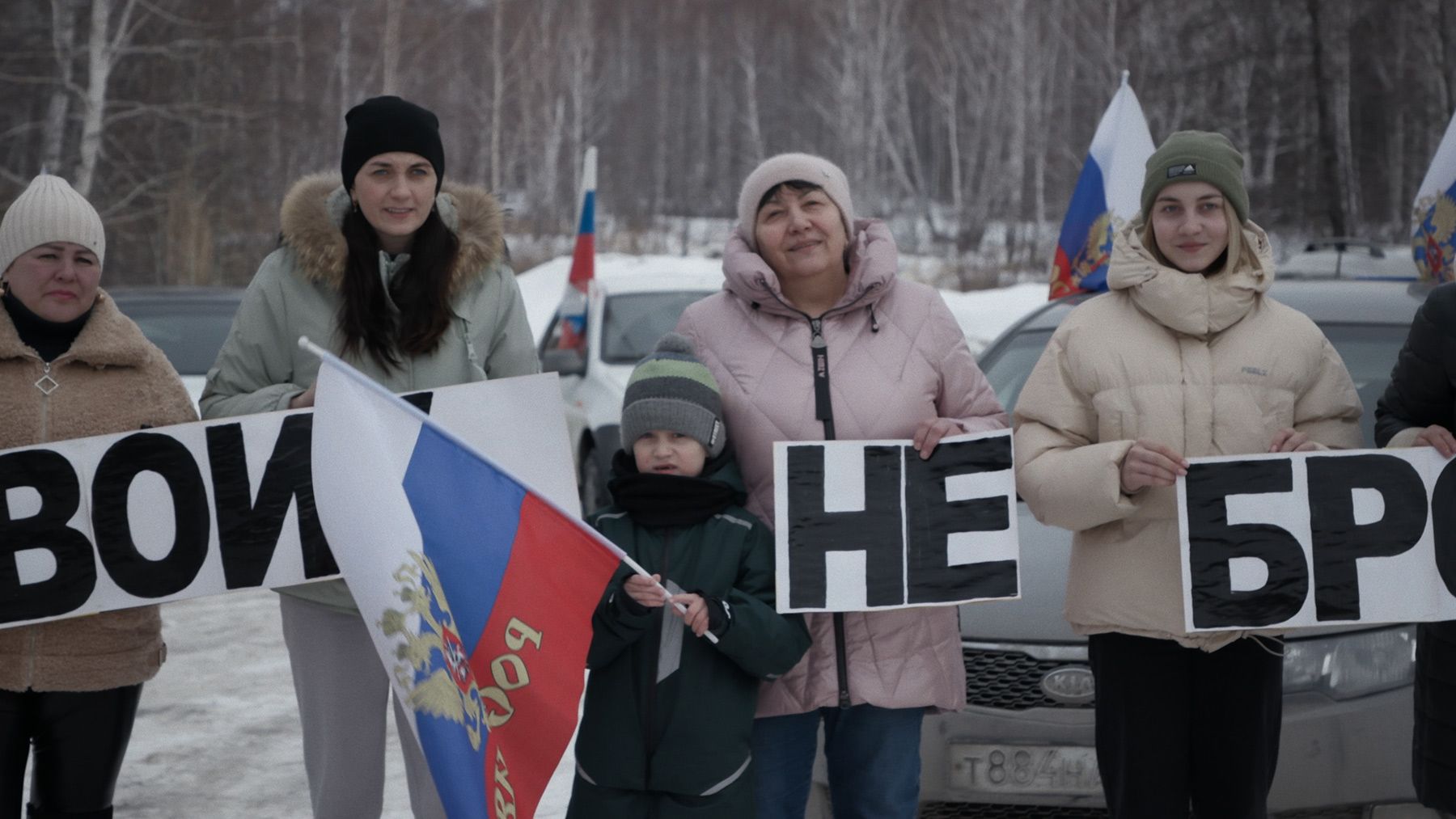
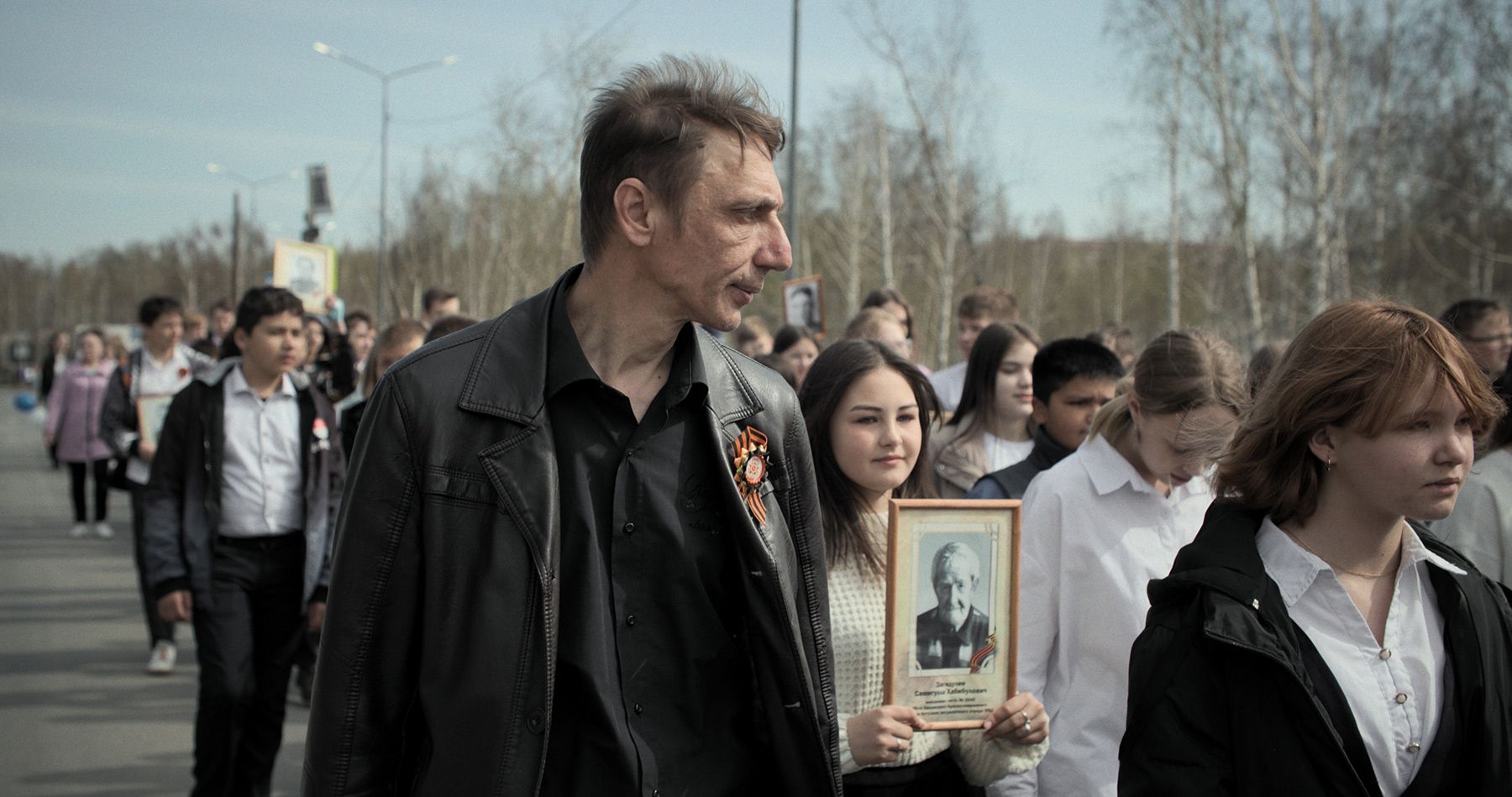
Talankin’s actions are nevertheless incredibly courageous: not only filming, but, for example, turning off display windows with recordings of patriotic actions or recording sound at the funeral of a fellow countryman who went to war. You can go to jail for this, and for a long time. Without seducing anyone or calling on anyone to follow his example (neither on camera nor among potential viewers in Russia), the hero definitely walks on the edge. Only those who are eaten up by remorse due to inaction can devalue this. By the way, Talankin is not alien to this feeling, so his motives are transparent and cannot in any way be reduced to the desire to “hype” in the West. After all, the chances of getting there by crossing the border without problems were not initially so high. Just lucky.
Finally, thirdly, and this may turn out to be the most interesting and painful, “Mr. Nobody against Putin” touches on the issue of patriotism - a concept and word that in Russia after 2014 for many has become taboo, almost abusive. Talankin does not try to convict his ideological opponents of hypocrisy. On the contrary, he understands that many of them sincerely believe in the righteousness of the Kremlin’s policies, while others choose opportunism out of ignorance or hopelessness, but not out of malice. For Talankin, it is more important not to expose his opponents, but to defend his vision of patriotism.
Karabash - one of the anti-leaders of the environmental rating of the Russian Federation with its ugly factories and panels - was filmed and shown with a poetic force rare for amateur photography. The author’s farewell to his students at “Last Bell” can bring tears to the viewer’s eyes. The hackneyed comparison of the homeland with the mother is literalized in the film: Talankin’s mother, a school librarian, gloomily brushes aside her son’s seditious reasoning and has no idea that he is leaving forever. There is a delicacy and even distance in this part of the filming that is not felt in other episodes. And there is certainly not a hint of artificiality in it. Just as Talankin’s grown-up pupils increasingly shun their dissident mentor, so their own mother does not want to delve into his internal conflicts. It’s as if the small homeland is rejecting a foreign body, a rupture is inevitable. The once mutual love of Talankin and Karabash suddenly becomes unrequited. But the resulting film still sounds like a sad declaration of love.
There is no anger, vindictiveness, resentment—everything that people love to accuse those who have left of—in “Mr. Nobody Against Putin.” Only despair and the obvious doom of protest, and also an irrational belief that the power of words and cinematic images can change at least something.
Anton Dolin