
Translated material
“The walls and doors were covered in ice, steam was coming out of the mouth.”
How residents of Irkutsk Bodaibo, at -40, have been surviving in frozen apartments for the second week after a utility accident
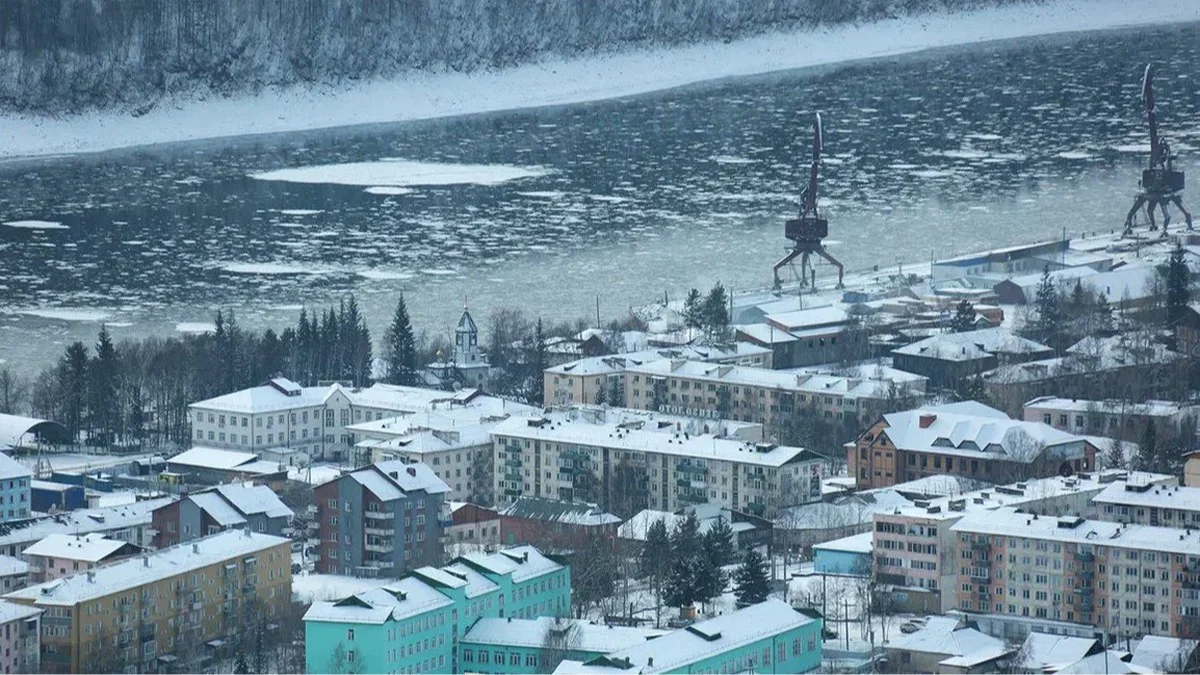
Bodaybo. Photo: Igor Kobzev / press service of the Governor of the Irkutsk region
Residents of Bodaibo have been living in cold apartments for the 11th day: the temperature at home is near zero, the sewage system is frozen, and a state of emergency has been introduced in the city. People are urged to leave their frozen homes for a while if possible. All this is the consequences of a large-scale utility accident that occurred in the city on the night of January 30 in 40-degree frost. As a result, 1.3 thousand people were left without heat and water. The problem has not yet been resolved: according to the authorities, out of 141 affected houses, only 12 of them were given heat. Officials claim that the frost is to blame, not negligence. Residents think differently. “New Europe” talked to them.
Residents of Irkutsk Bodaibo have been living without heat for 11 days in 40-degree frosts. On the night of January 30, a large-scale utility accident occurred in the city. According to the authorities, the cause was not negligence, but too much frost: the temperature in the city was -40 degrees or lower for a month. The central water pipeline that supplied water to the boiler rooms froze.
As a result, according to the regional governor Igor Kobzev, the operation of four heat sources stopped, and 141 houses, where 1.3 thousand people live, and two schools were left without heat and hot water.
Initially, the authorities introduced a high alert regime. However, a day later, on January 31, a local emergency was introduced in Bodaibo. Representatives of the regional government, rescuers, the head of the Russian Ministry of Emergency Situations Vyacheslav Fedoseenko and operational groups arrived in the city.
The Investigative Committee opened a criminal case under the article on the provision of services that do not meet safety requirements (238 of the Criminal Code of the Russian Federation) and under the article on negligence (293 of the Criminal Code of the Russian Federation). The agency recognized that the situation threatens the lives and health of citizens: people were left without water, their houses were cold.
Searches were carried out at the administration of the Bodaibinsky urban settlement and the municipal enterprise "Teplovodokanal".
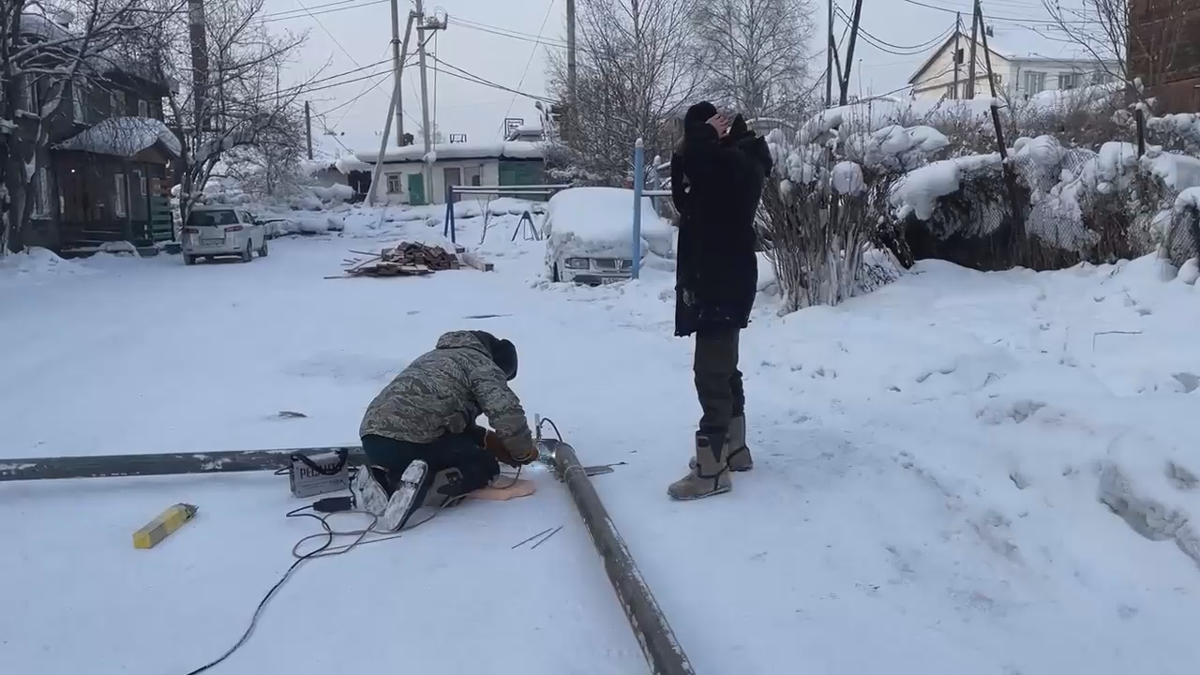
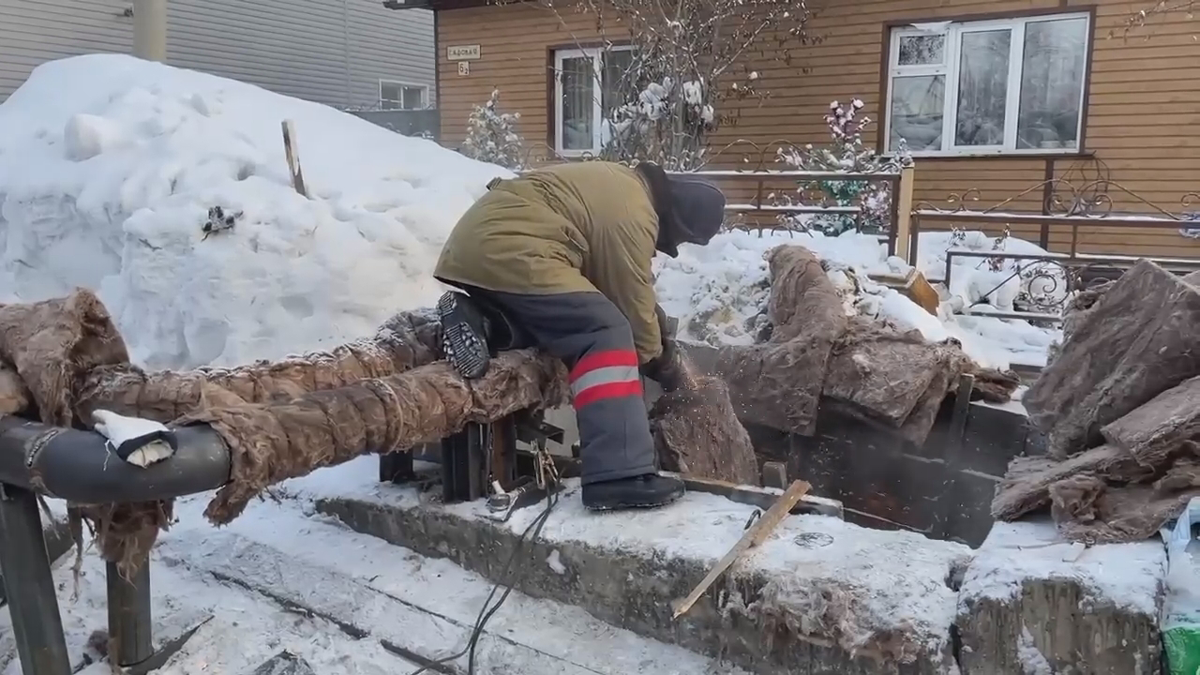
Repair crews first tried to warm up the old water pipeline and lay temporary soft pipes along the street, however, as Bodaibo Mayor Evgeniy Yumashev said , the frosts prevented this from happening. Therefore, a new metal pipeline 750 meters long had to be welded and laid on the surface.
For those who found themselves in the emergency zone, especially for families with children and the elderly, the authorities deployed warm heating points.
The mayor asked residents to temporarily move in with friends where there is warmth, or go to temporary accommodation centers.
The residents themselves created a chat for mutual assistance and began delivering water, food, heaters and blankets to each other.
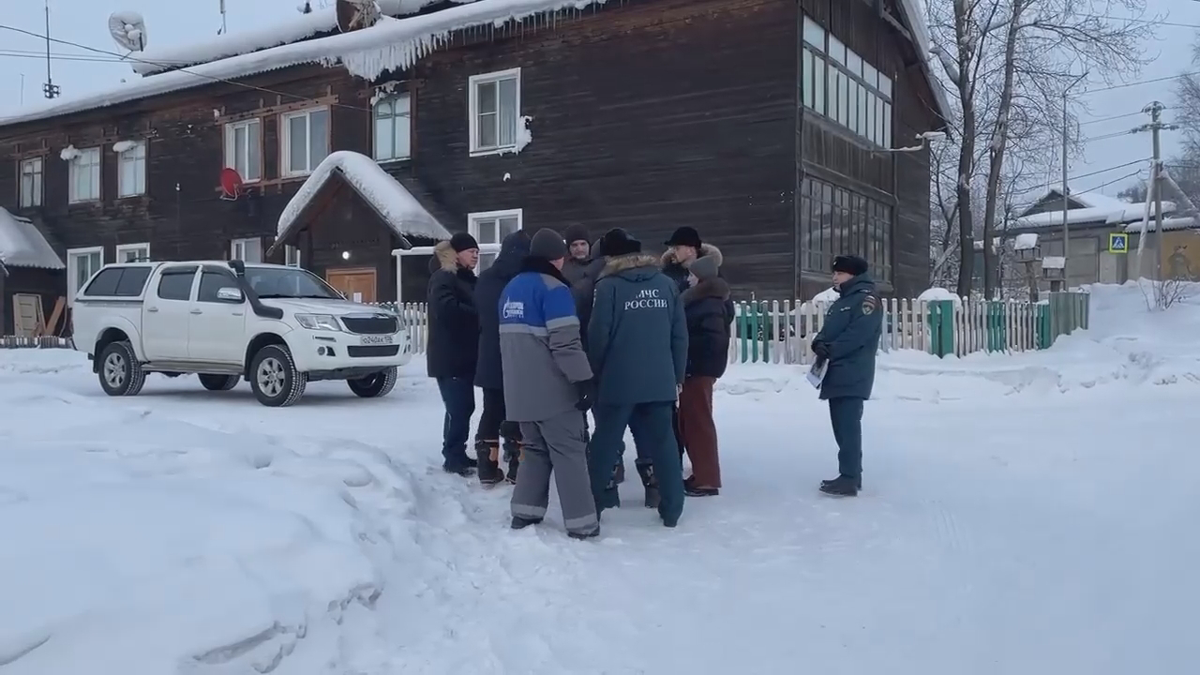
Irkutsk Governor Kobzev arrived in the freezing city only on February 6, a week after the accident. He inspected boiler houses and emergency repair work, and also met with residents and promised to suspend electricity bills for residents of houses located in the emergency zone. At the same time, people in local groups on social networks complained that they began to receive bills for heating and water supply in full. “It's really terrible. As if soon we will all leave to burn wood and coal. What kind of tariffs are these,” residents write on social networks.
While repair crews were struggling with the accident, another difficulty arose - residents began to panic because of the frozen sewer. Mayor Evgeny Yumashev, in response to this, asked citizens not to use the sewer system if possible, or at least pour warm water into it so that the pipes would not freeze even more, and “to be patient for literally another day or two.”
Only on February 7, a regional-level emergency regime began to operate in the city. People still live in the cold. Even the authorities admit this: Kobzev reported on February 8 that the commission only approved an adjusted emergency recovery plan. Moreover, judging by the timing of their implementation, the deadline for solving problems is February 21. According to the governor, in the emergency zone, heating is supplied to only 12 houses (out of 141), as well as to schools . By the evening of February 9, the authorities promise to supply heat to several more houses.
Temperatures in some apartments drop below zero
While authorities report a gradual restoration of heat supply, residents of Bodaibo told Novaya-Europa that it is still cold in their apartments. According to Dmitry*, the temperature in his apartment dropped even below zero: “You cram into one room, insulate yourself with blankets, seal the windows - and you’re there. We just ordered a diesel generator - we’re still waiting,” he explained how he copes with the cold. Our other interlocutor, Denis, said that in his house it is only +3 degrees Celsius.
Frosts in Bodaibo are not uncommon, another resident of the city, Olga, noted in a conversation with Novaya-Europa: in winter, the temperature in the city often drops to -50.
“Specialists took measurements in the apartment. On the second floor, the temperature dropped to -3 degrees,” Olga added.
“The walls and doors were covered in ice, steam was coming out of my mouth. The maximum the heater warms up to is +10, and by morning it’s again around zero.
Those who have the opportunity began to heat the basements with heat guns to save the risers. But many houses simply don’t have such basements.”
Olga’s family went to her grandmother’s, where it was also no warmer than +10. According to her, people are afraid to use electric ovens: every evening there is a smell of burning wiring due to network overload.
A resident of Bodaibo, Svetlana, in a conversation with Novaya-Europa, reported that there is still no heat in her house, although they promised to provide it by the end of the day - new gusts in the radiators are interfering. There is no drinking water; her family uses imported water or collects it from the Vitim River. “There’s nowhere to wash. We have been heating the sewerage with a heat gun in the basement for the second week now, and we buy fuel ourselves,” she added.
Residents described a chain reaction of problems: to save the water main, the water was turned off, which led to the freezing of the sewer system. Due to defrosted and burst batteries in apartments, it is impossible to quickly turn on heat.
“Against this background, everyone’s sewage system froze,” says Olga. — The ice is right on the drain. Many of the batteries have burst, which is why there is still no heat. They can’t get hot water to the house because the wells are frozen.”
“People should not live in such conditions”
The governor of the Irkutsk region, Igor Kobzev, published a video from Bodaibo in his Telegram channel, which shows the consequences of a utility accident. At the same time, he admitted: the condition of some houses in the city is disrepair.
“We saw that houses 4a, 5a, 8a are in a very unsatisfactory condition, which was aggravated by the utility accident that occurred in the city. It is obvious that people should not live in such conditions,” he wrote.
The governor promised that 24 apartments in these buildings will be resettled on a priority basis.
Many Bodaibo residents note that attention to the city’s problems is shown only when the situation has already become a disaster. According to them, if the condition of dilapidated networks had been carefully monitored, this large-scale accident would have been avoided:
“The population of our region does not live, but survives in harsh climatic conditions. Only complete inaction and indifference on the part of the authorities towards the northern territory led to this situation.
During severe frosts, people spend days in apartments without heating, which clearly does not meet their interests. If [the governor] had such attention to our city all the time, this would not have happened,” writes local resident Natalya on social networks.