
Translated material
The ruling party won the early elections in Japan. Japanese Prime Minister Sanae Takaichi's risky bet worked
What reforms did she get carte blanche for?
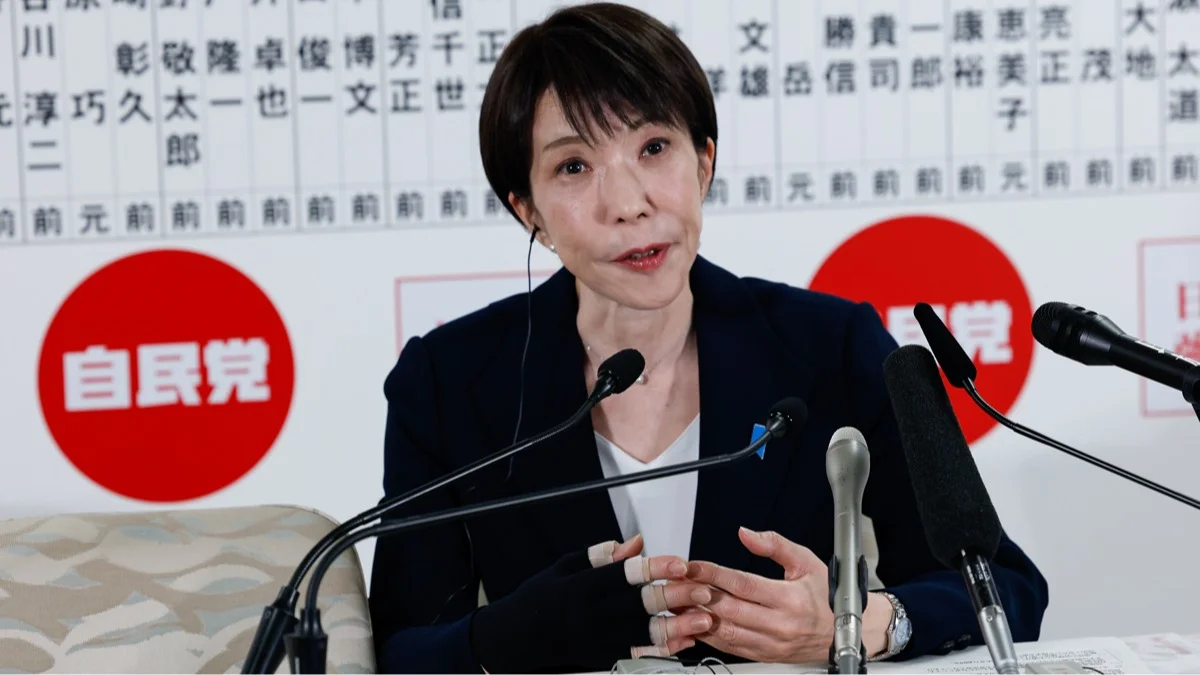
Japanese Prime Minister and leader of the ruling Liberal Democratic Party (LDP) Sanae Takaichi at a press conference on general election day, Tokyo, Japan, February 8, 2026. Photo: Kim Kyung-Hoon/EPA
The maneuver of Japanese Prime Minister Sanae Takaichi in calling early elections to the lower house of parliament turned out to be completely justified. The Liberal Democratic Party (LDP) has significantly strengthened its position, and its leader Takaichi has received a public mandate for reforms - in particular, aggressive government stimulation of the economy and an increase in defense spending to 2%. Among other things, this may threaten new conflicts in relations with China, which are already far from cloudless. Read about what Sanae Takaichi has already done and what ideas she now intends to implement in the material of Novaya Gazeta Europe.
Credit of trust
Before Sunday's elections, the conservative Liberal Democratic Party held 198 of 465 seats in the lower house. Its allied Innovation Party had 34 seats. Now, according to preliminary estimates, these political forces received 316 and 36 mandates, respectively. This will allow them to make all the necessary legislative decisions without any problems. The authorities' main opponent, the Centrist Reform Alliance, created in January, was unable to compete with the right-wing conservative bloc.
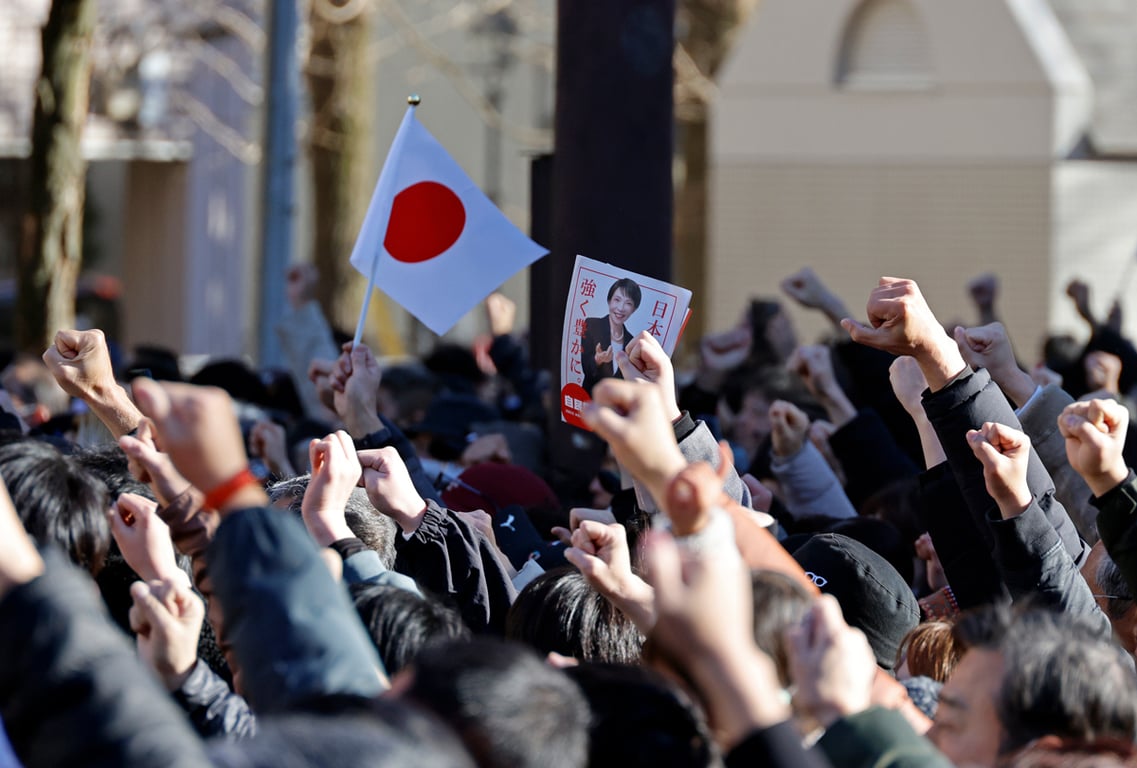
Takaichi's personal ratings are extremely high - around 78%. By announcing early elections on January 19, the politician hoped to convert her personal popularity into the electoral successes of the LDP. However, when announcing the vote, she still did not exclude the possibility of failure of her initiative:
“I'm putting my political future on the line. Let citizens directly decide whether to trust me to govern the country.”
The LDP won elections to the Japanese House of Representatives in 2024. But in 2025, the party performed unsuccessfully in the elections to the upper house - the House of Councilors, as a result of which, under pressure from fellow party members, Prime Minister Shigeru Ishiba resigned. Based on the results of an internal party vote, Sanae Takaichi took the post of Prime Minister of Japan on October 21.
Takaichi has repeatedly emphasized the fact that she was elected by her party comrades, and not by all Japanese. In addition, since the 2024 elections, the LDP’s partner in the ruling coalition has changed: instead of the center-right Komeito (“Clean Politics Party”), the right-wing populist Innovation Party entered the government. “Based on the new coalition agreement, we are promoting a new policy,” noted Sanae Takaichi.
Following the election results, arriving at the LDP headquarters and accepting congratulations from fellow party members, she could hardly hold back her tears. Now Takaichi will be able to bring all his plans to life without any problems.
Immersion in "sanaenomics"
Economic issues were the focus of the campaign that ended, and the Prime Minister ended up with a public mandate to implement “sanaenomics.” This is how experts dubbed the economic program of Sanae Takaichi, by analogy with the “Abenomics” of her political teacher, ex-Prime Minister (2006–2007; 2012–2020) Shinzo Abe.
Takaichi argues that decades of "excessive frugality" have led to underinvestment in critical areas of the economy, weakening Japan - something she is now determined to correct. “Strategic public investments will increase employment, incomes, consumption and lead to increased tax revenues without increasing tax rates,” the head of government promised .
The most important social element of the new policy was the decision to abolish the consumption tax on food and drinks for two years (currently it is 8%). This measure, which the prime minister called her “long-time dream,” is aimed at immediately mitigating the effects of inflation, which reached 3.1% in 2025 with a catastrophic rise in rice prices by 67.5% (nothing like this has happened since at least 1971, the first year for which such data can be found). According to preliminary estimates, the temporary abolition of the consumption tax threatens the budget with annual losses of approximately 5 trillion yen ($32 billion).
In addition, the measures agreed upon by the ruling coalition include lower prices for gasoline and diesel fuel, assistance in paying electricity and gas bills, regional subsidies and payments to families, improved conditions for obtaining tax deductions, and increased funding for medical and social institutions.
The question of how to cope with all these additional expenses without issuing new government bonds has yet to be answered. Takaichi herself claims that Japan is absolutely stable from a financial point of view. In a speech on January 19, she proudly noted that the 2026 budget, despite its scale, was the first budget in 28 years with a primary balance surplus. “The budget allowed us to cover the necessary expenses without using debts. We are not implementing a new policy on debt,” said the head of government. According to her, nominal GDP growth is projected for 2026 by 3.4% and an increase in real wages by 1.3%. Inflation is expected to be 1.9%.
Shock therapy in Japanese
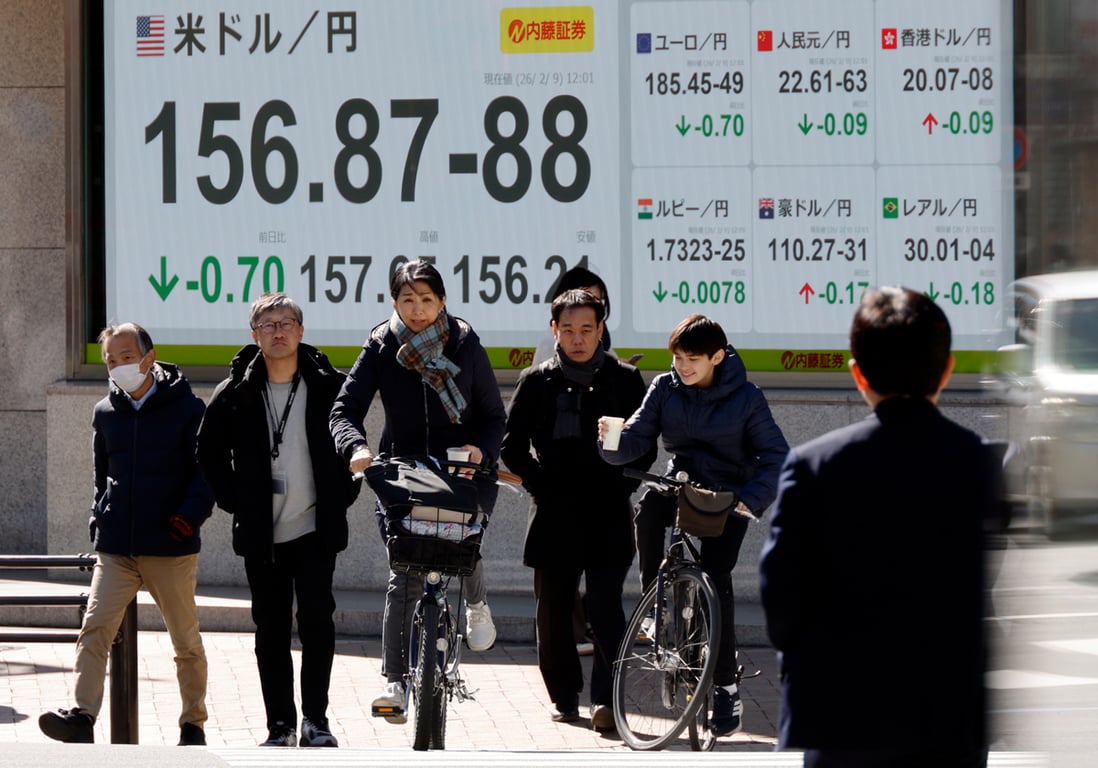
Meanwhile, many experts warn that such an aggressive economic policy has put Japan on a dangerous trajectory, which is already noticeable in the weakening of the yen and the rise in government bond yields to a three-decade high. Bloomberg noted that the Japanese government bond market, which was traditionally considered a model of stability, has now become a source of potential shock for the global economy.
“Japan's debt-to-GDP ratio is as high as 260%, and its population is aging and shrinking faster than any other major economy.
In 2025, Japan recorded the lowest number of births since 1899 and the highest debt servicing costs in history.
— a combination that can hardly be called optimistic,” noted Asia Times. And he quoted the founder of the Blokland Smart Multi-Asset Fund investment fund, Jeroen Blokland, who talked about the threat of repeating the “Liz Truss scenario.”
In 2022 in the UK, then Chancellor of the Exchequer Kwasi Kwarteng and Prime Minister Liz Truss announced a package of tax cuts to be financed by large government borrowings. The ensuing bond market collapse led lawmakers to force Truss to resign just 49 days after taking office. “Takaichi now faces a balancing act between nervous voters and those who have invested in bonds and are tired of Tokyo's chronic complacency,” the Asia Times noted.
Whether Takaichi will turn out to be the “Japanese Truss” or the “Japanese Thatcher” (the Japanese Prime Minister has repeatedly said that she admires the former head of the British government, Margaret Thatcher, who ensured long-term growth for the country in the 1980s) will become clear in the coming months, when “Sanaenomics” is tested by reality.
Not everyone is welcome there
As a result of the elections, the Takaichi government received a mandate not only for economic changes, but also, for example, for a tough migration policy. Takaichi began her bid for LDP leadership by criticizing foreign tourists for allegedly kicking deer in Nara Historical Park and criticizing migrants for their lack of integration into Japanese society.
As measures to limit what the current authorities believe to be excessive tourist flows, a sharp increase in visa fees and international tourist tax (collected when leaving the country) is being discussed . Also on the agenda is tougher requirements for foreigners applying for permanent residence: they may be required to take a Japanese language test.
Meanwhile, human rights activists are calling on Sanai Takaichi to look at the problem from a different angle. “An unprecedented number of migrant workers living and working in Japan, as well as a record flow of foreign tourists, have made immigration and xenophobia key issues in the July 2025 upper house elections,” Human Rights Watch said in its annual report released on February 4. The organization called on Sanae Takaichi to focus on “promoting new legislation prohibiting discrimination based on race, ethnicity or religion.”
Readiness for defense
Although defense and foreign policy issues have not been key issues for Japanese voters, Sanae Takaichi also pays a lot of attention to them. Announcing early elections, she spoke , for example, about strengthening alliances with the United States, South Korea, the Philippines, Australia, Italy, Great Britain and countries of the Global South. In addition, Takaichi promised to “expeditely review three key defense documents [National Security Strategy, National Defense Strategy, Defense Buildup Plan. — Approx. ed. ], strengthen deterrence, cyber and space security, defense industry, improve conditions of military service.” In the same speech, the prime minister announced “strengthening intelligence capabilities” - in particular, the creation of a specialized agency and the adoption of laws against espionage.
The Takaichi administration has formalized a plan to bring military spending to 2% of GDP by March 2026, two years ahead of the schedule set by its predecessors. The total defense budget, including additional appropriations, reached a record 11 trillion yen ($70.5 billion). In the context of a critical public debt, this decision was justified by “the most complex security environment in the post-war era.” We are talking about three countries - China, Russia and North Korea.
The technological core of “defensive afterburner” is the development of systems for hitting targets outside the enemy’s reach. The budget for fiscal year 2026 allocates more than 970 billion yen ($6.2 billion) for this. Key projects:
- purchase of upgraded Type-12 missiles with a range of up to 1000 km, designed to protect the southwestern islands. The first batch should be deployed in Kumamoto Prefecture by March 2026;
- integration of American Tomahawk cruise missiles into the Self-Defense Forces system;
- development of the SHIELD project: massive deployment of autonomous drones (aerial, surface and underwater) to protect maritime borders. The use of unmanned systems is positioned not only as a military necessity, but also as a demographic necessity: with an aging population, Japan faces an acute shortage of personnel in the Self-Defense Forces.
In addition, Takaichi does not rule out revising the “three non-nuclear principles” (not possessing, producing or importing nuclear weapons). Back in 2024, in her book, she characterized the latter principle as unrealistic, noting that the United States may have to station nuclear weapons in Japan to deter strategic rivals Tokyo and Washington.
This topic will likely be discussed during Takaichi's visit to Washington, which is planned for March. Her first personal meeting with US President Donald Trump - in October 2025 in Tokyo - passed on a positive note: the leaders announced the beginning of a new “golden era” in bilateral relations.
Who is Russia and China?
But over the past few months, relations with China—already traditionally far from rosy—have deteriorated sharply. One of the key reasons was Takaichi's statement that a Chinese attack on Taiwan could become a situation that "threatens the survival" of Japan, which would allow the country to exercise the right to use the Self-Defense Forces.
Takaichi's critics inside and outside the country interpreted the remarks as an attempt to violate Article 9 of the Constitution, which stipulates that the country renounces "the threat or use of force as a means of settling international disputes." However, Takaichi’s comrades have been pushing for a revision of this article for many years and decades, which also states: in Japan “never again will land, sea and air forces, as well as other means of war, be created” (now, given the results of Sunday’s elections, it will be much easier to amend the Constitution than before).

The indignation of Chinese diplomats alone did not solve the matter: Beijing suspended the import of Japanese seafood, limited cultural exchanges and took a number of other steps. The Chinese Consul General in Osaka spoke out harshest of all, threatening to “not hesitate for a second to cut off this dirty neck” (the message, clearly addressed to Sanae Takaichi, appeared on the diplomat’s account on the social network X, but was soon deleted).
As for relations with the Russian Federation, Takaichi has so far refrained from taking drastic steps. On the one hand, she continued the line of her predecessors in fully supporting Ukraine and sanctions pressure on the Russian Federation. On the other hand, as the Japanese newspaper Toyo Keizai reported in January,
Takaichi, through third parties, conveyed a secret message to Vladimir Putin with two main theses: Tokyo expects an early ceasefire in Ukraine and still considers relations with Russia extremely important.
One way or another, Moscow’s position is now quite tough. Russian Foreign Minister Sergei Lavrov on January 20 criticized “unhealthy trends associated with the desire of some political forces in Japan to return to the militarization of society.” “We have repeatedly called on our Japanese colleagues not to follow the path of remilitarization and to return to the positions that are enshrined in the Japanese Constitution and are characterized by an exclusively defensive policy in Japanese military development. Unfortunately, the current Japanese administration ignores our concerns,” he noted, among other things.
Meanwhile, many experts consider such claims to be unfounded. In a material for the Carnegie Berlin Center, James Brown, a professor of political science at Temple University (USA), noted: 2% for defense is “a modest level compared to the NATO countries’ commitments to spend 3.5% by 2035, not to mention Russia’s 7.3% .” And such possible steps as revising the ninth article of the Constitution and abandoning the principle of non-deployment of nuclear weapons will de facto not change too much: it will rather be about legal fixation of existing realities.
“Sanae Takaichi is not leading Japan towards militarism: she is only carrying out reasonable reforms to adapt the country to the deteriorating international situation,” stated James Brown.