Date
Author
Ikorzhtir2

Preserved copy
Translated material
Corruption Perceptions Index 2025: Frequently Asked Questions
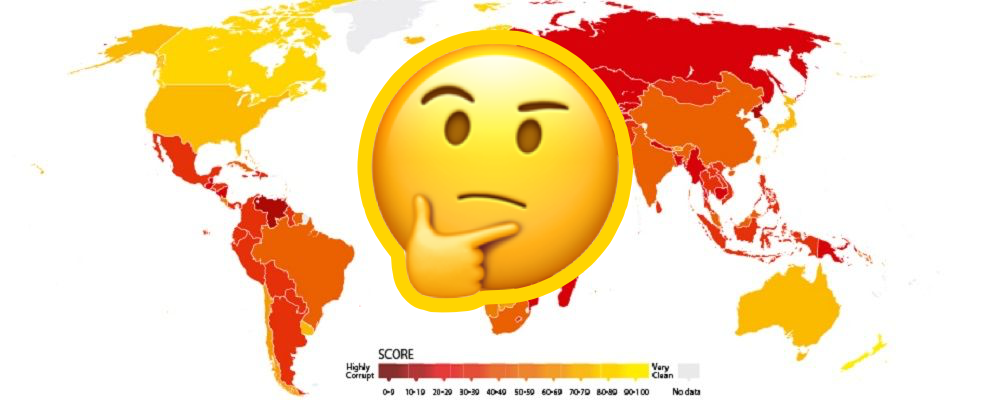
Tomorrow, February 10, at 07:01 CET (09:01 Moscow time), Transparency International will present the Corruption Perceptions Index for 2025. We answer your most pressing questions up front: how the index is calculated, what the scores mean, why some authoritarian regimes perform well, and whether data can be compared across years.
What is the Corruption Perceptions Index (CPI)?
The Corruption Perceptions Index evaluates and ranks countries and territories based on how corrupt their public sector is perceived to be. It is formed on the basis of expert assessments and data from the business community, combining from 3 to 13 independent sources. The CPI is the most widely used indicator for measuring corruption in the world.
What data is used?
The CPI calculation involves 13 sources from 12 organizations specializing in public administration analysis. Only sources that provide estimates of public sector corruption are used.
Why is the IVC based on perceptions?
Corruption is a hidden activity and cannot be measured directly. The CPI is formed on the basis of carefully prepared expert surveys, which reveal a general understanding of corruption in the country. These data are highly correlated with objective indicators, for example, with the experience of citizens faced with bribes.
Which countries/territories are included in the CPI and why?
To be included in the ranking, a country or territory must be assessed by at least three CPI sources. If a country is missing from the rankings, it is solely due to a lack of data and not to a lack of corruption. Since 2012, the CPI has covered about 180 countries.
Can country estimates be compared if they are calculated from different sources?
Yes. All 13 sources used in the CPI show high interrelationships with each other, despite possible differences in methodologies. Statistical analysis carried out by the European Commission's Joint Research Center showed that the number of sources and their specific composition do not have a significant impact on the final CPI score.
What does a score mean and how is it related to place in the ranking?
The CPI scores countries from 100—perceived as free of corruption—to 0—perceived as the most corrupt. A country's ranking is determined relative to other countries, and not in itself. A change in place may depend not only on improvements within the country, but also on the decline or rise of other participants.
What manifestations of corruption are not measured by the CPI?
The data used to calculate the CPI reflects the following aspects of corruption, depending on the wording of the questions used in the sources:
corrupt practices;
theft or misuse of budget funds;
use of official position for personal interests without consequences for officials;
the ability of the state to curb corruption and provide effective accountability mechanisms in the public sector;
excessive bureaucracy and administrative barriers that create risks for corruption;
civil service communications appointment;
effective prosecution of corruption crimes;
the presence of legislation on the declaration of income and the prevention of conflicts of interest among officials;
protecting whistleblowers, journalists and investigators reporting corruption and bribery;
state capture by a narrow circle of people;
access of civil society to information about the activities of authorities
What manifestations of corruption are not measured by the CPI?
The IVC does not include:
- Citizens' opinions about corruption or their personal experiences
- Tax evasion
- Illicit financial flows
- Activities of corruption intermediaries (lawyers, accountants, financial consultants, etc.)
- Money laundering
- Corruption in the private sector
- Shadow economy and illegal markets
Why do some authoritarian regimes have high rankings?
Corruption is more easily controlled in systems with independent institutions, free media and public control. However, authoritarian regimes can perform well through austerity, digitalization and intimidation. This does not mean that their anti-corruption mechanisms are sustainable: without democratic institutions, their fight against corruption remains dependent on the will of the leader.
Does the country with the lowest CPI score mean that it is the most corrupt in the world?
No. The CPI assesses perceptions of corruption in the public sector and does not reflect the level of corruption in the private sector, cultural characteristics, or the level of public condemnation of corruption. In countries with low CPI scores, citizens are often as critical of corruption as in countries with high CPI scores.
Is it possible to compare CPI estimates for different years?
Yes, but only since 2012. In 2012, the CPI methodology was updated, and only estimates calculated using the new methodology can be compared with each other.
Where can I find complete CPI data for previous years?
Full data tables can be found on the official website of Transparency International.
Tomorrow we will see how the situation in the world has changed. Follow our updates!