
Translated material
The magical journey is interrupted. Book about the shaman Gabyshev

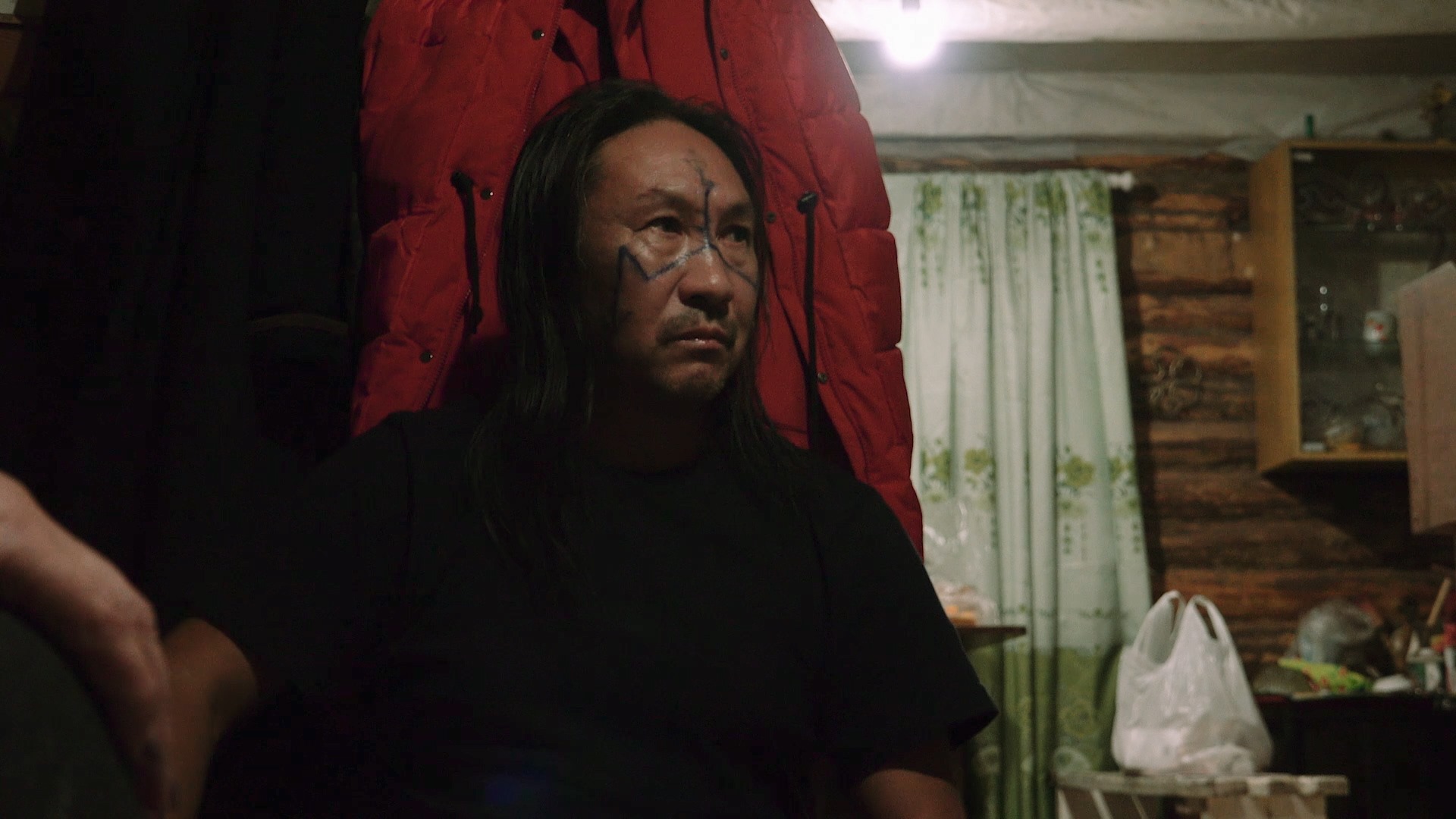
In 2024, the documentary film "The Tale of the Shaman" was released . Its authors, the spouses Beata Bashkirova and Mikhail Bashkirov, accompanied Alexander Gabyshev on his famous campaign against Moscow. This campaign, which was joined by sympathizers, was interrupted by the special services, and Alexander Gabyshev was forcibly placed in a psychiatric hospital. He has been under compulsory treatment for five years now.
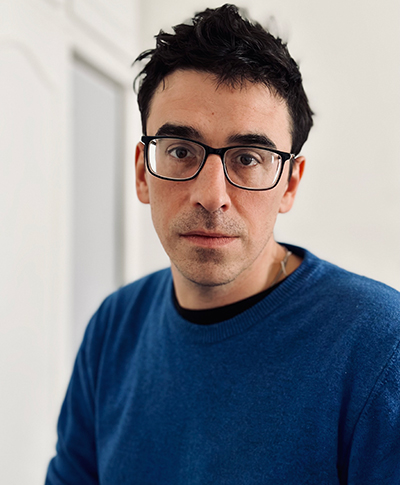
Mikhail Bashkirov emigrated in 2022, lives in France, but continues to monitor the fate of Gabyshev. In 2026, the Tel Aviv publishing house of the Babel bookstore published his book “Illuminations of Lightning. The True Story of the Shaman Alexander Gabyshev, who wanted, but could not, expel the demon from the Kremlin.”
Mikhail Bashkirov spoke about his book in the Radio Liberty program “Cultural Diary”.

– While reading the book, I imagined scenes from a documentary film. There was also a performance that you showed in Moscow - or rather, you tried to show it because “activists” were disrupting it. Why has the story of a shaman inspired you for so many years and why have you turned to it in different genres?
The shamanic world reflects, like a kind of mirror, the entire history of the country
– There are a lot of things intertwined here. I initially had an ethnographic, anthropological interest in this story, because at that time I was actively interested in shamans and everything connected with it. At the same time, it captivated me with its cinematic quality. Gabyshev was a full-fledged hero, and I wanted to talk about him in different ways. Ultimately it all led to a book. In the book I wanted to give a lot of context – both historical and social. It’s very difficult to fit all this into a film, let alone a play. And it's not necessary. And the book is the ideal format.
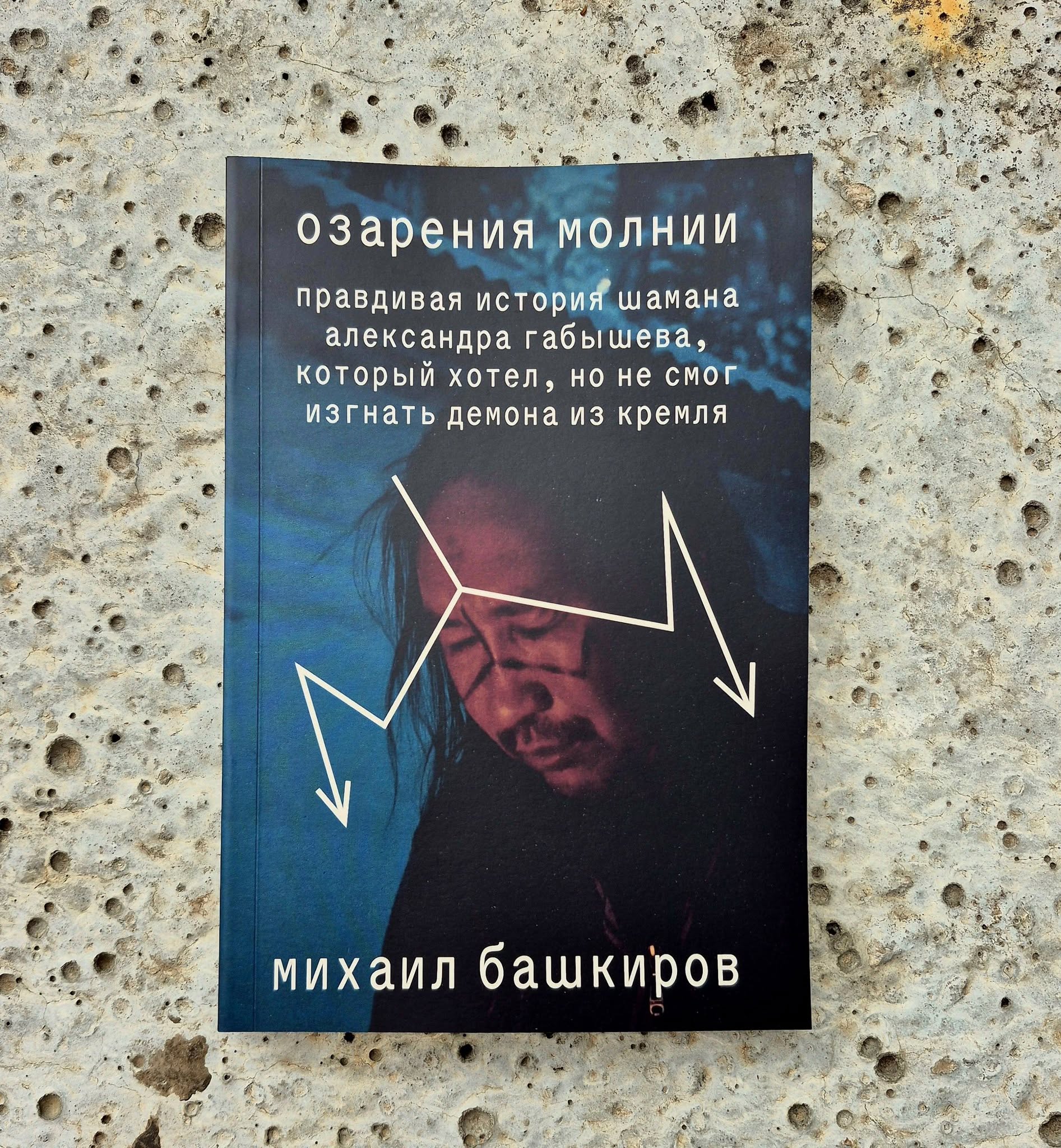
– In the book you tell the story of the confrontation between shamans and the state. These are important pages, and thanks to them I understood this story much better.
- It's an old story. Its roots go back to the 18th century. In different regions of Siberia, relations between the state and shamans developed differently, and the situation changed in different periods. There was an official position of the church as a state institution, and shamans were not the most desirable figures from the point of view of the church. They had to face repression: tambourines were burned, they were forbidden to perform rituals. But there were also regions inside Yakutia, where shamans enjoyed greater authority among both Russians and local residents than priests.
As for the Soviet regime, this situation worsened, and shamans very quickly became one of the most repressed groups in Siberia and the Far East. In Yakutia, Buryatia, and Tyva in the late 80s and early 90s, there was a revival of spiritual traditions. But some of the traditions were lost, some of the bearers of these traditions were simply destroyed. And somewhere these shamanic practices were reconstructed. Naturally, they were influenced by new times. This was often associated with such a concept as alternative medicine. This was often associated with the latest trends in the field of psychology. The shamanic world reflects, like a kind of mirror, the entire history of the country. And all the processes that took place in the Russian Empire, and in the Soviet Union, and in modern Russia affected the shamans.
– Alexander Gabyshev does not have the gift of healing and does not hide it. You write in the book that many experts treated him ironically. You attended a conference where its history was discussed, and experts said that it is not real shamanism. Is it possible to call him a shaman and compare him with those shamans who were persecuted by the Soviet regime?
A character like Gabyshev could appear in 2019-20
– This is a big question that has haunted me all these years. We are in a postmodern situation, and we do not have any generally recognized institutions and methods of how to qualify a person - whether he is a shaman or not. Yes, experts, of course, say that they do not consider him a shaman or consider him far from these traditions, not possessing such and such skills, such and such knowledge. But, nevertheless, if this is his personal identity, then, it seems to me, he may well consider himself as such. In this situation, when we decide who is a real shaman and who is not a real shaman, the question of the arbiter plays a big role. In Yakutia, some representatives of shamanic circles were very loyal to him, treated him calmly and did not try to challenge it all.
– But in Buryatia, on the contrary, they tried.
– They tried in Buryatia, yes. But again, this is a story about our time and about Russian diversity. Because the country is large, motley, complex. Shamanic traditions vary greatly from region to region. And there are many factors and circumstances that influence people when they decide whether to consider him a real shaman or a fake one.
– In the book, you reflect on whether Gabyshev’s behavior can be explained by phenomena called manerik or piblokto. This is a very interesting phenomenon.
– This is a certain type of behavior that arises in the conditions of the north among indigenous peoples. According to Russian canons, this could probably be called hysteria. But I use this term in relation to him not today, but to what he was like in the 2000s and 1900s. It seems to me that one could say regarding that period that this was characteristic of him. But in those years when I knew him and when this story began, all this was already behind me.
– You write that Gabyshev had periods of humility, when he was inactive and seemed to agree that it was impossible to compete with the state. And periods of radicalization, when he returned to his idea of continuing the campaign against Moscow and expelling the demon from the Kremlin. How can these mood swings be explained?
– It seems to me that this is his internal drama, internal struggle. I don't have a clear explanation. It seems to me that it was a complex internal process, a dialogue with myself. But he himself is a rather complex person with his own contradictions. And identity is complex, and biography is complex, and life’s path is complex.
– Can you be called a friend of Alexander Gabyshev? Or is this some other, formal type of relationship: the observer and the observed, the journalist and the hero of the essay?
– During his campaign and when he was in Yakutsk under surveillance, we communicated quite closely, and at that time we had friendly, friendly relations. At the same time, we had to try to keep our distance in order to somehow understand what was happening. And somehow it’s right to distance yourself, and not to distance yourself too much. Of course, I have warm feelings for him.
– One of the conclusions that a reader of your book can draw is that time has stopped. The story you are telling could have taken place, with understandable adjustments, in the 18th century, in the 19th century, and during the peasant riots at the beginning of the 20th century. And in general under Tsar Pea, because this is a fairy tale. The characters don't change. The same king, the same gendarmes, the same people. Do you agree with me?
This story was in tune with those pre-war years
– Yes and no, because I tried to make a book about our time, and it seems to me that such a character as Alexander Gabyshev (I’m talking about him now not as a person, but as a character) could appear in our time, in 2019-20. If he had gone on his campaign, say, in 2002-2003, there would have been no response either among the people on the road or among journalists. This story was in tune with those pre-war years. On the other hand, his story, you are right, is very archetypal, and some constants of Russian life are reflected in it. This is also one of the reasons why I was interested in doing all this. I just wanted to try to separate the archetype and everything that is timeless from what is happening now and in the years when this story took place.
– In the finale, you talk about how two of his squad died in the war with Ukraine. Another person apparently went there, and you don’t know his fate. The very people who, without fear of reprisals, went to expel Putin from the Kremlin, now seem to be carrying out his orders. You do not comment on this paradox in the book. Do you have an explanation?
– Yes, I was also amazed when I began to realize that they had made such a decision. One could refer to the mysterious Russian soul, but it seems to me that this does not explain anything. The people who were around Gabyshev, in a sense, reflected the entire Russian society. Naturally, in this society there will be a part that will want to go to war, a part that will not want to, a part that will then distance itself from everything. Such a drop of water, in which not everything, but something is displayed.
– The passionate part of society, an absolute minority. I saw such people in 1993, they came to Moscow from the provinces to “defend democracy,” that is, the parliament from Yeltsin.
– You’re probably right, but it seems to me, especially in the summer of 1919, when he walked through Buryatia, many had a sense of adventure. Such an adventure - to walk across the whole country in the summer, to travel with a noble goal. Maybe this was somehow explained by age, I don’t know, or by personal situation too. But it seems to me that among those who walked, not all were passionaries.
– In search of the very “movement” that Putin spoke about. Don’t be surprised, but I will quote Vladimir Solovyov, who said that Putin, having started the war, gave many people the meaning of life. People who were looking for the meaning of life in different places - in particular, in this campaign against Moscow - found it in the war.
- Yes, it’s quite possible.
From the book "Illuminations of Lightning"
A shaman heading on foot to Moscow to expel the demon Putin from the Kremlin is so out of the ordinary that no one understood how to even describe what was happening. Political action? No, Gabyshev did not have any program or clear political message - other than the fact that Putin must be expelled. Pagan ritual? Perhaps, but such rituals are not known to specialists. Ordinary madness perhaps? But madness is a very, very relative category. “City madman”, “holy man”, “exponent of the people’s pain”, “true shaman of Sakha”, “self-proclaimed shaman” - commentators hung various labels on Gabyshev, which spoke more about their worldview than about the shaman himself.
If desired, one could see anything in it.
If Gabyshev had not been stopped, he would have reached Moscow
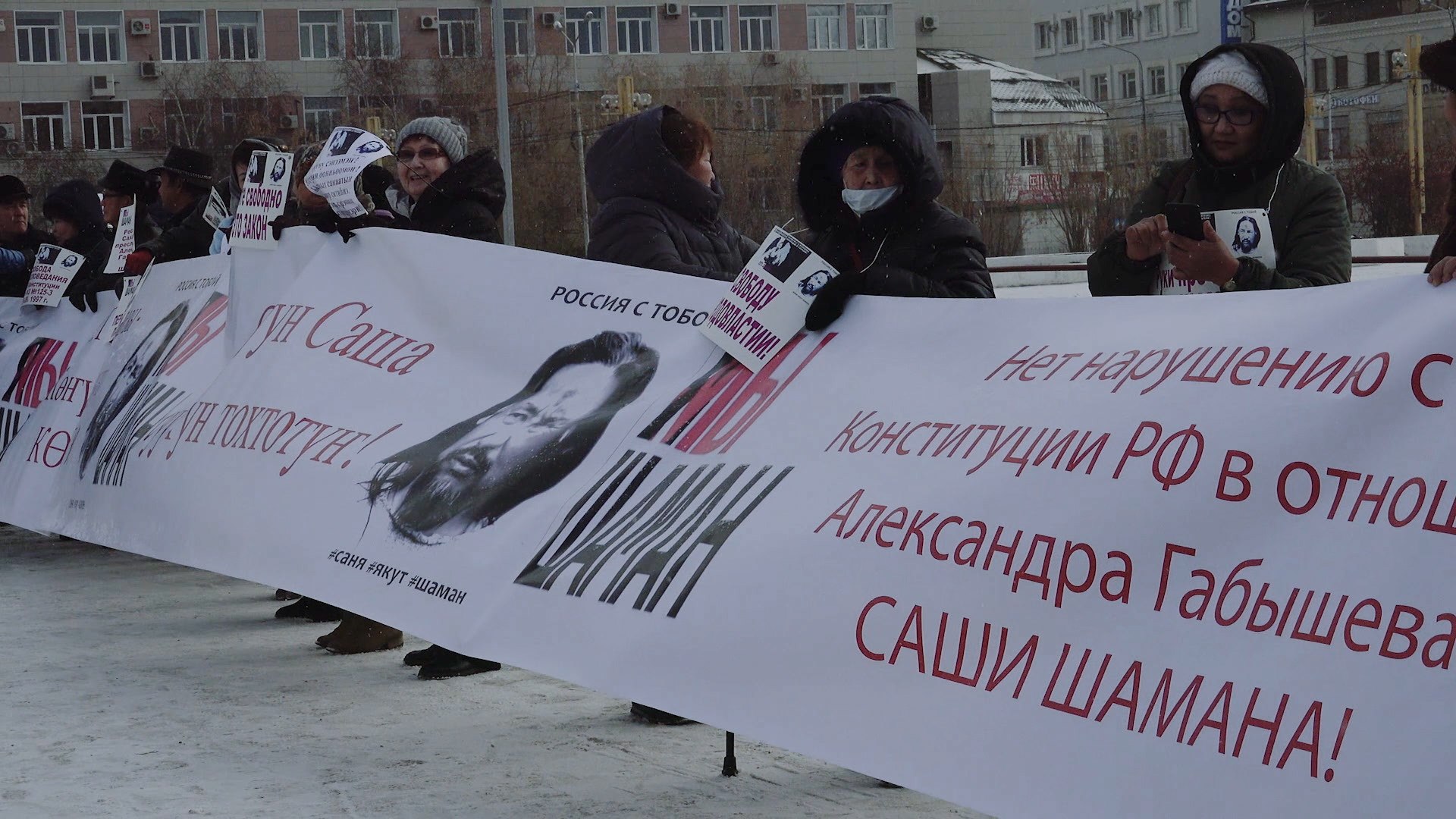
The opposition saw in him a fighter against the regime. Already a week after his arrest, at a Moscow rally against political repression, Alexei Navalny spoke about Gabyshev, along with other political prisoners. It was surprising how quickly the figure of the shaman gained fame. In just a couple of months, local Siberian history received a national dimension. Obviously, something in Russian society, which has been under Putin's rule for twenty years, resonated with the ideas of the shaman who announced that he would expel the president from the Kremlin.
In those days, the writer and politician Eduard Limonov wrote: “Shaman Gabyshev has a spiritual relationship with Rasputin, you noticed that he is a phenomenon of the same field. Mystical phenomenon. This means that the people’s soul has reached such a point that it is sprouting such sprouts. We haven’t had a Rasputin for a hundred years, but now they’re appearing.” A skeptic and pessimist, however, could well say that the soul of the people is not so much mystical as childlike, with an invincible faith in the Russian maybe and miracle. But few doubted that if Gabyshev had not been stopped, he would have reached Moscow.
For me, trying to understand who Gabyshev is was an incredible experience of immersing myself in the Russian collective unconscious. The more closely I studied the history of the shaman, the more clearly I saw how the supernatural and the ordinary, the funny and the tragic, grassroots protest and local beliefs, big politics and psychiatry are intertwined in it. It turned out that the concepts that I used to operate with when thinking about Russia do not work in this case, they are useless.
– I liked the unexpected analogy that you draw between Werner Herzog’s campaign from Munich to Paris and the shaman’s campaign to Moscow. I thought that the shaman’s campaign was in some sense similar to the return of Solzhenitsyn, who moved across all of Russia from east to west. True, by train, but it was the same mystical procedure. But the comparison with Herzog did not occur to me.
The belief that monotonous movement can change something unites Gabyshev and Werner Herzog
– Werner Herzog is not the only parallel here. There is also the story of Mahatma Gandhi, and there is another parallel that is often remembered - the story of Forrest Gump. Herzog walked for a reason, he walked with a specific purpose, and his goal was mystical. By walking from Munich to Paris, he wanted to save Lotte Eisner from death. This is such a famous figure of German cinema, who lived in Paris, and she was dying. He believed that with this walk he could save her. Ultimately, this is what happened. His personal personal magic worked in this case. It is this belief that something can be changed with monotonous, heavy, tiring movement that unites Gabyshev and Werner Herzog.
– And there is another cinematic analogy that you mention. This is David Lynch's film "The Straight Story".
- Yes. In general, it seems to me that this is such an eternal plot. The plot of a journey, the plot of movement, when you need to get from point A to point B, and something changes at the same time. In many cultures this plot plays a big role. You can find a lot of ancient parallels, medieval, and whatever. The plot of the road is eternal.
– The Journey of Odysseus, at least.
- Yes. That’s why I tried to make the book in the form of a travelogue. This is a book of travel, a book of movement, even when this movement and this journey are not carried out by the will of the hero himself.
– Another interesting topic is why the Kremlin took seriously this seemingly frivolous campaign of people who do not have any weapons and who have few people behind them. This is still not Navalny, this is not a political party, this is not Prigozhin’s squad, just a few people with a cart walking along the road. You write that you are skeptical about rumors that Putin consulted with shamans and believes in their occult power. But at the same time you say that it seems that the Kremlin really took the occult threat seriously. What happened?
If the authorities were interested in all this occultism, then this is something like the fashion that was at court several years ago
– It’s a difficult question. The problem is that we don’t know what’s going on there, because the entire system of power in Russia is very closed. We can only guess and judge by some indirect signs. We cannot say how they decided to arrest him and subject him to all these repressions. Who made the decision - Putin, not Putin, some people from the administration, some FSB officials or the Buryat authorities. We don't know for sure and may never know. And I have the impression (again, judging by indirect evidence) that if the authorities were interested in all this occultism and shamanism, then this is something like the fashion that was at court several years ago. It seems like people talk about it less now. Apparently because Shoigu went into the shadows. There is no definite answer, but it seems that fashion seems to have become smaller. Again, this story with Zygar’s column in Der Spiegel. He writes that there was allegedly a rumor in Moscow that Putin went to Mongolia and consulted with shamans whether he should launch a nuclear strike or not. And it was as if the shamans had given the go-ahead. But how long has it been? More than a year for sure. And everyone has already forgotten about this nuclear strike. The topic is such that it is very easy to speculate on it in different directions - magicians, sorcerers, wizards. You can play with this very easily, but as far as power is concerned, we have no documents, nothing. Therefore, it is very difficult to judge this.
“Judging by the fact that Gabyshev is still not free, the order was given from the very top. But your book ends on, shall we say, a moderately optimistic note. Please tell me what condition he is in now? And is there any hope that he will be released?
– A few months ago he was transferred from the Ussuri mental hospital to the Yakut one. As far as I can judge, in Yakut conditions the detention is worse, but for him this is the first step towards freedom, because formally this regime of detention has been changed to a more weakened one. He himself said not so long ago that he hoped that he might be free in the summer. Let's hope. And so he has been in this condition for about five years. Over the years, he was in a special type clinic in Novosibirsk. From there he was transferred to the Primorsky Territory, where he spent most of his imprisonment. And now he has returned to Yakutsk.
– You compare his situation with the punitive psychiatry of Soviet times, quoting Bukovsky. It seems that little has changed, because they use the same brutal drugs, like haloperidol. Such medications can break anyone. And if you don’t break it, it will greatly harm your psyche.
“ From what his relatives say, those who are in contact with him, I have the impression that, fortunately, this treatment did not mutilate him. Naturally, after so many years of all this torment, this probably somehow affected his internal state and his psyche.
– The main thing is that the person who ends up in prison or in a mental hospital is not forgotten. Does Gabyshev need help?
– Viktor Egorov (“Father Frost”) is organizing help for him. People send money regularly. This project is called "Good Piggy Bank". He collects money for food and household supplies for Alexander. They seem to be coping, everything is fine. He is now in Yakutsk, and now communication has become a little easier. As they say, walls help too. As far as I can tell, he does not have the feeling that he is forgotten and no one needs him.
The magical journey is interrupted. Book about the shaman Gabyshev