
Translated material
Kill the victim. Evgeniy Dobrenko – about the economics of victimization
The tumultuous start to 2026 has proven to be nontrivial in at least two ways. In one case, the Europeans were the victims, in the other - the judges.
For the first time in decades, Europe finally felt like a victim. A deceived victim of an abuser who promised to protect her forever, but instead suddenly demanded a “piece of ice” from her and even threatened to take it away by force. Only then did Europeans (regardless of their political views) finally feel defenseless in the face of betrayal, threats and intimidation. This is a feeling firmly forgotten in Europe. After all, the West has long been accustomed (it has accustomed itself and allowed everyone around to do this) to feel like a rapist. And not just a villain, but a historical abuser, guilty before the whole world of all its troubles - in the poverty and wars of Africa, in the exploitation and juntas of Latin America, in the humiliation of the great civilizations of China and India, in the destruction of natural habitats and plunder of resources, in the destruction of indigenous peoples and the slave trade... In a word, in the endless list of atrocities with which the freedom-loving peoples of his former colonies came to him, to which they once The Europeans themselves came just as they are now, the pogromists of the “Russian world” from the East and the defenders from across the “big, beautiful ocean” came from the West for pieces of land.
Suddenly the world of moral superiority in which Europe lived so comfortably, the world it had built under the banner of American progressivism, the world in which Europeans reveled in their suicidal generosity, collapsed and turned out to be a very uncomfortable place for those who succumbed to decades of corrupting self-flagellation, who, in the frenzy of self-exposure in the name of empty multicultural chimeras and pacifist fantasies, destroyed their own history and culture, and in their learned helplessness I forgot how to defend myself, my values and my freedom. This is how people usually end up who have allowed unscrupulous and self-interested bigots to sit on their necks.
And here the “second” awaits us - the Epstein files, which revealed the moral poverty and depth of the fall of the “world elites”. In the first case, Europeans faced monstrous cynicism. In the second - with the same incredible scale of hypocrisy (as someone bitterly joked: “And these people forbid us to smoke!”). In reality, cynicism and hypocrisy are two sides of the same coin. Only in the first case the essence and form coincide, but in the second they do not. That's why the second case is much more difficult to catch. People tend to ignore hypocrisy. Especially not to notice it in those whom they designated as victims - those whom they accepted into their home, saved from death and poverty, warmed and fed.
Few people in world literature have explained more deeply the psychology and world of the victim than Dostoevsky. He showed that the “little man” is worthy of more than just compassion. It contains all the prerequisites for degradation into an “underground man.” In fact, the gallery of “little people” created by Russian literature, which began with “The Station Agent” and “The Overcoat”, ended with “The Little Demon”. From Samson Vyrin and Akaki Akakievich to Peredonov - this is the story of the maturity of Russian realism. Dostoevsky’s story “The Village of Stepanchikovo and Its Inhabitants” became a turning point on this path. Dostoevsky created the image of the Russian Tartuffe, but his Foma Fomich Opiskin is much more complex than Molière’s bigot. Tartuffe is a classic liar who, through manipulation, ingratiates himself into the trust of the rich Orgon and takes over his entire fortune. Apart from the blinded Orgon, no one is “fascinated” by him. Foma Fomich's motives are completely different. This is a man traumatized by humiliation and literally gone crazy with self-affirmation. His goal is moral power over the house of Colonel Rostanev. He subjugates almost everyone to his influence - the colonel himself, his half-crazed mother, the cliquey hangers-on... He is not even interested in money. But only moral power over others.
Dostoevsky understood the world of the “humiliated and insulted” better than many. Having realized his insignificance, having experienced the loss of dignity, a humiliated person cherishes his grievances and humiliations, taking out all the injustices on those around him - most often not on the offenders, but precisely on those who sympathize. Opiskin creates an atmosphere of real moral terror in Rostanev's house. A hanger-on, he not only scolds everything and everyone, but even reproaches the owner of the house with his own kindness, throwing unfair accusations in his face and making him feel ashamed of the good that he did and does to him: “I am suffocating from your bread. Your feather beds are crushing me. Your sweets were cayenne pepper for me.” As another hero of the story will say about him, “this, I’ll tell you, is such a sour mess, such a tearful weakling, and all this with the most unlimited pride!” Or, in the words of the narrator, “a man of such pride that he cannot contain himself!” The narrator will formulate the main idea: “The low soul, coming out from under oppression, oppresses itself.”
The feeling of victimization, Dostoevsky tells us, gives birth to a scoundrel who poisons everything around with the poison of resentment.
The basis of Opiskin’s tyranny lies in the fact that he was a victim and emphasizes this in every possible way. Before becoming a hanger-on in the colonel's house, he was a jester. “Perhaps,” argues one of the heroes, “this is a saddened nature, broken by suffering, so to speak, taking revenge on all of humanity. I heard that he used to be something of a jester: maybe this humiliated, insulted, defeated him?.. You understand: a noble man... consciousness... and here is the role of the jester! weak-willed people, easily inspired and feeling “guilty” of Opiskin’s insults, obeyed. This is, first of all, the owner of the house: “All the oddities of Thomas, all his ignoble antics, his uncle immediately attributed him to his previous sufferings, his humiliation, his embitterment... he immediately decided in his tender and noble soul that it was impossible to ask the sufferer like an ordinary person; that not only must one forgive him, but, moreover, one must heal his wounds with meekness, restore him, reconcile him with humanity. Having set this goal for himself, he became extremely inflamed and completely lost the ability to even notice that his new friend was a voluptuous, capricious creature, an egoist, a lazy person, a couch potato - and nothing more.”
This Manilovism costs dearly to the owner of the house and all his residents, whom Opiskin tyrannizes and swaggers over. And since almost all the “inhabitants of the village of Stepanchikova” were captured by the charms of Foma Fomich, the narrator himself asks a rhetorical question: “Now imagine what can become of Foma, who has been oppressed and downtrodden all his life, and even, perhaps, actually beaten, of Foma, secretly voluptuous and proud, of Foma, a distressed writer, of Foma, a buffoon of daily bread, from Thomas in the soul of a despot, despite all the previous insignificance and powerlessness, from Thomas the braggart, and with luck the impudent one, from this Thomas, who suddenly fell into honor and glory, cherished and praised thanks to an idiot patron and a seduced, willing patron, into whose house he finally ended up after long wanderings?
It was difficult for a person of the 19th century to imagine this. But for people who lived through the twentieth century - communism, fascism, Nazism and other forms of ochlocracy and populism - it is much easier to do this. Thomas is a victim. But the feeling of victimization, Dostoevsky tells us, gives birth to a scoundrel who poisons everything around with the poison of ressentiment. Here is this necessarily extensive quote:
“Imagine a little man, the most insignificant, the most cowardly, a miscarriage from society, no one needs, completely useless, completely disgusting, but immensely proud and, in addition, not gifted with anything that could in any way justify his painfully irritated pride. I warn you in advance: Foma Fomich is the personification of the most boundless pride, but at the same time special pride, namely: what happens in the most complete insignificance, and, as usually happens in such a case, the pride of the wounded, suppressed by serious previous failures, festering for a long time and since then squeezing out envy and poison at every meeting, at every other person's success. Needless to say, all this is seasoned with the most ugly resentment, the most crazy suspiciousness. Perhaps, they will ask: where does such pride come from? How does it arise, in such complete insignificance, in such pitiful people, who, already by their social position, are obliged to know their place? Who knows, maybe there are exceptions to which my hero belongs. He really is an exception to the rule, which will be explained later. However, let me ask: are you sure that those who are already completely. have humbled themselves and consider it an honor and happiness to be your jesters, hangers-on and hangers-on - are you sure that they have already completely abandoned all self-love? of holy fools, pride not only does not go away from humiliation, but is even more inflamed by precisely this same humiliation, from foolishness and buffoonery, from groveling and eternally forced subordination and impersonality. Who knows, maybe this ugly growing pride is only a false, initially perverted sense of self-esteem, insulted for the first time, perhaps in childhood by oppression, poverty, dirt, spat upon, maybe. perhaps in the person of the parents of the future wanderer, before his own eyes?”
Everything is done in order not to anger the victim, who has already sat down at your table or gone to bed
What Dostoevsky describes here is the development of sacrifice into the “new ethics”, the arrogance with which the new progressive morality treats the world, in a Bolshevik way, seeing it as an object of “reforging”. The main thing here is pompous moralizing and a painful fixation on “offenses” - anything can offend: he said the wrong thing, looked at him the wrong way, touched the wrong thing, joked about the wrong thing (jokes are a problem here in general!). Incredible sensitivity, turning the simplest forms of communication - from conversation at work to friendly conversation - into a whole ceremony, surrounded by many conventions and taboos. Everything is done in order to please and, God forbid, not anger the victim who has already sat down at your table or gone to bed. She doesn’t like everything about you, like Foma Fomich - not the morals of your home, not the history of your family, not your way of life, not even the food they feed him here... As if the victim did you a favor by sitting on your neck. The debtor declared himself a creditor, interpreting any indignation as a manifestation of racism, misogyny, and homophobia. This tiresome moral terror is based on the master's instilled sense of guilt for unfair privileges and on the prude's cherished victim status. Those who do not want to submit to the whims of an unrestrained victim and feelings of guilt turn to those who trade in fear. The guilt merchants (the current left parties, captured by the radical leftists) and the fear merchants (the political right flank, filled by far-right forces) become masters of life. The world has turned into the global village of Stepanchikovo. But this tyranny of the victim not only condemns us all to painful torment, but is also the result of a conscious choice of social role.
And in fact, a victim is not so much a person who has suffered from violence, betrayal, deception, envy, misfortune, failure, circumstances. Each of us has been in this role more than once: living life is not a field to cross. Being a victim is a life philosophy that directly follows from a certain life attitude. There are many people who see everything in black. From them we constantly hear that everything around is bad and is moving from bad to worse, that all people (politicians, doctors, teachers) are corrupt and unscrupulous, the wife/husband and children are ungrateful, relatives only look into your pocket, the neighbors are unfriendly, there are only envious people at work, that everything is arranged in such a way as to annoy you, that the food in the restaurant is tasteless and the coffee is cold, that health is in jeopardy, that the tram a stop far from home, that the weather is always bad, that the water in the sea is always cold... Most of what these people say is incessant complaints about everything and everyone around them. And they themselves are victims of circumstances, the bad character of others, other people’s decisions, bad genetics, evil fate, finally. This endless self-pity, the need to find someone to blame, the constant need to feel like a victim is nothing more than an attempt to shift the blame onto others for everything that makes them unhappy.
In fact, this life attitude makes them unhappy. The most terrible thing about it is not even that a person dooms himself to miserability, but that it paralyzes the will. If everyone around you is to blame, starting with those around you and ending with fate, then nothing can be corrected. Self-victimization is the basis of resentment, the first step to hostility, from which aggression grows. All wars have always been accompanied by laments about the intrigues that the enemies are building in order to annoy you. These are the unfortunate (offended by the enslaving Treaty of Versailles, betrayed by the plutocracies, victims of the Jewish conspiracy) Germans of Hitler, the unfortunate (divided, betrayed by the elites, deceived by the insidious West) Russians of Putin, the unfortunate (robbed and used by everyone) America of Trump... Not to mention the rest of the world, inhabited by unfortunate Arabs, Africans, Latin Americans, Indians, Chinese, not simply historically suffering from the insults inflicted on them by the arrogant West, but continuing to suffer from those historical pains.
In today's heavily left-leaning world, being a victim has become perhaps the most honorable and profitable thing
Undoubtedly, life is full of injustices. But there is nothing less constructive and nothing more self-destructive than wallowing in self-pity, blaming everyone around you for your own troubles. In part, this cultivation of self-pity serves as an excuse for the lack of empathy: what kind of sympathy, let alone complicity, can we talk about if I am a victim myself? Reveling in one's own misfortunes is a favorite pastime of people. This justifies passivity, an unwillingness to make an effort, to take risks, to take responsibility in order to change the situation, even when it comes to survival. Self-pity deprives a person of will and control over his own life. The worst thing that can happen to a person is realizing that he is a victim. A victim is always an object of pity, alms, someone’s mercy. A sacrifice is always a loss of subjectivity. The man is weak and lazy. To be a victim for him means not only the removal of responsibility from oneself, but also the refusal of action, effort and the risk of change (in anticipation of justice, someone else's efforts, a change in circumstances). Nothing destroys life more than a person feeling like a victim, wallowing in self-pity and hatred of the world that is responsible for his troubles.
And societies are like people. In today's heavily left-leaning world, being a victim has become perhaps the most honorable and profitable thing. There is a real battle for victim status, to be declared victims of racism and discrimination, homophobia and misogyny, genocide or, at worst, political persecution. And not only in practice, but also in theory. The total negativism of self-proclaimed victims has found a mirror image in leftist movements. It is no coincidence that all leftist theories are strong not in their prospective vision, not in their positive program (as a rule, they are untenable and utopian), but in their criticism: criticism of Marx’s political economy, critical theory of the Frankfurt School, criticism of ideology... Criticism, criticism, criticism... These are theories of victimization, rationalization of grievances, justification of resentment, lamentations put in the language of revelations and concepts. All postcolonial theory was born out of this. In fact, gender, postcolonial and other critical theories are an entire system of justification for victimization that not only produces countless oppressed groups immersed in their own grievances, but gives them a language and argumentation.
How and why people are offended not even by actions, but by certain words, questions, intonation, gestures, why you can’t wear, eat, say this and that, so as not to offend the feelings of some, others, others... At one time, I attended a whole course on “microaggressions”, mandatory for all university employees. This is when you commit an "act of aggression" against another (i.e. victimize them) without even knowing it! Society is divided into endless warring groups of victims (offended) on many grounds - gender and race, ethnicity and religion, age and health, etc. These people (without even putting aside the posters "From the River to the Sea...") tell Jews what anti-Semitism is, and what they should and should not be offended by, African Americans are told about racism, women - about misogyny, gays - about homophobia, older people - about ageism... About what (almost everything) and why those should be offended (almost always) by the existing social order, simply because it was created by white cisgender men. There is a whole science about how to be a victim, how to feel like a victim, how to constantly remain offended by everyone around you.
This political program may seem devoid of logic. And in fact, on the one hand, the most radical internationalism (globalism, cosmopolitanism) is being affirmed. On the other hand, identity politics is advancing, which inflames nationalism, feminism and other “isms” hostile to each other. But there is no contradiction here: this is how the illusion of the so-called “moral politics” is created, when mass victimization through the creation of many “oppressed” groups (in fact, mainstream discourse today is reduced to discussing their grievances) and the division of society (making it an ideal object for manipulation - divide et impera) are presented as emancipatory actions.
Therefore, although these theories are presented as academic, in fact, these are purely political theories. Their emancipatory goals are explicitly political, and they boil down to the denial/abolition of Western domination. And since these goals are decisive in them, these theories must be qualified accordingly: in their political content they are anti-bourgeois, anti-capitalist, anti-elite only insofar as they are anti-Western. In other words, all their other (anti)characteristics are a consequence of this anti-Western content. Due to a misunderstanding, they are called “Western”, but these theories are such only in the sense that they are adapted to Western postmodernist and Marxist emancipatory discourse. However, if you do not trivialize Marxism, reducing it to politically relevant slogans, these theories (along with gender, feminist and other critical theories) have become dominant in modern Western society (essentially they have become official - the language spoken by everything - from the mass media to celebrities, from Harvard to Hollywood), because they successfully displace the Marxist tradition based on the economic, class paradigm, racial, ethnic, gender, etc. agenda, which corresponds to the economic and ultimately political goals of dominant neoliberalism, as I already wrote about here .
The conditions for this total softening of European consciousness, which led to the current sad state of paralysis of political will and inability to basic self-defense, did not arise yesterday. And not even as a result of the Second World War and the subsequent deliberate actions of the United States to subjugate Europe and the formation of European helplessness as a guarantee of maintaining peace on the continent. The crisis began much earlier - with the decline of empires and the formation of nation states. Their very existence presupposes a neighborhood of large and small, strong and weak countries, which is impossible without renunciation or, at least, without limitation of violence. Nation states and empires cannot coexist: war is the modus vivendi of empires. The long period of relative peace after the era of the Napoleonic wars led to a massive humanization of European consciousness, a “softening of morals” in the social sphere.
The catastrophe of the First World War undermined faith in the “cleansing”, “refreshing” power of war. Therefore, when World War II broke out after a lost peace, Europe simply fell under the imperial rapist. Thanks to Churchill's leadership, only Britain, which in many ways still retained its imperial fighting spirit, and the last remaining European empire, Stalin's Soviet Union, were able to resist. Nation states found themselves defenseless against the empire. Therefore, when today they ask: how can Europe, completely disintegrated in pacifist delirium, survive in conditions when up to 80% of its inhabitants not only do not want to defend their own countries, but are ready to live under occupation, the answer is simple: the same as it was during the Nazi occupation. Coming out of the war, Europe began to integrate economically, but not politically, and certainly not militarily. Nationalism is already too weak to mobilize the population, and civilizational (European) patriotism is still too weak for it. There remains hope for common sense and basic instincts, such as the instinct of self-preservation.
A by-product of World War II was a sense of guilt and the associated repentance: since Nazism was defeated, all its victims were declared winners (including the Germans themselves, who, after all, were also victims of the Nazi regime). So all Europeans turned into victims. The feeling of being a victim should have mitigated the feeling of guilt, since the target victims of Nazism were not the Germans, who almost universally supported Nazism, and not the French, Norwegians or Poles, who collaborated with the occupation authorities and were directly responsible for the Holocaust, but, firstly, Jews and other “Untermenschen”, and secondly, resisters who constituted a heroic minority in their countries. There is no better way to get rid of guilt than to move yourself from the status of an executioner to the status of a victim. And here a post-imperial reversion occurred.
With the collapse of the world colonial system, billions of people entered the historical arena, whose political subjectivity was almost completely exhausted by their colonial past - these peoples simply had no other history. Therefore, the first step towards their political subjectivity was the status of victims. Almost the only sphere where globalization took place was the sphere of political symbolization, where a real global market of victimization arose. Like any market, this one gave rise to trade, which in turn gave rise to speculation. Often those who declared themselves victims were not even those who experienced the real horrors of colonialism, slavery, genocide, discrimination, and not even their children or grandchildren, but distant ancestors - simply by virtue of the color of their skin or the shape of their eyes. These people and their left-wing guardians have done everything to cement the status of victims forever, just as fifth-generation Palestinian refugees cannot naturalize in countries of residence where those born there have already died. But victim status not only confers a lifetime of moral annuity, it also atrophies the skills of social adaptation, political responsibility and economic survival for people who have spent decades on welfare or enjoying the privileges of positive discrimination.
Let me give just one, but glaring example: when the USAID agency was closed exactly a year ago, there was a lot of talk about the millions of lives saved thanks to this agency. What, by and large, did USAID do? About the same thing that each of us does when we help loved ones, friends, relatives, or just strangers. Have you encountered black ingratitude in response to this? I have never seen a person who would say: no. Everyone knows the nice quality of people to not only be ungrateful, but to believe that everyone is obliged to them, that everyone except them is to blame for the fact that they find themselves in a difficult situation. And the more you do for them, the more they hate and despise you, believing that you are humiliating them with your help, demonstrating your superiority (hello, Foma Fomich!). It is unbearable for a person to think that he owes something to someone, that someone is rich and generous enough to help him. Now imagine all this institutionalized at the state level. This was USIAD, which annually distributed tens of billions of American taxpayers' money around the world, buying his love. But it didn't succeed.
Today they write about the dire consequences of its closure for entire continents. It's especially terrible when it comes to healthcare. For example, assistance in the fight against AIDS in Africa, it turns out, was financed almost entirely from these sources. This assistance has made a huge difference and saved millions of lives. But here the question arises: if this practice has been around for many years (and it turns out that it has been going on for decades!), then why didn’t these countries themselves bother with the production or purchase of drugs, since their situation with AIDS is dramatic? They will answer me that there is extreme poverty in these countries, and people live on almost a dollar a day. But these countries, generally speaking, are not poor at all. Namibia, Tanzania, etc. are full of minerals, rare metals, gems and resources. This is enough for the governments of some countries to finance military groups and start civil wars in other countries. In other words, there is enough money to maintain mercenary armies fighting in neighboring countries, and AIDS patients should be taken care of... by American taxpayers.
It would be understandable if these countries had US-friendly regimes that support American interests or at least are not hostile to them. But nothing like that. These regimes do not consider themselves beholden to anyone. They unanimously criticize European racism, American imperialism, support Russia and stigmatize Israel. They want to convince us that helping them is not the good will of American taxpayers, but a kind of “duty.” Only a racist would doubt this. But here a completely different story begins: if “black lives matter” really matters to you, do not start wars with your neighbors, but start treating AIDS at home. It is clear that your overseas uncle will someday get tired of doing this for you.
Today they write that the United States has lost its “soft power” and now China is filling it all. I don't think China will fill anything. That's not what China is about. It is not about the sick and not about the victims. It's about money and interests. He invests in future profits. It doesn't promote values. He is buying assets. He is not interested in transgender people, illiteracy of girls and AIDS patients. But the USA (before Trump) was about values. But over many decades it has become clear that it does not work that way with those who consider themselves victims. Those for whom the West successfully promotes its values in the Third World, at the first opportunity, leave for the West and make careers there (in particular, promoting their own victimization). The global South itself has changed little, living in anti-Western sentiment and resentment. Where America was loved (and not unconditionally), USAID was not sent. And where they sent her, for the most part they did not love her and will not love her, if in 65 years they did not love her after hundreds of billions spent on “growth and development.” This is the sad result of real interaction with victims.
The identity of the victim is not created by the abuser, but by the sympathizer
But the status of victims had to be granted by someone. Sartre argued that the identity of a Jew creates an anti-Semite. Continuing this thought with an adjustment for empathy rather than hostility, we can say that the identity of the victim is created not by the abuser, but by the sympathizer. The difference between these identities is that they contain completely different projections and experiences. The projection and experience of the victim and the sympathizer never coincide (even if the sympathizer was once a victim himself and extrapolates his experience to it). The projections of the object and subject of sympathy/empathy cannot coincide, just as the projections of the object and subject of violence cannot coincide.
And here the perfect coincidence happened. Several crises overlapped at once. The crisis of the West is, first of all, the crisis of its foundation - Christianity, in the bosom of which the modern West arose and took place. The crisis and collapse of communism, which led to the fact that the left-wing adherents of the left parties began to look for applications of strength in their countries. Thus, the proletariat (which, from their point of view, was completely mired in economic demands) was replaced by new categories of “offended and offended” - oppressed groups, a whole hierarchy of minority victims. And the entire leftist agenda boiled down to the cultivating of these groups and the endless claims of these new victims to the rest of the population, to fanning their conflict in the hope of a “revolution of minorities”, which should replace the failed proletarian revolution.
Two circumstances contributed to the success of this unprecedented task of total victimization. The crisis of the far-left parties has led to their adherents moving into mainstream center-left parties and moving them sharply to the left, essentially turning the Democratic Party or the Labor Party under Corbyn into radical left parties, which have been abandoned by moderate supporters. This institutional support dramatically strengthened the position of the radical left. On the other hand, their narrative finally came closer to the largely forgotten, but so familiar Christian “Come to me, all you who suffer...”, which helped attract large masses of the population to the side of previously marginal left groups. This instrumentalization and politicization of victimization determined its wide popularity.
In this light, it is clear where multiculturalism came from and why the entire process of adaptation of huge masses of migrants in the West went so “wrong”. Today, this topic has become one of the dividing themes in modern Western societies, acquiring, as in today's America, a tragic character (although in the USA the multicultural experiment has not yet gone as far as in Europe). Meanwhile, open border advocates who repeat the mantra that America was created by immigrants and that modern Europe is the result of a mixture of tribes and races forget, or rather deliberately ignore, one key fact: in those days, or rather at all times until recent decades, there was no multiculturalism. Yes, immigrants arrived in the United States, but they ended up in a melting pot. Nobody was interested in diversity. What was needed were qualifications, effort, initiative, adaptation. This has always been the basis of the American success story. This is capitalism, baby.
Undoubtedly, in the current demographic situation, migration is inevitable, but it must stop disguising itself as politics and morality: the vast majority of migrants are not refugees, but ordinary economic migrants. Such migration must be regulated, based on economic needs, quotas and qualifications. Only then will migrants be able to adapt and turn into full-fledged citizens.
However, current proponents of mass immigration propose a program of non-adjustment. In essence, this is what multiculturalism comes down to - it is not the immigrants who must adapt, but the society itself. As a result, firstly, there is a sharp rejection of immigration in society, and secondly, immigrants lose incentives for economic prosperity, become dormant in their religious and ethnic communities, create parallel communities, live on social benefits in immigrant ghettos, fall into a vicious circle of rejection and resentment, and become radicalized. In fact, they are turning into eternal victims, patronized by left-wing well-wishers. Doesn't remind you of anything? The classic example is the Palestinians - victims who are the source of permanent war.
More recently, during the Gaza War, the world witnessed a coordinated campaign organized by the UN with the active support of radical leftist and human rights organizations and groups to rebrand Israel's actions as genocide of the Palestinians. This concept was promoted so aggressively and manipulatively, as if it were about some kind of important status, on which the future of peace in the Middle East depends. Genocide was declared by the UN literally at the end of the day, and in such a hurry that there was not even time to confirm information about the artificial famine allegedly organized by Israel in Gaza (at least, not a single figure was reported on how many people it claimed). As if the Palestinians lacked the aura of even greater sacrifice to realize their “legitimate aspirations.” They were declared victims almost eight decades ago. To serve their needs, half the UN budget is spent, entire UN divisions have been created, and many thousands of human rights defenders are working. Did it make them happier or bring the world any closer? On the contrary, the main victims of the modern world - the Palestinian Arabs - constitute the most radicalized, the most economically helpless, the most dependent on external assistance part of the population of the Middle East. As a result of this terrible war, the lost residents of Gaza should have been awarded at least symbolic compensation - the status of victims of the Jewish genocide, the legitimation of the old Arab narrative. And although Trump came along, secured the return of the hostages, and everything returned to normal, the very idea that the status of victims of genocide is a reward is a true indicator of how morally perverse the world we live in.
Israel has given up the role of victim, outside of which the West refuses to see and understand it
Genocide is the most important indicator of true victimhood. Its archetypal image in the twentieth century was the victims of the Holocaust - the Jews. Some attribute their post-war success in all areas to speculation on the tragedy of the Holocaust, for which Israel continues to be blamed. If this were true, in a world based on the cult of victims, Israel would have to become the main hero, not the main outcast. But the problem with Israel in the modern popular consciousness is (besides good old anti-Semitism, of course) that Israel is a direct challenge to the culture of victimization. This is the epitome of refusing to be a victim. And this is precisely what I see as the secret of this country’s success in dynamic democracy and culture, in technology and advanced medicine, in agriculture and creating conditions for economic prosperity, and the secret of hatred towards it. Israel defiantly refuses to act like a victim. And this was especially evident during the Six Day War and the latest military campaign against Hamas, Hezbollah, Syria, Yemen and Iran. Israel has given up the role of victim, outside of which the West refuses to see and understand it. Its very existence is a challenge to the culture of victimization. The West continues to look at the world through the prism of victims. But Israel definitely shouldn’t rely on the pity of the West; as events in the world after October 7 have shown, the pity of the West is selective. Equals are respected, often hated, and often feared. But they never regret it. They feel sorry for the victims.
During the era of the birth of the Internet and the beginning of the communication revolution in the 1990s, the concept of a “global village” could only rival that of the “end of history.” Coined by Marshall McLuhan in the 1960s to describe the post-Guttenberg world, when, as a result of the digital revolution and instantaneous information transfer, the Earth was “shrinked” to the size of a “village”, the time of implosion had come, as McLuhan metaphorically described the process. But what could this explosion bring to the world? There is no need to look for historical analogies - after all, today the world is experiencing the same explosion. As Canada's prime minister so aptly put it at the recent Davos forum, American leadership has proven to be a "pleasant fiction" and the world is now "in the midst of a rapture, not a transition."
An explosion is a sharp breakdown. Sergei Medvedev even called the past year the Year of the Great Turnaround. We are talking about a year since Trump's re-election. Summing up the results led to a clear conclusion: during this year the worst has awakened in people, the rule of the strong has returned, nationalism and imperialism have been revived... But let us ask ourselves: what is new here? It’s just that the world we’ve lived in for the past decades has been more of an anomaly. All fairy tales end someday. This one is over too. The world returned to its usual unsightly state. Yes, it could still exist in its previous mode, but progressive fanatics helped it - they finally pushed it into the archaic, which had long surrounded it on all sides.
The nature of people has not changed. Why should the world change? Trump, Putin or Xi are an adequate reflection of the will of the majority of their countries, their response to the civilizational challenge. Has the advent of Trump really brought back the rule of the might? Yes, it triumphs everywhere beyond the golden billion - 7/8 of humanity obeys it! It triumphs within these societies and between states outside the West, from Africa and the Middle East to Latin America. Has imperialism returned with Trump? But the world never stopped living in it! And what, if not imperial construction, have Russia, China, and the Muslim world (Arabs, Türkiye, Iran) been constantly engaged in and are engaged in? Has caveman nationalism returned to the world? But the rest of the world has not even matured to nationalism - entire continents and civilizations are still in wild tribalism. How else could the “global village” turn into a complete hell for its inhabitants—the global village of Stepanchikov?
We address this question to those who were so eager for globalization, who invited all the flags to visit them and sang sweet serenades about cultural diversity, inclusion, multicultural enrichment... Isn’t that what you wanted? What else can a world drowning in violence, ignorance, prejudice, religious and ethnic intolerance enrich you with? This is how he “enriched” us. Previously, the only justification for limitless openness was the naive belief that diversity was the best cure for xenophobia, racial intolerance, nationalism, and anti-Semitism. But now we have learned that these nice qualities do not disappear anywhere with such diversity, that pity for victims in the world is selective, that, on the contrary, such ethnically and gender diverse crowds easily turn into multimillion-dollar anti-Semitic demonstrations around the world, radicalizing the already polarized political environment, destroying the very fabric of liberal society.
Let's return now to McLuhan. Implosion is the world returning to its original state. The same one he was in before he plunged into left-wing delirium. And the time has come to remember the basic truths, in essence. For example, that at the basis of European civilization lies not a pathetic ressentiment, hypocritically veiled under the “upholding of human rights”; not low envy, covered up by the sanctimonious “struggle for social justice”; not simple-minded self-deception that obscures harsh reality; not irresponsible hedonism camouflaged under the slobbering “sensitivity”, “empathy” and “new ethics”; not a destructive and fruitless culture of parasites, presented as “atonement for historical grievances,” but formulated at the origins of the New Age, “the final conclusion of earthly wisdom: Only he is worthy of life and freedom, Who goes to battle for them every day!” And the first step in this fight is to abandon the cult and culture of victimization and identification with the victim. Only loyalty to one's values, self-reliance, self-confidence and the will to action can revive a sense of political responsibility, the ability to self-defense, economic survival and social adaptation skills. But first you need to kill the victim in yourself.
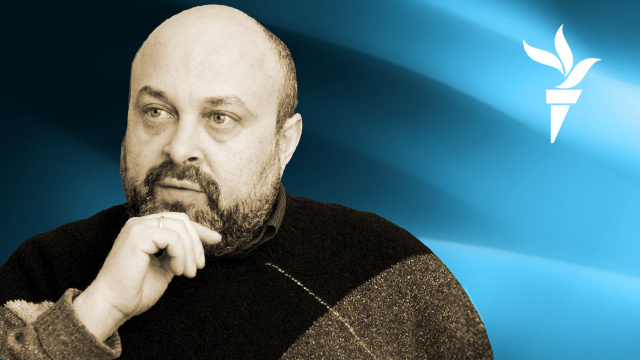
Evgeniy Dobrenko – philologist, cultural scientist, professor at the University of Venice
Opinions expressed in the "Author's Rights" section may not reflect the views of the editors.
Kill the victim. Evgeniy Dobrenko – about the economics of victimization