
Translated material
Genius, handsome, idiot
Leslie Nielsen is 100 years old. He starred in dozens of unsuccessful films. And yet he remained the most beloved comedy actor for so many
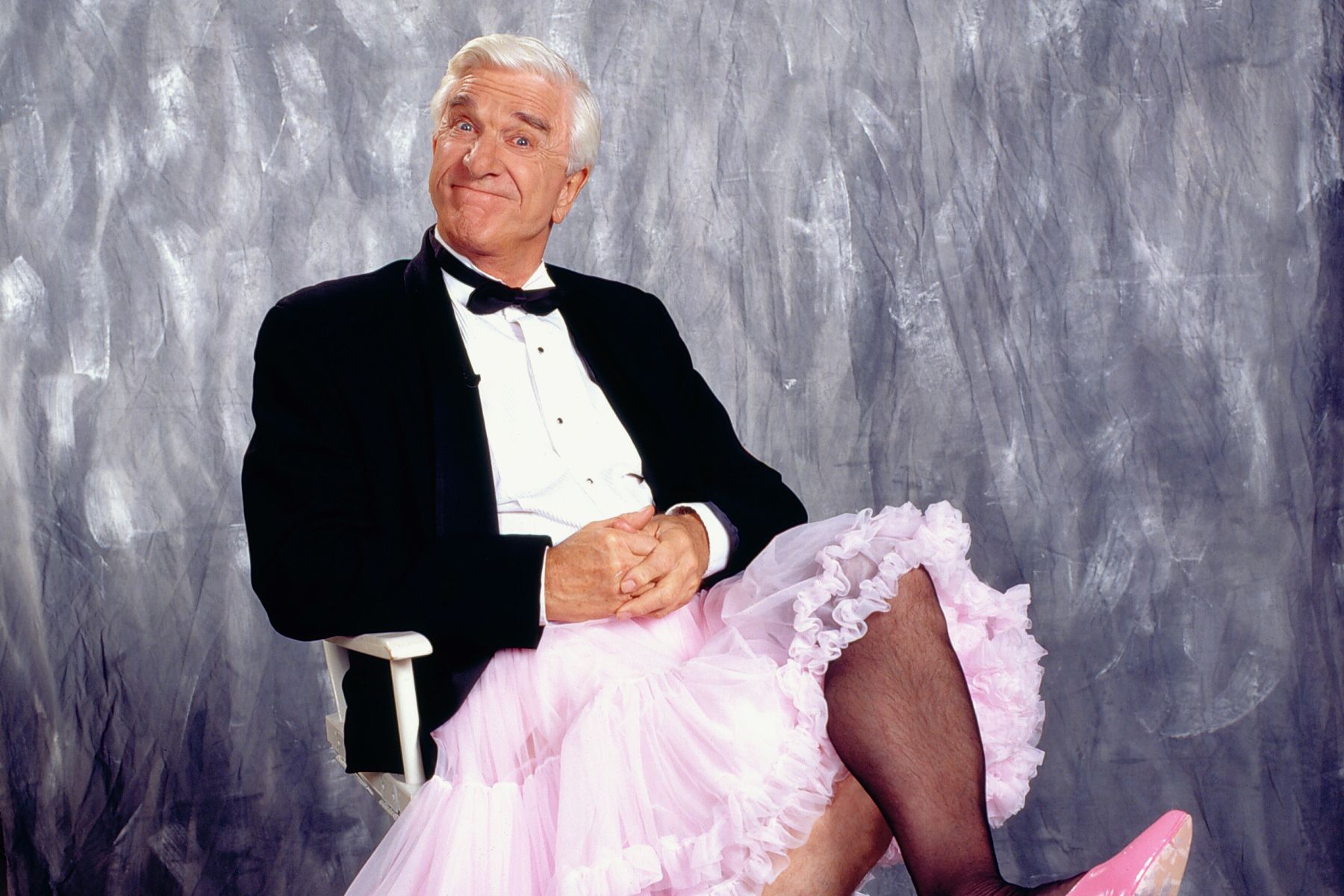
Leslie Nielsen was born on February 11, 1926, one of the funniest actors in the history of cinema, who became famous for his roles as extremely serious idiots. "Airplane!" and several parts of “The Naked Gun” with his participation are today considered comedy classics, despite (or perhaps because of) their absurdly simple humor. Nielsen’s business lives on - the new “Naked Gun” with Liam Neeson was recently released; his hero, the son of Frank Drebin, once played by Leslie, acts inspired by his great father. Why Nielsen is so beloved, although he played in many second-rate films, says film critic Anton Dolin.
To call Leslie Nielsen an outstanding actor would probably be an exaggeration, although many fans state without a second of doubt: “Genius.” There is no contradiction here. Over the course of a long career, he played hundreds of roles, mostly in casual TV series, and it was crystal clear to anyone: he was a strong professional, a conventionally attractive craftsman, not enough stars from the sky and not very suitable for leading roles. Until one day the world discovered in him the funniest comedian in America. He was 54 years old.
This may be the most amazing career in Hollywood history. A native of the Canadian outback, from a respectable family - his uncle Gene Hersholt, by the way, was an actor and starred in the great "Greed" by Erich von Stroheim, and his older brother Eric made a political career, rising to the rank of Minister of Defense of Canada - Leslie moved to New York in the 1940s, dreaming of becoming famous in the theater. However, his first earnings came from television, after moving to Los Angeles. Since the early 1950s, he has consistently starred in popular TV series, from Tales of Tomorrow and Alfred Hitchcock Presents to M.A.S.H. and Columbo.
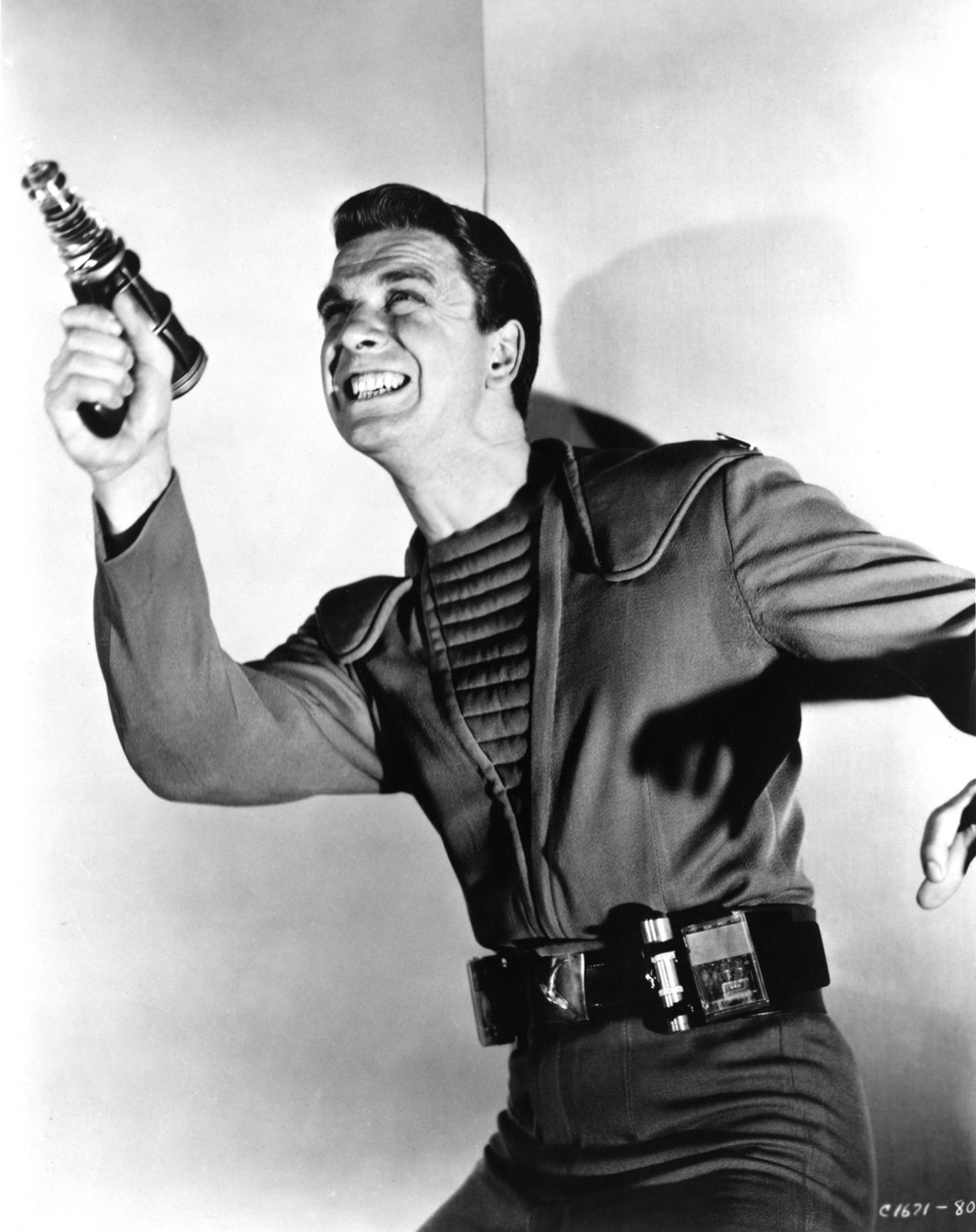
There were enough projects and roles, none of them were memorable enough to make Nielsen a star. The industry of that time was oversaturated with masculine handsome men (as well as feminine beauties), and he was always just one of many. The work in major film hits - Forbidden Planet , which became the standard of the science fiction genre in the mid-1950s, and the no less exemplary action blockbuster The Poseidon Adventure - did not change anything fundamentally.
A shocking change occurred in 1980. A trio of outstanding comedians - brothers David and Jerry Zucker and Jim Abrahams, also known by the acronym ZAZ, invited Nielsen to play in the parody film Airplane! It ridiculed the very canon of disaster films that was set by the dramatic “Airport” and, in fact, “The Poseidon Adventure.” Perhaps Nielsen’s participation in it was decisive (the directors considered many people for the role of Dr. Rumak, including the horror hero Christopher Lee - he later regretted that he chose to star in Spielberg at that time).
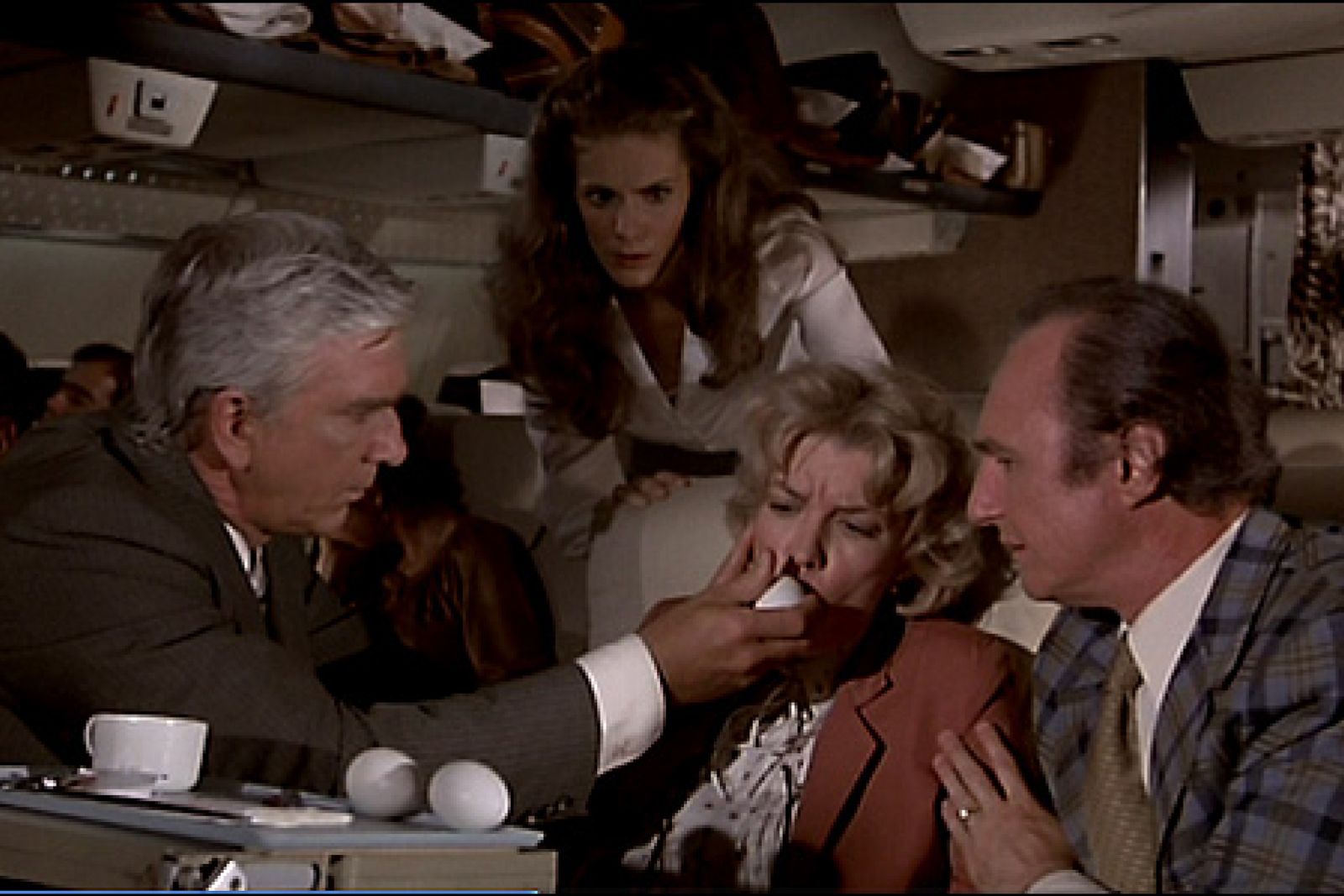
One way or another, the idea was to do without professional comedians, casting “serious” artists in the main roles, and this is how to create a unique comic effect. The plan worked brilliantly, “Airplane!” became a box office hit and has since been considered one of the funniest comedies of all time. Nielsen's contribution to this conquest is very significant, although formally Rumak is not the main character of the film. However, it was his dashing bearing and optimistic equanimity in the face of monstrous disasters that instantly won the audience’s love.
The partnership that developed was not just successful, but fateful. In the short-lived series of the same ZAZ “Police Squad!” (1982), and then in three full-length “Naked Guns” (1988, 1991 and 1994) Nielsen played Lieutenant Frank Drebin. If his Rumak was a successful background mask, stealing the audience's attention from a pair of protagonists, then the radiant idiot Drebin is the undeniable center of attention. ZAZ and Nielsen created an immortal image, both a mockery and a eulogy to the American policeman.
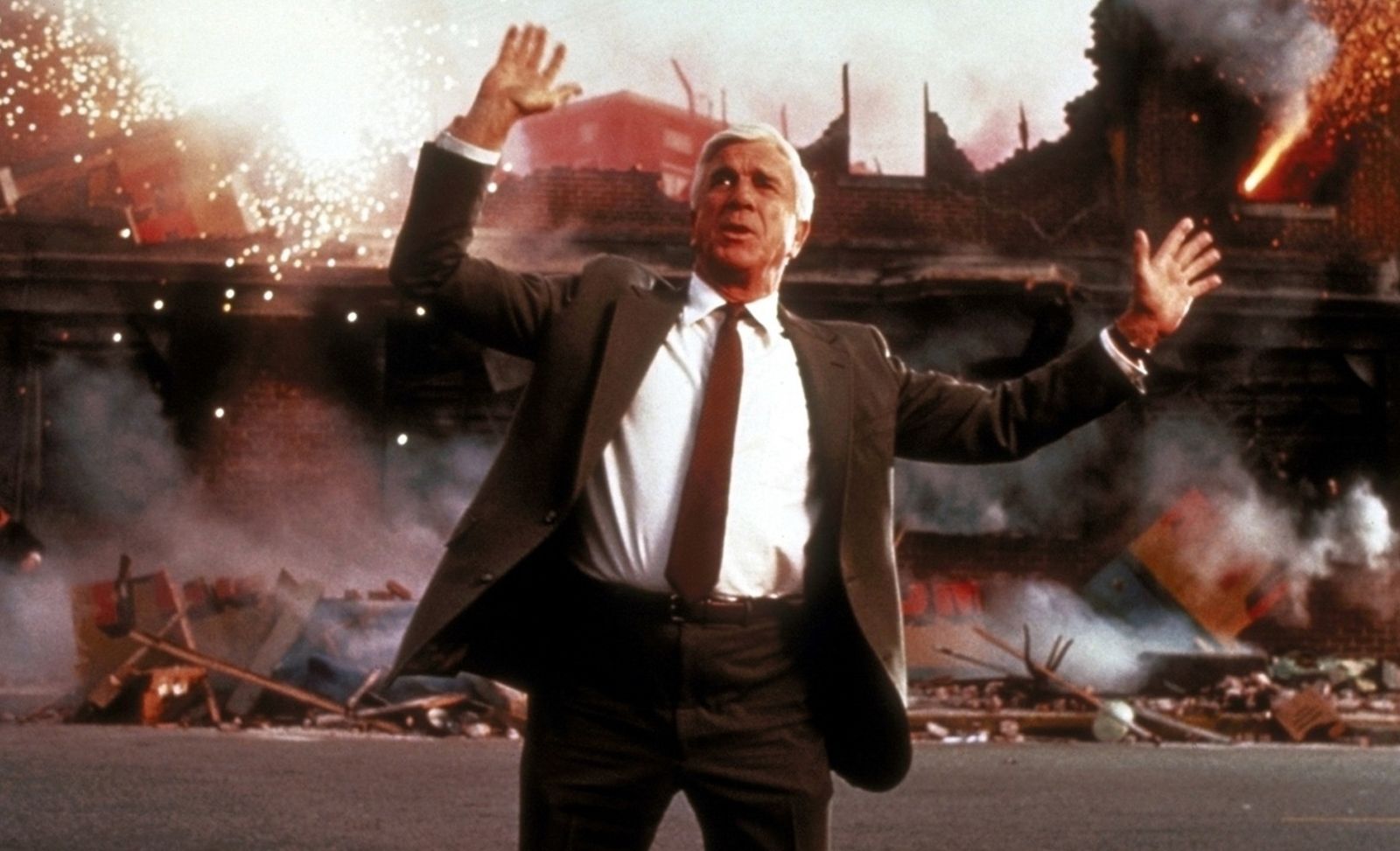
This monumental and charmingly invincible cretin is worthy of comparison with the French Jourdain , the Spanish Don Quixote, the German Simplicissimus or the Czech Schweik. This role alone would be enough to forever inscribe Nielsen in the annals of Hollywood. However, Drebin has become something more - part of world folklore. This is evidenced by imitations (for example, the puppet "Team America" by Trey Parker and Matt Stone), and the recent sequel-spin-off of "The Naked Gun" , where Drebin's son is played by Liam Neeson - it seems, invited to the role solely because of the similarity of the first and last name.
After "Airplane!" Nielsen finally found fame. The handsome, handsome, gray-haired man discovered an amazing gift in himself: the more diligently his characters imitated archetypal American heroes (not even from television series, but literally from commercials), the funnier they looked from the outside. Of course, numerous producers and directors took advantage of this, including incomparably less talented ones than ZAZ. Not very bright parodies of one-day science fiction ("Naked Space", "The Sixth Element"), horror films ("Relapse", the "Scary Movie" franchise), spy action films ("The Indestructible Spy"), thrillers ("Guilty Without Guilt") and comic book films ("Superhero Movie") came out one after another.
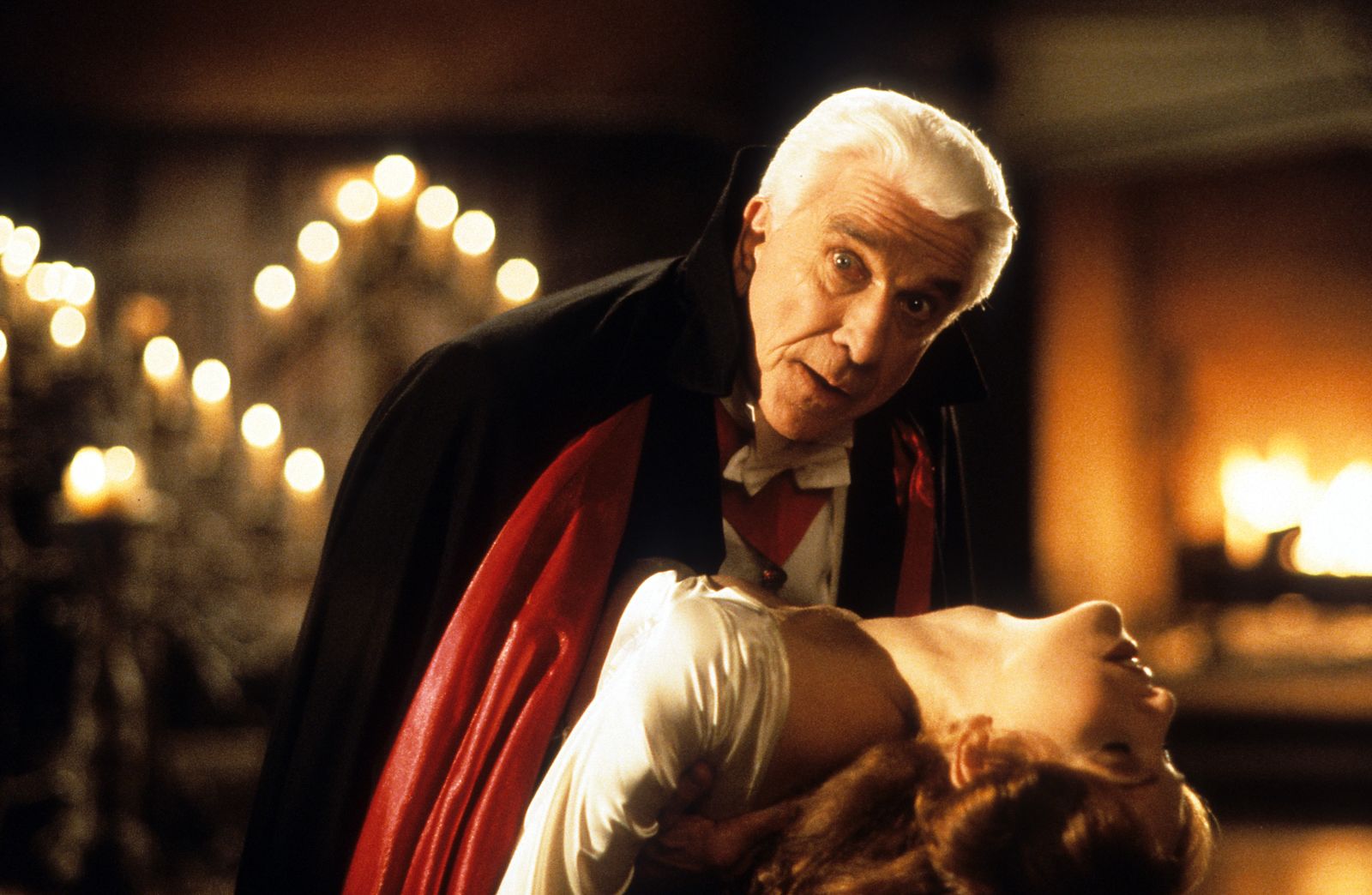
What stands out from the crowd is “Dracula: Dead and Loving”, filmed in 1995 by the living classic, one of the inspirations for ZAZ, Mel Brooks . The movie, for all its individual style and intonation, failed; Brooks has not made a single full-length film since then. But even this picture now seems to be a significant milestone for the careers of both the director and Nielsen, who literally set his sights on eternity by playing an immortal vampire. It was as if he was collecting a collection of genres that he helped turn inside out.
Perhaps it can be said that Nielsen's charm and talent were one of the reasons for the distinct postmodernist emphasis of American cinema at the turn of the millennium. And it’s not so important what the critics wrote: the audience adored the actor. By the end of his career, he naturally embodied the entire possible range of archetypal roles - from the President of the United States in the vulgar “Scary Movie” to Osama ben Nielsen in “An American Fairy Tale,” David Zucker’s strangest variation on Dickens’ motifs and Michael Moore’s documentaries.
To some extent, Nielsen's paradoxical story is rooted in his very type. The artist’s non-trivially long on-screen career illustrates the transformation of ideas about the ideal man. What was once considered a standard eventually became a ridiculous stereotype, which Nielsen exploited in the second half of his career. But still, no less (or even more) important is his gift, hidden for the time being, which blossomed at the instigation of ZAZ. Nielsen has been called a "closet comedian" who has finally "come out of the closet." Even in the most serious films, he played pranks and made his colleagues laugh during breaks between takes, and on the set of “Airplane!” never parted with his “farting pillow,” constantly confusing, amusing, and annoying those around him. In comedy he found his organic element, which he never left.
“A Very Spanish Cinema” and “Stan Helsing,” the last parodies in which Nielsen was involved, were not at all suitable cinematically, but for the complete collection it makes sense to remember them too. The actor starred in them at the age of 83, a year before his death. Nielsen also managed to frame his death as a joke: on his grave in the city of Fort Lauderdale there is a not very decent and not entirely translatable epitaph, playing on the standard “RIP” - “Let 'er rip” .
Anton Dolin