Date
Author
Source

Preserved copy
Translated material
Naughty
The case of the novices of Metropolitan Tikhon passed into the tragic farce stage in court

Metropolitan Tikhon (Shevkunov). Photo: Maxim Churusov / TASS
The clergy from the inner circle of Metropolitan Tikhon (Shevkunov), who allegedly prepared a terrorist attack against him, had their stay in custody extended. And the “secret” materials of their case were shown by “Russia-1”.
“The new deception will be worse than the previous one” (see footnote 1)
The second year of investigation into the strange case of “preparation of a terrorist attack against Metropolitan Tikhon (Shevkunov)” has begun. According to the defendants and their lawyers, the investigation is delayed, examinations are carried out for months, and the defendants’ statements that confessions were extracted from them under torture are not verified. According to the FSB, two close novices and students of the metropolitan, Denis Popovich and Nikita Ivankovich, allegedly received an assignment from the Ukrainian GUR and were preparing a terrorist attack against the bishop. In February last year, the FSB Central Election Commission showed their “confessional” testimony, but soon at the trial, the defendants’ lawyers reported that they testified under torture, after using a stun gun and other special means.
On the Rossiya-1 channel, for the anniversary of the case, they showed a film in which they tried to “correct” some of the mistakes in the investigation described in Novaya . In an effort to give a high meaning to the plot of the case, the FSB generated the idea that the bombing of Tikhon (who in the past was called “Putin’s confessor”) in the center of Moscow was supposed to disrupt the negotiations between Russia and the United States.
On February 10, the Moscow City Court extended the detention of Denis Popovich and Nikita Ivankovich for three months. The court hearing resembled a tragic farce: Judge Andrei Rasnovsky explained the Criminal Procedure Code, the accused declared their innocence, trying to convey to the judge the tragedy of the situation. What was seen in the courtroom and in the film strengthens the feeling that there is no clear evidence in the case of the guilt of the arrested clerics. The propaganda noise accompanying the investigation only camouflages the “big game” in which Tikhon’s novices could become almost random victims.
Novaya Gazeta looked into new details of the case...
HELP "NEW"
Chronology of the case of the “attempt on Metropolitan Tikhon”
September 11, 2022 - Publication of the telegram channel “Bishop Lucifer” with a denunciation of Denis Popovich as a “sleeping Bandera member” in Tikhon’s inner circle.
January 13, 2025 - Popovich was detained by the police on his way to service at the Sretensky Monastery; his administrative arrest under Part 2 of Art. 20.1 Code of Administrative Offenses of the Russian Federation (petty hooliganism).
January 22, 2025 - publication of the telegram channel “Bishop Lucifer” about the detention of Popovich for connections with “terrorist organizations of Ukraine” (it hung for several minutes).
January 27, 2025 - Popovich’s re-arrest immediately after leaving the temporary detention facility under Part 1 of Art. 19.3 Code of Administrative Offenses of the Russian Federation (disobedience to a police officer).
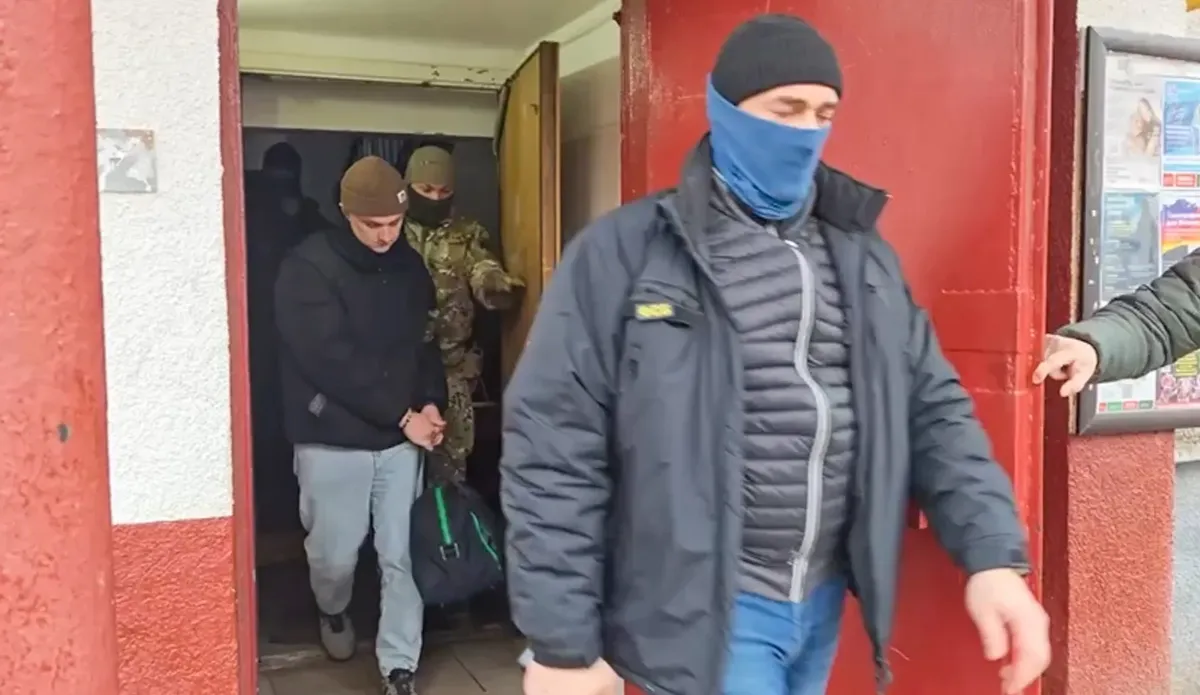
February 12, 2025 - Popovich and Ivankovic were detained on suspicion of preparing a terrorist attack.
February 27, 2025 - Novaya’s investigation into the detention of Popovich and Ivankovic.
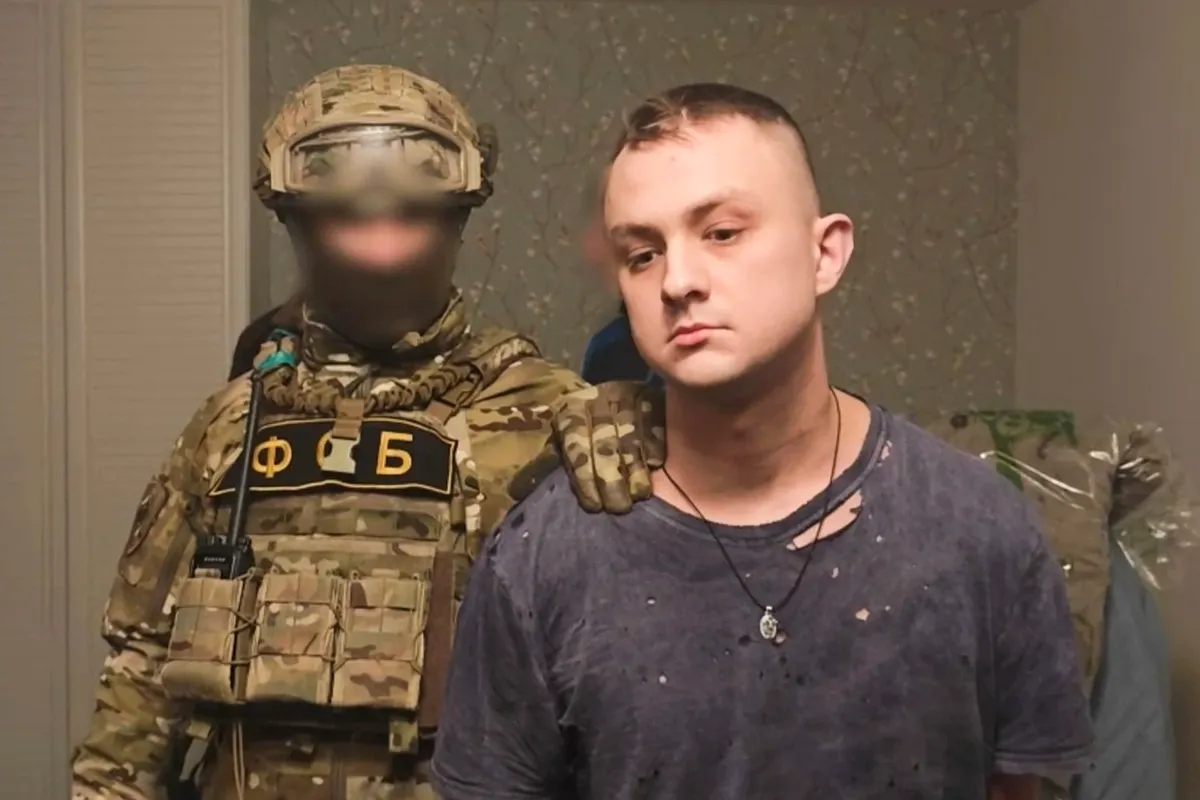
February 28, 2025 - publication of a video by the FSB Central Security Service with the detention of Ivankovich, the discovery of a “cache” with explosives and confessions of Popovich and Ivankovich.
March 6, 2025 - statement by Vladimir Putin about the preparation of an assassination attempt on Tikhon.
June 4, 2025 - the suspects' lawyers stated in court that torture and other illegal methods of investigation were used against them.
November 11–12, 2025 - a series of interrogations of Popovich and Ivankovich’s colleagues at Sretensky Seminary and the Pskov-Pechora Monastery. Statement by the FSB that the terrorist attack was supposed to disrupt negotiations between Russia and the United States.
February 1, 2026 - the release of the film “Betrayal” on the Russia-1 channel with the demonstration of new “evidence of guilt” of Popovich and Ivankovich.
Court
The decision of Judge Andrei Rasnovsky to extend the detention of Denis Popovich and Nikita Ivankovich was predictable. According to investigators, the clergy, one of whom served in the Sretensky Monastery, and the other in the Church of the Resurrection in Sokolniki, contacted the Ukrainian special services, received instructions from them to dig up explosives in the forest park, set off an explosion in Tikhon’s residence and leave the Russian Federation using Ukrainian passports. To support the poorly compiled version, Rossiya-1 showed screenshots of “correspondence with the curator,” which, in theory, is included in the materials of the criminal case and constitutes a secret of the investigation. “These correspondences do not belong to us,” Popovich managed to say when he was taken out of the hall after the decision was announced. We will return to this point.
Despite the resonance diligently created by propaganda around the case, the Novaya correspondent found himself the only journalist in the tiny hall of the Moscow City Court building on Friedrich Engels Street, where this body moved during the renovation of the main building on Bogorodsky Val. In addition to the correspondent, the room included Popovich’s dad, Ivankovich’s mom, a classmate of the guys at the seminary, Denis’s girlfriend and parishioners of the church in Sokolniki - eight people in total. The accused were delivered from the Lefortovo pre-trial detention center by a regular convoy, without masks and dogs, which are used when escorting real terrorists (subdeacons are charged with Articles 205 (terrorist attack) and 222 (storage of explosives) of the Criminal Code of the Russian Federation).
The judge, too, seemed not to be very serious: interrupting the arrested and their defense attorneys, he launched into didactic discussions about the “nature of procedural law” and that lawyers’ petitions to mitigate the preventive measure, in fact, contain an “admission of guilt.”
Let us recall: it was Rasnovsky who at one time arrested Mikhail Khodorkovsky*, and also refused to release from custody the terminally ill Vasily Aleksanyan, vice-president of YUKOS, who died at the age of 39.
The judge communicated with representatives of the FSB and the prosecutor's office succinctly, in a businesslike manner. When addressing the opposite side, he changed his tone to a mentoring one, as if they were half-educated law students, and not professional lawyers. The investigation’s petition emphasized that Popovich is a citizen of Ukraine, was born in Ukraine and has Ukrainian registration at his place of residence. In Moscow, he lived in the dormitory building of the Sretensky Seminary. His friend, Nikita Ivankovich, is a Muscovite, but the investigation is convinced that both “have criminal connections abroad”, can hide, destroy evidence, have conspiracy skills, etc. Lawyer Maria Eismont, representing Popovich's interests, noted that such labels cannot be hung arbitrarily, but must be based on something. Investigator Svyatoslav Matveev limited himself to formal remarks that this case is “of particular complexity,” all the examinations have not been completed, and witnesses still need to be questioned. The law allows the investigation under terrorism charges to be extended up to 18 months.
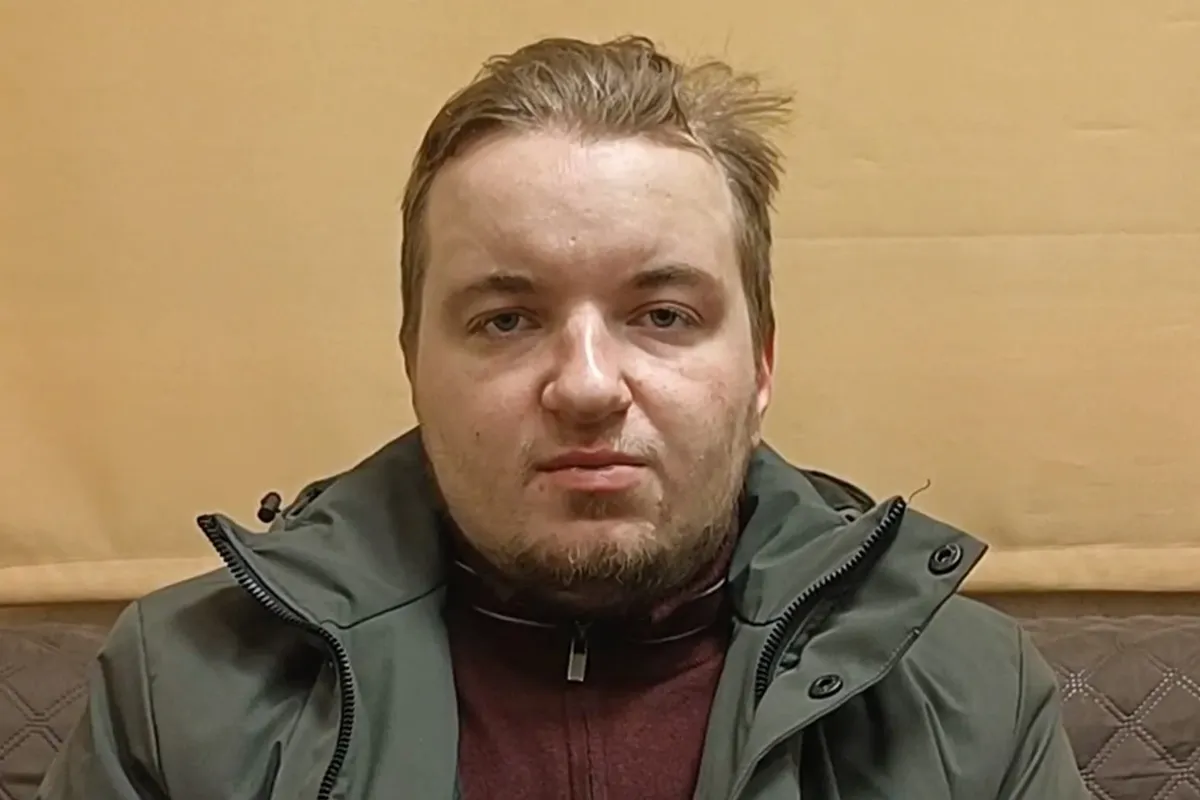
The atmosphere of the meeting is conveyed by the dialogue between the judge and Denis Popovich:
Judge (ironically): How do you look at the investigation’s request?
Popovich: Well, Your Honor, of course, I don’t agree, I don’t support...
- Hmmm...
- ... side of the investigation.
- Yeah...
- Well, actually, once again I want to declare my innocence. As I have said more than once in court, actually...
- Well, that's not our question.
- I understand, but it is still implied, this question. Innocent people, as it seems to ordinary people...
- Let's focus on the procedural law...
“We’ll still have to talk about the essence of the matter.”
- Well, please, we listen to you.
“I have said more than once that this is a complete falsification of the case, and also that the testimony that we gave, which is presented in the case, was replicated through video and the media, allegedly admitting the preparation of a terrorist attack, extracted under torture, using electric shock...
Maria Eismont: Dear court, I want to say that what my client is talking about concerns specifically the case materials that were used as the basis for the petition to extend the period of detention. This is exactly the process that we are going through; the documents are included in it. My client wants to speak out on this matter. Therefore, this is directly relevant to our trial.
— The procedure for declaring evidence inadmissible by the court can be applied only after the criminal case has been submitted to the court. Accordingly, the court should evaluate this evidence only at this stage. Therefore, you must somehow adjust your position as you stop. We are considering with you the issue of a preventive measure and nothing more. I explained this to you at the beginning of the trial.
Denis Popovich: But there is only a moment when we were told that some kind of check would be carried out related to torture and the fact that we were forced...
- The investigation, probably, if you stated this...
- We stated...
- ... the prosecutor, who supervises the legality of the preliminary investigation, will react - ... accordingly...
— During the year, we saw the main investigator in the case only once, probably when the preventive measure was extended. All! The rest of the time, no investigative actions were carried out, nothing related to us specifically.
- Well, in other words, if I understand you correctly, you are talking about the ineffectiveness of the time used by the investigator?
- Certainly. This time. Two is that all this time, reports and materials, which include...
- Let's talk about the preventive measure!
- No, wait, they’re coming out...
“I won’t wait, because I don’t want to discuss what you want to discuss, but I want to discuss what is subject to consideration at the court hearing... I understand that there are people present at the trial, you want to, as they say, communicate with them on this issue...”
- I don’t want to...
- ... and so on, I understand that. Yes, we have an open meeting, but an open meeting is aimed at something slightly different.
— We can also talk about the bias of the investigation. Because through publication...
“I will not make a decision about the bias or impartiality of the investigation, but decide the question of whether there are grounds for extending your detention or whether there are no such grounds.”
Denis speaks of his beliefs as a clergyman, who is “disgusted by all kinds of violence,” and calls his alleged connections with criminal structures and conspiracy skills “nonsense and manipulation.” He notes that the case is not circulating in the legal sphere, but in the media: “For a year, nothing has been done [by the investigation], there is only some kind of bullying with the help of the mass media.”
The logic of the investigation is broken by a simple argument that Nikita Ivankovich gives, speaking after Denis. He says that when his friend Denis was arrested for the first time in early January last year under an administrative offense (about “hooliganism” - Novaya spoke about this in detail), and 15 days later he was arrested a second time, he carried him packages and maintained all possible contacts with him. This behavior towards an “accomplice” is completely different from a member of a sabotage and terrorist group “with conspiracy skills.” “His whole conspiracy is to wear a chasuble at the service in the church,” adds Ivankovich’s lawyer Viktor Larin, according to whom “the investigation is not being conducted, but is being delayed.”
During a break, a parishioner asked FSB investigator Matveev about how the investigation materials ended up in the VGTRK film. He replied that he knew nothing about it. The Novaya correspondent asked how many witnesses had already been questioned. The investigator replied: “Five eyewitnesses” (his petition spoke of 13 witnesses). Matveev avoided a direct question about the interrogation of Tikhon, but there is every reason to believe that the only “victim” in the case was interrogated.
If in April last year there were still rumors in the media about Bishop Tikhon’s desire to meet with his novices, then later he chose the tactic of absolute silence - either he signed a non-disclosure agreement, or he realized that the organizers of this case were aiming at him...
Movie
On Patriarch Kirill’s name day, February 1, the Rossiya-1 channel aired a film by Moscow City Duma Deputy Speaker Andrei Medvedev “Betrayal.” It is based on a series of interviews with Russian suspects and already convicted in terrorism cases: Daria Trepova, involved in the murder of Vladlen Tatarsky, and the arsonists of the helicopter in Ostafyevo, near Moscow. But half of the film is devoted to the case of Denis Popovich and Nikita Ivankovich. Their friends told Novaya that the guys perceived Medvedev as Tikhon’s confidant, since his mother Saida Medvedeva was the producer and director of the metropolitan’s famous films: “The Death of the Empire. The Byzantine Lesson", "The Death of an Empire. Russian Lesson”, “New Chersonese”, etc. Tikhon was a co-founder of the production center “Workshop”, which released the film “Betrayal”. Former novices tried to reach their spiritual father through Medvedev. “I have dedicated my whole life to serving the church and serving God,” Popovich says. “Say your regards to Bishop Tikhon, I love him like a father.” And he repeats once again that he would never agree to a terrorist attack: “For me, this is comparable to parricide.” Given the harshly accusatory slant of the film, these phrases were still aired...
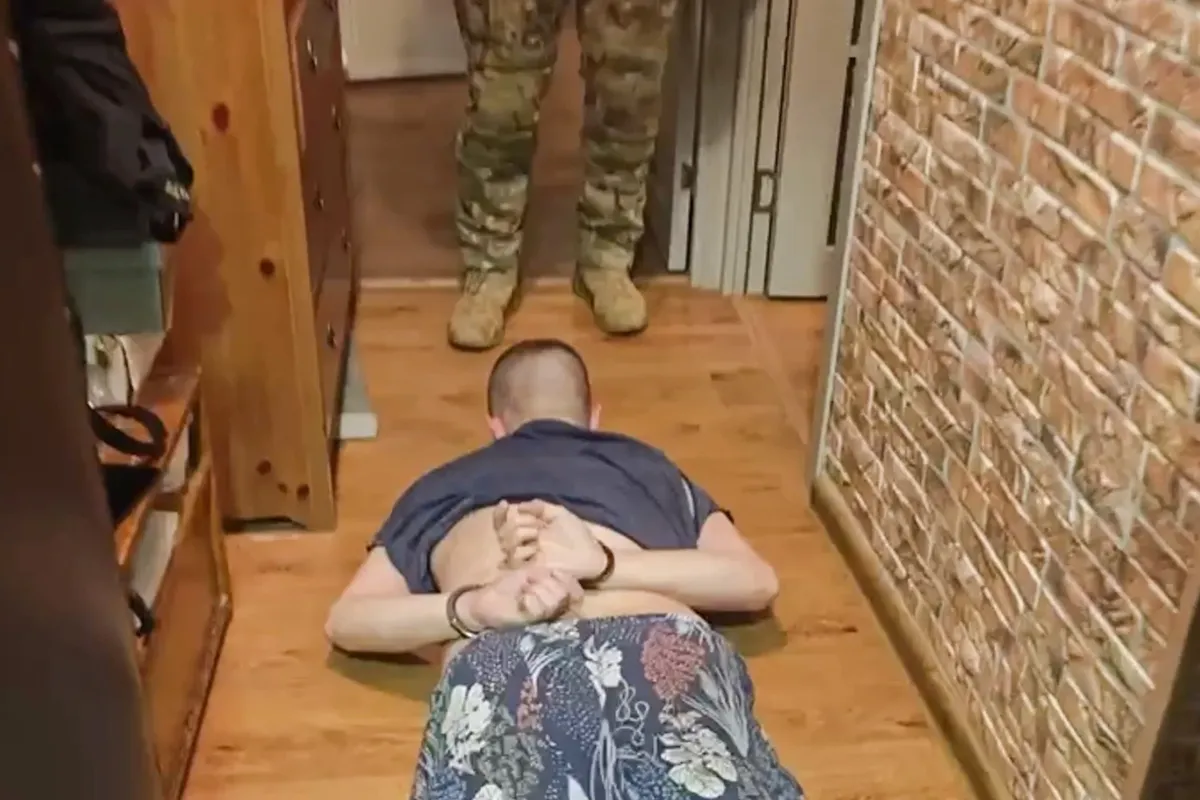
The rest of the content is reruns of last year’s filming, which Novaya has already analyzed , and fresh “leaks” from secret case materials. One of the “operational videos” is the demonstrative detention of Popovich in early February last year, when he was already serving his second administrative arrest in special detention center No. 1 of the Main Directorate of the Ministry of Internal Affairs of the Russian Federation in Moscow. As the Telegram channel “The Popovich-Ivankovich Case” established, the video was filmed approximately 200 meters from the special detention center - near house 20 on Fruktovaya Street in Moscow. Footage from Terletsky Park is also reproduced, where operatives, in front of Ivankovich’s eyes, remove from a “cache” lightly sprinkled with leaves a plastic container with explosives and old-style internal passports of Ukrainian citizens, issued in other people’s names.
By the way, with regard to these passports, the filmmakers partly admit the mistake of the investigation, which Novaya wrote about: you cannot cross the border with such passports, moreover, the former owner of one of them is on the wanted list in Ukraine. A purely propaganda explanation for this blunder is offered: the Ukrainian curators “dumped” the guys, viewing them as “disposable material.” The FSB COS, and now the authors of the film, claim that the “terrorists” had already seen the contents of the containers before their arrest: from under Nikita Ivankovich’s bed, during the operational filming, a shovel wrapped in a bag with unwashed traces of soil from that very park is picturesquely removed. This means that the “conspirators” already knew that they were “dumped” with their passports (remember: Popovich is a citizen of Ukraine and has her passport), which could hardly motivate them to continue the criminal plan. It is even more strange not to take the passports away upon first contact with the container, but to bury them again along with the explosives - so that if discovered, no one would have doubts about its identity. This is outright grotesque!
The key evidence, according to the creators of the film “Betrayal,” was supposed to be screenshots of telegram correspondence between the suspects and a Ukrainian curator under the deliberately pagan-Nazi nickname Thor Steinar (Old Scandinavian - “Thor’s Stone Fighter”). As noted above, investigator Matveev “does not know” how these case materials ended up in the hands of journalists, or who in the FSB violated the secrecy of the investigation. Let's pay attention to something else: the correspondence between Denis and Nikita shown in the film (pacifist, but without any crime and without mention of Tikhon) contains date and time data and has a gray background. But obviously criminal dialogues with the “curator” do not contain such data and have a green background, that is, they were copied from the computer screen.
The very content of these dialogues is deliberately demonstrative: Tikhon is directly mentioned, the desire to see his blood, dramatic exclamations like “You’ll be home soon” and “There’s a little left, be patient.”
One of the “curator’s” remarks reveals his knowledge of the fact that Popovich is under arrest, which does not prevent him from continuing to discuss the “operation” with him in plain text. It can also be noted that the correspondence was conducted in the evening, when the use of a telephone by those arrested in a special detention center (under the supervision of an employee) is prohibited.
...Meanwhile, gray Lefortovo everyday life goes on as usual. Nikita Ivankovich does not give up his dream of becoming a priest; he discusses Russian modernism in church architecture with his pen pals, enclosing his new graphic works with his letters. In this style, he writes, “there is the antiquity of the Russian and Byzantine tradition, the transparency and “otherworldliness” of holiness, at the same time, absolute realism and closeness to us, something Solovyov-Berdyaev: a mixture of mysticism and reality, tradition and modernity.” Recently Nikita had the opportunity to visit the temple at the pre-trial detention center and receive communion. Although most of his church friends and colleagues in Russia “keep their distance”, understanding the seriousness of the matter. By and large, it was based on church denunciations - back in September 2022, the anonymous but influential telegram channel “Bishop Lucifer,” which sympathizes with the patriarch but does not sympathize with Tikhon, published a denunciation of Popovich as a “sleeping Banderaite” in Shevkunov’s inner circle. The channel’s connections with the security forces are evidenced by access to operational materials: for example, recordings of Popovich’s private conversations and denunciations against Ivankovic as his like-minded person appeared there.
***
Alas, there is no one within the Russian Orthodox Church to give a moral assessment to the Popovich-Ivankovich case, and the reasons for this are clear. But in the global Christian world the case resonated. In a recent interview with The Independent, the former head of the Church of England, Archbishop Rowan Williams, spoke of the “assassination attempt” as an example of the Kremlin’s propaganda manipulation of religious narratives: “Anyone who knows these God-fearing young men immediately realized that such an act was simply unimaginable for them.” In an era when violence is presented as a “feat of holiness,” the innocent are left with no tools to defend their freedom and good name. “Which Christ do you believe in—the Christ of the Gospel or the goblin of nationalism?” — the English archbishop asks the Kremlin a rhetorical question.