
Translated material
A future without hostility and barriers
Human life will be priceless in the new architecture of the world. Or there will be no peace
Deadlock of hostility
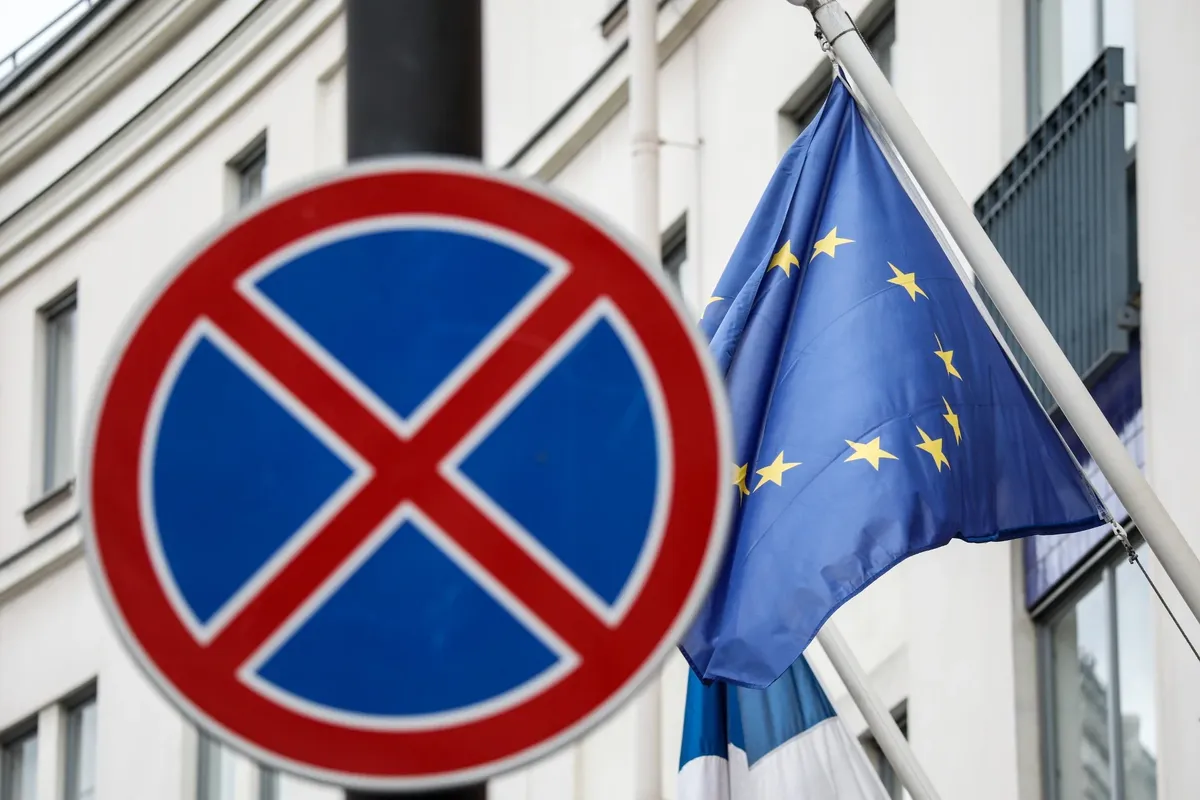
Today we are faced with an unprecedented cooling of relations between Russia and Europe. We have reached a point where there is a complete loss of mutual understanding, and this is the most serious crisis in the last half century. But behind the mutual accusations, it is important to see the main thing: the continuation of this confrontation is destructive for the future of both Russia and all of Europe.
Attempts to build a new “iron curtain” are not just a political gesture. This is a deeply irresponsible strategy that deprives our countries of development and security prospects.
We see frightening escalation on both sides. On the one hand, there are discussions about asset confiscation, new export restrictions and increased military spending. On the other hand, there is aggressive rhetoric about “attacks on capitals,” which is unacceptable in the modern world. In this atmosphere of hostility, the voice of reason becomes barely audible, but it is the one that is most important today.
The roots of this confrontation are deep, and we have consistently talked about the risks of this path, especially after the events of 2014 . However, today the situation has moved into a different phase. The introduction of the term “unfriendly states”, which did not exist even during the Cold War, and the massive declaration of international organizations as “undesirable” actually criminalize normal human and professional interaction. People are artificially divided, presenting basic European, but in fact simply universal, values - human rights, equality of all before the law, freedom of speech - as something hostile.
No right to break
We in the Yabloko party are convinced: if we do not start a dialogue now, if we do not stop the war of words, the risk of the conflict reaching an irreversible stage will only grow. Politics should serve to preserve lives, not destroy them. A way out of the impasse is necessary for both sides, and the first step towards it is the recognition that we have no other alternative than peaceful coexistence in a common European home.
Part of this confrontation has been the approach of many European leaders, who see Russia's isolation as the only path to security. The idea of turning Ukraine into a “protective buffer” separating Western Europe and Russia is a road to nowhere.
Support for the continuation of hostilities by European politicians and the lack of proposals for a realistic plan for a peaceful settlement is a policy that is devoid of responsibility to the future of not only Ukraine, not only Europe.
Today there is a lot of talk about ceasefire initiatives, including those coming from US President Donald Trump. However, we see a dangerous gap between words and deeds: in practice, no real steps are being taken to implement these proposals. But the immediate conclusion of a ceasefire agreement is the only condition to stop the loss of life and begin moving towards a new security system.
It is important to remember: Russia is not an “external threat” to Europe. Russia is historically, geographically and culturally an integral part of European civilization. We are linked by centuries of shared history, trade and cultural interpenetration. To try to completely break these ties is to make a historical mistake.
Security without fences
Everyone who calls for war to the bitter end must realize: a military conflict between Russia and NATO in modern conditions will inevitably lead to the use of nuclear weapons. And this will be the finale for the entire human civilization. Then there will be no opportunity to say: “Who would have thought?”
Over the years of this confrontation, colossal, irreparable sacrifices have been made. We must ask ourselves an honest and bitter question: why do thousands of people on both sides continue to die in the 21st century? Why these deaths of tens and hundreds and the broken destinies of millions?
We live in an era when humanity should unite efforts for progress, and not destroy each other. It is vital for us to develop science, deepen cultural ties, and increase the length and quality of people’s lives.
We are facing global challenges - such as imminent climate change, the spread of deadly viruses, international terrorism - that require the solidarity of all countries.
Instead, we see archaic cruelty that throws us back into the past. Shooting at each other, as in dark times, instead of building a future together is the path to self-destruction.
Yes, the old security system turned out to be ineffective - that's a fact. This means that our task is not to build new fences, but to look for other approaches. We need a new security configuration, based on the spirit of the Helsinki Process , which will include Russia, Ukraine, and Belarus. Only through dialogue and recognition of the supreme value of human life can we build a world in which borders are not front lines.
Get out of chaos
What should be the foundation for a new approach? The answer is obvious to us: returning to the center of politics a person, his freedom and dignity, his ability to create and create, to live without danger and without fear. Those same universal humanistic values that we traditionally call European.
The idea of a Greater Europe “from Lisbon to Vladivostok”, uniting countries to protect life, is more relevant today than ever. When it sounded in Europe from the lips of Mikhail Gorbachev at the end of the Cold War, it had the effect of a political earthquake. “We greeted this speech with stormy and sincere applause,” recalled the Frenchwoman Catherine Lalumière, who was then Secretary General of the Council of Europe. Then it seemed like a dream, but today it is the only meaningful prospect for both Russia and Europe. We should not see each other as enemies.
As Grigory Yavlinsky notes in his article “The Only Way Out,” we have no chance of de-escalation if we call for peace in words, but in practice defiantly disrupt any attempts at meaningful dialogue. Without a clear vision of a future in which man is the essence of politics, we are doomed to increasing chaos.
European integration of Russia is not a rejection of itself, but a continuation of the path that Europe began after 1945 in order to forever eliminate a major war from the lives of people on the continent, and then on the planet. This is the path to safety, modern technology and respect for the individual.
It's time to admit: the time for the politics of prohibitions and confrontation must pass. The future of Russia is in alliance with the values of freedom and peace. This is our only chance to get out of the global crisis and build a country in which we want to live.
Stop the disaster
After the end of the Cold War, unique opportunities for integration opened up for us. Year after year, connections between Russia and Europe expanded in science, culture, and human communication. However, the unification potential underlying the European project has not been properly developed, which largely predetermined the current deep crisis.
Today we must return to this path. If full-fledged integration now seems like a distant prospect, then we must begin a meaningful dialogue about it immediately. This dialogue should be based not on geopolitical ambitions, but on unshakable values - the priority of human rights and freedoms, and not the abstract interests of the system.
This conversation is necessary, no matter how difficult the situation may be. But for it to begin, there is one obligatory, critically important condition - the immediate conclusion of a ceasefire agreement between Russia and Ukraine without preliminary demands. This is the only way to stop the catastrophe, to stop the loss of life. This is what politicians and diplomats should discuss today, this is what they should fight for. Only this approach can become the foundation for building a peaceful and reasonable future on our continent.