
Translated material
Here - remember, but here - not
A broad interpretation of the concept of “genocide” is intended to solve momentary problems, and not to consolidate the collective memory of the victims of the Great Patriotic War
(18+) THIS MATERIAL (INFORMATION) IS PRODUCED, DISTRIBUTED AND (OR) SENT BY FOREIGN AGENT ANDREY VLADIMIROVICH KOLESNIKOV OR CONCERNES THE ACTIVITIES OF FOREIGN AGENT ANDREY VLADIMIROVICH KOLESNIKOV.
Recent days have been marked by a flurry of comments from Russian officials, and especially Foreign Minister Sergei Lavrov, about the current foreign policy and military agenda. Their meaning boils down, firstly, to the mantra of four years, according to which peace will only take place if the root causes of the conflict are eliminated, and secondly, the Americans misunderstood something in the “understandings” of Anchorage, so relations with them, if not deteriorating, then stagnate. If anything, the toughening of the rhetoric was facilitated by the impasse with the New START Treaty and the urgent need to show solidarity with the Venezuelan and Cuban people. Which, judging by the experience with other fraternal peoples (for example, Armenian and Syrian), has an exclusively rhetorical, and not at all practical, meaning.
Among other things, the minister, answering questions about relaxing by the fireplace and sports, expressed himself in the sense that kayaking and sports exercises in general are “service to the Motherland” (in one of the interviews he emphasized this idea twice). I immediately remembered the immortal song of Alexey Igorevich Ivashchenko and Georgy Leonardovich Vasilyev, the lyrical hero of which promised himself, while on a similar sporting hike, “it’s pointless not to eat vodka anymore, but to eat it only with a special meaning.” That is, designating the process itself as “service to the Motherland.” You can even toast the Supreme Commander, then even the invisible comrade major will recognize such a pastime as “serving the Motherland.”
In a series of interviews and speeches, one could find not only mantras promising a full fifth year of hostilities, but also a number of other statements. For example, this: “We will ensure that no one forgets about the decisive contribution of our country to the Victory over German Nazism and Japanese militarism. And so that the crimes of the Nazi invaders and their accomplices against citizens of the Soviet Union of all nationalities are recognized by the international community as genocide of the Soviet people. Very soon, on April 19, Russia will mark the Day of Remembrance for the Victims of this Genocide for the first time.”
Forced-prohibitive grief
This is another man-made conflict story. No one in their right mind disputes the decisive contribution of the USSR to the Victory (the best friend of the Russian regime, Trump, once challenged it, but “history with geography” is not the strongest side of the American president). The rhetorical trick here is different: in order to explain the special operation, over the past years an ideological and propaganda stamp has been cast in granite: the Northern Military District is a continuation of the Great Patriotic War, a defensive ***, which is carried out in response to an attack by the collective West, historically represented by Napoleon, Hitler and NATO, between which there is no difference.
In last year's 2025 version, the key source of evil has changed: before it was the United States, now it is Europe (in earlier versions of the propaganda cliché everything was exactly the opposite). In a word, the collective “we” are the heirs of Victory. But “we” are also victims, heirs of the victims of the Great Patriotic War. If genocide was carried out against the Soviet people, then even now the Russian people are fighting to avoid becoming victims of genocide on the part of Europe.
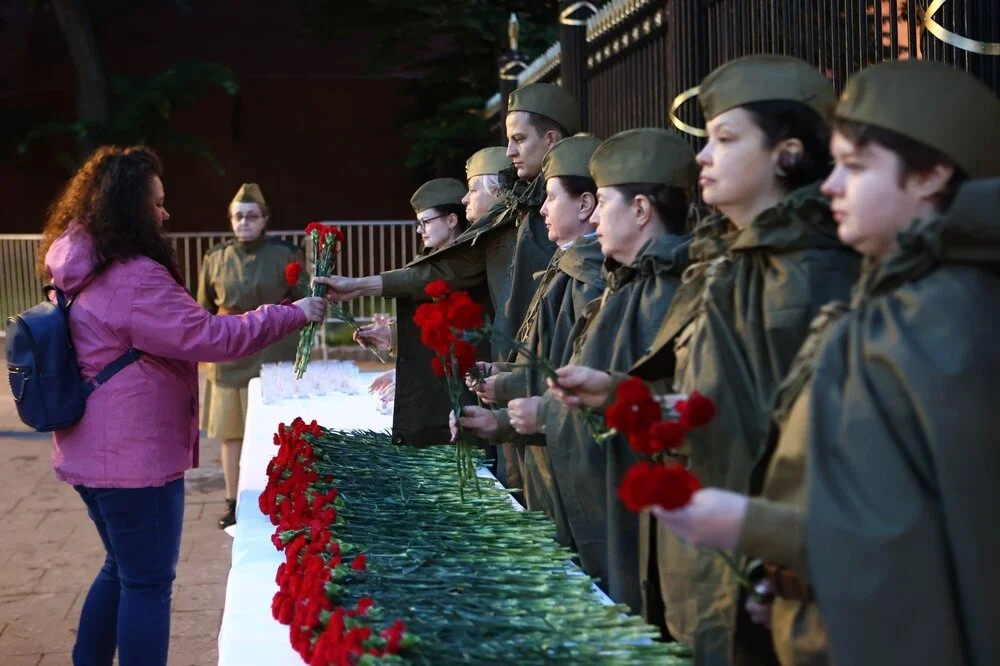
The new Remembrance Day has symbolic and ideological significance, complementing May 9 and June 22.
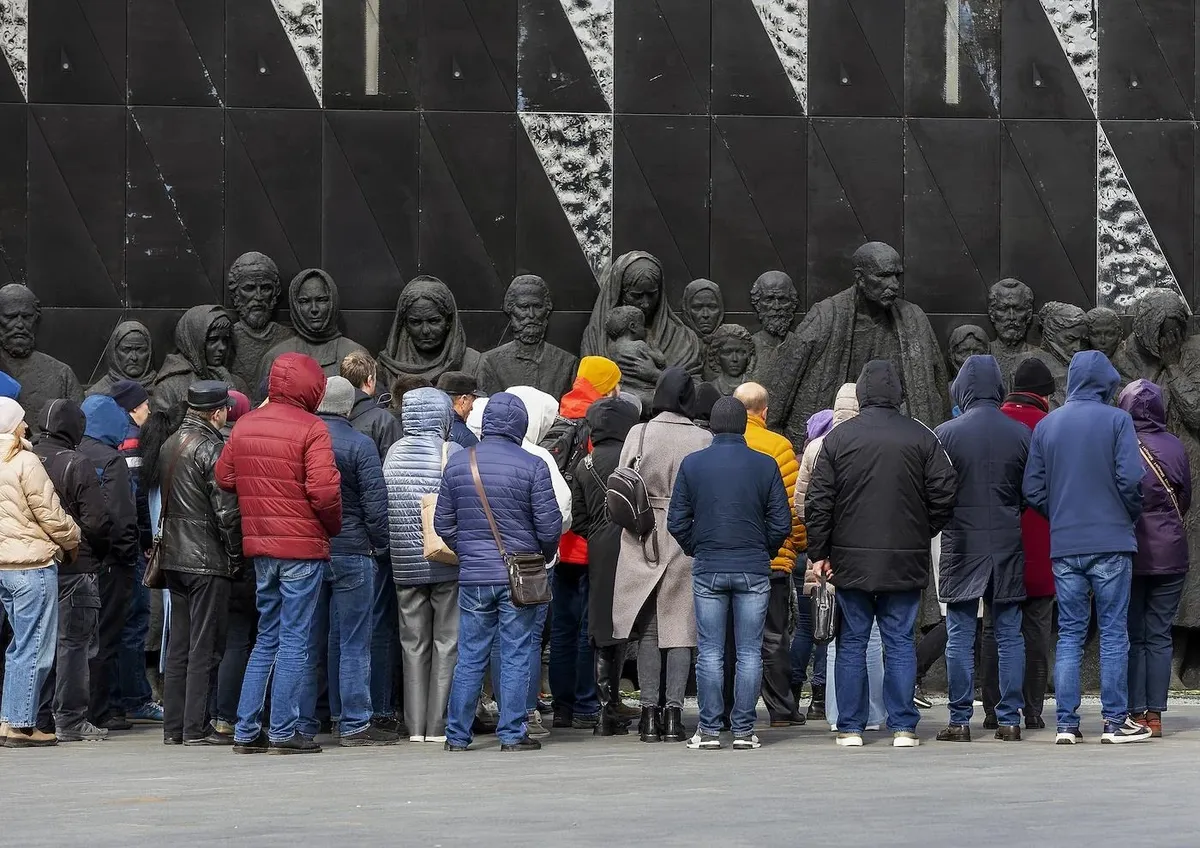
There is nothing wrong with state-sanctioned mourning rituals—they unite nations and remind them of history. Another conversation is that the forms and technologies, even the very names of this kind of rituals are needed by the state, not society.
Especially for a state that completely seeks to colonize the civil sphere and nationalize private memory and family grief.
This is another tool for controlling the historical narrative. Moreover, a special “chip” is built into the circuit for an immediate ban. You grieve on command, but don’t even think about questioning the adequacy of the ideas of state ideologists. The package with the new mournful date includes a ban in the form of a criminal sanction - in particular, for denying the fact of genocide of the Soviet people (the draft amendments to the Criminal Code passed the first reading). Again, it is unlikely that there will be many people who are capable of publicly insulting the memory of the victims of Nazism. Their actions are already punishable under other criminal articles, but the emphasis is on the concept of “genocide.”
Soviet people or Russian people?
Symbolic, ideological, propaganda tasks are thus solved. Legal and historical questions remain. But who will argue with the state, which has a monopoly on the formulation of the highest truths under threat of persecution, even if it freely interprets the concept of “genocide”? And this concept contains a clear goal setting - the desire to destroy an entire people or ethnic group (“Convention on the Prevention and Punishment of the Crime of Genocide”, approved and prepared for signature by the UN General Assembly in 1948, ratified in 1951 by twenty countries). “Crimes against humanity” is a broader concept, “genocide” is a narrower one, and it includes, for example, the extermination of Jews (Holocaust), Gypsies, and Armenians. However, the fact of the matter is that in our case legal purity does not matter, what is important is the one-time propaganda effect and the repeated consolidation by ritual and prohibition of the status of the “victim” people. To a greater extent - the Russian people; the Soviet people were not concerned with this topic.
Logical problem. We are talking about the Soviet people, but the Russian people are meant. Meanwhile, the “new historical community - the Soviet people” (the definition of the 1977 USSR Constitution) included the same Ukrainians. Does the modern Russian government thereby recognize the genocide of the Ukrainian people? Turkmen? Azerbaijani? Chechen (subjected to deportation by the Soviet authorities, which, by the way, is also not legally considered genocide)?
In this logic, in this interpretation, Stalin’s mass repressions should be recognized as genocide. That is, a war between the state and its own people. Soviet. Then it is logical to combine the new Day of Remembrance with another - the Day of Remembrance of the Victims of Political Repression, with which the domestic authorities have been waging an undeclared war in recent years. Because the current “dissidents” in the state’s “military-historical” understanding are the direct heirs of the then “enemies of the people.”
April 19 was chosen as the Day of Remembrance of the Victims of the Genocide of the Soviet People due to the fact that on this day in 1943 the decree of the Presidium of the Supreme Soviet of the USSR was issued “On measures of punishment for Nazi villains guilty of murder and torture of the Soviet civilian population and captured Red Army soldiers, for spies, traitors to the motherland from among Soviet citizens and for their accomplices.” The decree does not talk about genocide, just as it was not discussed at the Nuremberg trials, because the very concept of “genocide”, formulated by lawyer Rafael Lemkin, was in its infancy.
What did the authors of the amendments to the Criminal Code that punished denial of genocide mean? Denial of the very definition of the concept of “genocide” (which, we repeat, destroys an entire generally accepted international legal structure, but also a whole layer of work of professional, namely professional, and not “megaphone” historians) or denial of the facts of the destruction of people? Which no one denies. The result is an additional criminalization of historical science. Will historians be defamed and expelled from the profession (at best), as Alexander Nekrich once was for his book about Stalin’s mistakes in the pre-war period and at the initial stage of the war?
All these are unanswered questions, because the idea is to exploit one’s own history in the current political situation. As the same Foreign Minister says, in contradiction with his own thesis about the evil emanating not from the United States, but from Europe, “the war unleashed by Biden.”
Indecent word "Jew"
The Soviet narrative of victims, very similar to the current Russian one, skillfully concealed precisely the “classical” genocides (that is, once again, having the task of the complete physical destruction of an entire people), and especially the Holocaust. Shy state anti-Semitism did not involve the use of the indecent word “Jew” even in memorial signs over the sites of the mass extermination of Jews. The Soviet people as a whole suffered. And a Jew could receive a ticket to the category of victims only together with the entire “new historical community” and without being named under the fifth point. There is a point, but no commemoration. Both Soviet and even Russian propaganda historiography does not say about other death camps that they were extermination camps specifically for Jews. Such crafty selective amnesia turns, according to Pavel Polyan’s definition, into “historiomor”, the destruction, including through omissions, of real ideas about real history.
The Jewish public was a little outraged, since April 19 is one of the most significant dates in the history of the Holocaust, the day the Warsaw Ghetto Uprising began in 1943. But she was consoled by the invitation to the Kremlin of two official Russian rabbis for a joint (and important) mention at the president’s reception of the siege of Leningrad and Holocaust Remembrance Day.
Lavrov sets the task (or has been given the task) of recognition of the genocide of the Soviet people by the international community. Of course, this will be another long conflict story, another reason for an information war with the West, which will not recognize genocide due to the legal and terminological nuances of the interpretation of the term, with the understanding that Kremlin technologists use this concept (based on the decisions of several dozen regional courts) for propaganda purposes. And not to protect a truly sacred memory.
True memory needs protection, it is true, only from its distortion by the state.
And from the requisition by the authorities of family memory, which is still warm and alive - not only in family albums, letters, but also in archives, where access is now limited. Together with the memory of mass repressions, and until recently it constituted a genuine national memorial canon along with the remembrance of the victims of the Great Patriotic War. Many families, like mine, keep the memory of ancestors and relatives who became victims of both the war, the Gulag, and the Leningrad blockade. Now this canon is torn and profaned. Which certainly does not contribute to the unity of the nation, but even more splits it.