
Translated material
Beyond the 71st kilometer
The largest pre-trial detention center in Russia will be built in the Moscow region. Relieving overcrowded detention centers or counting on an increase in arrests?
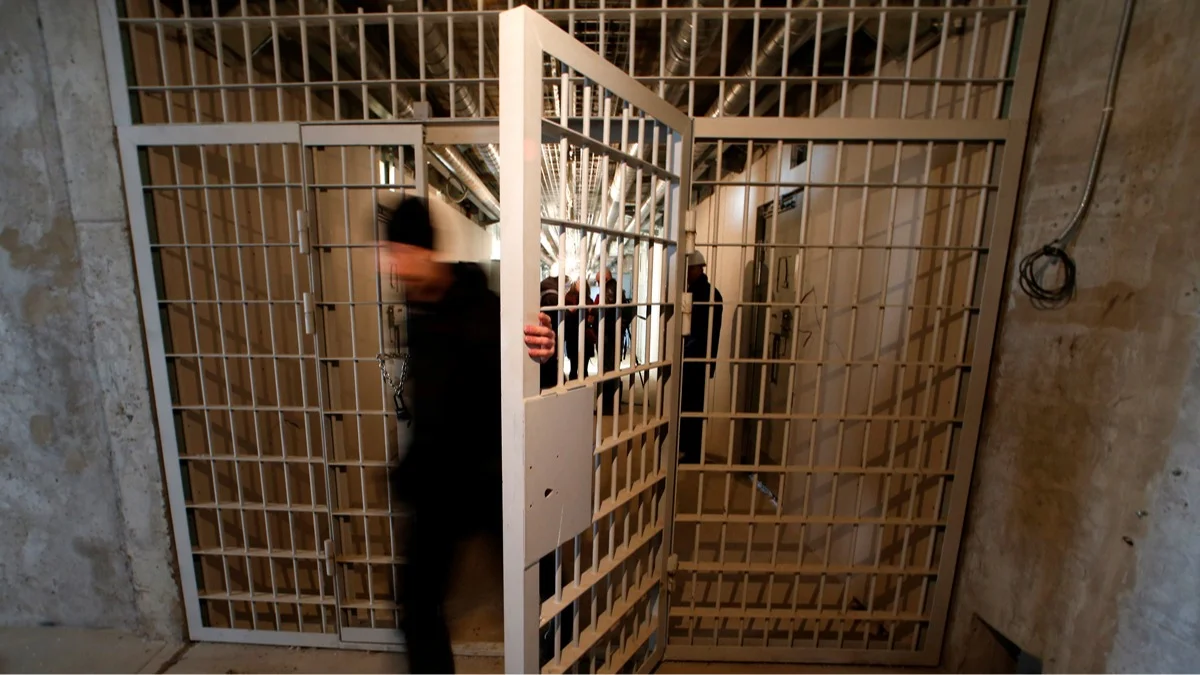
Corridor of the pre-trial detention center (SIZO) “Kresty-2” during construction, St. Petersburg, October 17, 2014. Photo: Alexander Demyanchuk / Reuters / Scanpix / LETA
In the Solnechnogorsk urban district of the Moscow region, in 2026 they will begin to build the largest pre-trial detention center in Russia, with 4,000 beds. Some Moscow pre-trial detention centers may be transferred there, but this has not yet been officially confirmed.
Relieve the congestion in the center of Moscow
In early February, Glavgosexpertiza approved the construction of a new pre-trial detention center in the Solnechnogorsk urban district on former agricultural lands.
The place is remote: it is 71 kilometers of the M-11 highway, between the villages of Shapkino and Ozhogino, behind the Central Ring Road (TsKAD). More than a kilometer from the city of Solnechnogorsk and more than five kilometers from the nearest train station. This will obviously create difficulties both for the relatives of the prisoners and for escorting them to the courts or for investigative actions in Moscow.
The idea of moving part of the pre-trial detention center out of the center of Moscow has been discussed since the 2010s: both because these detention centers are old, and it would be good for the prisoners to have better conditions, and because the land under them in the center of the capital is very expensive.
In addition to Solnechnogorsk, Troitsk (New Moscow) was also named as a possible location for the appearance of a new detention center. Transport accessibility there would be much better: they promise to extend the metro there soon. But while the discussions were going on, several residential areas were built near the place where a pre-trial detention center could be built in the Troitsk area (New Vatutinki).
According to rumors, the developers who built these new buildings lobbied for the choice of Solnechnogorsk: in the vicinity of the pre-trial detention center, prices for apartments in residential complexes would fall.
In the central districts of the capital there are four old pre-trial detention centers: “Butyrka” (built at the end of the 18th century), “Matrosskaya Tishina” (also built at the end of the 18th century), Presnensky Pre-trial Detention Center-3 (early 20th century) and “Lefortovo” (late 19th century). But Lefortovo, from January 1, was one of several isolation centers transferred from the FSIN to the FSB department, so it will probably not be transferred to the region.
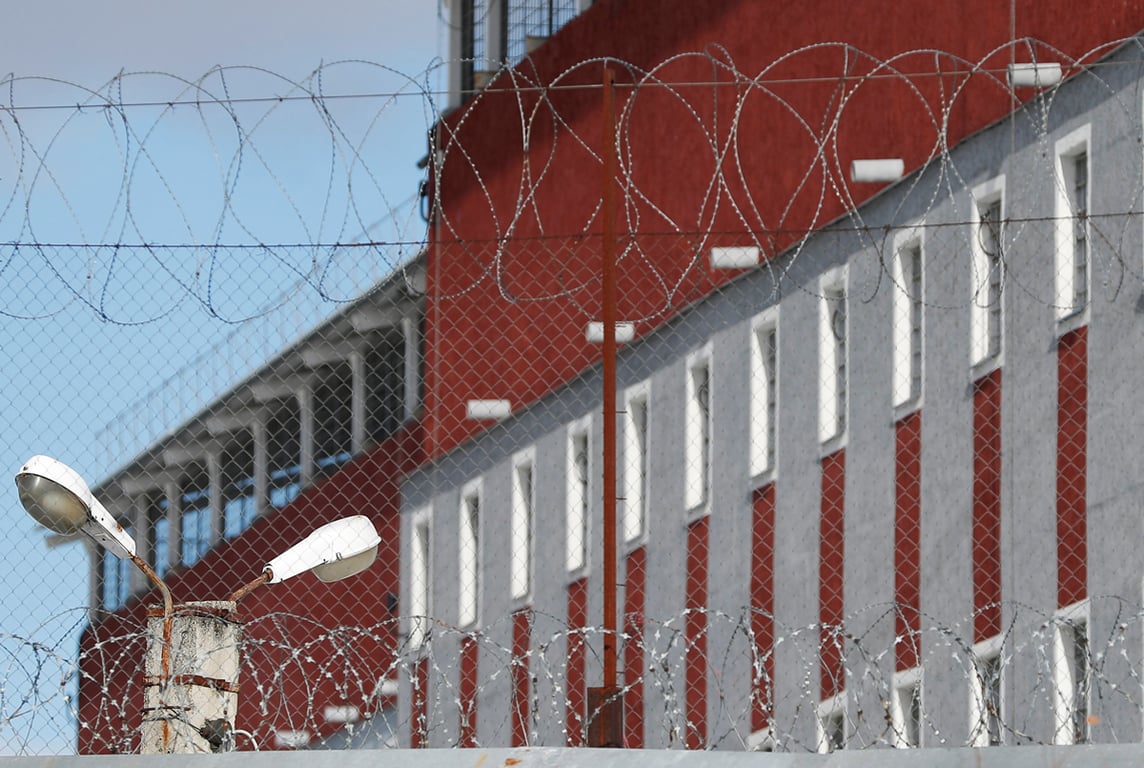
— “Butyrka” is the only pre-trial detention center in Moscow that operates on its own boiler house. As far as I remember, something was constantly catching fire and exploding there. In winter, in Butyrka they don’t turn on the batteries at full capacity because they are afraid that the pipes won’t hold up and the whole thing will blow up into the air. Every heating season we had to think about how Butyrka would survive the cold, recalls former employee of the Moscow Federal Penitentiary Service Anna Karetnikova .
According to the data that the Federal Penitentiary Service announced in 2024, both Moscow and the Moscow region were among the regions with the most overcrowded pre-trial detention centers.
Anna Karetnikova told Novaya Gazeta Europe that one large pre-trial detention center would also be completely inconvenient for the Moscow region:
The Moscow region is a region significantly larger in area than Moscow. There is no point in concentrating people under investigation in one place.
It is still unknown whether there will be more Moscow or regional prisoners in the new pre-trial detention center. Karetnikova notes that the leadership of the FSIN often changes, and each new leader may have his own plans. Moreover, the leadership at the FSIN not only changes, but often ends up behind bars themselves: for example, ex-deputy head of the FSIN Valery Maksimenko, who in 2018 voiced the idea of closing Butyrka, was sentenced to nine years in a bribery case in 2023.
According to Interfax, construction of the Solnechnogorsk pre-trial detention center will begin this year, and they plan to finish it by 2032. The design of the insulator was prepared by the Moscow company A-Project.K. According to information from the Counter.Focus database, she previously had several government contracts in Moscow. Glavgosexpertiza twice rejected in 2025 and officially approved in February 2026 the documentation for the construction of a pre-trial detention center near Solnechnogorsk. The Glavgosexpertiza website contains information only about the approval or non-approval of projects; details of claims against them in cases of refusal are not published.
How they did it in St. Petersburg
Prime Minister Mikhail Mishustin signed the decree on the construction of a pre-trial detention center near Solnechnogorsk at the end of 2022. This will be the largest isolation center in Russia. A pre-trial detention center with 4,000 places was also recently built near St. Petersburg (“New Crosses”), but in area it occupies 35 hectares, and the Solnechnogorsk one will be 42. The new pre-trial detention center will be located even further from Moscow than the “New Crosses” from St. Petersburg, but otherwise these projects are similar.
— “Crosses” was located in an old pre-revolutionary building, an overcrowded and terrible isolation ward. Except that it was located in the center of St. Petersburg. They built a pre-trial detention center, modern in terms of detention conditions, without over-limit, but on the outskirts. It’s definitely better to sit in a modern one: with separate toilets, normal ventilation and normal exercise yards,” a former member of the Public Supervisory Commission of St. Petersburg tells Novaya Gazeta Europe.
At the same time, New Crosses faced its own set of problems.
— There is always a shortage of staff in pre-trial detention centers, and in a giant detention center this is even more obvious. It’s impossible to see a doctor, books from the library are waited for weeks, orders from stores take a long time to be delivered. It is not always easy for lawyers to meet with their clients. Since “New Crosses” is on the outskirts, in order to get through traffic jams, for trials or investigative actions, prisoners are taken to St. Petersburg at five in the morning, and can be returned by midnight. In courts, people spend many hours sitting in guard rooms, where complaints of beatings and threats are often received,” our interlocutor adds.
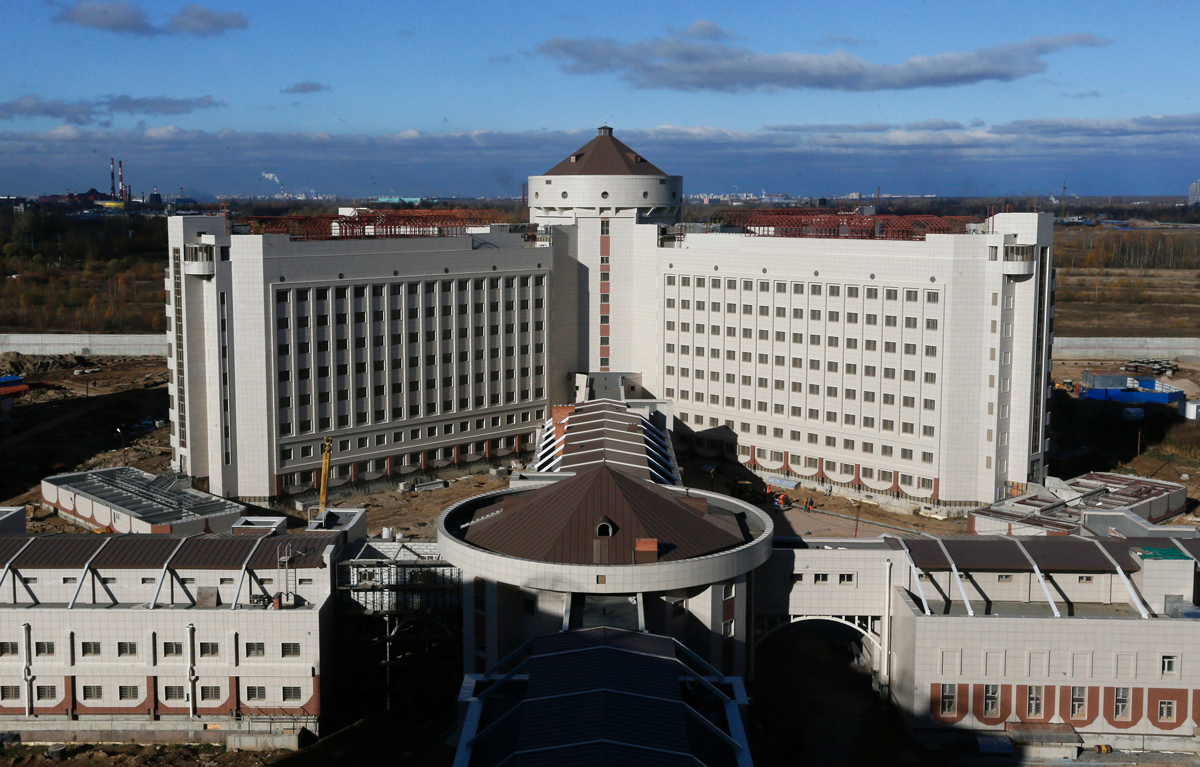
He recalls that “New Crosses” took many years to build: allocated funds were stolen, and criminal cases arose against those responsible for the construction.
— “New Crosses” was commissioned in 2017, prisoners were transported en masse at the end of 2019. While we went there from 2019 to 2022, something was constantly being completed there. And the quality of construction was not very good: pipes often burst, cells had to be moved and repairs made again,” he says.
Queues and distances
The interlocutor of Novaya Gazeta Europe, a lawyer working in Moscow, a former investigator of the Ministry of Internal Affairs, says that both defense lawyers and security officials encounter difficulties when visiting detention centers.
— In Moscow, any trip to a pre-trial detention center, whether for a lawyer or an investigator, is always a lot of stress and difficulty, because it takes a very long time. Investigators from the Investigative Committee and some criminals get in easily, but ordinary employees of the Ministry of Internal Affairs stand in line.
It takes a very long time for prisoners to be taken out of their cells: you can wait for hours. In the Federal Penitentiary Service, salaries are low, and you can’t even show anything to their employees, because where there should be four, only one works and gets knocked down,” he says.
Electronic registration for visits to pre-trial detention centers for principals (lawyers) and defendants (for investigators) is arranged in the most inconvenient way in Moscow.
- Without an appointment, you can lose a whole day without a guarantee that you will go there. Previously, there was a website called “FSIN-Visit”, you had to get up in the middle of the night to find a free place there, but at least it worked clearly. Then this function was transferred to State Services... I have a client in one of the Moscow pre-trial detention centers, and there, since December, the electronic recording has not worked at all. They’ll probably fix it soon,” the lawyer says ironically.
He notes that in Moscow, many pre-trial detention centers are not within walking distance of the metro, and without ground transportation it is problematic to get there.
“I recently defended a man who was kept in a detention center in Noginsk, Moscow Region. I spent less time visiting him than the lawyer of his accomplice, who was in Butyrka. This is taking into account the road to Noginsk. If in Solnechnogorsk they make convenient parking next to the pre-trial detention center and can quickly bring in and take out prisoners, good. If there is the same mess as in Moscow, then another couple of hours of travel along Leningradka will be added to all the difficulties,” he explains.
Another lawyer working in Moscow , in a conversation with Novaya Gazeta Europe, noted that she often encounters situations of “over-limit”: when there are more prisoners in the capital’s pre-trial detention centers than there are beds in the cells. But at the same time, she says, the transfer of part of the Moscow detention centers to Solnechnogorsk will be extremely inconvenient logistically for both the prisoners and the convoy.
The lawyer is not sure that the new super-pre-trial detention center is being built to close the existing ones in Moscow: perhaps, on the contrary, this is preparation for an increase in the number of arrests.