
Translated material
A year ago, JD Vance fell out with Europe at the Munich Conference. Now Marco Rubio (it seems) has tried to fix something
Did he succeed?
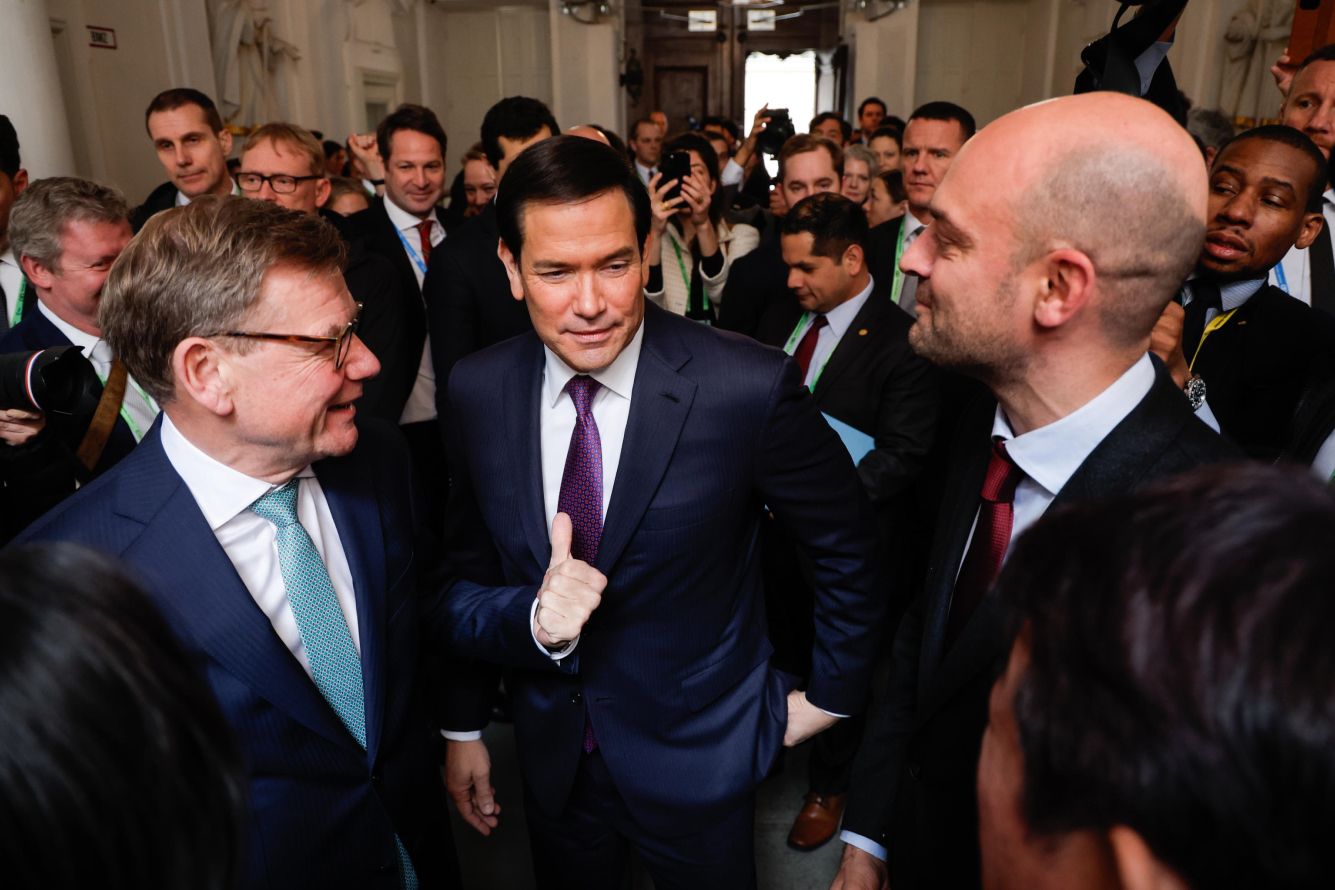
The main event of the Munich Security Conference, which took place on February 13-15, was the speech of US Secretary of State Marco Rubio. His speech was perceived as conciliatory.
At the 2025 conference, US Vice President J.D. Vance sharply criticized European states for their immigration policies and keeping right-wing parties out of power, despite their growing popularity. This speech marked the beginning of an acute crisis in the American-European alliance. It continued with the virtual exclusion of Europe from negotiations to end the Russian-Ukrainian war, as well as the adoption of a new US national security strategy (which predicted that Europe would be “erased as a civilization”) and, finally, a conflict over Greenland, which Donald Trump seeks to annex to the United States.
Rubio echoed many of the Trump administration's complaints about Europe, but his tone was much more measured and gentle. He assured the Europeans of friendship and the inviolability of the alliance. Jeff Rathke, president of the Washington-based American-German Institute, noted that it was “JD without a beard”—a change in tone without a change in substance.
European politicians and experts, although they greeted Rubio with a standing ovation, admitted in conversations with journalists that there would be no return to previous relations with the United States. In particular, Latvian Prime Minister Evika Silina directly stated this. Her words that Europe must become a “collective entity” and significantly speed up the decision-making process within the EU reflect the consensus that began to emerge less than a month ago at the Davos Economic Forum - where French President Emmanuel Macron, German Chancellor Friedrich Merz, and other leaders spoke about this. Silina also expressed support for the ideas of the European Security Council, a compact body responsible for promptly responding to threats to the European Union, and European nuclear deterrence.
The formation of a new reality of international politics, in which there are no longer alliances based on the common values of democracy and human rights, but only alliances based on interests, was stated in Davos (Canadian Prime Minister Mark Carney spoke about this most clearly and eloquently). In Munich, this was already a generally accepted fact, from which, for example, the head of the EU foreign policy department, Kaja Kallas, proceeded . “Strong leaders respect only strength,” she said, implying that the coordinated and decisive pushback by European states forced Trump to back down from demands for Greenland to be handed over to the United States.
US Undersecretary of Defense for Policy Eldridge Colby praised the Europeans for building up their military capabilities and reiterated that the US will continue to cover the continent with its “nuclear umbrella” - but otherwise must rely on itself. Rubio did not mention Russia at all in his speech, which the EU and European NATO members view as the main threat.
The uncertainty of American-European relations is further aggravated by the fact that congressional elections will be held in the US in the fall, as a result of which the Republican Party could lose its majority in at least one chamber - and this will significantly weaken Trump. At least in the domestic political arena. As for foreign policy, the influence of Congress is much less there - and that is why it may turn out that Trump, having lost the opportunity to achieve his own goals at home, will become even more energetic in international affairs.
Several American legislators who attended the Munich conference said that their European colleagues and experts questioned them in detail about the pre-election situation, as well as about the positions of the Democratic Party on various foreign policy issues. European leaders, including German Chancellor Friedrich Merz, met with both Trump administration officials and Democratic politicians expected to run for the 2028 US presidential election. Among them are California Governor Gavin Newsom, Michigan Governor Gretchen Whitmer, Senator Mark Kelly, and Congresswoman Alexandria Ocasio-Cortez.
"Jellyfish"