
Translated material
“He was not afraid, and we are not afraid”
The memory of Alexei Navalny was honored at the Borisov Cemetery. The people who came to the politician’s grave were filmed by security forces - but they didn’t care. This is how the day went
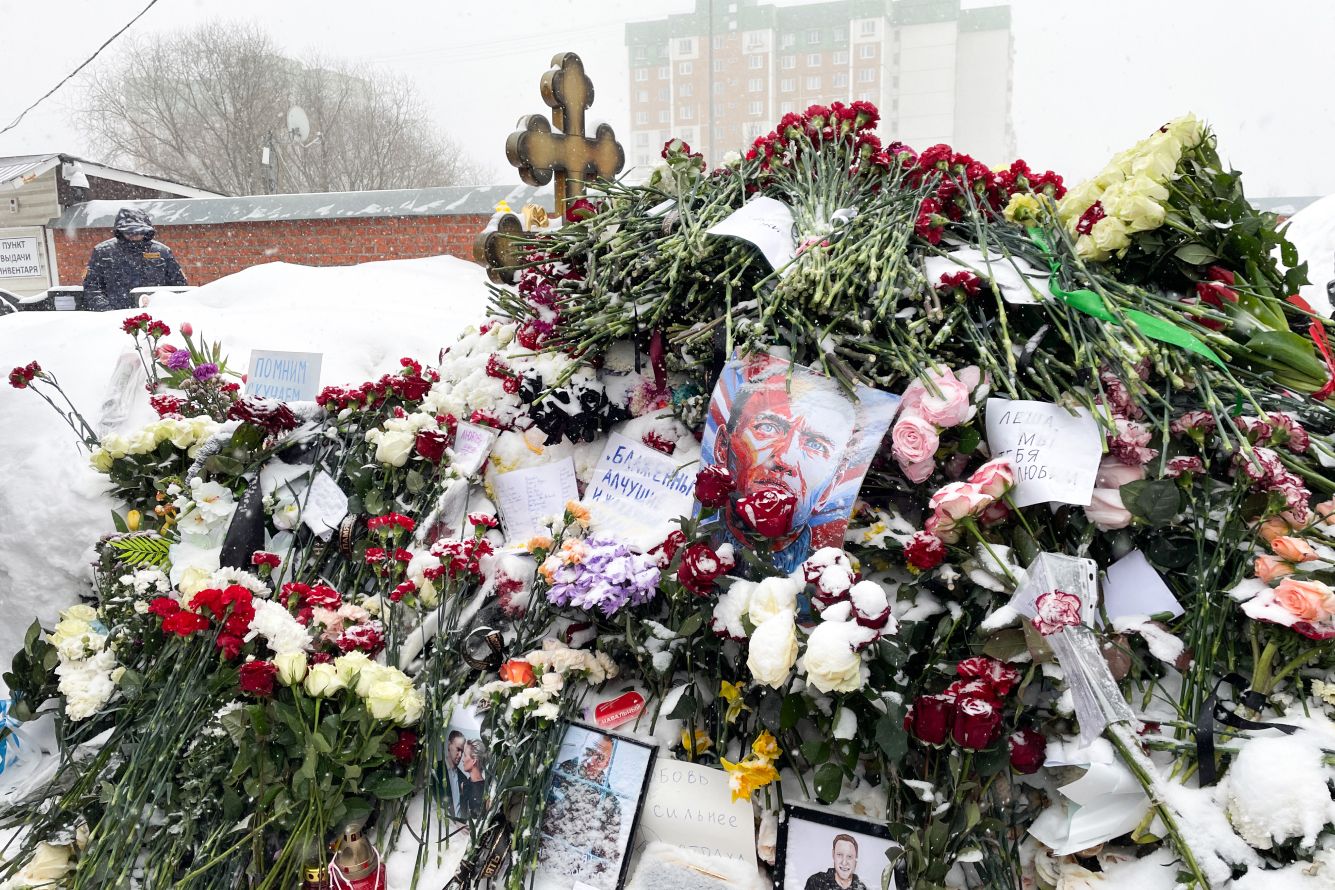
Two days before the anniversary of the death of Alexei Navalny, five European countriesannounced that, according to the results of independent examinations, the politician was poisoned in a colony in the Arctic Circle. The poison used for the killing was epibatidine . Russian authorities responded by calling the accusations a “stuffing of information.” Even after Navalny's death, the authorities did not stop monitoring his legacy. So on February 16, when Navalny’s supporters gathered at the Borisov cemetery in Moscow to honor his memory, security forces were already waiting for them: they were filming everyone who came. But this did not stop people from laying flowers on the grave of the slain politician. The Bereg publication tells how it happened. Meduza publishes the entire report.
“Yes, because it’s impossible not to come,” an elderly Muscovite, breathing heavily in the cold, explains why she is going to the Borisov cemetery. In her hands is a bouquet, tightly wrapped in a fresh daily newspaper. “I usually don’t take it, even if it’s for nothing: it’s just Sobyanin’s propaganda. And then I finally found some benefit from it,” says the interlocutor. She is not afraid of the cameras of journalists and security forces gathered at the cemetery: “There is nothing to be afraid of anymore.”
This year, employees of Center “E” were on duty not only at the politician’s grave. They stood along the entire Borisovskie Prudy street leading to the cemetery and took photographs of people passing by with flowers. They also photographed an elderly Muscovite with a newspaper bundle. “If I had known, I would have unwrapped [the flowers] beautifully in advance, otherwise it would have turned out awkward, like I was hiding,” she joked. “But I’m not hiding!”
By nine in the morning, several dozen people had already gathered at the grave of Alexei Navalny. Security forces in black balaclavas were constantly filming, but no one was hiding from their cameras. “He was not afraid, and we are not afraid,” the young girl said quietly, laying a huge armful of roses on the grave.
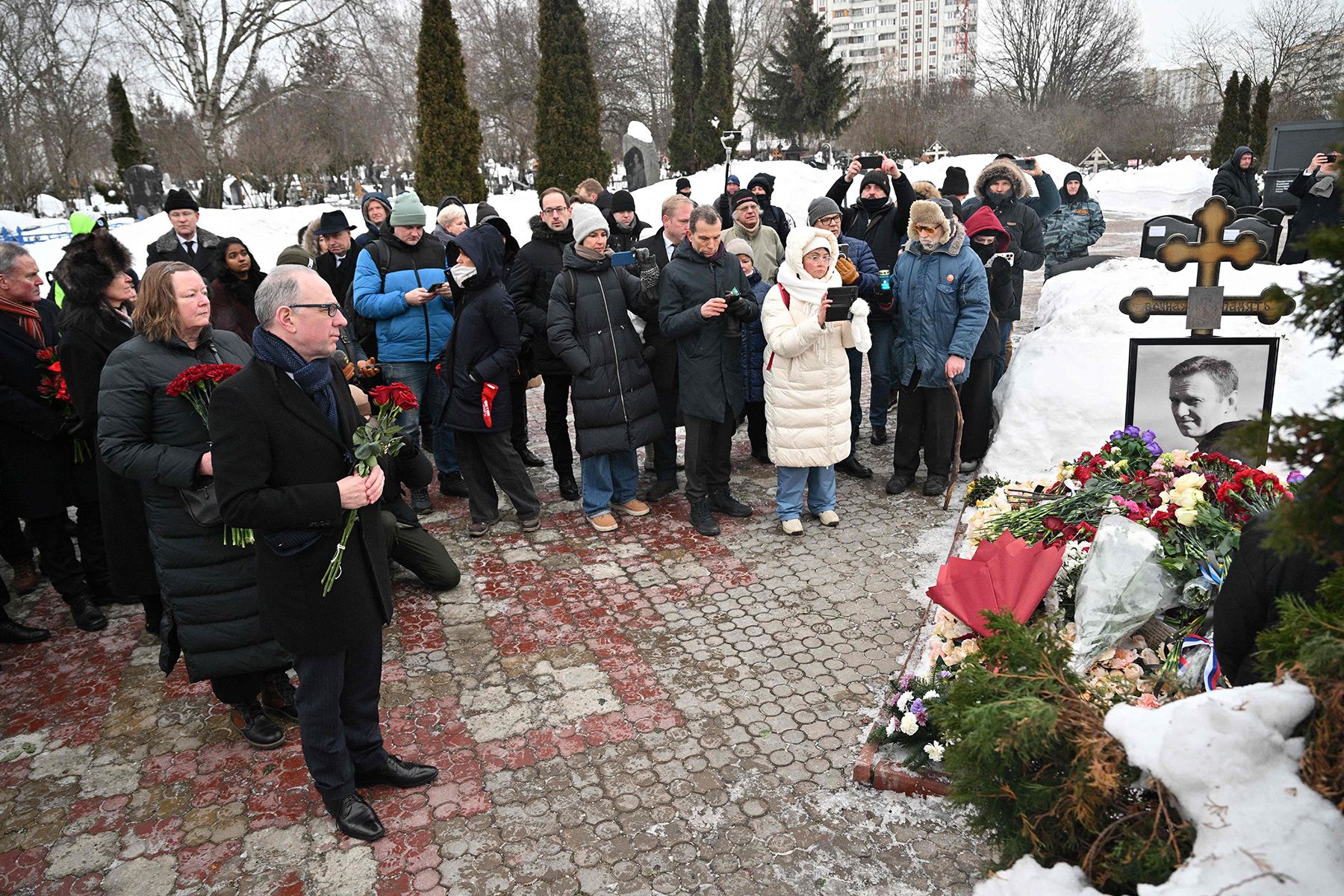
Later, staff from the embassies of Great Britain, Germany and Poland arrived at the cemetery. They had to wait in a short line to place flowers on Navalny’s grave. They made no speeches.
At 10 o'clock, Alla Abrosimova, mother of Yulia Navalnaya, and Lyudmila Navalnaya arrived. She placed an armful of blooming scarlet roses on her son’s grave, which stood out brightly against the background of other buds that had closed in the frost. Lyudmila Navalnaya touched the tip of the cross and shed a tear.
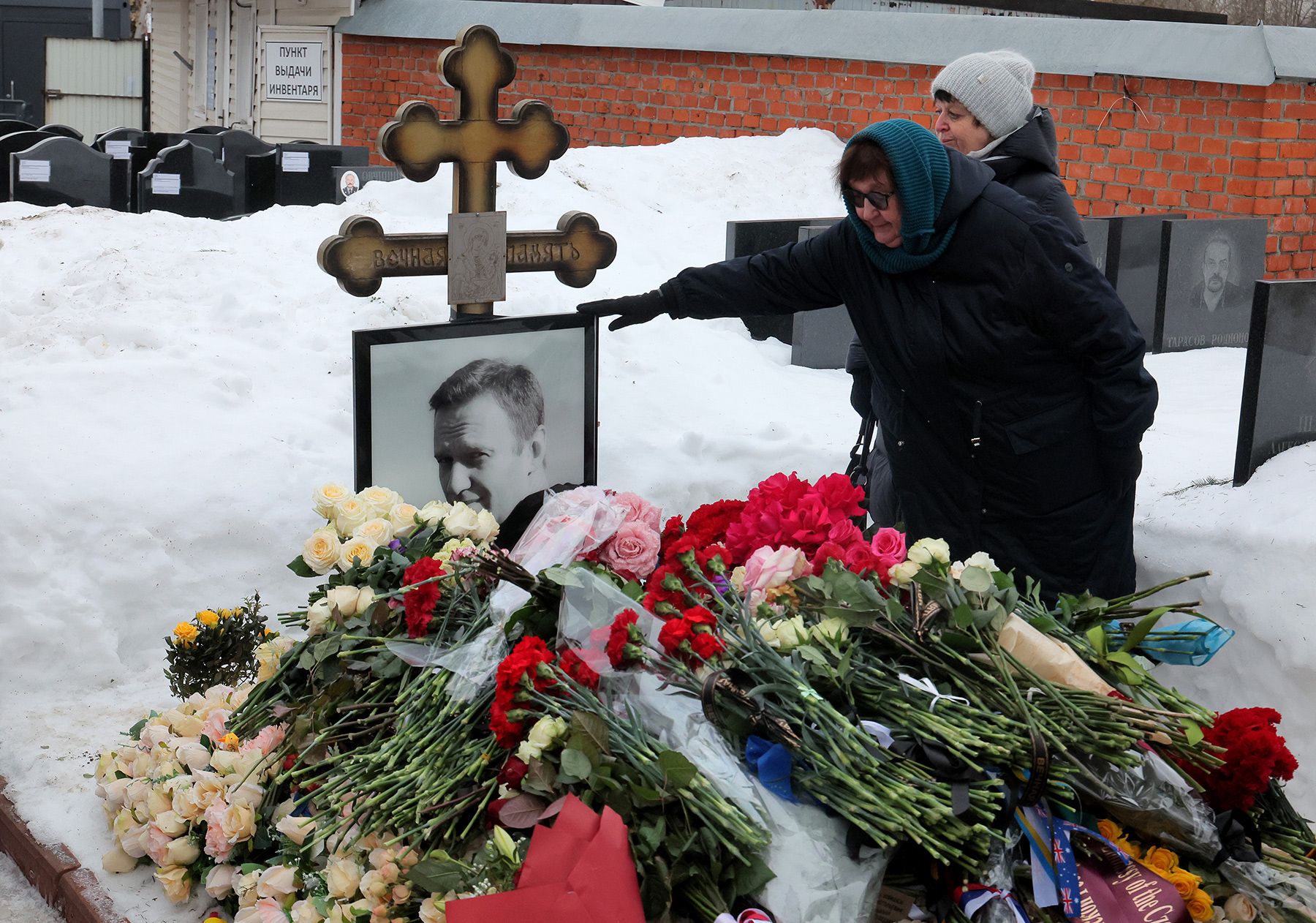
Valery and Tatyana Yashin, the parents of Navalny’s politician and ally Ilya Yashin, who was exchanged for Russian spies in the summer of 2023 and now lives in Germany, came to support her. “Ilyusha was friends with Alexey, we knew him for half of our lives,” Valery sighed. “The pain of his loss is with us forever.” It’s very difficult and very painful.”
Soon, people, one after another, reached out to Lyudmila Navalnaya to express their condolences. She was told words of gratitude “for such a son, for our Alexei.” Some of those who came said that they were trying to comprehend the legacy “that Navalny left to all of us” - in paintings and even plays, but it would be possible to show them publicly only when the “beautiful Russia of the future” comes.
Lyudmila Navalnaya listened to everyone attentively and hugged those who wanted to hug her. One of those who came to honor the memory of the politician bowed to the ground, another knelt down. “Alexey made me who I am now,” another visitor to the cemetery told Navalny’s mother, and she cried for the first time.
For about half an hour, Lyudmila Navalnaya stood listening to people approaching her (it was -13 degrees in Moscow this morning). When she was asked to take a few steps to stretch her legs so as not to freeze, Navalnaya refused. In front of her stood a line of Muscovites, for whom it was important to express their support and sympathy to the politician’s mother.
“Thank you, thank you... We hold on to your words and prayers,” Lyudmila Navalnaya answered to more and more people approaching her. She repeated her words spoken at the same placea year ago - that the whole world knows who ordered the murder of her son, and added: “And we want to know everyone who took part in this.”
The day before, Great Britain, Germany, the Netherlands, France and Swedenpublished a joint statement accusing Russia of violating the Chemical Weapons Convention. According to the examinations of several independent laboratories, Alexei Navalny was poisoned with the substance epibatidine - the poison of a South American frog, which Russia learned to synthesize. In Russia, the synthesis of the toxin was carried out by scientists from the same Institute of Organic Chemistry and Technology (GosNIIOKhT), where they developed the poison of the Novichok group.
The memorial service for Alexei, as last year, was served by Father Dimitri (Safronov), a cleric of the Moscow Church of the Intercession of the Most Holy Theotokos. He also performed the funeral service for Alexei during the funeral, for which he was later banned from serving.
“Darkness has no subjectivity,” Father Dimitri reminded. — In the Gospel of John there are wonderful words that the light shines in the darkness and the darkness cannot embrace it. So in our heart, if there is light, then darkness cannot absorb it in any way. If this spark burns in our heart, then nothing is scary. Likewise, evil can only win if it penetrates our heart.”
Someone in the crowd noticed that in the memorial prayer, Father Dimitri called Navalny not “murdered” or “innocently killed,” but “now remembered.” He explained that this is “the accepted church formula on the days of remembrance of the dead.”
People discussed with each other that a monument had not yet appeared on Alexei’s grave, for which his comrades raised money. Previously, they announced a sketch competition for a memorial to Navalny; a year ago, the winner was determined - he proposed a composition of two stone blocks, between which is the name of the politician, composed of titanium or steel letters. At the same time, a message appeared on the collection website: “Work on the implementation has already begun.”
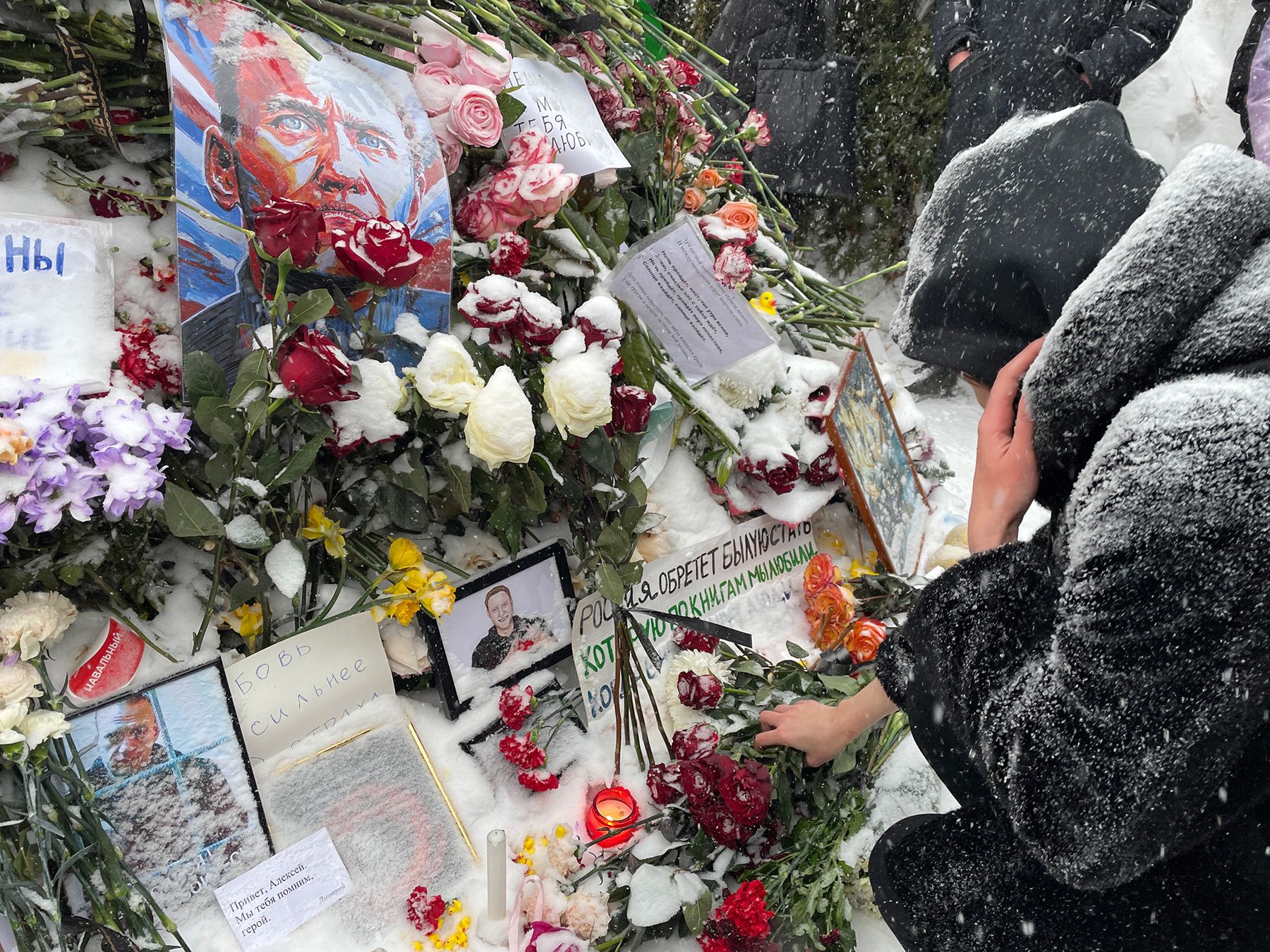
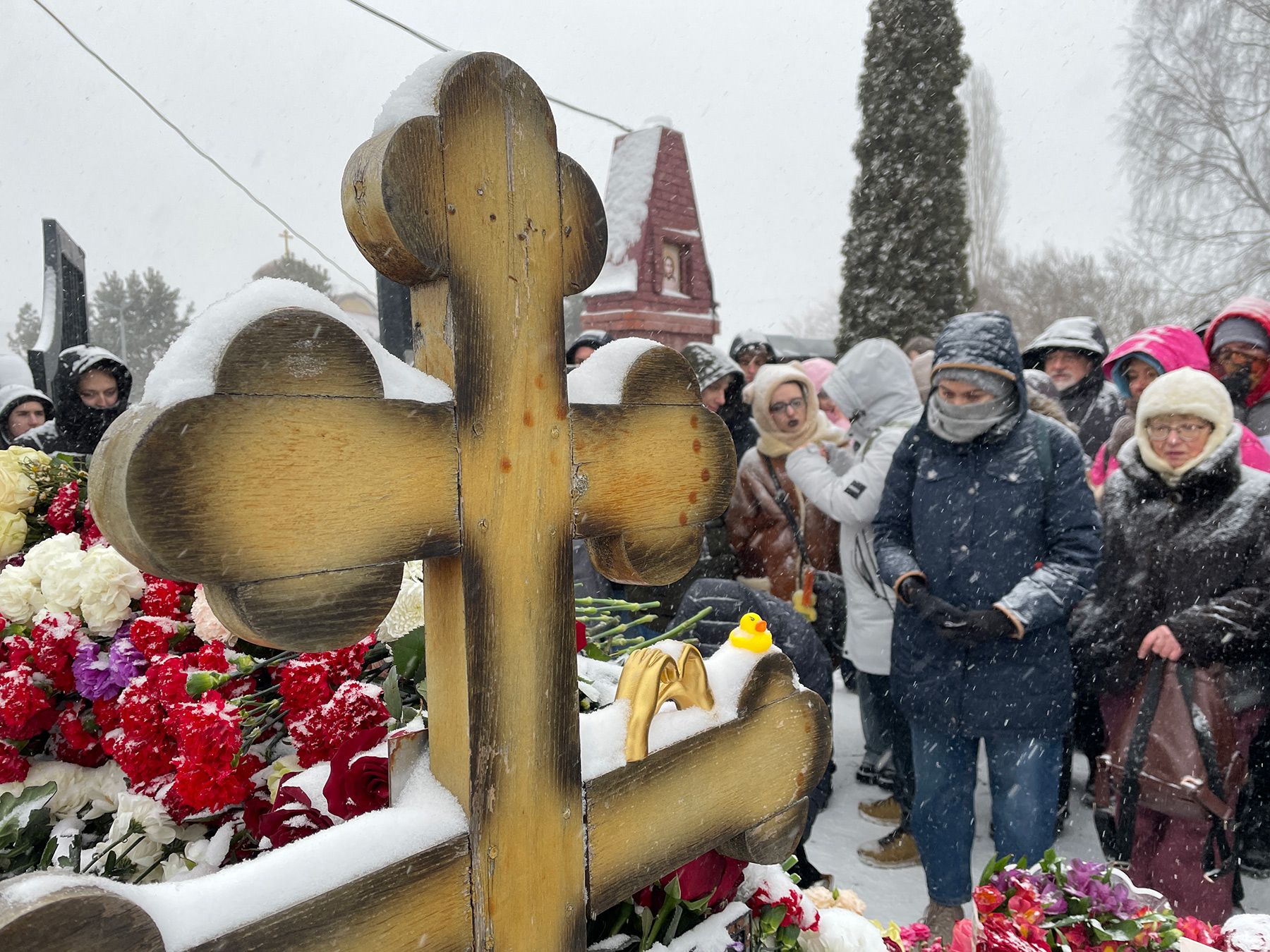
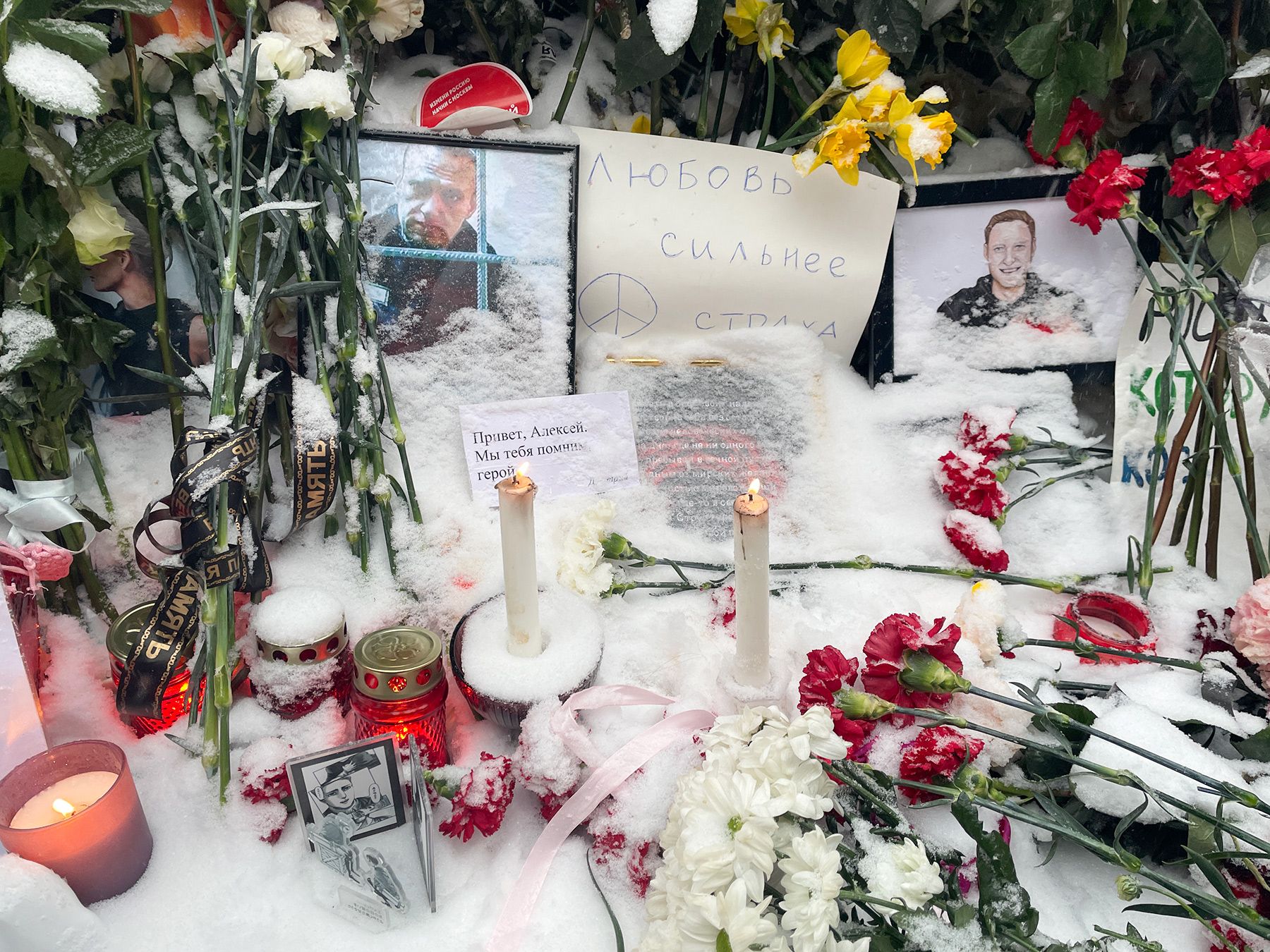
The flow of people did not decrease. They walked through the snowdrifts that had been swept up during the day by a blizzard. Portraits of Alexei Navalny, drawings, flowers, rubber ducks (a symbol of the FBK investigation “He’s not Dimon to you”), candles and lamps were covered with snow. Hastily written posters shone through it: “Love is stronger than fear,” “Russia will regain its former self,” “Blessed are those who hunger and thirst for truth,” “Lesha, we love you.”
On the crossbar of a simple wooden cross on Navalny's grave, someone placed a small gold sculpture depicting a heart made of two palms - a gesture that Alexey showed his wife Yulia in court.
Many came to Navalny’s grave, left flowers and notes, and then stayed for several more hours. In the middle of the day, the politician’s grave was no longer visible from behind the backs of those who came.
People sang:
The troubadour's serenade was replaced by songs of "foreign agents". Several teenagers sang “Abel Street” by Noize MC, written in memory of the murdered Navalny:
At the end of the performance, one of the teenagers read the “foreign agent sign” from memory.
— This information was created and distributed by the “foreign agent” Noise MC...
“Wrong, we need 15 seconds ,” the friends prompted, and the teenager began to read the impromptu warning again.
The young people also wanted to sing the Noize MC song “Bright Stripe”, the performance of which singer Naoko (Diana Loginova) and her group “Stoptime” became famous. After a video of this song being performed on the streets of St. Petersburg went viral, the musicians were subjected to round-robin arrests; Later, Loginova and her partner Alexander Orlov had to leave the country. But the teenagers could not remember the words of “Naoko’s song.”
Before the cemetery was closed, people shouted: “Alexey, Russia will be free! And Russia will definitely be happy! You will be as happy as you wanted! There will definitely be!” They applauded and walked towards the exit.
In the snowdrift there was a sign stuck by someone with a quote from a poem by Leonid Kaganov in memory of Alexei Navalny:
We expected a miracle to happen, and this is what it was.
"Shore"