
Translated material
Imperial tragic farce
A study by Ukrainian historian Sergei Plokhy about the war between Russia and Ukraine was published in Russian. We'll tell you why it's interesting.
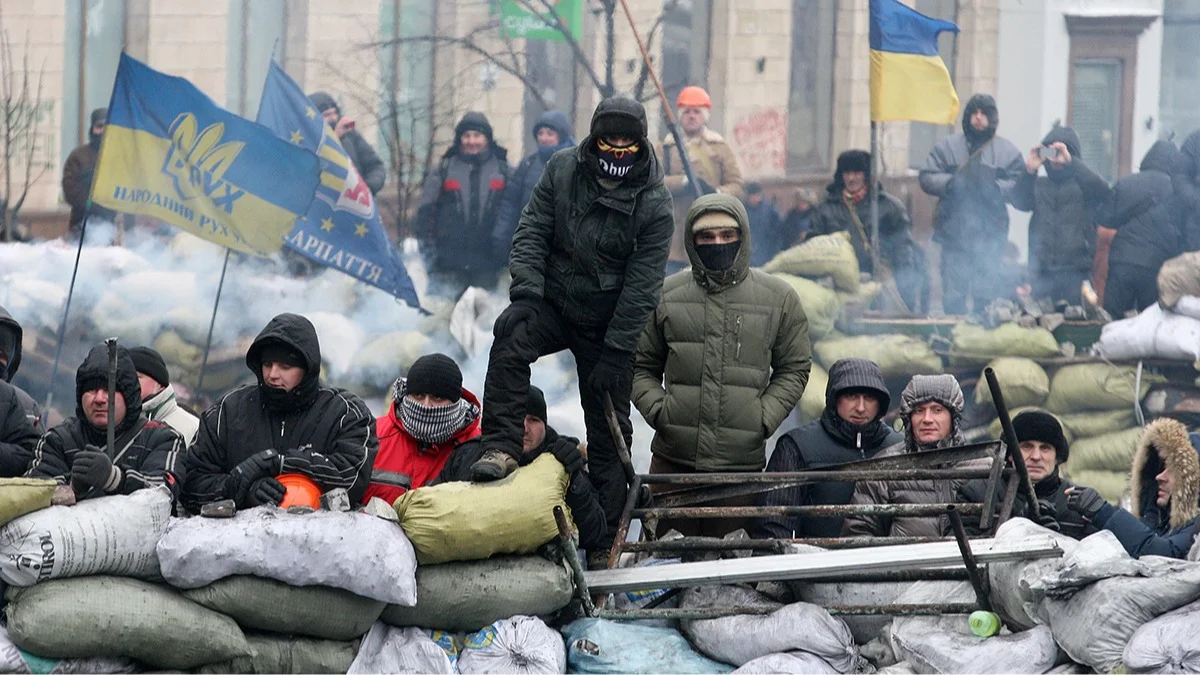
Protesters stand at a barricade during another day of anti-government protests in Kyiv, Ukraine, January 28, 2014. Photo: Zurab Kurtsikidze
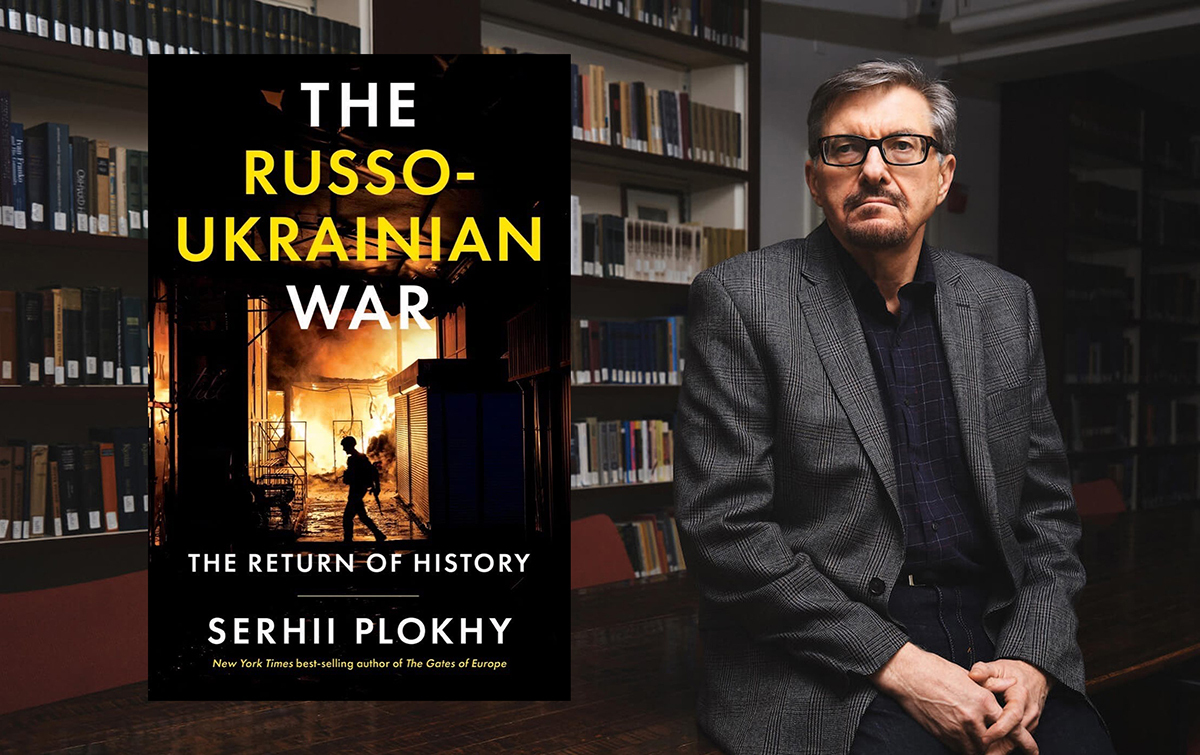
Sergei Plokhy is a famous Ukrainian historian who has been teaching at Harvard since the early 2000s. In his work “Russian-Ukrainian War. The Return of History" he examines not only wartime, but also Russian-Ukrainian relations before the war - even in the Soviet and imperial periods. Initially, the book was published in the USA in English, but now it is also published in Russian - by the Babel publishing house. The book contains a lot of little-known information, and the interpretations differ from those familiar to our readers. But there are also dubious theses and strange omissions - the literary columnist of the Novaya Gazeta Europe Sorin Brut believes that it is difficult not to argue with Plokhy.
Structurally, the book is divided into two equal parts, written in different genres. The first half is historical, about the development and interaction of Russia and Ukraine. Having reached 02/24/2022, the historian turns into a chronicler and analyzes the context of the war. Plokhy says that modern Ukraine largely relies on the memory of the Cossacks ( the book uses the spelling “Cossacks” to emphasize the difference from the “Cossacks” - a privileged military service class of a later period. - Author's note ) of the Wild Field (the neutral zone between Poland and the Crimean Khanate), who declared themselves at the end of the 16th century.
In the middle of the 17th century, the Cossacks, under the leadership of Bohdan Khmelnytsky, rebelled against Poland, formed the Hetmanate state and, needing allies, concluded an agreement with Moscow. The Cossacks were helped to survive - then the idea of helping the Orthodox brothers was important; I also remembered the concept of Moscow’s succession from Kievan Rus, which Ivan III used to justify the capture of Novgorod.
But Moscow itself encroached on the “ rights and liberties ” of the Cossacks—“ elements of their democratic structure .” They resisted, but gradually lost ground. “ The last traces of Cossack democracy were eliminated ” at the end of the 18th century. In the 19th century, against the backdrop of the rise of national consciousness in Europe and attempts by empires to contain it, Nicholas I’s ideologist Sergei Uvarov constructed the identity of a large Russian nation, which included Ukrainians and Belarusians (hence the idea of a triune Russian people).
This concept molded peoples into a manageable community, but devalued their differences. Now Putin refers to her in many ways. In the 1840s, a group of Kyiv intellectuals (historian Nikolai Kostomarov, poet Taras Shevchenko and others) created a secret society that studied the Ukrainian language and folk culture. Kostomarov hoped that the Russian and Austrian empires would eventually be replaced by a federation of Slavic republics. It was these people, based on the experience of the Cossacks, who formed the Ukrainian national project.
The UPR, proclaimed in the fall of 1917, grew from here. Before the October Revolution, Ukrainians were in no hurry to secede and believed in autonomy within the framework of the future Russian Republic. As a result of the civil war, the UPR entered the USSR. Lenin did not “create Ukraine,” but made concessions that were revised during Stalin’s time: the Ukrainian intelligentsia was subjected to repression. By the collapse of the USSR, Ukraine had a historical ideological foundation for building a national state.
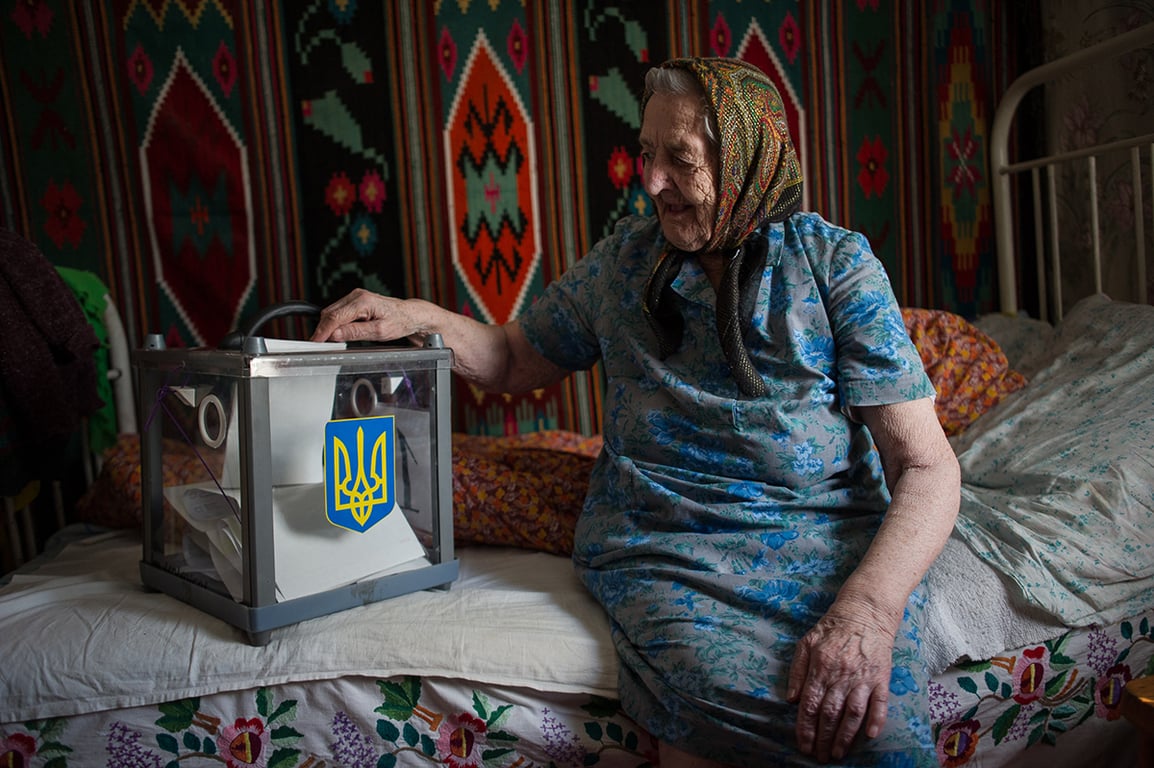
Then, in the referendum, Donbass voted for independence (84%), there was a slight advantage even in Crimea (54%) and Sevastopol (57%). Part of the Russian leadership, according to Plokhiya, did not consider the collapse of the USSR final. They saw it as a tactical retreat for Russia, which would emerge from the crisis while maintaining oil and gas revenues, and when “ it gets back on its feet, everyone will be drawn to it again, and then the issue [of the Union] can be resolved anew .” Not the death of an empire - a reboot.
But the following thesis looks dubious: “ Russian society and a significant part of the elite considered the fall of the imperial superpower a loss for Russia .” Bad voices this position as self-evident, without giving any argument. Although in this logic it turns out that the progressives did not rely on any part of the monolithic imperial society.
The percentage of those who regret the collapse of the USSR, according to the Levada Center and FOM , has indeed been high since 1992. Nostalgia for the USSR reached its peak at the turn of the 1990s and 2000s, and began to decline in the 2000s: the main reason for the melancholy was economic, and the growth of great power sentiments occurred already in the Putin years - under the influence of propaganda. Moreover, the opposite point of view was always held by a significant minority (minimum - 16%, maximum - 37%). One of the book's glaring shortcomings is its almost complete ignorance of this social divide, which has largely defined the country's appearance in recent decades.
Hence, the disdain for the Russian opposition is growing - the protests of the 2010s and Navalny are mentioned in passing, and the conversation about the arrest of Kara-Murza comes up in the same place as the arrest of Girkin. One may get the impression that there was no anti-war protest at all before the mobilization and defeats.
The author's preface to the Russian-language edition has a different tone. It talks about “ an old-fashioned imperial war waged by the Russian elite ,” about “ the remnants of democratic and pro-European hopes of Russian citizens ,” and finally, that “ for the survival of Russian society, it is necessary to defeat the Russian state .” Whether this is a show of politeness towards the reader or a clarification of the position is not entirely clear.
The historian says that the Russian government perceived the post-Soviet countries as only partially independent, and already in the 1990s hinted that it would interfere in their affairs if they were not allies.
The issue of Crimea was also raised and was a lever of pressure on Ukraine. At the same time, Yeltsin did not seek to take it away when there was such an opportunity in the early 1990s, so as not to stimulate the idea of secession from the Russian autonomies and not to spoil relations with the United States.
During the Yeltsin years, dreams of democracy quickly gave way to an authoritarian reflex with manual control, disregard for laws, forceful struggle with opponents, the use of state resources for elections, and finally the appointment of a successor. In Ukraine, according to Plokhy, strong regionalism became a defense against autocracy.
The Russified east and south collided with the west, which had long been part of the empires of Central Europe and had a nationalist anti-Soviet tradition. The Ukrainian-speaking, predominantly rural center fluctuated between the poles. “ No political party or regional elite was strong enough to take control of parliament and impose its will or political vision on the entire country. Compromise turned out to be the only possible way in which the elites could resolve their differences and take into account mutual interests ."
The culture of compromise has always been difficult in Russian society. There were also problems with the sense of community that the region can provide. The split was determined not by political preferences, but by an understanding of the role of power - “servant of the people” or the all-powerful architect of human destinies.
Bad shows that presidents made attempts (Kravchuk, Kuchma’s second term, Yanukovych), but could not achieve sustainable authoritarianism: the active part of society protested and, obviously, found support from part of the elite. There was no consolidation of the financial and political elites, security forces, or the church around the leader, and this made the context radically different from the Russian one.
If the task is to compare two societies and their political life, the question about the specifics of the protest experience seems logical: Russian society had the experience of successful protests, but for a long time, despite numerous and sometimes massive attempts to revive it. Protesters in Ukraine, on the contrary, have repeatedly achieved results. The historian avoids this issue, but yet it seems fundamental.
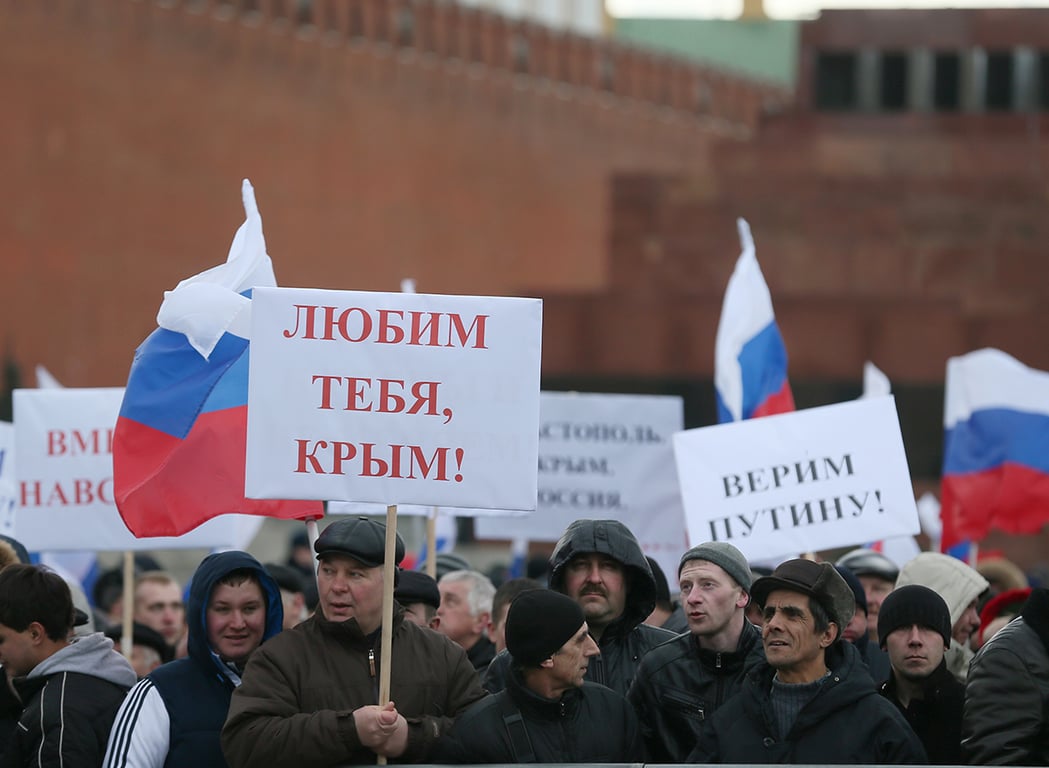
From Plokhia’s book one might easily get the impression that the Russians are behind Putin and are actively interested in annexing foreign lands. But one of the main characteristics of our society is passivity. In terms of manifestations of disagreement, this can easily be explained by atomization, repression (and their psychological effect), and the inability to influence the authorities peacefully. However
The empire that the historian speaks of also rarely goes beyond the boundaries of everyday chauvinism and boasting of native power. Militarism and Putinism usually remain at the level of a sticker on a car.
All this attracts few people to the front - unlike money. State patriotism in its current version looks like an attempt to cling to power, but only to hide from it in its own shadow. For the majority, the space for exerting effort remains private life. It was not possible to ideologically mobilize society for the war, and even participation in it had to be turned into solving personal issues: earnings, career growth or expungement of a criminal record ( you can read more about this in our conversation with Olesya Gerasimenko. - Author's note ) . Another question is that involvement in war contributes to ideologization. The mobilized Ukrainian society here is radically different.
According to Plokhy, the transformation of Ukraine occurred as a result of the annexation of Crimea and the war in Donbass. Putin excluded the most pro-Russian regions from the political process, weakening the parties that relied on them. There was a unification of society. Decommunization was carried out. Interest in Ukrainian history and culture has increased noticeably.
One of the obvious motives of the book: Putin destroys what is dear to him (at the level of declarations) and helps the collective fears of many Russians come true. He physically and culturally destroys the “Russian world” (the Russian-speaking part of Ukraine suffered the greatest damage from the war), kills the idea of fraternal peoples, creates a truly hostile Ukraine (one of the motives of the book is that society and the political elite of the country did not believe in the possibility of such a war until it began) and pushes it towards the West. Finally, the “defender of sovereignty” turns Russia into China’s junior partner.
It’s a shame that the book says little about Donbass, where it all began. Bad briefly talks about the development of the region until 2014. Further, it essentially excludes him from the narrative, although the attitude towards its residents in the country and the view on reintegration, which Zelensky’s team also tried to deal with, were important political issues.
The historian focuses on the fact that a quick “special operation” to “protect” the Russians of Donbass and “denazify” soon turned into a big war with the intention of occupation.
Plokhy rightfully does not perceive “protection of Russians” as the real reason, but interprets the Russian-Ukrainian war as an old-fashioned colonial one. This sounds convincing, but I think that the empire of power is specific. Putin's original plan was designed for a quick victory, was based on false ideas about Ukrainian society, and failed. Isn't everything further a reaction in the hope of extracting the maximum benefit from it? After all, what we got next was a chameleon war: a “holy war with the West” - either defensive, or for the establishment of a “multipolar world,” or for “traditional values.” Either with NATO, or with the USA, or with Europe, or with global liberalism.
The situational need to scare the whole world due to circumstances became a “revival of the empire”, for which ideological foundations were frantically selected. As a result, the empire turned out to be the same fake as the palace in Gelendzhik and the games of the Russian elites at nobility.
“The Russian-Ukrainian War” is a bright and controversial, sometimes too sweeping book. However, historical works even in quiet times only pretend to be accurate and objective: the selection and interpretation of facts are determined by personal or corporate values. A story made up of a combination of optics has a better chance of getting closer to the truth, and the reader will find Bad’s view useful.
The translation of a book into Russian and its publication by an emigrant publishing house is a good sign. This is a reminder that language does not belong to the country, much less the government.