
Translated material
War as an excuse
Russian authorities refer to “SVO” to ban rallies, cancel corporate events and develop embankments
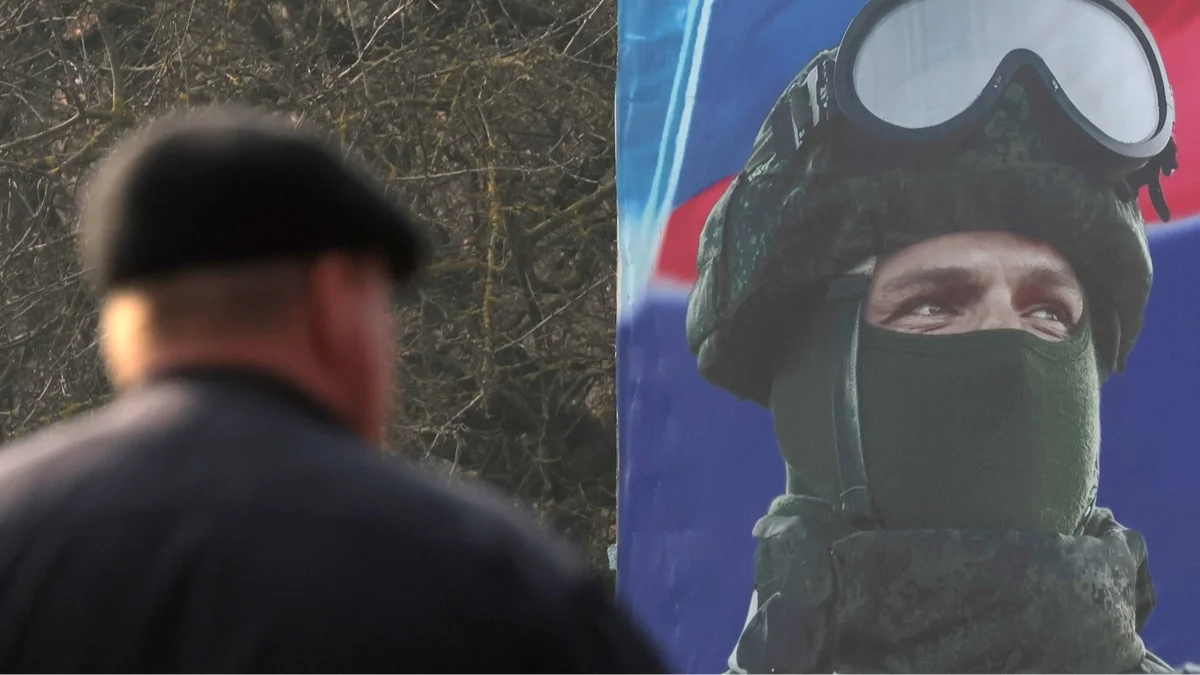
Photo: Maxim Shipenkov / EPA
From the very beginning of the full-scale invasion of Ukraine, the Russian authorities have justified repressive laws, limited communications, lack of Internet and much more by saying that a “special military operation” is underway. “SVO” has become a universal justification in Russia. It is referred to not only when passing laws or shutdowns, but also when it is necessary to justify local unpopular decisions - to ban a rally, build a temple in a park, or declare someone who complains about housing and communal services an “internal enemy”. How else have the authorities used military rhetoric in recent months to justify measures - in the New-Europe material.
Build the embankment with a 70-meter church
For the fifth time in a row, the Krasnodar administration refused to coordinate a rally against the construction of a temple on Rozhdestvenskaya Embankment, as calculated on February 9 in 7x7.
Officials explained each refusal in the same way: the site, according to them, was occupied all these days - from February 16 to 20. Instead, city authorities suggested that activists move the action to another area of the city.
Protests against construction began at the end of 2024. It was then that the administration decided to erect a temple 70 meters high. Local residents stood up to protect the only green area in the neighborhood and one of the few in the city. As New Europe wrote , people collected signatures, organized pickets, recorded video messages and even demanded that the mayor of the city, Yevgeny Naumov, resign.
In response, the authorities sent police to the protesters, called them “obscurantists,” and in December last year, justifying their decision, they decided to call the temple “a spiritual center for SVO fighters.”
Build a church in a residential area despite complaints from residents
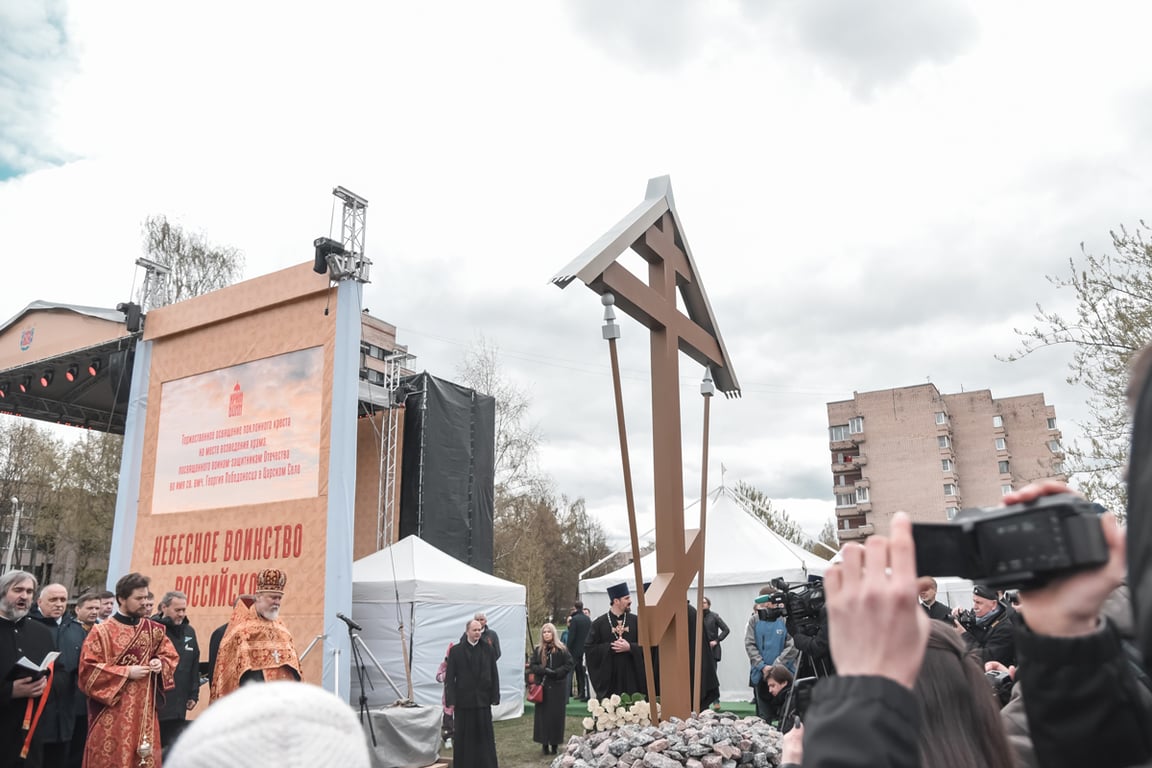
In the city of Pushkin, at the intersection of Petersburg Highway and Detskoselsky Boulevard, near residential buildings, the authorities want to build a large temple in honor of the “participants of the North Military District.” The project was called “Warrior Temple”. Especially for him, the Committee for the Protection of Monuments proposed increasing the height of permitted construction on the site - from 12 to 30 meters. This is comparable to a 10-story building. Gosstroynadzor approved the project.
Many local residents opposed this decision: in their opinion, a 30-meter building would completely deprive their apartments and houses of sunlight. Besides,
people regard the reference to “SVO” as speculation: “Precisely for the purpose that if someone is indignant about the construction of the temple, one can always say that these people are against a “special military operation””,
- locals told Okno.
Construction of the temple began at the end of December.
Do not hold rallies
In March 2025, the Krasnoyarsk administration did not allow a rally against the euthanasia of stray animals. The formal basis was “Covid” restrictions, although at that time they were no longer relevant.
In response to this, Deputy of the Legislative Assembly of the Krasnoyarsk Territory Alexey Boyko decided to hold a rally against these very “Covid” bans and submitted an application for it. However, even here the authorities refused and cited two reasons: planned improvement work and the fact that “holding public events during the period of a special military operation declared by Russian President Putin is unacceptable.” However, there is no such rule in Russian legislation.
Don't set off fireworks
This New Year, more than ten Russian regions have introduced restrictions on the use of pyrotechnics. Some directly referred to the SVO, while others did not comment on their decision.
Thus, the mayor of Novorossiysk, Andrei Kravchenko, asked city residents not to set off fireworks during the New Year holidays: he said that “conducting a special military operation dictates new rules of conduct and safety.” According to him, pyrotechnics are most dangerous during sabotage, the use of UAVs, grenades or other explosive devices. “This is an excellent disguise for the sounds of explosions. Our service members are fighting to ensure that we and our children can celebrate holidays without restrictions in the future,” he wrote.
And the head of Udmurtia, Alexander Brechalov, generally proposed banning fireworks “until victory.”
Do not hold corporate events
The Tuvan authorities have completely banned New Year's corporate parties as a sign of support for the Russian military. The head of the republic, Vladislav Khovalyg, said that “in the current conditions, holding large-scale New Year’s events with corporate parties and fireworks is unethical” in relation to “northern military forces soldiers.” Khovalyg advised to spend the saved money on helping the invasion participants.
In the Saratov region, they also abandoned New Year's festivities: “This is not the time to organize noisy holidays, when at this moment our military personnel, risking their lives, protect us and move forward, and their wives and mothers do not find a place for themselves at night,” said the head of the region, Roman Busargin.
At the same time, the head of Bashkortostan, Radiy Khabirov, asked not all residents of the republic, but only the heads of districts and members of the government to refrain from holding New Year’s corporate parties until the end of the war: “When the war ends, as they say, we’ll throw a good holiday,” he said.
Do not write comments about the poor state of housing and communal services
At a meeting of the government of the Belgorod region in mid-January, the governor ordered to strengthen monitoring of social networks, wrote the local publication Go31. According to him, they contain “internal enemies” who are heating up the situation. This statement outraged residents: they asked the authorities to clarify whether ordinary requests regarding everyday problems were classified as “hostile”.
“Do you really mean that you perceive people who complain on the Internet about the lack of public services as internal enemies?
I understand that the SVO is underway and the region is under attack, but often the only way for people to draw the attention of the authorities to problems whose solution is delayed is to speak publicly.
And instead of admitting that not all services work like clockwork, you make excuses from these very internal enemies,” said one of the residents.
Demolish art objects
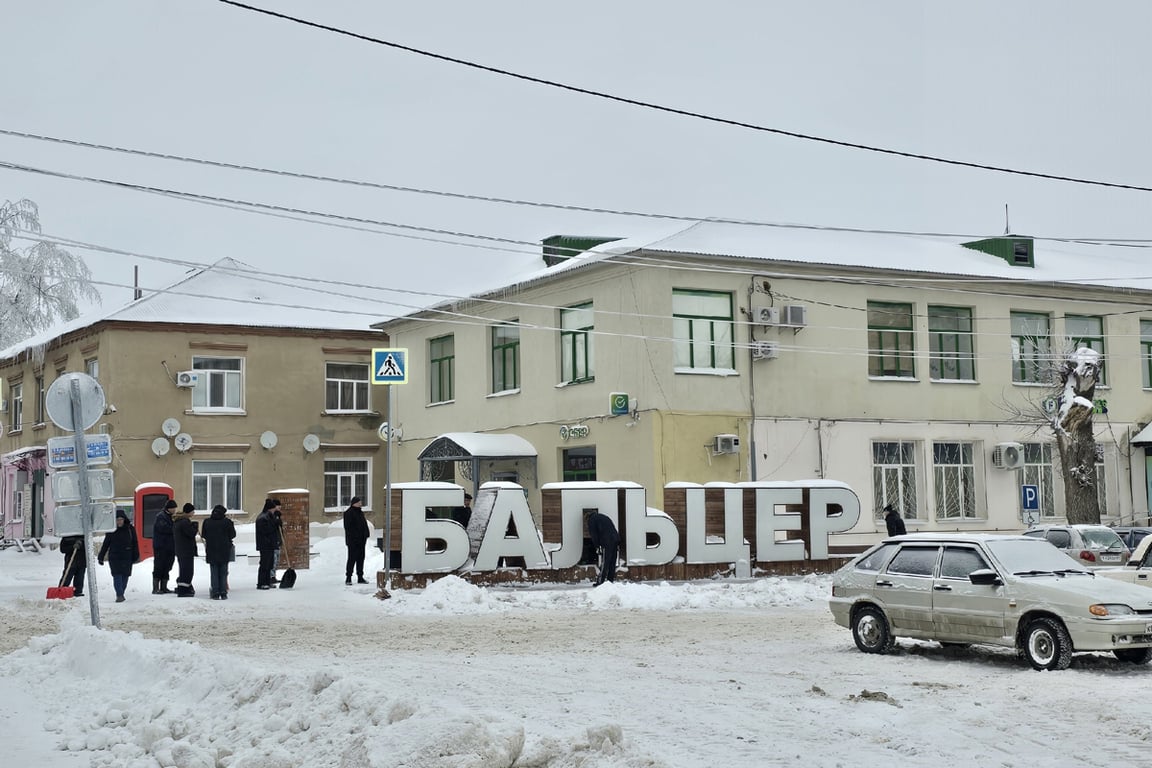
On January 15, the administration of Krasnoarmeysk decided to dismantle the art object with the historical German name of the city. War participants demanded that the “Balzer” sign installed near the city square be removed in 2023. The mayor's office officially stated that they had considered the appeals of city residents, and also took into account “the current situation related to the conduct of a special military operation.”
Build a school named after the “heroes of the Northern Military District” on the site of the park
As New Europe reported , in Saratov, on the site of the Territory of Childhood park, it is planned to build a school named after the “heroes of the Northern Military District” for 1,100 students. Residents of the Leninsky district opposed this. They organized rallies, collected thousands of signatures, proposed alternative sites and unsuccessfully tried to designate the park as a cultural heritage site. Activists stated that they were ready to stand as a “shield in front of technology” to protect the green zone.
The authorities and supporters of the construction called the park an “overgrown square” and the future school a “source of patriotism.” United Russia deputy Yulia Litnevskaya accused the protesters of provocations “in the spirit of the Navalnists.” As a result, on July 3, 2025, the Saratov Regional Court allowed the development, rejecting the residents’ claim.
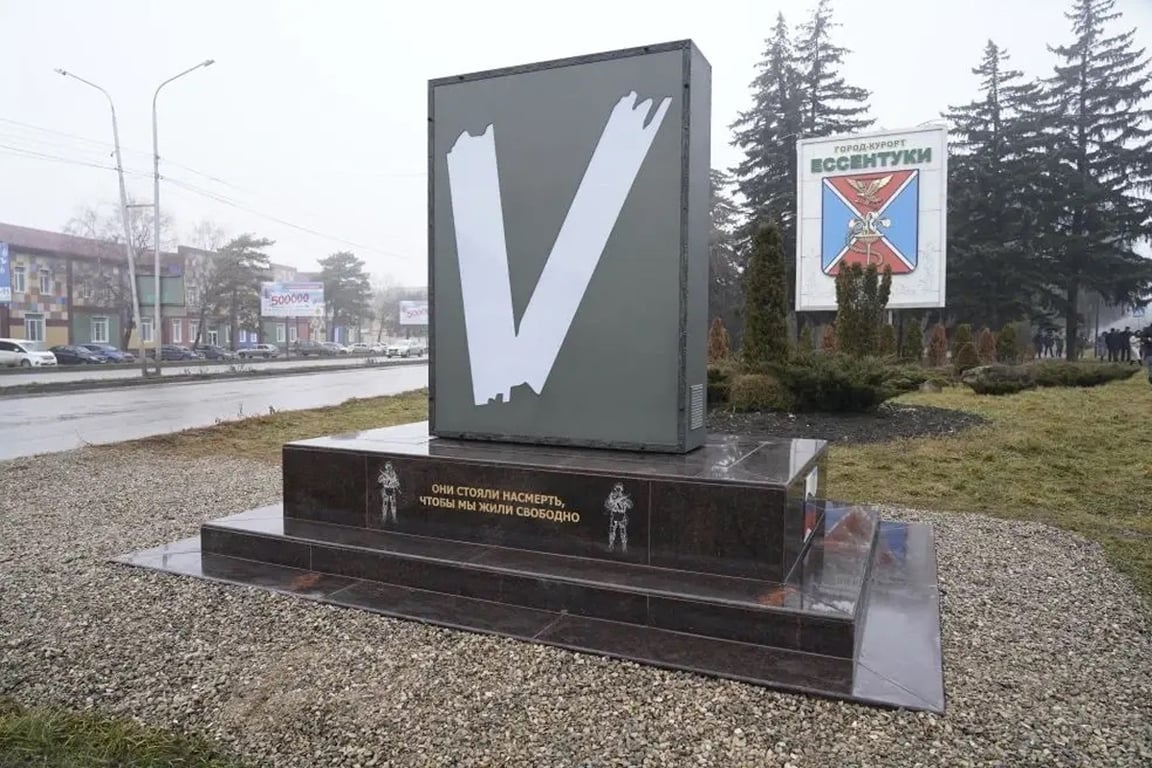
Spending billions in honor of the “heroes of the Northern Military District”
At the end of December, the Chuvash authorities allocated 84.7 million rubles to create a monument to “participants of a special military operation.” They began actively erecting monuments to “northern military district fighters” in Russia in the second year of the war. The BBC Russian service calculated in 2025 that in total about 440 such monuments appeared in the country. They spend money from the budget on them—somewhere a hundred thousand rubles, somewhere a million.
In 2024, the Agency wrote that the total costs of war monuments amounted to at least 1.2 billion rubles. At the same time, the publication calculated the figures based on TASS information that only 20 monuments were erected in the country. Now this figure should be much higher.
Do not talk about the “failure of the SVO”, otherwise it will be a denunciation
The Samara Provincial Dumasent a statement to law enforcement agencies because of a speech in the regional parliament by the representative of the Democratic Party of Russia, Grigory Eremeev. On December 23, 69-year-old pensioner Eremeev said that deputies “must share responsibility with President Putin for the failure of the SVO.”
The activist also demanded that legislators “propose to the president to stop military actions in Ukraine unilaterally within 10-30 days.”
At the same meeting, deputies unanimously decided to contact the security forces to evaluate such statements. As a result, Eremeev was fined 30 thousand rubles for “discrediting the army.”