
Translated material
The war for orbit begins: Starlink shutdown on the Ukrainian front became a lesson for Russia and China
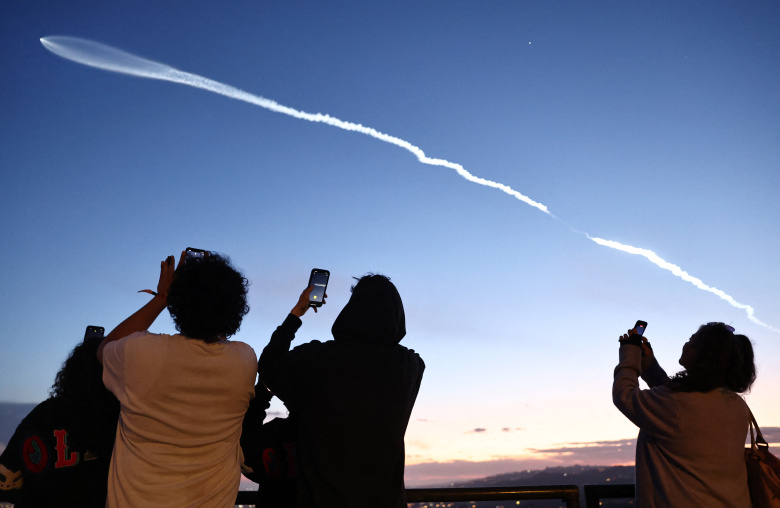
People watch a SpaceX Falcon 9 rocket carrying a payload of 22 Starlink internet satellites into space
Photo by MARIO TAMA / GETTY IMAGES NORTH AMERICA / GETTY IMAGES VIA AFP
The Russian military's disconnection from Starlink was not just another episode of the war in Ukraine, but also a booster for the global space race. China is accelerating the creation of its own satellite infrastructure, modeling ways to neutralize Musk's networks, trying to reduce such a serious technological gap with the United States. How one private project changed states' ideas about military communications and why the struggle for orbit is becoming a new strategic front line - in the analysis of Dmitry Goncharov.
Shortly after Elon Musk disconnected the Russian military from the Starlink system, Russian representatives at the relevant UN committee in Vienna demanded international negotiations to limit the number of new satellites in low-Earth orbit and “clarify the rules for the use of commercial satellite frequencies for military purposes.”
When the Russian Armed Forces in Ukraine adopted smuggled Starlinks, the Russians were not worried about this issue, but now, apparently, they are. And even very much so.
Meanwhile, the situation with the disconnection of Starlinks of the Russian army is scrupulously monitored by thousands of Chinese experts from specialized structures and bloggers specializing in military topics. And this is understandable: the Chinese do not have such a system and, by their own admission, will not appear in the foreseeable future. But an operation is being prepared to “liberate” Taiwan, where everything or almost everything is based on Musk’s communications. This is why China, in November 2025, simulated a blockade of Taiwanese Starlinks using approximately 2,000 jamming drones designed to “blind” all air defenses and military communications on the island.
Subscribe to read in full
Subscribe to Redefine.Media to read Republic
Subscribe [You can pay with a Russian or foreign card. The subscription is renewed automatically. You can unsubscribe at any time.]
Where does the subscribers' money go?