Date
Author
Максим Привин; Алена Алексеева; Рая Левашова
Source

Preserved copy
Translated material
Lavna port and billions in dust
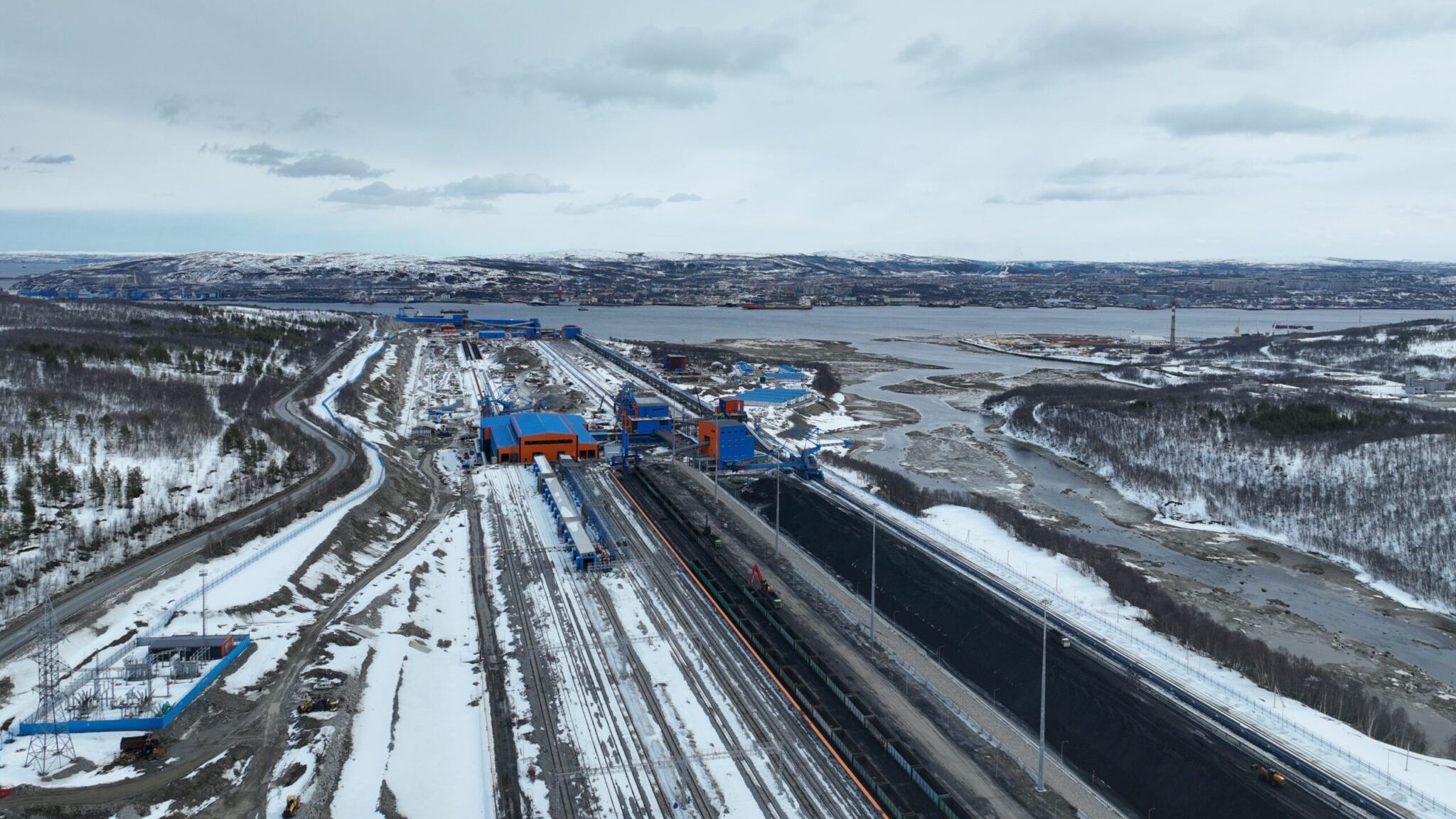
The coal terminal took 20 years to build, but no one needed it
The Lavna port was conceived as one of the key elements of the Murmansk transport hub. The new deep-water and ice-free port was supposed to redirect coal exports from Russia from the Baltic direction to northern routes and open up additional opportunities for supplies to Asia and India.
But by the time the project was launched, the economic and geopolitical situation had changed dramatically. After the start of the full-scale invasion of Ukraine, European markets for Russian coal miners began to close, exports dropped, logistics became more complicated, and the interest of private investors in Lavna decreased noticeably. The project, which the largest coal companies had previously fought for control over, eventually had to be completed through government loans, subsidies and concession schemes.
“Arktida” and “Chronicles.Media” examined in detail who started the Murmansk “construction of the century” and why, what risks the port poses to the environment and who made money on multi-billion dollar contracts.
"Lavna" without cargo
The Lavna port is designed for 18 million tons of coal per year. In January 2026, the general contractor reported an increase in throughput to 67% of the designed capacity, that is, up to 12 million tons.
However, the problem is that today there is no cargo in the required volume for Lavna. At the end of 2025, the terminal shipped about 1 million tons of coal. On the eastern shore of the Kola Bay near the Murmansk sea trade port, coal transshipment volumes have been falling for two years in a row. In the first quarter of 2026, the decline was 39% by 2025 and about 60% by the 2020 high.
In other words, the port was built for growing coal exports, but by the time it was launched it was faced with a sharp drop in demand and changed logistics. Back in 2016, the construction of Murmansk transport hub facilities was actually frozen due to lack of economic feasibility. Now this problem has returned, but after multi-billion dollar investments.
As they write in the media , the main contractor for the construction of Lavna, the company TEK Mosenergo, had difficulties with settlements with subcontractors. An equally difficult situation has developed around the Vykhodnoy-Lavna railway line.
Additional questions about the project arose after an audit by the Accounts Chamber. Auditors identified financial violations during the implementation of the project “Comprehensive Development of the Murmansk Transport Hub” on the part of the directorate of the state customer “Rostransmodernization”.
Why was the Lavna port built?
The idea of building a coal terminal on the western shore of the Kola Bay appeared in the mid-2000s. In 2006, the Siberian Business Union (SBC) announced plans to build a port with a capacity of at least 15 million tons of coal per year. Later, the project was included in the state program for the development of the transport system and became part of the Murmansk transport hub.
The meaning of the project was simple and clear. Thanks to him, Murmansk planned to abandon open coal transshipment within the city and create a modern terminal outside dense residential areas. In Murmansk itself, coal transshipment has been one of the main environmental problems for years. Residents complained about coal dust that settled on houses, cars, snow and got into the air. Protests against open transshipment have become an important part of the city's agenda.
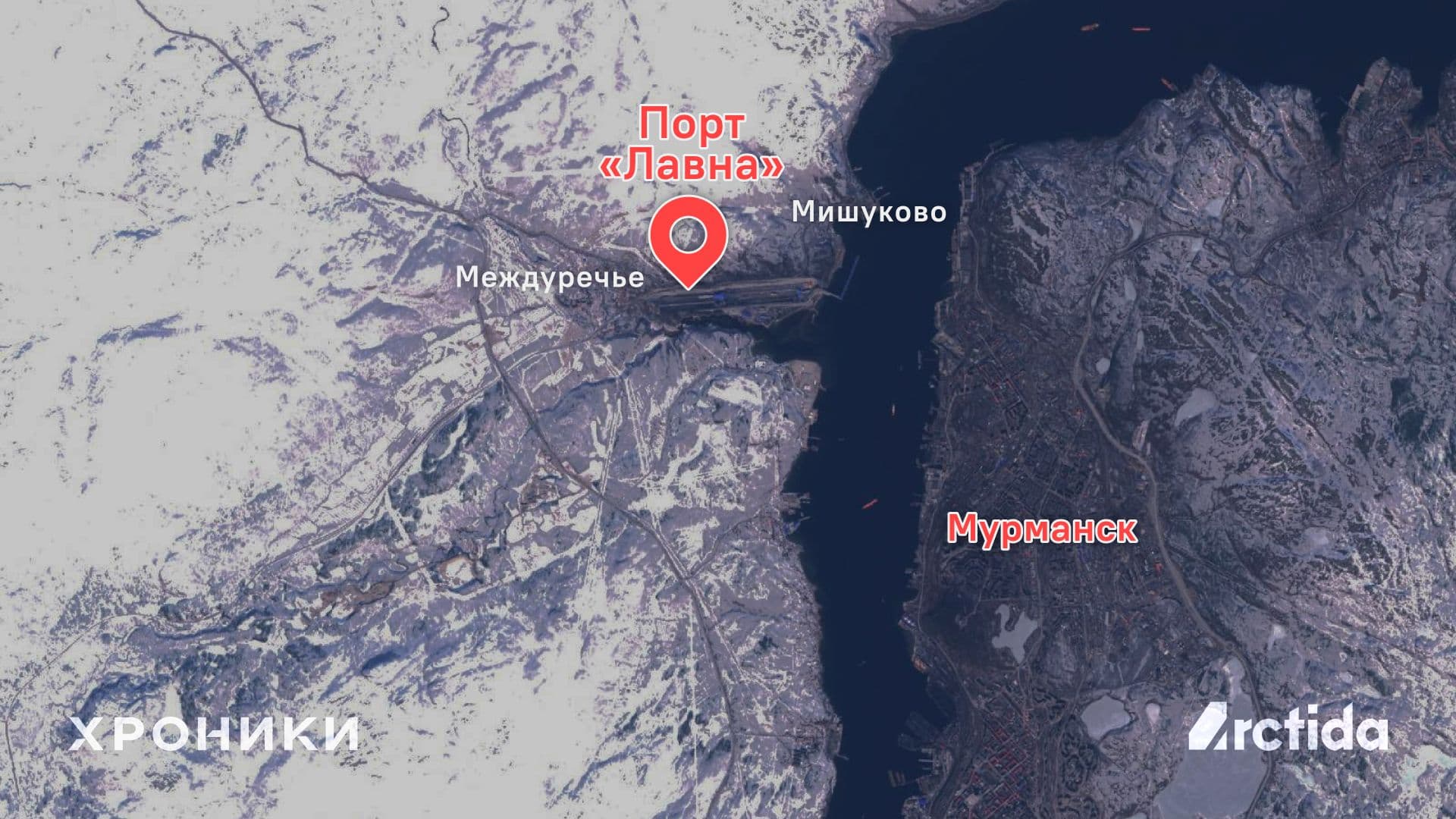
“Lavna” was promoted this way - as a technologically advanced and more environmentally friendly alternative. The terminal is located not in the city center, but on the opposite shore of the Kola Bay from Murmansk. There is about 2.5 kilometers of open space between the port and residential areas. Unloading of wagons must take place inside the building, coal moves along closed conveyors, and at certain stages aspiration and dust suppression systems are used. Theoretically, this should help clean the air in the city, but this will not completely solve the problem of coal dust.
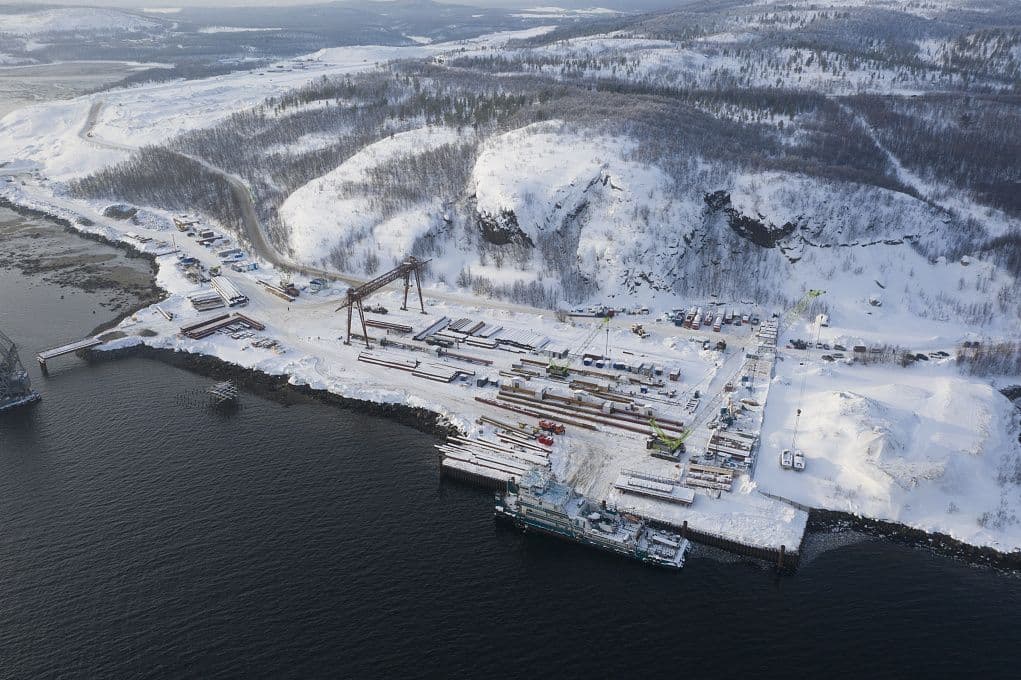
Closed transshipment, but open storage
The main environmental complaint against Lavna is related not so much to the unloading of cars or conveyors, but to the open storage of coal. The terminal's coal warehouses are not closed with sealed silos. They are located in open areas, fenced with perforated screens 18 meters high, with a maximum coal stack height of 16 meters.
Formally, this is considered a protection system, but in fact the screen is only two meters higher than the coal mass itself.
In the conditions of the Kola Bay, where strong winds are common, such protection does not eliminate the risk of spreading coal dust.
The Murmansk coast is characterized by wind speeds of more than 25 meters per second, and maximum values can reach 40 meters and higher. The average wind speed in Murmansk most of the year exceeds 4 meters per second, while small particles from dusty surfaces can be blown away at a speed of 3–5 meters. With a north wind, dust from the western shore of the Kola Bay can flow towards the Pervomaisky district of Murmansk: to the Abram-Mys, Drovyanoe and Three Ruchya areas.
Even closer to the terminal are the small villages of Mishukovo and Mezhdurechye. The border of the project site is located approximately 500 meters from the residential development of Mishukovo. Formally, the sanitary protection zone is observed, but in fact, residents of the villages live close to coal warehouses, railway infrastructure and operating port equipment, which creates risks for their health.
Dust in the lungs
and climate crisis
Coal dust is more than just dirt. In scientific research, it is considered as a source of toxic trace elements and polycyclic aromatic hydrocarbons. Some of these components may have carcinogenic, mutagenic and teratogenic properties.
Particularly dangerous are particles ranging in size from 2.5 to 10 microns . They are able to penetrate deep into the respiratory tract and reach the lungs, where they can settle and damage tissue. In addition, coal dust pollutes soils, surface and groundwater, and in Arctic ecosystems its impact can be especially sensitive due to the fragility of the natural environment.
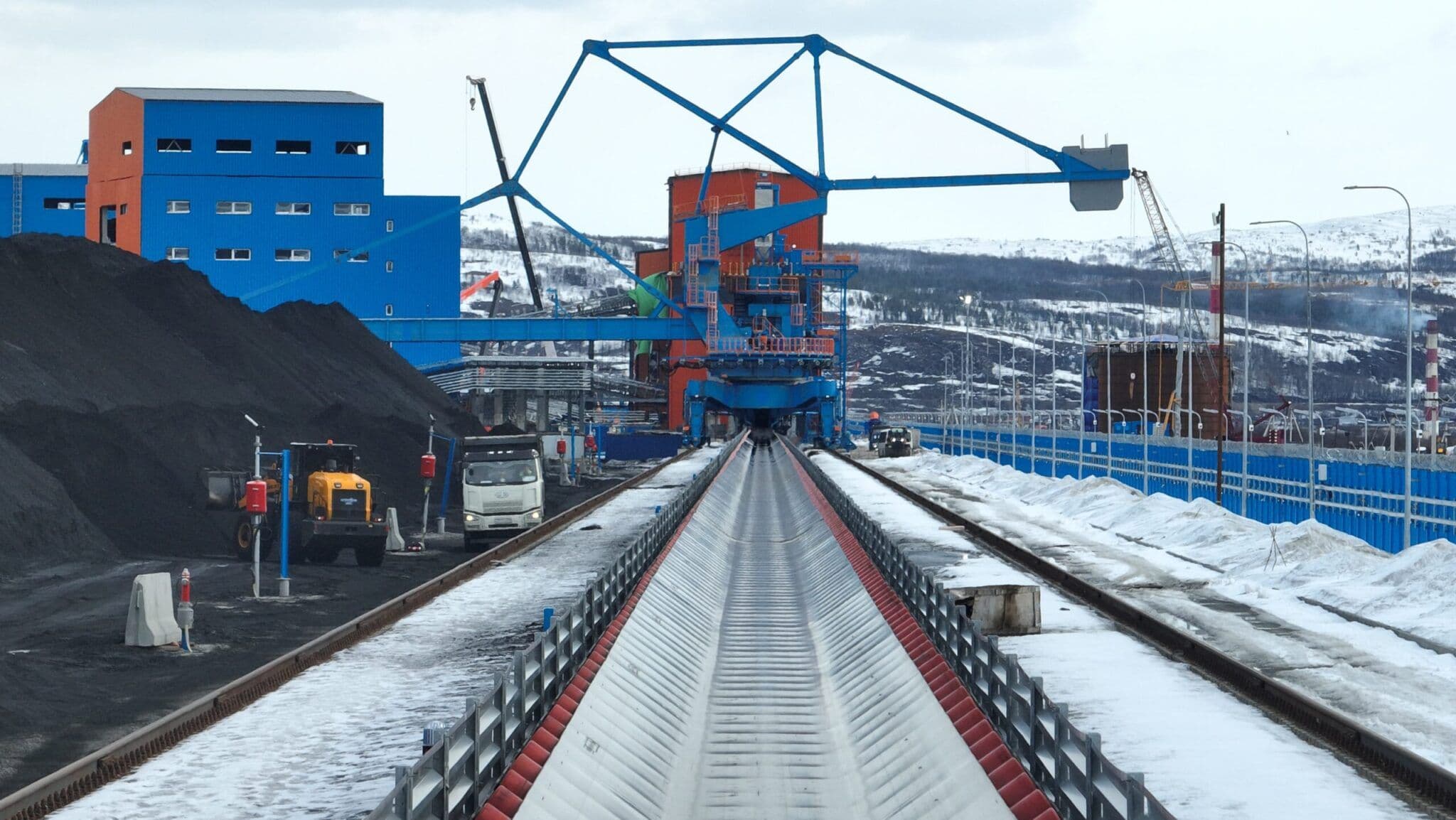
The environmental impact assessment materials for Lavna list sources of air pollution during the operation of the terminal: transshipment, accumulation, storage, crushing and sorting of coal, operation of diesel locomotives, tugs, ships, treatment facilities, repair areas and refueling infrastructure. Possible emissions include coal dust, nitrogen oxides, soot, sulfur dioxide, carbon monoxide, benzopyrene , formaldehyde, kerosene and other substances.
Although the project provides for irrigation, aspiration systems, closed conveyors and treatment facilities, even with these technologies, some risks remain - especially in the event of dust suppression failures, accidents, strong winds or an increase in transshipment volumes.
“The transfer of coal transshipment from the center of Murmansk to the opposite shore of the Kola Bay does not solve the problem of pollution, but transfers it from the “living room” to the “backyard”. Despite closed transshipment, the storage of millions of tons of coal in open-air “fields” remains a source of coal dust, threatening nature and human health. Unfortunately, no technology can completely stop its spread,” explains Arctida climate and environmental analyst Raya Levashova.
The analyst adds that coal remains the dirtiest and most climate-damaging fossil fuel.
The development of projects related to its extraction and combustion means investing in the strengthening of the climate crisis and its negative consequences: heat waves, droughts, floods, extreme precipitation, fires, storms, destruction of ecosystems.
“These and other effects that we are already observing in the abnormally rapidly warming Arctic will only gain critical mass. This means that people will have to deal with losses and damage, the costs of adapting to the climate crisis, which will require resources many times greater than the profit of the enterprise. At the same time, I don’t think that Russian large infrastructure projects like Lavna will ever be ready to admit their climate responsibility and compensate for the damage caused,” says Raya Levashova.
Risks to Arctic nature
The terminal is located in the Kola Bay area. Nearby are the Bolshaya Lavna and Malaya Lavna rivers, riverbed lakes and swamp areas. Part of the port territory is located in a water protection zone, which requires special measures to protect against pollution, clogging and depletion of water bodies.
The project documentation also indicates risks for surface waters. The papers talk about pollution by mineral suspensions during construction and dredging, possible oil spills, discharge of treated wastewater, water turbidity and damage to aquatic biological resources.
The nearest specially protected natural area (SPNA) is a natural monument of regional significance “Ram's forehead near Lake Semyonovskoye”. It is located only 4.5 kilometers from the site. Also in the region is the Kandalaksha Nature Reserve, which includes marine areas of the White and Barents Seas. The nearest marine protection zones of the reserve in the Kola Bay are located approximately 15 kilometers from the terminal berths.
Formally, the project developers believe that there will be no significant impact on the protected areas. But coal bulk carriers pass through the waters of the Kola Bay, which means additional risks: from noise pollution to fuel leaks and the transfer of small particles of coal dust by currents.
Coal dust also affects the melting of ice and snow covers, disrupting the albedo - the reflectivity of the Earth.
Dark dust particles prevent light-colored surfaces from reflecting heat and further contribute to warming the Arctic.
Thus, in addition to environmental pollution and negative impacts on ecosystems and humans, coal dust can contribute to earlier melting of snow cover, which increases the risk of fires and lengthens the fire season.
Like a private port
became state
In the early stages, Lavna was attractive to private investors. Over the years, the Siberian Business Union, the structures of billionaires Iskandar Makhmudov and Andrey Bokarev, and the Swiss trader Mercuria Energy Trading showed interest in the project.
Since 2009, the project was controlled by Makhmudov and Bokarev through the Rozana company, which owned the Lavna Commercial Sea Port LLC (MTP Lavna). But in 2016, Makhmudov decided to leave the project. Officially, the reason was the increase in construction costs after the devaluation of the ruble. At the same time, the absence of a cargo base was announced for the first time. The cost of the project increased from 17.6 billion rubles to 40–50 billion.
Most of Makhmudov's share was sold to the State Transport Leasing Company (GTLK) joint-stock company with 100% participation of the Russian Federation. According to the studied financial documents, the share was ceded for $11.28 million, and the rights of claim on loans issued by Makhmudov to MTP Lavna for 484.7 million rubles . After the deal, the billionaire’s structures were left with only 5% in Rozan, and the investment itself was later declared worthless.
But soon the former participants in the project tried to regain control of Lavna. In 2017, STLC reached an agreement with the Swiss Mercuria, which claimed 75% of the terminal. However, the deal was not approved by the Federal Antimonopoly Service. In parallel, Andrei Bokarev’s structures submitted an application for the acquisition of 70% of Lavna and received a positive decision. SDS-Ugol opposed this, fearing Bokarev’s strengthening in the northwestern port direction.
As a result, a compromise was found: Bokarev’s Business Globus received 20%, SDS - 25%, Russian Railways - 10%, another 30% went to the newly created joint stock company Center for the Development of Port Infrastructure (CPPI), the founder of which was the little-known lawyer Boris Guttsov. Later, this structure will become the main owner and logistics center of the project.
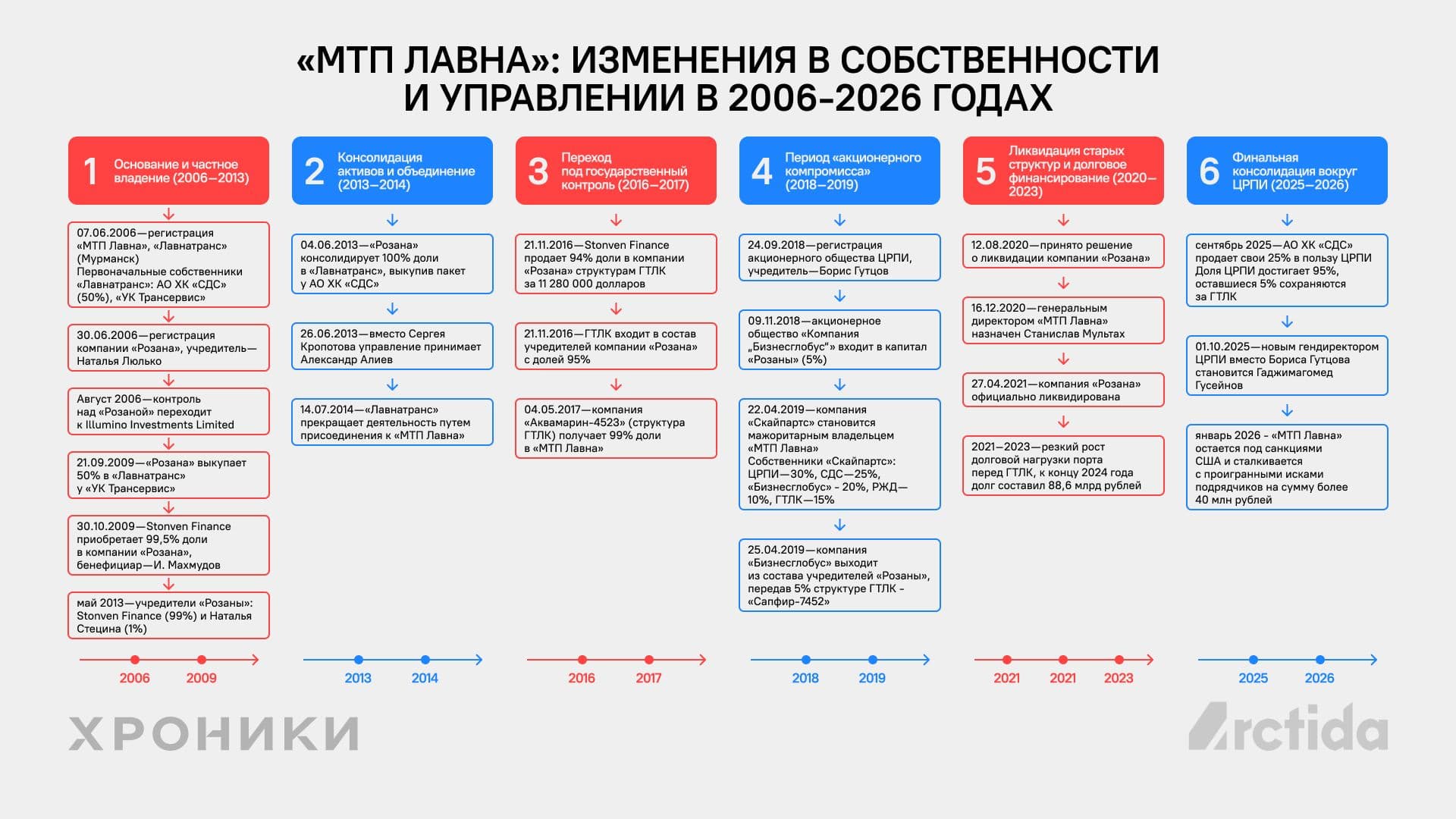
In 2018, the government formalized the project through a concession agreement , according to which the concession fee to the state was symbolic - only a thousand rubles, but the state pledged to invest in the construction of access roads, provide the operator with port operating conditions and the ability to collect special port fees.
Later, the conditions were rewritten several times: in 2022, the concession period was extended until 2043 and at the same time the payment schedule for the grantor, the Russian Federation, was removed from the “basic conditions”. The construction completion dates were postponed later in 2024, 2025 and the end of 2025. In December 2025, the government officially approved the two-stage completion of the terminal: by December 2025, there is enough throughput capacity of up to 9 million tons of coal per year, and the release of 18 million was postponed to May 2027.
Despite the fact that direct payments from the state were removed from the government decree on the concession agreement, part of the costs was still borne by government agencies, including State Transport Leasing Company. Thus, from the decision of the arbitration court on one of the disputes surrounding the supply and installation of equipment, it turned out that STLC invested 27.7 billion rubles in the purchase of technological equipment.
That is, the state not only took upon itself the creation of a favorable regime for the future port, but also directly financed the purchase of equipment for the terminal.
“Our” contractors at the “construction site of the century”
By 2021, the project was rebuilt. The general contractors for the construction were companies associated with billionaires Arkady and Igor Rotenberg, longtime friends of Vladimir Putin.
The main construction contract was awarded to the joint stock company TEK Mosenergo, which is 78.7% owned by the Rotenberg group of companies Natsproektstroy. The general director of TEK Mosenergo, Alexey Krapivin, is also associated with the 1520 group, the largest contractor of Russian Railways. His father Andrei Krapivin was an adviser to the former head of Russian Railways, Vladimir Yakunin, one of the shareholders of the Ozero dacha cooperative, of which Vladimir Putin was a member.
Another contractor was the NPS Engineering company, also associated with the Rotenbergs’ Natsproektstroy. According to the financial data of MTP Lavna, of the 23 billion rubles allocated directly for construction, 19.7 billion were received by TEK Mosenergo, and 1.4 billion by NPS Engineering. Thus, about 21.1 billion rubles from the construction budget went to two contractors associated with the Rotenbergs.
At the same time, the overall structure of expenses for credit funds looks completely different. Of the nearly 80 billion rubles of public investment, those same 23 billion went to construction, 17 billion went to return to banks, and about 34 billion more went to refinancing.
That is, a little more than a quarter of the allocated funds were spent on the construction itself.
The renewal of the Lavny project in 2021 was reflected not only in who got the construction contracts, but also in who began to manage the project. Key positions in the port and affiliated structures were occupied by managers associated with the structures of Natsproektstroy and the Rotenbergs’ entourage.
Thus, Stanislav Multakh, who headed Lavna, previously worked in the structures of the former Minister of Transport Maxim Sokolov, associated with the Rotenbergs. First Deputy General Director of Lavna, Andrei Levakin, once worked with Sokolov in the St. Petersburg government. Other port managers also worked in various Rotenberg companies: deputy general director for interaction with authorities and public organizations Maxim Nikolaev and for construction Vladimir Malanin (Zaitsev), investment adviser Nadezhda Primakova, director of the customer-developer service Timur Mukhamedzhanov and his deputy Vladimir Parshkov.
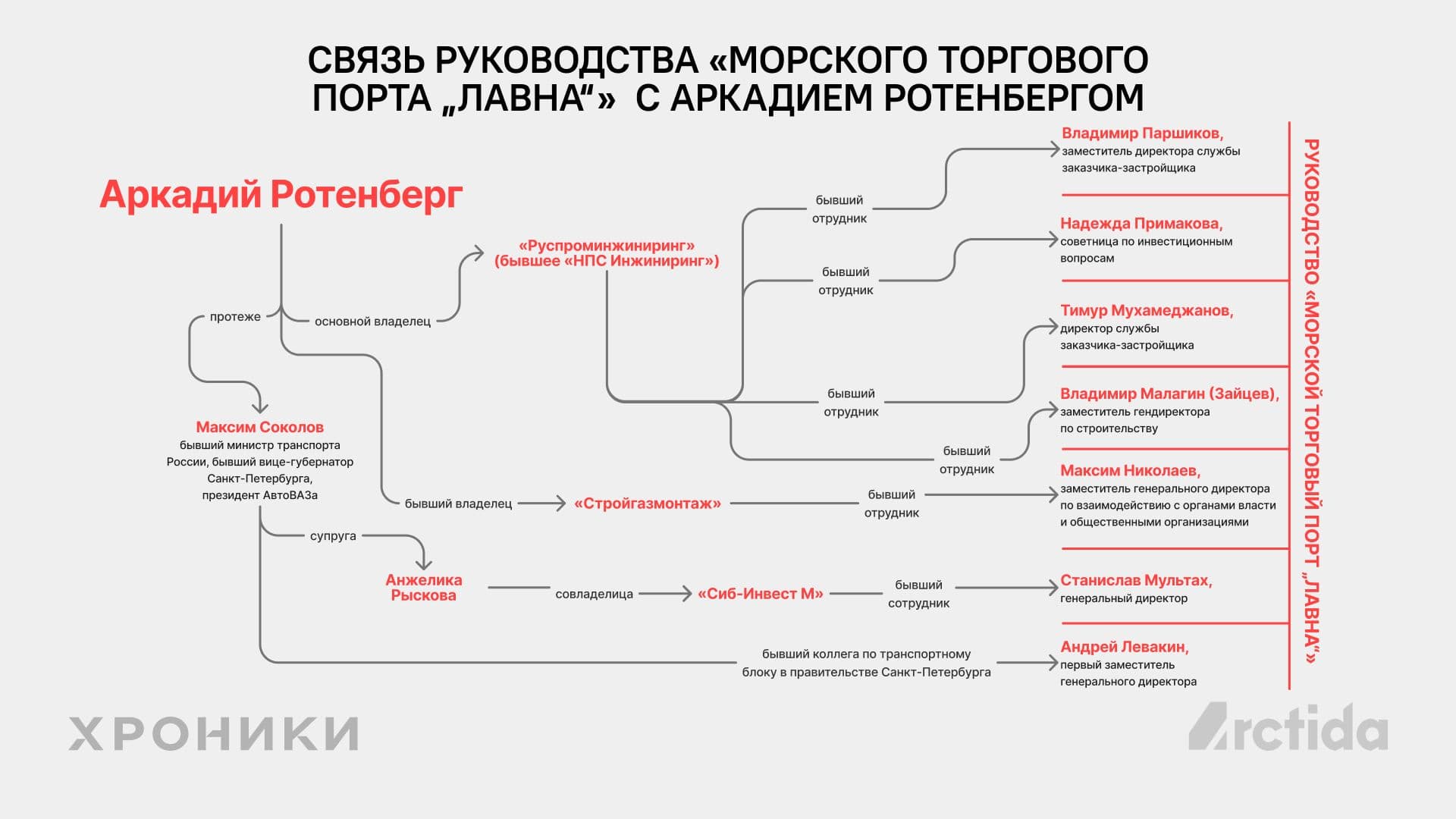
In fact, the same circle receives both money for construction and control over it.
Transshipment monopoly
To ensure the port's capacity, a system of long-term take-or-pay contracts was created. In 2021, Lavna contracted the capacity of the future coal terminal until 2043, when the concession expires. The contract holder was CRPI through the Moscow company Integrated Transport and Logistics Solutions (CTLR).
In fact, the CRPI has taken upon itself the obligation to pay the port for transshipment even in the absence of actual volumes. In parallel, the company entered into mirror agreements with four coal suppliers from Kuzbass.
This scheme made it possible to formally show the future loading of the terminal and provide a financial model for the project, but at the same time it created a transport monopoly, where CRPI received full control over transshipment for decades to come.
Today, the actual loading and logistics of Lavna are concentrated around companies associated with Boris Gutsov and TsRPI. The latter, by 2025, became the owner of 95% of MTP Lavna, that is, virtually the entire port. The remaining 5% belongs to the state State Transport Leasing Company.
SDS, which once competed for participation in the project, sold its share to CRPI in September 2025. This became a symbolic result: large coal players, initially interested in the port, no longer see the same benefits in it.
The role of the figurehead in Lavna
Boris Guttsov remained a little-known figure for a long time; his photographs are still not in the public domain. But it was through the structures associated with him that control over the key logistics of Lavna was formalized.

The joint stock company “Port Infrastructure Development Center” was registered in 2018, during the period of the next change of owners of Lavna. Until 2020, the sole owner of the company was Boris Guttsov, who was 31 years old at the time of the company’s creation. Now information about the owners is hidden, but it is known that since February 2020, the closed mutual investment fund “Development Infrastructure”, managed by one of the VTB Bank companies, has become the sole shareholder. Boris Guttsov remained on the company’s board of directors.
CRPI, in turn, controls the railway operator “Integrated Transport and Logistics Solutions” and the transport company “Special Container Lines”. It is KTLR that acts as the operator of coal transportation for Lavna. In 2024, KTLR paid the port 1.33 billion rubles for transshipment services, and its revenue amounted to 8.25 billion rubles.
Gutsov's biography indicates connections with the Russian managerial elite. Guttsov began his career in the modest law firm Antonova and Partners. Anton Ulanov worked there with him, who over the past few years had worked at the head of a number of companies of the Kolmar holding of Anna and Sergei Tsivilev, the niece of Vladimir Putin and her husband.
In the mid-2010s, Guttsov worked with fugitive Ukrainian oligarch and media mogul Sergei Kurchenko , who was also called the "gas king" of Ukraine. When Kurchenko had already moved to Russia, lawyer Gutsov was given a nominal share in the Russian part of Kurchenko’s media holding - United Media Holdings (TN-Stolitsa). As a lawyer for a fugitive Ukrainian oligarch, Gutsov was mentioned in an Al Jazeera TV channel investigation into the trade in frozen assets of former Ukrainian President Viktor Yanukovych, in which Kurchenko also participated. In 2016, Boris Guttsov participated in a trial in a New York court between Sergei Kurchenko's United Media Holdings and Forbes magazine.
The turning point in Boris Gutsov’s career was his work with Alexey Taicher, ex-adviser to the head of Russian Railways Oleg Belozerov and former co-owner of large leasing companies Transfin-M and SG-Trans. In 2023, Gutzow and Teicher traveled together several times to Istanbul and Dubai. Traveling with them was another former general director of the CRPI, Evgeny Prilepin, with whom Taicher once worked at Russian Railways and the Federal Freight Company.
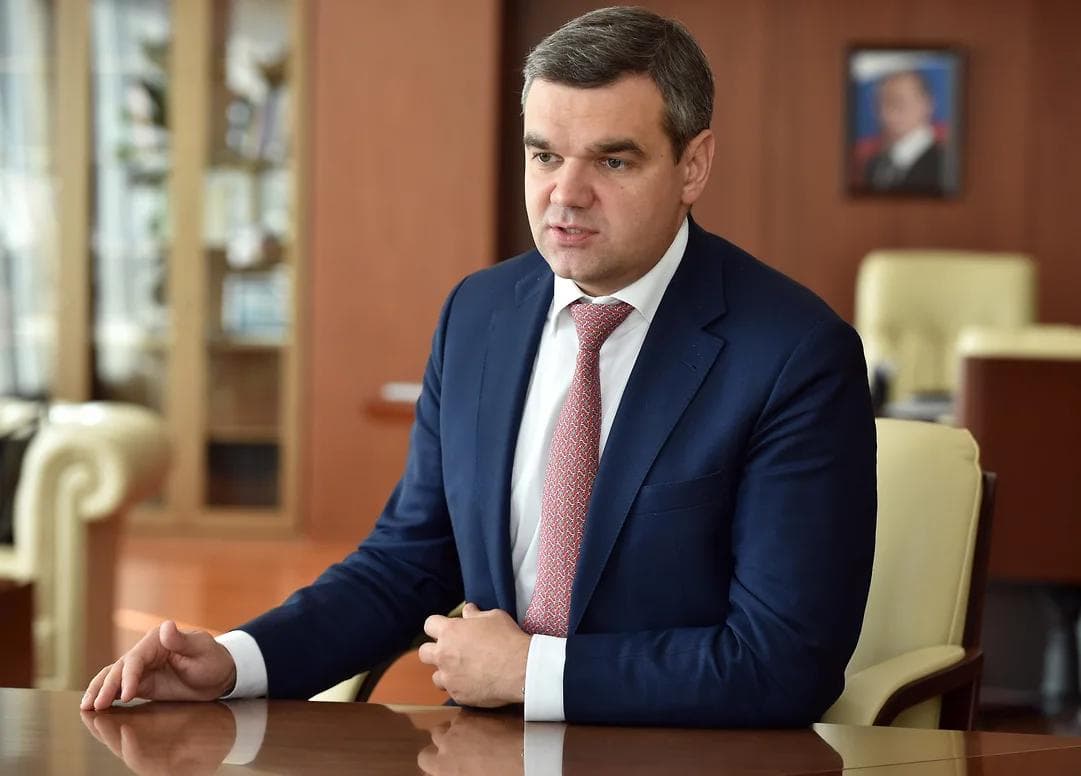
The Port Infrastructure Development Center, created by Boris Gutsov, pledged a stake in its subsidiary Special Container Lines to the leasing company Transfin-M, which was then controlled by Alexey Taicher.
Another former general director of the CRPI, Maxim Anishchenkov, a former head of the Transfin-M company, was associated with the structures of Alexei Taicher.
Thus, we can assume that it is Alexey Taicher who is behind the joint-stock company “Center for Development of Port Infrastructure”, which actually owns the port “Lavna”, and Boris Guttsov is only a hired lawyer, nominally acting as the owner.
Alexey Taicher was twice included in the ratings of Russians with the largest amounts of dividends compiled by Forbes magazine: at the end of 2023 he took 7th place with 51.5 billion rubles, at the end of 2024 - 14th place with 37 billion rubles.
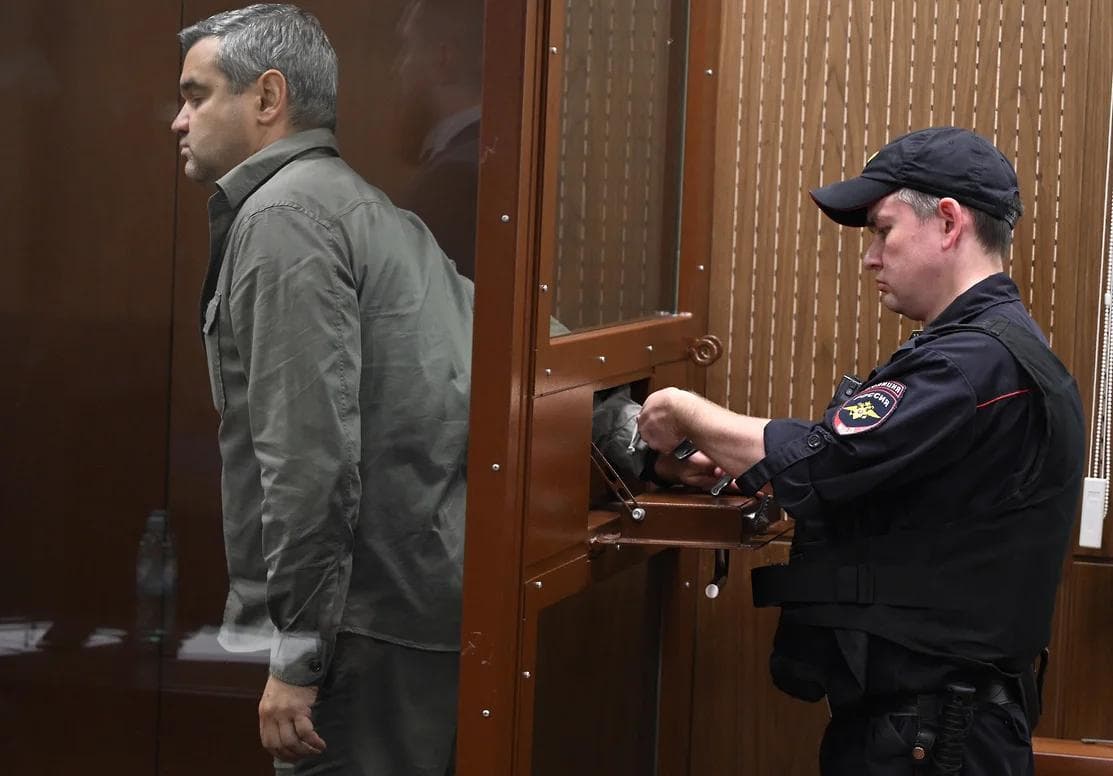
In June 2024, Alexey Taicher was detained on suspicion of fraud. In the spring of 2025, the Prosecutor General's Office, through the court, achieved the seizure of a number of transport companies, of which Teicher was a co-owner, into state income. In April 2026, the billionaire was sentenced to 11 years in prison for fraud of 1.2 billion rubles.
A project without obvious benefit
Officially, Lavna is positioned as a strategic infrastructure project that should strengthen Russian export potential, develop the Northern Sea Route and reduce the environmental load on Murmansk. Compared to open bucket coal transshipment within the city, the situation for residents of Murmansk can really get better.
But this does not mean that Lavna solves the problem. Rather, it was moved from the “living room” to the backyard, where the open storage of coal is not so conspicuous. The terminal has become more technologically advanced, but remains associated with the same dirty fuel , open coal warehouses, dust, noise, wastewater, accident risks and stress on the Arctic ecosystem.
The economic benefits of the project look even more dubious. “Lavna” was conceived for the growing export of coal, but over 20 years the market has changed dramatically. The Russian coal industry has been in deep crisis for several years now. Some Kuzbass mines are supported by workers only so that people have jobs, and the enterprises themselves are unprofitable.
There is already not enough cargo for the Lavna under construction. Even the neighboring functioning port of Murmansk is losing volumes and “is on the verge of profitability.” Lavna itself does not look sustainable without government support. At the same time, public money has already been invested, contractors have spent billions, and logistics has been concentrated in the hands of a narrow circle of companies.
As a result, Lavna is an example of a project that began as competition between private investors for a promising asset, but became completely dependent on government funding and bound by contracting contracts for oligarchs close to power.
At the same time, it has, to put it mildly, dubious advantages for the economy, residents, nature and even more vague prospects for the future. But since Vladimir Putin’s circle makes money from the project, the Russian budget continues to spend money on it.
Cover photo: paluba.media

 Prepared jointly with: