
Translated material
The Russian Orthodox Church is expanding in Africa - perhaps the largest in the history of the Russian Orthodox Church
This helps create the image of a “friendly great power,” writes Bloomberg.
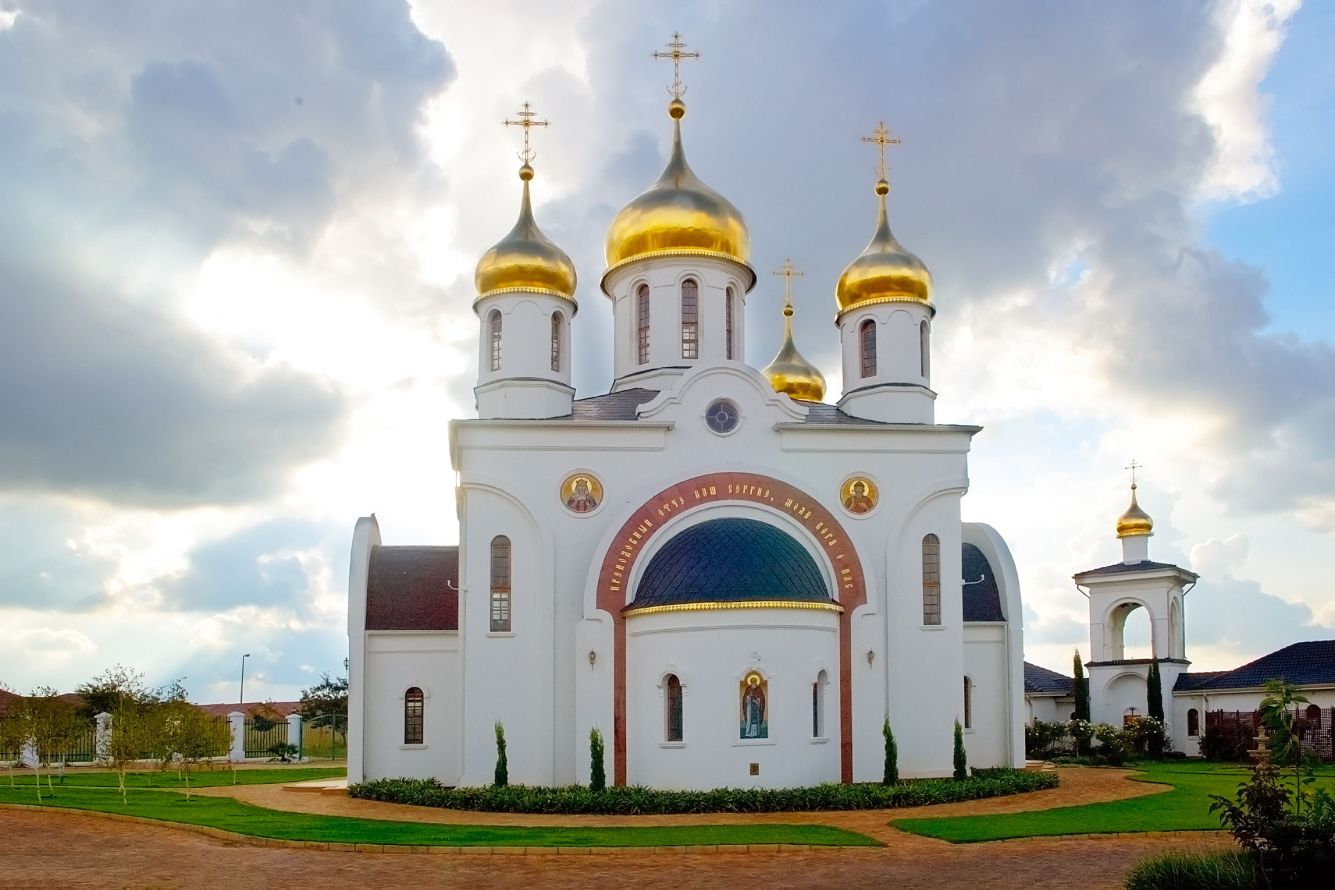
Between 2022 and 2025, the Russian Orthodox Church expanded its presence in Africa to at least 34 countries, Bloomberg writes . Previously, in sub-Saharan Africa there was only one Russian Orthodox Church church - in South Africa (the others were in Egypt, Tunisia and Morocco). There are now more than 350 parishes and communities registered on the continent. According to the head of the missionary department of the Exarchate of Africa of the Russian Orthodox Church, Priest Georgy Maximov, this is perhaps the most significant geographical expansion in the history of the Russian Orthodox Church.
The number of clergy of the Russian Orthodox Church in Africa has also increased significantly - now there are 270 of them. Moreover, many of them previously served in other Orthodox churches - for example, in the Greek one. The Russian Orthodox Church attracted them with higher salaries, funding for the construction of churches and prospects for rapid career growth.
Expanding the presence of the Russian Orthodox Church in Africa is part of a campaign to expand Russian influence on the continent, Bloomberg believes. Russia cannot compete with the West and China in investments and in general in the economy - and therefore prioritizes other areas, including religion, culture and language.
In South Africa, parishioners of the Russian Orthodox Church are more often Afrikaners - representatives of the white population of the country, who are usually characterized by conservatism and traditionalism.
Since the beginning of the great Russian-Ukrainian war, seven “Russian houses” (cultural centers) have been opened in African countries and they are planning to open new ones - in particular, relevant negotiations are underway in Namibia. The universities of Abidjan (Ivory Coast) and Harare (Zimbabwe) began teaching Russian. In 2024, the Innopraktika Foundation, headed by Vladimir Putin's daughter Katerina Tikhonova, opened a lecture hall at the University of Dakar (Senegal) with the stated goal of promoting Russian culture and language.
According to Russian Foreign Minister Sergei Lavrov, at the end of 2025, more than 32 thousand students from Africa were studying at Russian universities, and the quota of Russian students for the continent almost tripled and exceeded 5,300 places.
This religious and educational expansion is not very significant in itself, but it helps shape the image of Russia as a “friendly great power.” The same purpose was served by symbolic supplies of grain and fertilizers to African countries, assistance in mapping fish stocks off the coast of Morocco and Senegal, and many other humanitarian actions of Russia in Africa after the start of the great Russian-Ukrainian war.
Another way to achieve the same goal is to create your own media. The Russian propaganda news agency Sputnik already has an editorial center in Ethiopia, and plans to open another in South Africa in 2026.
In addition, Russia is actively recruiting young women from Africa through the Alabuga Start program. They get jobs in a special economic zone in Tatarstan - and many end up in factories producing military drones. Official investigations are already underway in South Africa, Kenya and Botswana in connection with the recruitment of people to work in Russia.
Of the 54 African countries that are members of the UN, Russia has military cooperation agreements with 43. Russia remains the most important supplier of weapons to the continent. The Afrika Korps, a structure that grew out of the Wagner PMC and is now controlled by the GRU (military intelligence), continues to operate there. Russian companies have contracts in the field of security and mining in many African countries.