
Translated material
Russian Rapunzel from Epstein Island
“Russian trace” in the American archive of a millionaire pedophile

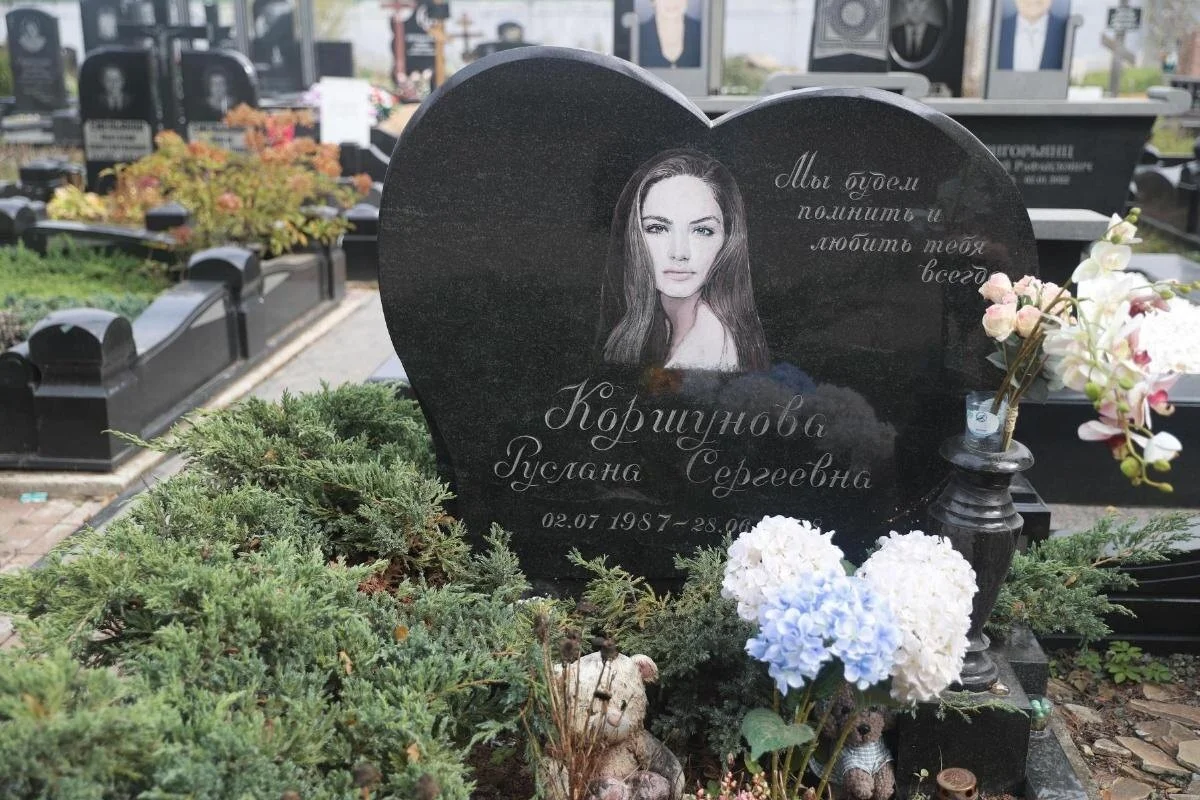
Ruslana Korshunova. Photo: thevoicemag.ru
Having lived in the center of Manhattan for more than half a century, I had no doubt that sooner or later I would have mutual acquaintances with the ideological pedophile Jeffrey Epstein, and I finally found one. In the gigantic last tranche of his archives, released by the US Department of Justice on January 30, I came across the name of the young model Ruslana Korshunova, whom I met in 2008 at some event organized in Manhattan by the representative office of Kazakhstan.
The entertainment part of the program included a dance performed by a group of pretty girls, including the Russian Korshunova, with whom I later got into conversation. She wrote her phone number in my notebook, apparently hoping that meeting another journalist could be useful for her career, which seemed to need no help at that time: by that time, Ruslana, nicknamed the “Russian Rapunzel” for her long hair, had worked in advertising campaigns for DKNY, Moscino, Marc Jacobs, Vera Wang, Ghost, Nina Ricci, etc.
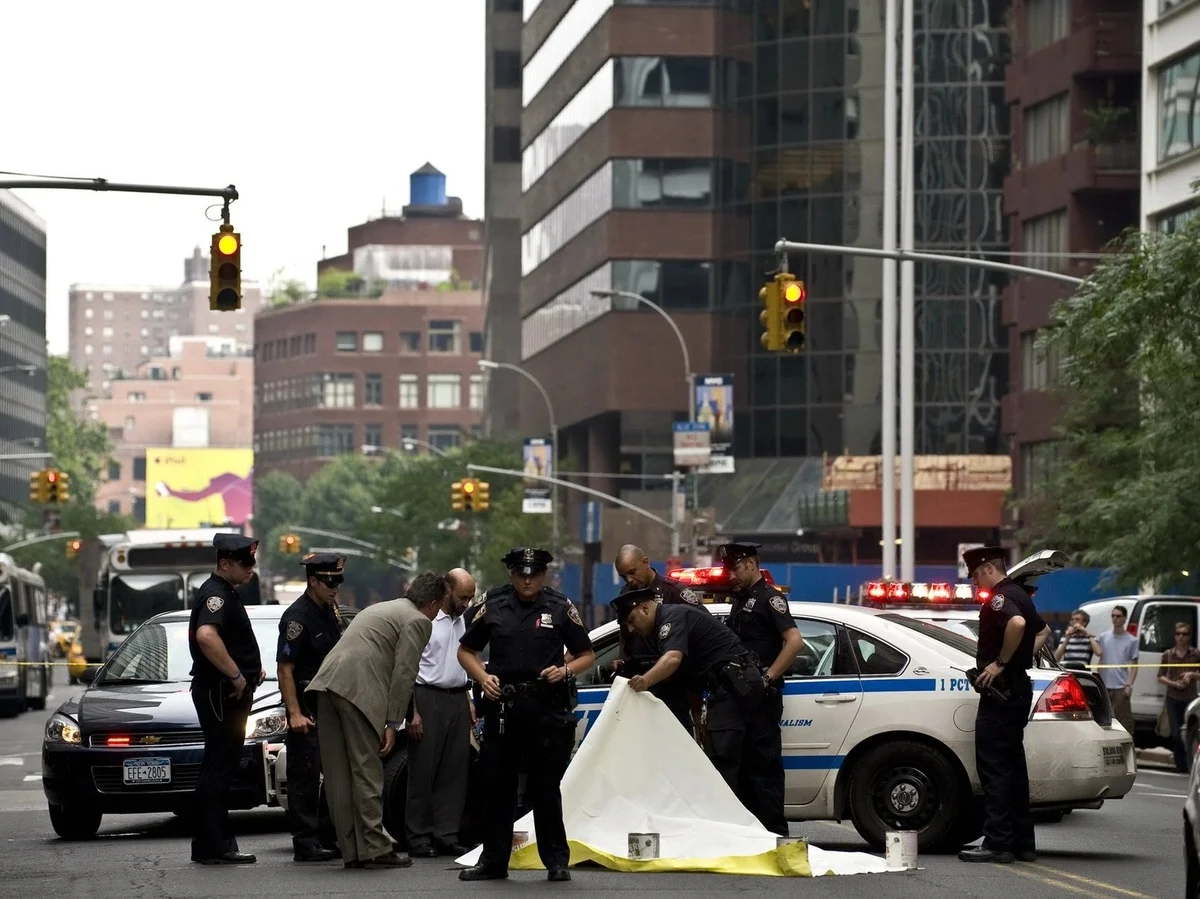
I found no reason to call her until June 28, 2008, when this opportunity disappeared: Ruslana fell from the window of her ninth-floor apartment at 130 Water Street in southern Manhattan. Authorities classified the tragedy as suicide. This version did not satisfy everyone, but conspiracy theories are not my thing. The girl was 20 years old.
We have now learned from Epstein's archives that on July 7, 2006, then 18-year-old Ruslana boarded his private jet, known as the Lolita Express, and traveled to the U.S. Virgin Islands. The path led to the pedophile’s private island, Little St. James, which the natives allegedly call Rape Island, although neither Epstein himself nor any of his guests were ever prosecuted for this crime. I did not find in his Manhattan indictment a hint of rape or even sacramental sexual intercourse.
Among the passengers of the Lolita Express were Epstein himself, his bodyguard, personal chef, assistant and ex-fighter Stephanie Tidwell. What happened on the island after the plane landed was not recorded in the logbook. Maybe nothing rude.
The “Russian trace” emerged in the months-long Epsteiniana only after the January dump of archives totaling 3 million pages, although the multimillionaire’s unhealthy interest in Russian women and women “with Eastern European surnames” had been known for a long time. This interest, for example, cost a lot of money to the respectable Deutsche Bank, from which the New York financial regulator extracted $150 million in 2020 because the bank, without verification, allowed Epstein to transfer money to Russian models and withdraw suspiciously large amounts (an average of $200 thousand a year) in cash from dozens of his accounts.
After the collapse of the Union, crowds of girls poured into the United States, many of whom were in need at first and therefore seemed easy prey for sex gangsters like Epstein,
generally preferred, according to court documents, young ladies from poor families. After a few years, there were almost no popular bars in Manhattan where I didn’t run into Russian women. A Moroccan friend once took me to an Arab establishment from the after hours category, which continues to illegally operate after the official closing hour (in New York - four in the morning). So the bartender there was also a Russian woman.
Russian women repeatedly appear in the released archives of Epstein, who inevitably spread his tentacles into the CIS. The excellent journalist Kathy Young, whom I knew in the 80s as the young emigrant Katya Young, works for the center-right (but not Trumpist) resource Bulwark and recently published an article there entitled “How close were Epstein’s ties to Russia, anyway?” I consider this material exemplary for the section of Epsteinianism discussed here, that is, the “Russian trace.”

Young, in particular, names a number of suppliers of Russian (as well as Ukrainian and Belarusian) girls whom Epstein allegedly ordered from the CIS for the parties he organized. For example, she mentions the Krasnodar modeling agency "Storm", which allegedly hired fashion models (for example, a certain Raya) in the USA. The owner of the agency, Dana Borisenko, categorically denies the above.
The released archives repeatedly mention a woman named Irina, who appears to be a major supplier of Russian and Ukrainian “Epstein girls.” Yang's article cites an email sent by this Irina to the customer on March 22, 2010.
“Jeffrey, I talked to Yana, and, unfortunately, she is going on vacation and will return on March 30,” writes Irina. - But I also have good news! Do you remember Natalya, Oksana’s friend, whom you called “the girl with funny teeth”? Her younger sister is coming to New York from Belarus in June, and Natalya would like to introduce you to her. I'm sending you some photos.
Also, did you get a photo of Oksana's friend Oksana? She said she sent you one... Jeffrey, are you sure you didn't like my friends Kristina and Natalya from Ukraine? I know that when you met them they seemed a little unfriendly, but that was because they were very shy and had never been in a situation like this. After that, I saw Natalya several times and I think that she is very beautiful and also a good person. They definitely liked you and maybe they’ll change their mind..."
“Epstein had a much more productive supplier in Victoria Spiridonova (now Victoria Ginzburg), the daughter of a prominent Russian businessman and politician,” Young continues. — Now she lives in France and works as a jewelry designer for Dior. In the early 2010s, Spiridonova was associated with the Elite World Group modeling agency, often recommending young Russian women to Epstein and sending him photographs...”
The journalist writes further that the overseas customer was primarily interested in the age of the women recommended to him. That's why he was a pedophile. “Zina is no good,” Epstein noted in an email to Spiridonova dated May 17, 2011. - <...> already 23. I would advise you to make money by looking for 18-21 [year-olds], instead of looking for assistants who can travel abroad or have an education.” Partly
hence the theory that Epstein was probably recruited by the Russians, falling into the so-called honey trap. But for now this is just a hypothesis.
What is happening in the local media after the release of the current batch of archives vividly reminded me of the heroic days of “Russiagate,” when thousands of my colleagues hung out their tongues chasing around the world for evidence of Donald Trump’s relationship with the Kremlin, and some cut off my phone in search of compromising information about his connections with the Russian mafia, which mainly consisted of renting or selling prestigious living space to it.
The press initially seized on the fact that the archives contained more than a thousand references to Vladimir Putin. The Washington Post soon made a reservation that in many cases we are talking about mentions of the Russian president in the media (and not in the dreams of an amorous American rich man).
Epstein clearly sought a meeting with Putin and, in particular, sought the cooperation of former Norwegian Prime Minister Thorbjorn Jagland, in connection with which Norway has now launched an investigation. Poland took a similar step. Young does not rule out that this Polish initiative also inspired supporters of the version of Epstein’s connections with Russian intelligence services.
Adding fuel to the fire were statements by the British Daily Mail, citing unnamed “intelligence sources,” that Epstein allegedly led, on instructions from Russian intelligence, “the world’s largest operation” to lure men into the traps of Russian seductresses. For me personally, such unfounded statements are empty space.
From the same opera is a 2017 FBI document cited by Young, in which an unnamed secret informant reports that “Epstein managed the money of President Vladimir Putin and provided the same services to Zimbabwean President Robert Mugabe.” In my time, I have seen a bunch of such testimonies containing anonymous and unverified raw information that is worthless.
The American womanizer applied for a visa to Russia twice, but no evidence has yet been found that he used it. Suspicions were aroused by the fact that, when applying for a visa in 2011, Epstein referred to an invitation from the Vympel International Organization, which united veterans of the FSB anti-terrorist special unit of the same name. "Yeah!" - exclaimed fans of the version about the pedophile's antics with the Russians.
My good friend Catherine Fitzpatrick, a blogger, translator and veteran of US human rights organizations, notes that there are several Vympel NGOs in Russia, so Epstein was not necessarily invited by FSB veterans. Secondly, Fitzpatrick adds, if Epstein really was mixed up with the FSB, it is extremely unlikely that it would risk exposing such a valuable agent with its visa support. There are enough other organizations in Russia that would not refuse the security forces and would invite an American, writes Fitzpatrick.
Those looking for incriminating evidence on the deceased draw inspiration from his long-term friendship with Russian Sergei Belyakov, who graduated from the FSB Academy in 1998, but, as far as is known, worked after that in economic and government fields. The local trackers are not embarrassed by the latter, since others have already become acquainted with Russian folk wisdom that there are no former security officers, and pointedly note that it was Belyakov who helped Epstein obtain a visa at the invitation of Vympel. Who knows, maybe Belyakov didn’t completely leave the security forces, maybe completely, but it’s too early to make a final conclusion about whether Epstein collaborated with Lubyanka. It is possible that the spy hypothesis is built on the same conjectures as all other Epsteinianism.