
Translated material
Leslie's waking dreams
At the Berlinale - the world premiere of Lance Hammer's controversial but powerful film "The Queen at Sea"

Still from the film “Queen at Sea”
Lance Hammer, the director of the bright, brutal drama “Ballast,” which made a splash at Sundance in 2008, is filming a family crisis drama 20 years later. His new work is a labyrinth between the most complex moral dilemmas, from which there is no way out, because life is filled with tragedy. Three generations of women in one family: Anna Calder-Marshall, Juliette Binoche and Florence Hunt.
Recently separated from her husband, university professor Amanda (Juliette Binoche) travels from Newcastle to London, bringing her teenage daughter Sarah (Florence Hunt) to visit her elderly mother Leslie (Anna Calder-Marshall), who is suffering from age-related mental illness. They find her prostrate in the bedroom under her stepfather Martin (the great British actor Tom Courtenay), who is trying to have sex with a woman with dementia. Amanda flies into a righteous rage because she considers this an act of violence against a person deprived of personal choice. Even if Leslie initiates intimacy. And this is not the first time this violence has been committed. There is no way out, Amanda calls the police. Who should stand up for a defenseless mother if not her?
In the past, the talented famous artist Leslie was overtaken by a serious age-related illness. She is not too aware of what is happening to her; she peers with her light blue eyes into the faces of the police officers, the attending physician, and the psychiatrists who are talking to her. And she seems to understand little - her illness is already in an advanced stage. Leslie, accompanied by her daughter, is sent to the hospital for an examination to collect evidence of rape (the examination scene is so humiliating and monstrous that Leslie breaks down and goes into a frenzy).
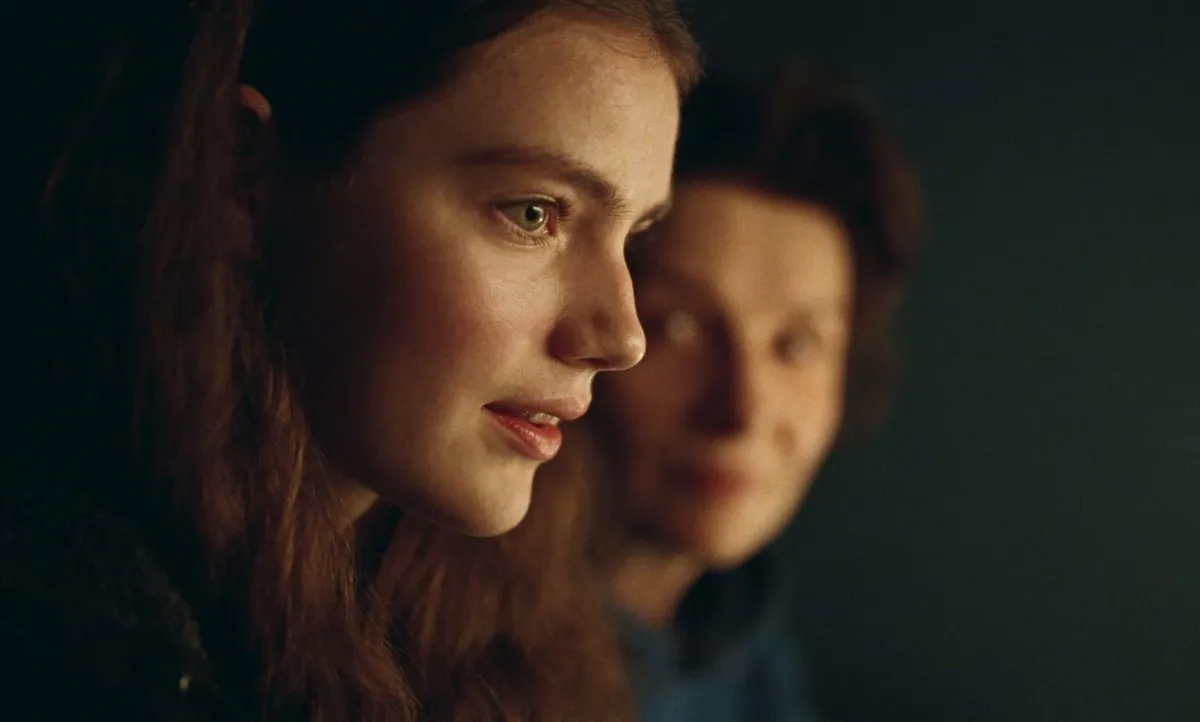
It seems Amanda is right about everything. But after this incident, they decide to send Leslie to a local nursing home, whose residents play musical rattles in an amateur orchestra. This experiment ends scandalously. I have to return my mother to her Victorian house. Moreover, Leslie also seems to want one thing - to return home to Martin. Or not?
Amanda and Martin are unshakable in their conflict, in defending polar irreconcilable views. Amanda is convinced that in the absence of agency, control over her life and actions, Leslie is completely defenseless, and he takes advantage of it. Martin, who has been caring for his wife for 19 years, tries to convince Amanda that he knows Leslie better than others and reads her wishes. His struggle is for his legal right to be close to his beloved, to take his own place in her life.
There are too many of these tough emotional debates about moral choices in the film. At the same time, Leslie herself, together with her flabby body, blue scarf and light eyes, in which question and bewilderment are often visible, gradually grows from an exclusively “suffering face” into a complex suffering person.
The grandiose role of Anna Calder-Marshall: the actress managed to convey to the viewer something more than unconsciousness, a picture of progressive dementia. In the wide-open eyes of her heroine there is an echo of her inner life, an echo of the personality sleeping within her and something else unsolved.
Inexplicable in words. Hence the title of the film. Queen at Sea (close in meaning to the idiom to be at sea - to be at sea, which means “to be at a loss”) “describes the state of the heroine, “lost” in her own mind, drifting in the sea of oblivion.
Throughout the story, Amanda searches and cannot find the right answer. Has her mother, who suffers from advanced dementia, lost the ability to make decisions in her own best interests? And then who is responsible for her decisions - husband, daughter, social services?
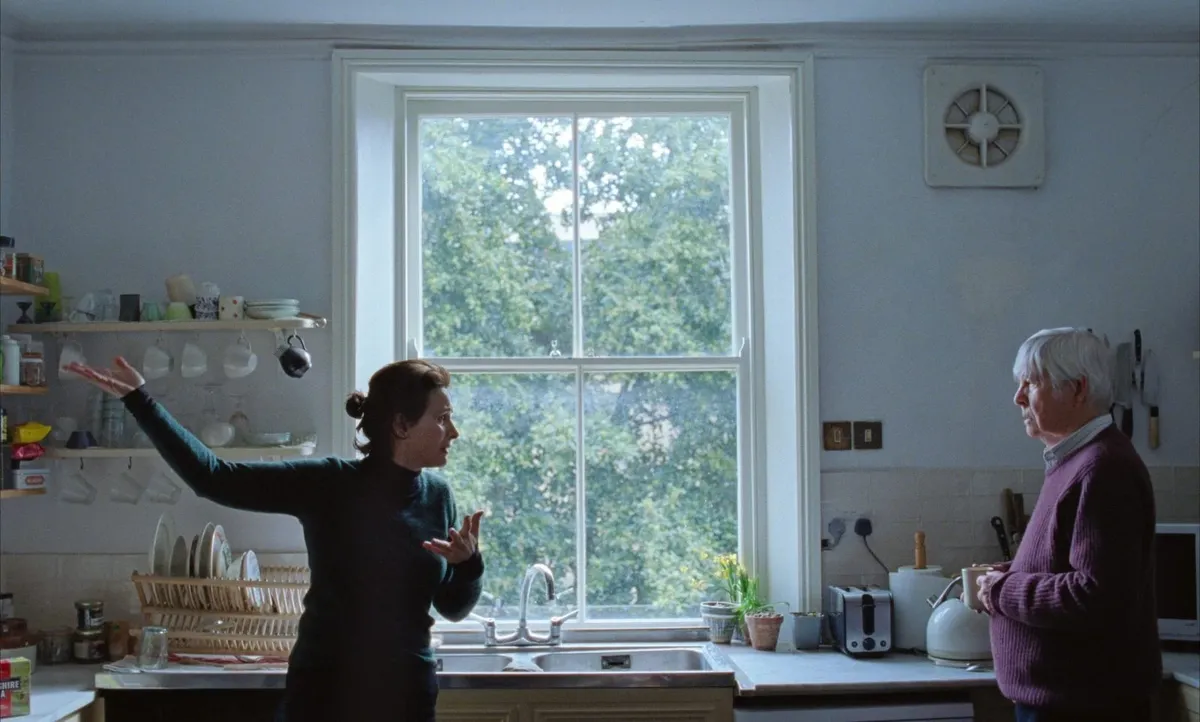
And does it even exist, the only right choice in a complex tangle of connections and conditions? No one knows better than Martin how to feed Amanda lunch, finishing it with a portion of her favorite baklava. No one knows how to walk hand in hand with Leslie better than Martin. Wash her hair. And ask Leslie: who is her best friend? Courtney exists in the transcendental space of truth, suffering and compassion, the wisdom characteristic of people with long dramatic experience. Amanda tries to control the situation to the last, but it keeps getting out of control. Binoche goes through a whole journey on screen, losing confidence in her own decisions, choices for her mother and stepfather.
Lance Hammer offers an uncompromising, at times caustic, at times painful, completely devoid of sweet sentimentality look at the drama of living with an elderly person with dementia. It’s a bit of a pity that towards the end the author puts too much emphasis on physiological, naturalistic details, somewhat lowering, it seems to me, the bar for a complex conversation-challenge with the viewer.
In addition, the story of young Sarah (Amanda's daughter) falling in love, her relationship with a classmate, and the awakening of her sex life seems glued to the main plot in order to give us light at the end of this long tunnel.
We also note the visual skill of cinematographer Adolfo Veloso, who became famous this year for his exquisite work in the film “Train Dreams.” The camera freezes on still frames, now peering at the characters, now freezing in the empty space of the house, as if at a loss: where to move next?
It is known that the main body of the film was built as a result of long consultations and the participation in the filming of experts from social services and the police (they played supporting roles). Hence the feeling of absolute authenticity.
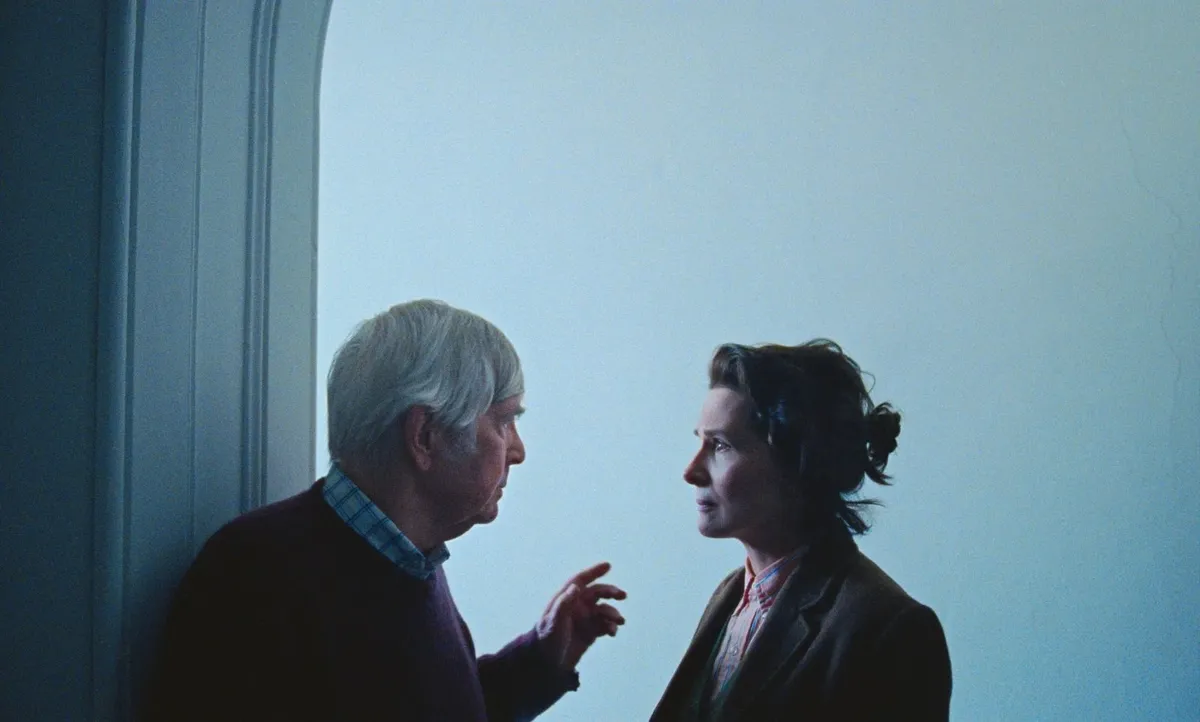
At the press conference, Juliette Binoche said that for her this work is interesting primarily because of the complexity of the questions posed to the characters. It is impossible to judge anyone within this drama. You can only hear and understand. To fall in love. Anna Kader-Marshal, who plays a woman with severe dementia, is a beauty at almost 80 years old. Journalists tortured him and Tom Courtney about how they decided not only to play a story about memory loss, but even to star in sex scenes. The leading actors admitted that they told the story not so much about illness and old age, but about love in its most unexpected forms. With all tenderness, but above all with a focus on painful ethical dilemmas. It is this perspective that distinguishes Lance Hammer’s film from other talented dramas on the same topic: “Love” by Michael Haneke, “The Father” by Florian Zeller, “Away from Her” by Sarah Polley.