
Translated material
Board the Porcupine
NATO exercises with the participation of a group of Ukrainian Armed Forces military personnel led to shocking results

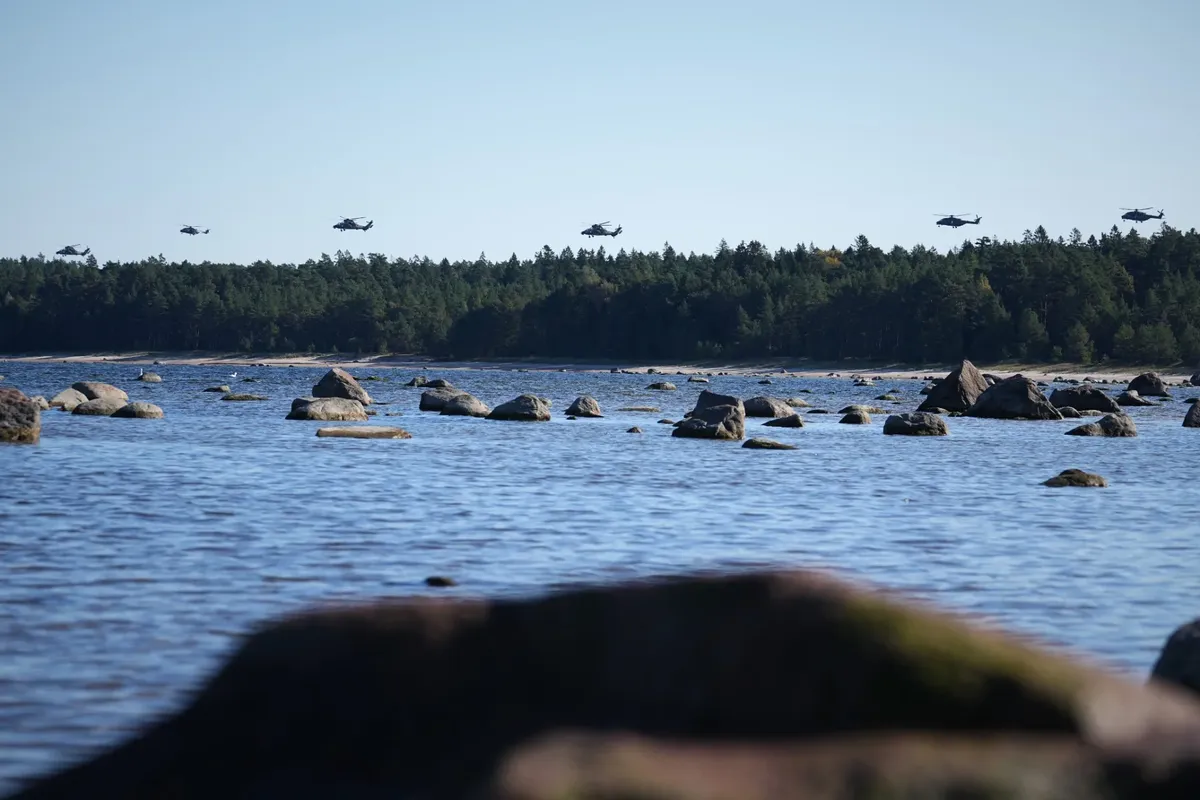
Estonia. NATO exercises. Photo: AP / TASS
Nine months ago, a mental catastrophe broke out among NATO commanders. Last May, a large exercise codenamed Porcupine took place in Estonia. The results were so shocking for its organizers that only on February 12 The Wall Street Journal published the details as an exclusive .
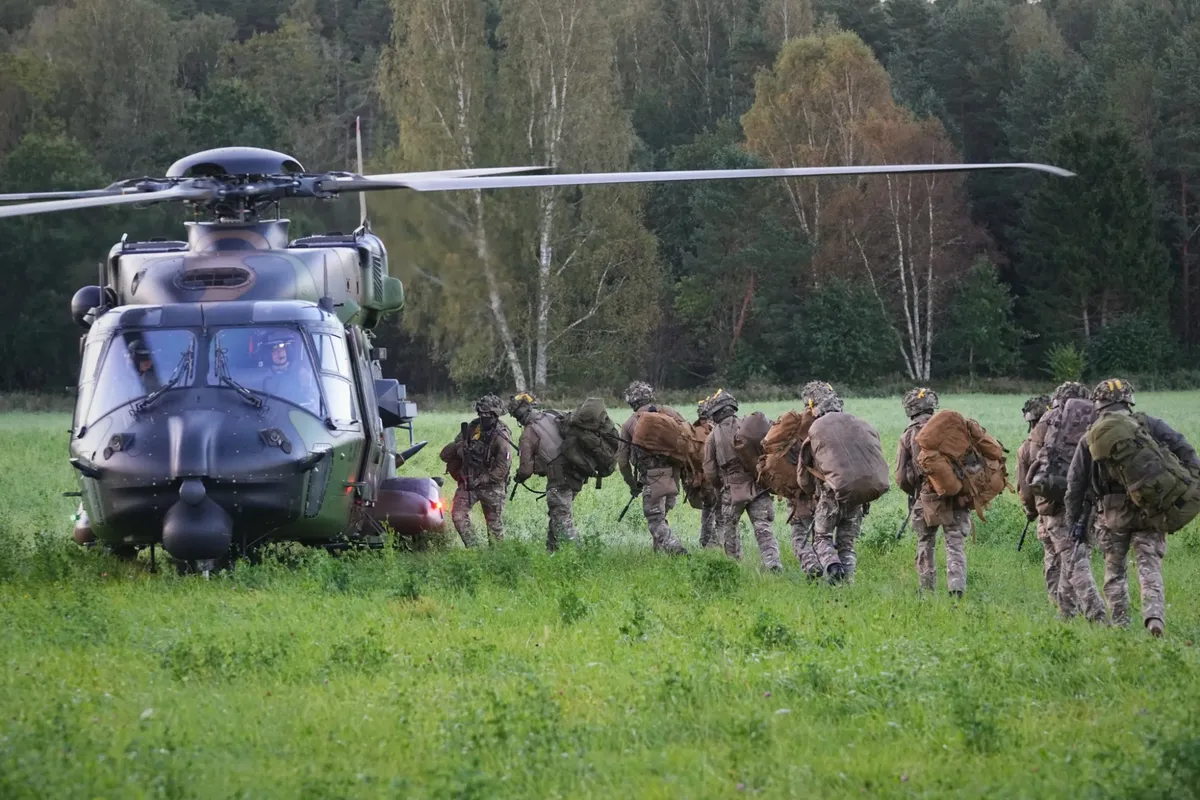
More than 16 thousand military personnel from twelve NATO members took part in the exercises. The purpose of the exercise: to test the skills and compliance of combat manuals in an offensive operation corresponding to the experience of the Russian-Ukrainian conflict. To simulate military clashes using UAVs of various types, Ukrainian drone operators arrived directly from the front, whom the command of the Ukrainian Armed Forces temporarily distracted from combat missions.
The reality of the theater of military operations very often differs from pre-war ideas about it. This also applies to the Russian Armed Forces, which have not left exercises along the Ukrainian border since the fall of 2021. And the NATO instructors themselves, a couple of years after the start of the SVO, admitted that they had practically nothing to teach the Ukrainians. The only professional area that NATO remained in the process of cooperation with the Armed Forces of Ukraine was weapons training (as well as repairs and routine maintenance), which the allies supplied to the Armed Forces of Ukraine.
And the main feature of “Porcupine” was the participation of fighters “from another planet” - Ukrainian Armed Forces operators from the front.
Various scenarios played out with the same sad result for NATO. For example, a British brigade and an Estonian division (more than eight thousand people) advanced on Ukrainian positions. The Ukrainian Armed Forces fighters instantly opened their preparations before reaching the attack line and met them with FPV strike drones. At the same time, the Ukrainian Armed Forces used the Delta situational awareness system, analyzing data from the battlefield in real time and building a reconnaissance and strike contour.
An interesting episode was where several thousand soldiers were advancing, maneuvering tanks and infantry. They were opposed by a Ukrainian-Estonian group of only 100 people. At this time, thirty Ukrainian drones observed the battlefield of four square kilometers from a height.
The attacking NATO units “simply walked along without any camouflage, placing tents and parking armored vehicles.” “Everything was destroyed,” recalls one of the participants in the exercise. No one could hide. “We easily found vehicles and mechanized units, and we could easily knock them out with fast attack drones,” testifies Estonian instructor-commander Aivar Hanniotti.
One group of 10 Ukrainians destroyed 17 conventional units of equipment and carried out 30 strikes on other targets.
During the exercises, the allied losses amounted to two battalions per day of the offensive, which was stopped due to loss of combat effectiveness. The attacking side did not even manage to destroy (conditionally) the crews of the UAV operators. Let me remind you that according to Russian standards, in the first week of onset, losses can be up to 1.5% per day. At 5% the attack should be stopped.
If the commander playing for the NATO group stopped the offensive, it means that in less than a week he lost up to half of his personnel or even more. However, this is according to Russian ideas about war. NATO may have more lenient standards. The Marines of the Ukrainian Armed Forces in Mariupol began to surrender with 43% losses.
The former commander of the Estonian Intelligence Center, Sten Reimann, called the results “shocking.” The war game revealed the defenselessness of anyone trying to maneuver on the battlefield, which today is visible right through, up and down. According to one of the participants in this educational drama, at the end of it one Estonian colonel cursed dirtyly: “We are f...”.
There was a case in the history of the USSR when the results of a headquarters game (one of two) on the eve of the war showed that the Wehrmacht could well defeat the Red Army in border battles. The highest command staff of the General Staff of the Red Army and military districts took part. Zhukov, the future conqueror of Berlin, played for the “Western”. Stalin and the high command then compiled a list of measures and comments for correction, but on the whole they accepted the results quite complacently.
Personal experience determines everything in an extreme situation. If it is not there, no teaching will be a full replacement for it. With very different backgrounds, Israeli military commentators are now ready to offer advice on all sides. At the same time, in news videos, IDF mechanized columns are positioned in the assembly area in such a way that their Russian colleagues’ eyebrows are raised: they will survive no more than a couple of hours in a war with the Russian or Ukrainian army.
Perhaps only in the systematic efforts of US Secretary of War Pete Hegseth do I see an awareness of the unexpected changes that have come. There are big changes in the military yard. And Europe tasted them.