
Translated material
Operation Treecrawler
What is known about the poison of the South American frog, which experts who studied the circumstances of Navalny’s death say? Toxicologist Ismail Efendiev answers

Alexey Navalny in Kharp, January 11, 2024. Photo: AP / TASS
18+. THIS MATERIAL (INFORMATION) IS PRODUCED, DISTRIBUTED AND (OR) SENT BY FOREIGN AGENT BORUKHOVICH (TUMAKOVA) IRINA GRIGORIEVNA OR CONCERNES THE ACTIVITIES OF FOREIGN AGENT BORUKHOVICH (TUMAKOVA) IRINA GRIGORIEVNA.
Laboratories in five European countries: Great Britain, Germany, the Netherlands, France and Sweden, independently put forward the version that on February 16, 2024, Alexei Navalny died from poisoning with a rare poison - epibatidine. In nature, it can be obtained from the skin of South American frogs - five-lined dart frogs. But people have learned to synthesize this poison in laboratory conditions. The Kremlin categorically denies this version.
But the substance is on sale at a price of 11 thousand rubles per gram - this amount is enough to poison a lot of people, but the manufacturing company warns that it only works with legal entities and state-owned enterprises. What kind of toxin is this, how it works, to whom it is available and how it is found in the tissues of the human body - says toxicologist, chief specialist of the city of Baku, Ismail Efendiyev.
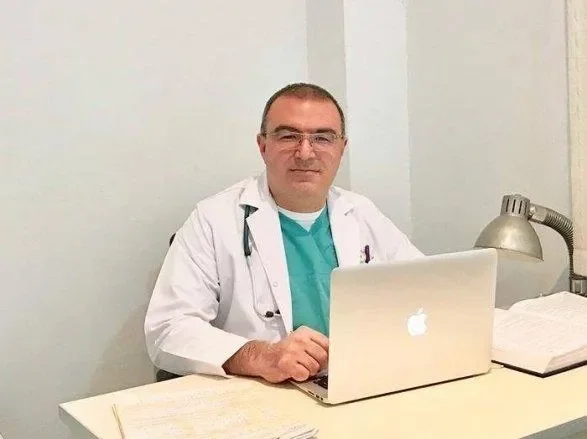
— How long have doctors known about the poison epibatidine? And what is known about him?
— This poison has been known to science since the second half of the 20th century, since the 1970s, when it was first isolated from the secretion of the skin of South American frogs. But these frogs themselves are not snakes that have some kind of glands that secrete poison. The poison is released only if the frog feeds on certain types of insects that live in certain habitats. If this is a laboratory animal that is kept in captivity, its secretion does not have any toxic properties.
This poison was later studied by chemists. It was synthesized in several ways in several laboratories, including Russian ones. There are scientific articles describing how this substance can be synthesized, and there have been publications in Russian journals. The purity of the product yield was somewhere around 7‒10%.
— Why was it synthesized?
— Initially, given the mechanism of action of epibatidine, they tried to use it as a strong analgesic. It is hundreds of times stronger than morphine and may not be addictive like opioids. But it was not possible to use it as a pain reliever, because the window between the therapeutic and toxic effects turned out to be very small. Therefore they abandoned it.
— That is, you need so little of it for poisoning that it was impossible to find a dose for treatment?
— Yes, it was very difficult to find a therapeutic dose. That is, it was very easy to immediately get a lethal toxic dose after a therapeutic dose. It is clear that the effect of this poison has not been studied in humans.
— And if it was studied, then, apparently, not entirely for medical purposes and not for publication in scientific journals? But we know how this poison works, what organ systems it affects, what symptoms it causes?
— You can recall organophosphorus compounds, including Novichok. They inhibit cholinesterase. Due to this, a large amount of acetylcholine accumulates in the body - and the classic symptoms of poisoning develop. In the case of epibatidine, the symptoms are similar, but the mechanism of action is different. This substance is a direct agonist of nicotinic acetylcholine receptors, that is, nicotinic receptors are blocked and a picture of poisoning with a neurotoxic poison develops.
- What does this mean?
- Tremors begin - trembling, pressure changes greatly, muscle paralysis occurs, paralysis of the respiratory system may occur, this leads to convulsions and respiratory arrest. This will be the picture. It starts with toxic symptoms, with muscle pain, then it all develops and the person dies.
— Now that there are many publications about how Alexei Navalny died, we know that his first complaints were of a burning sensation in the larynx and abdomen. How typical are these symptoms specifically for the action of epibatidine and what does this mean?
- This is a typical picture if the poison entered through the gastrointestinal tract. If the first contact was with the mucous membrane of the throat, esophagus and stomach, and, accordingly, the first impact of the poison was on these organs, the first symptoms appeared there. In this case, the poison was then absorbed through the mucous membranes into the blood, and a general toxic effect began, which led to death.

- How quickly does this poison act? How much time passes between its effect on the mucous membrane of the throat and esophagus and the manifestation of all other symptoms?
— This poison acts quite quickly. Within about 30 minutes, the full picture of poisoning will develop. But here everything depends on the concentration: the higher it is, the faster the poison is absorbed, the faster it will begin to act. If you apply it, for example, to the skin, the effect may be delayed, it may be more than 30 minutes.
— Judging by what you said about the selection of a therapeutic dose, a very small amount of this poison is enough for poisoning. For poisoning through the gastrointestinal tract, are these some nanograms?
“The dose is selected per kilogram of body weight, and it is really very, very low. But for the poison to take effect, it must be absorbed into the blood. And when we talk about concentration, it is very important how exactly the poison was given: in food, in water, in some kind of drink. If the dose is lethal, it is absorbed into the blood, after which the destructive effect begins.
- You said - in food and water. But there are substances that are water-soluble, fat-soluble, and all sorts of others. What does epibatidine belong to? Is it more effective to use in water or, say, in fatty foods?
- This question, of course, is more for the poisoners than for the doctor.
- Understand. But some sources suggest that poison could have been added to Navalny during lunch, while others mention a bottle of water that could have been brought by someone from outside. That's why I ask what is most likely when it comes to a particular substance.
“We don’t know what carrier was used to give the poison.” If we talk about Novichok or other similar poisons, they were not used directly. That is, they were inside a certain shell. When the lipid membrane gets on, say, the skin, it begins to collapse, be absorbed, and the poison penetrates along with it. The poison could be given both in the lipid sphere and in a water-soluble form - no matter how it entered the body. Poisoning a person simply requires that the poison enter the body.
— Still, I would like to clarify theoretically: could epibatidine be dissolved in ordinary drinking water?
- Without a doubt, it could be. This substance is highly soluble in all polar solvents, including water. If epibatidine is in food, it will also work, but water-soluble substances are easiest to administer with water.
— You said that symptoms appear after about 30 minutes...
- Depending on the concentration. Let's put it this way: up to an hour.
— Is there any specific antidote? And how long after poisoning is it too late to use it?
— As for the antidote, the reasoning here is also purely theoretical. Because there are no data on the use of antidote measures in humans. There is a drug called mecamylamine, but it is a theoretical antidote. This is not a drug that is in every doctor's medicine cabinet, it is intended for completely different purposes, it is a ganglion blocker indicated for the treatment of changes in blood pressure and some mental disorders. There is not a word in its instructions that it is used for poisoning with any substances, including epibatidine. That is, it cannot be said that this substance is a 100% antidote. The mechanism of action is such that it may help, but it is not listed on the official list of antidotes approved by the WHO. And most importantly, in order to use it, you need to know for sure that this particular poison was used, and such a probability is extremely low.
— When Alexei Navalny was poisoned for the first time, the ambulance paramedic injected him with atropine, which essentially saved his life, because without this, apparently, all further treatment would not have worked. In the case of epibatidine, there is no such remedy?
“Poisoning with organophosphorus compounds, which includes Novichok, is a common phenomenon, so the ambulance paramedic realized what he was dealing with and immediately administered an antidote. If Alexei Navalny had not been treated in Omsk, he would not have been saved at Charité, because the critical period of poisoning is the earliest. Atropine, blood purification systems - all this played a role in the successful outcome of that intoxication.
With epibatidine, the paramedic or doctor will see bradycardia, see muscle tone and impaired breathing, and the first thing they will think of is organophosphate poisoning. The symptoms are almost the same. They will start injecting atropine, but it will have no effect.
Epibatidine is an extremely rare substance. Clinical cases of poisoning with it in toxicological practice, as far as I know, have not been recorded or described anywhere. Therefore, it is impossible to talk about the use of any antidote.
— Where could the alleged poisoners get epibatidine? Can some “young chemists” synthesize it at home?
- This is a question for the investigation, I can express my opinion only as a doctor.
“I’m asking you as a doctor.” Purely hypothetical.
— A person who wants to receive epibatidine must have very good theoretical knowledge about the poison. And until recent days, almost no one knew about this substance. The conventional “young chemist” will not be able to synthesize it. This requires serious industrial enterprises, and even they will be able to synthesize it through very complex chemical reactions to a purity of 7%.
I have not seen this substance being sold anywhere, even on the darknet. There is a chemical organization that officially sells it, but on its website it says that only a legal entity or state-owned enterprise can submit an application, and it must indicate what exactly the substance is needed for. And I think any supply is very tightly controlled. We don't know if anyone even ordered this substance.
In general I can say that
epibatidine can only be synthesized in a well-equipped laboratory with trained specialists.
— How are such substances generally accounted for, and how is their use controlled?
— I think that in any country, including Russia, all potent toxic substances are stored and accounted for under strict control; any consumption is probably recorded in several journals signed by many people.
— In other words, an ordinary person on the street won’t buy a couple of ampoules of epibatidine to put in a package?
- Without a doubt, this is impossible.
— How is poison detected in the body, in what tissues?
— If we talk about organophosphorus compounds, they undergo metabolism in the liver, where they turn into active and sometimes polyactive compounds, that is, even more toxic compared to the original poison. Epibatidine is poorly metabolized in the liver; it accumulates in the body unchanged.

— Do I understand correctly that because of this, epibatidine can then be easily detected in tissues?
- It's only easy to spot if you know what you're looking for. The poison is rare, and it is unlikely that anyone will immediately look for it as the root cause of death. But now toxic chemical laboratories have very good analyzers. First, the spectrum of all chemical substances is displayed, then, based on this, they begin to select the substance from the catalogue, this is now done by computers.
In this case, five laboratories independently confirmed the same substance. They could examine anything: tissue, blood, urine, something else. Even if a substance is contained in some nanoquantities, modern atomic mass spectrometers will determine it.
— Is it possible to detect this poison in hair, in nails, that is, in those tissues that are easy to take from a corpse?
— In order for the substance to be detected in the hair, the hair must still be growing. After a person’s death, hair stops growing, and with the immediate use of poison, nothing is deposited in it.
If a person is under the influence of some chemical substance for a long time, then the hair, like a magnetic tape, “records” it all. For each centimeter of hair, you can even understand in what period of time which substance affected a person; this is one of the methods of forensic toxicological examination.
— But it’s hardly realistic to poison a person for a long time with a substance whose lethal dose is so small that they couldn’t find a therapeutic one?
- Without a doubt. Especially in a colony.
— If not hair or nails, then what tissue can be taken to look for signs of poisoning?
“If there was a specialist nearby who knew how to carry out such manipulations, he could even take tissue, not necessarily, it could be some kind of liquid, or a section of the mucous membrane.
— Should a doctor do this?
- Under normal conditions, only a doctor. You can, for example, insert a urinary catheter into a corpse and take residual urine that is in the bladder, and a substance can also be detected there.
— Can the orderly at the morgue do this? Is he qualified enough to take some tissue or liquid?
“If the body was given to relatives after the autopsy, then the integrity of the skin was already compromised. In this case, it is not difficult for the morgue orderly to take tissue from the abdominal cavity or somewhere else.

— Have any studies been conducted on animals on how to stop the effects of epibatidine?
— I am not aware of such studies. If they were carried out, I did not see anything about it in the open press. But I don’t think anyone did this on purpose. The symptoms of poisoning and the effect of the toxin were studied in mice. When you conduct research on a toxin in mice, you are not studying treatments, you are studying the lethal dose.
In this case, specific symptoms are known that are associated specifically with the neurotoxic effect of the substance: trembling, convulsions, paralysis - everything that is observed in poisoning with organophosphorus compounds.
— Can epibatidine be considered a chemical weapon?
— There are a lot of very toxic substances that are not classified as chemical weapons. For example, there is such a substance - dichloroethane.
- Glue, I think.
- It is also added to solvents. This is a terrible toxic substance, both in Russia and here in Azerbaijan at one time hundreds of people died from dichloroethane poisoning. To do this, it is often enough not to even drink the solvent, but to inhale several times. And there is no antidote. But nowhere will you hear that dichloroethane is a chemical weapon. Although in toxicity it is comparable to very heavy poisons.
— Why then did representatives of the countries that, according to their findings, discovered traces of epibatidine in Navalny’s remains, contact the Organization for the Prohibition of Chemical Weapons (OPCW)?
“I think the fact that this substance could have been used for criminal purposes played a role here.” But I will repeat that not every toxic substance is a toxic weapon.
In Russia there was a case of using gas at Dubrovka, if you remember, people were put to sleep there. The formula of the substance that was used there is still classified, although I know approximately what it is. It was, as far as I know, carfentanil - a powerful opioid analgesic that is lethal even in small doses, judging by the fact that many people fell asleep and then did not wake up. But this is not a chemical weapon, but a narcotic substance.
Likewise, not all organophosphorus compounds are classified as chemical weapons. For example, dichlorvos, which people use to poison cockroaches at home: it is the same organophosphorus compound as sarin, soman or Novichok. It is the purpose of use that is important: chemical weapons are substances that are used for the mass destruction of people.
For a substance to be recognized as a chemical weapon, it must be a means of mass destruction rather than individual destruction. Sarin, soman, and mustard gas are classified as chemical weapons because when they are sprayed, when a bomb explodes, thousands of people die at once. I believe that epibatidine is a very potent poison, but it can hardly be considered a weapon of mass destruction. Although, if the OPCW includes it in the list of prohibited substances, we will consider it that way.
— In what form can epibatidine be transported? Roughly speaking, how to carry it somewhere? Is this an ampoule, a powder, or a ready-made solution?
“I think that everything here is limited to the imagination of a hypothetical attacker who wants to use poison.” Especially if we are talking about a strictly protected zone beyond the Arctic Circle. It is very difficult to carry anything there. I think that everyone who comes there is checked quite strictly. Like all the programs that are sent there.
— Or can this be done by a person from a category that is not very strictly checked at the entrance?
- Or so, yes. Although it is possible to allow someone to be bribed.
— There are poisons that decompose in air, for example, cyanide, and some substances lose their properties when heated or frozen. Are there any special storage and transportation requirements for epibatidine?
- It could just be a small ampoule. In one of the past cases there was apparently Nina Ritchie perfume.
— In the case of the Skripal poisoning.
- You see, every time they come up with some new form. So it could be a small bottle, from which you only need to spray once into the water.
— How stable is epibatidine?
- This is a fairly stable substance. If you do not boil it, it retains its properties for quite a long time.
— How could the alleged poisoners know about epibatidine if it is such a rare substance? Is there any information about him in popular literature?
— In certain departments, since the time of Vladimir Ilyich Lenin, there have been special units for poisons. A Baku resident, Professor Grigory Mayranovsky, worked in one of them; he graduated from Baku University. He was directly involved in the study of toxic substances and their use for just such purposes. I do not exclude that the traditions of Professor Mayranovsky are alive, and over a hundred years the technology has also improved, the arsenal of tools has certainly expanded.