
Translated material
Without communication, light and heat
By slowing down telegrams, the Kremlin deprived residents of freezing Belgorod of not only warnings about shelling, but also peace of mind for the fate of loved ones
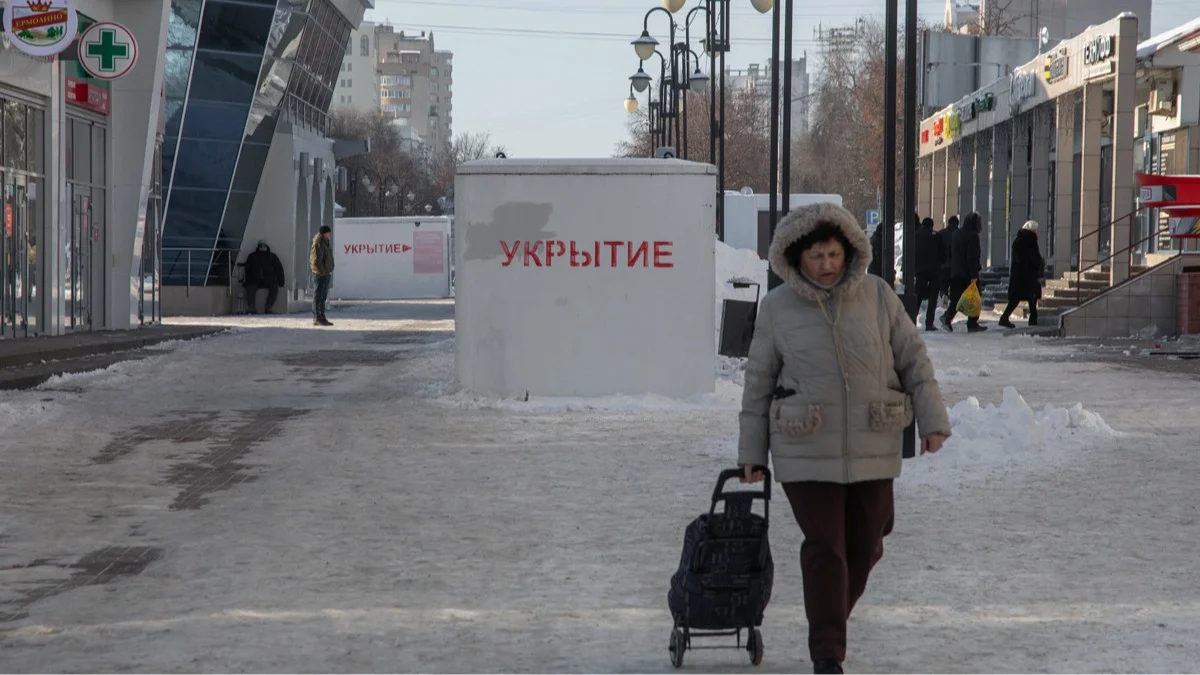
Photo: Novaya Gazeta Europe
“During the entire period of our communication with you, my telegram channel has been the main source of information, primarily that relating to your safety. <...> I am worried that the slowdown of the Telegram channel may affect the delivery of operational information to you if the situation worsens, and we are a front-line region,” wrote the governor of the Belgorod region, Vyacheslav Gladkov, in his Telegram channel on February 11, after it became known that telegrams in Russia were slowing down. He called on Belgorod residents to subscribe to his channel in MAX. Now the governor has 121 thousand subscribers in MAX, while in telegram - 482 thousand. As of 2025, the population of the Belgorod region was more than 1.4 million people. The slowdown in telegrams against the backdrop of incessant shelling of the Belgorod region is not just a worsening inconvenience. This is a serious blow to the entire system of ensuring the safety of residents. “New Europe” found out how private telegram channels became, in fact, the main mechanism for alerting Belgorod residents about rocket attacks.
“No one expected the shelling to start”
Unlike Ukraine, Belgorod did not launch a separate application to inform citizens about the missile danger, although the region has been subjected to massive shelling for several years now. In 2023, Belgorod residents actively used the application from the Ministry of Emergency Situations, which simply duplicates standard notifications sent by rescuers: in other regions these messages inform about bad weather, and in the Belgorod region - about missile strikes. However, this format turned out to be not very convenient. The fact is that the newsletter in the Ministry of Emergency Situations application involves informing about threats occurring throughout the region, without a more specific link to the location of users. As a result, for example, residents of Belgorod regularly received reports of shelling of border villages, which are located tens of kilometers from the city itself. And if at first people reacted to these regular notifications, over time they turned into uninformative white noise. After all, during shelling, a person has only a few seconds to hide in cover, and these precious seconds had to be spent on geographical clarifications. The application simply ceased to be perceived as something that really provides security.
There was another option for notifications from the Ministry of Emergency Situations: you could watch SMS on your phone, in which case the location was determined automatically and notifications about shelling were sent exactly to those who were nearby. But there were difficulties with this option too.
“During all 4 years of war, the authorities have never fixed the sending of SMS about the dangers of missiles and UAVs. They still arrive very late, sometimes they don’t arrive, and there is no point in such notification,”
- says Belgorod resident Anastasia and then sends a screenshot of her SMS. They also indicate the specific time of the missile danger: one notification arrived with a delay of 19 minutes, another - 49 minutes.
The Ministry of Emergency Situations explained that delays in the delivery of SMS messages in Belgorod occur due to the large number of recipients: the mobile network cannot cope. In small settlements, it is possible to inform residents more quickly. In addition, there are purely organizational reasons for delays: “SMS distribution is carried out by cellular operators upon request. In this case, an application for sending messages is sent to cellular operators only after receiving reliable information about the shelling. After receiving the application, the telecom operator processes it within three to ten minutes and begins sending it out,” the Ministry of Emergency Situations said.
Belgorod is located only 30 kilometers from the border with Ukraine - and from this circumstance alone it clearly follows that any shells reach here very quickly, that is, there is very little time to react after detecting missile activity. The city needed other, more rapid warning schemes.
“You need to understand the context. Massive shelling began in April-March 2024, and they turned out to be quite unexpected, Belgorod resident Alexey, who was immersed in this very “context” on duty, tells Novaya-Europa. “No one expected that just at one moment the Ukrainian Armed Forces would begin to actively fire at the city with MLRS missiles or target them with HIMARS missiles. So at first, the biggest problem for city residents was precisely the untimely, belated notification of the start of a rocket attack. That is, the siren began to buzz, and within 20–30 seconds explosions occurred. At that time, concrete shelter boxes did not exist in large quantities. And in general, the shelter system was not as developed as it is now. It was difficult to find out about the shelling in advance and to hide properly. And somewhere on the third or fourth day after the start of heavy shelling, telegram channels appeared for notification.”
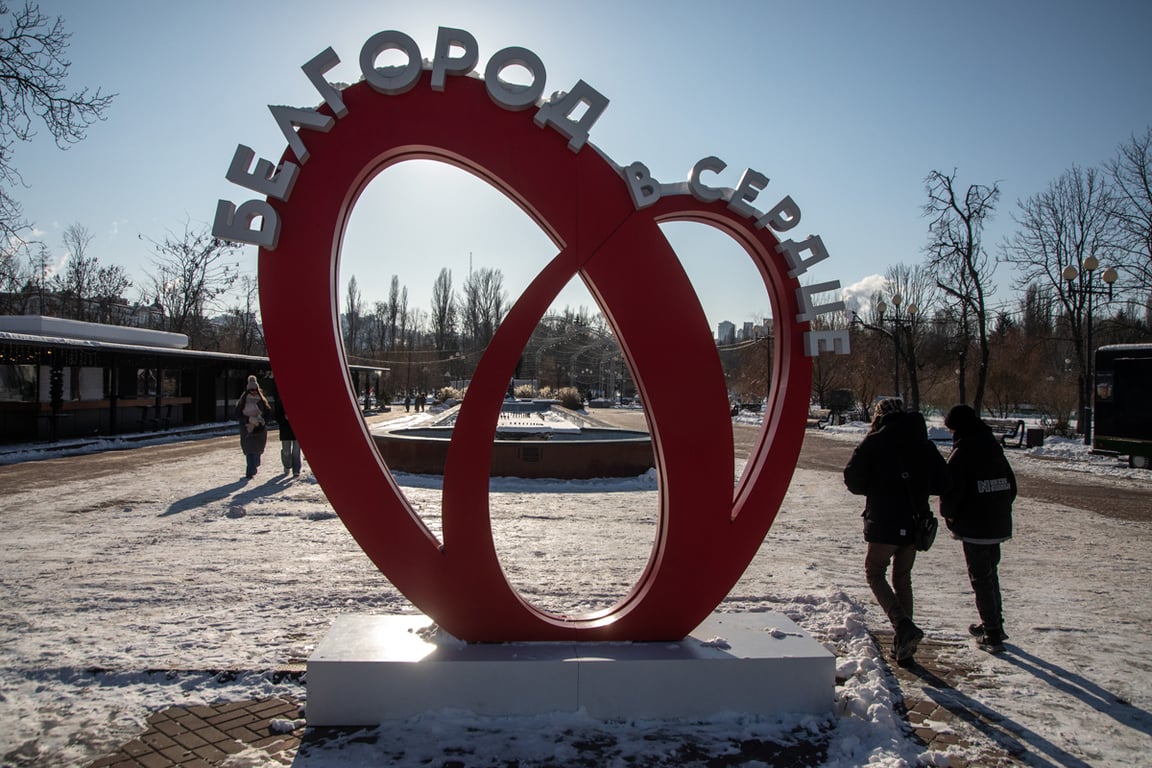
The war has come
When Alexey says “no one expected massive shelling,” this is not a figure of speech. For a long time, the regional authorities really did not think about the consequences of missile strikes for civilians: the basements were locked in the interests of anti-terrorism security, there were no warning systems, as well as instructions on what to do in the event of shelling. Explosions were sometimes heard over the city, “clouds” from air defense were visible in the sky, but there were practically no consequences on the ground.
At the very beginning of the war, Belgorod was bombarded mainly with ballistic missiles. For example, on July 3, 2022, an air defense system shot down a Tochka U missile, it fell in the city center, killing four people. Ballistic missiles fly along a clear arc-shaped trajectory: the air defense in this case calculates where the enemy missile will be at a certain moment and explodes nearby at the planned time. Fragments from an exploding air defense missile hit an enemy shell and destroy it.
In October 2022, the Ukrainian Armed Forces also began to use Harm missiles. It was very easy to distinguish them from “Point U”: during the shelling of Harm, houses shook, and there were a lot of explosions at once. Such missiles were launched from Ukrainian aircraft, and it was much more difficult to shoot them down: unlike ballistics, this missile does not have such an obvious trajectory. Also, due to the large number of missiles fired simultaneously, the air defense system might not have time to shoot down all of them.
At the end of 2023, Ukraine began to use a new weapon in Belgorod, which had previously been used to fire at the border Shebekino - MLRS. MLRS missiles fly quickly, and they have a lot of shells in a package at once; air defense cannot cope. In a situation where the military could no longer guarantee protection for Belgorod residents, timely notification of a missile threat became critically important.

"Warning"
The first telegram channel that began to notify Belgorod residents was “WARNING | RO" This channel was created in March 2024, and the style of its messages suggests that the military is involved in the administration. “We would like to assure you that our work is carried out 24/7, and we are constantly on standby to repel enemy missiles and drones,” the channel reported on March 21, 2024.
The informal nature of the channel made it possible to avoid bureaucratic delays, due to which official notification of the threat was ineffective: the military simply detected the fired missiles and wrote posts about it. The link to the channel quickly spread through word of mouth. In Belgorod, they had just begun to install a street warning system, so the authors of “Warning” even urged their subscribers to put the sound of a siren as a notification on messages from their channel: so that when the attack began, everyone around would also hear the sound from the phones of passers-by and have time to hide.
“The Warning channel reported on the missile danger before the sirens began to howl, and much earlier. That is, one and a half to two minutes before arrival. Which, in fact, saved many people,” Alexey recalls.
- Alerts about the flights were - we now understand - from the Belgorod air defense departments, which transmitted information directly to the administrators. It became some kind of salvation; life revolved around the canal for a long time.”
However, the official authorities did not want to lose in the “alert competition”: Governor Gladkov began posting the same prompt notifications about missile dangers on his channel. Over time, many Belgorod residents unsubscribed from the “Warning” channel: it began selling advertising, which annoyed many residents.
In the summer of 2025, Belgorod experienced the worst drone attacks of the war - and new information channels appeared. For example, the channel “ UAV Information Belgorod, Belgorod region ”. Its administrators—apparently also associated with the military—published information about flying drones: trajectories, numbers. During moments of massive attacks, almost all Belgorod residents monitored the movement of the UAV in this or similar channels.
A similar warning system about drone attacks has appeared in other areas of the region. For example, in Shebekino, in addition to local news publics, the channel “ Information on the Shebekino UAV ” was launched, and in Valuyki - “ Emergency: Valuysky Moscow Region ”. Governor Vyacheslav Gladkov posted a whole list of such channels for different areas of the border Belgorod region.
Over time, these Telegram channels acquired an additional function: roll calls began in chats under messages about attacks. What are the consequences of the impact, was anyone hurt? It was these chats that turned out to be the most efficient means of communication among citizens. So, after the telegram slowed down, Belgorod faced a double problem: now it is impossible not only to find out about the approaching strike, but also to find out the fate of loved ones who came under fire.
Fires, breakthroughs, stuck elevators
This frosty winter has already brought an energy war to the Belgorod region, from which the civilian population is greatly suffering. The city now experiences regular blackouts due to Ukrainian attacks on energy infrastructure. In January, one of the largest power outages occurred - Governor Gladkov then stated that 556 thousand people were left without electricity. Now they hit the energy sector up to several times a week. Such shocks are accompanied by new blackouts of light, heat and water.
On February 14, it became known that all Belgorod houses that are heated by centralized heating will be without hot water until the end of the heating season. This is due to the high load on the surviving infrastructure, which cannot cope even after connecting emergency capacities. “All emergency teams are on the ground, working, but, unfortunately, the damage after the shelling of the Ukrainian Armed Forces is very large and very serious,” said the governor of the Belgorod region, Vyacheslav Gladkov.
“People simply adapted, bought themselves flashlights and gas stoves so that they could cook food if the electric stove didn’t work,” says Anastasia.
In addition to the lack of hot water in the city, Belgorod residents are experiencing many other utility problems due to power outages. For example, in a multi-storey building on 2nd Michurinsky Lane, due to the lack of heating, residents warmed themselves with electric heaters, but the wiring in the house could not stand it, and a fire broke out . In other houses, pipes are bursting .
And in some areas the voltage either drops or, on the contrary, rises to values dangerous for household appliances. At the same time, Gladkov states that there will be no compensation for equipment burnt out due to power surges: the region already has a lot of expenses with the restoration of housing. Another problem during shutdowns is elevators that stop when people are inside. Technical services went out to rescue stranded Belgorod residents so often that in most apartment buildings the elevators were simply turned off.
Despite the energy crisis, schools and kindergartens in Belgorod operate in the usual full-time format, although some have problems with heating.
Residents of private houses purchase generators to provide their homes with heat and light. In addition, heating points have been deployed in the city. They are located in various government institutions, as well as in the “headquarters of public support for United Russia.”