
Translated material
“Do not go to a shameful country until its fate is over.” How orientalist Nikolai Nevsky paid for his return from emigration
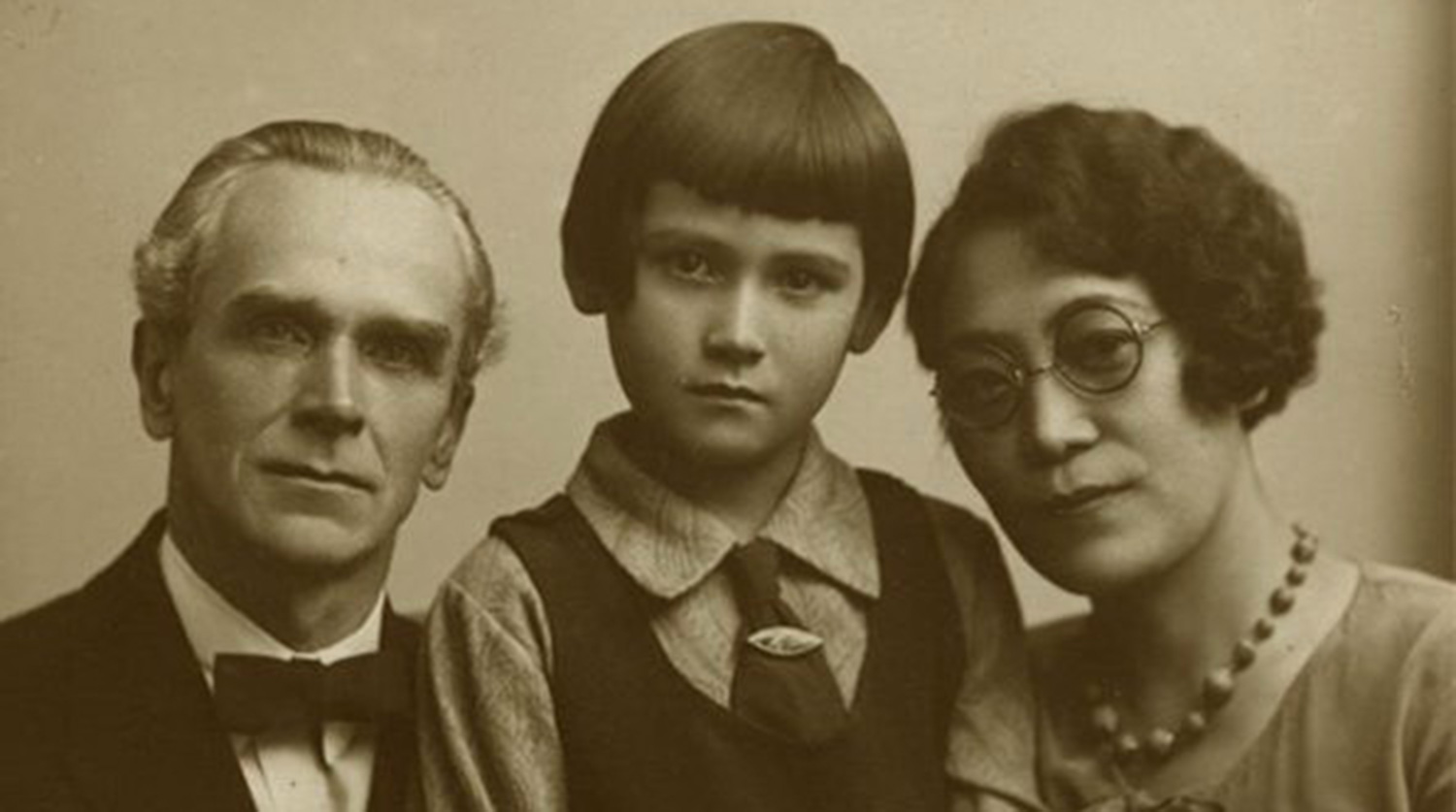
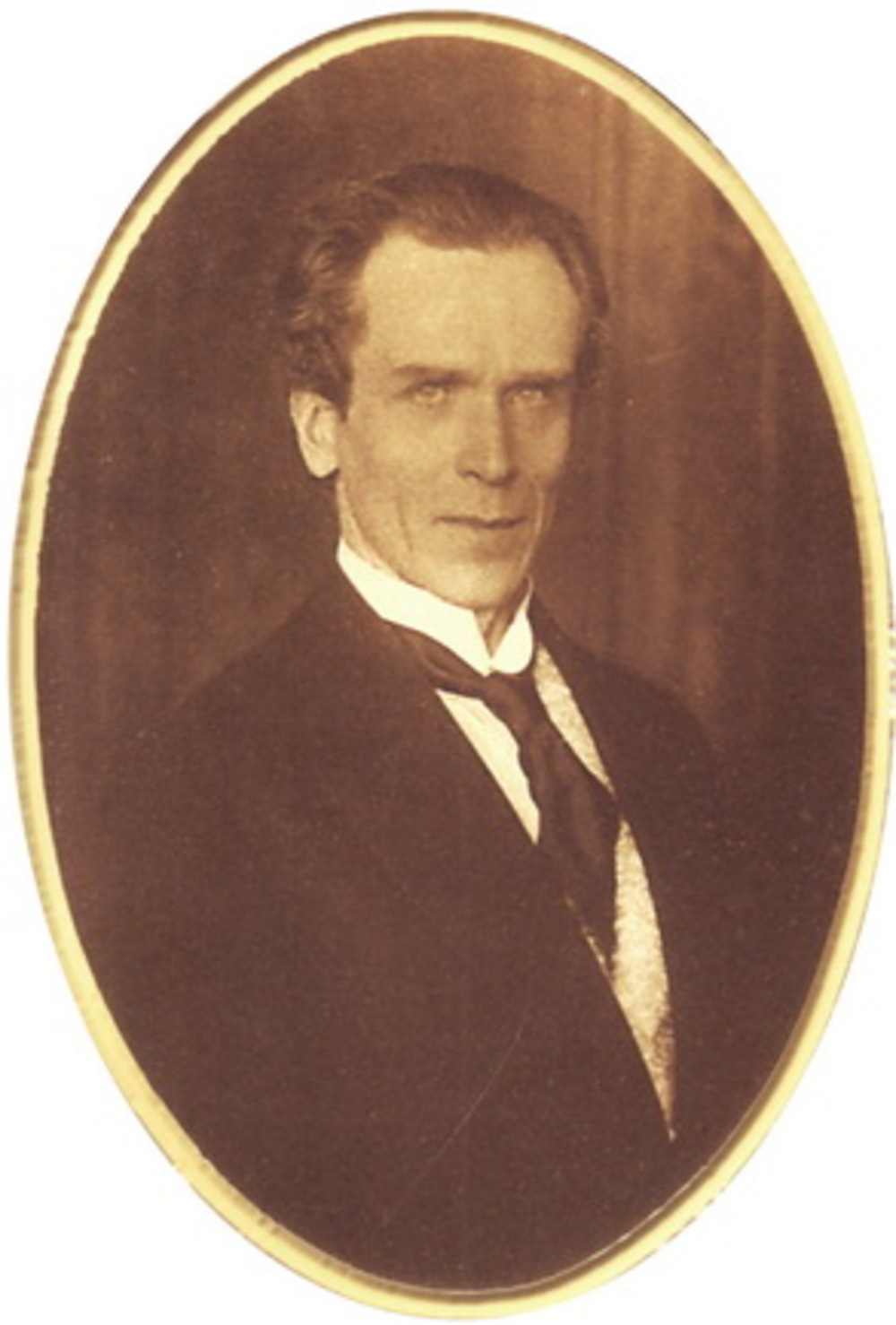
On February 18, 1892, Nikolai Nevsky was born, the scientist who was the first to decipher the writing of the Tanguts, whose state existed on the border of China and Mongolia and disappeared about 800 years ago. His discovery returned the voice of civilization destroyed by the troops of Genghis Khan, but Nevsky himself did not live to see recognition: in 1937 he was shot in Leningrad.
End of 1937. An overcrowded cell in the Leningrad DPZ of the NKVD. In the moments of respite between interrogations, prisoners, in order not to go crazy, lecture each other on topics dear to their hearts. A modest and quiet man, who introduced himself to his cellmates as an “employee of the Hermitage,” talks about the history of the Tangut state, which arose on the border of China and Mongolia in the 11th century. Growing up on the sands of the Gobi Desert, this state quickly became so powerful that even huge China itself paid tribute to the Tanguts. But the main achievement of the mysterious people was their own writing and literature.
Seven centuries after Genghis Khan’s troops wiped out the Tanguts from the face of the earth, a huge library of texts remaining from them was found in the dead city of Khara-Khoto by Przhevalsky’s student Pyotr Kozlov. Since then, major scientists from all over the world have tried to read them, but have not been able to decipher the mysterious hieroglyphs. As the prisoner modestly admitted, he managed to get closer to solving this problem.
From the memoirs of V.M. Tityanov, who was in the same cell with Nikolai Nevsky during the investigation into his case:
“While in prison, he was very concerned about this matter, that his works could disappear without a trace. During his arrest, as he said, his manuscripts were treated very carelessly, which raised doubts about their safety.”
The scientist did not know that he had less than a month to live. And, of course, he could not even imagine that his wife, guilty only of following her beloved to Russia, would be shot along with him. He only bitterly regretted that he had succumbed to persuasion and returned to his homeland from Japan, where he lived happily for 14 years, where he met the woman he loved and where his daughter was born.
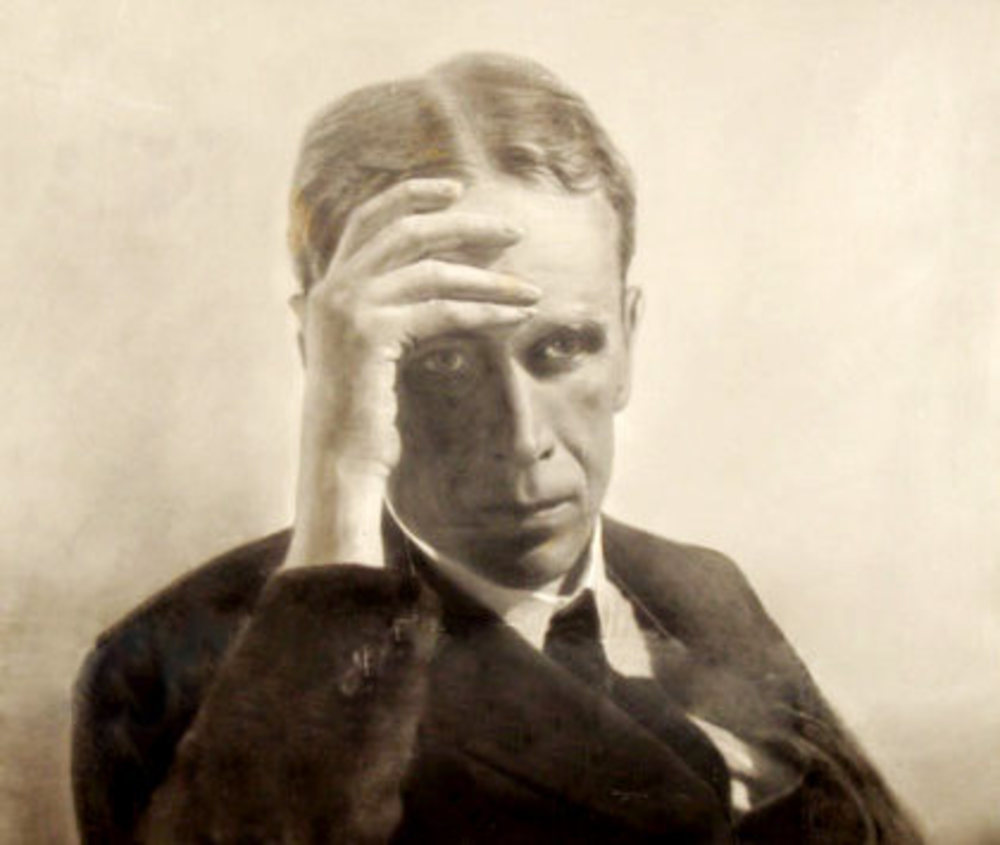
From the memoirs of V.M. Tityanova:
"On 10 or 11/XII-37... I... was brought to the cell. Everyone had already settled down to sleep. Nikolai Alexandrovich was lying somehow unusual. His trousers were pulled up above his knees. His legs were still swollen. ... I quietly got to the bed, began to touch him, and he woke up. “Why are you here?” He asked me somehow confused. ... He wanted to give me the bed to rest, but I persistently began to protest and began to prove that it would be better for me to lie on the floor... Suddenly he said to me in a distressed whisper: “Why did they deceive me, bring me here - to Russia.”
"My double, only stronger and generally better"
Nikolai Nevsky was born in Yaroslavl in the family of a forensic investigator. He lost his parents early and was raised by his grandparents who lived in Rybinsk. The grandfather was the rector of the Transfiguration Cathedral, an educated man who loved his grandson. But in 1905 he died, and Nikolai was taken in by his own aunt, his mother’s elder sister Varvara Krylova. She lived modestly, so her nephew, a high school student, had to earn his own living. One summer he went to tutor for the whole summer - to Poshekhonsky district, from where he brought about one and a half hundred ditties he had recorded. This trip became his first "ethnographic expedition".
However, his range of interests was not limited to his native folklore: Rybinsk, located on the Volga, was a trading city, and every summer traders from all over the world came to the local fair. Nikolai especially enjoyed watching the Chinese and listening to their incomprehensible language. And one day he met the Tatars, and they taught him the Tatar language. The high school student also mastered Arabic writing completely independently. Languages came surprisingly easily to him. Over the years, he will learn 16 of the most difficult oriental languages, and will write and speak German, French and English perfectly.
In 1909, Nevsky graduated from high school with a silver medal. Relatives insisted that I need to choose a practical specialty that will provide food. Having listened to their advice, Nevsky entered the St. Petersburg Institute of Technology, where he was supposed to master the specialty of a railway worker. But after the first year of study, he realized what his true calling was, and moved to the university to study at the Faculty of Oriental Languages. He chose Japanese and Chinese, “to which he had long felt an attraction,” as he admitted in his autobiography.
Nevsky was lucky: among his teachers were such outstanding philologists as Lev Shcherba, Vasily Bertold, Nikolai Veselovsky. But a particularly close relationship developed with the future academician sinologist Vasily Alekseev, who was then not much older than him. Alekseev wrote in his diary in those years about Nevsky: “My double, only stronger and generally better.”
"People have a hard time understanding you"
After graduating from the university, Nevsky was sent for an internship to Japan for two years - “to improve knowledge and acquire the necessary skills in spoken language.”
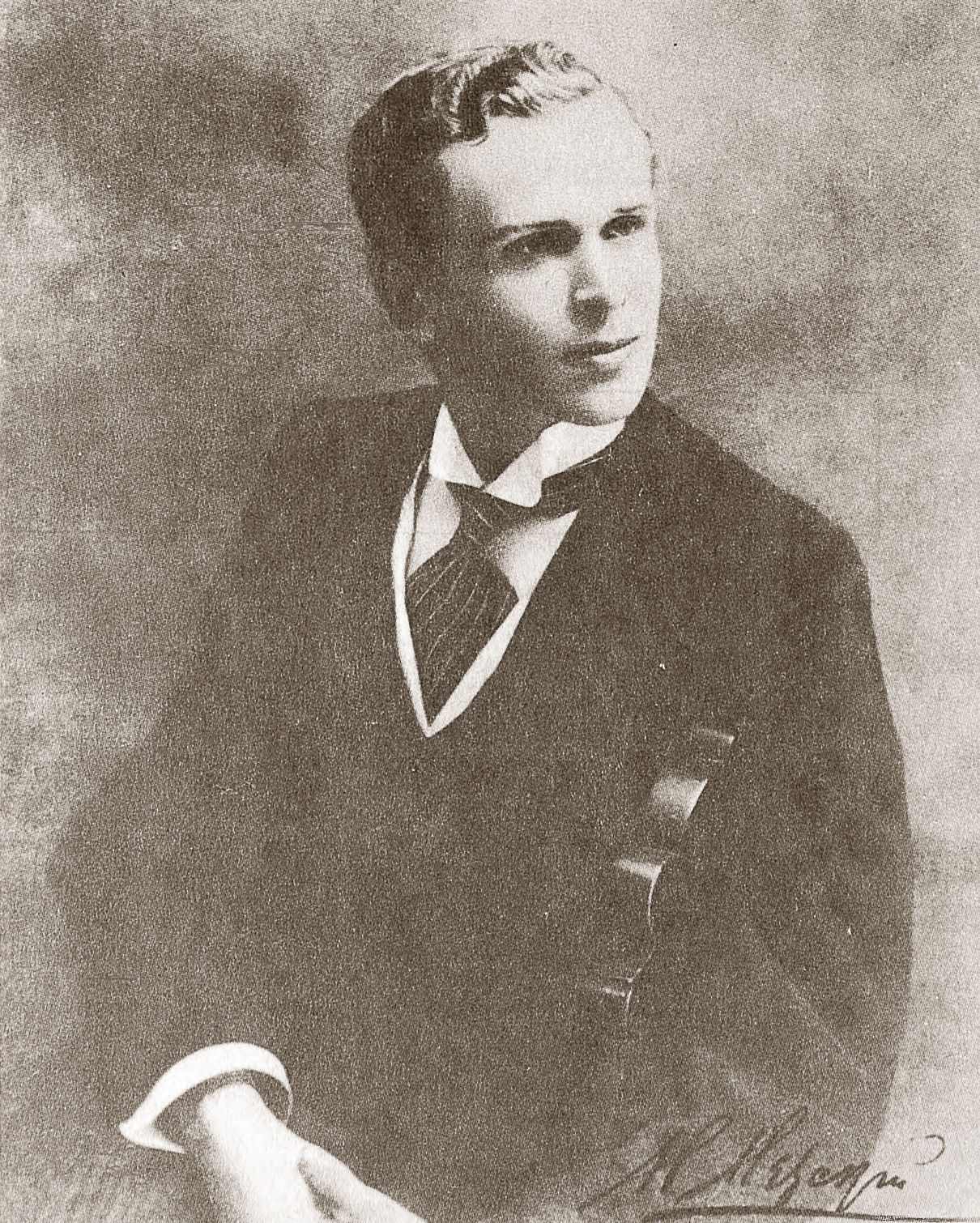
There, at the hotel, on the very first day he spoke Japanese, carefully choosing words and expressions, pronouncing them exactly according to the rules he had learned, but - alas! – the servants crowded around with curiosity, bowed, but obviously did not understand him. Nevsky later recalled how an elderly, intelligent-looking Japanese man in glasses appeared from the door of the next room, listened and politely, slowly pronouncing the words, said:
– Sir, you deign to speak the language of classical books of the Middle Ages. This makes it difficult for people to understand you. (This story is described in the book “Nikolai Alexandrovich Nevsky” by Lydia Gromkovskaya and Evgeniy Kychanov from the words of the prominent Japanese ethnographer Macao Oka. He recalled that Nevsky loved to tell this story to his Japanese friends)
Nevsky settled in Tokyo with his university classmates - orientalists Nikolai Conrad and Otto Rosenberg. Together they quickly filled in the gaps in their university education and mastered modern Japanese to perfection.
From the memoirs of the Japanese ethnographer Nakayama Toro:
“One spring evening in 1916, the clerk of a second-hand bookstore, with the owner of which I was friendly, told me: “Two Russian students often come to us, they would like to meet a person knowledgeable in the history of Japan, the morals and customs of the Japanese. Do you have any desire to make friends with them?" I replied that this was impossible, since I did not speak any foreign languages, but then the owner intervened, saying that they both spoke excellent Japanese and could talk about the most complex things."
A year later, Conrad and Rosenberg’s internship expired and they returned to Russia. Nevsky was left alone: he was supposed to return in mid-1917. But plans were changed first by the February Revolution, then by the Bolshevik coup, and then by the civil war.
– Friends warned Nikolai Alexandrovich in letters that Russia had changed and he needed to think three times before returning. They accepted the February revolution with enthusiasm, but the Bolsheviks’ coming to power cooled their ardor, says historian Irina Vasilyeva ( name changed for security reasons ). – Nevsky was especially convincingly dissuaded by Alekseev and Konrad. The latter completely described his return as a catastrophe: “Imagine a man who is caught in a whirlpool and rushes towards the abyss; he realizes that he needs to save himself, but he is not able to do this.”
Nevsky heeded the warnings of his friends and decided to stay.
From a letter from Vasily Alekseev to Nikolai Nevsky dated November 2, 1917:
“Do not go to a shameful country until its fate is over. ... Everyone feels as if on the eve of their death. Russia has ceased to be a state. The devil knows what is happening here. Apart from violence, nothing. I am waiting for an inglorious, stupid death from a hooligan soldier and have given up on work.”
Nevsky managed to get a position as a teacher of the Russian language at the Higher Commercial School of the city of Otaru in Hokkaido. On this northern island, he met a 19-year-old girl, Isoko Mantani, from a large family of a fisherman from the village of Irika. Despite her humble origins, Isoko perfectly mastered playing the national instrument biwa and performed on stage performing ancient ballads under the pseudonym Kyokuren. The young people fell in love with each other.
In Hokkaido, Nevsky became interested in studying the culture of the indigenous inhabitants of the island - the Ainu. He mastered the language of this mysterious people, recorded thousands of poetic stanzas (including a heroic women's epic never recorded by anyone else) and translated them into Russian. Thus, Nevsky became one of the first Ainu scientists not only in Japan, but throughout the world. Over the course of three years, he recorded dozens of texts, many of which are now known exclusively thanks to Nevsky.
"The smoke of the fatherland is not always sweet and pleasant to us"
In 1922, Nevsky was offered a very lucrative position as a professor at the Institute of Foreign Languages in Osaka. Isoko returned to the village to her parents, who were against an affair with a foreigner. But as soon as I received a letter from my beloved with an invitation to come to him, I immediately went to Osaka. They began to live together, got a cat, a dog and even a monkey. And on May 3, 1928, the couple had a daughter, Elena. After this, Nikolai and Isoko officially registered their marriage at the Soviet consulate.
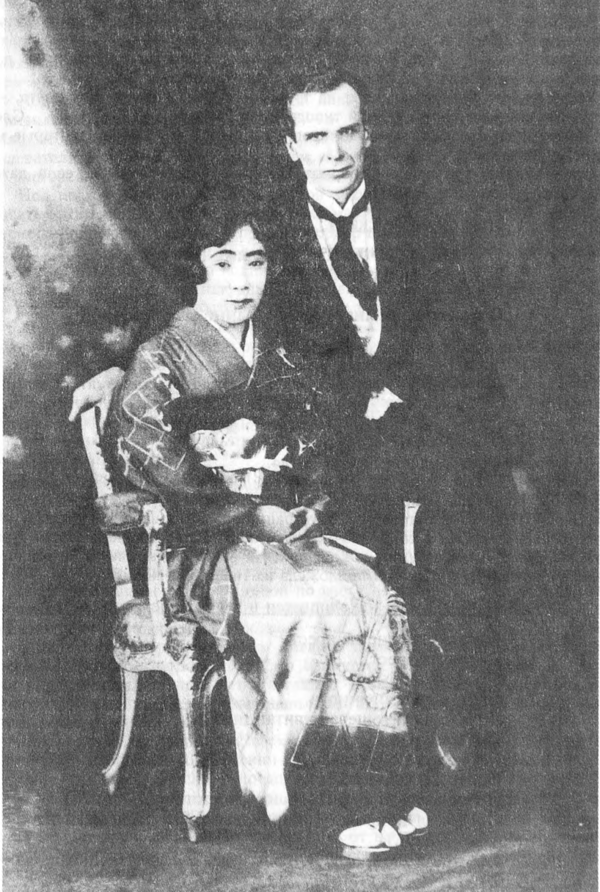
In Osaka, Nevsky began to study the dialects and folklore of the Miyako Islands, and visited these remote places three times. And then he went to the island of Taiwan - the then Japanese colony of Formosa - to study the culture of the island's aborigines, the Tsou tribe. He published the results of his research in Japanese journals, each time arousing great interest in scientific circles. And then Nevsky was completely captivated by a new hobby - deciphering the Tangut written language.
“In fact, we owe the fact that Nikolai Alexandrovich became interested in Tangutika to an accidental coincidence,” says orientalist Evgeniy Popov ( name changed for security reasons ). – During a trip to Beijing, Nevsky met Alexei Alekseevich Ivanov, his former teacher at St. Petersburg University. For many years he studied the collection of Tangut books stored in St. Petersburg, but was never able to come close to deciphering their writing. Ivanov complained to Nevsky about the futility of his efforts, and at the same time handed over several photocopies of Tangut texts. This was enough to provoke Nevsky.
One problem: the entire huge collection of Tangut texts - more than 8 thousand books taken by Kozlov's expedition from Khara-Khoto - was stored in Leningrad. To access them, you had to go back. Friends and relatives could no longer warn Nevsky against this decision: their letters did not reach him. But the USSR plenipotentiary representative in Japan, Ivan Maisky, promised mountains of gold upon his return to his homeland.
From a letter from Nevsky’s 73-year-old aunt Varvara Krylova, which she sent to Vasily Alekseev in March 1925:
“I passionately, madly want to see him, or at least find out what fate befell him there. ... I completely agree with you, Vasily Mikhailovich, that it makes no sense for Kolya to return to the USSR at the present time; it is not always possible to say that the smoke of the fatherland is sweet and pleasant to us.”
– I believe that it was the shift in the focus of scientific interests that forced Nikolai Alexandrovich to decide to return to Russia. The collection of Tangut texts attracted him like a magnet. He believed that he would be able to find the key to them and was literally sick of this idea. It is difficult to find other convincing reasons. In material terms, Nevsky’s life in Japan was quite prosperous, but he always stayed away from politics, being fascinated by ethnographic topics that were extremely far from this agenda, says Evgeny Popov.
Nevsky managed to fall in love with Japan, it was hard for him to part with this country, but his new passion turned out to be stronger.
From the memoirs of Elena Nikolaevna Nevskaya, the daughter of a scientist (she passed away several years ago):
"In the investigative file, Nevsky is called a Japanophile. Indeed, he sincerely loved Japan: its nature, culture, people, their traditions and customs. This love was also manifested in his personal habits and behavior. Returning from work, he always changed into a kimono, and in the summer at the dacha he even wore it on the street. He studied while sitting on the floor covered with tatami, at a low Japanese table. ... With everyone, at least a little who knew the Japanese language, he spoke only Japanese. And he spoke the language brilliantly... Oka Fumio, who lived in Leningrad in the 30s, said: “Nevsky’s speech is music to the Japanese ear.”
"My wife doesn't believe me"
Immediately upon his arrival in 1929, he received the position of associate professor at the Leningrad Oriental Institute - in the department headed by his old friend Konrad. At the same time, Nevsky began working at the Institute of Oriental Studies of the USSR Academy of Sciences, at Leningrad University and - completely free of charge - at the Asian Museum, where the treasured Tangut archive was kept. The orientalist initiated a systematic study of the collection and began a phonetic reconstruction of the Tangut language.
From the presentation of N.A. Nevsky into corresponding members of the USSR Academy of Sciences by a team of employees of the Institute of Oriental Studies in 1936:
"Professor N.A. Nevsky is the only specialist in the field of Tangut studies. He is credited with developing the extremely rich Tangut fund of the Institute of Oriental Studies of the USSR Academy of Sciences. The work he carried out to decipher the meanings and readings of Tangut hieroglyphs - the compilation of the first Tangut dictionary - goes far beyond the boundaries of the Tangut language. ... The work of Professor Nevsky is a major scientific discovery that returns to scientific practice study of the long-vanished Tangut culture."
Isoko and Elena remained in Japan: it was assumed that his wife and daughter would soon follow Nevsky to Russia. But obtaining permission to enter the USSR was not so easy.
From a letter from Nikolai Nevsky to the commission at the All-Russian Central Executive Committee dated May 16, 1931:
“Due to the young age of my daughter 1 (she was one year old at the time of my departure), which made it risky to take her on a long trip at the beginning of winter, and also due to the uncertainty of my life in the USSR (mainly in an apartment), I left my family in Japan in order to bring her a year later. In the summer of 1930, I submitted a corresponding application to the Foreign Department of the Leningrad Region, but permission to travel was denied to me.”
A year later, the money left by Nevsky to the family came to an end. He could not transfer his salary from Leningrad. To survive and feed her daughter, Isoko had to give up music and open a billiards room. Over time, she began to doubt that her husband was still waiting for their arrival.
From a letter from Nikolai Nevsky to the commission at the All-Russian Central Executive Committee dated May 16, 1931:
“Due to the current ... laws on transferring money abroad, I am deprived of the opportunity to support my family. ... Since it is difficult to maintain contact (letters often disappear) and since I am deprived of the opportunity to satisfactorily explain to my wife the reason why I was not allowed to travel last year, my wife does not believe me, believing that I simply do not want to come, do not want to write, i.e. abandoned her. In view of this, she persistently asks me to come ... This is also my ardent desire.”
Isoko had to not only take care of supporting her daughter, but also solve problems with the police: her foreign husband, who had also voluntarily returned to the USSR, aroused serious suspicion.
From the memoirs of Elena Nevskaya:
“After her husband left for his homeland, she was persecuted by the police, so she was forced to go into hiding for some time and hide me with her friends. She took the separation from her husband very hard and, as soon as a call came from him, she immediately left for a foreign country to live with her loved one, leaving her family, friends, and work.”
Only in 1933, 4 years after leaving Japan, Nevsky finally managed to get his wife and daughter allowed to come to the USSR. Alekseev invited his beloved student to live with his family in his spacious apartment and allocated two rooms.
Immediately after her arrival, Isoko began teaching Japanese at two universities - the Leningrad Oriental Institute and the Leningrad Institute of History, Philosophy and Literature. The daughter, who didn’t know a word of Russian, quickly learned her father’s language. Her first teacher was Musya, the daughter of Nevsky’s teacher, Academician Alekseev. And Isoko never managed to learn to speak Russian well.
From the memoirs of Elena Nevskaya:
“Mom drew beautifully and devoted her free time to her favorite pastime. I remember how, taking a piece of graphite flat, she drew bamboo trunks, and traditional Japanese landscapes quickly appeared from under her hand. There were also many of my mother’s drawings, made in pencil and charcoal. She wrote very beautifully both in Japanese and in “European.”
Sometimes, when the mood suited her, she took the biwa in her hands and, playing quietly, sang. When guests gathered, she always sang at their request."
" He seemed to be in a hurry "
Although Nevsky finally had a beloved family next to him, Work continued to take first place in his life.
From the memoirs of Elena Nevskaya:
“Usually I remember my father at work, sitting in his office at his desk, surrounded by books, papers, cards, in clouds of tobacco smoke. He worked a lot and in many places. ... This required time, which he got from his sleep and rest. He valued every minute. He slept 4-5 hours a day, trying to do as much as possible every day. It seemed that he was in a hurry, afraid of not having time to complete started."
– It was not without reason that Nevsky was in such a desperate hurry to finish the main work of his life: the year 1937 came. All Japanese scholars had little chance of surviving the Great Terror, but for Nevsky, who lived for 14 years in Japan and was also married to a Japanese woman, they tended to zero. Nikolai Alexandrovich understood this perfectly. Despite all his indifference to politics, he could not help but see what was happening around him, notes Evgeniy Popov.
The so-called “orientalist case” unfolded in the country, in which many outstanding scientists were arrested and executed .
From the memoirs of Elena Nevskaya:
“N.A. returned home gloomy, depressed and bitterly reported that such and such an employee was not at work. And so day after day. He experienced the arrests of his friends especially hard. ... N.A. was also waiting for the arrest. I remember how at the beginning of autumn the “remnants” of friends gathered at our place. Sitting at the set dining table, N.A. sadly noted that it was very difficult to see how narrow the circle of friends. Perhaps, tomorrow, none of those present will be there. He himself is not afraid of anything, since he lived an honest life, but is worried about his daughter - what will happen to her if he is arrested? After these words, N.I.
Nevsky was arrested on October 4, 1937.
From the memoirs of Elena Nevskaya:
“They came for him at night, but he was still working. My father told my mother that this was some kind of misunderstanding, he would go, find out what was the matter and return in two hours. He asked very much not to touch anything on the desk, since he was going to continue working upon his return. In addition to my mother and me, Vasily Mikhailovich and his wife, Natalia Mikhailovna, came out into the hallway to see him off. Dad hugged everyone, kissed them, put on a light raincoat and headed towards the exit. At the door he turned around, said to Alekseev: “Goodbye!” and left.
Four days later they came for my mother. She immediately asked to invite N.I. Conrad, so that he would take his daughter, but heard in response: “No Conrads! The daughter will be sent to an orphanage.” Only after the mother fainted was a janitor sent for Conrad.
This is how my life with my parents ended. I never saw them again."
Shot on the same day
On May 31, the Pravda newspaper published an article “A pseudoscientist with the rank of Soviet academician,” signed by employees of the Institute of Oriental Studies and dedicated to Vasily Alekseev. In this, in fact, denunciation, in particular, it was stated that “during the years of Soviet power, for almost ten years of his stay in the ranks of Soviet academicians, V. M. Alekseev did not publish a single work of any kind, scientifically valuable and necessary for the country.” Mass meetings were held in Leningrad academic institutions, at which resolutions were adopted condemning “Alekseev’s erroneous teaching methods and his publication abroad of weak, outdated work.”
Nikolai Conrad then not only did not speak out in defense of his colleague, but also supported the criticism of Alekseev’s “methodological errors,” which, however, did not save him from arrest. They came for Conrad on July 28, 1938. Alekseev, by the way, by some miracle escaped arrest, but was deprived of the opportunity to teach and publish, his scientific school was destroyed.
And Elena had to change three more foster families in those years.
From the memoirs of Elena Nevskaya:
“Immediately after the arrest of my parents, I turned into the “daughter of enemies of the people.” There were millions like me. This is a special category of people who were not shot immediately, like their parents, but were killed morally, for a long time and persistently... none of the trustees ever made an inquiry about the fate of my parents. Yes, this is understandable. We lived in a terrible time, when people were afraid to say the name of the arrested person out loud, when, for the sake of their own well-being, some even abandoned their loved ones: children - from their parents, wife - from her husband and vice versa. Therefore, those who took me into custody committed a civic feat, since they risked their lives. I am grateful to them and very much obliged... When I turned 18, I started searching for my parents.
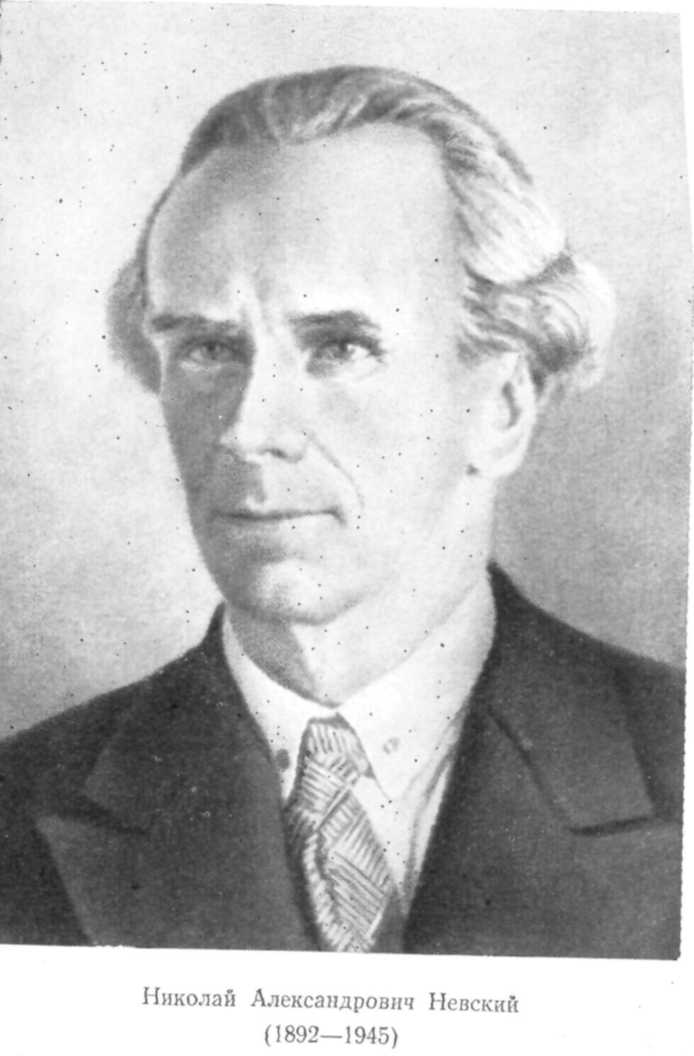
After six months of walking around the offices, Elena Nevskaya was summoned to the KGB and informed: her father died on February 13, 1945, and her mother on December 12 of the same year. However, the daughter stubbornly continued to believe that her parents were alive. She sent requests twice more, but received the same answer.
After Stalin's death, Nikolai Conrad initiated the rehabilitation of his old friend. On November 14, 1957, due to the lack of evidence of a crime, Nikolai Nevsky was rehabilitated, and on February 18, 1958, his wife was rehabilitated. The daughters were issued a death certificate for their parents with the date 1945. The cause of death of the father was named myocarditis, the mother - nephroso-nephritis.
Only in 1991, when the KGB archives were briefly opened, did Elena get the opportunity to get acquainted with the affairs of her parents. This is how she learned that her mother and father were shot on the same day - November 24, 1937.
From the memoirs of Elena Nikolaevna Nevskaya:
“For several days in February-March 1991, I sat in a separate office of the Big House (that’s what the KGB building is called in St. Petersburg), read, re-read and rewrote verbatim these wretched pieces of paper that decided the fate of my father and my mother. ... While reading, I felt cold inside, my hands shook and my breath caught. What have they, poor people, gone through!
The father, in fact, has two, and the mother has only one short interrogation, during which she denied all the charges brought against her, and... there are no people.”
Nikolai Nevsky was accused of being a Japanese intelligence spy who recruited agents for sabotage activities. Isoko is that she was recruited by her husband and recruited new agents herself. Both orders of arrest were signed by Sergeant Garkavenko, the head of the 2nd department of the 3rd department, Golub, and the head of the 3rd department of the NKVD, Major Perelmutr.
Isoko refused to plead guilty.
From the memoirs of Elena Nevskaya:
“Poor mother! All this time she lived in a terrible prison environment, in ignorance, with heavy thoughts about her husband and child. Mom had a very subtle and sensitive soul, but she could not even share her thoughts with anyone. Perhaps she had to endure bullying and ridicule even in her cell, since she was Japanese and did not know the Russian language (it is not known who surrounded her)... She turned out to be a courageous woman and found strength in herself until end to deny all the charges brought against her. Perhaps such resilience is explained by a trait of national character, as well as by her great love for her husband.”
What exactly they were accused of, Nikolai and Isoko found out only a month and a half after their arrest, after a series of torture and abuse.
Despite all this, Nevsky had the strength to support his comrades in misfortune.
From the memoirs of V.M. Tityanova:
“Nikolai Alexandrovich Nevsky is a noble, modest person. ... Attentive to people. And he wished only the best for everyone. ... There was such a moment on 27/X1 37. I was called in for investigation. They kept me for 3 days without eating or sleeping, standing on my feet. From all this I became dull and weak. When I was returned to the cell for literally one hour for lunch, Nikolai Alexandrovich was horrified. He immediately organized rest for me. for a few minutes. He placed people close together on both sides of the bed, they laid me on the bed, and he and Dr. Vinogradov began to massage my legs, taking off my chrome boots. They cut off my breeches that were pinching my calves... When they came for me with a call for investigation, he kept the following answer: “Wait, he’s weakened and can’t eat on his own, we’re still feeding him.”
Nevsky signed the confession. But under the interrogation protocol, instead of a signature, there are squiggles that clearly demonstrate the state he was in by that time. The interrogations were conducted by senior lieutenant Golub and detective Slepnev.
From the memoirs of V.M. Tityanova :
“On 7 or 8/XII I return to the cell for lunch and suddenly my friend N.A. is not there. I ask, where is Nevsky? Someone mysteriously whispers to me that he was taken in for investigation at night. On the second day at lunch I enter the cell, Nikolai Alexandrovich is sitting with his head down. His gray hair is in some kind of disarray, the bags under his eyes are swollen. For some reason he is sitting with his shoes off and his legs are also swollen. I immediately rushed to him and I ask, what’s the matter, Nikolai Alexandrovich? He somehow coldly answered that he was a spy like you, only you are a Polish spy, and I am a Japanese spy. Why did you swell? There followed a calm answer: “Maybe they beat you?” He nodded his head negatively and said: “Why beat me, I signed everything for them.”
On November 19, Nikolai and Isoko Nevsky were sentenced under Art. 58-1a of the Criminal Code of the RSFSR to capital punishment. Five days later the sentence was carried out. The indictments were drawn up in January 1938 - two months after the couple were shot. Signed by Slepnev, Golub and Perelmut.
On August 11, 1940, Nikolai Konrad turned to the People's Commissar of Internal Affairs of the USSR with a statement that he was convicted innocently, and signed all the testimony that he was a Japanese agent under physical and mental pressure from the investigator. Conrad wrote that he was systematically beaten, “kept in the ‘wall’ for several hours and driven to a state of insanity, during which he signed false interrogation reports.” His old friend was apparently subjected to the same torture.
The results of an inspection carried out in 1957 are attached to Nevsky’s investigative file. Former NKVD employees Garkavenko and Slepnev admit during interrogations that they did not have any materials regarding the orientalist “indicating his espionage and other counter-revolutionary activities”, that they used “stands” and continuous interrogations on Nevsky, and their boss Golub “beat those arrested in order to extract confessions.” Former NKVD employee Perelmutr was shot in 1939 “for abuse of power.” In those same years, a criminal case was opened against Golub, but he committed suicide.
“It turned out that there was no grave”
Following Nevsky himself, his works were also “rehabilitated”. The first two-volume book, Tangut Philology, was published in 1960. He created a sensation in the scientific world. It was called one of the largest philological discoveries of the twentieth century and was compared to the discovery of the Egyptian pyramids. Now the history and culture of the Tanguts could be studied from their own books.
From the memoirs of Elena Nikolaevna Nevskaya:
“Tangutika” is my father’s brainchild, to which he devoted his strength and health. How many sleepless nights he spent working on manuscripts. This is his joy and pride. Thoughts about the “Tangutik” haunted him even in prison. He was worried about the fate of his manuscripts, afraid that they would end up in someone’s unclean hands and be lost.”
In 1962, a quarter of a century after the author of Tangut Philology was shot, he was awarded the Lenin Prize
From a publication in the newspaper "Evening Leningrad" dated March 14, 1962:
“But recently the publishing house of the USSR Academy of Sciences published the book “Tangut Philology”. In its two voluminous volumes - on 1284 pages of text - the key to penetrating the secrets of Tangut manuscripts. This key was found by Prof. N.A. Nevsky - our Leningrad orientalist. The 70th anniversary of his birth is widely celebrated by the scientific community these days. ... The dictionary N.A. Nevsky compiled by him was not during his lifetime managed to prepare for printing."
In 1992, Russian scientists decided to publish a collection in memory of Nevsky on the centenary of his birth. There was no money for the publication, and then ten Japanese scientists collected and sent the required amount from their own funds.
“In 2001, a delegation came from Okinawa to honor the memory of Nevsky, who is rightfully considered one of the fathers of Japanese ethnography and folklore,” says Irina Vasilyeva. – We visited the university, the Institute of Oriental Studies, and visited the house where he lived. And at the end of the visit they wanted to lay flowers at his grave. The Japanese were - to put it mildly - very surprised when it turned out that there was no grave. The delegation was brought... to the Levashovskaya wasteland, where thousands of the same innocent victims of Stalin’s terror are buried. They had to lay flowers on the common cross for all those shot. After this, the Japanese decided: since no one bothered to erect a monument to Nevsky in their homeland, it means that it needs to be done in Japan. Elena Nikolaevna was invited to the opening of the monument in the city of Hirara. So for the first time she was able to see her maternal relatives, who all these years knew nothing about her fate.
“Do not go to a shameful country until its fate is over.” How orientalist Nikolai Nevsky paid for his return from emigration