
Translated material
Association of Informers of Russia. Why do authorities encourage snitching?
What is the difference between denunciation and manifestation of civil liability and what will be the penalty for failure to inform?
In 2025, Russian residents called the FSB hotline 146.6 thousand times. According to the department, this is a third more than in 2024. Most of the requests in 2025 were received by the “helplines” of the regional departments of the FSB. “Operationally significant information” contained only 15.2 thousand messages. The rest were of a “reference and informational nature.” Based on these appeals, in 2025 the FSB prosecuted 18 people.

What is the difference between denunciation and manifestation of civil liability and what will be the penalty for failure to inform?
by Radio Liberty Text copied width px height px The URL has been copied to your clipboard
No media source currently available
0:00 0:54:01 Download media file
Also in the issue: Did he die or did he help? Why is the state obliged to prove the causes and circumstances of the death of prisoners . Lawyer Karinna Moskalenko comments. Serfs are not supposed to know . Rosstat has classified data on the salaries of Russian officials . General Director of Transparency International - Russia Alena Vandysheva comments
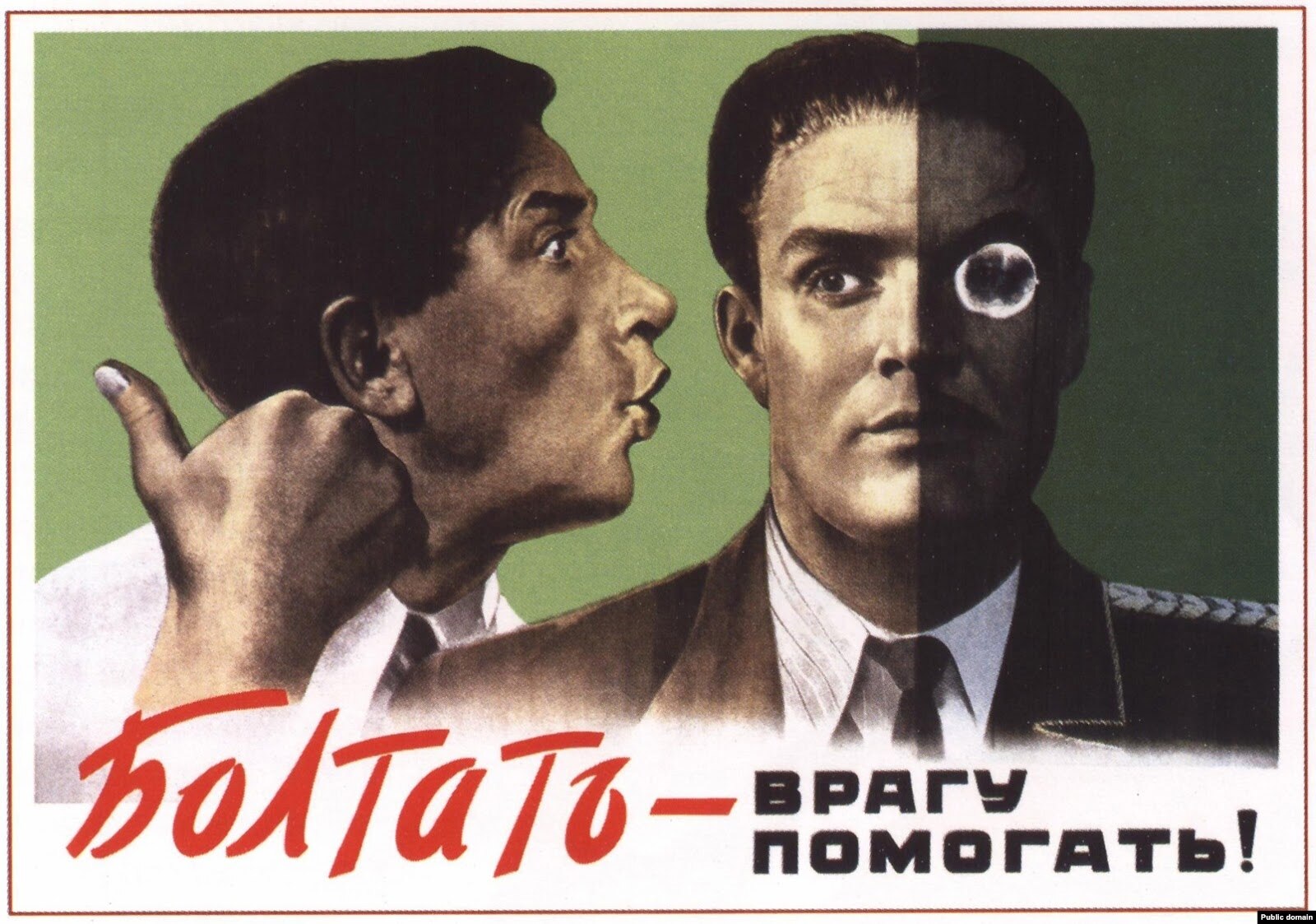
Denunciation in Russia ceases to be a secret and shameful matter, turning into a kind of social elevator and even a form of civic activism. The state encourages people to try to control their neighbor's life. Denunciations are becoming a daily norm, behind which there are not only beliefs, but also technologies.
What is the difference between denunciation and manifestation of civil liability, and what threatens Russians for failure to inform, lawyer specializing in international law and human rights, teacher at the Free University Dmitry Gurin told Radio Liberty:
We do not have a legal framework that defines what is denunciation and what is civil liability
– It’s difficult to find the legal difference. We do not have a legal framework that defines what is denunciation and what is civil liability. This understanding will relate more to the sphere of sociology, ethics, and perhaps to a number of other related disciplines. The idea is that denunciation, at least the connotation that this word bears in Russian, suggests that its author is trying to somehow harm the subject or object of his denunciation, or to obtain some benefit for himself. That is, there is some kind of selfish component in this. But we understand what civil responsibility is - here a person is guided by basic ideas about safety for himself, for others, his neighbors, his family. They are driven by socially positive motives. The line is not clear, rather blurry, but some internal measure should allow us to distinguish one from the other.
– How to navigate in modern Russia, when the legislation is also changing, and a person is really afraid that there are only enemies all around - terrorists, extremists? And suddenly he finds out that his neighbor is meeting with his comrades, they are Jehovah's Witnesses, and the other neighbor always reads Meduza or Radio Liberty? So, we need to go and report where to go...
We are not the first, our mothers and fathers, grandfathers and grandmothers went through this, this happened before them
– We are not the first, our mothers and fathers, grandfathers and grandmothers went through this, this happened before them. Responsibility for what is called in criminal law “non-reporting, or failure to report a crime” has been with us since tsarist times. She stayed with us throughout the Soviet period. In 1960, the Criminal Code of the RSFSR slightly trimmed this norm, saying that, okay, so be it, relatives, in general, are not obliged to inform on their relatives and immediate family members. Great. In 1996, the criminal code with which we formally still live in Russia was adopted, in which there was no rule on non-reporting.
And for 30 years we existed perfectly well without her. In 2016, the state says that, no, I will probably punish you also for not informing if you know about impending acts of terrorism. And after that this article begins to swell. In addition to terrorism, we have a long list of all these terrorist crimes there - training, organization, hostage-taking, illegal trafficking of nuclear materials, encroachment on the life of a statesman, seizure of power, rebellion, sabotage, attack on persons and institutions that enjoy international protection, and so on. This list will obviously grow.

– You are now talking about article 205.6 of the Criminal Code, which specifically provides for liability for failure to report such crimes. Does the average person know about this, and how can he navigate it? Just in case, he’ll go and snitch, relatively speaking?
People who really liked to report imaginary or real crimes will do it anyway
- Well, look, no one is immune from anything. Whether this article exists or not, those people who really liked to report on imaginary or real crimes will do this in any case. They have a spiritual urge. They do this not because there is a ban in the criminal code. The problem is that the ban in the criminal code will increase the number of these people. This is a fact. I would allow myself a quote. Nikolai Stepanovich Tagantsev, a Russian lawyer, academician, one of the great theoreticians of Russian criminal law, senator, lawyer, spoke about this here 150 years ago. He wrote: “Under modern conditions of state life, there is no need to involve all citizens in the prosecution of criminals.
This natural duty seems too heavy, and special bodies can conduct the business of discovery, that is, searching and identifying criminals, with incomparably greater success and with less effort. Woe to the country that turns denunciation into a necessary element of public life. For the sake of temporary benefits, the government will sow in society the seeds of a terrible moral infection, which threatens the extinction of the state organism or will require enormous and long sacrifices for its healing." After 150 years, nothing has changed. Therefore, it is clear that for the state apparatus, for the notorious federal security service, this seems to be a simple and easy tool.
This is done in order to encourage those people who want to cooperate with them on a voluntary basis and identify those very traitors to their homeland - that they will run to them with these denunciations faster. In the near future, this will most likely happen. In the long term, this threatens a truly moral decay of the category of people who were ready for this. But thank God, we have already been through all this. These cases are difficult to prove; responsibility for failure to report will not fall from the ceiling. It is unlikely to be implemented in such an automatic mode. In other words, this article, of course, will pose some kind of threat to people, but not immediately. Therefore, those who do not want to knock will not knock.
– You are talking about moral guidelines. On the other hand, it is one thing to report, relatively speaking, some kind of criminal crime. And another thing is that there is now a large number of active citizens who are “stoking” for the so-called traditional values. Roskomnadzor even added some new mechanism - you can “snitch” on a film that violates traditional values, but from March this can also be done anonymously, and then it may be banned at the box office and in online stores. What does this mean from a legal point of view?
All forces must be mobilized to find the enemy and put him to immediate death.
– As for anonymous or not anonymous, according to the law, the investigative authorities had to respond to any sources of information about the crime all their lives. In those cases where this reaction was really required. As for the wave of increasing denunciations from champions of traditional values, this is probably an echo or continuation of the culture of hatred and aggression that has become part of state policy, which is being implanted in society through all possible platforms and all possible institutions, from films to religion.
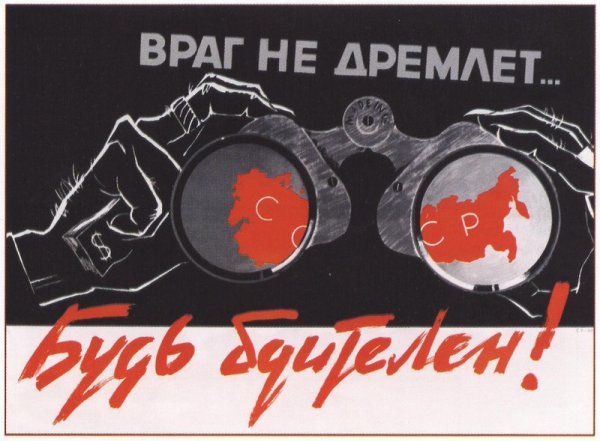
The leitmotif of this state monologue, which the state broadcasts to society, is the search for the enemy inside and outside: all forces must be mobilized to find this enemy and put him to immediate death. The practice of denunciation is subordinated to this basic idea - ensuring imaginary state security through the search for some elements that are under foreign influence or under the influence of some value systems supposedly alien to us. This, of course, has a most destructive effect on fragile minds.
If a person does not have an internal resource, if at some point a person loses the connection and understanding of black and white, the idea that, in fact, it is my civic duty to immediately go and report can settle in him and find fertile soil. This is the first option. And the second option is that we will always be dealing with opportunists who either think that this will benefit them in terms of their career, presidential grants, or God knows what else, or they just need to annoy some of their offenders. This is also a common scenario, we have observed this practice, and it is well documented if we take denunciations from the thirties of the last century.
– Please explain how then the state generally determines what a real threat is, and to what extent are these threats that the authorities find in modern Russia adequate to the realities?
After 2022 in Russia we can talk about wartime legislation, within which criminal prohibitions with exorbitant sentences are growing
– This is the most difficult question to which there is no clear answer. In today's realities, the process of criminalization, that is, the definition of a list of what constitutes a crime and penalization, does not have a scientifically and socially justified basis. These decisions are not based on the relevant studies that should be there, they do not include the necessary measurements, and so on. Threats are very often determined momentarily, in response to any fluctuations in social order, and the criminal law itself and criminal policy are used as such a primary means for solving any social problem.
As soon as some new social problem arises, it is always said that we have taken measures, and a new article has been added to the criminal code. As a rule, this does not solve the essence of the problem. The essence of the social problem cannot be solved through a ban. It can only be solved through a gigantic set of actions in which all subjects of society will be involved - from the entrance and the yard, from the minimal community to the head of state, relatively speaking, who must work at their level in order to solve these social problems.
After 2022 in Russia, we can talk about wartime legislation, within which criminal prohibitions with exorbitant sentences are growing, which for the most part, if we look at these latest changes, are in one way or another connected with extinguishing dissent and civic activity. Another set of norms are laws against sabotage. In order to exclude any active actions within the country that would be perceived as a direct and obvious threat. All new bans are aimed at ensuring the steadfastness of the regime and intimidating as many people as possible, says lawyer Dmitry Gurin.
Association of Informers of Russia. Why do authorities encourage snitching?