
Translated material
"War Tax". Sharp rise in prices for food and utilities
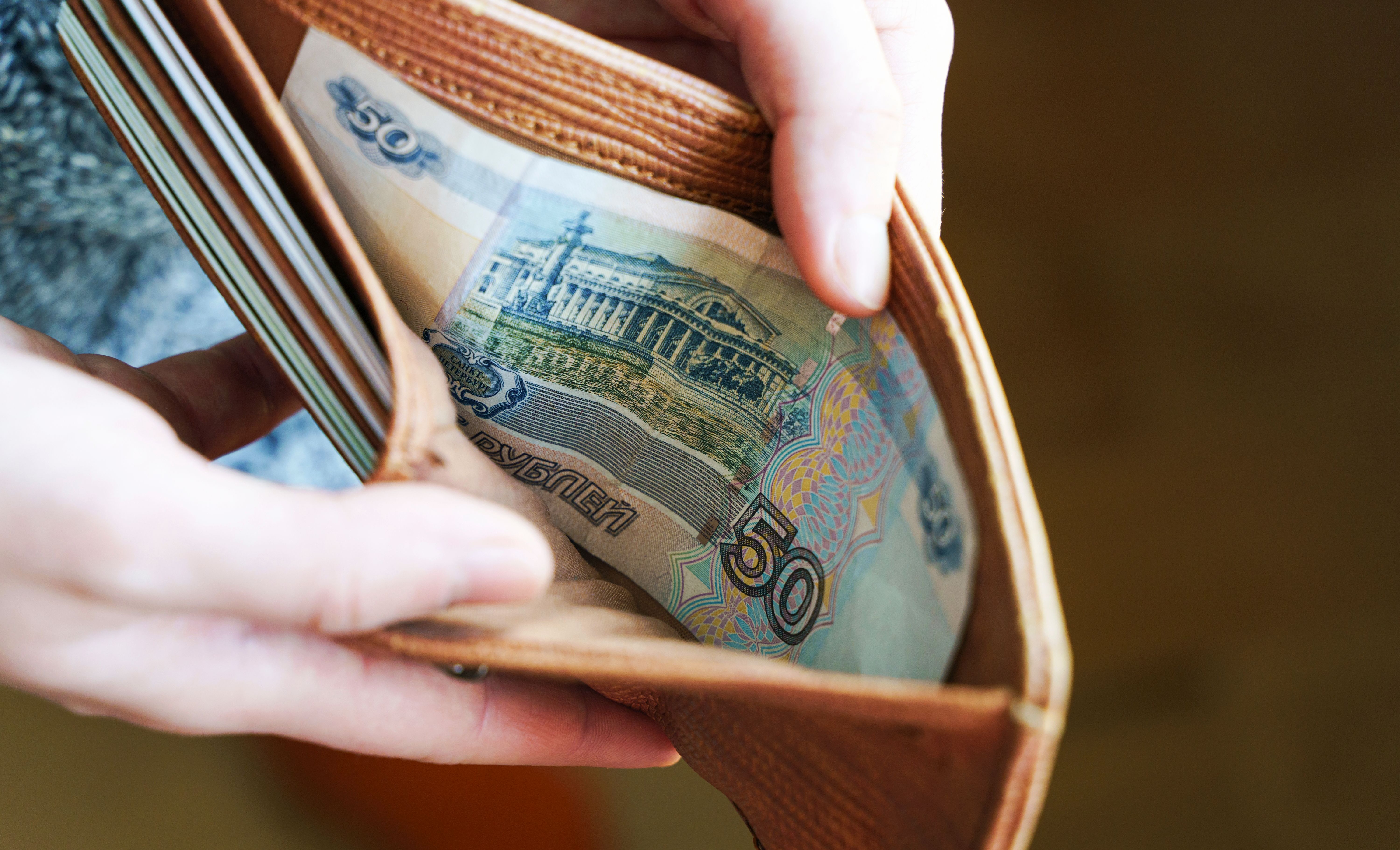
The share of food expenses in the budget of the average Russian resident has reached its maximum over the past 16 years and amounted to 39%, according to Rosstat data at the beginning of 2026. In January, compared to December, prices for food products increased by 1.95%, inflation of non-food products amounted to 0.61%, and inflation of services - by 2.33%.
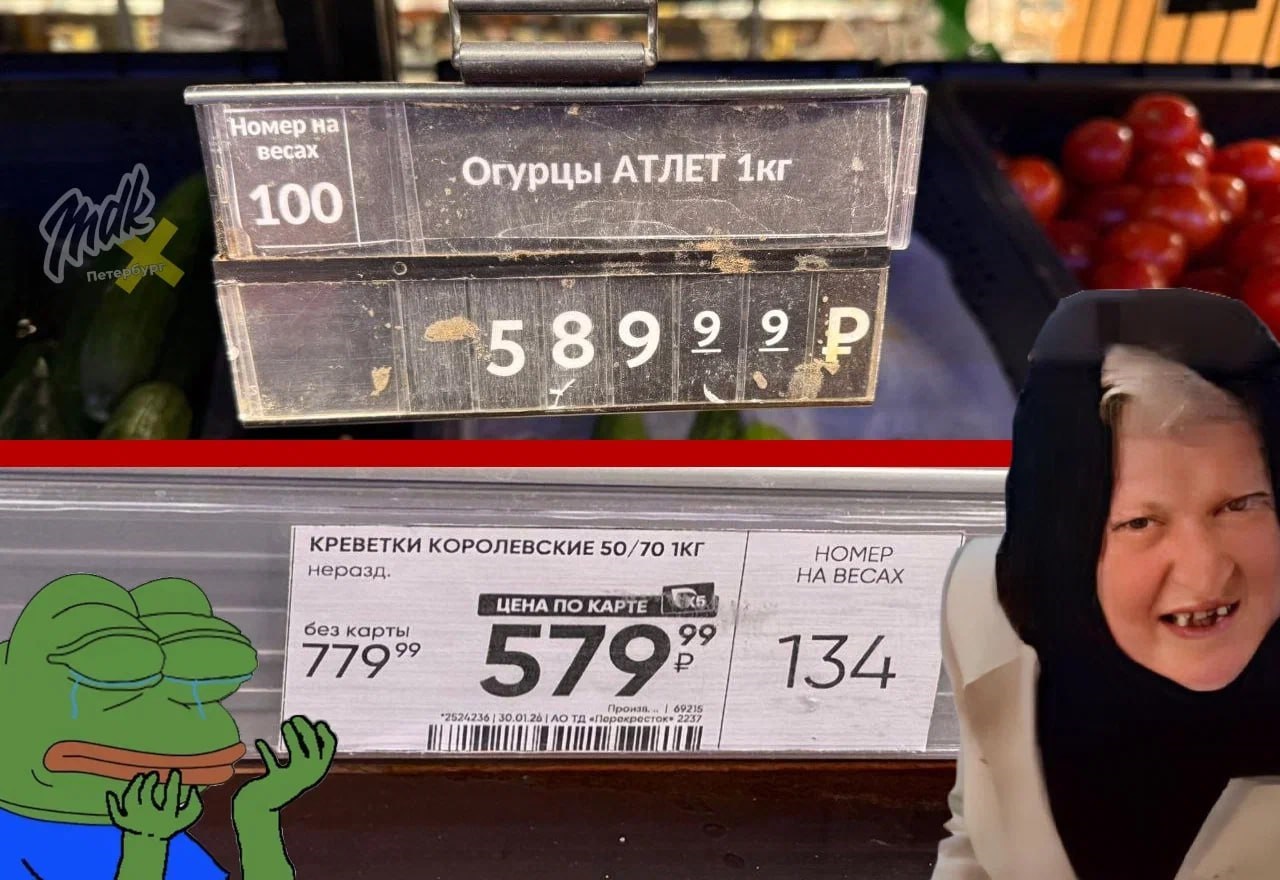
In February, prices for basic products increased by at least a quarter. And the cost of some goods has already become a meme : “Since when did cucumbers become a delicacy?!” Their prices increased by 32.7% over the year. On social networks, Russians are complaining en masse that they are now working only for food, loans and utility bills.
“Prices in stores have changed as if we had lost a war to someone,” people write.
“I got into my funeral savings”
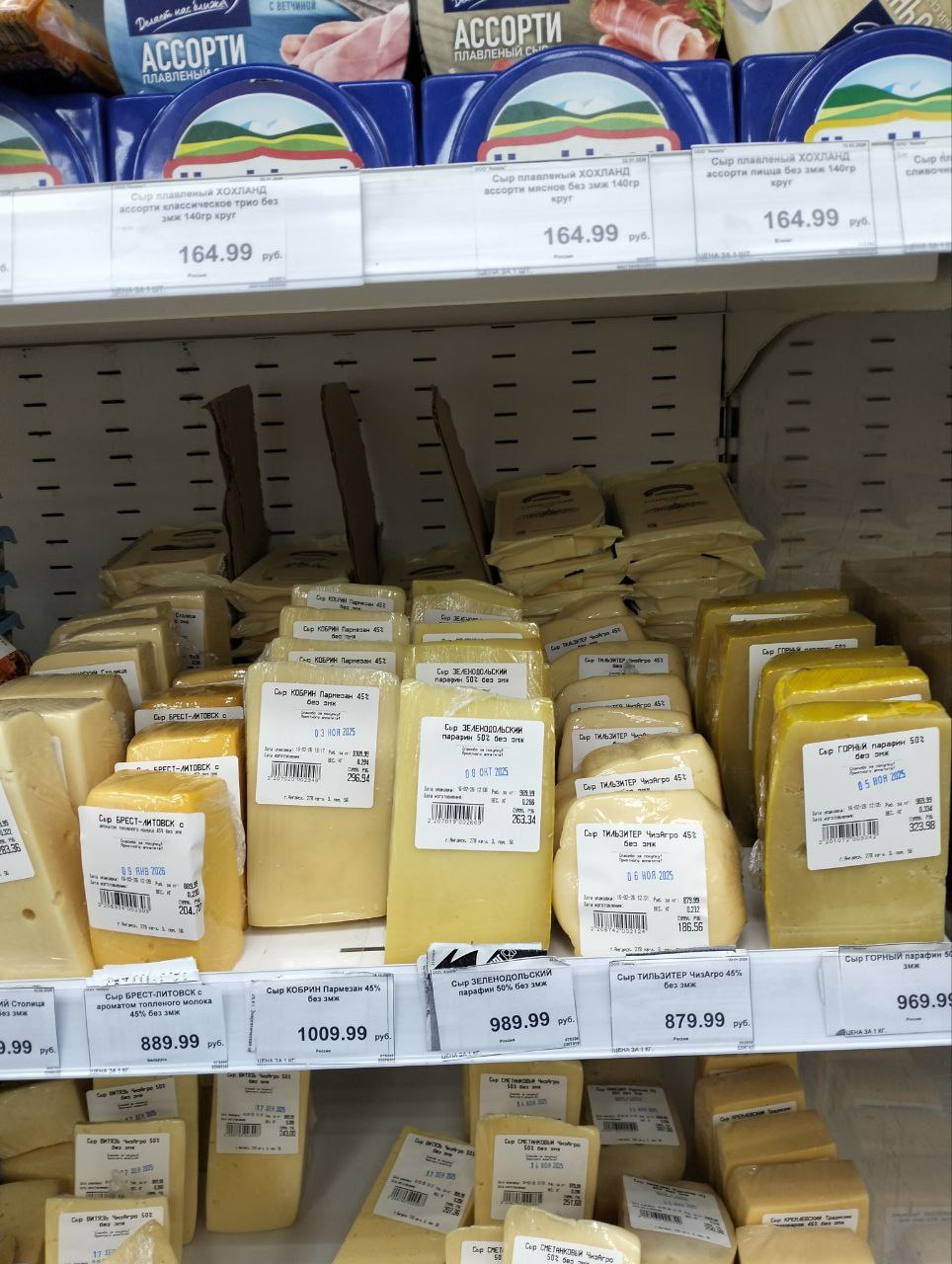
The prices that customers see in Russian stores today often diverge from even the most unpleasant official statistics.
– In February, our basic products such as milk, butter, and cottage cheese increased by 25%. Meat products and fish have risen in price by 50-70%, and for some items – by 5(!) times,” indignant pensioner Tatyana from the Irkutsk region (the editors do not name the names of the interlocutors for reasons of their safety). – If earlier we left half of our pension in stores, now it’s two-thirds, if you count pharmacies. The rest is gobbled up by the utilities. Vegetable milk, I always take, was 130 rubles, now it’s 190. The simplest milk was 89 rubles per package, now it’s 100. The better one, which I always took, cost 101 rubles, now it’s 124! Cheese, which was good, cost 820 rubles per kilo, is now 1150. And fish has simply risen in price fabulously - the most expensive pollock was 120, now look at the price tags - 216! Twice. Is capelin the cheapest?! It cost a penny - less than a hundred, now - 560 rubles! What is this anyway?! The price jumped five times.
Official inflation in Russia in January 2026 was 1.62% versus 0.32% in December 2025, as follows from statistical data . Since January 2025, consumer prices have increased by 6% in the country, Rosstat reports. Despite the fact that annual inflation in 2025 was recorded at 5.59%.
As usual, pensioners are experiencing the rise in prices especially painfully.
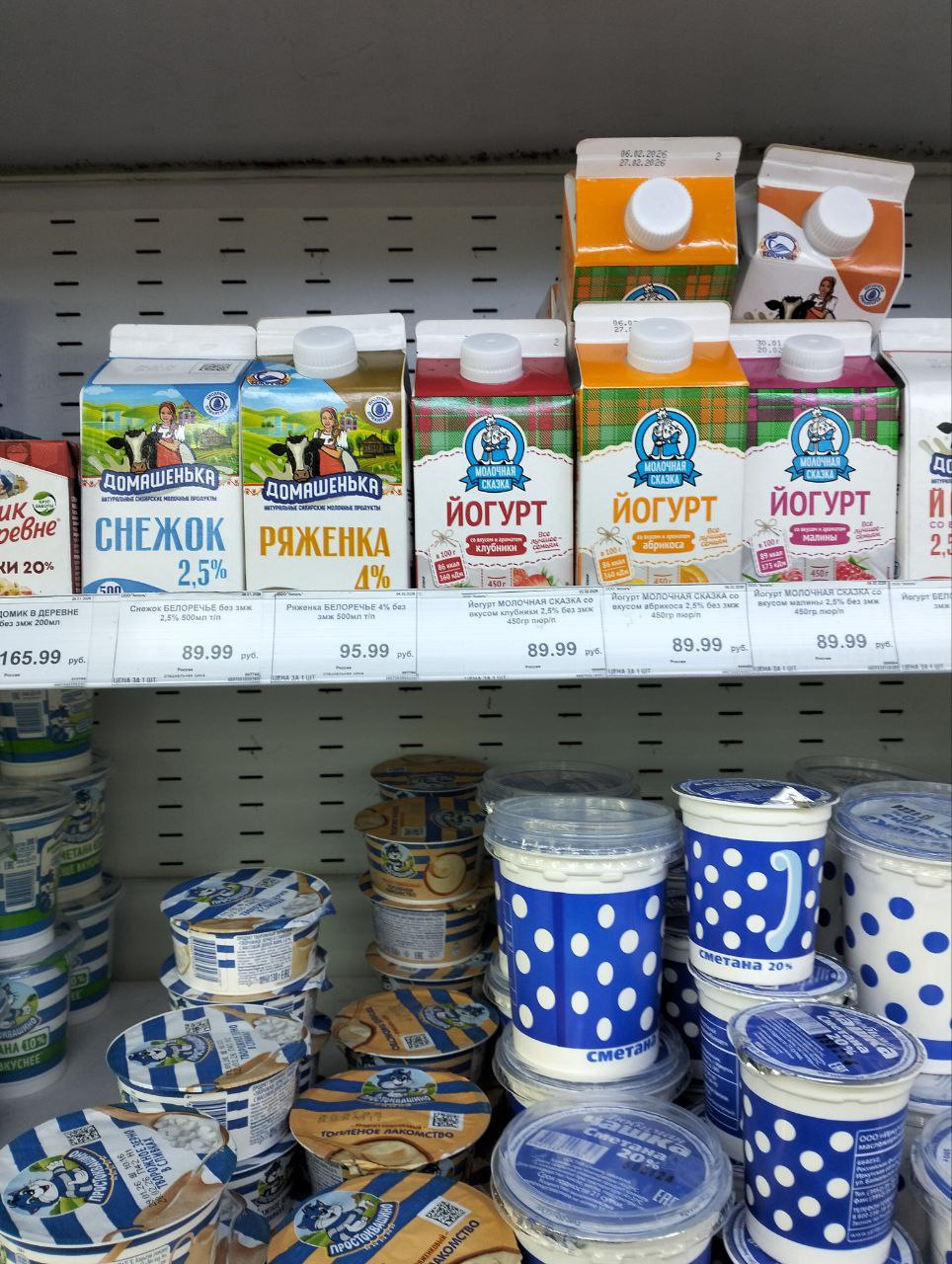
– I got into my funeral savings. Sorry, dear ones, we’ll probably have to bury them with the remains or even with our own. My pension of 26 thousand is already not enough for me,” admits Zinaida from Krasnoyarsk. - As a diabetic, they give meds for free, including even Omeprazole, but I buy additional ones - for blood pressure, heart, gout - with my own money, since I need special ones to which I do not have an allergic reaction, and they are not on the list of free ones. But these special pills still cost me 5 thousand rubles. Add products - now instead of 12-13, the total is 17 thousand rubles. And that’s it – there’s no longer enough for utilities! And she grew in my apartment from 4 to 7 thousand! And just think - you can’t pay for the electricity, in three months it will be turned off. If you don’t buy pills, you’ll die anyway. As a result, I gave up my favorite cheese, and this time I also gave up fish. They gave up chocolates a year ago. And still, two thousand wasn’t enough, so I dug into my stash.
Many people have to “cut down the menu” in order to “find their retirement.”
– My husband and I are both public sector employees, I am a school teacher, he is a school teacher. We shop on a budget - at the market a couple of times a month (it’s cheaper there). This time we arrived and were stunned: okay, we don’t buy meat every time anymore (it’s expensive, and the quality has deteriorated greatly - yes, even from Buryatia), but to stand and think about chicken and chicken - whether to take it or too expensive... I don’t know when this has happened. In the 90s for the last time?! – Irina from Angarsk is perplexed. – Chicken carcass, local, Sayan (!) – under 300 rubles per kilo. Although back in January it was 190, well, 200. Well, where is this with salaries of 35 thousand (and this is a good salary for a teacher with all the additional payments for experience and additional part-time pay)?!
They write on social networks that as soon as they “moved away” from jokes about cucumbers at the price of pork, the price of pork immediately increased by 30-40%.
– In December, even our Novosibirskstat recorded a “record jump” in prices for fresh cucumbers. More than 27 percent in one month! In fact, the jump was higher - the price went up to 555 rubles! While we were digesting the fact that cucumbers are more expensive than chicken fillet and pork - grunt, and pork is no longer 450 rubles, but 600! - says Olga, a budget employee. - but they [the officials] told us that there was a unique case with cucumbers, they say, greenhouse farms cannot cope in the harsh winter, and demand is increased during the holidays. And they connected the FAS (Federal Antimonopoly Service) and sent requests to the largest farms. What now? The Novosibirsk Federal Antimonopoly Service is silent, filled with water, “keeps the situation under control.”
Many of the editors' interlocutors admit that it is no longer possible to save for a rainy day.
– I used to manage to save 5 thousand rubles a month. The pension is increased, the northern one is under 50 thousand,” says Elena from Novosibirsk Akademgorodok. - Now everything is leaving! Simple cheese instead of 300 - all 600! Chicken is no longer 800 (as in December), but 1300! They couldn’t afford sausage for 1200 (rubles per kilo) before, but now they’re not afraid to even look at the price tags – 1500-1600! My husband and I have an apartment of 40 square meters - we only pay 10 thousand for all housing and communal services! This is almost double what it was in December. More than half of my pension is spent on food for the two of us. Another 15 thousand for medicines - this is almost the entire husband’s pension (Elena Borisovna’s husband has the first group of disabilities). And if you get sick unplanned, catch a cold, or something else, you’ll get into what’s already been postponed. If it’s teeth, that’s it, a disaster. Humiliating. Theater is no longer affordable. Our entire district is intelligent, but only a few continue to go to the theater. From 2 to 8 thousand per ticket is no joke. I didn’t even notice how I switched from a retired theatergoer to survival mode.
Many state employees and pensioners, whom inflation always hits the hardest, characterize the situation in stores something like this:
“It’s the end of the world,” says Yulia, a budget worker from Vladivostok. - Around the New Year, my average purchase was 1.5 thousand rubles a week, now it’s 3. Moreover, I don’t buy any delicacies, all the most basic, current items - in general, everything is very expensive. What saved me was that, having lived through the 90s, I probably stocked up on many products for a whole year. I have a supply of Belarusian ghee, milk powder, also Belarusian, flour, sugar, salt, cereals, vermicelli, plus I bought meat, and I have my own potatoes and other vegetables. And as soon as the war began, I set a goal to update the equipment at home, because I don’t know whether it will be possible later. Over these four years, I bought a TV, a stove... I’m holding on, I’m not starving, but I really sympathize with the people who live in the city, who have small salaries and no garden.
Julia notes that “the people themselves have changed a lot lately.”
“Everyone seems to be secluded, they communicate little with each other. People are all on edge, someone will say something in the wrong tone - often an outburst of indignation, inappropriate behavior. People are on edge, they don’t know how to live, what awaits them next. And I also withdraw, I’m even afraid to communicate - keeping in mind the situation in the country, repression. It seems to me that those who have such an opportunity should sell everything and cut their claws.
"Prices cannot help but rise."
People's everyday experience and official statistics speak about the same thing - but in different languages. On February 13, the Central Bank of the Russian Federation, despite high inflation, decided to reduce the key rate to 15.5% from the previous 16%. According to the regulator, the January acceleration in inflation was caused by one-time factors and that disinflation will resume as soon as these factors are exhausted. “The accumulated effect of tight monetary policy creates the preconditions for inflation to return to the target of 4%. Thus, we continue to ease monetary policy,” the Central Bank said in a statement .
“The regulator correctly explains the rise in prices in January and February mainly by such factors as changes in taxes and tariffs, for example,” says Doctor of Economics, teacher at one of the Siberian state universities Alexey Vyunov (for the safety of experts, the editors use pseudonyms). – But where the Central Bank of the Russian Federation is wrong is that it does not expect further growth in inflation and predicts it at the level of 4-5.5% in the coming year.
Rosstat has already hastened to announce that annual inflation had slowed to 6.36% by February 9 from 6.46% a week earlier, and weekly price growth had dropped to 0.13% after 0.20% at the end of January.
“In parallel, business inflation expectations fell sharply, falling to 20.8 points in February versus 30 points a month earlier,” the regulator announced and said that “this is reason to believe that price pressure is easing faster than expected.”
Experts are not so optimistic and are convinced that “prices cannot help but rise.”
– Because all the country’s resources are now going in one direction – to the northeastern districts. Price increases are institutionally built into the economic model that is currently operating. This is a tax on war, says economist Kirill Mankov .
For the same reason, utility bills have now skyrocketed in the country. Since July 2025, tariffs have increased by 8–12%. From January 1, 2026, another 1.7% was added, after the VAT increase.
Experts in an interview with Radio Liberty emphasize: this is not a glitch or an arithmetic error, but part of the overall economic picture. From January 1, VAT in the country increased by 22%. A progressive income tax scale has been introduced: rates now depend on annual income. The conditions for doing business using a simplified system have become more stringent. All this leads to increased costs for entrepreneurs, which ultimately affects payments and price tags.
– From January 2026, VAT increased from 20% to 22%. Some predicted an increase in prices just because of this by the notorious couple of percent, I immediately said that it would be all 10-13% at once, since not only retail trade, purchasing, supplier, logistics and others are involved in delivering goods to the counter - and all these links will increase their 1-2% after the increase in taxes. Many of them suffered even more seriously - they had to leave the simplified taxation system, and they immediately ended up paying twice as much in insurance premiums. Who did the entrepreneurs transfer this to? Of course, for buyers,” says Vyunov. – And we must not forget about the continuing rise in inflation. This is facilitated by the release of large sums of money onto the market through the relatives of fallen soldiers, through the military themselves. All this provokes an increase in prices. Despite the fact that the Central Bank did its best to restrain this by raising the key rate. With the other hand, the authorities have been doing the opposite all this time - making the ruble cheaper, pouring in hundreds of millions through contract workers. Since last summer, the Central Bank has been forced to reduce the already high interest rate, consumption has accelerated, and with it prices. Even a slight reduction in the rate will make the ruble cheaper, and what this means for importers is another reason for raising prices. So get ready, this is just the beginning, maybe not at such a sharp pace, but the monthly price increase will continue in 2026.
"War Tax". Sharp rise in prices for food and utilities