
Translated material
“This all looks more like paranoia”
A political scandal broke out at Berlinale 2026. However, it wouldn’t be possible without a good movie either.

Chairman of the jury Wim Wenders. Photo: AP / TASS
The festival is coming to its finale, and the most interesting films were shown at the end. But before we talk about them, let’s remember the Berlinale’s long conflict with Palestinian activists, among whom there are more and more stars.
Let me remind you that more than 80 representatives of the film industry, with Javier Bardem and Tilda Swinton at the forefront, published a statement on Tuesday in which they unapologetically condemned the “institutional silence” of the Berlin Film Festival regarding the “genocide in Gaza.” The chairman of the jury, Wim Wenders, was separately criticized, who proposed the seditious, from their point of view, formula “art is a counterbalance to politics.” Here all the cones fell on Wenders. And the Indian writer, activist, screenwriter, winner of the Booker Prize and Sydney Peace Prize, Arundhati Roy, completely refused to participate in the Berlin Film Festival due to the jury’s “unacceptable,” as she put it, refusal to comment on the situation in Gaza: “To hear them say that art should not be political is simply amazing.” Roy officially canceled her visit to Berlin and withdrew her film, The Misadventures of Annie, from the Classics section.
Following the publication of the open letter, Culture Minister Wolfram Weimer defended the festival:
“Berlinale is not an NGO with a camera and a director, but rather a place where filmmakers can develop their work, discuss it openly with each other and touch on all relevant topics,” Weimer said.

The Minister of Culture stood up for Wim Wenders, saying that the director was under pressure from a group of activists. There is talk on the sidelines that the situation is unsafe for his life.
Festival director Tricia Tuttle released a statement in support of Wenders and all the filmmakers who came from different countries. She emphasized that freedom of expression is present at the Berlinale, and Berlinale filmmakers deeply respect the dignity of every person.
It's hard to forget that after the Berlinale 2024 closed, the festival came under fire for some laureates' harsh condemnation of Israel's actions in the Gaza Strip without mentioning the October 2023 terrorist attack by the Islamist group Hamas. Then several laureates took the stage in black and white arafts, almost turning the ceremony into a rally. This caused a loud discussion, during which accusations were made of the initiators and connivance of the incident of anti-Semitism.
The influential German newspaper Süddeutsche Zeitung elaborates on the situation, expressing alarm: “Is there 'censorship' and 'paranoia' around the Gaza theme at the Berlin Film Festival? It seems to us that this is all more like paranoia.” The author of the text explains why some of the accusations are absurd or even false.
Amid the scandals, the most tender melancholic dramedy-blues “The Loneliest Man in Town” by the Austro-Italian duo Tizza Covey and Rainer Frimmel (we remember them from their excellent docks) almost went unnoticed. The man dresses carefully: bow tie, white shirt, smart jacket. He decorates the Christmas tree, lighting candles on it in the old-fashioned way, opens a small bottle of champagne, and puts on his favorite record. Then he plays the blues... until they turn off the lights...

Al Cook is a lonely blues guitarist, for whom everything seems to be old-fashioned, everything is in the past. Beloved wife, musician friends. All that remains is music and this apartment/studio, in which live favorite records, VHS cassettes with home videos, magazines, recording equipment, a slightly out-of-tune Bechstein piano from 1881, photos on the walls - fragments of a past full-fledged polyphonic life - the last air for today's life. And a lot of Elvis, with whom he was in love since he was 14 years old, when he saw him on the screen. He was born in this house, here time has stopped, and all around him the voracious machinery is hammering and devouring, gnawing off whole pieces of old buildings. And a ruthless real estate company has already brazenly invaded Al’s life. They turn off his lights and water, and literally kick out the last occupant of the old house. Forced to part with his countless treasures, which he sells one after another, he has almost decided what to do next.
Flawlessly, with subtle nuances, a simple story of a little man leading his small, modest life. With a minimum number of dialogues about how and where to find light under the rubble of life, when “it’s both painful and funny,” “both sad and bright.” And about “vinyl” and VHS memories that are more alive than silicone reality. About commitment, stoic loyalty to your music, your daily habits, rituals, bright jackets.
All this looks like resistance to the onslaught of the arrogant forces of today, like opposition to the only unique thing - mass consumer goods.
Al Cook, who starred in the title role, is a truly talented blues guitarist with a great stage career, playing solo and in different teams. His hero is an image of a bygone era, a symbol of artists who swore allegiance to art in tiny venues, in small clubs, who refused to compromise.
But this is also a story of loneliness and loss that can only be expressed in music. And a shaky dream - about a reunion with the very place where the blues was born: on the southern banks of the Mississippi. Where Al has never been. In real blues there is no ending, it seems that the music has simply died down and is about to continue in another place. May be. In the Mississippi Delta.
“My wife is crying” is an existential hermetic parabola of the cult Angela Schanelec, one of the key figures of the “new Berlin school”.
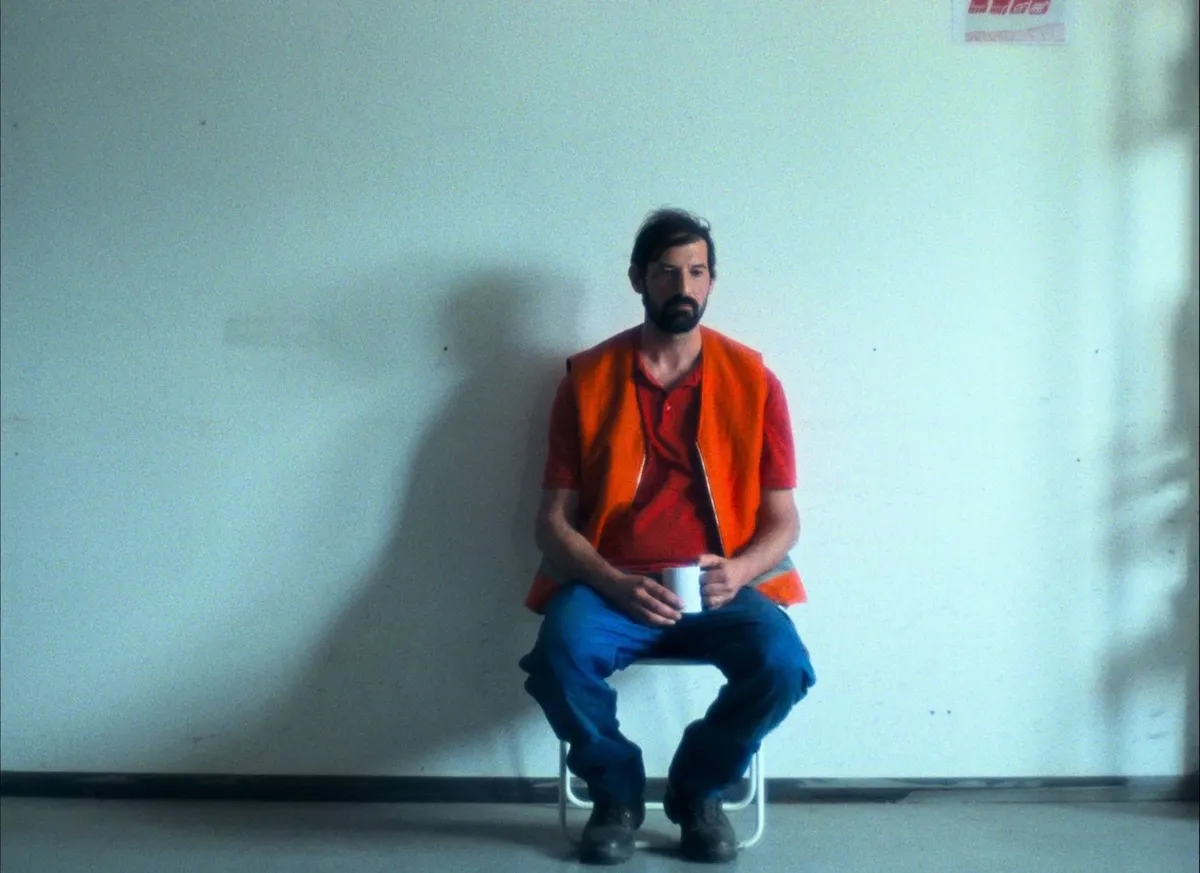
Deciphering this minimalist meditative psychological composition is a thankless task: how to describe in words the music of a modern composer or a painting by a surrealist. The director’s usual static long takes, slow rhythm, dotted narrative. A movie about the breakdown of connections and relationships. There's even a "plot for a short story" inside. How the lanky crane operator Thomas (Vladimir Vulevich), having received a call from his wife, rushed to pick her up from the hospital. Crying, Carla (Agathe Bonitzer) told him that she had been in a car accident with her dance partner David. David suggested looking at a new house outside the city. There is no talk of treason. But Thomas is depressed, he moves away, withdraws into himself. However, the author breaks the plot, splits it into unrelated moments, as if you were reading a book, snatching out different pages.
There is practically no dialogue in this movie; all the characters speak in monologues in an impassive manner. About pregnancy, about a missing girl. About trying to get along with your partner. There is a huge distance between everyone.
Marisus Panduru's camera is also kept at a respectful distance. It seems that this distance is the inexplicable essence of both the film and reality crumbling into fragments. The rhythm is broken: during long pauses, a park orchestra suddenly intervenes (however, it is flooded with rain, and the musicians scatter), or melancholic characters suddenly begin to dance to Lover Lover Lover by Leonard Cohen.
The director explores the difficulties of language, understanding (more precisely, the complete unknowability of another, even if he is nearby), de-energized connections that one wants to revive. At least with pain. This is the subject of the last, one of the saddest sex scenes in cinema. Having removed his heroes from us, the author focuses on the state - disunion as an insurmountable trauma, a “quietly broken emotional climate”, where trust and the very possibility of making plans for the future are irrevocably destroyed. And don’t tell me that this movie is artificial and divorced from life.
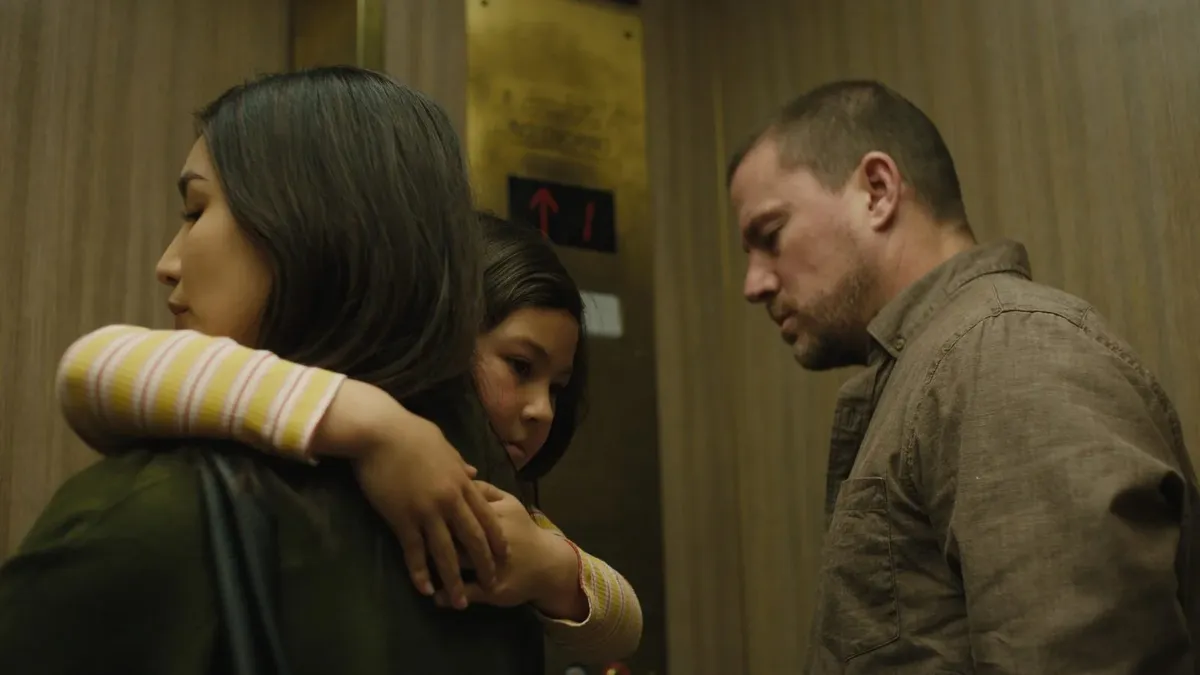
And on the last day of the competition they showed “Josephine” - one of the main discoveries of auteur cinema this year. We’ll tell you separately about the film that became a Sundance discovery, as well as about the prizes that Wim Wenders will award.
MORE ABOUT CINEMA
Larisa Malyukova runs a telegram channel about cinema and more. Subscribe here .