
Translated material
And the Cart is still there
Restriction of access to Telegram turned into chaos - both informational and technological

Photo: Igor Ivanko / Kommersant
Formally and legally, the popular messenger will be blocked, but almost everything will remain exactly as it is. The Russian authorities demonstrate the main thing - you can step on the rake as much as you like. Previous experience teaches nothing.
Given the scale of the tragedy and the number of industries affected, it is problematic to describe what is happening in a coherent narrative. The statements of officials alone are worth it.
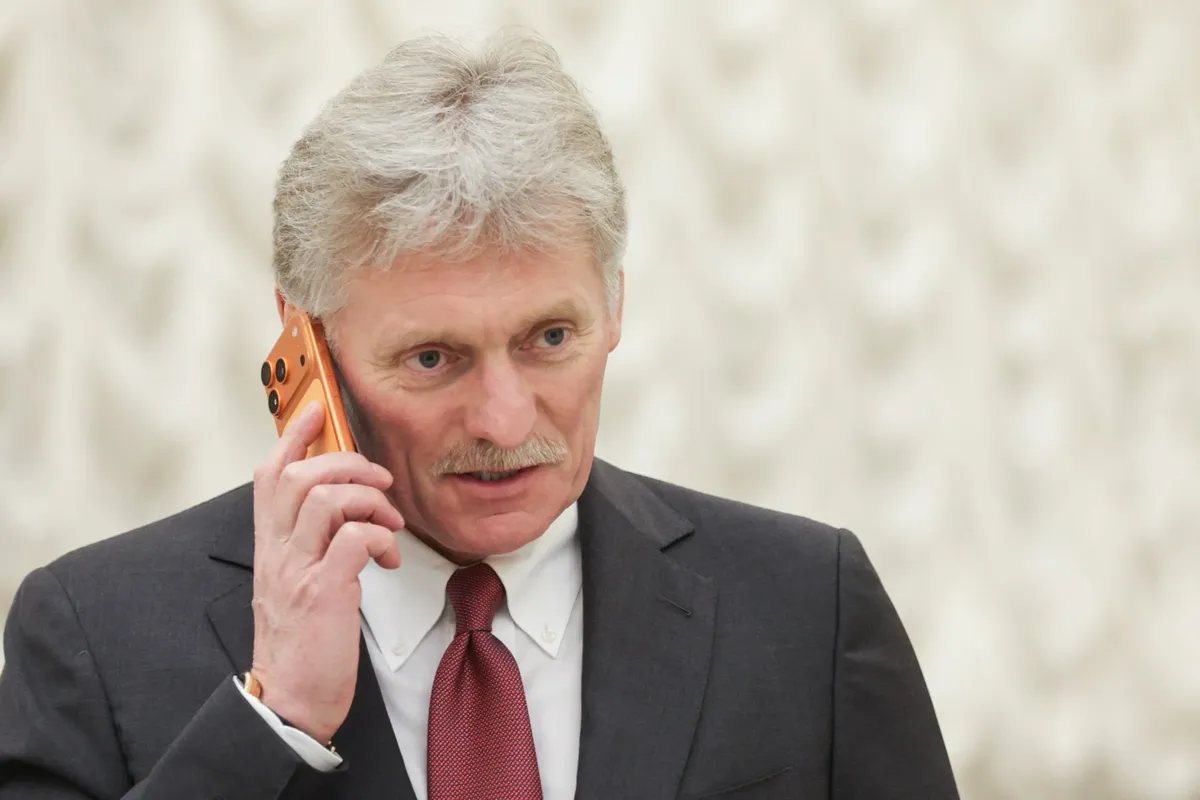
Dmitry Peskov cannot imagine that the military uses Telegram for operational communication. Meanwhile, this is the main means of communication in endless spaces. From direct coordination of military operations to warning citizens in places where they still exist. There's no conspiracy theory here, it's just convenient. It’s an easy application that everyone has, and if no one bothers you, it works quickly and stably.
Against this background, the Ministry of Digital Development appears and gives birth to a joke: “There are regions in Russia where salaries are high and nothing is blocked” - and there is some truth here. In the border regions, nothing will be slowed down, because suddenly it turned out that promoting alternative means of communication in the trenches was quite problematic.
The introduction of a three-letter messenger even in quiet places is difficult and endless scandals, let alone in places where everything is difficult.
Another factor comes up here, which probably also played a role: TG is a gigantic financial and information infrastructure serving the current conflict. Hundreds of channels, many of which have large, active and aggressive audiences. This is the second front, which one way or another broadcasts what is happening. And it has no analogues. There are also channels that sell violent content and collect as much as they can for the needs of the warring forces. There are just advertising placements there. It is impossible to accurately calculate, but it is tens, or even hundreds of millions of rubles. Or maybe more than a billion. Considering how much this process directly and indirectly consumes, any assessment may turn out to be fair.
Against this background, other statements by “officials” simply pale into insignificance. Quoting deputies is not respecting yourself. It is up to the press services to refute statements.
The statement by the same Ministry of Digital Development that Western intelligence services can read messages from Russian soldiers forced the Telegram team to respond to Reuters. There is a feeling that in the current powerlessness, active participants in the events are beginning to throw whatever they can get their hands on. And this can be understood.
Given the efforts of Roskomnadzor, the service’s audience is shaking, and fluctuations in channel statistics are possible due to outages in different regions. But just like last time, it’s not the messenger itself that really suffers, but everything else. Users experience difficulties updating operating systems. Both with Windows and Linux. In the case of the latter, this is especially touching. If Microsoft products can be considered hostile, then migration to open and adapted distributions such as Alt Linux was part of the official policy. Shooting yourself in the feet is becoming a tradition.
And this is just what broke the news agenda and attracted the attention of newsmakers. Most likely, the number of services affected by the ricochet will grow and a brighter choice will appear among the victims. From conventional water heaters, which have become clearly smarter than many officials, to complex medical equipment. Today, in an age when many devices are smarter than people, just about anything can suffer. Except Telegram. These lines evoke a feeling of déjà vu - back in 2018, everything was going according to the same scenario. We can only hope that everything will come to the same ending. And at least something - albeit in the form of one messenger and without calls - will return to normal.
But it will not happen without losses. While the trial is going on, the VK company buried the TamTam messenger, which was supposed to become a “Skype killer” (which is also everything), an “ICQ killer” (that’s also everything) and an alternative to everything. The redesigned OK Messenger, which the company inherited after the merger with Mail.ru Group, ceased to exist, which confirmed the forecasts for the thousandth time - it was superfluous, unnecessary and generally a waste of money. And in order not to turn everything into humiliation of the already illiterate management of an unprofitable company, it’s worth adding a little praise: it’s high time, all this is unnecessary. We got rid of an unnecessary asset and a meaningless brand.
But there is also an official messenger, where they have already found the share of the first person’s relatives. After all, successes there are exclusively virtual.
Max, despite unprecedented efforts and clearing of the clearing, remains an absolutely inflated story. That ordinary people, that officials go there without any joy, and that this messenger will become at least some kind of alternative to anything, you can’t even dream of.
Moreover, all the same, despite the blocking, despite the loud statements, everyone remains on Telegram - even in the person of that same Dmitry Peskov . And if the Kremlin does not experience difficulties with access to the TG, then what can we say about the rest.
Describing current events is a thankless task: by the time of publication, new data may be added, an elephant in a china shop may hit another shelf and cause a new flow of news, another miracle on budget money may blurt out some new nonsense. But, it seems, we can state that nothing significant will happen, despite the fakes and threats to block the entire network service on April 1. The current government tends to get itself into all sorts of troubles—and now it has gotten itself into trouble with Telegram, and, curiously, twice. And given the scale of the story, it will take a long time to smear the consequences while trying to clean your boots.
The bottom line is to observe seemingly mutually exclusive things. Officially, Telegram will be recognized as non grata - by court decision, laws and registries. This will happen in some special Russia, subordinate to pieces of paper and some documents. In another country, which by chance occupies the entire same territory, everything will work as before, even with calls and video communications. And if someone has any complaints, you can always say: “Well, we need to convey our opinion to our foreign partners and citizens who find themselves abroad.” The only thing that will unite these two such different entities is endless accidents and problems. Gross interference in the infrastructure, which Roskomnadzor is engaged in, will not remain without consequences, despite the widespread use of programs to bypass all kinds of blocking.
The so-called blocking of Telegram is not another nail in the lid of freedom, it is simply an attempt to achieve the impossible. The Islamic Republic of Iran could not cope with this, and the Russian Federation will not cope either.
For those who need it, everything will work. Of course, I would like that after the next speech or law the topic would fade into the background and something else could be discussed, but the messenger as a means of communication plays an important role, so it is to be continued as expected.