
Translated material
Without words, but with victory
Nikolai Statkevich did not allow himself to be expelled from Belarus with other political prisoners. After five months of uncertainty, he is home, but with a stroke
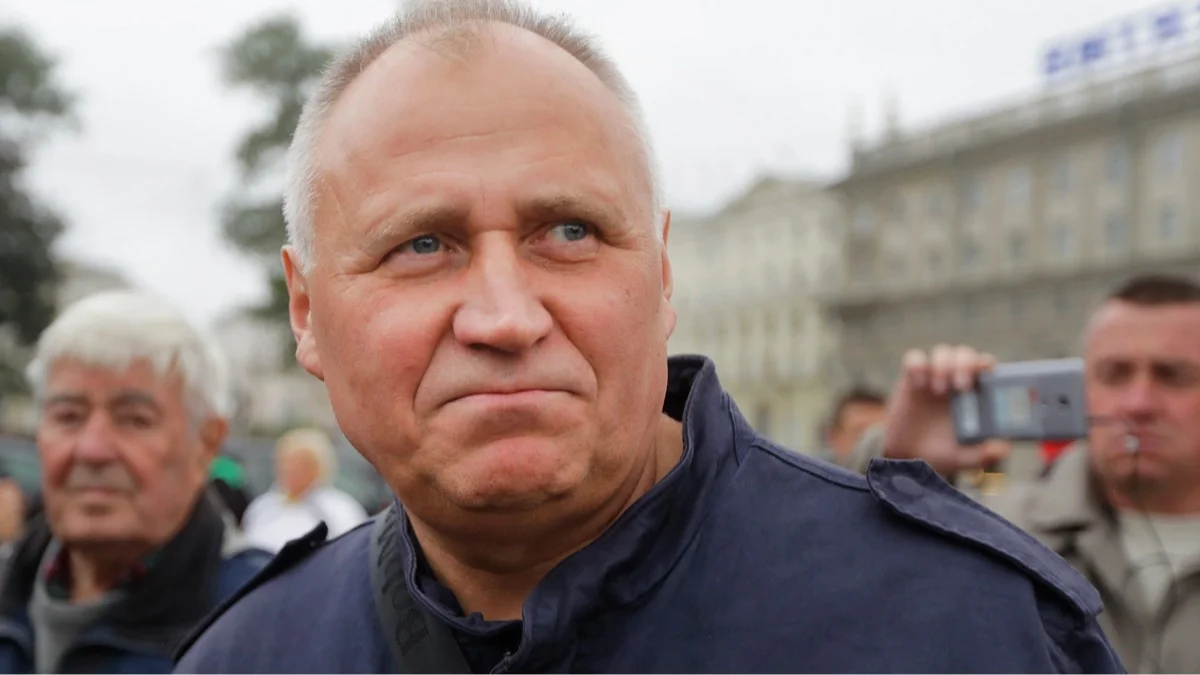
Nikolai Statkevich, 2017. Photo: Sergei Grits / AP Photo / Scanpix / LETA
“He doesn’t speak well yet, but he will soon recover, I have no doubt! - Marina Adamovich, Nikolai Statkevich’s wife, tells Novaya Gazeta Europe over the phone. “He’s already doing it better than even an hour ago!”
Statkevich, one of the leaders of the Belarusian opposition, a former rival of Alexander Lukashenko in the elections and the longest-serving political prisoner in the country, was released on February 19. With a stroke. Yesterday his wife Marina said : “Dear friends! Nikolai is at home. He had a stroke. He is now recovering. Still having problems with speech. Otherwise everything is fine. Everything will be fine".
He still achieved his goal - he returned home from prison, and did not find himself expelled from Belarus. He won at the cost of his own health, on September 11, 2025, committing a desperate and misunderstood act on the Belarusian-Lithuanian border.
On that day, after five years and three months behind bars, after two years and seven months without communication with the outside world, Statkevich, along with fifty other political prisoners, was taken to the Belarusian-Lithuanian border and thrown out to Lithuania. The previous batch was expelled in June, the next in December. The only one with whom this feat of the Belarusian regime did not work was Nikolai Statkevich.
Right at the border, in no man's land, he jumped out of the bus and walked towards Belarus. They tried to stop him, but to no avail. The cameras recorded Statkevich, and then he disappeared.
Together with Nikolai, political prisoner Maxim Vinyarsky jumped out of that bus. This is what he said about the events on the border of “New Europe”:
—— A young border guard came out to meet us. She said: “You can’t come here! Go to Lithuania!” Statkevich replied that he was a citizen of Belarus, and no one could refuse to let him into the country. The border guard replied: “How can you prove that you are a citizen of Belarus? You don’t have documents, and without documents no one will let you into Belarus.” “Then,” continues Maxim Vinyarsky, “some kind of mutiny in civilian clothes came from the direction of Belarus. He told the border guard to return to the post, and began to convince us that we had no other choice, and we were obliged to go to Lithuania, since they wouldn’t let us into Belarus anyway. And in Lithuania they are already waiting for us, there is freedom and friends.
In Belarus, if we persist, nothing good will happen. Statkevich did not want to listen to him.
We stood near that concrete arc that hit all the world media. Nikolai wanted to sit down. He asked the big-faced guy: “Can I sit here?” He replied: “No, it’s impossible, this is already Belarusian territory.” And then Nikolai grabbed his heart and said: “Oh, I feel bad, I can’t stand...” And he sat down.
Maxim eventually went to Lithuania. But Nikolai remained. Then he disappeared. And for the next five months no one knew where he was. Nikolai's wife Marina Adamovich fought at all doors, seeking an answer to the question of where her husband was. She filed a statement about the disappearance of a person to the police department at the place of registration, wrote to the department of execution of punishments, to colony No. 13 in Glubokoye, from where Nikolai was taken, to the Ministry of Internal Affairs, to the border service - after all, he disappeared at the border - filed a lawsuit. The only official document that she received in response to her numerous requests was a letter from the Ministry of Internal Affairs dated November 21, 2025, signed by Deputy Minister Gennady Kazakevich. He wrote: “I inform you that Statkevich N.V. is serving his sentence according to the verdict of the Gomel Regional Court dated December 14, 2021.” Naturally, Marina was not informed where exactly Statkevich was “serving” his sentence.
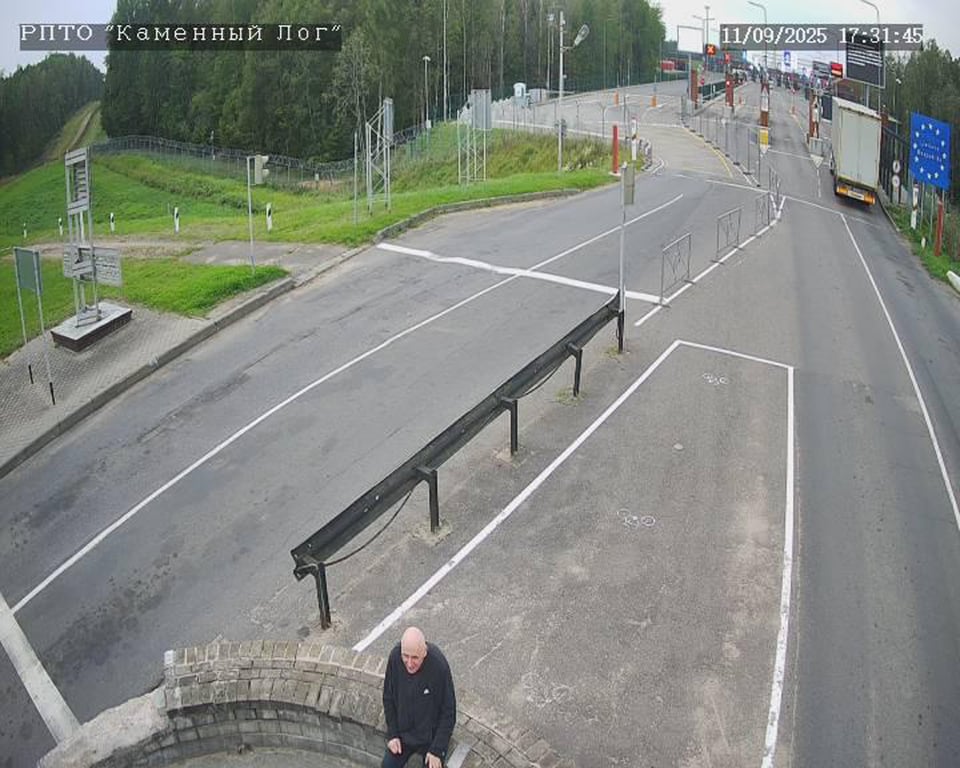
“It turns out that all this time he was in the same colony in Glubokoye from which he was taken in September,” Marina Adamovich told Novaya-Europa. - Nikolai said that he was taken both from the colony with a bag on his head, and on the way back, from the border to the colony, with the same bag on his head and zip ties on his hands. I wrote there, to the colony. I went there three times over these months. And no one told me anything, did not give a single answer to my appeals. But he was there the whole time. And Nikolai had a stroke on January 21, and he was taken to Minsk that same evening. ( Nikolai’s voice is heard in the background at this time. It’s inaudible, but Marina understands. — Author’s note.) Nikolai says that the doctors really did everything possible to save his life: three weeks of intensive care, feeding through a tube.
The same sentence of the Gomel court that Deputy Minister Kazakevich cynically referred to - 14 years of special regime. The regime is special, the colony is also special. Because Nikolai Statkevich has been Lukashenko’s personal enemy since ancient times.
He received his first term back in 2004 for organizing a protest: then Lukashenko decided to remove the limitation of two presidential terms from the Constitution, opening the way for himself to endlessly and continuously sit in the same chair. At that time, Article 342 of the Criminal Code of Belarus - “organizing actions that grossly violate public order” - was not yet called popular; the record-breaking mass protests of 2020 were far away, but Belarusians protested even in those days. And Nikolai Statkevich was one of the first organizers of street actions against the Lukashenko regime. His conscience did not allow him, an officer and founder of the Belarusian Military Association, to remain silent according to the principle “if you don’t get involved in politics, then nothing threatens.”
The second time, also for protests, Statkevich was sentenced to prison in 2011, already as a presidential candidate.
He, like other candidates, was arrested on election day, December 19, 2010, and in May of the following year he was sentenced to six years in prison. The article was already from the category of especially serious ones - 293rd, “organizing mass riots.”
And Nikolai Statkevich received his last sentence under the same article without even having time to take part in the protests: he was detained at a permitted picket to collect signatures on May 31, 2020. He could not run for president: after his release, the criminal record was valid for eight years, and according to Belarusian law, a convicted person cannot run in presidential elections. But Nikolai was not thinking about the papers at the Central Election Commission, but about the street. And he was right.
If Statkevich had remained free, the protests would have ended completely differently - Lukashenko had no doubt about this. A sentence of 14 years was needed to guarantee a couple more quiet terms in power. And the colony for Statkevich is the most closed, in Glubokoye. And a ban on communication from February 9, 2023. And no calls even before the “incommunicado” mode. And only one short-term date with his wife - in June 2022.
In total, Nikolai served 12 years in three terms.
On September 11 last year, when Statkevich was eager to go to Belarus, and they were trying to send him to Lithuania, an American embassy employee came up and gave him a phone number to call his wife. Everyone hoped that Marina could persuade him to leave the country. But she didn't even try. Then Marina told Novaya Gazeta Europe that Nikolai said: “They are trying to take us out, but I won’t let them do it. I’m returning to Belarus.” And he returned.
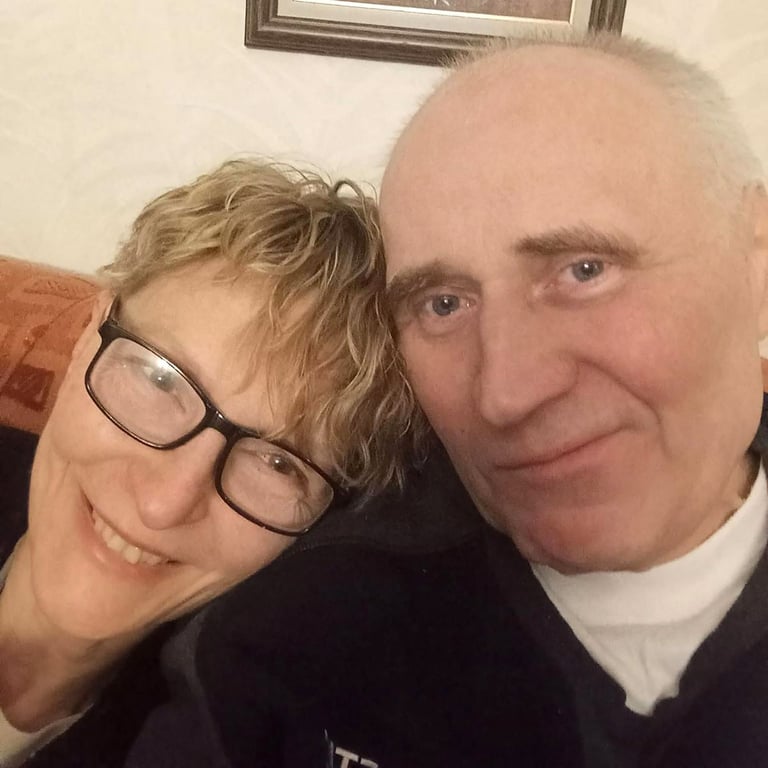
Marina only dreamed of hugging him. She was ready to stay with him in that no man's land until the end of time. And now he's finally home.
Marina can hug him. She understands his speech. She doesn’t need to parse the words - this is the case when one partner has just thought, and the second is already saying it out loud.
At home, in addition to Marina, a slightly larger hooligan flock of dogs and cats was waiting for Nikolai. “Our old cats recognized their owner even after five years,” said Marina.
Of course, Statkevich will speak out.
One can only imagine how serious the stroke was, even if the jailers, whose credo is “do nothing, do not make unnecessary movements,” immediately sent him to Minsk, where doctors in intensive care fought for Statkevich’s life for three weeks. And in the same way, one can imagine what kind of willpower this person has, if he, having nothing but this very willpower, was able to resist the entire state machine and stay in Belarus, and now also return home. And speech will be restored: Statkevich still has too much to say.