
Translated material
Director General of Gaza and All the Earth
How the first meeting of the Peace Council under Trump's leadership ended - and with Putin on the sidelines
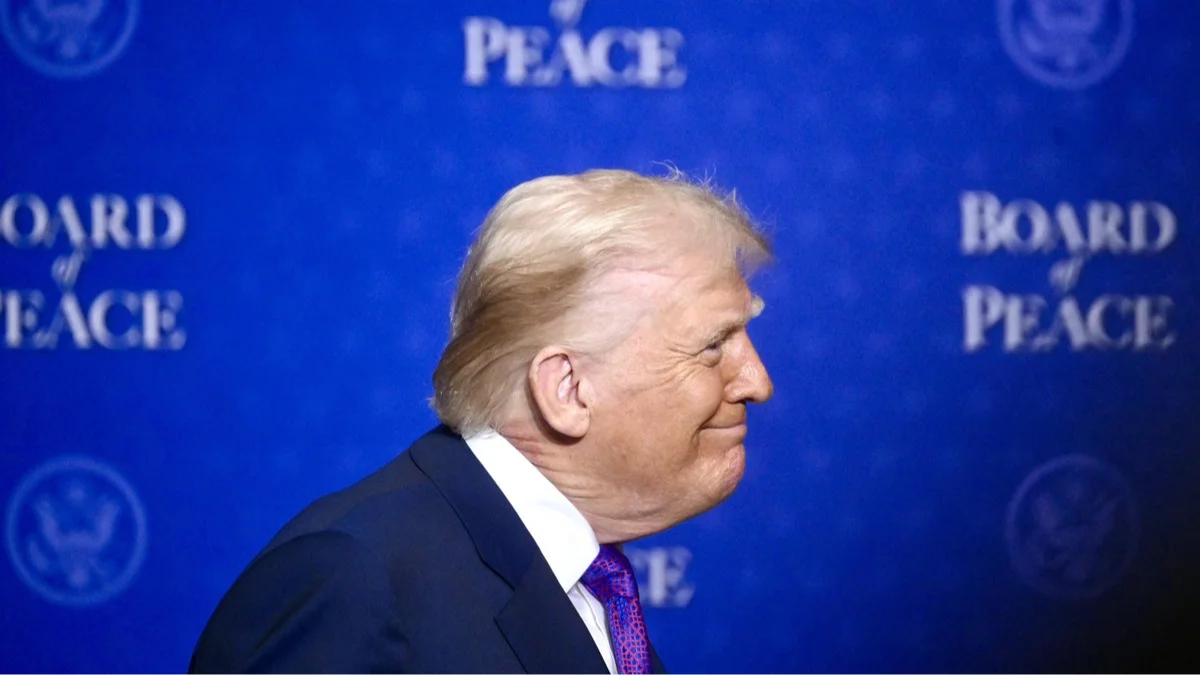
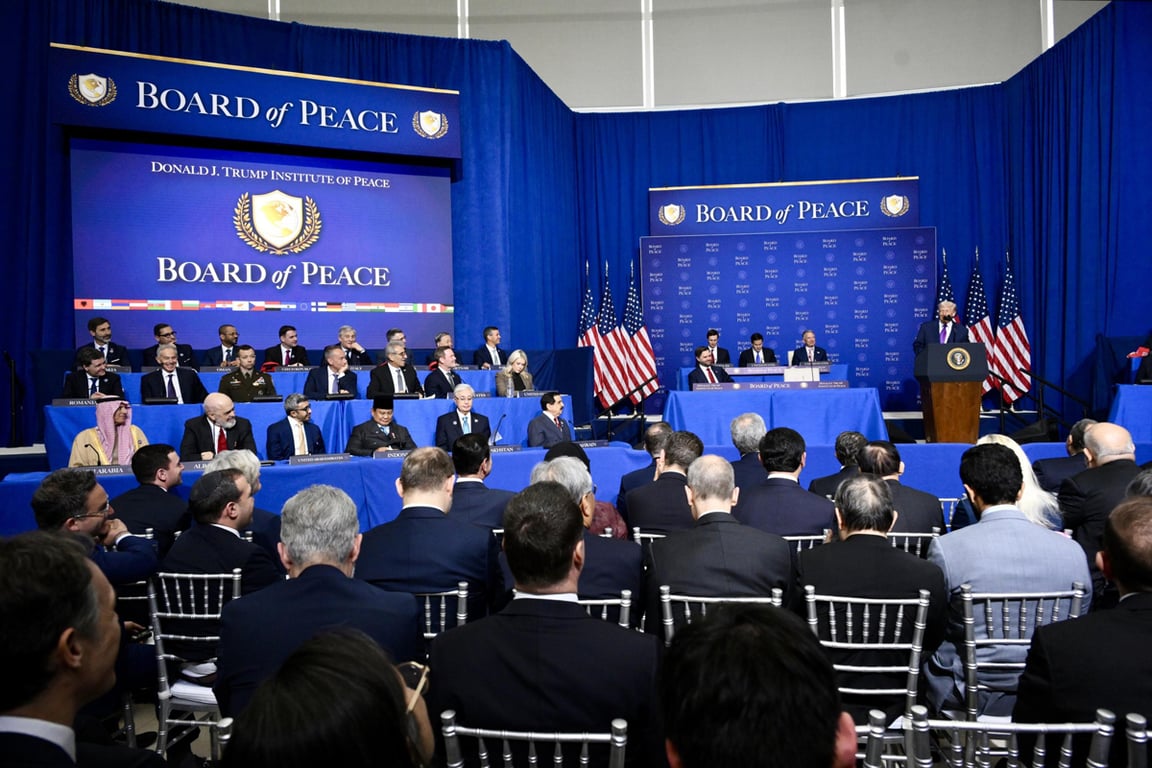
Donald Trump during a Peace Council meeting at the Donald Trump American Institute of Peace in Washington, DC, USA, February 19, 2026. Photo: Alessandro Di Meo/EPA
On February 19, US President Donald Trump gathered his international allies - participants in the new structure that he himself created - at the Institute of Peace named after himself in Washington. The main result of the first meeting of the Peace Council, which discussed the Gaza Strip, was the allocation of $7 billion for humanitarian assistance and the restoration of the Palestinian enclave. The United States promised to add $10 billion. However, to implement all grandiose plans, investments in the amount of $115 billion are needed. But this is not the main problem: first, it is still necessary to achieve the disarmament of Hamas and other radical groups. Russia still remains aloof from the Peace Council and is watching exactly how Trump’s new structure is going to resolve the Palestinian issue. About how the Peace Council wants to help Gaza and at the same time “shake up the dying giant” - the UN - in the material of Novaya Gazeta Europe.
Donald Trump and everything, everything, everything
“I've seen great corporate boards of directors. I've seen some great advice. But compared to this [ the first meeting of the Peace Council. — Approx. ed. ] - it's all a small thing. Because almost everyone here is the head of state,” Donald Trump began his speech at the meeting. Representatives from nearly 50 countries, including 27 Council members (the rest were present as observers), gathered on February 19 at the US Institute of Peace in Washington, which was recently renamed the Donald Trump Institute of Peace.
Trump had pleasant words for each of the leaders who came to the American capital. Thus, the head of the White House called Prime Minister of Armenia Nikol Pashinyan “a truly wonderful person,” and introduced President of Azerbaijan Ilham Aliyev as follows: “I now like to say this name. It was difficult at first, but now I like it. It’s a beautiful name.” [Trump has previously referred to the country as “Aberbaijan” several times. — Approx. ed. ]. Trump called Kazakhstan, which was represented by President Kassym Zhomart-Tokayev, “a wonderful and rich country.” “This is a person I really like. He's tough. I wouldn’t want to fight with him,” the American leader described Indonesian President Prabowo Subianto. And he simply called Paraguayan President Santiago Pena: “A young, handsome guy.”
The Guardian newspaper described the meeting's participants as: "Authoritarian, strong leaders and dictators." Not all of the meeting participants can be classified into one of these categories, but for most of them these formulations are quite suitable.
It is significant that the EU was represented by only two participants - Hungary and Bulgaria. Austria, Croatia, Finland, Germany, Greece, Italy, the Netherlands, Norway, Poland, Slovakia and the European Commission sent observers. But France, which harshly criticized the initiative from the very beginning, never joined it, even in the observer format. This is despite the fact that Trump previously threatened to impose duties of 200% on French wine and champagne if Paris boycotted the Peace Council.
Initially it was assumed that Belarus would be among the participants. The invitation was sent to Alexander Lukashenko. But his press service said that it came too late, when “the president’s work schedule was already planned.” It was decided to send Foreign Minister Maxim Ryzhenkov to Washington. But he didn’t make it to the USA either: the American side did not issue a visa to the Belarusian delegation. “A logical question arises: what kind of peace and what kind of sequence can we talk about if even the basic formalities for our participation were not completed by the organizers?” — the Foreign Ministry wondered .
Russian diplomats were not initially going to the meeting. The Foreign Ministry and the Kremlin are still refraining from being specific about whether the Russian Federation will join the Peace Council. For example, from an interview with Foreign Minister Sergei Lavrov on the Al-Arabiya TV channel, one could conclude: Moscow will first look at what exactly and how the Peace Council will do to resolve the Palestinian issue.
In particular, the minister was confused by the composition of “the executive structures created under the subordination of this Council”: “These structures consist of foreigners. Many of them are known for their past actions.”
As New Europe previously wrote , we are talking about two councils within the Peace Council. The first is the general executive or constituent council (Executive Board). Its task is to implement the vision of the Peace Council and develop a long-term strategic concept for the development of the Gaza Strip, and in the future, apparently, not only Gaza. The second council concerns the Gaza Strip directly (Gaza Executive Board). There is some overlap in the lists of members of the two structures. For example, ex-British Prime Minister Tony Blair is present in both places, who previously called on the West to “show everyone that it still has strength” and strengthen Ukraine to the maximum.
Not Gaza, but the new Riviera
At the first meeting there was a lot of talk about what a future settlement in Gaza might look like. It is going to be based on Trump's 20-point plan, published in September 2025. Some of the provisions—for example, the return to Israel of “all hostages, living and dead,” as well as the release of a number of Palestinians from prison—have already been implemented. Achieving the remaining goals will take more than one year, if theoretically possible at all.
Paragraph 10 states that an ambitious reconstruction plan for the Gaza Strip would have to be drawn up by a group of experts "who helped create some of the thriving modern wonder cities of the Middle East." Among other things, it is planned to create a “special economic zone with preferential tariffs and access conditions.” But first of all, the plan notes, the disarmament of Hamas and other groups is necessary. In addition, as it states, they should not play “any role in the governance of the Gaza Strip, either directly, indirectly or in any form.”
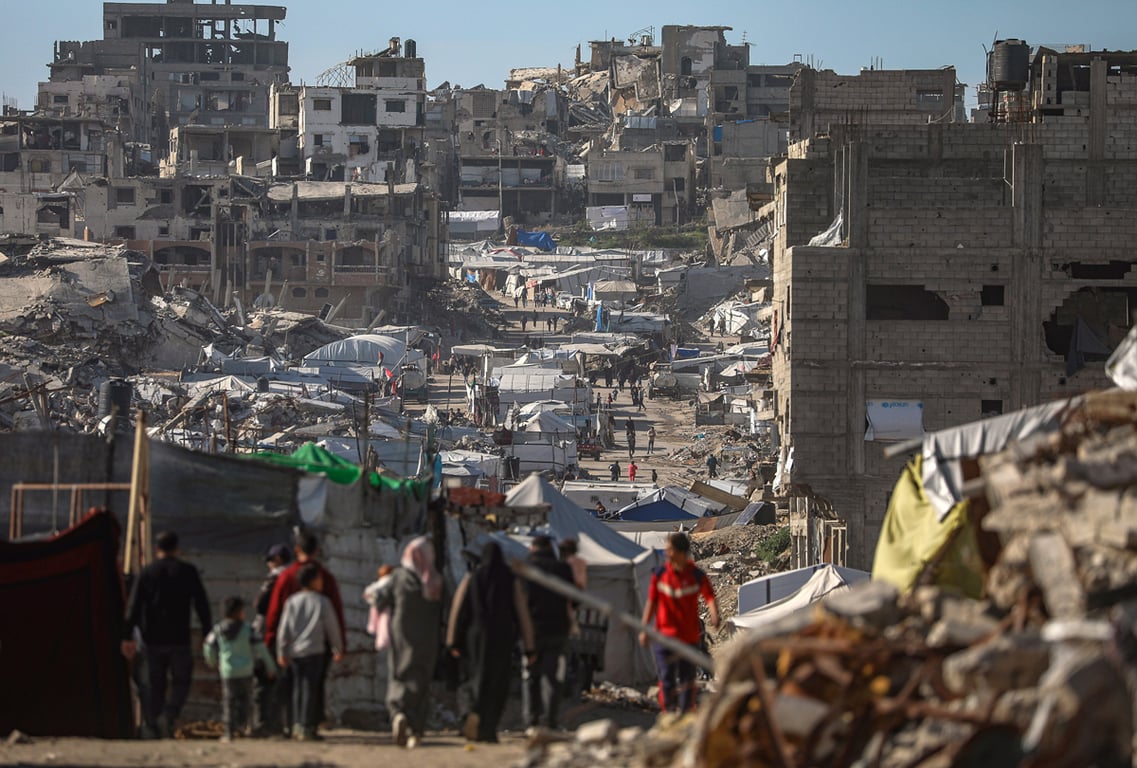
Many at the Peace Council recalled these plans and talked about what had already been achieved - of course, solely “thanks to Trump’s leadership.” For example, US Ambassador to the UN Mike Waltz reported on a sharp increase in the volume of humanitarian supplies: “4,200 trucks carrying humanitarian aid have entered Gaza every week for 13 weeks in a row - this is the longest period of intensive deliveries in recent years...
The proportion of households experiencing acute food insecurity has fallen from around 30% to 1%.” “This is a Council of actions, not endless conversations,” the diplomat concluded.
Then the head of the National Committee for the Administration of Gaza, Palestinian Ali Shaath, spoke . This new structure will work under the direct leadership of the Peace Council. Ali Shaath outlined five priorities:
- Restore security by forming a new professional Gaza police force, which first requires training 5,000 police officers within 60 days;
- Revive economic activity and employment by creating jobs;
- Ensure sustainable emergency response;
- Restore basic services - electricity, water, health, education;
- Ensure freedom of movement.
Former UN special coordinator for the Middle East settlement Nikolai Mladenov, who received the post of High Representative of the Peace Council for Gaza as part of the scheme developed by Trump, continued the topic with the new police. He noted that the process of recruiting police officers, whose further work “will ensure the disarmament of all groups in Gaza,” has already begun. Within a few hours, he said, 2 thousand applications were received to join the new security structure. Egypt and Jordan have promised to train a new generation of Gaza police.
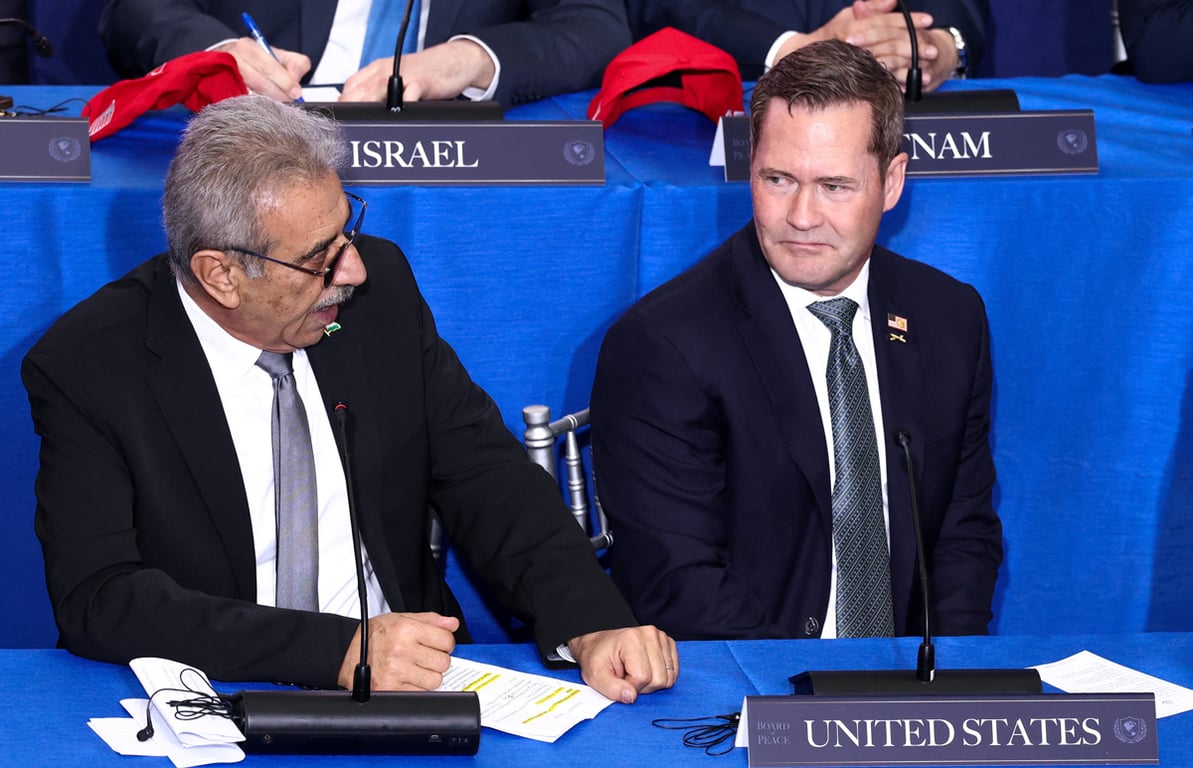
Major General Jasper Jeffers then settled on the creation of an interim International Stabilization Force (ISF) that "would train and support a vetted Palestinian police force." The ISF will cooperate with Israel and Egypt in securing the border areas. The plan also calls for the ISF to gradually transfer control of Gaza from the Israel Defense Forces. As Jeffers clarified, the mission will begin from Rafah, a city that borders Egypt. The major general said that the first five countries - Indonesia, Morocco, Kazakhstan, Kosovo and Albania - have already pledged to send their military to the ISF. The total number of forces will be 20 thousand people.
Meanwhile, Cypriot-Israeli businessman Yakir Gabay, who joined the executive council for Gaza, focused on the topic of construction and reconstruction, which is close to Trump the businessman. He talked about a “housing and infrastructure master plan” covering everything imaginable: “Modern schools and hospitals, manufacturing and agriculture, roads and railways, water and energy, logistics hubs, telecom and data centers, sports and leisure facilities, seaport and airport, and much more.”
“The local population will build their cities, creating hundreds of thousands of jobs and revitalizing the economy... The Gaza coast could be developed as a new Mediterranean Riviera with 200 hotels,”
- Yakir Gabay said enthusiastically (Sergei Lavrov, by the way, spoke with skepticism on this subject in the mentioned interview: “Of course, it is important how the restoration of Gaza will be carried out. Ideas have been expressed to create there almost a “Middle Eastern Riviera”, a casino city, a resort city...").
Another member of the executive board, American billionaire and head of investment company Apollo Global Management Mark Rowan, spoke about money. According to him, investments in the amount of $115 billion are required for infrastructure reconstruction and construction. A report released this week by the World Bank, UN and EU indicated that rebuilding Gaza would cost about $53 billion. But this amount is extremely impressive.
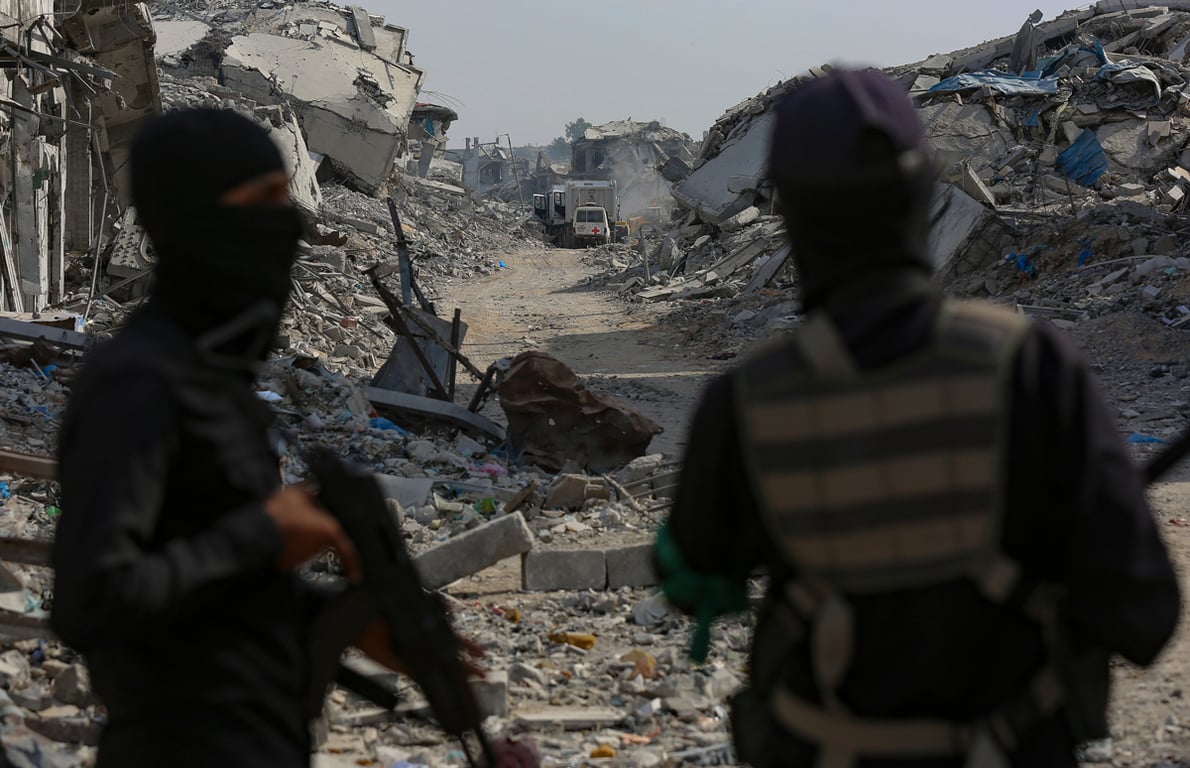
At a meeting in Washington, Donald Trump announced that nine member states - the UAE, Kazakhstan, Azerbaijan, Pakistan, Bahrain, Qatar, Saudi Arabia, Uzbekistan and Kuwait - had collectively pledged $7 billion for humanitarian aid and reconstruction of Gaza. The US itself will add another $10 billion. However, later an unnamed administration official, quoted by Politico, explained: the US commitment was part of a ten-year recovery plan, on which the White House “will work together with Congress.” That is, it is likely that the allocation of money has yet to be agreed upon with legislators.
At the same time, Donald Trump expressed the hope that both China and Russia will ultimately contribute money. Let us recall that Vladimir Putin previously stated : Russia is ready to transfer to the Peace Council $1 billion from its assets, including those frozen in the United States after the invasion of Ukraine. But, according to Moscow, a clear answer to this proposal has not yet been received from Washington.
One way or another, in any case, all these grandiose plans come up against one extremely problematic point - the disarmament of Hamas. On February 16, Israeli government secretary Yossi Fuchs said : “We are preparing for a period when Hamas will be given 60 days [ to disarm. — Approx. ed. ]. We are fully coordinating our steps with the Americans. They asked for time for Hamas, we respect that request." After this period expires, the group - if it does not disarm - will face a new full-scale operation by the Israeli army. This will clearly interfere with plans to build “200 hotels on the new Mediterranean Riviera.”
For services in the field of peacekeeping
Not only the problems of Gaza were discussed at the Peace Council and on the sidelines. Trump himself set the tone for the discussions when he began by saying that the structure's work would "strengthen the United Nations," which had "tremendous untapped potential," and then added, "Over time, the UN will become stronger, and the Peace Council will sort of watch over it to make sure it works correctly." The fact that the UN charter does not imply any “observer” did not bother the head of the White House.
The same theme was continued , among others, by Albanian Prime Minister Edi Rama: he expressed the hope that the Peace Council would shake up and awaken the UN, an organization that he called a “morning giant.”
Even the Council members themselves still have a rather vague idea of what exactly, besides Gaza, this club named after Trump will do. Meanwhile, he himself is sure that “there is still a lot of work ahead.”
Speaking, the head of the White House did not miss the opportunity to again talk about the fact that in just a year he “ended eight wars,” and achieved each agreement “in a matter of days.”
Trump's advice to the world was to turn to him if necessary. “There were so many negotiations, for example, between Kosovo and Serbia, in which I personally took part. Can you stand up? If any of you are here, stand for a moment. How much work has been done! Thank you, we are very grateful to you. You get along with each other, and when you don’t get along, call me and we’ll find a solution, right?” - he asked a question that did not imply any variability in the answer.
Perhaps Kassym-Jomart Tokayev captured these sentiments best of all. In his speech, he expressed confidence that under the “strong and visionary leadership” of the current head of the White House, “the Council will successfully fulfill its noble mission.” And he proposed establishing a special award named after Trump under the auspices of the Peace Council - “in recognition of the outstanding efforts and achievements in the field of peacebuilding” by the US President, who so wanted to receive the Nobel Peace Prize.