
Translated material
“My son is a Youth Army member, a patriot. And for some reason now he’s a terrorist.”
Why Krasnodar teenagers set fire to relay cabinets en masse and how their families united and are trying to protect them
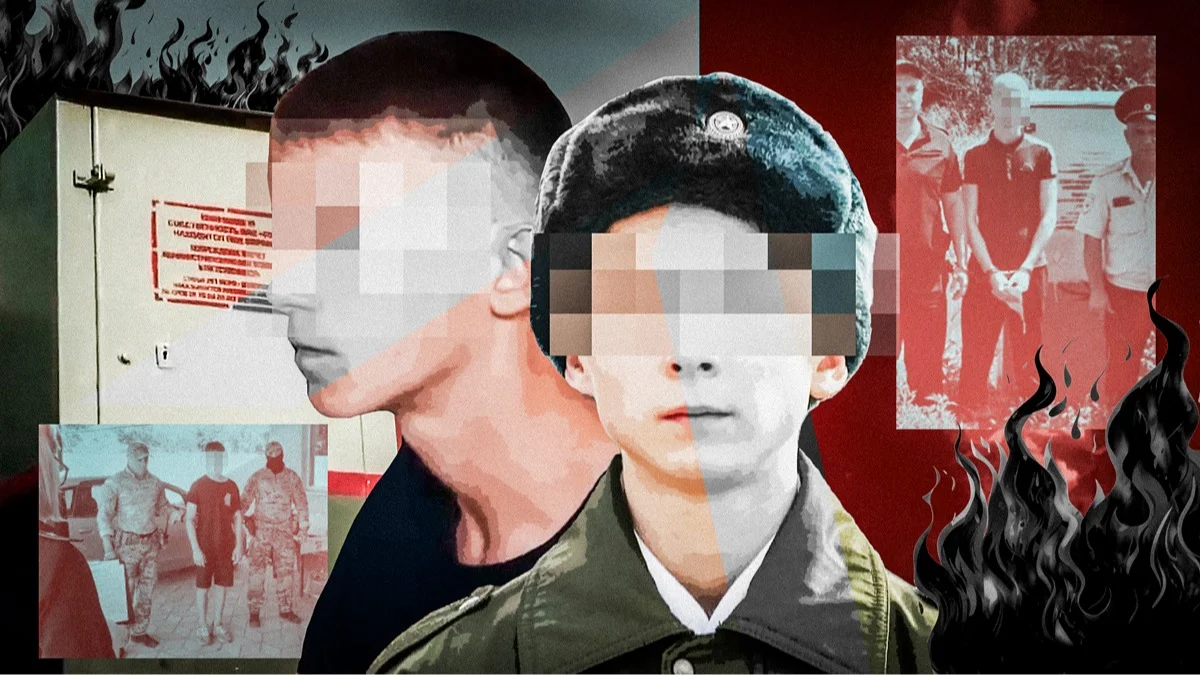
Collage: “New Newspaper Europe”
The parents of ten teenagers in pre-trial detention center No. 1 in Krasnodar for setting fire to relay cabinets published a petition to reclassify cases of terrorism as articles of damage to property. The families of the prisoners claim that their children did not want to harm their homeland, but were only trying to earn extra money - some to repair a moped, others to go to the cinema. The publication “Veter” publishes the stories of two eighth-graders who are awaiting a military trial today.
EDITOR'S NOTE
This material was first published in the publication “Wind”.
“How did you do this? Gasoline? Your head, damn it, isn’t working at all!” — a man with a tanned face looms over a skinny teenager in shorts and a T-shirt. The boy looks at his father from under his brows with large dark eyes, not daring to get a word in. Sitting nearby, her cheek resting in her palm, is a dark-haired woman in a flowered robe—the mother of a teenager. She seems even more perplexed by the situation. The kitchen is perfectly clean, there is a calendar with the Kremlin on the wall. Residents of one of the Krasnodar gardening associations—witnesses—are crowding the doorway.
This is one of the episodes of the documentary film “Betrayal” by the Russia-1 TV channel, in which propagandist Andrei Medvedev talks about young Russian “terrorists”.
“Your son is involved in committing a crime: an attempt to commit a terrorist act, that is, setting fire to a relay cabinet on the railway tracks,”
— the red-haired investigator, whose face is not shown, explains to the parents.
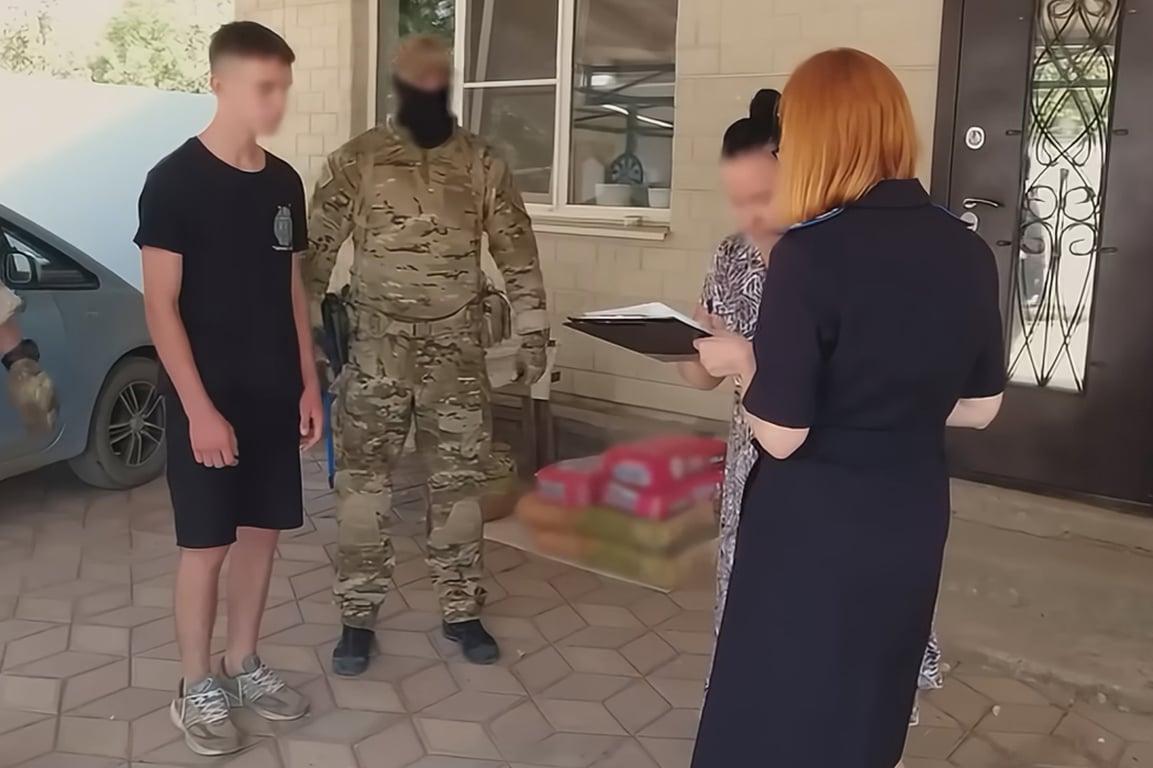
The footage shows 15-year-old Vadim, his father Valery (the characters asked not to disclose their last names) and mother Margarita Klyots. As Margarita told Vetr, she did not give permission to film, much less broadcast, the video of her young son, but on that day—July 30, 2025—everything happened too quickly. A film crew and FSB officers broke into her house in Krasnodar, and brought her son Vadim in handcuffs - for this, the security forces took him from a children's camp in the neighboring city of Slavyansk-on-Kuban, where the boy was learning to kayak. The teenager’s parents were then told that Vadim was a terrorist.
Moped and search for part-time work
Vadim’s family moved to Krasnodar in 2019 from Kazakhstan, “because Russians wanted to live in Russia.”
There is work in the region: there are many agricultural holdings around the city, in Krasnodar itself there are several defense enterprises, as well as foreign factories: among them are the French Bonduelle and the German CLAAS, which did not leave Russia after the start of sanctions due to the war in Ukraine. The city's population is growing steadily: over the decade it has increased by one and a half times. In the new place, Vadim’s father got a job at a sawmill, his mother – at a furniture factory. They built their house in a gardening partnership.
Vadim's life, like many local teenagers, revolved around his moped. He was not interested in politics, but participated in school collections for humanitarian aid to Russian soldiers in the zone of the so-called “special military operation” in Ukraine.
— First, they brought some kind of Soviet moped. They repaired it, started it up, and sold it. Then a little better, some kind of Korean. Our dad used to swear because the yard was constantly littered with spare parts and filled with oil. They were repairing it, but something was always missing. “Mom, we need a carburetor, we need to buy brakes. Then the rubber broke,” says the schoolboy’s mother, Margarita.
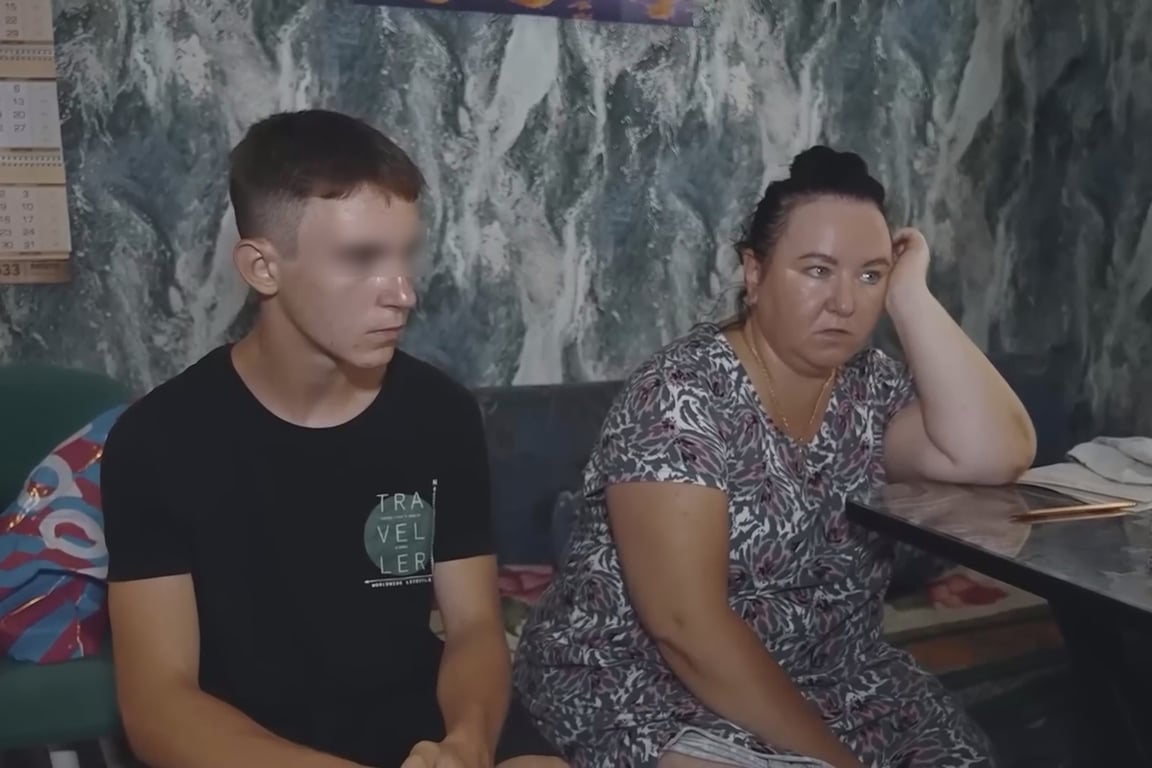
To earn money for spare parts, Vadim began working part-time in a conifer nursery near his house: they paid 2,200 rubles per shift. Vadim came home from work, which starts at four in the morning and lasts 12 hours, sunburned, dehydrated and hungry. He also unloaded furniture in the office several times, but the employers were unscrupulous and the teenager was not paid.
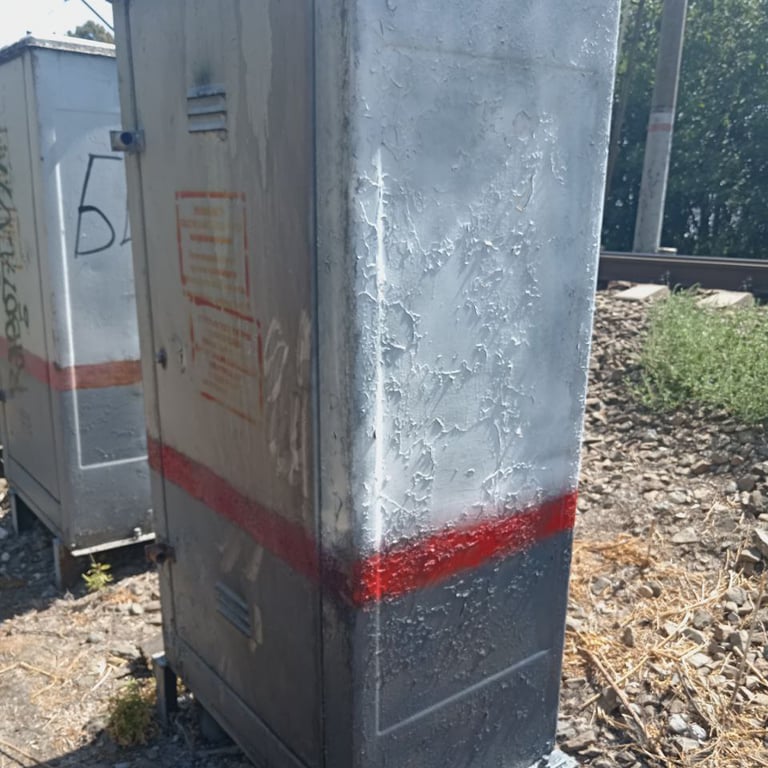
At the beginning of summer, in the “Work Krasnodar” public telegram, Vadim came across a man who offered good money for setting fire to a relay cabinet. This is the equipment that controls traffic lights and switches on the railway. Since 2025, inconspicuous gray boxes in Russia began to be marked with red inscriptions stating that their damage falls under Article 281 of the Criminal Code of the Russian Federation (sabotage).
“They wrote about the work, for 25 thousand they had to set fire to one piece of garbage,” Vadim explained in the video. And although he really wanted easy money, he was afraid to commit a crime. The teenager came up with a plan: create the appearance of a fire, send video evidence to the customer, and quickly put out the fire. This is not the first such case - for example, 14-year-old Bogdan Protazanov from Vyborg imitated arson of a relay cabinet and received five and a half years in prison for this.
Dry grass set on fire
A friend, 17-year-old Krasnodar resident Ilya at that time, went to “deal” with Vadim. The guys had gasoline, antifreeze and sand with them. It was supposed to treat the booth with antifreeze before setting it on fire - Vadim thought that in this way it could be protected from fire.
“There is a correspondence where Vadim writes to a friend: “I know how to do this without consequences, so as not to harm anyone.” And first they doused this cabinet with antifreeze, because it, in fact, does not burn, it is like a coolant.
That is, they understood that there was no need to burn this cabinet. And they set fire to the dry grass a little. We filmed it all on video, literally six to eight seconds. [Then] they took sand, put it all out after themselves,
- says Margarita.
The paint on the booth was only slightly burnt. Subsequently, Russian Railways assessed the damage from the fire at 1,149 rubles. Vadim sent the video to the customer and received money from him. The guy was found three days later. A fragment of the filming of his arrest will subsequently be shown on the central channel, and the teenager will be charged under Part 2 of Article 205 of the Criminal Code of the Russian Federation (terrorism as part of a group).
— Journalists have arrived. I also asked: what kind of shooting? “This is an operational shooting, don’t worry, it won’t go anywhere further.” They all burst in with machine guns and masks. A child with such [round] eyes. Set it on fire? “He set it on fire.” Well, naturally, he immediately said yes. A search was conducted in the house, everything was recorded, all phones were confiscated. Antifreeze - they looked - what is it? “I used this antifreeze.” This is a mitigating circumstance. In the case materials there is an examination proving the presence of antifreeze and sand, but this is not taken into account. They tell us: was it arson? That means he’s a terrorist,” continues Margarita.
The second member of the “group,” Ilya, was placed in a pre-trial detention center along with Vadim. In January 2026, he turned 18 and was transferred to adult status. The documentary film “Playing with Fire” by the Rossiya-1 TV channel published footage of his arrest: operatives tell the teenager’s mother that her son acted on orders from the Ukrainians, to which she replies: “I’ll kill him myself, give me five minutes.”
— Question to the state: why do you allow people to work from the age of 16, but they started imprisoning people from the age of 14? Children are forced to work in some fields to earn money for their needs. All parents now have mortgages, loans, we cannot give our children everything we want. We provide food and everything necessary for them to study properly, but they want a little more: to go to the cinema once again,” says Vadim’s mother.
Margarita was told that a “Ukrainian curator” had contacted her son. At the same time, during the investigation it turned out that the fraudster’s account was registered in Canada. In the case materials, only the fraudster’s nickname appears - “Cactus”, and his avatar shows a grave. Money was transferred to the teenagers’ account using the cryptocurrency purchase mechanism, when ruble transfers can be made by strangers in exchange for receipts to their foreign currency accounts.
- When we got acquainted with the case, we looked - there were some Ivanovs, Petrovs, Sidorovs. Who is this? - Margarita asks. — The investigator says: these are the people who sent money to the children on the card. There were four transactions and two people were questioned. To which people responded: we just bought crypto on the Internet. All.
I had a gun with me
In pre-trial detention center No. 1 in Krasnodar there are at least ten teenagers accused of terrorism and sabotage - they are called “political”. In addition to them, there are many young drug pawners and thieves in the detention center. Margarita Klyots found out this when she began to knock on the thresholds of the prison and seek a meeting with her son. Investigators prohibited him from seeing the child due to the severity of the charges.
One of the local prisoners is 15-year-old youth member Timofey Slipchenko. His story is very similar to what happened to Vadim. On the evening of May 8, 2025, he, then 14 years old, received a call from a 16-year-old acquaintance named Yaroslav and invited him to work part-time at a construction site. Timofey agreed.
— We let the child go to work. At the age of ten he began working part-time: either handing out leaflets or working at a car wash. That's how he wants it. And I think that this is a normal trait in a boy. He's a man. I asked: until how long? He said: a couple of hours. “I say: good,” his mother Natalya Slipchenko tells Veter.
The boys took a minibus to the Rostov highway. Krasnodar, built up with low-rise buildings of Soviet modernism, here turns into rows of gardening associations and islands of factories and car dealerships. The guys went to the railway, and Yaroslav announced to Timofey that there was no construction here, but that they needed to set fire to the supposedly decommissioned transformer panel.
- Yaroslav - he is also a deceived child - said something like: don’t piss, he’s not working, nothing will happen. Yarik is stronger, Timofey was afraid of him. And Yaroslav also had a traumatic pistol with him. Timofey got scared and stayed to film [video]. And now he still has the qualification that he is a terrorist,” explains Natalya.
That relay cabinet was completely burned out.
Trapped
The next day, Timofey went to the village to visit his grandmother - according to family tradition, every year on May 9 he gives her the Victory Banner. He didn’t tell his family about the arson.
“And in the evening the FSB received us there in the village. The op said, “Break it.” I shouted: “Don’t touch me!” She didn’t let them touch her child. They brought us to our house in Krasnodar, conducted a search, found nothing, only took away his phone and the things he wore at work. And his computer,” recalls Natalya.
By evening, Yaroslav was also detained. Russian authorities added both boys to the Rosfinmonitoring list of terrorists and extremists in July.
Timofey's mother suggests that her son was found so quickly thanks to camera traps on the railway, as well as mobile phone billing.
— I saw the correspondence in the telegram, there was nothing about relay cabinets at all. It said: let's go to work. The only thing Timofey wrote: “Where are my grandmothers?” At that moment Yaroslav transferred this money to him,
- she notes.
Eighth-grader Timofey Slipchenko was not particularly successful in his studies, but took an active part in extracurricular activities: he signed up for the Yunarmia movement, collected humanitarian aid for the military, and went to congratulate veterans. Timofey attended the Thai boxing section, but, as his mother points out, he could not protect himself from his classmates. Due to constant bullying, he lost interest in studying. His grades did not improve even after changing schools, where he “lounged around, helped carry furniture, or sat in the library.” After school, the boy often worked and even saved up for a moped.
His mother says that she would never give such an expensive gift to her son: there is no extra money in the family. Natalya, who previously worked as a technician at a factory, got behind the wheel of a taxi after Timofey was detained. He says there is no time for permanent work: at any moment he can be pulled out to court or for an investigative experiment.
“Where will you write the article? On the Internet? Because they don’t let our truth pass on television,” she says. Natalya is referring to the documentary “Betrayal,” which does not mention that teenagers are being deceived by scammers, but emphasizes that they were recruited by Ukrainian intelligence services.
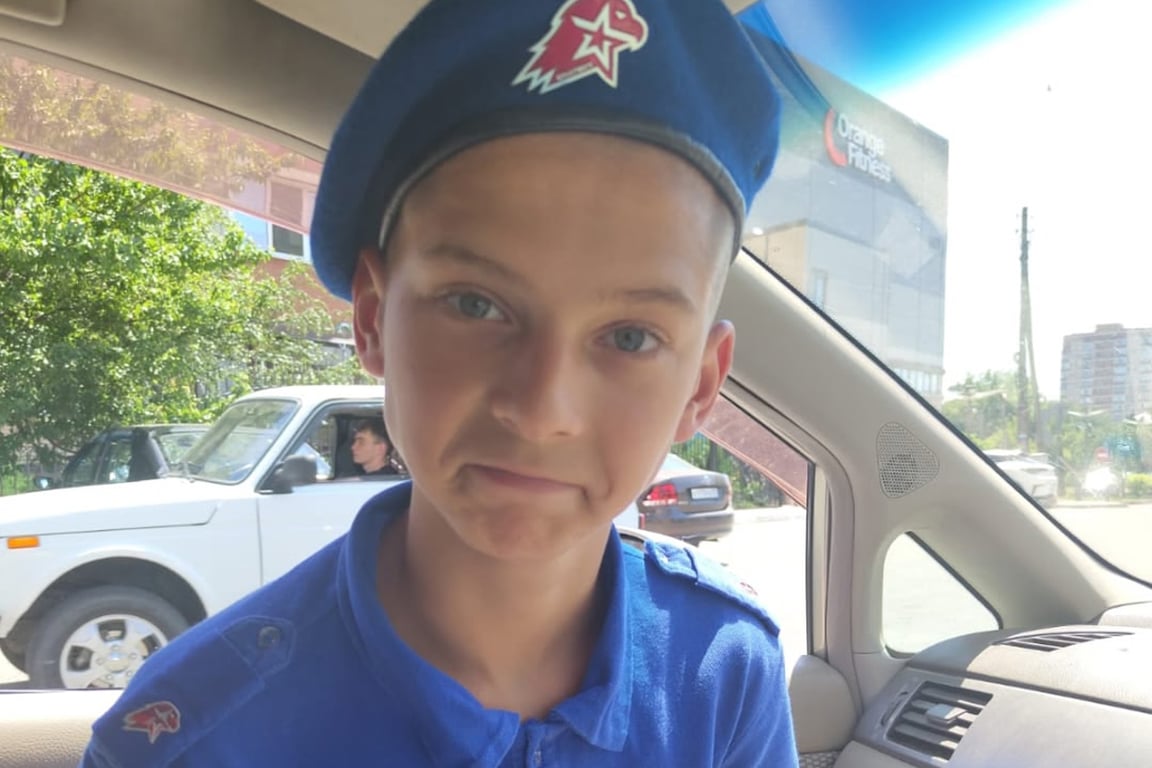
“Journalists came out [to Margarita’s family], they came for interviews, they were shown on the program for exactly two seconds,” says Natalya. “They didn’t let me tell the truth.” [Parents] said that the children were deceived, they showed all the complaints [to government agencies] , what kind of children they really were, that none of the children were registered. Children are clean! Mine is a youth soldier, an athlete. He is a patriot. And for some reason now he’s like a terrorist.
children's day
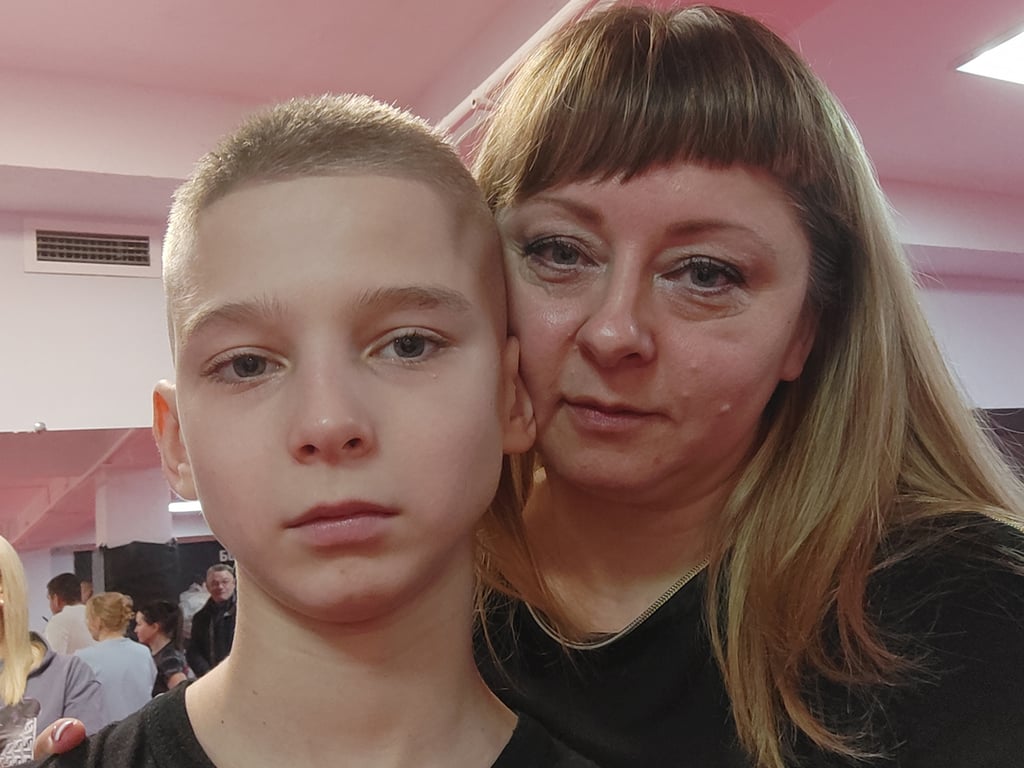
Margarita Klyots, Natalya Slipchenko and other relatives of young Krasnodar “terrorists” united in a joint chat: in total there are ten families there today. They organized a visit to the Commissioner for Children's Rights in the Krasnodar Territory, Tatyana Kovaleva, with a request to improve the regime for keeping their children and allow visits with them.
— After we started going as a group to all authorities, we were finally allowed to meet. Can you imagine, when we arrived on the first day, a woman came out and let us in and said: “I don’t understand, is it Children’s Day?” And we were all with tears in our eyes, [with the hope] to finally see our children after so many months,” Margarita recalls. — [The commissioner, when we entered] had all the heads of the pre-trial detention center, we complained about the conditions, because there were cockroaches, bedbugs, poor food, there was no walking, and in the summer, in the heat, these feeding troughs through which they give food were closed. Due to unsanitary conditions, all children have shingles. There are no air conditioners, but in Krasnodar the heat is below 40 degrees, there is no draft. The children were roasting there.
The cells where the schoolchildren are kept have eight beds. Rise at six in the morning. If you oversleep, you will miss out on a walk. The teenagers discuss among themselves where they will see each other next: in a military court in Rostov-on-Don or in a pre-trial detention center in Taganrog - minors are sent there, since there is no suitable detention center in Rostov. Once a month, a school teacher comes to them and gives them assignments. It is impossible to exercise in such conditions, Margarita believes.
— There was a test on literature. Vadim says: “I don’t know either the author or what the work is.” They just brought pieces of paper: “Answer this way,”
- she explains.
- They are simply degenerating there. If they were given house arrest, they would at least finish their studies at home,” adds Natalya. — [On the Ukrainian side] there is a targeted criminalization of their generation.
At the same time, Natalya has no questions about Russian legislators, who in 2025 lowered the age of responsibility for sabotage from 16 to 14 years.
“Our government can only [give] punishment so that children don’t go there.” It’s just that there was no prevention before, nothing was said about it. And now, when our children have already got there, films are already being created and shown in schools. The film “Betrayal”... Of course, everything there was cut as it should be: let’s say Dmitry Vasilchenko gives testimony, I know his testimony, and there it was cut as needed. I understand why this is being done. To intimidate. So that teenagers can hear it all. They tell a little bit of lies [on TV]. We need to tell the whole truth so that children do not fall for this deception.
Work on mistakes
Margarita Klyots and other Krasnodar families published a petition demanding that Article 205 of the Criminal Code of the Russian Federation (terrorist act), which carries a penalty of 10 years to life imprisonment, be reclassified for their children. The actions of teenagers are covered by Articles 167 (destruction or damage to property) and 267 of the Criminal Code of the Russian Federation (damage to transport equipment), the penalties for which include a fine or compulsory labor. “They are not terrorists or criminals, but victims of circumstances and deception. No one is exonerating them from responsibility for their misconduct, but we only ask that they be judged for the crime actually committed,” the petition says.
— Article 205 is the destabilization of government bodies. Children don't even know these words. We did not want to harm the Motherland! - Margarita emphasizes. - We do not consider our children to be traitors. They did not go to betray their Motherland. Ilya ( her son’s friend, with whom they went to “business.” - Author’s note ) generally dreamed of getting to the North Military District. Moreover, his father died there.
“Wind” asked the women whether such a number of cases of sabotage are connected with the war that is currently going on in Ukraine.
“I think so,” says Vadim’s mother Margarita. “It’s just through the hands of our children that sabotage occurs.” Do you know what happened to a friend of ours in Thailand? He says, I’m sitting, a man comes up to me. “You speak Russian, where are you from?” Our friend says: “I’m from Kazakhstan.” The second one says: “This is a good country, we are friends with them.” An acquaintance understands that this is a Ukrainian. He says: “I have a very good part-time job for you.” “What needs to be done?” “We need to recruit Russian children. You pay them a little, they are ready to set fire and blow up anything.”
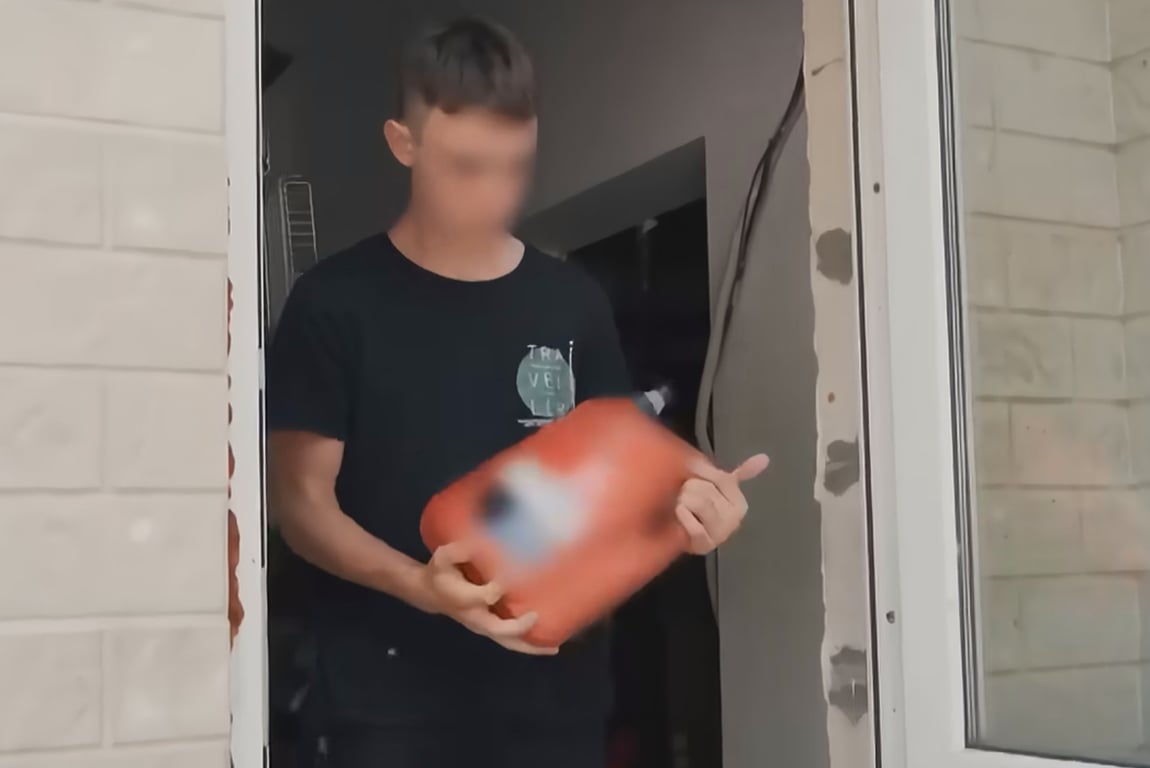
The mothers do not believe that there were those among the children who deliberately wanted to cause sabotage.
— Judging by the film [“Betrayal”], there are ideological comrades there, but not minors. Closer to 20 years, they are already yes, we are against the state, we don’t like something, like revolutionaries. They already consciously went. And those who are 14, 15, 16 years old are far from politics at all. You see, if a person is not ideological, well, what is the two hundred and fifth? This is arson for selfish reasons,” Margarita insists.
She notes that she regrets her reaction when television crews came to her house. At that moment, the child only needed to be supported.
“I said: “What have you done, now the SVO is coming.” Didn’t you know that you can’t do that?” - Margarita recalls. - A crowd of people, witnesses. It was scary, of course. You don’t know what to say, they shove a camera in your face. And now I think, why am I doing this to my child? You can’t talk to children like that, of course...
Author: Yulia Kulikova