
Translated material
Are tattoos harmful? Can they really cause you to get cancer? And on what parts of the body should they not be stuffed? And how to get rid of a bad tattoo?
Useful tips for those who have already gotten a tattoo - or are planning to
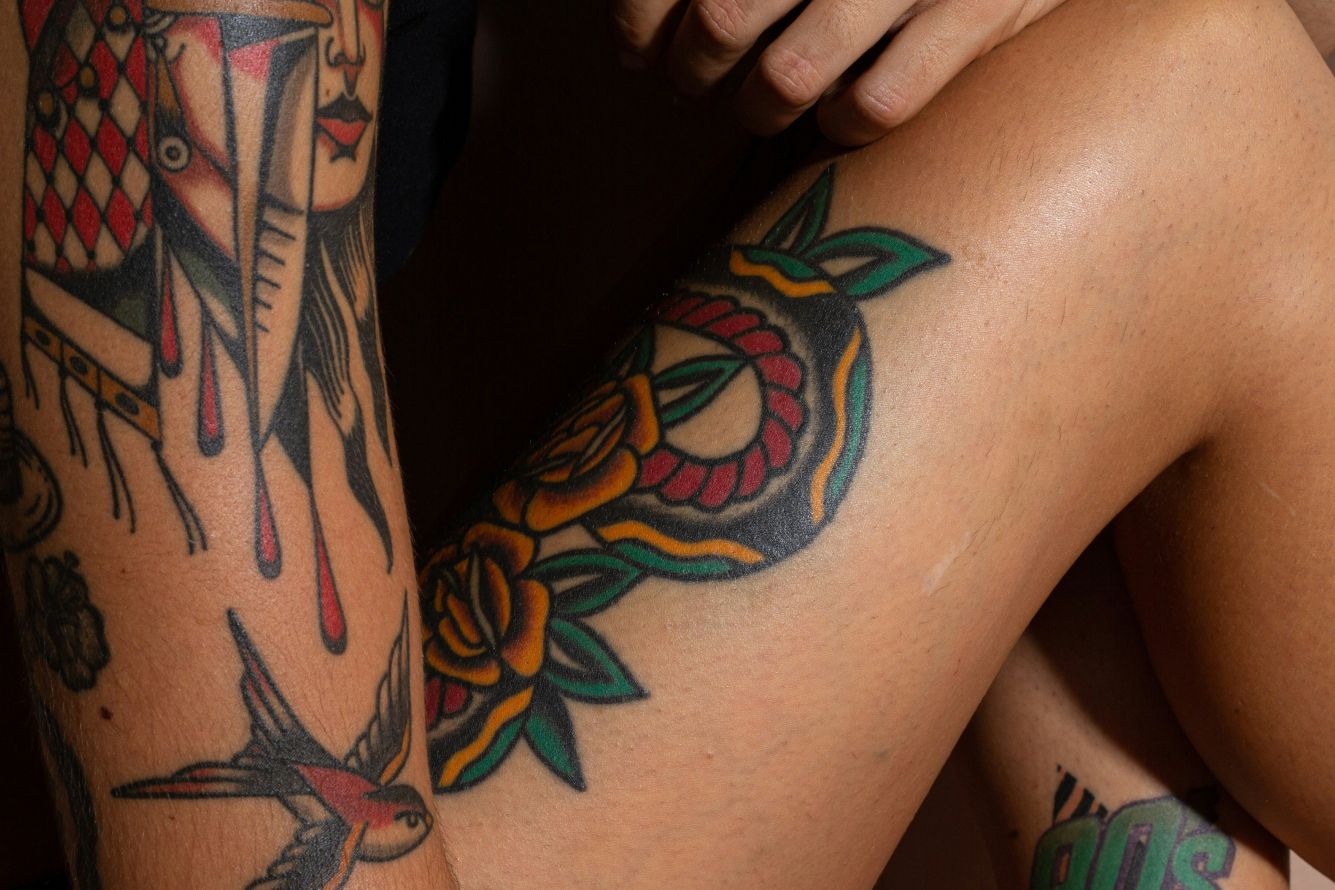
Tattoos can be a way to express your position , they can remind you of something important, or they can serve another meaningful purpose. But what if they are harmful? From time to time, there are reports in the media that tattoos lead to cancer. What if after many years you want to remove the tattoo? How is this even done? We tell you what is important to know about tattoos for those who already have them, and for those who are just about to get their first one.
Are tattoos harmful?
It is difficult to answer this question unequivocally, but in any case there are some risks.
Skin reactions
Skin reactions may occur first. They can be temporary and expected: for example , slight swelling, redness, sensitivity of the skin. But there are also those that can be called problematic. These are , in particular:
- allergic contact dermatitis (it can develop even years later);
- granuloma, that is, dense inflamed nodules that can be located in different organs, but in the case of a tattoo - on the skin, they can itch and be sensitive to touch (another granuloma caused by a tattoo may be the first sign of sarcoidosis ).
Colored inks increase these risks.
In rare cases, damage to the skin can cause raised scars that may extend beyond the tattoo. Getting rid of them is not so easy. And if you have already encountered hypertrophic or keloid scars , it is better to do without a tattoo.
Will it hurt?
Quite likely. Much depends on what area of the skin the tattoo will be on, how large it will be, the style of the artist and your personal characteristics.
Tattoo artist Sasha Kiseleva said in the podcast “Post_Anxiety” that she usually calmly endures the pain in the process (she has several tattoos). But one day, for unknown reasons, when it was necessary to paint over the tattoo the next day after the contours were filled in, it turned out to be very painful:
I have never been in so much pain before. From the first seconds. Usually for two or three hours, when the nervous system is still alert, fresh, cheerful, you can endure it. This then begins to wear out. At the fourth, fifth hour Satan begins, at the sixth, seventh hour - a second wind, as if everything is already over. There, some inner demons are just coming out, and you’re just so tired of suffering that it doesn’t seem to hurt so much anymore. But this tattoo was unbearable just from the first seconds. <…> I left only on the third day.
Infections
Tattoo machines and other tattooing instruments can transmit viruses, bacteria ( including non-tuberculous mycobacteria ) and fungi.
Bacteria usually cause skin infections ( especially at risk in people with diabetes). Viruses can also lead to skin problems. For example , the process can transmit herpes simplex virus, human papillomavirus and molluscum contagiosum virus. Skin fungal infections due to tattoos are quite rare .
In a small number of cases, the bacterial infection affects the entire body or vital organs. This happens more often in people who have congenital heart disease, rheumatic fever, or immunodeficiency (for example, during chemotherapy).
And it happens - although in practice this happens very rarely - the hepatitis B virus, hepatitis C virus, human immunodeficiency virus or monkeypox virus is transmitted to a person. (By the way, note that you can get vaccinated against hepatitis B.)
Because of all these risks, pregnant women are not recommended to get tattoos. And donors in Russia cannot donate blood for four months after getting a tattoo (other countries have similar restrictions ).
To reduce the risk of getting sick, it is important to choose a trusted tattoo parlor and artist. To do this, you can first just come to the salon, ask questions to the master and see how everything is organized. And only then come to get a tattoo.
What should everything look like?
- All reusable instruments are autoclaved and sealed.
- Before work, the master washes his hands and puts on disposable gloves (and ideally a mask).
- First, the artist treats the area of skin where the tattoo will be applied with an alcohol solution or other antiseptic.
- If you need to dilute the pigment, the artist uses sterile (not tap) water.
- The master dips the needle into the pigment, which is poured from the factory packaging into a disposable container.
- During the process, all fluids that are released from the skin are removed with a sterile disposable wipe.
As for the choice of pigments that the master uses, everything is quite complicated. Even unopened tattoo pigments can harbor bacteria and cause infections (rarely leading to infection outbreaks). In addition, often the permissible concentration of some substances in ink is exceeded ; they may also contain substances that are not declared in the composition and are even prohibited for such use. In the USA, such finds are not uncommon . In the European Union , from where pigments are also transported to Russia, several years ago they adopted more stringent requirements for the composition than before (and than in Russia ), but the rules are still violated . However, one of the researchers who checked the compositions of pigments and found inconsistencies, John Swark, in an interview with Scientific American, said :
The main thing I always want to emphasize is that our work does not say anything about whether tattoos are safe or not. This is just the first step. The fact that we found certain substances in ink does not mean that you should not get a tattoo or that you are at risk of developing skin cancer or anything like that... This is how science develops: first we need to study the basics and fundamental things in order to build the next questions on this foundation.
Oncological diseases
In theory , tattoos may increase the risk of developing cancer, especially lymphoma and skin malignancies. But the conclusions of large studies (there are only a few ) are contradictory . Some work suggests that people with tattoos may be more likely to be diagnosed with melanoma and lymphoma . In other studies, on the contrary, they see that the risk of developing melanoma decreases or remains the same .
“What I would like to say to all those who have tattoos and those who are planning to get them is that at the moment this is not a cause for serious concern,” Sine Clemmensen, co-author of the study on tattoos and lymphoma, told New Scientist. The International Agency for Research on Cancer admits that at this stage it is simply impossible to answer the question of whether tattoos increase the risk of developing cancer. Not to mention the fact that even without tattoos, the risk of developing lymphoma is low (for example, in 2023 in Russia, 17 thousand people were diagnosed with this disease). And the development of melanoma is primarily associated with other factors.
Which ones?
The risk of developing melanoma is greatly reduced if you protect yourself from ultraviolet radiation. Therefore, it doesn’t matter whether you have a tattoo or are just planning to get one, you need to make sure that you do not sunbathe or burn. And for this you need to protect your skin from the sun:
- use sunscreen with SPF;
- do not visit the solarium;
- do not stay in the sun for a long time.
It is also important to periodically examine your skin and check for any strange moles . Make an appointment with a dermatologist if you notice that a mole is growing, changing shape, color, bleeding or peeling, has uneven edges, or parts of it are different colors. You can find a more detailed description of the signs you need to pay attention to on the Onco Wiki help service website.
Can I get tattoos if I have any skin diseases?
Not always. First you need to consult a dermatologist. In some cases, a tattoo (like other skin lesions) can trigger an exacerbation. Therefore, people who have already had this happen need to think especially carefully. For example , this happens with psoriasis, lichen planus and vitiligo .
One of the general rules is not to get a tattoo while you have an exacerbation of a skin disease and until your condition has stabilized . In addition, if you are using medications that affect the functioning of the immune system for treatment, you should first consult your doctor.
Are there places where it is better not to get a tattoo?
Eyes
Where you definitely shouldn't get tattoos is on the eyeballs. In such cases, pigment is used to change the color of the sclera (the white part of the eye) or the iris (the colored membrane of the eye that is located around the pupil).
In the first case, the pigment is injected with a syringe under the conjunctiva (this is a transparent membrane that covers the sclera). In another case, the pigment is injected into the cornea (the transparent membrane that covers the iris). That is, the natural eye color is covered by pigment. Both procedures are irreversible .
They carry risks : for example , the needle may be deeper than necessary, and the pigment will fall on those parts of the eye with which contact was not intended. As a result, a person may lose vision (totally or partially), have problems with the retina , the eye will be constantly inflamed, there will be increased sensitivity to light, or a feeling as if something is in the eye.
If you really want to change your eye color, you can use colored contact lenses.
Moles
If a person has already been diagnosed with melanoma, his relatives have been diagnosed with this cancer, or he has dysplastic nevi , then it is recommended to apply tattoos only to clean skin, that is, not to cover moles with them. Tattoos should not be applied to scars left from a removed dysplastic nevus or melanoma. And one more recommendation: if there is an increased risk of developing melanoma, it is better not to apply tattoos that require continuous painting with dark pigment.
But even without such a history, covering moles with tattoos is not recommended : these areas of the skin can become inflamed, and if they need to be removed, the tattoo will be ruined. But if you still want to get a tattoo over a mole, it's best to talk to a dermatologist first.
How to care for a tattoo - immediately after it was done and after? And how do you understand that something went wrong?
While the tattoo is healing - it takes about two weeks (but a lot depends on its location and size) - you need to follow several rules .
- At first, try not to touch the tattoo again (and if you do, do it with clean hands).
- You can take a shower (if you use soap, use a minimum amount and rinse with plenty of water).
- Dry the wet skin on the tattoo with a clean towel (or paper). You can't rub it.
- If the artist has applied a temporary bandage, it will need to be changed when liquid begins to ooze from the tattoo. Before applying a new bandage, the area of skin should be washed and dried.
- Apply a moisturizing ointment (such as Vaseline) to the tattoo two to three times a day for two to three days. As your skin improves, you should continue to apply fragrance-free moisturizers several times a day over the coming weeks.
- Until the scabs fall off, do not take a bath, do not go to the sauna or swim, wear clothes that do not irritate your skin, and try not to do anything that makes you sweat. And yes, although it may be difficult, try not to pick out any crusts that form.
- Use sunscreen and avoid the sun, otherwise the tattoo may fade or changes in pigment composition due to ultraviolet radiation will provoke contact dermatitis. For the same reason, tattoos are not recommended when a person is undergoing phototherapy (for example, with psoriasis).
It is normal for the tattoo to be sensitive to touch for the first few days, warm to the touch, a little red, swollen, and clear or pinkish liquid flowing from it (sometimes along with pigment). It’s also normal if a person gets hot on the first day (especially if the coverage area is large). But it happens that eventually symptoms appear that indicate that a doctor's help is needed. Here they are :
- more and more fluid flows from the tattoo;
- this liquid is yellowish or green in color;
- there is an unpleasant odor;
- heat, redness and sensitivity do not go away and become more intense;
- a rash appears at the site of the tattoo (this can happen even years later).
What should I do if I want to get rid of my tattoo?
Contact your doctor. Tattoo removal in Russia is a medical procedure , that is, it cannot be performed independently, at home, and cannot be performed by a person without medical education.
Nowadays, tattoos are mostly removed using nanosecond Q-switched lasers. It destroys the pigment, which is then removed by the immune system . This is why it takes time to remove a tattoo.
For small black tattoos on light skin, six sessions may be needed , in all other cases more. Older tattoos, head and neck tattoos require fewer sessions. Orange, yellow, red and blue pigments are more difficult to remove. As a rule, four to six weeks should pass between sessions (the break is needed to allow the pigment broken by the laser to disappear).
The removal process is quite painful - it resembles a blow to the skin with a thin rubber band. Therefore, the doctor first uses a local anesthetic. Redness, soreness, or pinpoint bleeding may occur after the procedure. Other complications that may occur in the long term include scarring and changes in skin color. In addition, it is not always possible to remove a tattoo completely.
After the session, you can apply something cold to the tattoo. In addition, it can be lubricated with Vaseline. And it is important to ensure that the tattoo site is protected from the sun during therapy and for several weeks after, otherwise the skin in this area may become darker.
It happens that using a laser to remove a tattoo is contraindicated (for example, if you have developed an allergy to the pigment). Then the doctor may suggest more traumatic methods. This is surgical removal or damage to the upper layers of the skin (for example, mechanical). Such methods leave scars.
Do not try to remove a tattoo at home with sprays, salt or any other devices. At best, they will have no effect; at worst, they will damage the skin and not damage the tattoo.
Another option to get rid of a tattoo is to cover it up .
Department "Analysis"
Cover photo: Stories & Ink Tattoo Care / Unsplash