
Translated material
March, dance, song
Critic Lev Gankin talks about how Shortparis’ music works. The brightest heroes of the Russian scene of recent years, unimaginable without Nikolai Komyagin
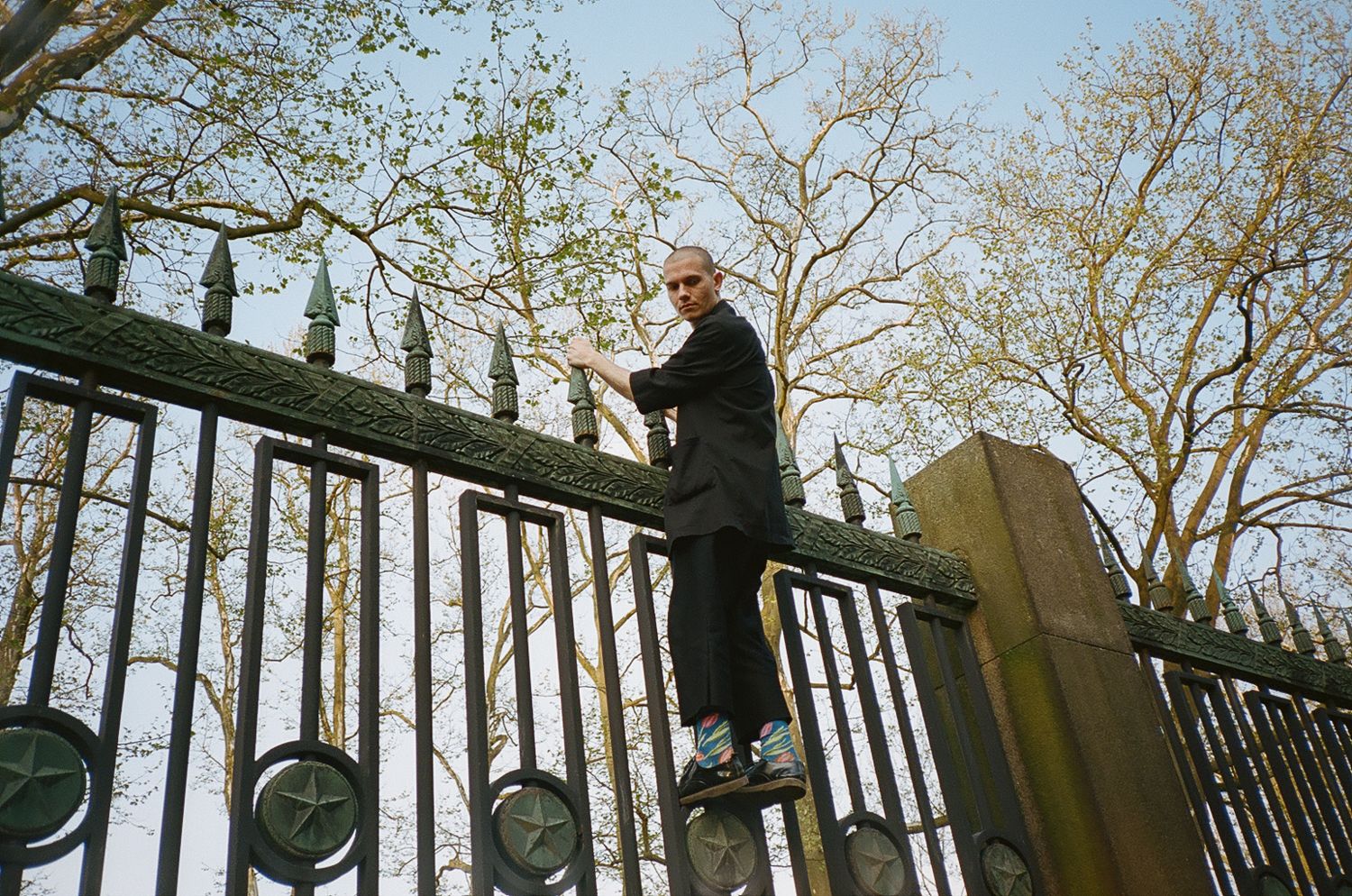
On February 20, Shortparis frontman Nikolai Komyagin died. He was 39 years old. His heart reportedly stopped after a boxing training session. These days, the group is remembered as one of the best concert bands in Russia, and Komyagin himself is called a great Russian artist, whose legacy has yet to be realized. At the request of Meduza, music critic Lev Gankin wrote about the sound of a group that turned the Soviet system of music on its head - and showed us what is beautiful and what is scary.
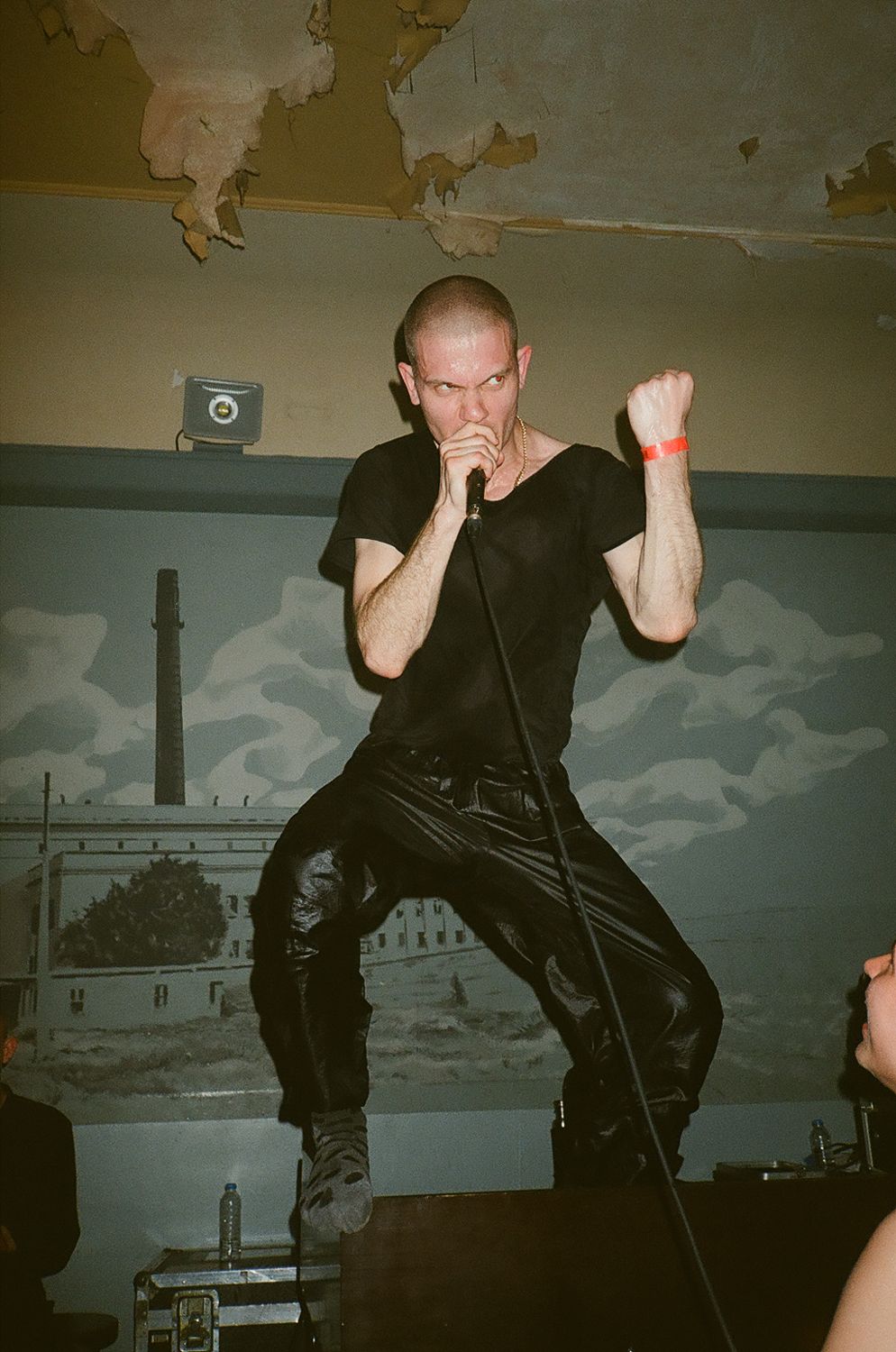
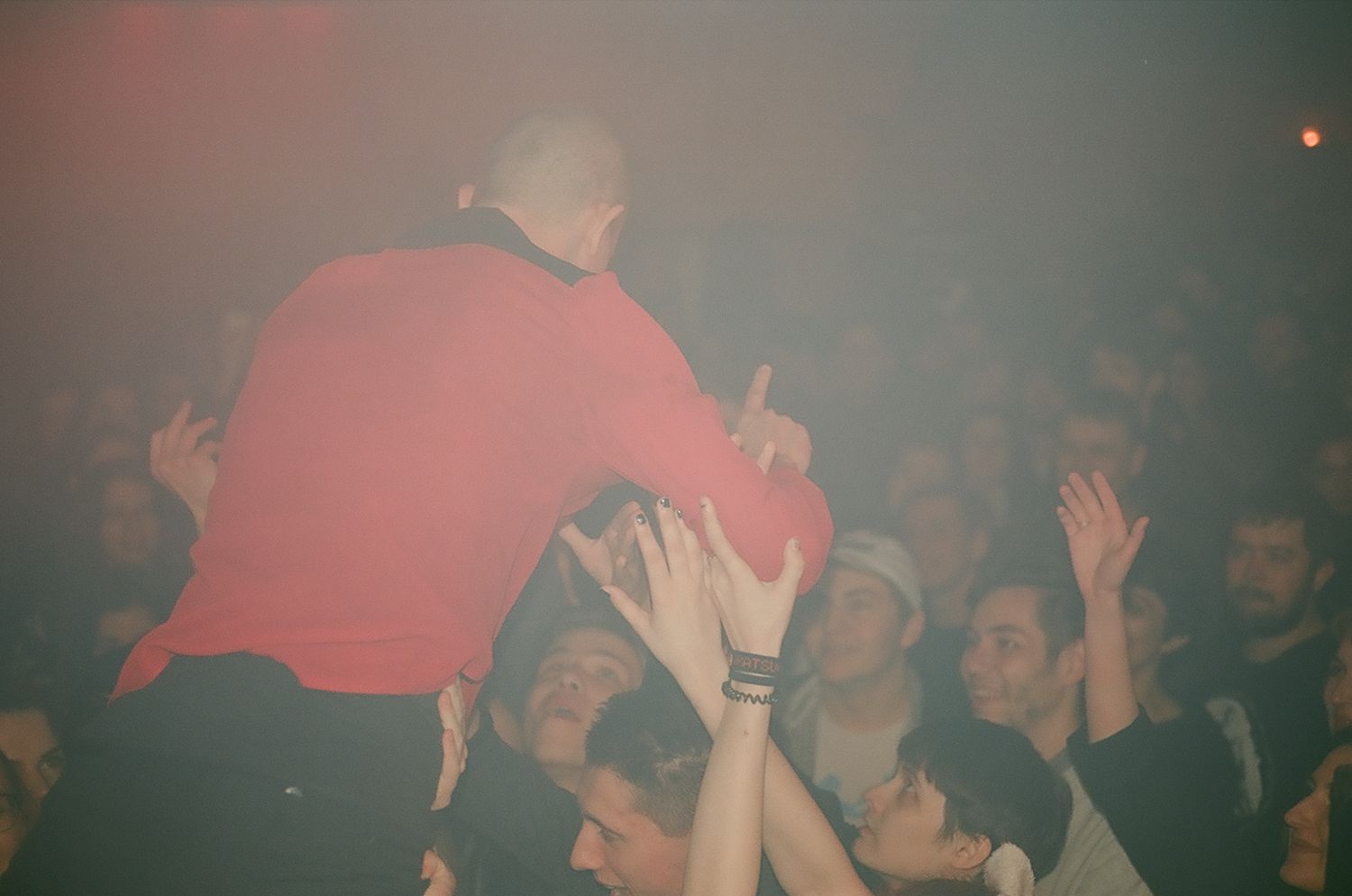
The beat thunders, the bass shakes the diaphragm, and blinding flashes of spotlights hit your eyes. With a short-haired man on stage, something happens that most closely resembles an exorcism session: he arches like a cat, spins around his axis like a dervish, then, as hard as he can, falls on the microphone, which obediently broadcasts his frenzied falsetto to the audience. This is what one of the concerts of the Shortparis group looked like, which I happened to attend, and it was far from the largest: another time the group could bring dozens of dancers-performers onto the stage or stage a site-specific performance in some place that, at first glance, was decidedly inappropriate for this.
Nevertheless, it was still very beautiful - and very scary.
It’s tempting to think that these are the two poles between which the ensemble’s music exists: beauty and horror, impeccable style and grave cold, a fashion show and a panic attack. The image of Shortparis frontman Nikolai Komyagin embodied both extremes: graceful, broken plasticity, like that of a modern ballet dancer, and backhanded lines: “Counterattack, drunken brawl, the colonel cried into his wife’s shoulder,” “Flies are dying aimlessly, and labor is in vain,” “The native land is sleeping, the evening is mutilated, ashes are rising above the Kremlin Cathedral.” In the group’s early set lists, songs in French, with exquisite nasal “n” and grating “r”, coexisted with “Novokuznetsk” - a heartbreaking dedication to Komyagin’s hometown (“Mother lies on the stove, streams sharpen stone, horses lick ore from blackened brocade, children glorify the country”).
The caveat, however, is that the apparent configuration with poles here seems to be false. Beautiful and scary are not two extremes of the Shortparis aesthetic program, but its single pain point: as in the totalitarian art of the 20th century with its impressive crowd scenes and monumental propaganda (this is definitely one of the sources of the group’s visual language). Or like in the pre-war Russian metropolises of the 2020s with their impeccable visual perfection in the shadow of the riot police baton - the current reality, in turn, gave Komyagin and Shortparis literally everyday food for artistic deconstruction. Of course, not everything scary is beautiful, and not everything beautiful is scary. However, one amplifies the other: horror makes the beautiful even more beautiful, and beauty makes the terrible even more terrible.
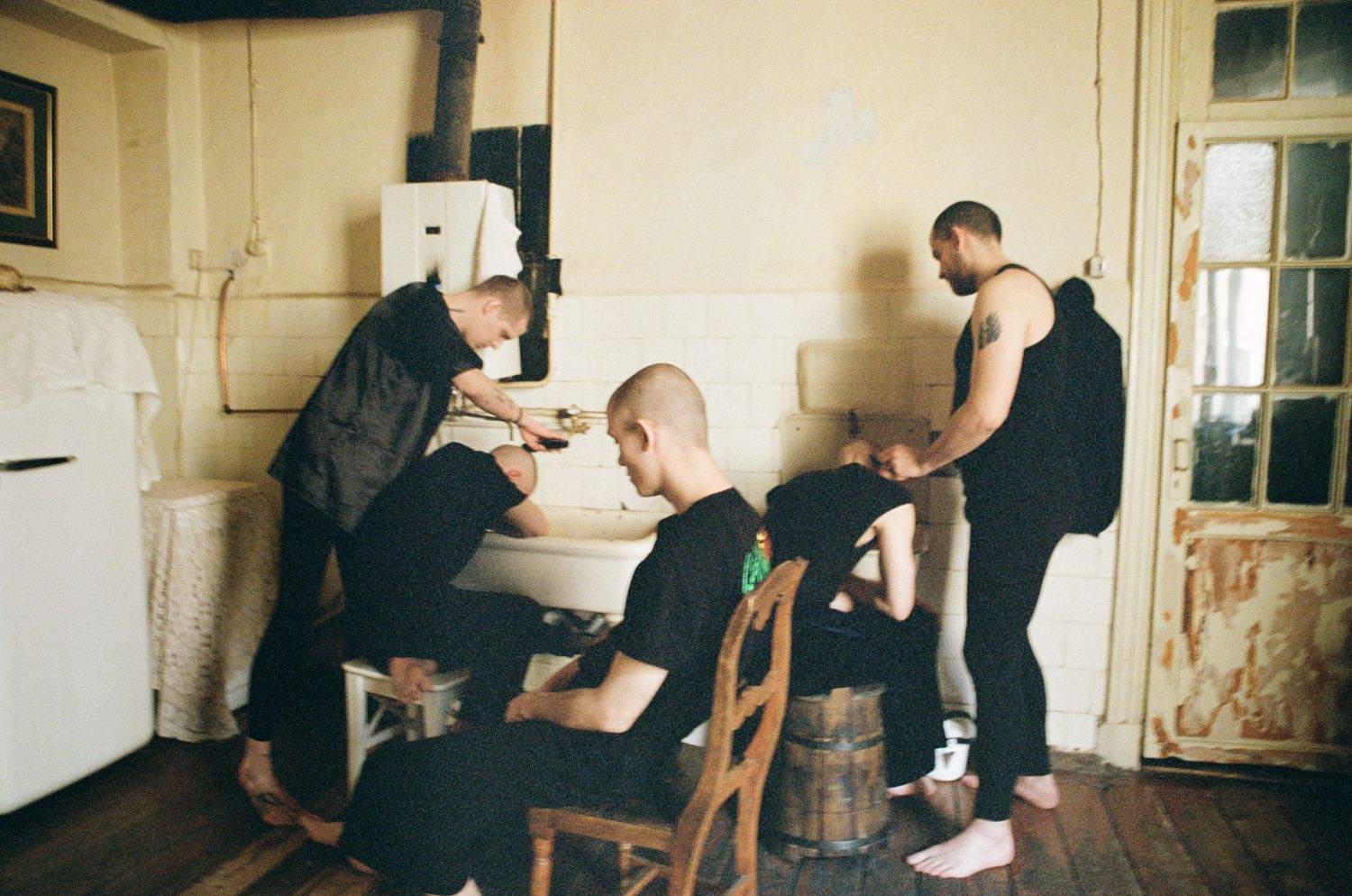
The method was most clearly used in the widely discussed video for the Shortparis program song “Scary”, which once brought the group on the air of “Evening Urgant” (the musicians from this performance staged a unique happening, bringing several dozen people in janitor’s uniforms to the stage of the country’s main TV show). Shaven-headed young men with suspicious bags resolutely head to the gym of the district school - are they scared? Yes, it’s uneasy - but what happens next is much more expressive: the dances and round dances of the alleged terrorists with people of oriental appearance found in the hall - either refugees or migrant workers. “That’s why it’s scary!” - Komyagin presses, convulsively (and, moreover, incredibly gracefully) twitching in the manner of Stromae . It's scary precisely because it's beautiful.
The image of a gym then appeared in the group’s work for the first - but not the last time. In 2025, having already lost the opportunity to give concerts in Russia, Shortparis recorded a live performance in the gym with material from their latest mini-album “The Grapes of Wrath”. Considering the circumstances of Nikolai Komyagin’s death, this seems like some kind of bad joke - but in fact, such an environment for the ensemble’s music really suited the ensemble’s music perfectly. I myself often wanted to describe it using fitness terminology: strength training, stretching, core muscle exercises, cardio. An annoying industrial-electronic beat - like a soundtrack for a workout in the underworld. Regular dynamic contrasts - alternating growth and decay of texture - like a series of approaches to projectiles, diluted with respites.
That is, to put it simply, Shortparis’ music was distinguished by increased physicality - it is no coincidence that the album “Apple Orchard” literally begins with the word “body”. The classical triad of the Soviet composer and teacher Dmitry Kabalevsky - song, dance, march, the “three pillars” on which the art of music is supposedly based - Shortparis, in light of this, was logically turned backwards. First, the march is a collective rhythmic action; then dance - as a liberating way out of the repressive space of the march; and only then, if you’re lucky, a song. The video for “Scary” can also serve as a vivid illustration of the method: here the heroes walk in step, inexorably approaching the gym; here is a stunning transformation and a series of dance divertissements; here, finally, is the belated transition to the song mode - in the finale, in the shots with the procession.
But what did the author want to say with this? A question that goes back to the same era that gave us the concept of “song-dance-march” - and which Komyagin and Shortparis were asked non-stop: from right and left, “those who left” and “who stayed,” Ksenia Sobchak and Nikolai Solodnikov , soilists and Westerners. What did you want to say? And anyway, whose will you be?

For all his many grateful nods to 20th-century modernism, Nikolai Komyagin was an artist of the 21st century—and the standard vector question-and-answer scheme seemed to prefer the more complex, multidirectional mechanics of the tag cloud. In Shortparis songs and videos, the imagery is more important than the storyline; the whole here is created from scraps of meaning, from a poorly ordered enumeration of signs and phenomena of reality. In this music, the event itself is often absent - but its experience is there; there is definitely no “program of action” in it - but there is a statement and reflection. This is what “the author wanted to say with this.” The songs of Shortparis denote the background of life, call its constituent parts by name and so record them for contemporaries and descendants; further is at our discretion. Each of the following strategies is acceptable and self-sufficient.
So, we can limit ourselves to the aesthetic layer of this art: admire bold artistic decisions, drop our jaws when watching, say, a video clip for the song “Moscow Speaks” - an even more exciting work of audiovisual art than “Scary”.
We can look for specific signs of the times in Shortparis songs, outline the historical background from them - or, say, find amazing prophecies in them (the group sang that “February is approaching” back in 2019: three years before the war begins in February, five years before Alexei Navalny is killed in February, seven years before Nikolai Komyagin himself passes away in February).
Finally, this music can also give us an impulse to action, including political action, but not through a direct call. Everything we do under the impression of her is our responsibility. The Shortparis Group provides the data, we manage it.
This is an honest position, especially since Nikolai Komyagin was responsible for himself - and for his own choices. Shortparis responded to the full-scale invasion of Ukraine by Russian troops by recording and releasing a new version of the composition “Apple Orchard” in the company of the St. Petersburg choir of WWII veterans. The industrial-electronic arrangement of the original here gave way to intense, uptight avant-rock - with a chaotic piano part in the leading role. Against the backdrop of a hopeless Russian snowstorm, elderly people in medals threw apples into a freshly dug grave - they buried the old world, the history of which ended on February 24, 2022. The concept of “beautiful and scary” seems to have reached its apogee here.
After this, the group decided to stay in Russia - despite the fact that Shortparis predictably soon ended up on state stop lists and stopped performing live in the country. There is a feeling that otherwise Komyagin would have lost access to his cloud of tags, he would have lost a view from the inside that was vital for his activities, from the position of a participant in the process, and not just an external observer.

From that moment on, they gave concerts only abroad - fortunately, even before the war they turned into a sought-after international club and festival line-up thanks to their unique stage energy and ingenuity. It is alleged that, in addition to traditional touring destinations, Shortparis traveled extensively and frequently to China. In the work of the “war years” - songs from the mini-album “The Grapes of Wrath” and a concert in the gym - a noticeable aesthetic shift was identified: it sounds harsher, dirtier, more straightforward. “The Grapes” starts with a mocking quote from “The Apple Orchard” - Komyagin seems to be ironizing his own pretentious, decadent vocal style of the pre-war period. However, the group still consistently avoids answering the question “whose will you be?” Shortparis prefers to comment on the ideological battles of the right and left with Akhmatova’s sarcastic paraphrase (“I’ll put a boot from someone’s broken right foot on my left foot”).

Nevertheless, with all the undeniable intellectual charm of Nikolai Komyagin, the world around him evoked in him, first of all, a physical, even physiological reaction - the specific physicality of the music of Shortparis, it seems, was explained precisely by this circumstance. The group reacted to the reality outside the window, as if at an appointment with a neurologist hitting the knee with a hammer - with a reflexive muscle contraction. It was physics that could not stand it: in another damned February, Nikolai Komyagin died of a heart attack, before he even reached the age of 40. He didn’t manage to do a lot - but at least he managed to show us what beauty is.
And also - what is scary.
Lev Gankin