
Translated material
The US and UK predicted a Russian invasion months before February 2022. How did they do it? And why didn’t Ukrainians and Europeans believe them?
The main thing from a long article by The Guardian
American and British intelligence were able to predict a full-scale Russian invasion of Ukraine back in 2021. But their European allies, as well as the Ukrainian leadership, did not take their warnings seriously. The Guardian journalist Sean Walker, based on more than a hundred interviews with intelligence officers, officials and diplomats from different countries, reconstructed in detail the sequence of events. We retell the main points from his article.
Listen to the audio version of this text on Radio Medusa
In hindsight, Western analysts believe that Vladimir Putin made the final decision to invade in 2020. At this time, amendments to the Constitution were adopted, which provided Putin with the opportunity to remain in power after 2024. Then Covid came to Russia, and Putin isolated himself: he met few people, but he read a lot of books about the history of Russia - and, apparently, thought about his place in it.
Also in 2020, protests against Alexander Lukashenko were brutally suppressed in Belarus, and Alexei Navalny was poisoned in Russia. All these disparate events pushed Putin to consolidate power and realize great-power ambitions.
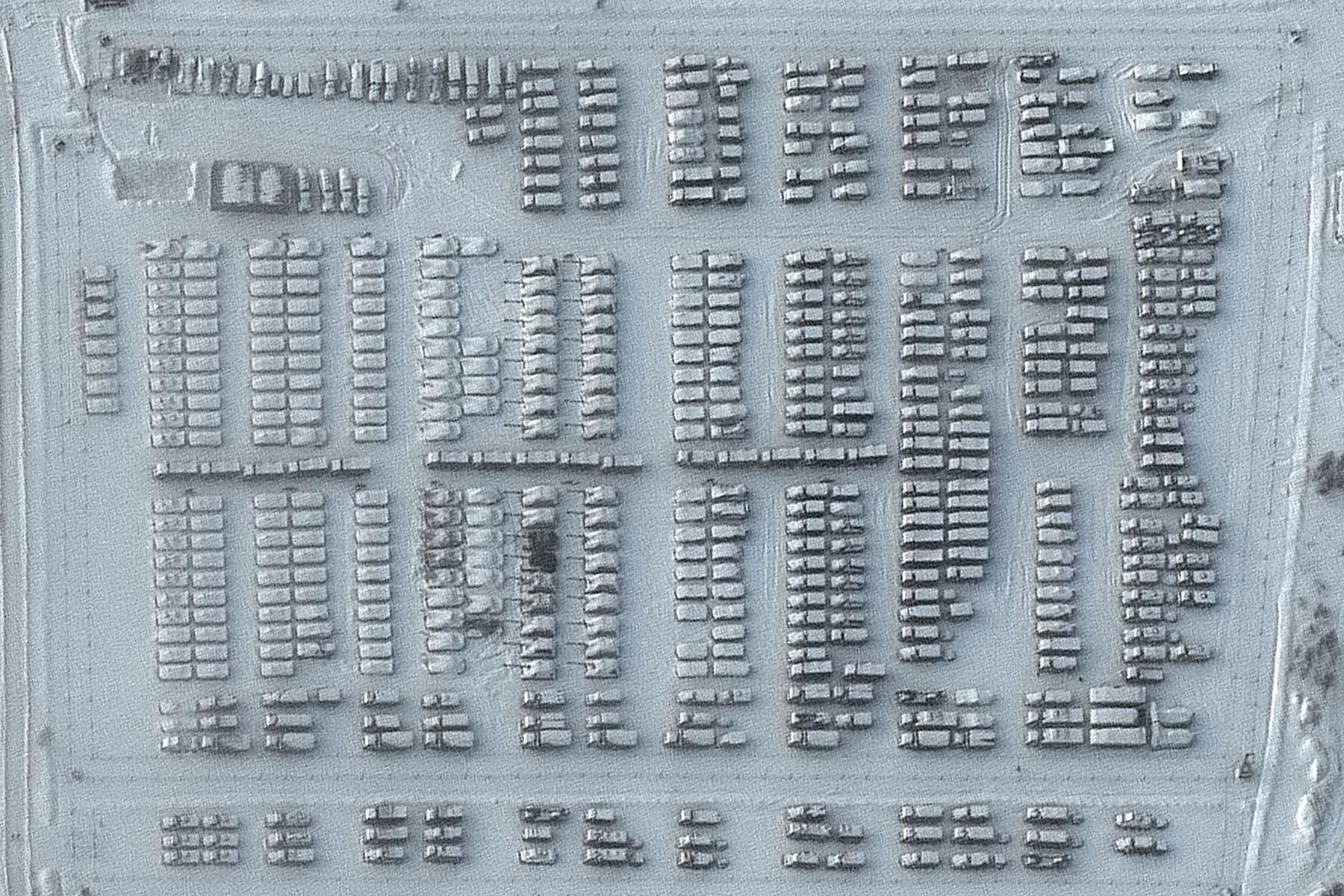
In the spring of 2021, Russia, under the guise of military exercises, began to gather troops near the borders of Ukraine and in Crimea. US intelligence has received information that Putin is using his April 21 State of the Union address to justify the invasion. It was assumed that Russia intended to formally annex the “people's republics” of Donbass, as well as to break through a land corridor to Crimea - for this it would also need to annex parts of the Zaporozhye and Kherson regions.
Biden called Putin, expressed concern - and proposed a summit meeting. The exercises ended, Russian troops retreated from the border. Putin's speechturned out to be non-belligerent . The meeting between Putin and Biden took place in June in Geneva. Putin hardly spoke about Ukraine. The Biden administration has decided that the danger has passed.
However, in July, Putin published a lengthy essay “On the Historical Unity of Russians and Ukrainians.” Many, including Western intelligence services, took it as a declaration of intentions: for Putin, it is fundamental that Ukraine, in one way or another, be included in Moscow’s sphere of influence.
In September 2021, in connection with the Zapad military exercises, Russia again began to increase its military presence near the borders with Ukraine and in Belarus. The United States received new intelligence: this time Putin intended to actually seize Ukraine entirely, take Kyiv and install a puppet regime there. The Biden administration's attention at this time was absorbed by the consequences of the withdrawal of American troops from Afghanistan: this was a severe blow to its prestige.
In November, Biden sent CIA Director William Burns to Moscow. He should have met with Putin and told him something like this: We know what you are going to do, and we warn you that if you do it, the consequences will be catastrophic for you. However, Putin remained at his residence in Sochi and did not receive Burns personally. The CIA director had to be content with talking on the phone.
Putin ignored Burns' threats. When the CIA chief returned to Washington, Biden asked him to share his personal impression: Is Putin going to attack Ukraine? Burns answered in the affirmative.
Shortly after Burns' trip, US Director of National Intelligence Avril Haines, on behalf of Biden, went to Brussels and held a briefing for the heads of intelligence of NATO countries. She shared some American intelligence, as well as the main conclusion: Russia is preparing to invade Ukraine. She was supported by the head of British foreign intelligence MI6, Richard Moore.
European colleagues received this warning with great skepticism. First, the Americans and British did not reveal the sources of their intelligence so as not to jeopardize it. Secondly, everyone remembered how in 2003, the United States, justifying the invasion of Iraq, cited a lot of intelligence information about the presence of weapons of mass destruction in Saddam Hussein’s regime - and then all this intelligence turned out to be false.
Finally, thirdly, Europeans are accustomed to considering Putin a rational player - and it was difficult for them to imagine that he would be ready to actually break with the West for the sake of Ukraine. French and German intelligence believed that the movement of Russian troops to the Ukrainian borders was a bluff designed to put pressure on Ukraine and the West and strengthen Russian negotiating positions.
In Kyiv, American and British warnings were perceived in a similar way. British Defense Minister Ben Wallace went to President Vladimir Zelensky and said that there can no longer be any doubt that a Russian invasion is being prepared - the only question is the timing. Zelensky considered this an exaggeration.
During December 2021 - January 2022, American and British intelligence received detailed information about the planned invasion. First of all, they were based on satellite images of the positions of Russian troops near the borders with Ukraine, as well as on interceptions of negotiations - which were conducted, possibly, not only at the positions themselves, but also at the General Staff. Presumably, they received additional indirect confirmation from informants in the Kremlin. Almost no one there was privy to Putin's plans, but it was hard not to notice that the president was spending a lot of time with the military, apparently preparing for something.
By January, the Americans and British already knew that Russia was preparing an invasion from several directions, including Belarus. They knew that there would be a landing at Gostomel airport, which was planned to be used as a springboard for the quick capture of Kyiv. They also knew that special detachments would be sent to Kyiv, which would have to kill Zelensky at the very beginning of the invasion.
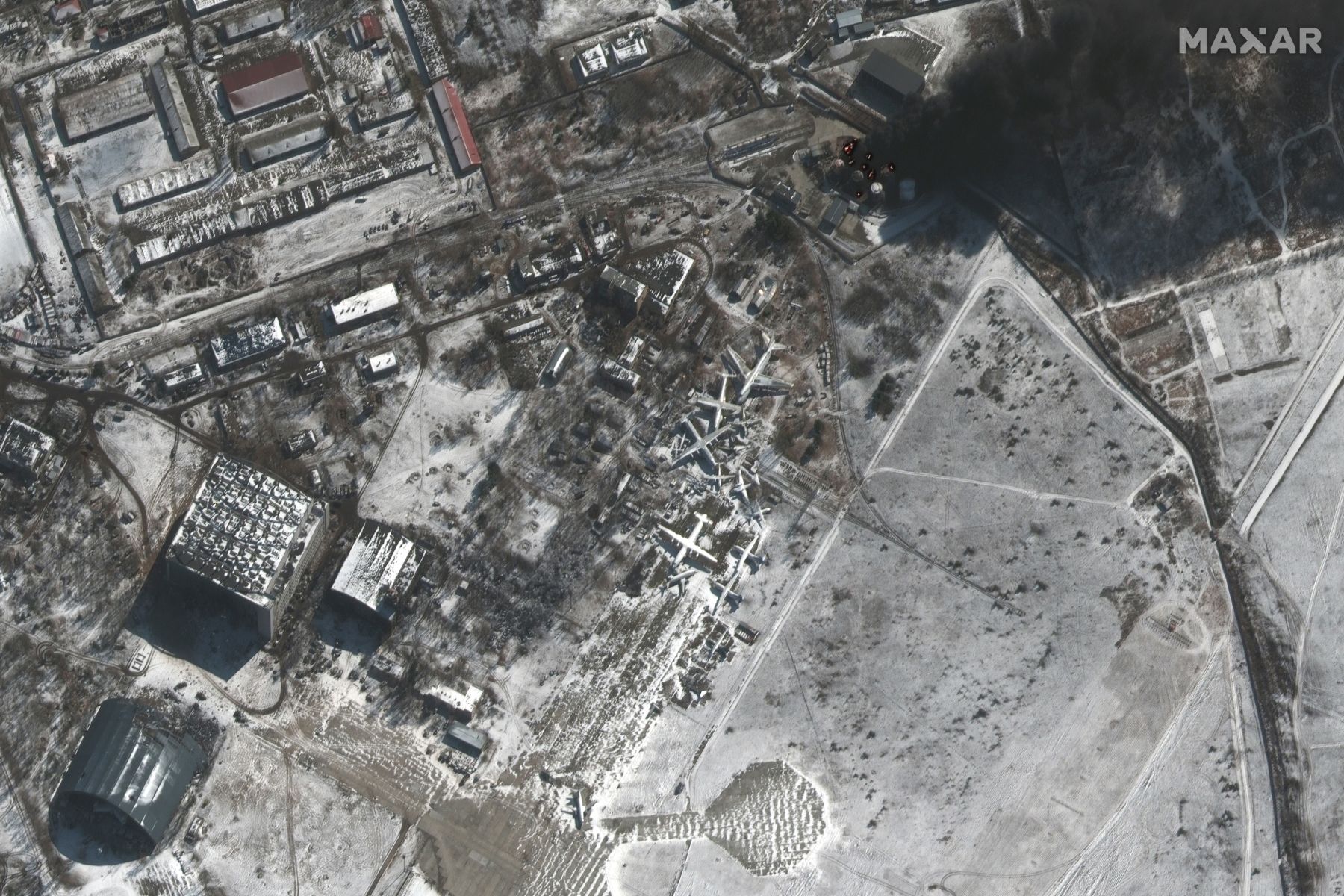
Burns came to Kyiv to once again warn Zelensky, but he again did not take the warning seriously. The Ukrainian president feared that if he gave orders to prepare for war, it would cause panic among citizens, and Russia would perceive it as a provocation.
By mid-February, the USA, Great Britain and some other states evacuated their embassies from Kyiv. French President Emmanuel Macron and German Chancellor Olaf Scholz traveled to Moscow, hoping to dissuade Putin from attacking. On February 12, Biden had his last telephone conversation with Putin. The American president became convinced that the Russian leader had already decided everything and was not at all interested in any negotiations.
Desperate to convince Zelensky, the Biden administration - particularly his national security adviser Jake Sullivan - has focused on contacts with Ukraine's military leadership, including the Main Directorate of Intelligence. There, the warnings were taken much more seriously, but in order to begin military preparations, political sanction was required - and only Zelensky could give it.
On February 21, the famous meeting of the Russian Security Council took place. Formally, it was devoted to the issue of recognition of the “DPR” and “LPR”. But it was then that many - including representatives of the Russian elite - realized that in fact we were talking about a war with Ukraine. Almost no one dared to object.
The next day, the Ukrainian Security Council met. The commander-in-chief of the Armed Forces of Ukraine, Valery Zaluzhny, insisted on introducing martial law, but Zelensky limited himself to a state of emergency. He probably expected that Russian troops would enter Donbass - and that would be the end of it. However, on the same day, the Ukrainian president was informed that several groups that were supposed to kill him were already in Kyiv.
American, British and Polish intelligence agencies confirmed on February 23 that the order to begin the invasion had already been given. Despite this, the head of German intelligence Bruno Kahl arrived in Kyiv - he later had to be evacuated with great difficulty.
The invasion began on the night of February 24. The Verkhovna Rada hastily met and nevertheless introduced martial law. Zelensky spent much of the day calling Western leaders, starting with British Prime Minister Boris Johnson, with one request: contact Putin and tell him to stop the war.
Paradoxically, the American and British intelligence agencies, while accurately assessing Russia's intentions, overestimated its capabilities and also underestimated Ukraine's ability to resist. They expected Kyiv to fall very quickly. However, the Ukrainian army, even despite its unpreparedness at the very beginning of the invasion, was able to disrupt the landing in Gostomel and defend the capital.
Sean Walker concludes that the most important lesson that the world's intelligence agencies have learned from the American prediction of a Russian invasion of Ukraine is this: do not rule out a particular scenario just because it seems irrational or impossible.