
Translated material
Here's a telegram for you!
Eighty years ago, George Kennan, in a message to the State Department, described the Russian political regime - past, present and future

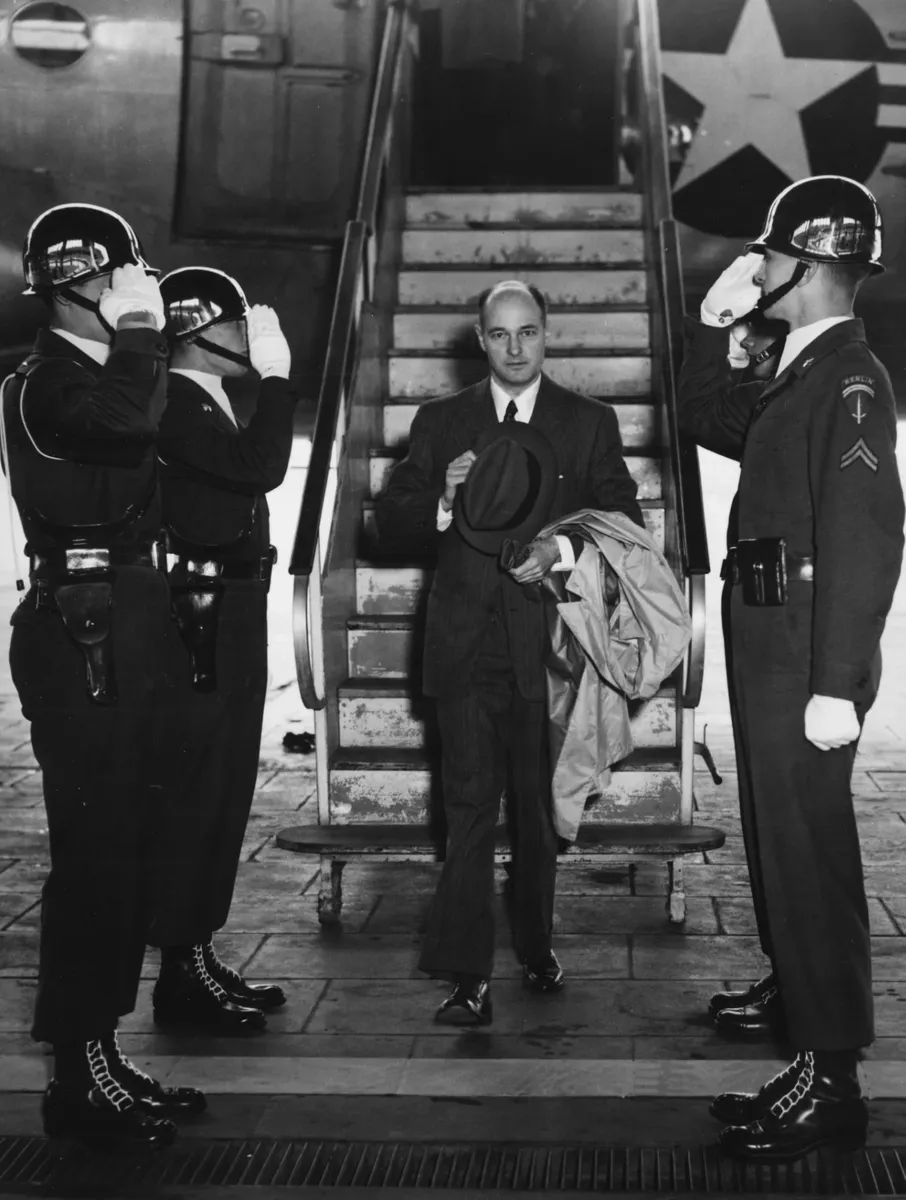
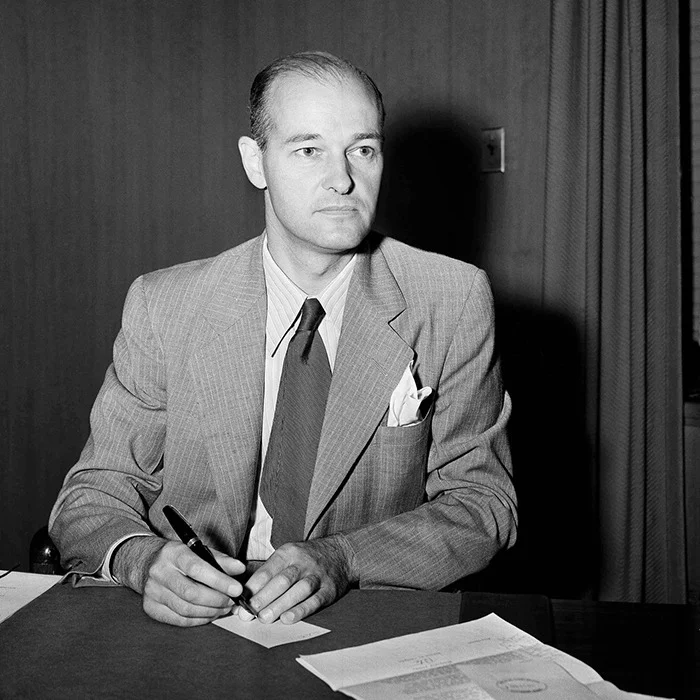
George Kennan. Photo: FPG
(18+) THIS MATERIAL (INFORMATION) IS PRODUCED, DISTRIBUTED AND (OR) SENT BY FOREIGN AGENT ANDREY VLADIMIROVICH KOLESNIKOV OR CONCERNES THE ACTIVITIES OF FOREIGN AGENT ANDREY VLADIMIROVICH KOLESNIKOV.
An old joke. A telegram arrives: “Start worrying. Details by letter." A 42-year-old employee of the US Embassy in Moscow, George Kennan, combined in his famous text, dictated while lying down (as he thought better) and then transmitted on February 22, 1946 from the encryption room on Mokhovaya Street to the State Department, a telegram and a letter.
It seems like just a situational analysis, the stimulus for which was Stalin’s speech at the Bolshoi Theater on February 9, where the tyrant outlined the self-sufficiency of the Soviet Union, unexpectedly turned out to be a long-term forecast. So long-term that the main theses of the “long telegram” regained their relevance even before the special operation, not to mention the last four years.
Kennan's text was sent shortly before Churchill's Fulton speech, from which the beginning of the Cold War is usually counted, and Stalin's answers to the Pravda newspaper (the allies want to “replace the domination of the Hitlers with the domination of the Churchills”). That is, on time - everyone read it, from US Secretary of the Navy James Forrestal to President Harry Truman. The “long telegram” marks the beginning of the implementation of the doctrine of containment, although this concept was formulated by Kennan in July 1947 in the article “The Origins of Soviet Conduct” for Foreign Affairs signed X.
Each American president interpreted this concept in his own way. Including Trump, who says he needs Greenland to “contain” China and Russia. Kennan's subsequent work showed that he himself used his own concept very carefully, insisting on rationality in foreign policy moves. But at the same time, he shared the concepts of containment - “containment” and appeasement - “pacification”: containment is not pacification.
Containment was based, among other things, on the idea that the Samoyed autocratic regime would sooner or later die on its own, and it was only necessary to contain it firmly, but without turning the matter into a hot war stage
(by and large, in the long term, by the end of the 1980s, this is what happened).
In the “long telegram,” Kennan, who was in love with Russia and believed that the worldview of the authorities “is not natural for the Russian people,” expanded on his long-held thoughts about the Soviet regime. Back in 1937, he wrote that “according to the theories that underlie the Soviet state, the entire outside world is hostile and not a single foreigner is trustworthy.” Even before this, from the earliest years of his diplomatic service, he had been very astute in assessing the nature of Stalin’s policies, and US Ambassador Averell Harriman, who had a direct telephone line with the tyrant, warned that Stalin never stopped pursuing politics “in terms of spheres of influence.”
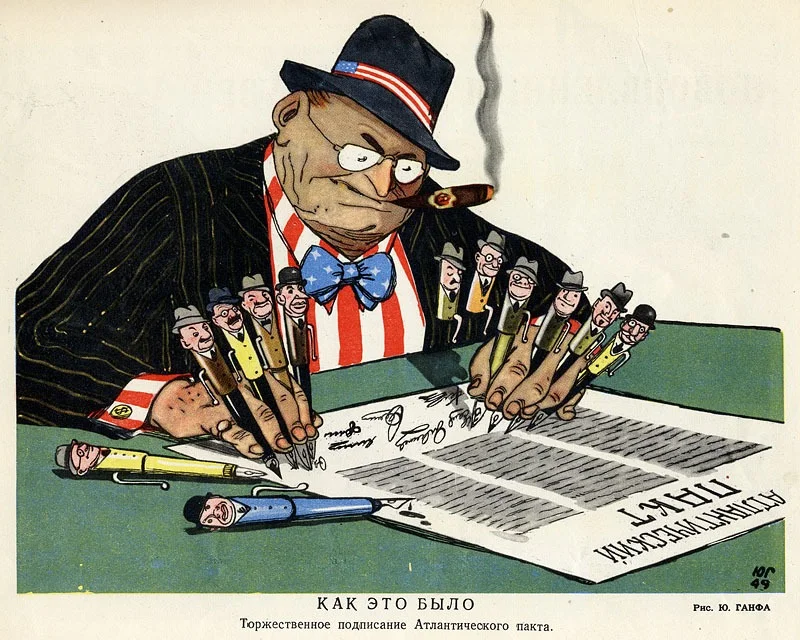
The West and Stalin's USSR moved to practical confrontation in 1947. The Truman Doctrine was proclaimed in March of this year (“we must help free people shape their own destinies as they themselves would like”), then came the European aid plan (“Marshall Plan”). Stalin simply overlooked the emergence of the United States as a superpower by focusing on the Churchills.
Faced with this kind of decisive action by the United States, the Generalissimo, during his meeting with George Marshall in April 1947, spoke about the possibility of compromise. But he only convinced the new US Secretary of State that they were no longer possible. “Stalin went overboard in defending his position,” wrote Henry Kissinger in his book Diplomacy. - Because I never understood the psychology of democratic countries, especially America. The result was the Marshall Plan, the Atlantic Pact, and Western military buildup.”
Conversation with the Devil
George Kennan, for all his almost philosophical depth and subtle understanding of Russia, is as much a realist as Kissinger or Brzezinski. Here is an example of extreme pragmatics to help soft deterrence with elements of involving the opposite side in cooperation.
In September 1973, Kennan, in a letter to Henry Kissinger in connection with his appointment as Secretary of State, expressed displeasure with the excessive activity of Alexander Solzhenitsyn and Andrei Sakharov and their appeals for help and reaction from the United States: from his point of view, excessive criticism of the Soviet regime undermined the fragile foundations of détente, a positive vector in the development of relations between the Brezhnev USSR and the United States and the Western world in general. Cynicism? No - prioritization. In this view, detente was more important than the internal situation with human rights and censorship in the Soviet Union because it helped avoid nuclear war.
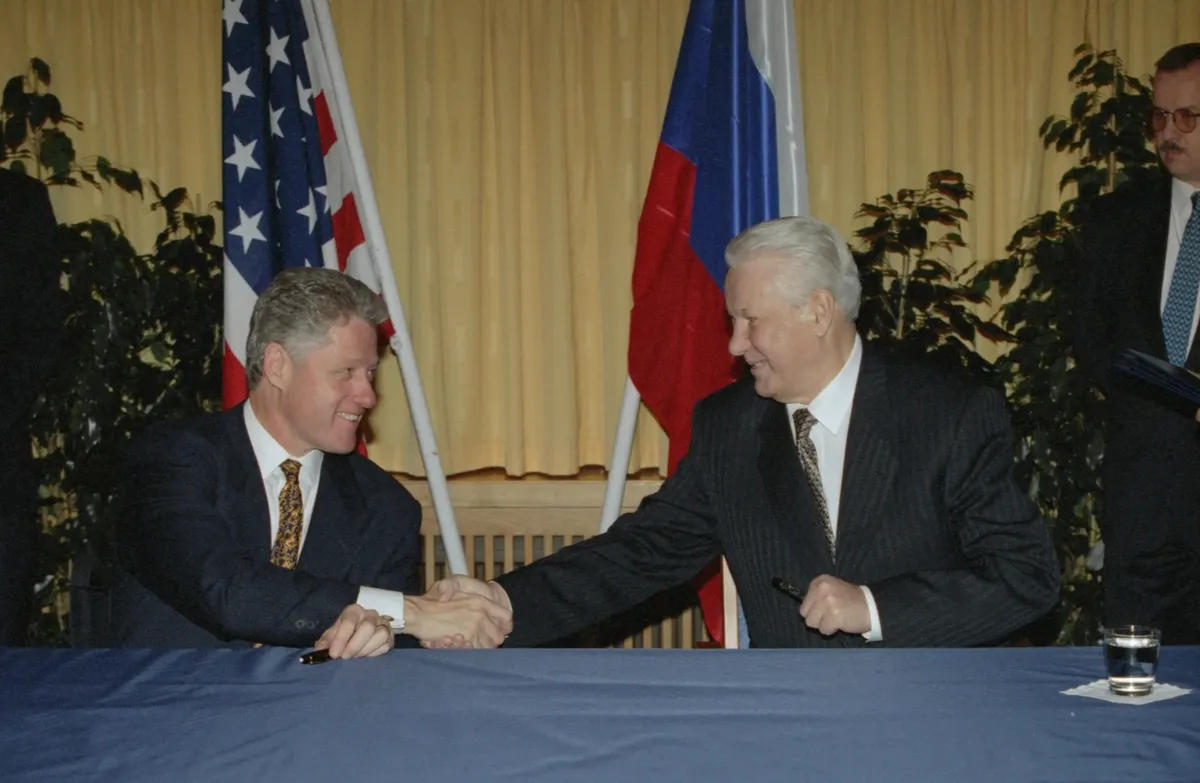
The classic of American foreign policy, already a 91-year-old patriarch, applied the same logic to the expansion of NATO to the East. Kennan blew the whistle on President Bill Clinton's closest advisor and Deputy Secretary of State Strobe Talbott (known for publishing Nikita Khrushchev's memoirs and generally thorough knowledge of Russia), insisting on abandoning the alliance's eastward expansion because it fueled anti-Western sentiment.
Talbott partly understood Kennan’s arguments, but in practical policy the US administration could not help but take into account the position of the Eastern European and Baltic countries, for which the alliance, like the EU, was an anchor that signified belonging to the Western world and a guarantee of security in the event that an authoritarian leader came to power in Russia after Boris Yeltsin.
You can call this the Clinton-Talbott dilemma: it is impossible to refuse expansion, because it is an antidote to the case of returning authoritarianism in Russia, but at the same time, it is the admission of former Eastern Bloc countries to NATO that can trigger the mechanism for the implementation of such a scenario.
Kennan had no doubt that the effect of the Alliance's move east would be disastrous. More than half a century after the “long telegram,” he prepared an article for The New York Times, about which Talbott was fairly warned. It was published on February 5, 1997 under the title “A Fateful Error.”
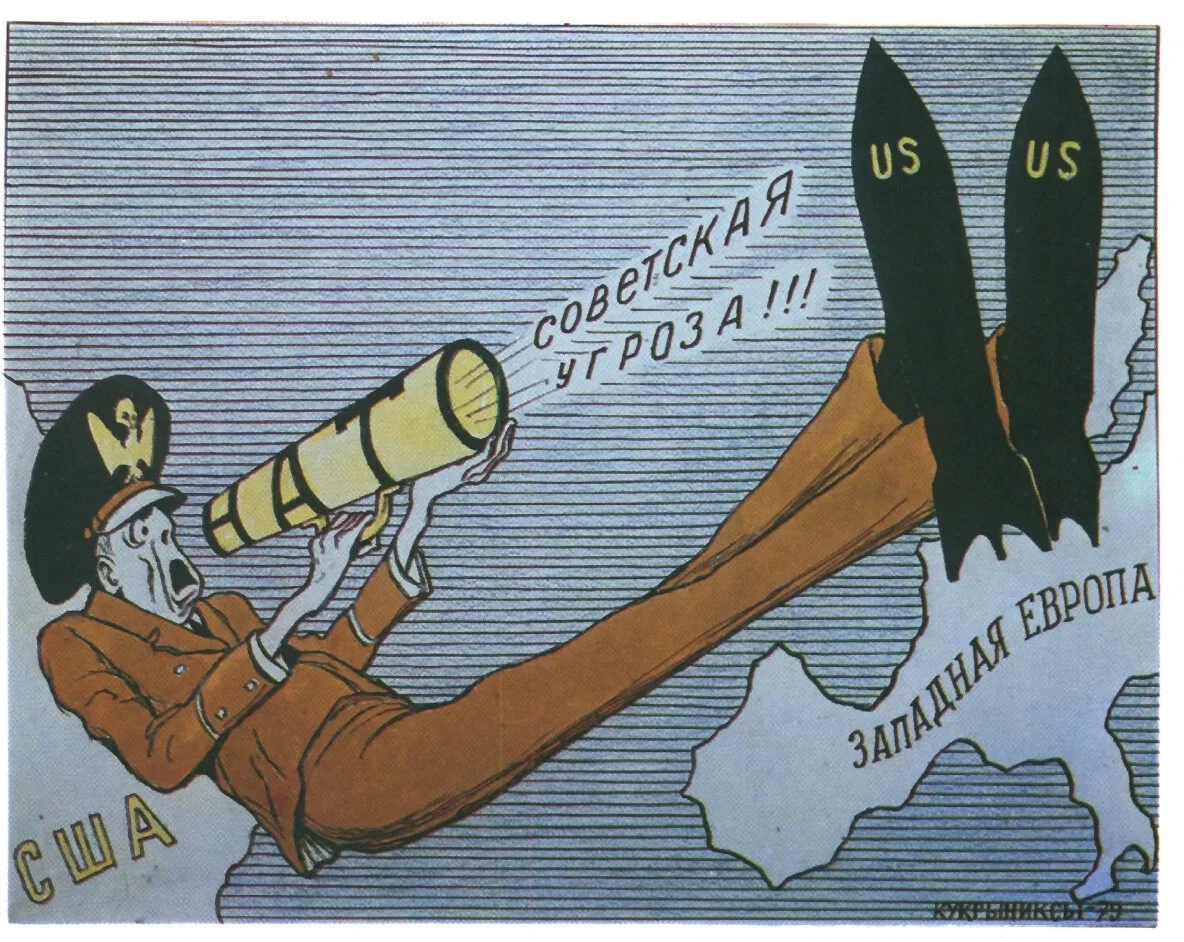
The classic’s arguments coincided with the position of Yeltsin’s side: “NATO expansion would be the most fatal mistake of American policy in the entire post-war era. It can be expected that such a decision will lead to strengthening of nationalist, anti-Western and militaristic tendencies in Russian public opinion, will have a negative impact on the development of Russian democracy, will return the atmosphere of the Cold War to relations between East and West, and will direct Russian foreign policy in a direction that we clearly do not like.”
Kennan-style containment also meant self-restraint on the American side. In 1944, as the same Strobe Talbott wrote in his book about the outstanding American diplomat Paul Nitze, “Master of the Game,” Kennan, while on business in the United States, accidentally met Nitze on a train, whom three years later he tried to propose as his deputy in the political planning department of the State Department, and subsequently received an irreconcilable opponent on the most important issues of foreign policy.
These two people, who had a significant influence on the foreign policy of the United States, during that conversation on the train, almost two years before the “long telegram,” agreed on a realistic understanding of the future: there would be no allied relations with the Stalinist USSR after the end of the war, the Western world would receive its main enemy in the person of the Soviet Union. In subsequent years, Nitze's position was that the United States should increase its military power to balance the USSR; Kennan, on the contrary, insisted that the world could avoid disaster only if the two superpowers agreed on arms control.
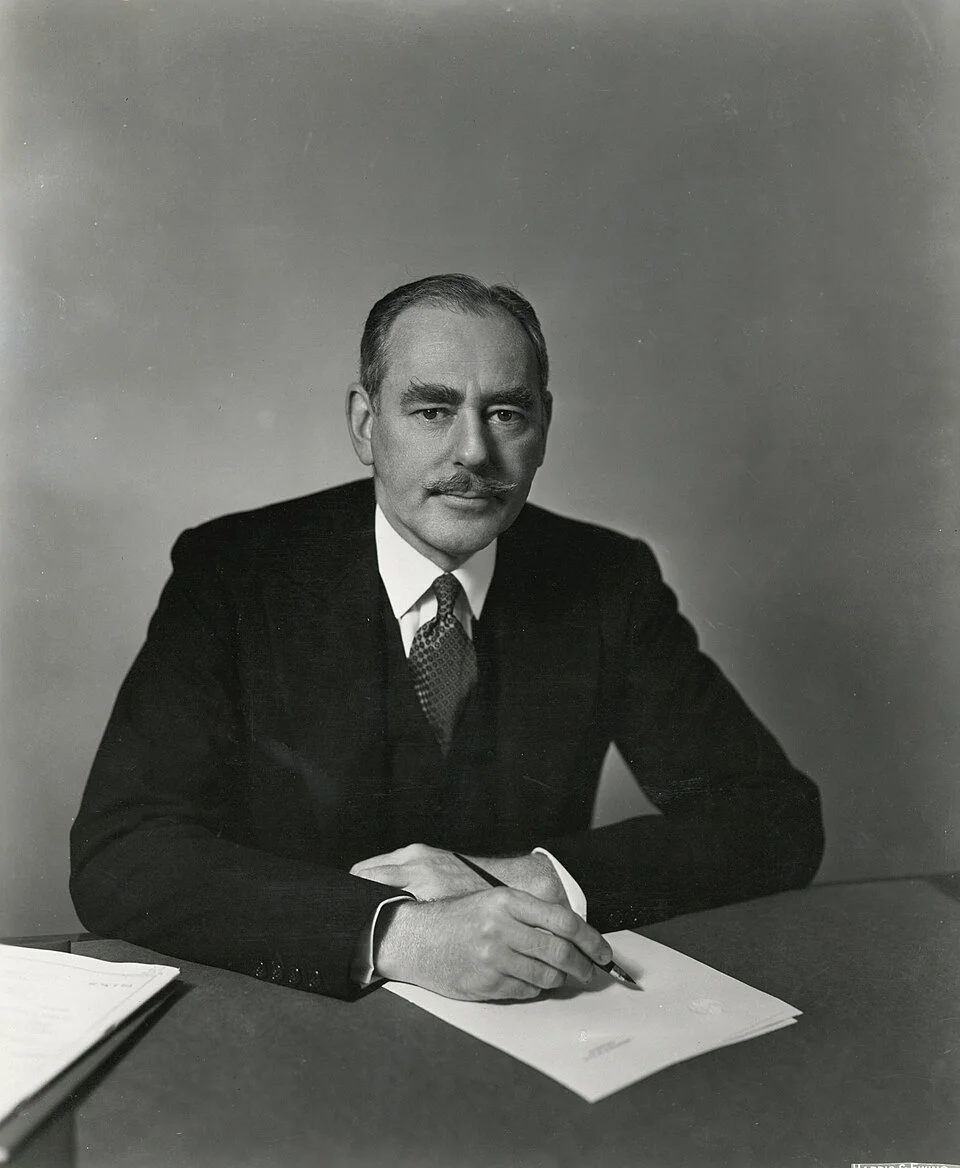
In practical politics in the late 1940s, especially since Nitze replaced Kennan as head of the State Department's policy planning office, the prevailing position was that America should not engage in self-restraint. Dean Acheson, who became Secretary of State in 1949, sided with Nitze: “How can you convince a paranoid enemy to disarm by example?” True, this was precisely the tactic that Paul Nitze subsequently followed when he negotiated the Intermediate-Range Nuclear Forces Treaty with the USSR, and went down in history for “wandering in the woods” with his Soviet colleague Julius Kvitsinsky in attempts to reach a compromise.
All these episodes from different periods of the history of the 20th century show the peculiarities of Kennan’s political position and his belief in the objective and sometimes subjective restraint of the Soviet Union even in the era of late Stalin - in any case, the political guru did not believe that the Soviet tyrant could start a war, and considered the division of Europe into spheres of Atlantic and Stalinist influence inevitable and not the worst scenario for the development of events after the Second World War. In 1950, as journalist David Halberstam observed in his famous book on the roots of the Vietnam War, The Best and the Brightest, Kennan believed that the administration's national security men had "exaggerated Soviet ambitions in Western Europe and NATO's ability to stop them."
To understand Kennan's position, an episode is important when he was again not heard, and it must be admitted that ignoring his arguments cost the United States its gradual involvement in the many years of the Vietnam War. Kennan wrote a memorandum to Dean Acheson in which, agreeing with the position of his colleague, China specialist John Paton Davis, he warned against interference in Indochina affairs.
Kennan argued that it could not be successful, that the threat to the balance of power in the world if the Communists came to power in Vietnam was exaggerated, that communism was just a front, that nationalist forces were much more important and influential, that, to quote Halberstam, “many of these forces are simply beyond our control, and in trying to control them, we not only cannot influence them, but we can, in fact, turn them against ourselves.” Kennan's memorandum was ignored, and the United States replaced France in Indochina in a fruitless, decades-long, bloody war.
Kennan was consistent. For example, in a 1963 interview with Look magazine, he argued: “We must be prepared to talk to the devil himself if he controls a significant part of the world.”
Do Kennan's arguments fit the current era? Of course, Vladimir Putin would like to divide the world into spheres of influence (realities that Kennan was willing to take into account). But such logic would presuppose the rationality of the leader (when Putin came to power, Kennan hoped for the normal development of Russia), and such rationality was absent in the actions of the autocrat.
If we read the “Fatal Mistake” column again, we will see that Kennan allowed for problematic developments. Then Yeltsin was in power, not Putin; no matter what anyone says, these are two big differences. But Kennan, in the spirit of his most famous works, spoke generally of “Russians” “who will find their prestige (which is always the most important thing for them) and security interests undermined.”
Kennan could hardly have foreseen what would happen on February 24, 2022; rather, his logic suggested the appearance of Putin in the mold of the 2007 Munich speech, but maintaining a restrained and pragmatic vision of the world system and world events.
This is the political part of the problem, where there are different versions and speculations about the adequacy of Kennan's position in the context of today's extraordinary circumstances. In an ideological and historical sense, Kennan’s analysis is not at all outdated, and one has to turn to it in order, to paraphrase the title of Kennan’s famous article “The Origins of Soviet Behavior,” to understand the sources of Putin’s conduct, “the origins of Putin’s behavior.”
Mister X
The article “The Origins of Soviet Behavior” was included as a chapter in Kennan’s book “American Diplomacy. 1900‒1950", published in 1952; Another important article, from 1951, from Foreign Affairs, “America and the Future of Russia,” was also republished there. Both of them summarize Kennan's political philosophy, relevant in terms of explaining the actions of the Kremlin and its historically determined ideology.
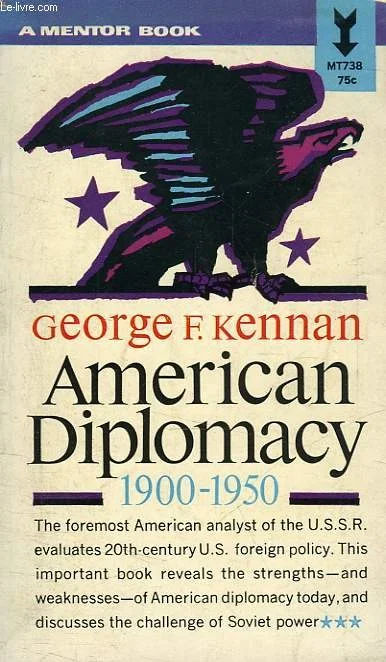
However, the perfect summary of Kennan's conclusions, which first appeared in the Long Telegram of 1946 and then were refined in two articles for Foreign Affairs, is contained in his short work, published a decade later, in 1960, Soviet Foreign Policy. 1917‒1941". He writes about the problems created by the “Russians” “for themselves” and related to the very essence of the regime, whose “main motivation” is to maintain power: ideological prejudices against the West, brutality at home, Russia’s traditional sense of suspicion and insecurity towards the outside world “and, above all, the cultivation for domestic political purposes of the myth of a hostile external environment.”
All this is present in today’s political line: “In order to justify the dictatorship, without which they ( Soviet leaders - A.K. ) considered it impossible to maintain power within the country, they did not hesitate to portray the outside world as more hostile and threatening than it really was, and treated it accordingly. Thus, they not only burdened themselves with imaginary hardships that did not exist in reality, but also provoked real fears and discontent that otherwise would not have existed at all.”
In “America and the Future of Russia,” Kennan delved into the psychological depths of the Soviet system and, prophetically, the current Kremlin: “No ruling group likes to admit that it can govern solely by treating the people as criminals and treating them accordingly. Therefore there is always a tendency to justify internal oppression by pointing to the threatening evil of the external world. And the outside world in these conditions should be presented as extremely evil - evil to the point of caricature.”
Kennan continues: “There can be no true stability in any system that is based on the evil and weakness of human nature, which tries to live off the degradation of man, feeding like a vulture on his anxieties, his capacity for hatred... Only people with a deep sense of personal failure can find satisfaction in doing to others those things that are always associated with such a system.”
In The Origins of Soviet Behavior, Kennan emphasizes that “Soviet leaders, taking advantage of the contribution of modern technology to the art of despotism, resolved the question of popular obedience.” Which creates an internal basis for the continuation of external hostile actions - “the Russians are ready for an endless duel.” Hence the most famous conclusion in the history of not only American but also world foreign policy: “... the main element of any United States policy towards the Soviet Union must be a long-term, patient, but firm and vigilant containment of Russian expansionist tendencies.”
But here's what's important: in "America and the Future of Russia," Kennan really thinks about the long-term prospects of the Soviet Union (Russia) in the post-containment era. He reminds us that totalitarianism is not a national phenomenon, that any nation can be infected by it, not just the Russian one, that “there will always be areas in which a totalitarian government will be able to identify itself with popular feelings and aspirations.” He even writes that we must not forget about the “greatness of the people of Russia” and it is necessary to look at “the tragedy of Russia as partly our own tragedy, at the people of Russia as our comrades and in a long and difficult battle for a happier system of human coexistence.”
“We can look for... a Russian government that, unlike the one we know today, would be tolerant, communicative and frank in relations with other states and peoples” - such a government was found under Mikhail Gorbachev and Boris Yeltsin. And then Russia returned to the familiar world of the “long telegram”.
George Kennan ended his message on February 22, 1946, 80 years ago, with a warning to the United States that, as we understand today, is not at all empty: “We must formulate and present to other countries a much more positive and constructive aspirational picture of the world than that which we have presented in the past. <…> Finally, we must have the courage and self-confidence to hold on to our own methods and ideas about human society. After all, the greatest danger that can await us in solving the problem of Soviet communism is that we allow ourselves to become the same as those with whom we are trying to cope.”
In Soviet, and then in current Russian traditions, it is to mirror the adversary. For example, Trump met with five presidents of Central Asian states - and then Putin gave a grand reception to Kazakh leader Tokayev in Moscow, and then went to Kyrgyzstan. Trump put his paw on our friend Maduro - the Russian president defiantly calls the Brazilian leader (although it would be more logical - the Mexican one), and then, in a speech to foreign ambassadors, promises to help Cuba “defend its sovereignty and independence.”
This happened with Kennan’s memorandum, which, of course, was read in the Kremlin (by the way, Stalin praised the American diplomat’s Russian language, which, however, later, when Kennan became ambassador, did not prevent him from being declared persona non grata).
Molotov instructed the USSR Ambassador to the USA Nikolai Novikov to compose a similar telegram. Which was done by September 1946. The Soviet document spoke about the “imperialist tendencies of American monopoly capitalism”, and about the desire for “world domination”, and about the adhesiveness between America and England, and, in contradiction to this thesis, about their bad relations (Stalin stubbornly believed that capitalist countries would conflict with each other), and most importantly, about the US’s readiness to fight with the USSR. Unlike Kennan's telegram, it was the collective work of a number of comrades, including Molotov. A year later, Novikov was recalled from Washington - there is a version that he did not share the thesis about the United States’ desire to start a war with the Soviet Union. For which he paid with his diplomatic career.
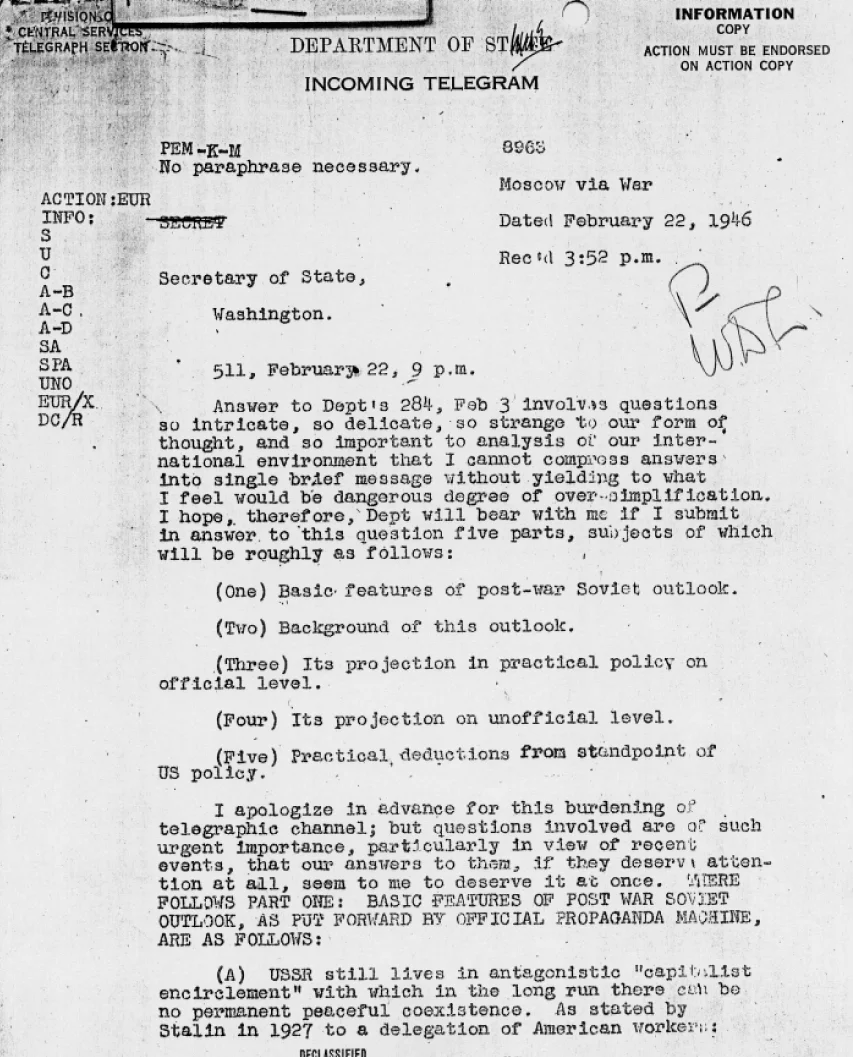
"Long Telegram" Fragments
<…> Before starting to study the political course of the USSR in practice, I would like to draw attention in this regard to a number of specific aspects.
Firstly, the worldview in question is not natural for the Russian people. For the most part, the Russian people were friendly towards the outside world, were interested in exploring it, revealing their talents, and most of all wanted to live in peace and enjoy the fruits of their own labor. A political course is only a thesis that the official propaganda apparatus persistently puts forward to the public, which often resists. But politics is based on the views and behavior of the people who make up the apparatus of power - the party, the secret police and the government, and it is with them that we have to deal. <…>
At the root of the Kremlin's manic view of international relations lies Russia's traditional and instinctive sense of insecurity. Initially, it was the feeling of insecurity of agrarian peoples living in vast open territories next to ferocious nomads. As contacts were established with the economically more developed West, this feeling was supplemented by fear of a more competent, more powerful, more organized community in this territory. But this insecurity inspired fear in the Russian rulers rather than in the Russian people, since the Russian rulers were aware of the archaic nature of their form of government, the weakness and artificiality of their psychological organization, and the inability to withstand comparison or contact with the political systems of Western countries. For this reason, they were always afraid of foreign invasion, avoided direct contact between the Western world and their own, and were afraid of what might happen if the Russian people learned the truth about the outside world or the outside world learned the truth about life inside Russia. And they sought ways to ensure their security only in a stubborn and deadly struggle for the complete destruction of competing powers, never entering into agreements or compromises with them. <…>
After the establishment of the Bolshevik regime, the dogma of Marxism, sounding even more aggressive and fanatical in Lenin’s interpretation, became an excellent conductor of a feeling of insecurity that took root in the minds of the Bolsheviks more firmly than that of previous Russian rulers. In this dogma, based on altruistic goals, they found justification for their instinctive fear of the outside world; dictatorship, without which they could not imagine running the state; cruelty, without which they could not do; the sacrifices they felt it was their duty to make. In the name of Marxism, they sacrificed any moral values in their methods and tactics. Today they cannot do without it. It is a fig leaf to their moral and intellectual respectability. Without this, they would appear in the face of history, at best, at the end of a long line of cruel and wasteful Russian rulers who inexorably pushed the country to achieve new heights of military power in order to ensure the external security of their weak internal political regime. Therefore, Soviet goals were always officially hidden behind the guise of Marxism, and therefore no one should underestimate the importance of this dogma in matters of Soviet policy. Thus, Soviet leaders were forced by their past and present to put forward a dogma that viewed the outside world as evil, hostile and formidable, but bearing within itself the germs of a slow-spreading disease and doomed to complete destruction due to increasing internal cataclysms. The final death blow will be dealt to this world by an increasingly powerful socialism, and as a result it will retreat to a new and better world. This thesis justifies the growth of the military and political power of the Russian state, the external isolation of the Russian people, as well as the constant expansion of the boundaries of Russian political power, which in general constitutes the natural and instinctive beliefs of Russian rulers. At its core, it is simply a forward movement of unstable Russian nationalism, a centuries-old movement in which the concepts of offensive and defensive are incredibly confused. But in the new guise of international Marxism, with its honeyed promises to a desperate and war-weakened outside world, this dogma appears more dangerous and insidious than ever. <…>
In the atmosphere of secrecy and conspiracy that reigns in the government, there are endless opportunities for distortion and falsification of information.
Russians' distrust of objective truth - or rather, lack of faith in its existence - leads them to regard the facts presented as a tool to support one or another secret goal. <…>
In general, all Soviet efforts at the unofficial international level will be negative and destructive in nature, designed to destroy sources of power outside Soviet control. At the heart of the Soviet worldview was the idea that there was no compromise with rival states and that constructive activity could only begin when communist power became dominant. But behind all this there will be a persistent, incessant desire to penetrate and control all key positions in the administrative and especially political apparatus of foreign countries. The Soviet regime is essentially a police regime, dating back to the times of tsarist political intrigue and accustomed to thinking primarily in police categories. <…>
This material was published in the sixteenth issue of Novaya Gazeta. Magazine". You can buy it in the online store of our partners.