
Translated material
Fall of the House of York
Citizen Andrew Mountbatten-Windsor, the King's brother and former Prince Andrew, was arrested by English police on suspicion of misconduct in public office.

Former Prince Andrew. Photo: AP / TASS
He was held in custody for 11 hours and released without charge pending further investigation. The details were not officially reported to the press until now, but according to the law, the detainee had to be interrogated in the presence of a lawyer and presented with some evidence.
The British press almost unanimously believes that the investigation relates to information from the so-called Epstein dossier and concerns the transfer of confidential information by Mountbatten-Windsor, who was the UK's special representative for trade and investment from 2001 to 2011, to Jeffrey Epstein and his associates. The BBC argues that in a case of alleged misconduct in public office it is not necessary to focus only on those emails that were exposed. Journalists acknowledge that “some documents may have escaped media attention,” and Buckingham Palace has said it will fully support the police investigation. Houses in Berkshire and Norfolk where Andrew lived for many years were searched. Experts say that
The police actions open the door to a potential Royal Court trial of a senior member of the Royal Family before a jury, but the investigation could take months or even years.
It is difficult to obtain a conviction under this article: no high-ranking official has ever been convicted of such a crime, notes The Economist magazine, but formally the maximum sentence is life imprisonment.
Mountbatten-Windsor has always denied any wrongdoing and in 2022 settled a sexual assault charge in civil court in the US. The amount of the donation to the victim's fund has not been disclosed. Since October last year, Andrew has not made any official statements at all.
* * *
On the day of the arrest, King Charles III expressed his "deepest concern" and promised his "full and complete support" to the authorities, stressing that "the law must take its course." Not once did he call Andrew brother.
Just a couple of days ago, Britons overwhelmingly believed (51 to 2) that the royal family “should do more to condemn” its member. The Times now rates Andrew's arrest as "the worst constitutional crisis in a century." The British press defines the situation in terms of “cataclysm”, “earthquake”, “the most serious threat to the crown since the death of Princess Diana”, “the monarchy is in turmoil”.
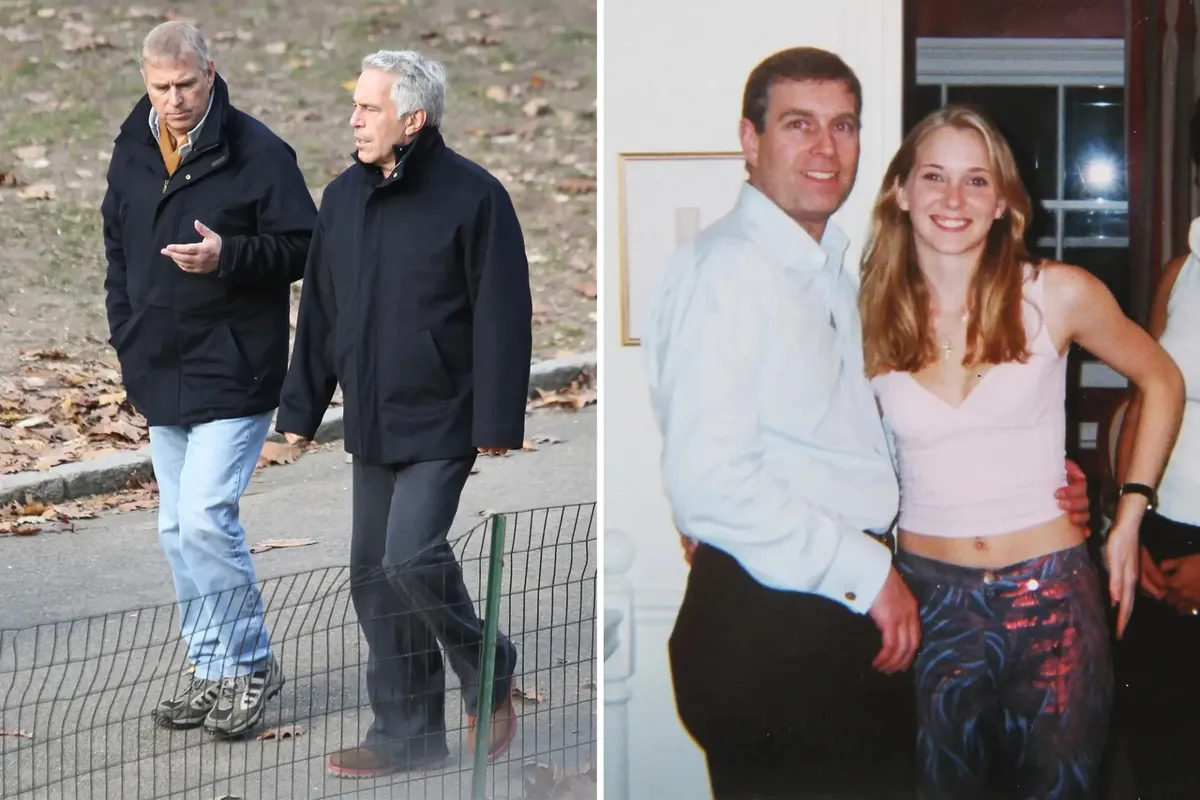
Indeed, the arrest of a person of royal blood is a unique event in the modern history of England, remotely comparable only to the fate of King Charles I, who during the Civil War in 1647 was arrested, accused of treason and tyranny, tried and executed by court in 1649.
The noose dragged on for a long time, too long, the British believe. Andrew was forced to step down in 2011, but retained his titles and responsibilities as a working member of the royal family. In 2019, against the advice of the palace, he gave an interview to the BBC News Night program and completely failed it. The interview received derogatory assessments from the media and the public.
It has been called a “car crash,” a “nuclear-level disaster,” and “the worst public relations crisis for the Royal Family since the death of Princess Diana,” which is obviously rock bottom in the public mind.
A few more years passed, and Andrew was forced to give up some military titles, ranks and duties (for example, the rank of Colonel of the Grenadier Guards), and in 2022 he stopped using the title of HRH. In October 2025, he renounced the title of Duke of York, and soon after King Charles III initiated official proceedings to strip him of his titles, and since then the king's younger brother has been known as Andrew Mountbatten-Windsor. He was also stripped of the honorary titles of Knight Commander of the Order of the Garter and Knight Grand Cross of the Victorian Order.
During the life of Queen Elizabeth, until recently, he was invited to family holidays, including Christmas and Easter, although, they say, the heir always took the extreme position of not allowing Andrew to return in any role.
Mountbatten and his family were denied residence at the Windsor mansion and were denied royal security. His 75-year rent-free lease on the Windsor property was terminated last year and he moved to Sandringham (the estate is privately owned by the royal family) earlier this month.
Andrew is still eighth in line to the throne, but preparations have begun to remove him from this position.
This is difficult and perhaps unnecessary, since the probability of Andrew's turn approaching zero. Removing him from the succession to the throne would require legislation that would then have to be supported by the 14 Commonwealth countries where Charles III is head of state, including Canada, Australia, Jamaica and New Zealand. A YouGov poll found that 82% of Britons would support such a proposal.
Andrew served in the Royal Navy for 22 years and served in the Falklands War as a helicopter pilot. He subsequently commanded a mine countermeasures vessel and was a promising officer. But he failed in the civil service and was unable to gain a positive reputation. Today, positive attitudes towards him are at a record low of three percent, with negative 90 percent (YouGov data). He was considered the favorite son of Queen Elizabeth II, with which many observers attribute his unsinkability. For many British people, this is one of the dark spots on the image of their beloved queen.
* * *
64% of citizens believe the UK should retain the monarchy (YouGov data), but this proportion has been declining for decades. The press has been slow to draw conclusions about what impact the arrest of the king's brother might have on public support for the monarchy. For example, The Financial Times emphasizes that the public differs in its attitude towards personalities and the crown as an institution. But regardless of political views and age, your interlocutor will, as a rule, notice - with bitterness or indignation - that the reaction of the royal house was too late.
The British approved of stripping Andrew of his titles and titles (79 percent to six), but 58 percent of his subjects felt that the king took too long to make this decision (only one in five believed that the king acted with appropriate speed). Therefore, in a conversation about the stability of the British crown, we will soon talk about the heir, Prince William, about how he resembles his mother, Princess Diana, still beloved by the people, about how lucky he is with his wife, an example of femininity and motherhood, Princess Catherine, about what reforms he has conceived and which he may be able to implement.