
Translated material
“To die in a camp is considered lucky.” Yamal reindeer herders demand the promised housing - the police come to them
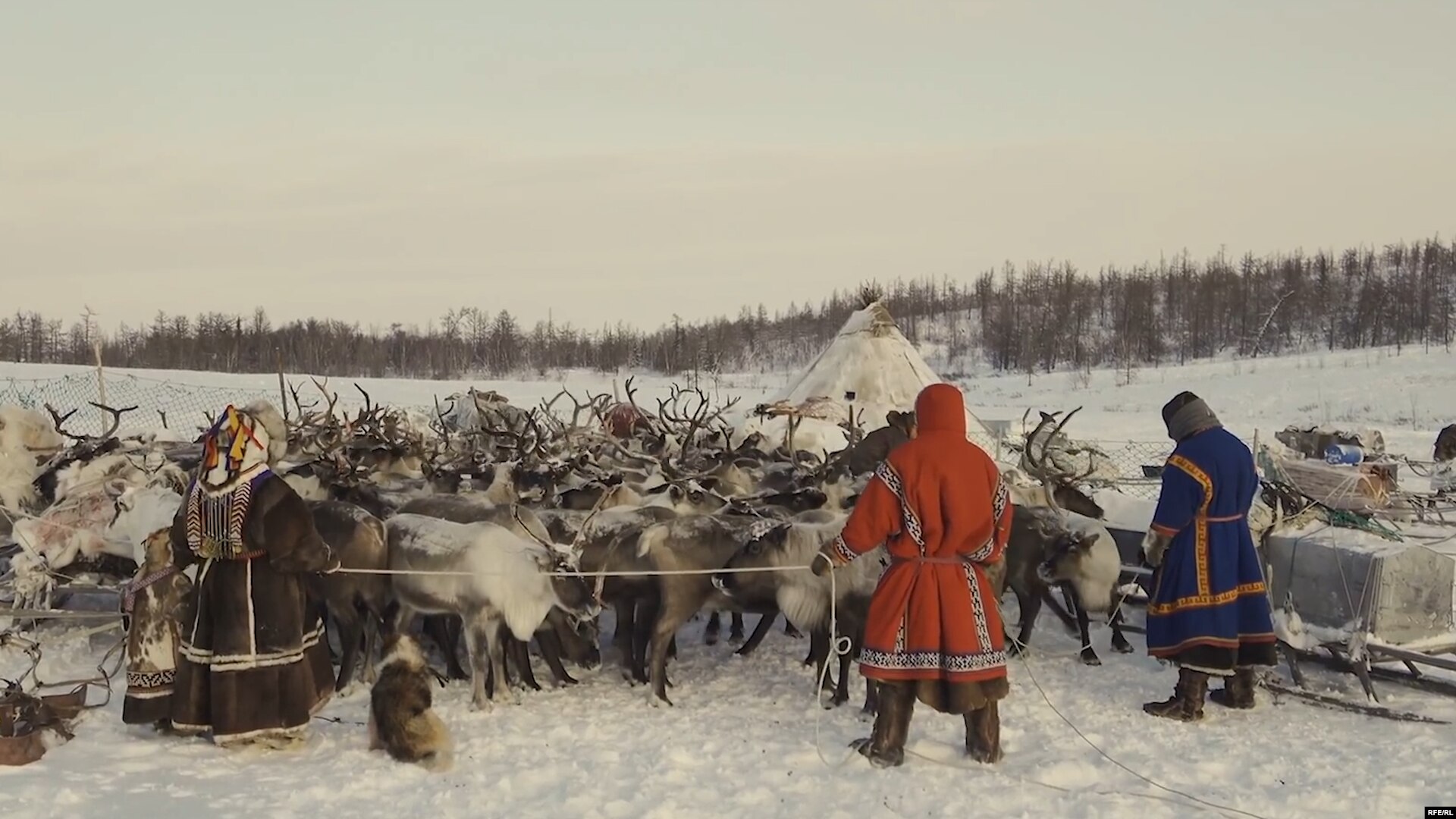
Retired Yamal reindeer herders complain that the authorities have made them "homesteaders" for relatives. Thus, 61-year-old Ivan Nogo (the names of all the characters have been changed for their safety) now lives in the tent with his youngest son. He admits that at his age it is no longer easy to lead a nomadic lifestyle, but he has less and less hope for the comfortable housing long promised by the authorities.
56-year-old Alexander Alacheva says that in his old age he does not even have to rely on the help of his son Sergei. Back in 2022, he, a hereditary reindeer herder and a representative of the disappearing Khanty people, was mobilized and sent to war. Over the past four years, the region has also allocated billions of rubles to pay war participants. But local authorities have no money to fulfill housing obligations to reindeer herders.
In January, reindeer herders of several Yamal villages held a rally demanding that they be provided with comfortable housing. After the protest the police came to them.
“One more time - and it will go according to the article”
Since the late 2000s, in the Yamalo-Nenets Autonomous Okrug, special regional legislation has been in force regulating the provision of housing to persons belonging to the indigenous peoples of the North.
1. Law of the Yamal-Nenets Autonomous Okrug dated May 30, 2005 No. 36 - ZAO "On the procedure for providing residential premises to citizens living in the Yamalo-Nenets Autonomous Okrug."
2. Resolution of the Government of the Yamal-Nenets Autonomous Okrug on approval of the procedure for providing residential premises to persons from among the indigenous minorities.
According to the official document "People's Program of Indigenous Peoples of the North of the Yamal-Nenets Autonomous Okrug", improving the living conditions of citizens from among the indigenous peoples of the North is carried out in two ways:
1) through the acquisition of residential premises into the ownership of the Autonomous Okrug with subsequent transfer on the terms of social rent
2) by providing social payments for the purchase of housing to citizens from among the indigenous peoples of the North
The Yamal authorities regularly extend the state program for assistance to small indigenous peoples of the North. The validity period of the next document, which promised payments of up to 100% for housing to small indigenous peoples - Khanty, Selkup, Nenets - expired at the end of last year. Officials are preparing a new document, but people do not expect much from it.
– We have a pensioner from Labytnangi who has been waiting in line for 20 years! How many such cases are there in Salekhard? 10 years is not a long time at all. Oleg Nemirovich stood in line from 2004 until he died. So it turns out that now the only way out of it [the queue] is there. I personally have been standing there since 2019! – says 61-year-old Ivan Nogo. - At first they treated this [refusal to provide housing] with understanding - well, let's wait until I'm at the camp with my son. According to our tradition, parents go to the tent to visit their youngest son when they themselves can no longer do it. But it’s one thing at 56 years old from place to place looking after herds, and another thing at 60! If my heart seizes or my legs catch again, I spend half a month in the hospital, then my son drops everything and comes after me. It’s hard for me and for him to run around every time - he can’t throw the whole herd at his daughter-in-law and eldest grandson every time. Okay, in winter they don’t go far, to Aksarka (a village 60 kilometers from Salekhard), and in summer – when to the Kara Sea?
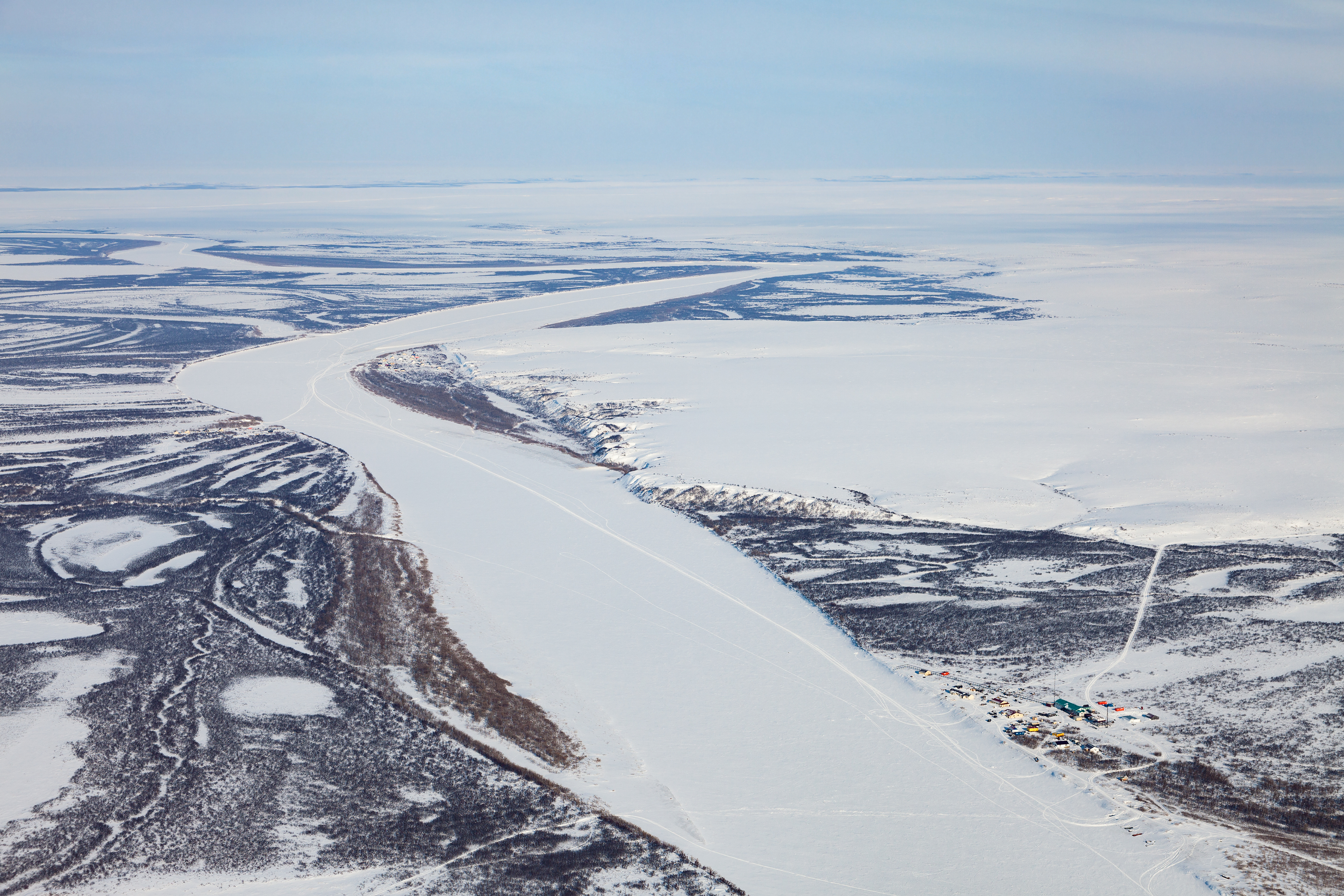
Ivan says that over the past four years, no one he knows has received an apartment or payment for its purchase.
– Maxim got in line two years earlier than me, he is already 63 years old. He and local activists even complained to the Investigative Committee to Bastrykin. Everything is official, the document has been registered. Just nothing more. Then they organized a rally in their area. “Nothing either,” says Ivan. “More precisely, a local police officer then came to his relatives and forced him to sign a document saying that again he would be charged with an illegal rally. The police came to all the relatives whose reindeer herders lived as live-ins. Of course, they then stopped coming out. It’s not the old people who cause problems, but those who shelter them.
The rally that Ivan mentions took place on January 27 in the Tazovsky district of Yamal. Its participants recorded an appeal to the head of the Investigative Committee of the Russian Federation, Alexander Bastrykin, regarding the long waiting periods for housing and the lack of commissioning of specialized houses for reindeer herders and representatives of indigenous small peoples of the North. According to residents, the department never informed them of the results of the inspection.
In January 2026, Bastrykin announced another check: a pensioner from Labytnanga has been waiting for improvement in her living conditions for almost 20 years. It is known that a resident of Yamal has been on the waiting list for public housing since 2005.
“They asked me to end the protests”
63-year-old Maxim is a hereditary reindeer herder from the Khanty people. For the last three years he has been living in Salekhard in the family of his cousin’s niece.
– He has no nieces and nephews; his children died. So you have to wander. When the police started coming to my husband’s work, we asked my grandfather to “end this,” says Marina , the niece of my grandfather’s cousin Maxim. “It’s clear that they [the pensioners] won’t be able to get housing with their protests, but there is a possibility that at the same time, we young people will be deprived of our jobs.” That's how they shut it up.
According to Marina, almost all of her relative’s friends – old reindeer herders – live in a similar situation.
– At the age of 55, a reindeer herder can officially retire, a chum worker (housewife in a tent) at 50. But most often they have nowhere to go. Therefore, they work while their legs are worn. Dying at the camp is considered lucky. It’s already difficult for them in a city or town - to get used to city life again, but to live here on a bird’s license... They honestly say: “It would be better if he went to the tundra [and died],” says Marina. – Their pensions with all the northern allowances are pennies: 15-17 thousand. This is with over 30 years of experience! Well, why laugh at such money in the North: everything is much more expensive here - from matches to apartments.
According to Marina, her reindeer herder parents did not count on the state program and saved money to buy an apartment from selling reindeer antlers and selling meat.
– We saved on everything and still didn’t have enough [to buy an apartment]. Housing in Salekhard is very expensive - you can’t buy a good apartment for less than 7 million. With my family’s savings, my husband and I took out a mortgage. We took a larger apartment so that our parents could also be with us, but mom and dad died. So we have the opportunity to shelter my uncle,” says Marina.
On social networks, under any news about the next extension of the state program for reindeer herders, you can find messages about the long-term expectations of Yamal residents. For example, Ekaterina from Salekhard writes that she has been in the queue for 28 years - since 1997 and as of November 2025, her number in the queue is still eighth.
According to data at the beginning of 2026, nearly five thousand families of Yamal reindeer herders are on the waiting list for housing. In January, they united and began to complain en masse to the Investigative Committee.
“The more people from SIM [indigenous minorities of the North] personally write to the Investigative Committee, the more difficult it will be to unsubscribe formally. One letter can be “considered”. A flow of identical applications from dozens of families is already a signal of a systemic problem that the Investigative Committee is obliged to check,” wrote Yamal activist Eiko Serotteto on his VKontakte page.
He invited the affected reindeer herders to briefly describe their stories to him, and he would prepare statements for them to send to the Investigative Committee.
– This is our local activist Eiko – he is also a hereditary reindeer herder. He himself suffered from a non-working program, and he knows that thousands of Khanty, Selkup, Nenets have been standing in line for state housing for years, decades (!). Eiko invited people to send him short descriptions of their stories of waiting for housing and information from registration documents on his VKontakte page. As long as he is not afraid (in 2019, a case was opened against Serottetto for an uncoordinated meeting in the tundra for a meeting of 30-40 fishermen and reindeer herders) . Using his own templates, he is already preparing a separate application for each to the Investigative Committee of the Russian Federation. That’s what I did - then I received it, entered my data there and sent it by mail, and my grandson sent it there via the Internet,” says Alexander Alachev .
56-year-old Alexander is also a retired reindeer herder. He lives with distant relatives and calls their children grandchildren.
– My eldest daughter went abroad a long time ago, and my only son - he was taken to this “SVO” more than three years ago. I was still working then, and so was he – a hereditary reindeer herder, fisherman, my pride. I thought we’d wander around together until I die. But you see how it turned out. He was admitted to the hospital in August 2022, and in September he was given a summons right there. You see how unlucky it is,” Alexander sighs. - Still alive. I've never been on vacation. If I took him to the tundra, no one would find us there.
After hospitalization in 2024, Alexander was taken from the hospital to live by distant relatives.

“We are looking after him, but all the same, his grandfather has given up a lot,” says his second cousin Grigory . “He’s worried about his son, and in general, he’s outraged by all this injustice.” Every trip to the city is stressful for him. Recently I got into a conversation with someone at the clinic and told about my son. They let him “calm down”: “Even if your son dies, the state will pay you enough for an apartment.” Grandfather's heart sank again. What kind of people?! How can you “calm down” like that?! Well, this is not true, these five million are not enough for a normal apartment in Salekhard. And if the old people buy it somewhere cheaper - in Pangody, Seyakha, Nyda or Urengoy, then there is no medicine there: except for a general practitioner and a dentist, there are no doctors. What difference does it make where to die without it - in a village or in the tundra?
Interlocutors say that Alexander’s son is one of the few mobilized Yamal residents who is still alive.

– In my native Tazovsky district, every month there are funerals of the dead. In Ukraine there were deaths, somewhere else. In Gyda (a village in the Tazovsky district), Max Yando and Kostya Yaptunay were buried almost one after another that year. Kostya is only 23 years old; I remember growing up in our Gydan tundra as a boy. Both are at the khalmera (traditional Nenets cemetery) , since they are both Nenets. We said goodbye at the National Culture Center, as usual, and then we were taken to the tundra. As far as I understand, I didn’t open the zinc. They hammered it into a box and left it on the stilts just like that (the Nenets bury their dead above ground due to the impossibility of digging up frozen soil; a wooden coffin with the body and belongings of the deceased is placed on stilts), says Alexander. – If the deceased was a reindeer herder, they usually carry it to the tundra. If he lived in a village, he is buried in Tazovskoye. Here are Tibichi Gosha and Andrey, for example. Even though they were relatives, Andrey was left in Tazovskoye, and Georgy was left in the Nakhodkinskaya tundra (tundra between the villages of Gyda and Nakhodka) .
2-4 apartments per year
The last time the "reindeer herders' house", built specifically for representatives of indigenous peoples in need of housing, was commissioned in December 2023 in the village of Seyakha - then 34 families received the keys. At the same time, the regional authorities announced four more buildings with 120 apartments. Since then, the Yamal authorities have not announced anything about the delivery of new houses.
According to an estimate published by the regional branch of the Communist Party of the Russian Federation , in the Yamalo-Nenets Autonomous Okrug, about 5 thousand people from among the indigenous peoples of the North continue to stand in line for social housing, while funding for the corresponding program remains limited and does not allow the accumulated demand to be eliminated. Against this background, the budget priorities of recent years look particularly contrasting: in 2024, the district allocated about 8.54 billion rubles for social support measures for participants in the “special military operation” and members of their families, and in 2025 – at least another 4.57 billion rubles, that is, about 13.1 billion rubles over two years.
With the average market price of housing in the region being 158 thousand rubles per square meter on the secondary market or about 184 thousand rubles in new buildings, these funds could purchase from 71 to 83 thousand square meters of housing. Depending on the composition of the family and current standards for the provision of social housing - from 18 sq. m per person for families of three or more people up to 33 sq. m for those living alone - this volume could be enough to provide living space for approximately 2.1 to 4.6 thousand citizens. Against this background, the budget of the Yamal-Nenets Autonomous Okrug at the end of 2025 was executed with a deficit of 93 billion rubles .
For 2026, the Yamal budget provides for a deficit of 53 billion rubles. Yamalo-Nenets Autonomous Okrug, according to a report by the Accounts Chamber , ranks 5th among Russian regions in terms of the fall in tax and non-tax revenues to the budget; they decreased by 6.7% in 2025. Having announced the draft budget, officials assured that they would fulfill “all social obligations.” However, in 2026 , only 27 million rubles are allocated for the program of providing housing to representatives of indigenous peoples of the North in the Yamal-Nenets Autonomous Okrug. Given the average market price of housing in the area, this is the equivalent of approximately 150-170 square meters, that is, 2-4 apartments depending on their size.
The only monthly payment currently in force for residents of Yamal who lead the traditional lifestyle and economic activities of indigenous peoples in the district is 5,000 rubles. In 2025, an innovation was adopted: nomads who retired and switched to a settled life will not stop receiving “nomadic” payments - previously they were abolished. In addition, there is a payment of 3,000 rubles for holders of the title “Veteran of Yamal” (it is awarded to people who have worked for a long time in the territory of the Yamalo-Nenets Autonomous Okrug; for women - at least 25 calendar years, for men - at least 30 calendar years of work experience in the region; length of service requirements for representatives of traditional indigenous professions (for example, reindeer herders, fisherman, hunter) are reduced:
men – 25 years, women – 20 years). At the same time, the regional payment to “voluntary participants of the SVO” in 2026 in Yamal is 400 thousand rubles. Previously it reached 1.1 million.
“To die in a camp is considered lucky.” Yamal reindeer herders demand the promised housing - the police come to them