
Translated material
The Legend of Zelda is 40 years old!
We'll tell you why it's one of Nintendo's greatest game series and how it's still managed to retain its charm.
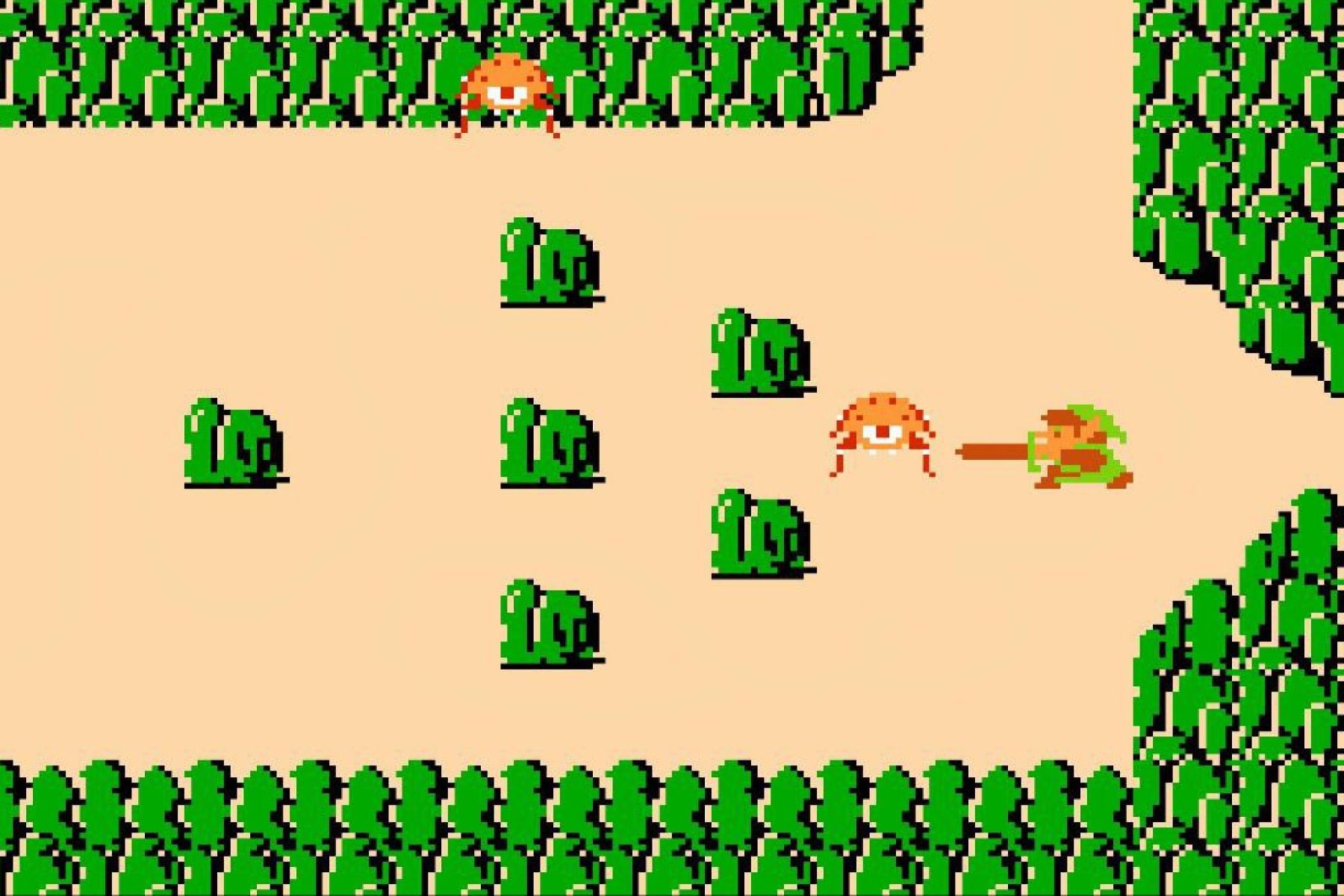
The Legend of Zelda, one of the main series in the history of Nintendo, has an anniversary this year. On February 21 she turned 40 years old. Over the years, two dozen games have been released within its framework (not counting re-releases and spin-offs), many of which are still recognized as exemplary action-adventure games of their time. And one of them, Ocarina of Time, is considered by many gamers and journalists to be the best game in history. And to this day - despite the fact that it was published almost three decades ago - it regularly wins thematic voting. “Medusa” recalls the journey The Legend of Zelda has made during this time and tells what makes this series unique.
The history of The Legend of Zelda can be divided into three key phases. The first is the origins of the series, when the games were 2D. During this period, the basic concept was formed, which was subsequently followed by all other parts. At the second stage, a transition into three dimensions occurred, which is why the usual game mechanics had to be radically changed. During this period, the developers laid the foundation not only for modern versions of The Legend of Zelda, but in many ways for all similar games in the genre. Finally, the third stage is “growing up,” during which experiments and searches for new directions for the development of the series took place.
However, this division is very arbitrary. For example, Nintendo did not abandon 2D games after the first 3D game, but only moved them to more suitable handheld consoles. There were attempts to make the main character more mature (and the setting darker) even before the start of the third stage. You could say that this is also something of a unique feature of The Legend of Zelda. Throughout its 40-year history, the series has constantly evolved and looked for new ways to develop, avoiding sudden changes and radical restarts.
Who made The Legend of Zelda great
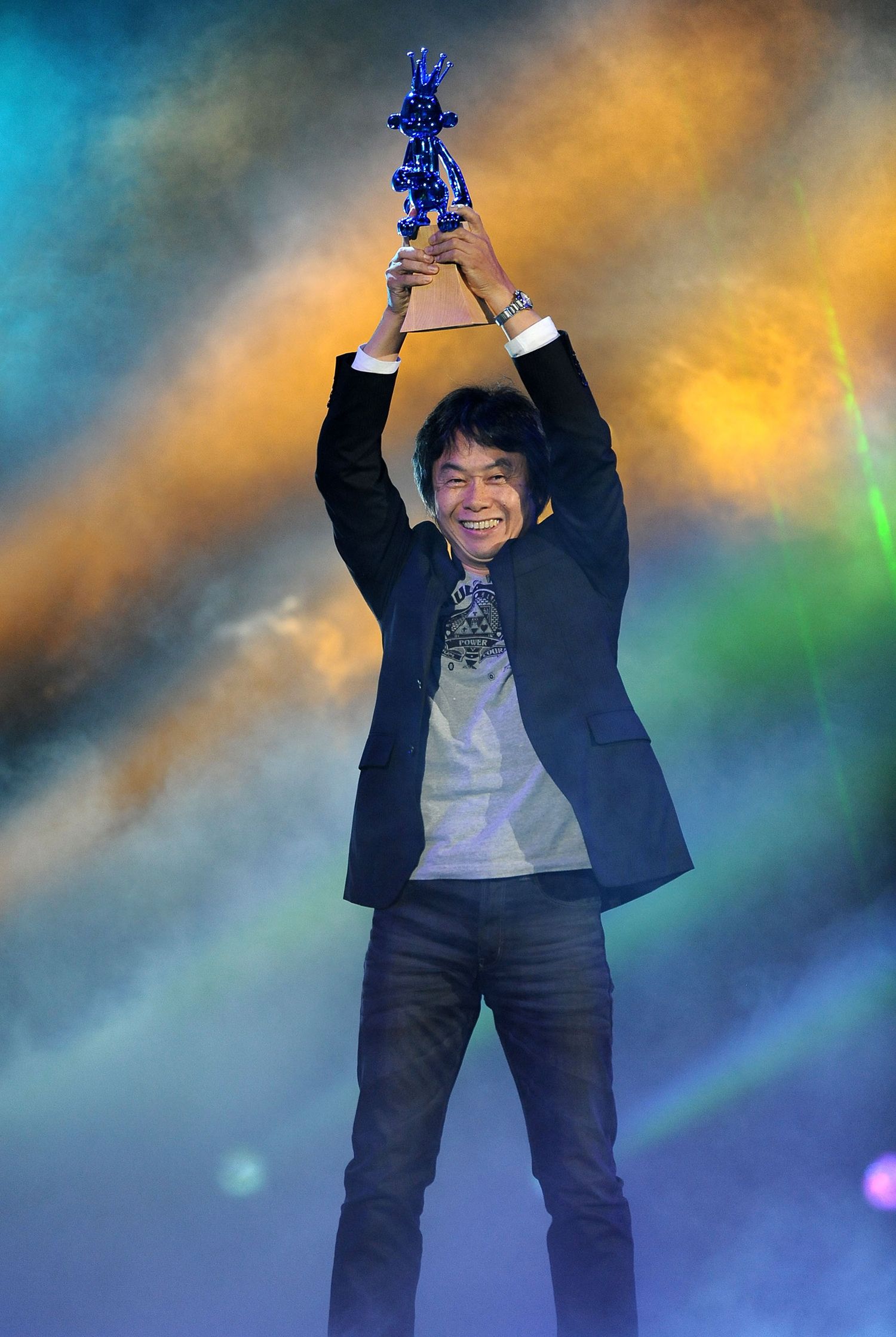
Game designers Shigeru Miyamoto and Takashi Tezuka were responsible for the creation of the first part of The Legend of Zelda. The first was at the origins of many iconic Nintendo games and series (including Mario and Donkey Kong). He still serves as a producer on all key parts of The Legend of Zelda. Tezuka, who also wrote the script for the first game, has increasingly limited himself to the role of supervisor since the mid-90s, overseeing the creation of new projects. The last part of the series where he was listed as a producer was The Wind Waker.
Also one of the key developers of The Legend of Zelda was programmer Toshihiko Nakago. At the same time, he formally worked at the Systems Research and Development (SRD) studio, which for many years was a key development partner of Nintendo. The gaming company acquired SRD only in 2022. Toshihiko Nakago, like Tezuka, has been increasingly listed as a supervisor in the credits of new parts of The Legend of Zelda since the late 90s.
Since the second half of the 90s, game designer Eiji Aonuma has played a key role in the development of the series. He led the development of Ocarina of Time, Majoraʼs Mask, The Wind Waker and Twilight Princess, and also produced subsequent installments. In fact, Aonuma is now the producer of the entire franchise.
Also worth mentioning is composer Koji Kondo, who wrote music for many Nintendo games. He actively worked on The Legend of Zelda from the first part up to and including Twilight Princess. After that, he limited himself to writing individual musical compositions.
When creating The Legend of Zelda , the developers took risks. Before them, such large-scale games were rather the exception
The first The Legend of Zelda, released in 1986 on the Famicom Disk System , was created as an alternative to another recent hero of the day , the platformer Super Mario Bros. The development of both projects was led by the same team, but at the level of ideas, these games were radically different from each other. Mario's adventures were linear, not very long, and took place in a world without a clearly defined setting at that time. The Legend of Zelda offered a larger journey with relative freedom to choose the path and obvious references to classic fantasy.
At the time, such games were the exception on consoles, and Nintendo was taking some risks. With the release of the congenial Dragon Quest, the first mainstream JRPG , months away, the developers were entering uncharted territory with The Legend of Zelda, unaware of how audiences would react to their experiment. But the fears were in vain: on the first day of sales alone, the game sold a million copies. Even by today's standards, this is a huge success for the new series.
The Legend of Zelda was a top-down (and a little side-view) action-adventure game in which the protagonist Link had to save the kingdom of Hyrule from a villain named Ganon. Interestingly, Princess Zelda, whose name was included in the title, played a supporting role, serving as the classic “damsel in distress.” Most of the time in The Legend of Zelda, the player had to explore the world map and find dungeons, which were mazes with puzzles. Along the way, I had to fight enemies and look for new, more powerful weapons.
Despite the fact that over 40 years the series has acquired a rich lore , and the gameplay has naturally evolved, the basic principles of the series remain unchanged to this day. This is still a journey through the big world with the obligatory dungeons and puzzles, the search for new weapons and important plot artifacts.
Attempts to deviate from the canon are usually met with disapproval by fans. This happened with the second game, Zelda II: The Adventure of Link, which was made by another team. In it, the developers left the top view only on the world map, and in dungeons and other locations they used a side view, like in Super Mario Bros. Because of this, the emphasis shifted to battles and overcoming obstacles, and puzzles completely ceased to be a key element of the gameplay.
The original developers had to fix it, and they did it brilliantly. The Legend of Zelda: A Link to the Past, released in 1991 on the Super Nintendo console, can still be called one of the best in the series. The team returned to the usual camera layout, expanded Link's arsenal, added multi-level dungeons and new types of puzzles. Many secrets appeared on the map, which made its exploration even more exciting.
Among other things, A Link to the Past offered players the opportunity to move between two parallel worlds, light and dark. Subsequently, this concept was used more than once in other parts of the series. Finally, the game was very beautiful for its time: bright and varied pixel locations were drawn with great attention to detail, and characters and enemies had expressive animation.
When, 11 years later, A Link to the Past was re-released on the Game Boy Advance portable console, it turned out that the game had not become morally outdated and had not lost its charm. Journalists continued to give it very high marks and admire the thoughtfulness of the game mechanics. But still, it failed to become the main game in the The Legend of Zelda universe.
The first 3D part of The Legend of Zelda was a masterpiece. So far no one has been able to surpass her
In 1998, Nintendo released the first game in the series with 3D graphics, The Legend of Zelda: Ocarina of Time. The developers faced a difficult task: to preserve the recognizable style and familiar game mechanics, but adapt them to an additional dimension. Two years earlier, the company successfully pulled off this trick with Mario. But there the world was not open, but divided into levels, and without a complex combat system.
However, it turned out that the power of the Nintendo 64 console, for which the new game was created, makes it possible to create a large-scale gaming universe, and even with an impressive drawing range. While developers for the competing PlayStation had to resort to various tricks to hide the lack of computing resources. Although the decisions were sometimes successful - this is how the famous fog in Silent Hill appeared.
At the same time, the creators of Ocarina of Time decided not to compromise and not make things easier for themselves. The new game did not have two worlds, like in A Link to the Past, but Link could move between two different time periods. This was reflected in the gameplay: the adult hero used more formidable weapons, but the child made his way into hard-to-reach places. The debate among fans about which version of Link is better has not subsided even ten years after the release.
The issue of fighting in three-dimensional space was resolved thanks to a special targeting system for the enemy. The player held down the button, and the hero focused on the target, after which he could move freely, constantly keeping the enemy in his field of view. Nowadays this is a standard solution for most action games, but at the time the system seemed revolutionary. In addition, thanks to her, a new character appeared in the game, the fairy Navi. It was she who acted as Link’s “navigation system,” and later became an important part of the plot.
Journalists and gamers praised literally every aspect of the new game: from the well-developed world, a large number of side activities and graphics to cinematic videos, realistic animation and excellent camera work. Ocarina of Time has long been at the top of the list of the best games in history on aggregator Metacritic (it was the only one with a combined score of 99 out of 100) and to this day regularly wins user votes for this title.
All of this just reinforces the fact that Nintendo developed the perfect 3D game at a time when no one among the developers (including the creators of Ocarina of Time themselves) knew how to do it. “Anyone who makes 3D games and says they didn’t borrow anything from Mario or Zelda [for the Nintendo 64] is lying,” GTA series writer and producer Dan Houser emphasized in an interview with The New York Times.
The incredible success and universal acclaim of Ocarina of Time led to the fact that the two subsequent 3D games in the series remained in its shadow. Nintendo began experimenting with style and settings, but neither the darker Majoraʼs Mask nor the cartoonishly bright The Wind Waker were able to surprise the audience in the same way and did not receive the same love from fans. Although at the same time they are also quite good and highly rated games.
At the end of the 2010s, the developers gave players complete freedom of action. This is how one of the best parts of The Legend of Zelda was born
By the mid-2000s, it became obvious that it was becoming increasingly difficult to release high-quality and large-scale 3D games at the same pace as before (about once every two years). And The Legend of Zelda series itself needed a little rethinking: it had to become a little more mature and intricate. Moreover, constantly evolving consoles allowed this.
Released in 2006, Twilight Princess offered players a more nuanced, dark story, a new supporting character named Midna, and the ability to transform into a wolf. The Wii version additionally featured different controls: you could swing the controller like a sword, or use it to aim at a specific point on the screen while shooting a bow.
However, the combat system was not entirely fair: in reality, it was enough to shake the controller for Link to strike. He did not repeat the player’s specific movements. This flaw was corrected in Skyward Sword, which was released five years later. In it, control has become more precise and natural. And the visual style has changed again: after the dark realism of Twilight Princess, the new game with its watercolor palette again returned gamers to the fairy tale.
Perhaps it was this general fabulousness that was the very element that slowed down the further development of the series and made The Legend of Zelda look frivolous compared to Western games. For example, The Elder Scrolls V: Skyrim, released in the same year, with its incredible freedom of action at the time of release (even though it was in a different genre).
All this was corrected in Breath of the Wild, released in 2017. From the very beginning, the player found himself in a huge world and could go anywhere, even straight to the final boss. But in this case, he deprived himself of several dozen hours of interesting adventures. Particularly because with the release of this game, the world of The Legend of Zelda ceased to be just a space for exploration and became, among other things, a platform for experimentation.
Any point on the map became available for study. The world began to obey the usual laws of physics, becoming fully interactive. Water froze and turned into ice, wooden objects burned, metal conducted electricity and attracted lightning, and it all worked naturally as a single system.
By March 2018, Breath of the Wild had received 189 awards in the Game of the Year category and became the only part of the series that came as close as possible in its average rating to the unattainable result of Ocarina of Time. It also became the most successful The Legend of Zelda game with more than 33 million copies sold.
Released in 2023, Tears of the Kingdom (originally the game was supposed to be just an addition to Breath of the Wild) further expanded the capabilities of its predecessor. And it once again confirmed the correctness of the chosen direction for the development of the series, adding even more than 22 million copies to the total sales of the duology. For a new generation of gamers, these two games became the main ones and opened up the world of The Legend of Zelda to them.
The series has a confusing chronology and complex mythology. But you don't need to know it all
Like many famous game series, The Legend of Zelda over these 40 years has acquired legends and simply interesting stories that allow us to better know and understand it. Some of them were confirmed by the developers themselves, others were just fan theories and just rumors. Here are just some interesting facts.
The series has a clear chronology. Despite the fact that almost all games in the series are not connected by plot, The Legend of Zelda has a clear timeline. True, until 2011, none of the fans of the series saw it. Shigeru Miyamoto only said that the company has a “huge document” that explains all the connections between different games. But he emphasized that it is not necessary to know all this. It was only when the book Hyrule Historia went on sale that gamers learned that the timeline begins with Skyward Sword, at some point splits into three parallel narratives (in one Ganon wins, in the other two he loses) and then becomes unified again in Breath of the Wild and Tears of the Kingdom.
The first game had an unexpected source of inspiration. One of the common rumors about Zelda is that its creators were inspired by The Lord of the Rings. Allegedly, one of the screenwriters, Kensuke Tanabe, was fond of Tolkien's works. Miyamoto does not confirm this, pointing out that Tanabe joined the team later, when they were already working on A Link to the Past. But in one of the interviews, the game designer admitted that he was inspired by films about Indiana Jones. According to Miyamoto, he wanted to bring that same “sense of adventure” to a video game.
Princess Zelda is not the main character. For almost all of 40 years, she was content with a minor role. The first and so far only game where she plays the role of the main character - The Legend of Zelda: Echoes of Wisdom - was released only in 2024. It's unclear whether Nintendo will develop its story further, but some journalists and fans are already dreaming of a sequel. By the way, the princess herself is named after Zelda Fitzgerald, the wife of Francis Scott Fitzgerald, who wrote the novel “The Great Gatsby.” Later, actor Robin Williams named his daughter this way - but in honor of the princess herself.
The Zelda and Mario games have more in common than you might think. Some gameplay elements that didn't work well in one game were often used in another. This was because the development of some key parts in both series proceeded in parallel and were often carried out by the same people. The most notable example is a horse named Epona, who first appeared in Ocarina of Time. Initially they wanted to add it to Super Mario 64, but later this idea was abandoned.
Link is often called an elf, but in reality he is not. Despite the fact that the main character of The Legend of Zelda has sharp ears and is good with a bow, he has no relation to elves. In the games in the series, all races are, in principle, unique and not associated with classic fantasy. Link is actually a Hylian. The race got its name in honor of the goddess Hylia, whom its representatives worshiped.
The Legend of Zelda has had epic failures. True, Nintendo itself has nothing to do with this. In the mid-90s, Nintendo allowed Philips to release three games featuring characters from its popular series on its CD-i entertainment platform (essentially an interactive CD player). The first two - Link: The Faces of Evil and Zelda: The Wand of Gamelon - turned out to be simply disgusting, and because of the creepy plot cutscenes they even turned into a meme. True, these games are not included in the official timeline, and Nintendo itself prefers to pretend that they did not exist at all.
"Jellyfish"