
Translated material
Sinking Island
The oil blockade has turned Cuba into a disaster zone. What is the Trump administration trying to achieve?
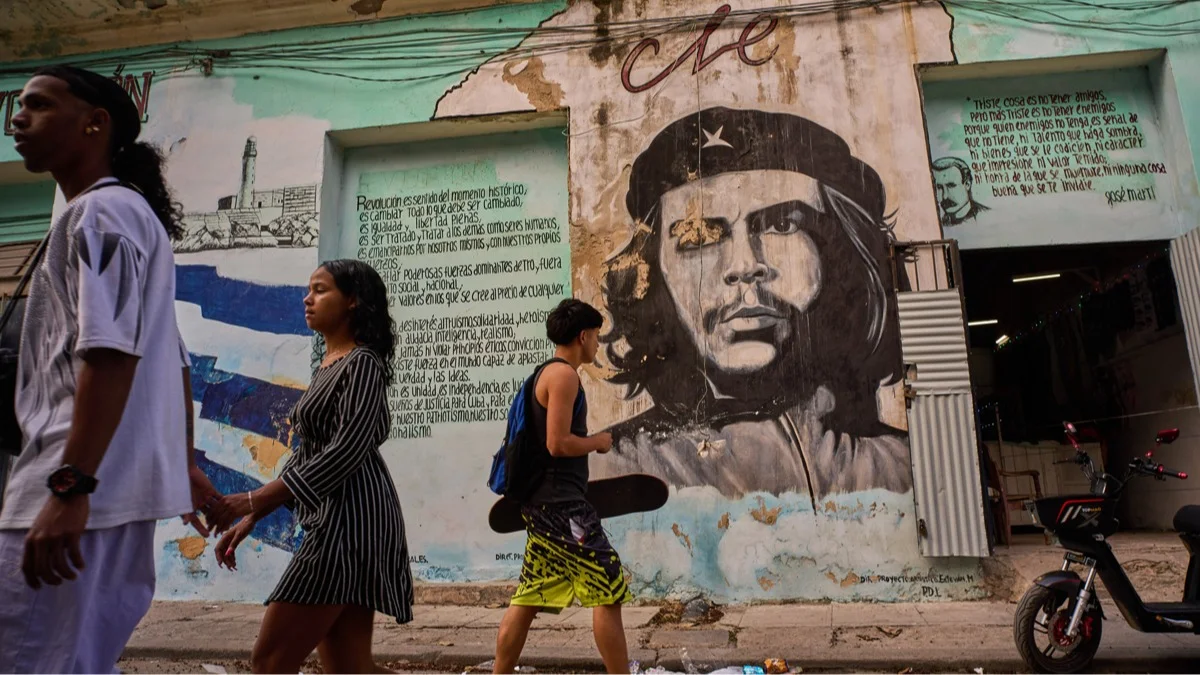
Mural depicting Che Guevara in Havana, Cuba, February 17, 2026. Photo: Ramon Espinosa / AP / Scanpix / LETA
Cuba is experiencing its worst economic crisis since the 1959 revolution and is already on the verge of a humanitarian catastrophe. All the island's long-standing problems have been exacerbated many times over due to the oil blockade imposed by the Donald Trump administration and which has drawn "strong condemnation" from Russia as a long-time ally of Cuba. President Trump claims that Washington is in contact with Havana and offers to conclude a deal. What it might consist of is not known for certain, but the Trump administration is emphasizing the need for political liberalization and fundamental economic changes. Such that, naturally, would be beneficial not only to the Cubans, but also to the American authorities. Conversations about who could become “their man in Havana” are also intensifying. Western media also point to two people with the last name Castro. Read about the situation on the island and what options the Cuban government has left in the material of Novaya Gazeta Europe.
They don't take them out anymore
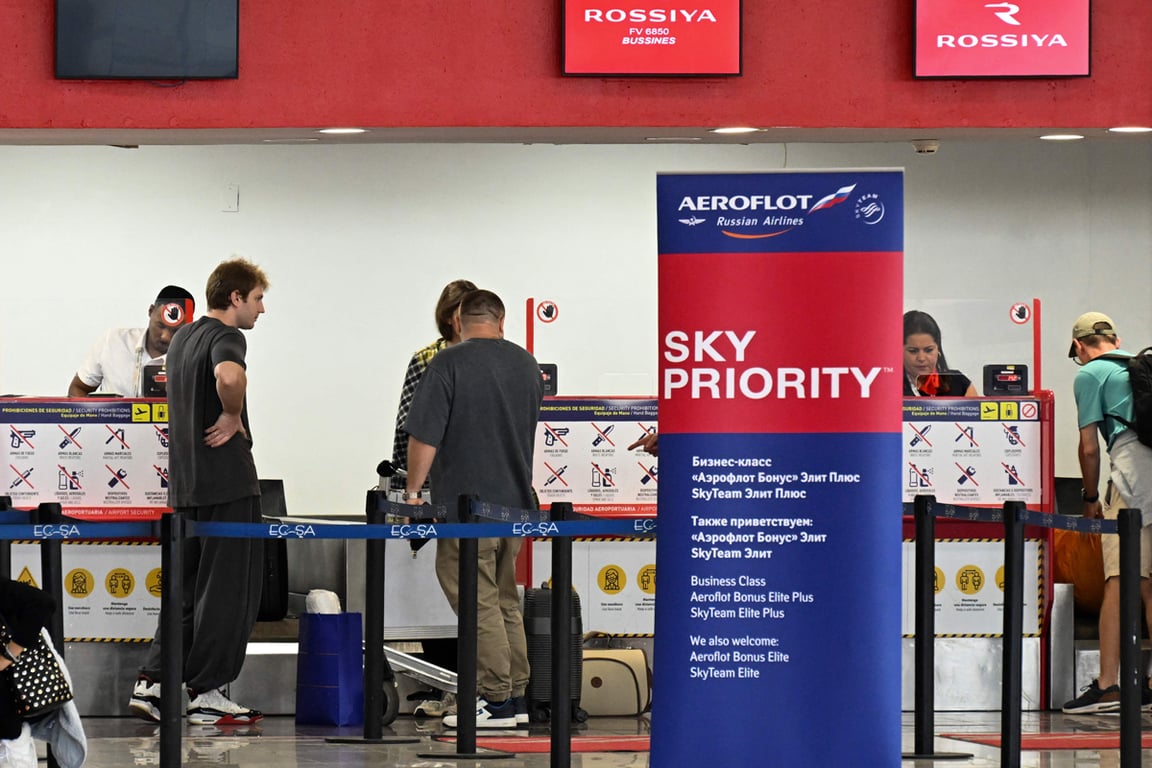
Over the past two weeks, Russian airlines have flown empty to Cuba as export flights designed to help tourists get off the island. Rossiya Airlines (part of the Aeroflot group) operated such flights from Havana and Varadero to Moscow, and Nordwind operated from Varadero, Holguin and Cayo Coco. On February 21, the last of the announced flights took place: Holguin - Moscow (Nordwind) and Varadero - Moscow (Russia).
The reason was the severe shortage of aviation fuel that arose in Cuba due to the oil blockade imposed by the Donald Trump administration. The republic's aviation authorities have issued a notice that Jet A-1 jet fuel will not be available at the country's airports from February 10 to March 11. But it is quite possible that the matter will not be solved in one month.
The situation has hit not only Russian airlines. For example, Air Canada and other Canadian air carriers - WestJet and Air Transat - announced the suspension of flights. But the Mexican Aeroméxico continued flights: the route is significantly shorter, which allows you to take enough fuel on board the plane for the return flight.
Meanwhile, Spanish carriers Iberia, Air Europa and World2Fly have made route changes, with their planes now making technical stops in the Dominican Republic for refueling. And Turkish Airlines began flying from Istanbul with refueling in Cancun. Rossiya and Nordwind do not have such an opportunity: refueling their aircraft carries the risk of secondary sanctions from Washington. The Cuban leadership did not care about this aspect, but fuel suppliers in the Dominican Republic and Mexico will not take risks.
Crisis turning into catastrophe
What is happening is a severe blow to the tourism industry, one of the most important sources of foreign exchange earnings for Cuba. And without Trump, the flow of tourists to Cuba has been declining in recent years. For example, in 2025, the country was visited by 2.6 million tourists (a fall of 18% over the year) - this is the minimum value since 2002. For comparison: in 2018 and 2019 we were talking about 4.6 million and 4.2 million people. This was largely a consequence of the US-Cuban warming that began after then US President Barack Obama visited the island in 2016.
The most tourists in 2025 came from Canada - 754 thousand (-12.4% per year), followed by Russians - 131.9 thousand (-29%). So the lack of flights from these two countries could be fatal for the Cuban tourism industry, on which the government has placed a special emphasis in recent years. In Havana, they believed that it was tourism that would save the collapsing economy, and they set priorities accordingly. For example, in 2024, 37.4% of government investment was allocated to activities related to the tourism and hospitality sector - 11 times more than was allocated to education and health. Now the hotels are empty, and healthcare and education are in obvious decline.
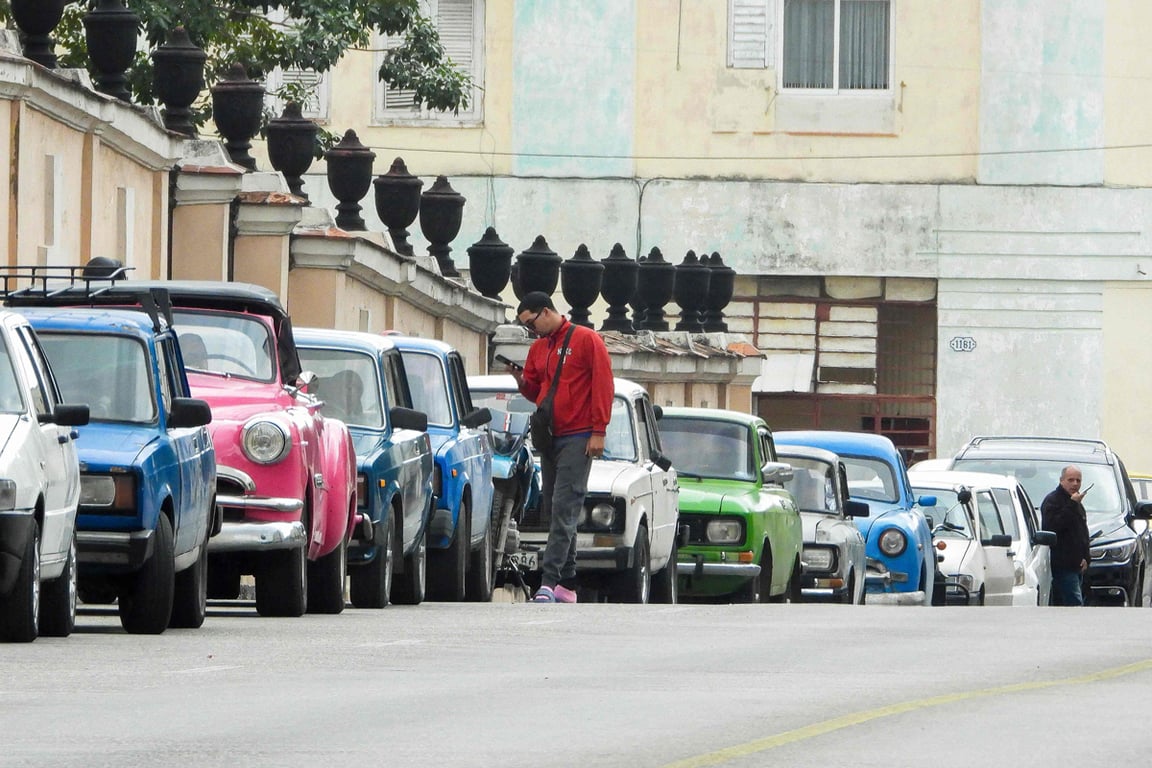
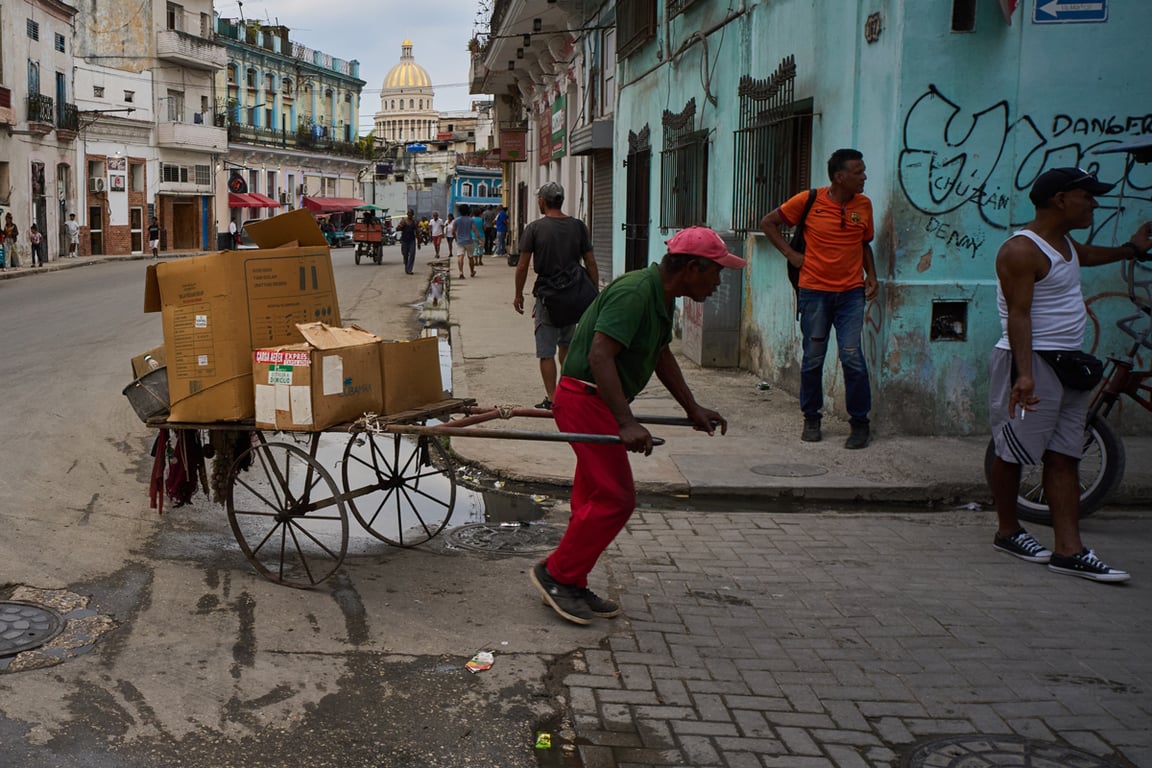
The crisis, which has gradually gained momentum in recent years, has affected all Cubans without exception. Lack of fuel and deteriorating infrastructure (many thermal power plants have long been out of order) led to an energy collapse.
During peak hours, more than 60% of the country remains without electricity. Sometimes rolling blackouts last up to 20 hours a day in the provinces and up to 12–14 hours in Havana.
The energy crisis triggered a chain reaction in life support systems. Without electricity or fuel for pumping stations, hundreds of thousands of Cubans were left without water supplies. The lack of gasoline for garbage trucks has led to a sanitary crisis: mountains of waste accumulate on city streets that are already far from clean standards, which in a tropical climate creates an ideal environment for epidemics.
At the end of 2025, the authorities recognized the increase in arboviral infections (caused by viruses transmitted by mosquitoes, ticks, mosquitoes) - dengue, zika, chikungunya. Another alarming indicator is infant mortality. Last year it was 9.8 per 1 thousand live births. This is significantly higher than the 2024 rate (7 per 1 thousand) and comparable to the level of the early 1990s (in 1992, 10.2 babies died per 1 thousand live births on the island).
It is already clear that this year will become even more deadly. In the absence of gasoline, ambulances cannot respond to calls. Hospitals that have long experienced shortages of basic medicines have suspended non-urgent surgeries. It happens that surgeons operate under the light of telephone flashlights. According to Cuban state media, sometimes there is no gasoline even for hearses, resulting in the failure to bury the dead in time.
Government agencies and companies have switched to a shortened working week. Hours of face-to-face classes in schools have been cut, and universities have transferred students to distance learning or free attendance. Cultural life has been put on pause: public events have been cancelled, including world-famous international book and cigar fairs.
Bus service in and between cities has been reduced to a minimum. Prices for the services of those private taxi drivers who manage to get fuel have soared to levels unaffordable for the vast majority of Cubans.
Food security has also been undermined.
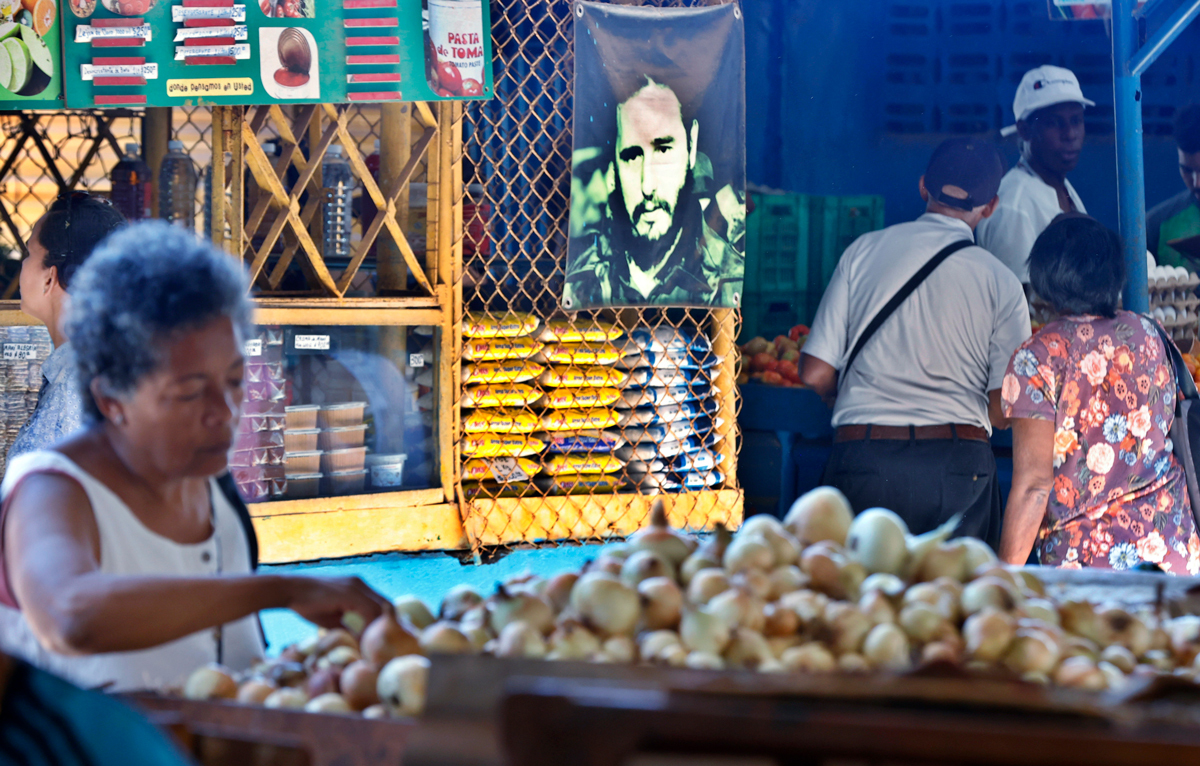
The state system of distribution of basic products (rice, flour, beans, etc.) by ration cards no longer guarantees even the physiological minimum: rations have been cut, supplies are irregular.
“The rationed store no longer has bread or milk for the children—at least bread so my children can go to school,” a local resident complained on February 16 in a Matanzas Facebook group. “I’m not one of those mothers who says this, but if the Americans are going to interfere in the affairs of this country, let them intervene already, because someday this must end,” summed up the author of the post, which already has more than 1.4 thousand likes.
According to the Observatory of Social Rights (ODS), which issues annual reports based on population surveys, 89% of Cuban families live in extreme poverty. 55% choose the answer “I have problems even buying the basic necessities for survival,” and another 27% choose “I have enough income to survive, but not enough to afford anything beyond the basics.” Seven out of ten Cubans have to skip at least one of their three daily meals. 14% of people over 70 continue to work after retirement to survive.
The level of disapproval of the government's economic and social policies is a record 92%.
The survey for this study was conducted in the summer of 2025. Now the figures would probably be even higher.
More swashbuckling than the 90s
Cubans over 40 years of age shudder at the phrase “special period.” This term refers to the most difficult period in the modern history of Cuba so far - the 1990s, when, as a result of the collapse of the USSR and the socialist bloc, a deep economic crisis began on the island. From 1990 to 1993, Cuba's gross national product fell by 35%, exports by 79%, and imports by 76%. Moscow then had neither the ability nor the desire to support its ally at the same level, which put many Cubans on the brink of survival.
Meanwhile, the current crisis is in many ways harsher. As the Havana Times portal noted , “the fall into the abyss was not as sharp then as it is now”: the authorities were prepared for problems in advance, the infrastructure - from sugar refineries to power plants - had not yet collapsed, pork production was developing, tourism and remittances from abroad were growing. And then, in 1999, Hugo Chavez came to power in Venezuela, becoming the main external support of the Cuban regime.
Now the situation is different. One of the problems is the serious stratification of society. Cubans appeared on the island and became rich by obtaining licenses to import goods. At the same time, the majority continues to live in poverty.
“The crisis affects all generations, but especially those who created the revolution and responded to calls to renounce personal gain for the common good. They were the ones who voluntarily went to cut cane [ in 1970. — Approx. ed. ] during the “10 million tons” campaign, hoping that the state would provide them with food and medicine for the rest of their lives, described the situation as journalist Ruaridh Nicole, who lives on the island. And he stated: “The revolution brought many out of poverty - this is its great achievement.” But now she has made them beggars again.”
Spanish economist Marc Vidal has pointed out that now, “while the population faces increasing poverty, prolonged blackouts and food shortages, the elite associated with the military apparatus is concentrating significant resources beyond public control.” He is confident that the narrative that attributes the depth of the current crisis solely to the American embargo is deeply flawed.
“During the special period it was very bad because there was no food. But there was hope,” The Guardian newspaper quoted Cuban film producer Carlos Bustamante as saying. “Now there is food if you can buy it, but there is no hope.”
Countering Threats
The situation will probably begin to change for the better only if the Donald Trump administration again makes an unexpected maneuver and - as has already happened in relations with other countries - radically changes its tactics.
The current oil blockade is based on the Executive Order “Countering Threats to the United States from the Government of Cuba,” signed by Trump on January 29, 2026. The document corresponds to the US National Security Strategy updated last year, which breathed new life into the Monroe Doctrine (about the Western Hemisphere as the exclusive zone of US influence).
By his decree, Trump introduced a “national emergency” regime, justifying this by the “unusual and extraordinary threat” to national security and US foreign policy from the Cuban leadership.
The Trump administration has brought forward a whole list of charges against Havana, including “systematic violations of human rights,” “destabilization of the region,” as well as “building close ties with a number of hostile states and unfriendly actors,” including the Russian Federation, China, Iran, Hamas and Hezbollah.
For example, as the White House noted, “in Cuba there is the largest radio intelligence center outside Russia, focused on collecting sensitive information about US national security.” It does not specify what we are talking about. Such a center, in Lourdes, Cuba, actually existed, but was closed by decree of Vladimir Putin back in 2002. No new such structures have been publicly announced.
Trump’s January decree qualitatively changed the regime of sanctions pressure that had existed since the early 1960s. Washington considered Cuba a source of military threat and, since 1982, a “country sponsor of terrorism,” but did not interfere with cooperation with Havana from third countries. Now the United States has activated the mechanism of extraterritorial coercion.
The key instrument of pressure was the threat of imposing duties on goods from any country that “directly or indirectly” supplies oil or petroleum products to Cuba. The authority to designate such countries was delegated to Secretary of Commerce Howard Lutnick, and the authority to determine the size of tariffs was delegated to Secretary of State Marco Rubio. Havana's trading partners face a difficult choice between continuing to support Cuba and maintaining relations with the United States.
Neither Venezuela nor Mexico
The first blow to Havana’s allies was dealt even before the decree was issued - on January 3, 2026, when the capture of Venezuelan leader Nicolas Maduro by American special forces destroyed the Caracas-Havana axis. “Cuba lived for many years on large volumes of oil and money from Venezuela. In exchange, Cuba provided “security services” to the last two Venezuelan dictators, BUT THIS IS NOT SO FROM FROM HERE... No more oil and no more money for Cuba - ZERO! Trump wrote on Truth Social on January 11.
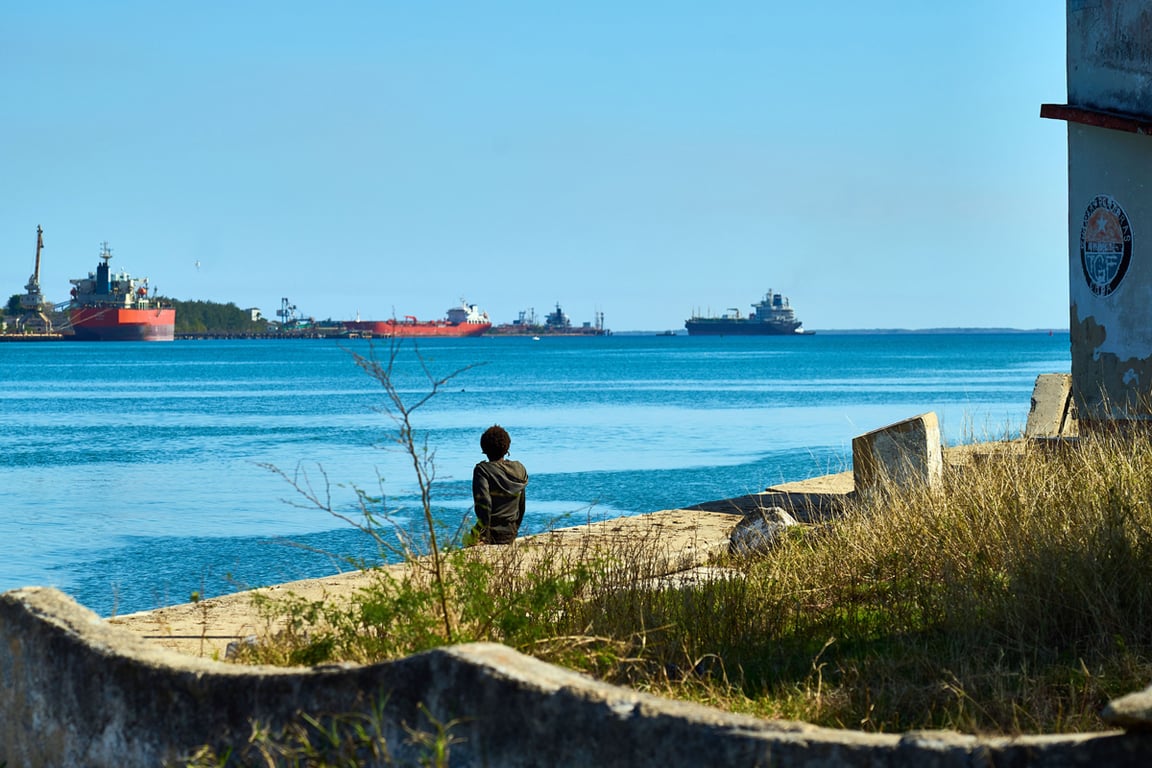
Cuba's daily needs are about 110 thousand barrels of oil. On the island itself, at most a third of this volume is produced. Until the beginning of 2026, Havana’s main support in this sense (and in many others) was Venezuela. In the last quarter of 2025, an average of 35 thousand barrels of oil per day came from there to Cuba. Far from 90 thousand barrels during the heyday of Venezuelan-Cuban friendship under Hugo Chavez, but also significant. In turn, Cuba has been supplying Venezuela with doctors and security forces for years. Let us recall that during the capture of Nicolas Maduro, 32 Cubans were killed who were guarding the presidential residence and the head of state personally.
When the reins of power passed to Vice President Delcy Rodriguez (now acting president), Venezuela cut off oil supplies to Cuba. There are no humanitarian aid supplies either. In Caracas, a process has begun that local media call “de-Cubanization”: the new administration is dismantling the structures of Cuban influence in the intelligence and military, which deprives Havana not only of oil, but also of the most important tool for the geopolitical projection of power in the region.
Moreover, according to the Mexican portal La Politica Online, during a February meeting with US Energy Secretary Christopher Wright, Delcy Rodriguez assured him that Venezuela could help the transition process in Cuba and promised to ask Havana to start releasing political prisoners.
The next task for the United States was to increase pressure on Mexico, which supplied the Cubans with about 20 thousand barrels of oil per day. Mexico faces its own risks: Trump has threatened attacks on the country to combat drug crime. And this is not to mention Trump’s favorite tool, tariffs.
Publicly, Mexican President Claudia Sheinbaum took a tough line, calling the US sanctions "grossly unfair." But oil supplies to Cuba stopped. Instead of oil tankers, Mexico sent 800 tons of humanitarian aid to the island: beans, powdered milk, canned tuna, vegetable oil, and so on. This gesture allowed Sheinbaum to at least partially save face with the left-wing electorate, which demands solidarity with Havana, without crossing the “red line” drawn by the White House.
Cuba is far away
Havana’s other strategic allies, Moscow and Beijing, also find themselves in a difficult situation. On the one hand, you cannot remain silent. On the other hand, the real economic opportunities and strategic priorities of both powers force them to be extremely careful and limit themselves to symbolic gestures and humanitarian assistance.
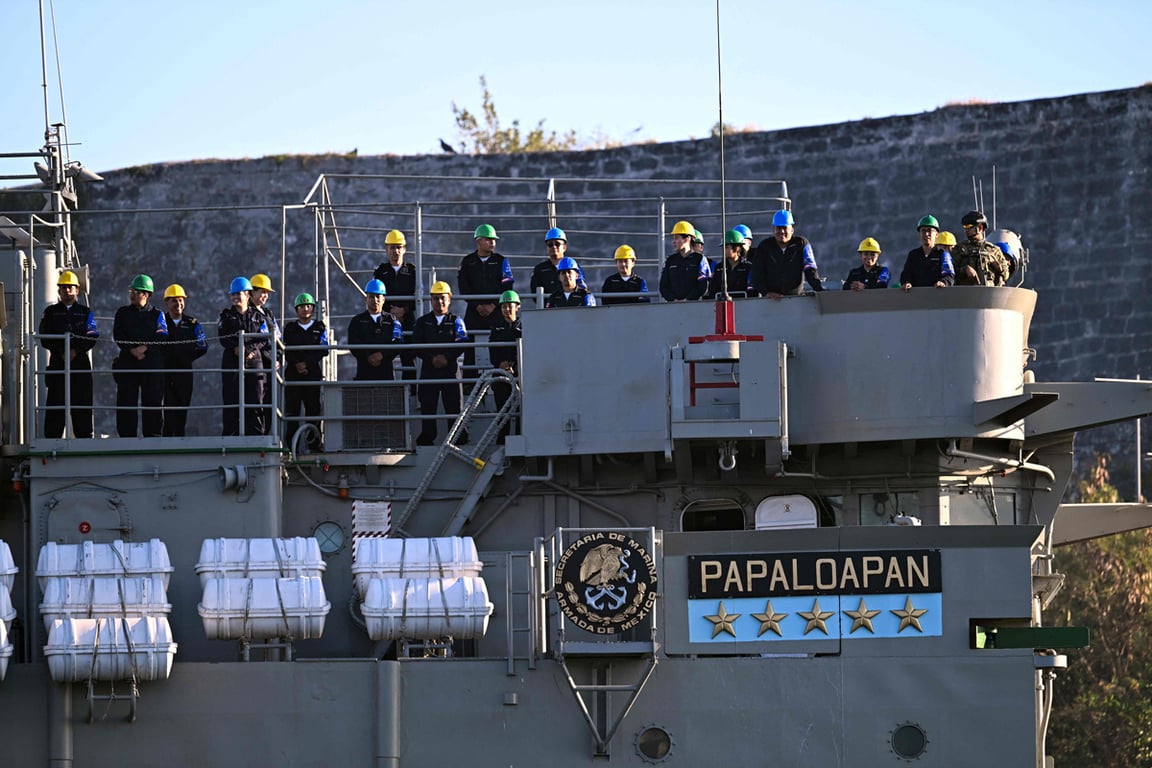
During his visit to Moscow on February 18–19, Cuban Foreign Minister Bruno Rodriguez Parrilla heard from his interlocutors in the Kremlin , Foreign Ministry , Security Council , State Duma and Federation Council many words “strongly condemning Washington’s illegitimate prohibitive steps towards Havana.” “Together with the majority of members of the international community, we call on the United States to show common sense, a responsible approach, and to refrain from plans for a naval blockade of Liberty Island,” said , for example, Russian Foreign Minister Sergei Lavrov. “We do not accept anything like this,” Vladimir Putin commented on the US actions.
The Russian Embassy in Havana previously said that Russia is preparing to supply Cuba with oil and petroleum products as humanitarian aid. The previous large-scale delivery took place in February 2025, then it was about 100 thousand tons (about 733 thousand barrels). But this was before Trump's order. If a new supply does take place, despite all the economic and political risks, it is unlikely to be on a significantly larger scale. But the main thing is that Moscow will be able to say that they promised “not to abandon Cuba” and did not.
Beijing's position is even more pragmatic. China remains Cuba's second largest trading partner, but the volume of its assistance is strictly limited by risk assessments. In response to the crisis, China sent Havana food aid and a financial grant of about $80 million. But China is in no hurry to support Cuban energy, especially since until recently it itself purchased oil from Cuba (part of the proceeds from Venezuela was resold in order to obtain much-needed hard currency for Havana). The key deterrent for China is still the same - its reluctance to enter into direct confrontation with the United States in its “near abroad” for the sake of an asset of dubious value.
The Cuban leadership is trying with all its might to mitigate the crisis. For example, Bruno Rodriguez Parrilla traveled not only to Moscow, but also to Madrid , where on February 16 he agreed on the supply of humanitarian aid worth 1 million euros.
In addition, the country's authorities liberalized the rules for importing oil: small private companies were allowed to import fuel (of course, under strict government control). According to sources of the Miami-based publication Martí Noticias, private traders have already engaged in this activity in an atmosphere of total secrecy, as there are fears that the Trump administration may block this channel as well.
But all these are attempts to patch up holes in a rapidly sinking ship.
Doesn't attack or threaten
The question is whether the United States seeks to sink this ship, and if so, by what methods. Donald Trump has repeatedly said that the Cuban government is experiencing “serious problems” and is “hanging on by a thread.” At the same time, he once admitted that it was no longer possible to increase pressure on Cuba except to “tear this place to hell.” But so far there are no serious preparations for this option.
“If I was going to do it [ carry out a military operation. — Approx. ed .], it wouldn’t be a very complicated operation, as you understand,” Trump said on February 16. And he added: “But I don’t think there will be a need for that.”
Against this backdrop, the Cuban administration relaunched an old strategy known as the “war of all the people.” The plan, developed more than 40 years ago by Fidel Castro in the event of a clash with Washington, involves mass mobilization of the population and the creation of popular militias. Since the beginning of 2026, the Cuban authorities have introduced a weekly day of military training: Cubans are taught how to lay mines and throw grenades, and are introduced to the basics of military medicine and camouflage. However, similar exercises were held regularly in Venezuela in the last months before the American attack, but this did not help Nicolas Maduro.
If we hypothetically talk about the possibility of a full-scale operation, then Cuba is in an even less enviable position than Venezuela: approximately 49 thousand full-time military personnel versus 123 thousand , as well as much less modern equipment than that of the Bolivarian Republic.
However, there are also advantages: as the Chatham House think tank noted , the Cuban regime is ideologically integral and homogeneous, while the Venezuelan regime under Maduro was fragmented into factions that were guided by purely selfish interests. In addition, the analysis argued, Cuban officials and security forces, unlike Venezuelan ones, “have undergone institutional ideological training in the spirit of revolution and are afraid of change.”
Looking for a conversation partner
However, the United States is confident that there are people in the Cuban leadership who are ready - as Delcy Rodriguez did in Venezuela - to become conductors of American policy. At the end of January, The Wall Street Journal reported that Washington was looking within the Cuban government for a figure who would help in overthrowing the current authorities by the end of 2026. And in mid-February, in an interview with Telemundo, the head of the American mission in Cuba, Mike Hammer, hinted that “Cuban Delcy Rodriguez” had already been found. At the same time, he smiled and did not answer clarifying questions about who it could be.
The director of the analytical organization Interamerican Trend, Antonio de la Cruz, suggests that the current vice-president of the National Assembly, Ana Maria Marie Machado, a person with a less tarnished reputation than many other representatives of the Cuban establishment, could become the head of the transitional government. The government, according to the expert, could also include current Prime Minister Manuel Marrero, experienced diplomat Josefina Vidal and Deputy Prime Minister (as well as the great-nephew of Fidel and Raul Castro) Oscar Perez-Oliva Fraga. The Spanish publication El País singled out the latter, calling him a potential main contender for the role of “Cuban Delcy Rodriguez.”
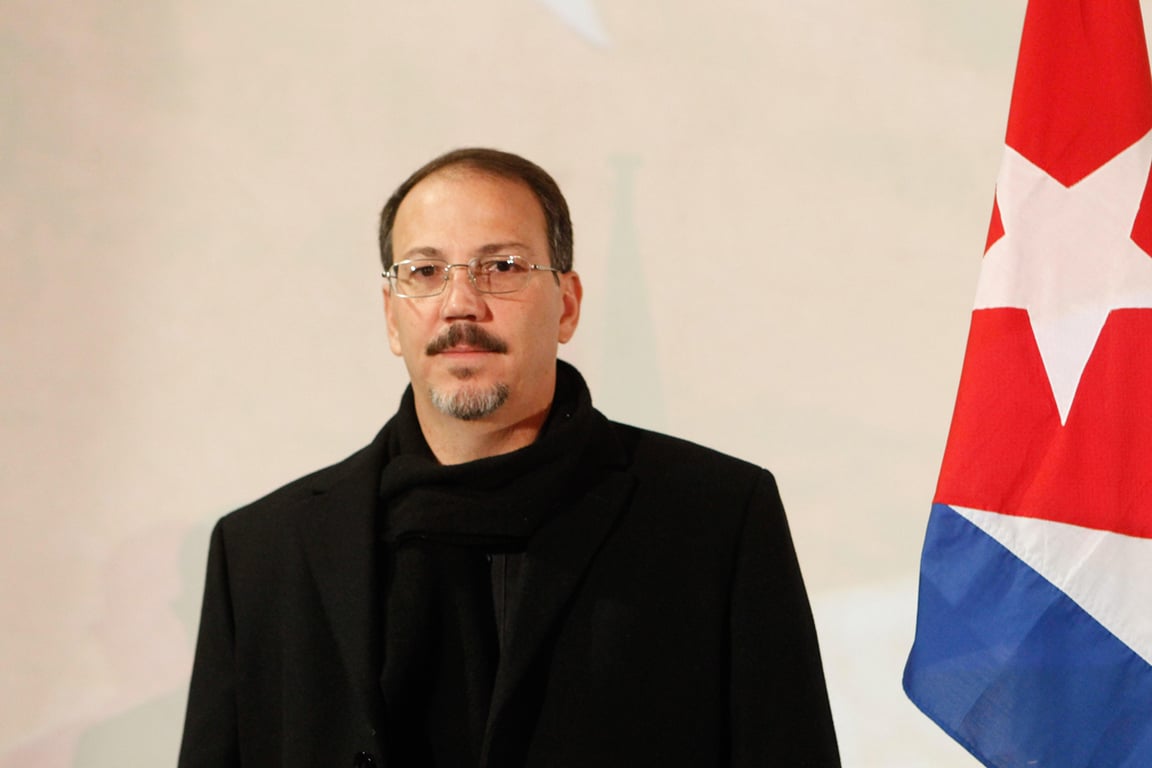
Those who follow signals in the highest echelons of Cuban power pay attention to another person from the Castro family - 60-year-old Alejandro Castro Espina. He is the son of Raul Castro and nephew of Fidel. El País called him “the architect of rapprochement with Washington” during the Obama presidency and a skilled negotiator. During the reign of Raul Castro, his son was an influential figure in the state security system, but then, for reasons that are not fully understood, he disappeared from view. It is assumed that he became another victim of the “Pajama” plan - this is how in Cuba they call the quiet removal from power, disguised as gratitude, of those who were not needed by the regime or began to behave too independently.
One way or another, in October 2024, Alejandro Castro Espin appeared in front of television cameras for the first time in almost seven years, which many took as an eloquent signal. And now, according to some reports, Raul’s son generally plays a key role: the Spanish newspaper ABC reported , citing sources in the Mexican government, about certain contacts on Mexican territory between Alejandro Castro Espin and representatives of American intelligence services.
Meanwhile, sources from the American publication Axios on February 18 told another version: the key figure who communicates with the American side (specifically, with Secretary of State Marco Rubio) is 41-year-old Raul Guillermo Rodriguez Castro, Raul’s grandson. According to one source, this member of the younger generation is "his grandfather's favorite", served as his bodyguard and, importantly, has allies at the head of the giant military-business conglomerate GAESA.
It is, in essence, a state within a state that manages a significant part of the national economy and controls a significant part of Cuba's foreign exchange earnings.
The Cuban government claims that there is no established dialogue between the two countries, either at the highest or even at the middle level. “I would call these not so much “negotiations” as “discussions” of the future,” an unnamed senior US administration official assured Axios. “Our position is that the regime must go. But exactly what that will look like is up to President Trump, and he hasn’t made a decision yet.”
We need more freedom
The head of the White House himself confirmed the fact that Americans communicated with people “at the very top” of Cuba’s power system. And he noted : the Cubans “definitely should conclude an agreement” with the States.
What exactly it may consist of is unknown. According to ABC sources, initial exchanges with Alejandro Castro Espín discussed the possibility of “ending the US blockade of the Cuban economy.” It is argued that the White House could consider abandoning this pressure mechanism in exchange for the admission of American companies into strategic sectors of the Cuban economy - energy, tourism, banking, telecommunications. According to Mexican officials cited by the publication, the first positive signal of progress could be the start of American oil supplies to Cuba.
True, it is likely that if such conversations were held, they were still talking about a partial easing of the blockade. The corresponding 1996 law ties the hands of even the US President. Congress can lift the embargo on Cuba only if a number of conditions are proven to be met: the removal of all representatives of the Castro family from power, the release of political prisoners, the restoration of rights and freedoms, and movement towards multi-party elections.
At the January Senate hearings, Marco Rubio pointed out precisely the aspect that the lifting of the embargo is possible only in the event of a regime change in Cuba. At the same time, in mid-February, discussing the situation around Cuba, he spoke about the importance of “the people of Cuba having more freedom, not only political, but also economic.” “I think that they [ the Cuban authorities. — Approx. ed. ] willingness to start taking steps in this direction is one possible way forward,” the Secretary of State said.
He did not go into detail about exactly what steps would be needed to ease sanctions, saying such announcements require "space and time to get it right." But the emphasis on economic freedoms itself speaks volumes, especially since Rubio, who has Cuban roots, has always been the main “hawk” in American policy towards Cuba and has previously shown no willingness to compromise that would allow the Diaz-Canel government to survive.
“What Rubio is proposing is the smartest, prudent and humane way: to drive change through an economic solution,” the Miami Herald quoted former Congressman Joe Garcia, a South Florida Democrat who previously tried to mediate between the two governments. “In a sense, this is what the Cuban regime tried to achieve but failed due to incompetence and fear of losing control.”
Choosing between Poland and Vietnam
In recent years, the Cuban authorities have indeed made attempts to liberalize the economic system. For example, opportunities for private business gradually expanded. But fundamental changes never happened. In the Heritage Foundation's Index of Economic Freedom, Cuba ranks 175th, ahead only of North Korea. The rating's authors noted that "Cuba's inefficient state-run economy is performing very poorly," "the lack of an independent and fair judiciary undermines the rule of law," "tight government control constrains the development of the private sector," "the application of regulations is inconsistent and opaque," and "monetary stability is vulnerable to government intervention."
Experts consider two models of the transition from socialism to a market economy. The first is Polish, where the sharp collapse of the socialist system led to the formation of a market democratic society. It is significant that Poland's first president, Lech Walesa, who played a key role in the fall of the communist regime, is ready to pass on his experience to the Cubans. So, on February 12, he spoke on this topic in Florida at the Museum of the Cuban Diaspora. The main message was this: Trump is “moving in the right direction,” but we must remember that he is “acting in the interests of the United States, not Cuba.” Therefore, the Cubans themselves, Walesa noted, need to take the initiative and bring about change on the island, and then cope with the serious challenges of rebuilding a deeply divided nation.
The second model, which does not imply a radical breakdown of the system, is the Vietnamese one. In the late 1980s, Vietnam began market reforms without affecting the one-party political system. And this led to success. Back in 1993, 80% of Vietnamese lived in poverty. By 2006, the figure had dropped to 51%, and today it is only 3%. While Vietnam ranks above the world average in terms of economic freedom (61st out of 176), the Communist Party's hegemony is not threatened.
The question is whether the Cuban leadership has enough self-confidence and the desire to take risks by reforming the economy so radically. So far they have not shown any particular readiness for this.
And it is even more unlikely that the authorities will agree to significant socio-political liberalization. In Cuba, as before, as under the Castro brothers, they are tough on dissent. The latest high-profile example is the arrest in early February of two founders of the El4tico project, popular among young people, video columns about the country’s problems that were distributed on social networks. They face eight years in prison for “inciting a change in the constitutional order and slandering the activities of the country’s political and public institutions.”
The Cuban authorities rightly see a threat to their position in both the expansion of political freedoms and a large-scale amnesty. And they will probably resist this as long as they have enough strength.