
Translated material
Yard
The story of one family, one house and one dog
Novaya Gazeta writes a lot about Sudzha - so much that it seems that readers should already know everything about the fate of that part of Russians to whom the real price of what is happening now has become clearer than anyone else. And yet these people still have a story to tell - and there are stories that say a lot not only about what happened in Sudzha, but about everything in general. Here is one such story.
*Sleep, my boy, sleep, darling.
It's war outside.*
Ilya Erenburg, “Lullaby”
“I’m going to the front so that *** doesn’t come into my yard,” the Sudzhan man, who went missing two years later, told his wife.
In the courtyard of his house there grew an apple tree, which - like in all courtyards on this land, deeply dug by the roots of genealogical trees - it was unknown who planted it and when. The owner got the house from her grandmother, and she bought it from someone else - she bought it on receipt, so to speak, on her word of honor. Here everything was always done simply - still our own. In the summer, the shadow from the apple tree fell on a wooden doghouse and saved a black, fold-eared mongrel living on a leash from the heat. The dog was completely black, without spots or tan marks, which is why it bore its half-horse nickname, Nochka.
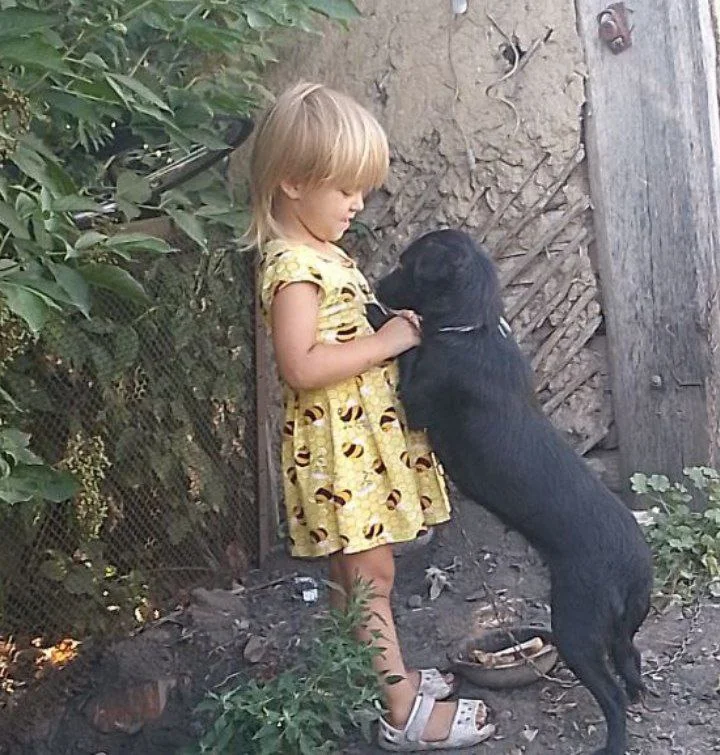
The owner of the house brought a two-month-old puppy home from work one night, when his daughter Veronica was born - by that day she was also two months old, and turned out to be the same age as the puppy. Nochka - generally affectionate and infinitely faithful - of the whole family loved Veronica most of all: she did not leave her side, resignedly allowed herself to be pulled by her ears, spent days lying with her on the old sofa pulled out into the yard, and she, stroking Nochka on the stomach, felt sorry for her all the time.
And one day the dog ran away. It’s not that she came to her yard completely, but as soon as the owner, or the hostess, or one of their three children tried to approach her, she immediately disappeared again. And then - winter was already here, it was cold - it came, sat on the porch and began to howl. Don't whine or growl, but just howl. Oleg—that was the owner’s name—tried to approach, but Nochka ran away and began howling again, as if she was calling somewhere. It turned out that she really was calling - she brought Oleg to where her four newborn puppies lay: two had already died from the cold, and two were still alive, and she asked to save them.
They say that Oleg loved his home and his village with the same devotion with which Nochka loved his daughter. He worked at a fish farm, and going around the local ponds by boat was his favorite thing - feeding and catching fish, making sure there were no poachers. He caught, guarded, admired the water meadows - and really wanted to fight. And all the time, especially in days of doubt and reflection, he talked about this to his wife Victoria - he said that if a war started somewhere, he would immediately go.
Victoria tried to argue that she and her three small children needed him more at home, but her arguments didn’t work. Oleg's brother fought in Chechnya, but Oleg himself did not have time - he was still a teenager then. And either from then on he wanted to prove that he himself could do just as well as his older brother, or he had heard enough of heroic epics - in any case,
The war, as far as Victoria remembers, has always been with him. And he began to wait for her long before February, and when February came, he began to get ready. My wife said: don’t go. That's no use.
Oleg began to reassure her: he said that he would not sign a regular contract, but another one - a reserve one. This, he said, is a special contract under which you only need to go to training camps from time to time, but in general you spend almost all the time at home. Well, I went and signed, and Victoria did not suspect anything. And one day he suddenly warned: they would take me away in a couple of weeks. Where? And they took it away - in April 2023. And these were the words he said as a farewell - that he was leaving, “as long as there weren’t *** in his yard.”
For a year she was approaching the court - and although she was still far away, she was getting closer. The children seemed to be used to the roar and drones, but they were still mortally afraid - and every time at night, when they heard something rattling or flying, they jumped out of their beds and ran to the kitchen to their mother, hiding their heads in her armpits. In May, Nochka had to calm down her children: six puppies were born, four were distributed to neighbors, and they decided to keep two, a black one like their mother and a red one like their dad. And they were two months old when the occupation of Sudzha began on August 6.
From half past three in the morning, roars and explosions were heard - but no one paid any attention: these sounds here had long ago become familiar, albeit terrible, white noise. They just went back to sleep. Waking up in the morning and turning on the phone, Victoria learned that there was a breakthrough at the front and that she had to leave. Then the electricity, gas, and internet disappeared. Panic began - and only the city administration asked to remain calm and the neighbors assured that soon all this would end, that there was no need to be nervous. A couple of hours later the neighbors left without a word. Victoria and her children, without a car and without communication, were left alone.
She went out into the yard - the only one left to ask for help was her husband, who was lying in the hospital, and she had to get through to him. Trying to catch at least some signal, she stood on a bench and extended her hand with an old push-button telephone. And then, turning my head, I saw a rocket flying in the sky above the yard - it seemed like it was straight at it. She fell from the bench into the grass, covered her head with her hands, and managed to think that she was going to die, but the rocket flew further and exploded into fireworks somewhere to the side.
She finally got through to Oleg, and he sent an acquaintance from Kursk to pick her up. No one, including the driver Alexander himself, knew whether he would get there or not, but he got there when machine gun fire could already be heard in the village. We drove around in a roundabout way, through fields, and then on the sides of the roads we saw civilian and military vehicles burning and burning. Having crossed the bridge over the Loknya River, we saw another one, a military one, folded in half from the explosion - soldiers were walking around it and collecting what was left of its passengers. Victoria tried to cover the children’s eyes with her hands so that they wouldn’t see her.
So we got to Kursk - and already at the entrance to the city we realized: there, in the yard, in a kennel on a leash, Nochka and her two puppies remained. They forgot the dog.
At night she had nightmares, and in the morning, waking up in a strange house, in a strange city and in a strange almost peaceful life, Victoria told Alexander, who allowed him to stay with him for the first time: “I want to go home.”
Then we decided to wait a couple of days - maybe it would all be over. A year and a half has passed and it’s not over.
Alexander turned out to be the only person who risked for the sake of this - stranger, in general - family and was able to save it, and Victoria was truly grateful to him. But time passed, and it was impossible to live in his house indefinitely. She found a rented apartment and tried to find a job, but people in Kursk were reluctant to hire her.
The official pretext of the administrators of “Pyaterochka” and “Magnit”: “But you will take it and leave, and we will look for the person again,” although where can they go, fire victims with houses blown to pieces, with mined roads and courtyards where neighbors buried the dead? What a job - people in Kursk are reluctant to see them even on the street. “They came in large numbers,” the Kursk residents throw at them, “with full support, they also get monthly payments, and they feed three times a day, and they bring everything for free, there were unfortunate people. Register me in Sudzha!” The neighbors downstairs, meeting Victoria at the entrance, look askance as if they were waiting for someone to break into their house at night and completely destroy it. They don’t understand that Victoria would be glad to never come here - and even now, if she had a choice, she would go to her explosion-torn yard and the ruins of her house, just not to live in this alien and hostile city.

In fact, Kursk residents still hated refugees, mainly because of money - because of the certificates for new housing that they were given and monthly payments of 65 thousand rubles. Victoria did not try to dream about a housing certificate from the very beginning - the sale of the house, based on her word of honor, was not formalized in any way, and the relatives of the former owner, who were somehow found, said that the courts and the rest of the bureaucracy would become possible only after her, the former owner, death. The only thing left to live on were payments - but from the new year they were canceled too, and there was absolutely nothing to live on. She wrote to everyone she could - starting, of course, with Governor Khinshtein. The tearful “hear me” was answered by a long but formal tablecloth: “According to Part 1 of Art. 3 of Federal Law No. 218-FZ of July 13, 2015...” ( see footnote 1 ) In general, she understood little from his answer.
And if at first successive governors and a pantheon of local officials promised that they would return everything as it was, then they took away the little that still remained - the money with which the region compensated them for moral damage. When it was decided to redirect funds from payments to the needs of the region, they went to a rally - they seem to be the last ones in the country who are still capable of this. The Authority came out to meet them and, in the confident voice of Governor Penkova’s adviser, lectured them: “the men in Sudzha should not have run away from the Armed Forces of Ukraine, but defended their homes.”

Oleg had been defending—or thought he was defending—his house and yard by that time for more than a year. From him came long letters, by the standards of ordinary correspondence in the messenger, that he wrote while on duty at observation posts. The letters were bravado, colorful with emoticons and heart emojis, but behind all this one could hear that real combat operations were far from what he had dreamed of all his youth. He wrote:
“We’ve been sitting at the observation post for the seventh day, the food has run out, we’re waiting for it to be brought, all that’s left is water and cigarettes. Every second I remember the taste of the soup I ate on vacation, I’m drooling. So the situation is not great, they are shooting from both sides, and the bird (drone) is testing all its *** nerves... Now I’m writing the body is glowing, and this *** is hanging over us, I really apologize for the rudeness, but my mortar went off... So our mortar went off, a piece of shrapnel landed on our pancake (dugout)))) the small pancake cannot straighten up, do not walk around to stretch your legs and back, I sleep, one might say, on the ground. During all these days, I think my legs and back will go home on their own))) Well, okay, it’s an everyday matter. Hello to Mom and Grandma, hug and kiss the children. I miss you, we’re waiting for demobilization.”
The second year of his stay at the front was ending when he wrote to his wife that he had been transferred to the “assault”. The last message, which arrived on April 21, was: “We are leaving for a combat mission. I’ll write later.” Later the ninth month does not come.
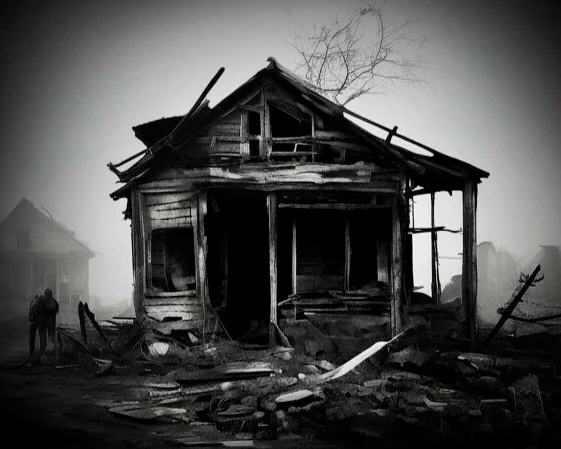
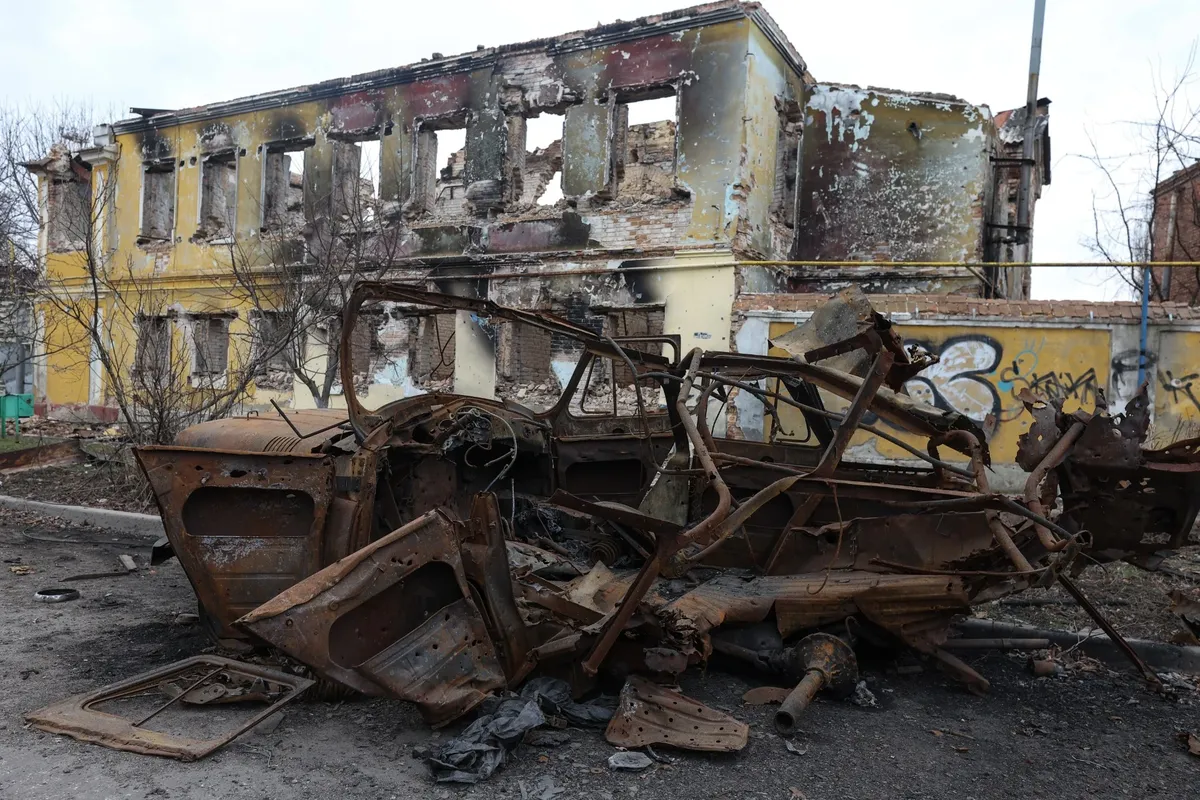
There is little left of the court for which he left on this mission. Victoria saw her house and her yard in one of the many videos taken by volunteers who come to Sudzha: a crumpled skeleton without windows, without a roof, without a fence, without an apple tree and without a doghouse. And without Nochka, who went missing. But she still dreams of returning to such a dead and plowed yard. She says that sometimes she thinks: there, in the burning yard, she will find her husband.
footnote
- The meaning of the answer was that Victoria needed to apply to Rosreestr, and in the event of a dispute about the ownership of a property or the impossibility of registering it, to the court. The first would lead Victoria nowhere, because the rights to the house are not documented in any way, and the second, because there is no one to sue: the official owner is incompetent.
This material was published in the sixteenth issue of Novaya Gazeta. Magazine". You can buy it in the online store of our partners.