
Translated material
News PTSD
The influence of news on the psycho-emotional state of their consumers. Psychotherapist Research

Photo: Alexey Dushutin / Novaya Gazeta
In November - December 2025, a survey was conducted that was supposed to help identify the influence of news in the media on the psycho-emotional state of their consumers. A link to a Google form with questions and an invitation to take part in the survey were posted on social networks.
The conceptual basis of the survey was the idea of secondary mental traumatization. That is, psychotraumatization, which occurs not in people who directly experienced a life-threatening event or who directly witnessed such incidents, but in those who receive information indirectly. The questionnaire was based on questions used in screening tests for post-traumatic stress disorder (PTSD) and secondary traumatic stress.
The survey involved 474 people aged 14 to 93 years. 16 of them indicated that they do not follow news about socio-political events, so their questionnaires were not taken into account when processing the results.
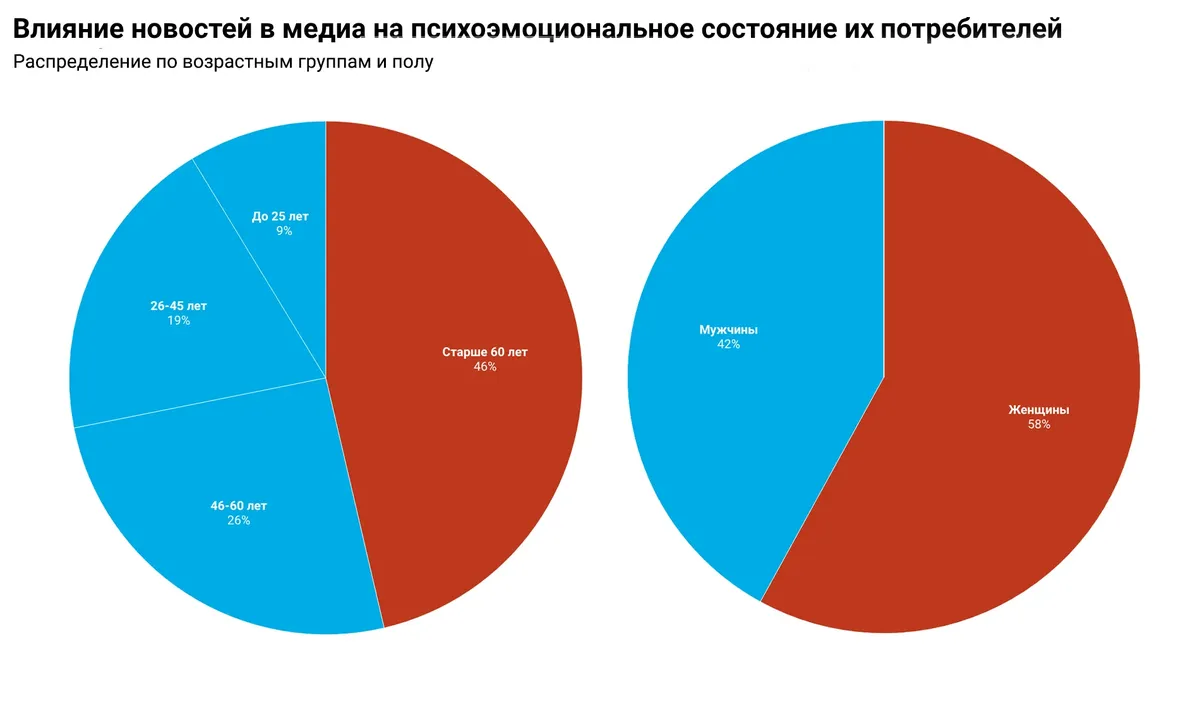
The median age was 60 years. The respondents were divided into four age groups: under 25 years old - 40 people, from 26 to 45 - 89 people, from 46 to 60 years old - 117 people, over 60 years old - 212 people. Thus, the last age group turned out to be the largest.
The ratio of men to women was 42 to 58% (192 and 266 people).
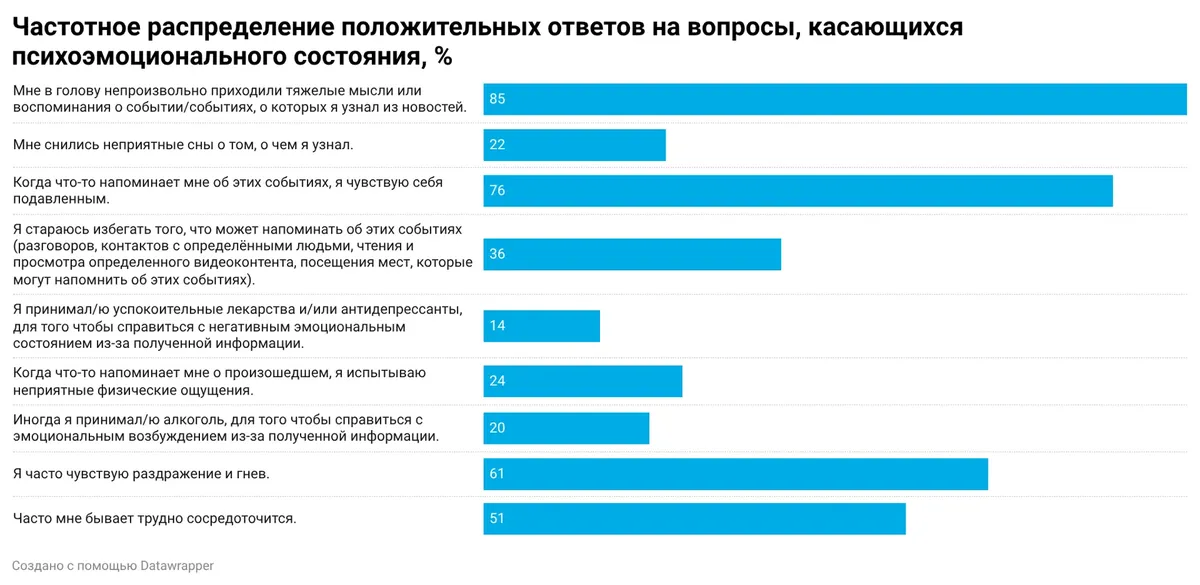
An analysis of the frequency of responses to questionnaire items related to stress symptoms showed that the largest number of positive responses were for the statements “I have involuntarily had difficult thoughts or memories about an event/events that I learned about from the news” (86%) and “When something reminds me of these events, I feel depressed” (76%), as well as for the statement “I often feel irritable and angry” (61%).
Response frequencies were compared depending on gender and age group.
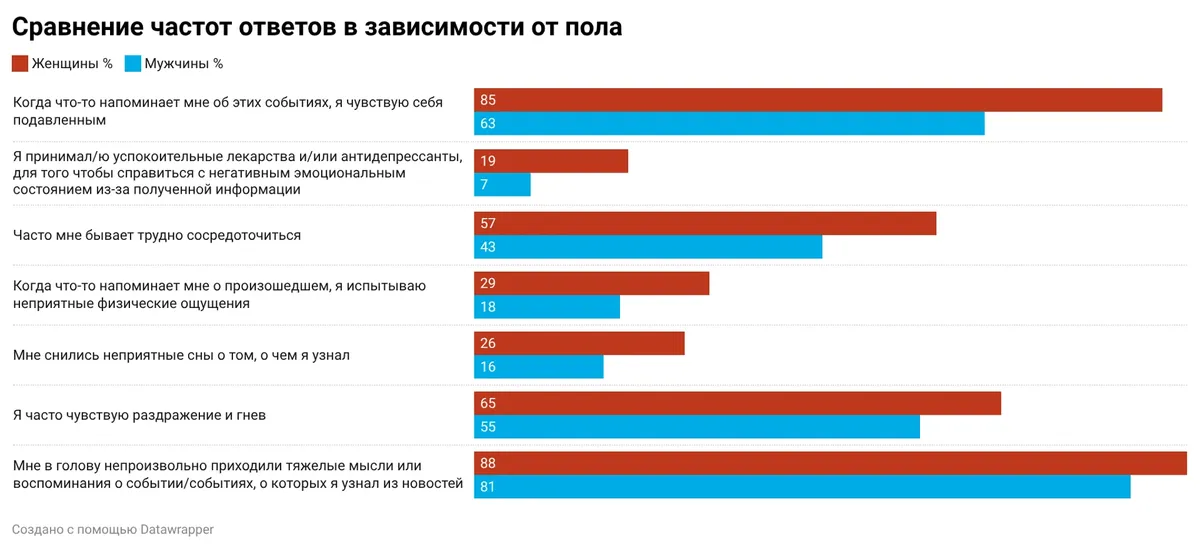
Compared with men, women were more likely to experience depression in response to information received from the news, more often resort to medication to cope with negative emotional states, more often experience difficulty concentrating, unpleasant bodily sensations in response to stress, and more often have dreams inspired by the information received.
Comparison of age groups also revealed statistically significant differences on a number of items.
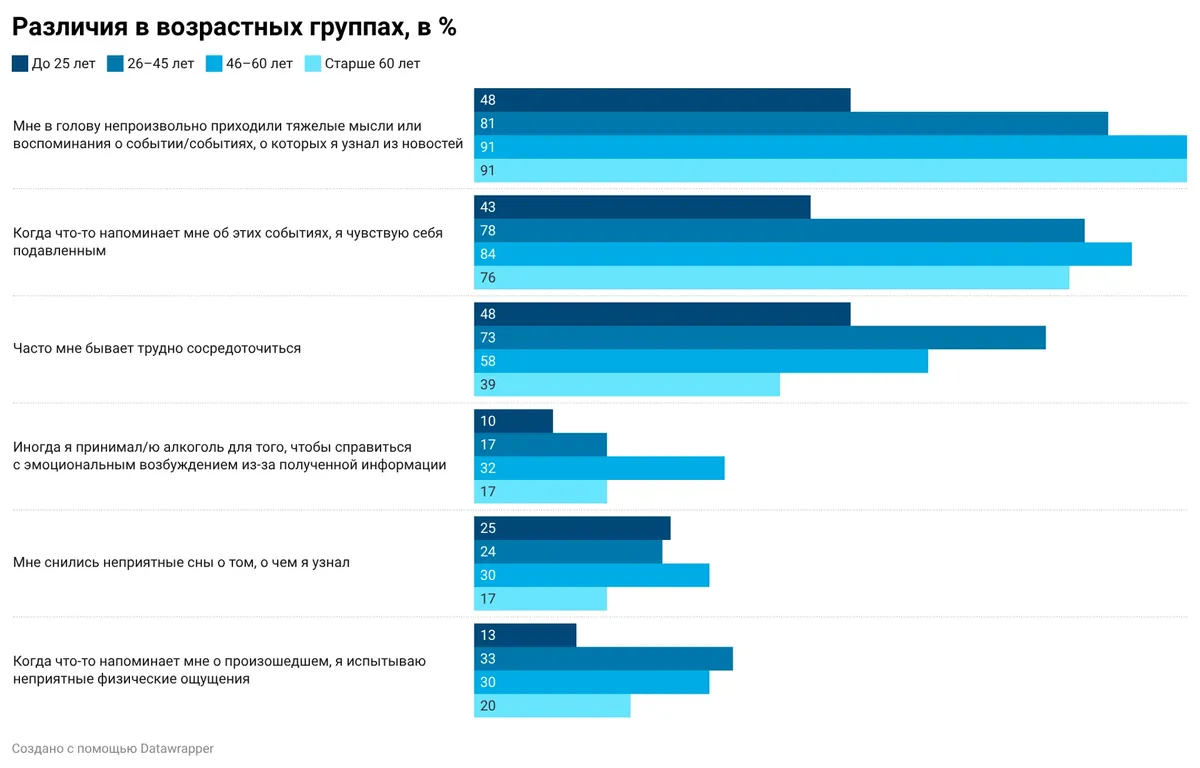
As can be seen from the diagram, older people reacted more sharply to negative information from news media content. Respondents aged 46–60 years were more likely than other groups to experience involuntary difficult thoughts or memories of events they learned about from the news, more often felt depressed, and more often resorted to drinking alcohol to cope with their emotional state. And representatives of the age group under 25 years old generally gave fewer positive answers to the questionnaire.
Thus, the analysis showed that
News information causes symptoms of stress in its consumers; its impact on the psycho-emotional state should not be underestimated. And also that there are gender and age differences in the results of this influence.
footnote
- For this purpose, analysis of contingency tables was used using the Pearson chi-square test (𝜒2).