
Translated material
“The older ones are more afraid. And young people have nothing to lose"
The war through the eyes of a 55-year-old volunteer and a 19-year-old contract soldier from the same brigade of the Ukrainian Armed Forces. Material from hromadske publication
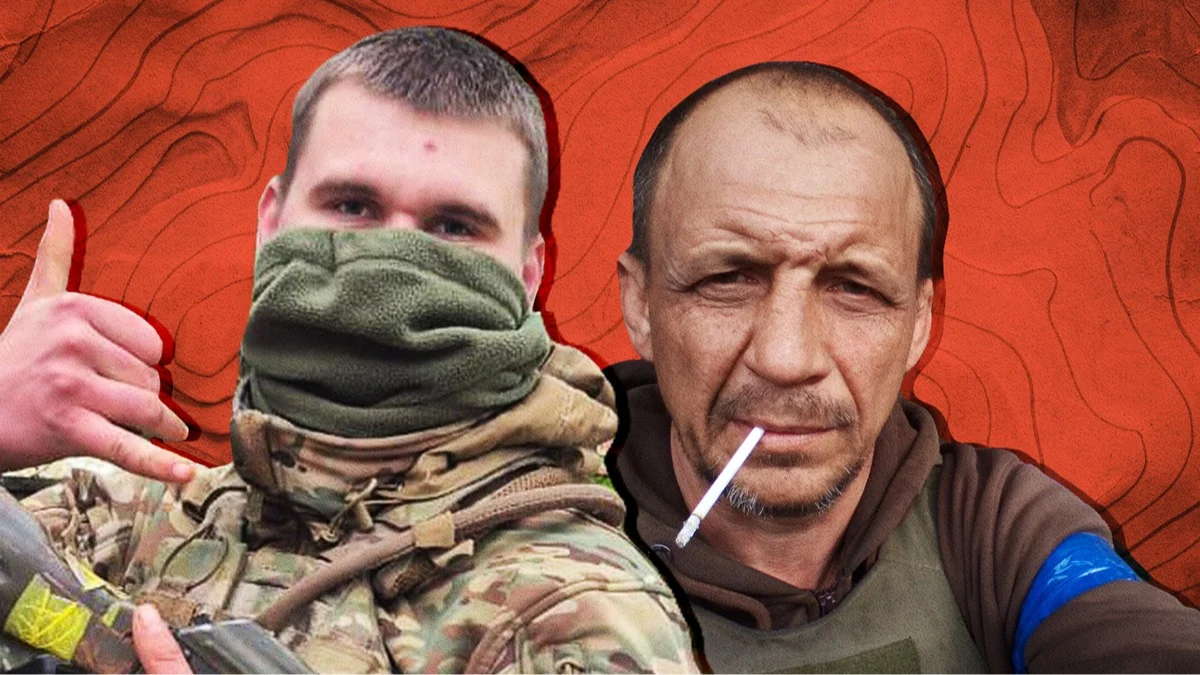
Yaroslav Kravchuk and Dmitry Kovalchuk. Collage: hromadske
EDITOR'S NOTE
The material was published in hromadske. With the permission of our colleagues, we publish its Russian version in its entirety, with minor editing. The material was released with the support of Media Network.
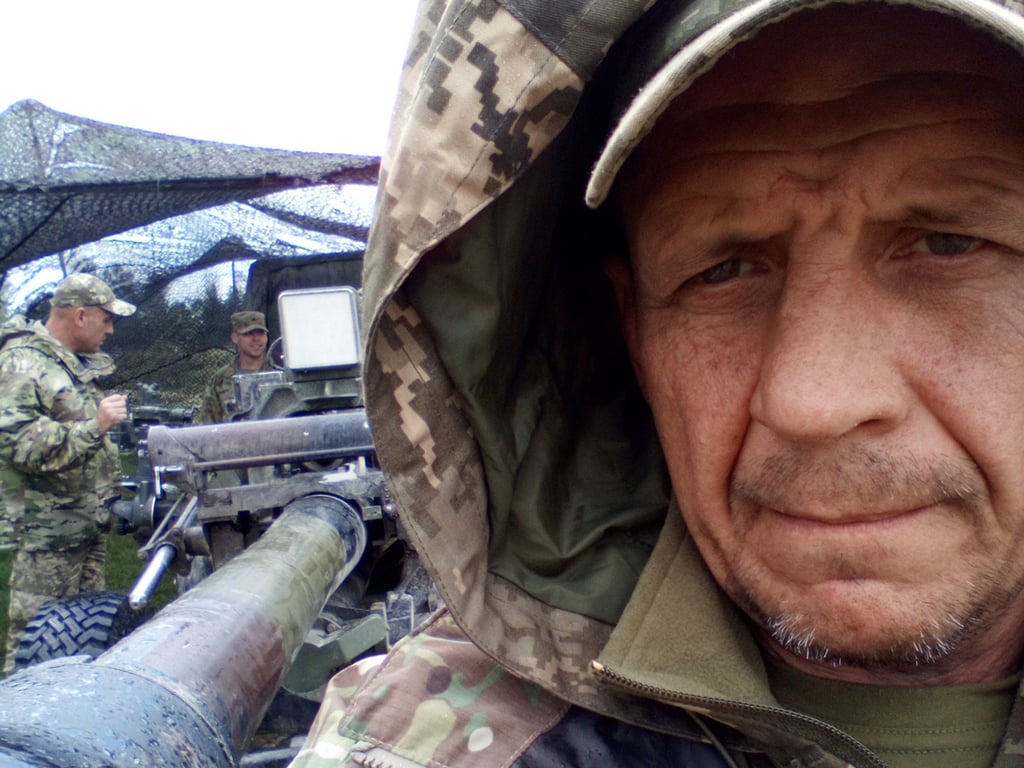
On February 24, 2022, the director and coach of the children's and youth sports school for Greco-Roman wrestling, Yaroslav Kravchuk, woke up at 5 o'clock in the morning. I made some tea. Yawned. The night before I was in the bathhouse with my students: tired muscles are best restored there.
Aircraft buzzed outside the window. I thought: probably night exercises at a military airfield, which is not far from his native Zhitomir.
Suddenly a call from an old comrade, the commander of one of the combat brigades: “It has begun!”
“Pack your bag,” 51-year-old Yaroslav woke up his wife. She was no stranger to this: the man fought in the ATO ( Anti-terrorist operation in eastern Ukraine - the first stage of the Russian-Ukrainian war, which lasted from April 14, 2014 to April 30, 2018 - Editor's note "hromadske" ) and did not hide: if the offensive begins, he will go again. Although he had a “deferment”, like all the other teachers.
“I don’t remember what words she used to see me off, but there was nothing joyful there. When I hear now: “Let those who want to go to war,” then I will answer this: over the years I have not met a single person who wants to go to war. We walked with obscenities and ruined plans, because we knew: the Muscovites didn’t just want to change a flag. They are moving here to destroy everything,” is his motivation.
At half past nine in the morning, Yaroslav, the father of two sons and a lover of carp fishing, was already at the military registration and enlistment office. There I was waiting for the guys with whom I went through the ATO. It was agreed with them in advance: as soon as Russia attacks, they unite and go to war.
Yaroslav called everyone. No one picked up the phone, and later they called back: “We got weapons, we’re going to the defense.” They knew: if they joined him, then 25 (25 separate airborne Sicheslav brigade) , 95 ( 95 separate airborne assault Polesie brigade) or 30 (30 separate mechanized brigade named after Prince Konstantin Ostrozhsky) brigade would await them, which would find themselves at the epicenter of events as the most combat-ready.
Kravchuk got angry:
“And in the defense you can weave. I then said that if necessary, I would ask everyone. And the results will be on the face, too.”
On the evening of the 24th he was already in the 2nd battalion of the 95th brigade - dressed, shod, with weapons. And he went to carry out his first task: at one of the military airfields they were waiting for an enemy landing.
***
Meanwhile, in a village in the Rivne region on February 24 at half past six in the morning, a grandmother came to wake up her grandson:
- Dimka, there is war on the street!
- Wow! - he exclaimed. - Let's go watch TV.
15-year-old Dima Kovalchuk is an ordinary guy. He loved to play football with the boys, go fishing and pick mushrooms, he lived with his mother, grandmother and two brothers. The eldest served at one time in the ATO. They called him in the morning: “Andryukha, come back!” And he went.
For the student, the day was spent in the news, in Telegram channels, and correspondence with friends. The parents wanted to send several classmates abroad, but they were stubborn: this one stays, this one doesn’t want to, and we won’t go. Only one girl was taken away.
That day, the connection with my older brother disappeared, and my mother began to worry.
“And I knew that everything would be fine with Andrei, because he understands military affairs and will get out of any trouble unharmed. There was no thought that he would be wounded or something worse. And so it happened,” says Dmitry. Indeed, that day my brother made himself known in the evening: everything was fine, he was completing his assignments. My brother fought for two years and was written off due to health problems. Now he's home.
First months: released 200 mines per day
In the first days of the great war, Yaroslav Kravchuk did not allow his brother-gunner to shoot at our helicopter, which he considered enemy in the fog. He hit him on the shoulder, and the shot missed the helicopter. Yaroslav was praised. One of the guys found a major's shoulder strap and attached it as a joke. So the call sign Major stuck to him.
The first months of the invasion for Yaroslav were the most difficult in all four years.
“Spring 2022. Highway Slavyansk - Izyum ( In 2022, after the occupation of Izyum, the Russians used this route as a key route for the advance of Russian troops to Slavyansk and Kramatorsk - Editor's note "hromadske *" ) . The Muscovites were rushing at her. And if they succeeded, the Ukrainian group in Donbass would be completely surrounded. Our battalion covered the infantry near the village of Dolgenkoe (a village in the Izyum district of the Kharkov region -* Editor's note "hromadske *" ) . What was happening around is unknown. There are no Starlinks. Somehow the information arrived late. We only knew what was to our right and left. There was no artillery as a concept, because there were no shells, and there were two tanks, and only one was hidden. Our battalion's weapons include three mortars. They released 200 mines per day - this is a very high intensity,” he recalls that time.
Ukrainian fighters managed to hold their position, although no one replaced them. For four months the enemies had not advanced a meter. Yaroslav says that for this they did the incredible with their brothers-in-arms, they jumped above their heads.
The ATO experience is nothing compared to a full-scale one. His friends, who lived through April - June 2022, agree that neither before nor after have they encountered such intense battle. And it was not little flowers that awaited them: Serebryansky Forest, the Kharkov operation, the defense of Kupyansk, the Kursk operation. They joke that for them this is already a resort.
What do you need to know about these operations?
- Serebryansky forestry is an area near the city of Kremennaya in the Lugansk region, where active hostilities took place in the battle for the Donetsk and Lugansk regions since 2022.
- A counter-offensive operation of the Ukrainian Defense Forces in the fall of 2022, during which they deoccupied most of the territory of the Kharkov region, in particular the cities of Izyum, Balakleya, and Kupyansk. Also known as the Slobozhansky counter-offensive.
- On February 27, 2022, Russian troops occupied Kupyansk, and already on September 16, 2022, as a result of the Slobozhansky counter-offensive of the Ukrainian Armed Forces, they liberated the city.
- Offensive actions of the Ukrainian Armed Forces on the territory of the Kursk region of Russia, which began on August 6, 2024, when the Ukrainian Armed Forces crossed the Russian-Ukrainian border near the city of Sudzha. The operation was the first large-scale transfer of military operations to internationally recognized Russian territory.
***
The first weeks of the big war in the Rivne region: the guys are erecting roadblocks, they don’t take Dima because he’s small. In the evening he and his friends walk around the village: there is darkness everywhere, it’s almost impossible to poke out your eyes. It felt like everyone had died out—people were afraid of shelling. And they happened - however, later and not in the village: somewhere they hit infrastructure and military units, somewhere they flew to Rivne. We learned about this from the news.
Dima did not go into much detail about the chronology of the war: at school and among themselves, teenagers at the age of 15 did not discuss this very much. He remembers how the Russians retreated from Bucha and the truth of their abuse of civilians was revealed.
What happened in Bucha?
The occupation of the city of Bucha, Kyiv region, lasted from February 27 to March 31, 2022. During the occupation, Russian troops committed massacres, torture and other abuses of the civilian population.
After the liberation of the city, the world media published evidence of mass graves and killed civilians, which caused an international outcry and an investigation into war crimes
“And what struck me most about the war was the looting of our people, who climbed through broken shops, empty houses, and took things out ,” he recalls. “ I saw a video of how they were caught and tied to poles. And I developed severe aggression towards my enemies when they cut off the genitals of our prisoners and shot them. I remember that before the execution, some guy lit a cigarette and exclaimed: “Glory to Ukraine!” (we are talking about Alexander Matsievsky, killed on March 6, 2023 - Ed. ).
The young man was finishing school, and gradually the thought matured in him: he would go to serve. Wants to be among the best. But he didn’t tell anyone about his desire.
He received a certificate and went to Poland to earn money: he picked apples. In November 2024, he turned 18. The day before, he left an application on the Azov website, which he dreamed of. They immediately called back from there: “Would you like to come to us? We are waiting for an interview." Passed it successfully. And then a question that turned everything upside down for him: “Do your parents know that you want to serve? They need to know."
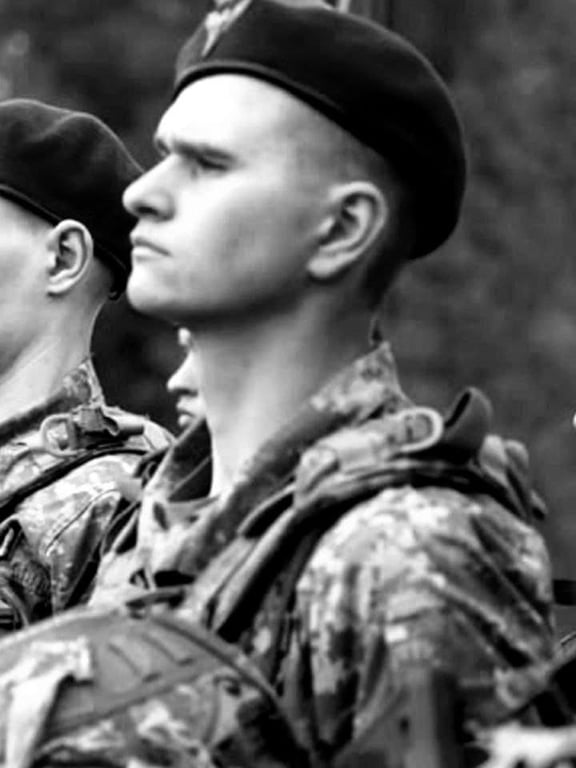
Dmitry retreated. I didn't want to scare my mother.
They vying with each other to get him into different brigades, but he chose the 95th. There they asked the same question, and without blinking he blurted out: “They know.”
At the same time, information was released about the “18–24” contract , which, according to the plan of the Ministry of Defense, was supposed to encourage young people under 25 to join the ranks of the Armed Forces. And the young man agreed to sign him for a year.
The family found out he was serving through TikTok. Some channel was filming a story about the first contract soldiers undergoing training. And Dmitry lit up.
“We thought you were in Poland ,” my brother called.
- It’s not me, it’s someone like me!
- Your mother recognized you.
- Well, ok, it’s me, so what?
Mom was crying. I was worried about one son, and then about the second: “Why do you need that army? You haven’t seen life.”
“But I didn’t regret it,” Dmitry, who was given the call sign Bledny, comments on his decision.
Now he is 19, and for a year now he has been performing the most difficult tasks in the 13th separate air assault battalion 95.
Many things seem cool and interesting to him: following the map to a landing, and on the spot discovering that there is a bare lawn there. Sit in a position when there are enemies ahead and nothing separates them. Let them get closer and “put them down.” He is interested in overcoming unpredictable difficulties and testing himself.
There are also painful moments: the loss of brothers-in-arms.
What the war taught us, what we learned about ourselves
The major is sure: even though he is an athlete, in war physical training fades into the background. The main thing is to withstand everything psychologically.
His first crew commander, during the battles for Dolgenkoe, taped his bag to his bicycle and ran away, leaving the fighters behind.
“But we ourselves chose him as commander in 2022, as the most experienced. And indeed, he created the illusion that you could rely on him.
We live in great times, all masks have been dropped, you can clearly see who is who. Here's an example: guys from a village who had the most vivid experience in their lives - how they got drunk when they were young, couldn't get up and fought in a club while sitting on their asses. And in war, when everything around is whistling and flying, they do everything as it should. And someone - such an experienced, such a seasoned kalach - gets on a bicycle and betrays his own. In war, everyone’s nature is visible, here you can’t pretend to be different,” is the conclusion of Yaroslav Kravchuk.
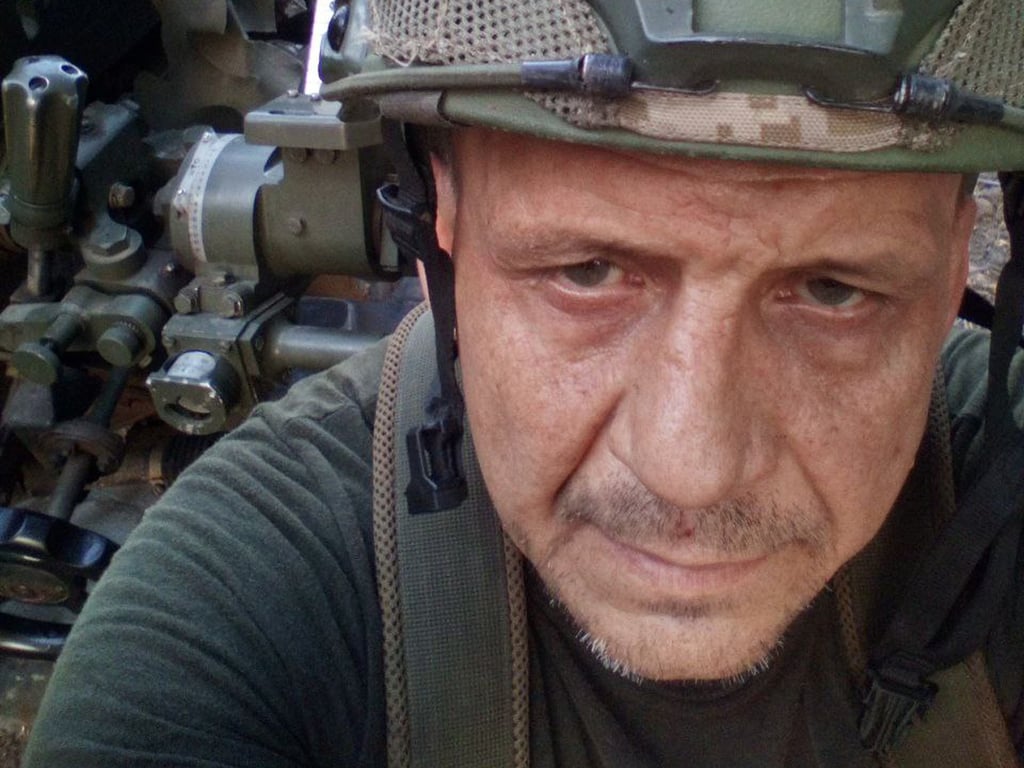
About himself, during these four years, he realized that he would survive anywhere, given the slightest opportunity, and also complete the task. I am convinced that this is the experience of that terrible spring of 2022.
“I know that responsibility to people is very strong in me. At the end of last summer, I was transporting artillery ammunition to the position, two cans of gasoline for generators. A drone flew into our car from behind, my machine gun, walkie-talkie, and the whole car burned out. I jumped out and escaped with bruises. And so I was tormented by my conscience before the unit. They lost their transport because of me,” he says.
Yaroslav called the deputies of the Zhytomyr Regional Council. They chipped in with the governor for another car. A week later he was driving to the position again and was more worried about the car than about himself.
The war gave him friends - even more than friends. These people, with whom I became so close, have grown together into one whole, which is called the word “brothers.”
***
Dmitry was once at a position in the Sumy region for 34 days. He says he really wanted something sweet. We shared a Snickers bar between two people and devoured it all day, getting a kick out of it. And one day the guy ran out to pick cherry plums: he knew that they were sweet, because the same ones grew at home. And I saw a parcel in the field, and next to it was a drone.
“That is, it was a transmission to us, it was shot down. I think it’s worth taking the risk and taking it - or not. I understand that there is water and food there, and I made this jerk, about ten meters into the field. I open it, and there are six bottles of water, and all of them are intact! I fly into the dugout: “Let’s have fun!” At that moment I realized: we must appreciate everything. In war, the meaning of life changes,” he openly shares.
When he was “rolled back”—ordered to leave his position—he got to the house where he lived with his guys. Dirty, covered in blood, because a soldier was wounded on the way and carried him on himself. He could barely stand. He walks into the yard, and there are strangers there. And he so wanted to go to his people, to tell them everything.
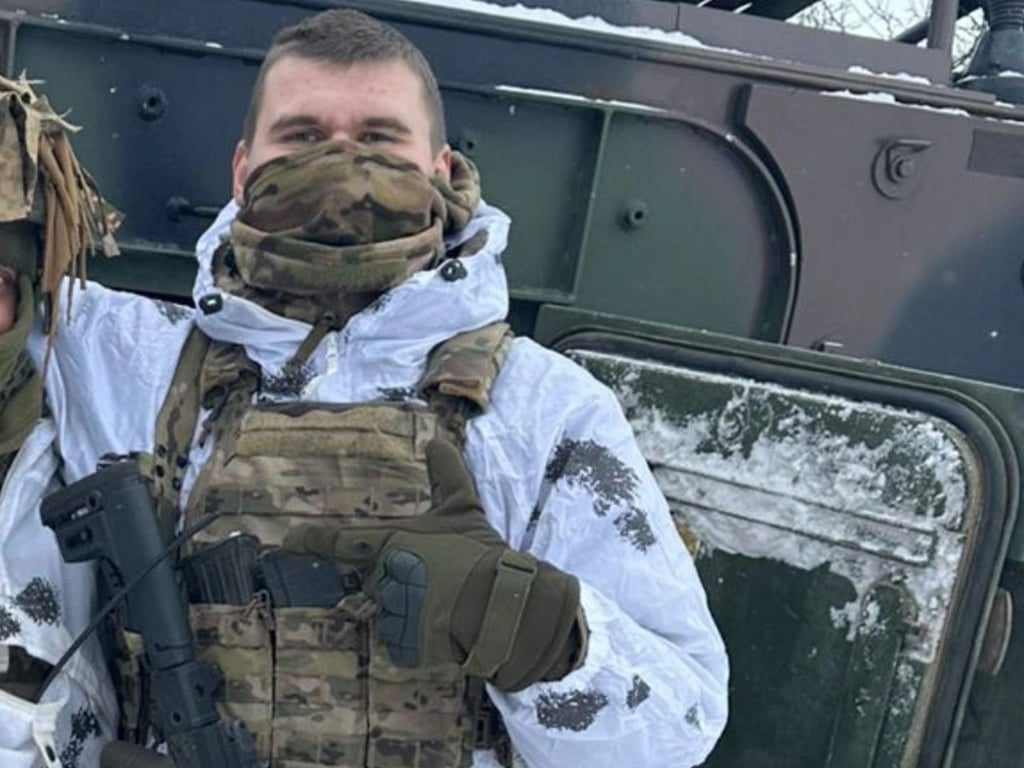
“Where the hell are those with whom I started, did I get trained, and just signed contracts? No. In positions. In the house there are others lying on the beds (and I remember who slept where). It hurts. It's a shame. The new guys ran up: “Well, tell me, what’s there, how’s it going?” And I: “Come and see.”
Already washed, in the evening I sat down in the yard. The birds are singing, everything around is intact, beautiful all around. I thought again: we must appreciate every moment! And to involve everyone in this so that they value life.”
Dmitry also realized about himself that he had become more responsible during the war. This is especially true for training new students.
“These skills determine whether a person will survive. And if we send someone untrained to the front line, then consider that we have betrayed him,” he says.
His dream has come true - he is among the best in the war. He met such friendship, such support, such a sense of shoulder, which he had never had before. Of his classmates, he is the only one who serves; almost no one writes to him or asks how he is doing. And he no longer has anything to talk about with those who did not fight. But I am constantly in touch with real friends whom I have met over the past year. Even if they are far away.
Seniors - Juniors
Yaroslav Kravchuk is now 55. There are few people like him at the same age. Mostly men over 40 and young. He thinks about the latter like this:
“They are more digitally responsive. They are more dexterous, have better health, are more resilient and effective in extreme conditions. They don’t yet have a feeling of fear; they think that they are immortal, that death is something so distant. I remember myself when I was young, even though it was in the 1990s, I lived with a bang. A time of hope, I never gave up, sometimes I woke up covered in blood because I had a fight with someone in the evening, but I knew it was temporary.”
As for military experience, he doesn't think the older ones have more. All new recruits are taken into account evenly and sent to tasks with knowledgeable people. And six months later, the young fighter can do what took his elders years to achieve.
Dmitry Kovalchuk agrees with him:
“If you take a man at 40 and at 20, the difference is big. We are better friends with phones; we catch the latest information on the go. And tell and show the elder five times. It’s precisely everyday experience that doesn’t play a role in war, because there is no time to think about family, wife, child. The older ones have it all, and they are more afraid. And young people have nothing to lose. Here you are, brother, enemy, danger.”
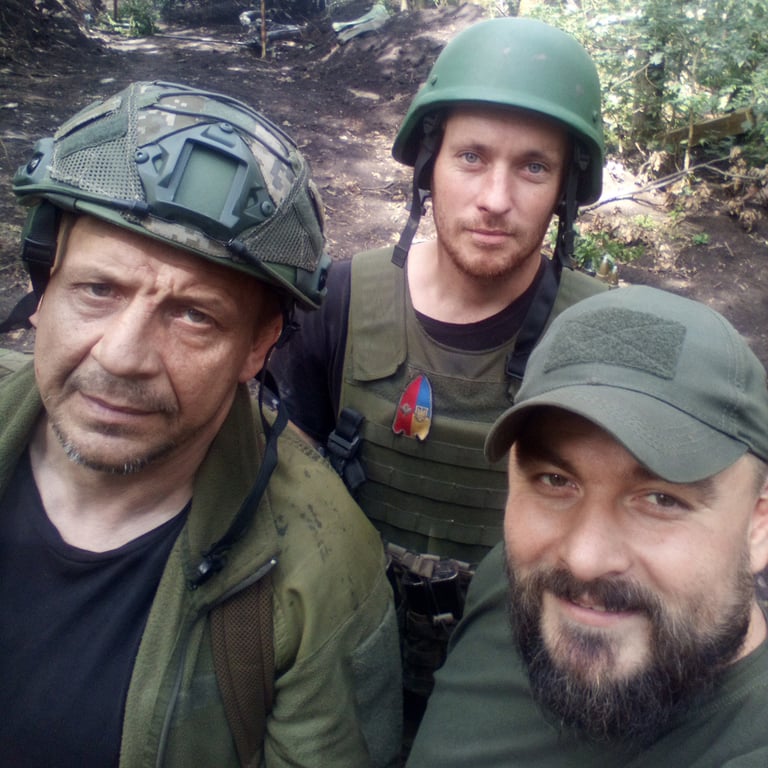
What gives strength?
Yaroslav Kravchuk remembers well how his great-grandmother and grandmother, instead of fairy tales, told stories in childhood about how they were exiled to Siberia, beyond Lake Baikal, in the 1930s. They dispossessed us because the family had two cows. They were transported in freight cars. They returned to Ukraine in 1954.
What do you need to know about dispossession?
Dispossession is the forced confiscation of the property of wealthy villagers (the so-called kulaks) and their eviction during collectivization in the USSR in the early 1930s. This political repression was accompanied by arrests, deportations and violence, and also aimed at eliminating private agriculture and strengthening the collective farm system.
“In my arms was my little mother, who was born in the Irkutsk region, and her older brother. He soon died of meningitis. That is, the history of my family shows how the adventures and power of Muscovites in Ukraine end. I went to stop them. And when it’s very difficult, I remember my relatives or go to their graves, and it becomes easier that we are doing everything right. I tell them: “Sleep peacefully,” he admits.
***
Dmitry Kovalchuk was getting out of the position where he spent more than a month. I walked on wobbly legs through a large corn field. There were unexploded mines everywhere, and he repeated: “Lord, save and preserve.” He felt that he would not stay here, that God would lead him out. A comrade stepped on a “petal” ( Soviet-made PFM-1 anti-personnel high-explosive mine – Editor’s note “hromadske ”) , his bone was broken, a drone was hunting for them, but the guys got out.
“And I really wanted to call my mother,” says Dmitry. This young fighter, who did not go on vacation because war was fun, felt the strength his mother gave him. A mother who is waiting, who is praying for him.
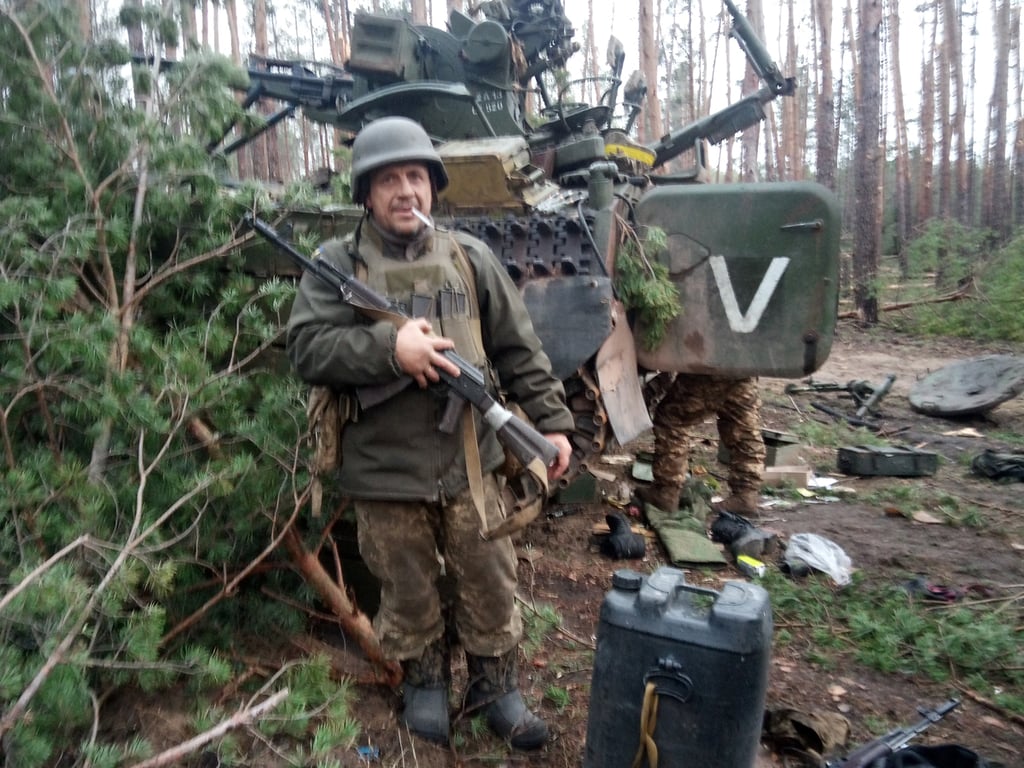
What after the war?
Even now, coach Yaroslav Kravchuk finds time to manage the school from a distance and hold competitions. He says that four students died in four years: Dmitry Konova (born in 1984), Ruslan Rechko (born in 1977), Alexander Zagursky (born in 1988), Andrey Yaremenko (born in 1999). All are candidates for master of sports.
The major dreams of raising at least three Olympic champions after the war.
“And we will be proud of ourselves when we finish this whole thing. And we’ll finish well,” he concludes.
Dmitry Kovalchuk's one-year contract expires on March 13, and he will extend it. He would like to remain in service after the war - to improve the army. At the end of the conversation he recalls:
“In sixth or seventh grade, we drew pictures and sent them to the military. And then I would never have thought that children would also send pictures to me, 18 years old. And it gives strength, it’s nice. I really wish that they would no longer be sent to current sixth-graders. That's what we're here for."
Author: Natalya Mazina