
Translated material
War and witnesses
20 films and books about the invasion of Ukraine that will help you understand the catastrophe that happened after February 24
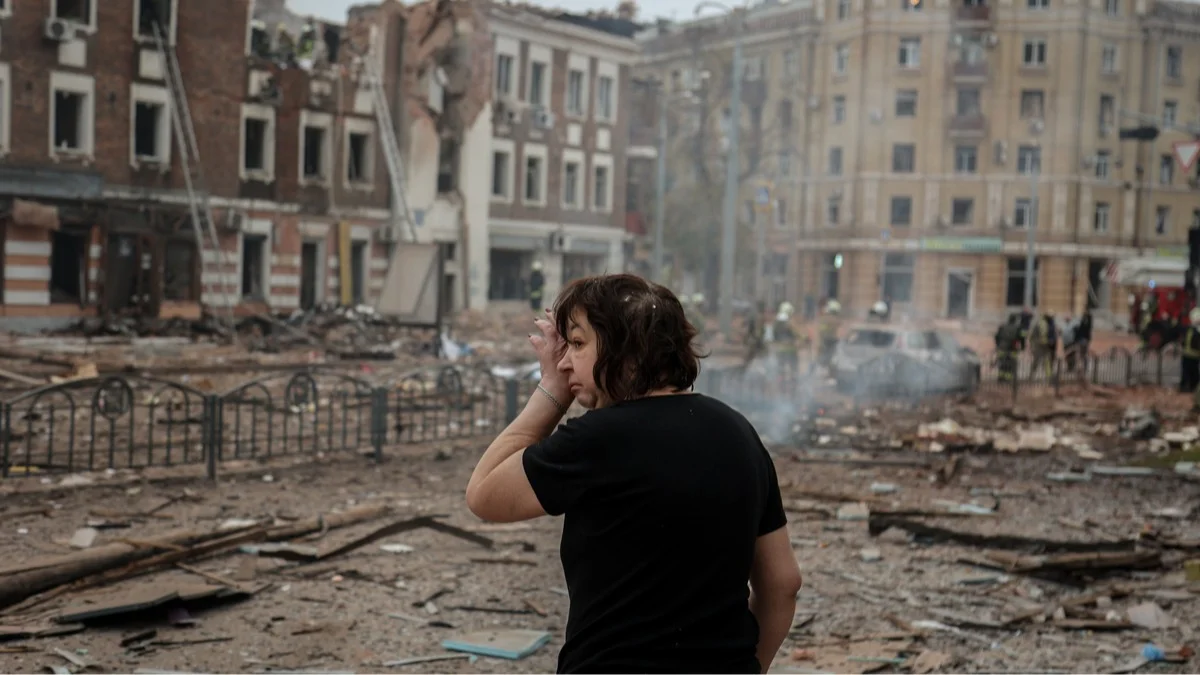
A resident of Kharkov after a missile attack on the city, October 6, 2023. Photo: Yakiv Lyashenko/EPA
Four years of destructive war are reflected not only in news reports, but also on the pages of books and on big screens. Ukrainian and foreign authors are trying to record and tell not only stories from the battlefield, but also everyday life - life in which routine coexists with sirens, shelling and death. And show how the perception of war is changing.
“Novaya Gazeta Europe” has collected a selection of the main materials of recent years that help to understand the scale of the disaster.
“2000 meters to Andriivka” (2000 Meters to Andriivka, 2025)
A documentary film by Ukrainian director Mstislav Chernov about the battles for the liberation of Andreevka, a tiny village ten kilometers from Bakhmut in the Donetsk region, the battle for which became one of the most difficult and lengthy episodes of the war. The author shows battles and shelling, shares his behind-the-scenes reflections, inserts footage from military GoPro cameras, and also talks with fighters.
“Television and newspapers report the names of liberated villages, the number of wounded, killed, kilometers traveled, but this is all abstract. I wanted the spectators to be in the same trench with our military and that they would not have the opportunity to leave this trench until they reached Andreevka. When people leave the cinemas, they are shocked, because they have never seen such a war,” the director said in an interview with Novaya Gazeta Europe.
The film was included in the shortlist for the 2026 Oscars in the Documentary Feature category. In 2024, Chernov’s documentary “20 days in Mariupol” won in this category.
“20 days in Mariupol” (20 Days in Mariupol, 2023)
Another documentary film directed by Mstislav Chernov, shot in a team with photographer Evgeniy Maloletka and producer Vasilisa Stepanenko. The work became one of the first and strongest materials since the beginning of the full-scale Russian invasion.
The film is based on filming from Mariupol during the siege in the spring of 2022. The authors of the film recorded in detail the blockade and capture of the city, shelling and mass bombing, information about numerous civilian casualties.
This film brought Ukraine the first Oscar in history. But Chernov, accepting the award, said: “It would be better if this film did not exist.”
Looking at Women Looking at War, 2025
A book by Ukrainian writer Victoria Amelina, written in English in diary format about the war and the search for justice. It includes notes from the author, interviews, reports, sketches from the field and stories about women who found themselves at the center of the fighting. Through stories about representatives of different professions - lawyers, nurses, researchers, cultural workers - the author shows how closely routine and tragic events are intertwined.
Amelina began work on this text immediately after the full-scale Russian invasion in February 2022. Initially involved in humanitarian aid and volunteerism, she later began researching war crimes with a human rights organization, documenting the testimonies of survivors and what happened in liberated cities.
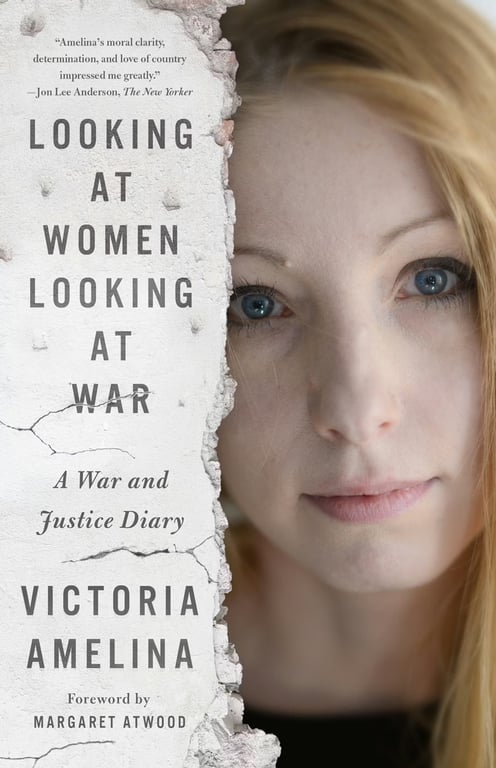
The writer died at the age of 37 as a result of a Russian missile attack on a pizzeria in Kramatorsk, before finishing the book.
In 2025, the work received the British George Orwell Prize, which is awarded for works that “can transform political text into art.”
The book became the first work of a Ukrainian author to be awarded this prize. Amelina's husband received the award - three thousand pounds sterling - at a ceremony in London. He noted that all funds from the prize fund will be used to support the New York Literary Festival, which Amelina founded in 2021.
"The Invasion" (2024)
A documentary look by director Sergei Loznitsa at Ukraine at war. Loznitsa, a man originally from Belarus, who studied in Russia, considers Ukraine his new homeland and lives in Europe, finds himself at an equal distance from the opposing forces and defends his right as an artist to film about violence and resistance without ready-made verdicts.
“Invasion” is a chronicle of everyday life, self-defense and self-organization of the inhabitants of Ukraine after the outbreak of war in February 2022. The film premiered at the Cannes Film Festival in May 2024.
"Peaceful People" (Intercepted, 2024)
Documentary film by Oksana Karpovich, based on intercepted telephone conversations of Russian soldiers. First shown at the Berlin International Film Festival in February 2024.
The main directorial technique in “Peaceful People” is the contrast between Russian soldiers and civilian Ukrainians trying to build their lives after the outbreak of a full-scale war.
In foreign distribution, the film was called “Intercepted,” with a reference to those same telephone conversations of the Russian military. Among these calls are dialogues between soldiers and relatives and friends, who here become the collective voice of that very “Russian world” around which the film’s narrative is built.
“The Showman: Inside the Invasion That Shook the World and Made a Leader of Volodymyr Zelensky”, 2025
American journalist Simon Shuster described in detail the first year of Russia's full-scale invasion and how Vladimir Zelensky and his entourage lived through this period.
In 2022, Shuster was in Kyiv almost all the time next to the Ukrainian leadership. Having received rare access to the presidential complex on Bankovaya Street, he observed the work of the authorities from the inside.
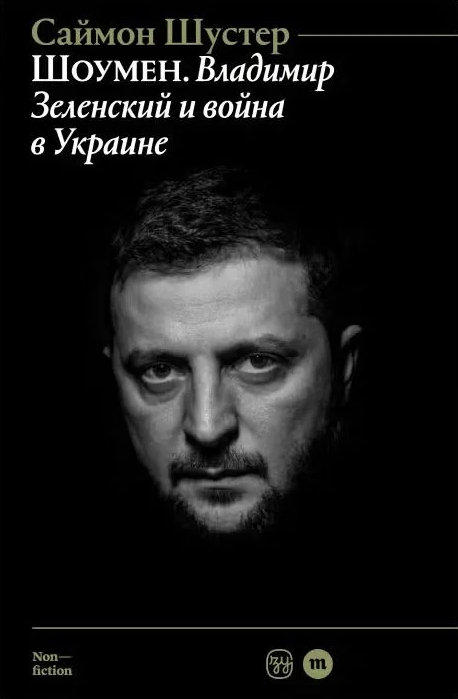
The journalist talked with members of the government, first lady Elena Zelenskaya, then-commander-in-chief of the Armed Forces of Ukraine Valery Zaluzhny, head of the presidential office Andrei Ermak, and also accompanied Zelensky on trips to front-line areas.
“Showman” tells not only about the key events of the first months of the war - the defense of Kyiv and the counter-offensive in the Kharkov region, but also about the behind-the-scenes side of what was happening: decisions, doubts and circumstances that preceded these events or remained outside the official reports. This is the story of Zelensky’s transformation into the leader of a warring country, ready to do anything to defend its dignity and independence.
In April 2025, the book was published in Russian by the Meduza publishing house.
Our Enemies Will Vanish: The Russian Invasion and Ukraine's War of Independence, 2024
Observation of the full-scale Russian invasion of Ukraine from The Washington Post journalist Yaroslav Trofimov, who previously covered military conflicts in Afghanistan, Somalia, Iraq and Libya.
Since February 2022, Trofimov, a native of Kyiv, worked for months in the combat zone, including on the front line, recording key episodes of the war - from the battle for Kyiv to the grueling battles for Bakhmut, where, among other things, units of the Wagner PMC operated.
“On the first day of the war there was a shock. People didn't want to believe that this was really happening. I remember waking up at four in the morning and going outside to see [what was happening in the city]. Around ten o'clock from the city administration building, secretaries took boxes of ordinary things from work, because they thought that they would not return. There were huge traffic jams. The road from Kyiv to Lviv, which usually takes five to six hours, lasted for two days. At the same time, many took their families to the West and returned to fight. On the second day of the war, Kyiv was empty. We got from the center to the front line on the Irpen River in 15 minutes, although previously this distance took from 40 minutes to an hour. The feeling was extremely incomprehensible, but everyone was invigorated by Zelensky’s address. People calmly accepted that they needed to defend themselves. No one was going to give up,” the journalist said in an interview with Meduza.
“The house is in the line of fire. Chronicle of the Russian invasion of Donbass", 2025
Dmitry Durnev's book is about why Donbass became the hotbed where a direct military conflict broke out between Russia and Ukraine.
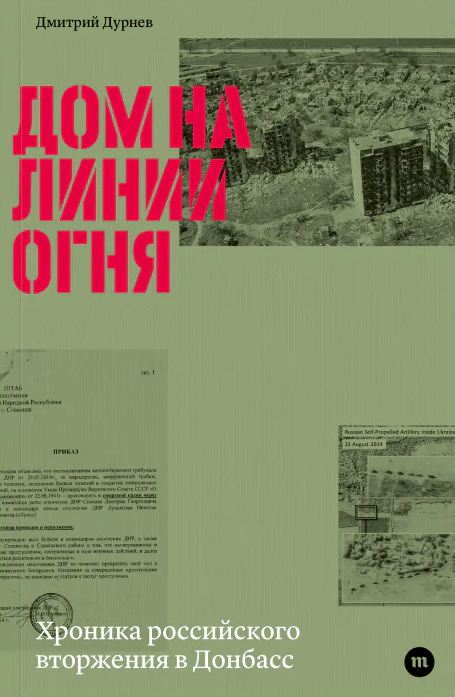
The book was written by an independent journalist who continued to work in the region after the capture and occupation. It is a consistent documentation of how the front line cuts through everyday life and how the war gradually changes the region.
"Flying Time" (2024)
Documentary film by Vladimir Mansky, which he shot in Ukraine during the war. The name refers to the time between the launch of a missile and its impact - the waiting time that becomes part of everyday life for residents of cities under fire.
Mansky, a director who was born in Lvov and worked for many years in Russia, and then moved to Latvia, has been making films about what is happening in Ukraine since the beginning of the great war. “Flight Time” is one of his most ambitious works: an almost three-hour documentary about the life of the country during the war.
The film consists of observations of everyday life in Ukraine - streets, houses, people in different cities. There are no active combat scenes, but the feeling of threat is always present: peaceful life exists next to the front. The film was shown out of competition at the 2025 Berlin Film Festival.
“Russian-Ukrainian war. Return of History", 2025
The book by Ukrainian historian Sergei Plokhy is a large-scale study in which the war between Russia and Ukraine is considered not only as a series of military events, but also as the result of a long history of relations between the two countries.
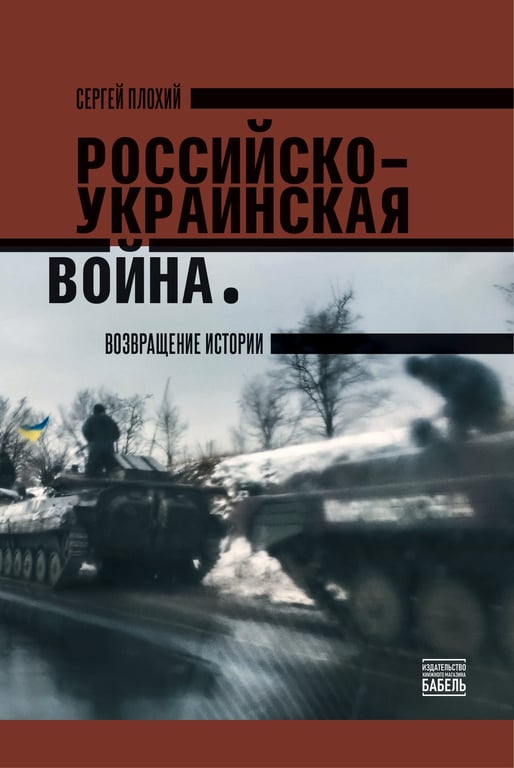
Bad begins with interactions between Russia and Ukraine over the centuries, including the Imperial and Soviet periods, and then leads the narrative to the events of 2022. The author uses little-known information to reveal how history has shaped the context of the current conflict.
Mr. Nobody Against Putin, 2025
A painting by Russian Pavel Talankin, a school organizer of extracurricular activities and videographer from the small town of Karabash in the Urals. After the invasion began, he, not agreeing with the state propaganda being introduced, decided to record “patriotic” lessons and military rhetoric.
Talankin, on instructions from the school administration, photographed “patriotic” events, official matinees and assemblies. Then he left Russia along with the footage and handed over the recordings to American film director David Bronstein.
The film has already received a British Academy of Film and Television Arts (BAFTA) Award and has also been nominated for an Oscar 2026 in the Best Documentary Feature category.
“I died in Irpin” (I died in Irpin, 2024)
Ukrainian short animated film, shortlisted for Oscar 2026. The 11-minute documentary animation tells the story of the first days of the full-scale invasion of Ukraine through the personal experience of director Anastasia Falileeva. The film is woven from animation created from charcoal drawings and archival materials from the author.
“Us, Our Pets and the War” (2024)
Documentary film directed by Anton Ptushkin, former host of the popular travel show “Heads and Tails.” The film shows the stories of Ukrainian volunteers who rescued abandoned animals during the war.
“Everyone told me that it was strange to film about animals and not about people during the war. But that’s the point, they were filming about animals, but the film turned out to be about people,” explained Ptushkin.
One of the central characters was the famous dog Patron, a Jack Russell terrier who works with pyrotechnicians of the State Emergency Service of Ukraine. Patron became famous at the beginning of the war, when a video of him in a bulletproof vest received thousands of views: he was looking for explosive objects and helping specialists defuse mines and landmines.
Another notable story of the film is the rescue of a cat from Borodyanka, which is called Shafa or Gloria. Its owners were forced to evacuate due to massive shelling, and the animal remained in a destroyed house. Shafa spent months in a dilapidated building, surviving without food or water, before she was discovered and rescued.
In addition, the authors talked about a volunteer from Kyiv, Natalya Popova, who rescues abandoned large predators from hot spots: lions, tigers and bears.
The film was produced in co-production with the Canadian company Yap Films, which works on documentaries and TV series. Filming lasted from the spring of 2022 to the second half of 2023, and the premiere took place in April 2024.
“Battle in the Shadow of Drones” - report by The New Yorker, 2024
In a piece for The New Yorker, Luke Mogelson spends time with Ukrainian troops in the east of the country and details life on the front lines. This is an observation of everyday life in combat conditions: anticipation of shelling, lack of sleep, short conversations between soldiers.
Mogelson shows the front as a space of exhausting struggle, where days are spent in the mud under the constant threat of drones and artillery. Through dialogues and details, he conveys the state of people for whom the war has become a difficult routine.
Mediazona translated the report into Russian.
Children in the Fire (2025)
Documentary film , directed by Evgeny Afineevsky, about children who grew up during the war. The authors explore how constant threat, evacuations and separation from home affect psychology and maturation. The film tells personal stories and emphasizes that behind the dry numbers of news reports there are specific children's lives.
At this year's Berlinale, 11-year-old Roman Oleksiw, who suffered in the Russian strike on Vinnitsa in July 2022, received the Cinema for Peace Honorary Dove 2026 award for his participation in the film. It is emphasized that this award is given not only to Roman, but also to all Ukrainian children who grow up to the sounds of sirens.
"Our War" (Our War, 2025)
French documentary about the war in Ukraine, presented at the Cannes Film Festival. This is the fourth film about the war in Ukraine, created by the French philosopher and writer Bernard-Henri Levy together with director Marc Roussel.
The film focuses on events in early 2025 and shows how perceptions of war are changing three years after a full-scale invasion. The authors work in an observational format, recording both military episodes and everyday life: waiting, fatigue, attempts to adapt. This is a film about the duration of the conflict and how war becomes the backdrop to everyday life.
“Dear Beautiful Beloved” (Dear Beautiful Beloved, 2025)
A documentary film by Ukrainian director Yuri Rechinsky about the work of evacuating civilians and returning the bodies of dead soldiers. The film captures the stories of the people who deal with this complex and often invisible part of the war. This is a film about memory, loss and trying to maintain dignity even in the most difficult circumstances.
"In Her Car" (2024)
Ukrainian drama series filmed during a full-scale war. The plot centers on psychologist Lydia, who remains in Ukraine and begins to give rides to people evacuating from dangerous regions. Each trip turns into a confession: passengers share fears, memories, doubts and hopes.
The idea for the series was born in the first weeks of the invasion, when one of the authors of the project himself helped to evacuate people. The car here becomes a chamber space - a place where personal stories are heard against the backdrop of war.
Filming took place in Ukraine under conditions of constant threat: the team worked under a curfew and the need to go to shelters during alarms. Despite this, the project received an international response: the series was shown simultaneously in several European countries and became an attempt to tell about the war through the fates of ordinary people.
“Form for growth”, 2025
A podcast from the publication “New Tab”, in which the authors talk about how a full-scale war changed children’s camps in Russia. In recent years, the authorities have been paying more and more attention to military-patriotic education. Through conversations with children from children's camps, their parents and counselors, journalists demonstrate how children and adolescents are experiencing these changes and how they are affected by the new “military” agenda.
"Temple of War. People and ideas that made the invasion of Ukraine possible", 2025
Ilya Venyavkin explores the ideological background of the war. He examines what ideas, historical myths, religious images and political concepts shaped Russia's perception of the permissibility and inevitability of invasion over the years.
We are talking about specific figures - ideologists, publicists, clergy, officials. Some of the book's characters are widely known: TV presenter Margarita Simonyan or long-time FSB director Nikolai Patrushev. Other heroes are less familiar to the public - for example, political scientist Timofey Sergeytsev or priest Mikhail Vasiliev.
Additionally
“Russians at War” (2024)
A Canadian documentary film by Russian director Anastasia Trofimova is about the war in Ukraine from the perspective of Russian soldiers. The author spent several months of 2023 next to a Russian army unit on the territory of the annexed LPR and DPR, as well as in Moscow, where independent Russian journalists cannot work.
The premiere of the film caused heated discussions. Some saw the project as an attempt to figure out who exactly is fighting on the other side of the front, while others saw it as a shift in focus from the victims of the war. In addition, before this, Trofimova released several projects with the RT television channel, which fueled the controversy surrounding the film.