
Translated material
The results of four years of war: the front line hardly moves, negotiations too, the parties are waiting for a diplomatic or technological breakthrough
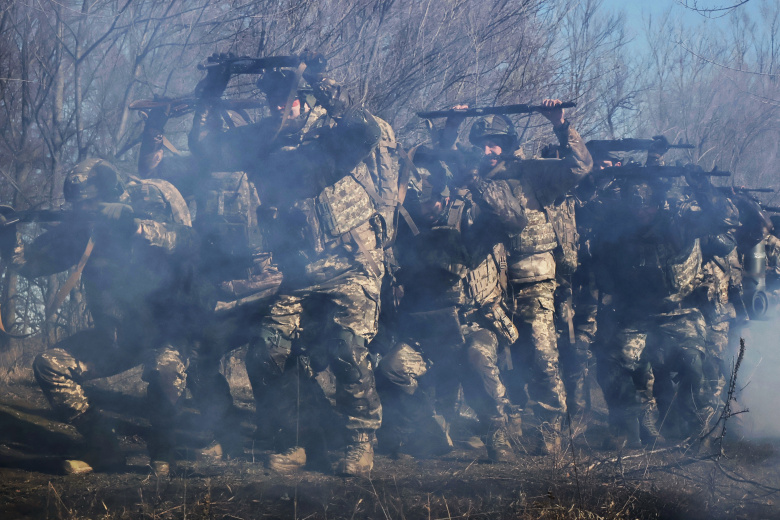
Ukrainian recruits undergo basic military training in the Zaporozhye region.
Photo by ANDRIY ANDRIYENKO / 65TH MECHANIZED BRIGADE OF UKRAINIAN ARMED FORCES / AFP
Four years ago, the largest war in Europe since World War II began. During this time, hundreds of thousands of people died and cities were destroyed. Now the front line is almost frozen, negotiations are stalling, and the main intrigue of the coming year is a technological breakthrough on the battlefield - the possible appearance of humanoid robots that can change everything. Nikolai Mitrokhin* sums up the military results and analyzes what happened at the front and beyond in recent weeks.
Four years of war have passed. The fifth begins today. Europe's biggest war since World War II had many important aspects and taught many lessons. But the most important of them is that even a state that is obviously inferior to the enemy in strength is capable of holding out for so long with rather modest support from its allies - without serious defeats and without significant concessions.
If you look at the situation from a purely military point of view, the picture is obvious: the front froze, as in the First World War. Everyone is waiting for either peace, or collapse in the rear (and for Ukraine this scenario is much closer than we would like), or a new technological leap.
Subscribe to read in full
Subscribe to Redefine.Media to read Republic
Subscribe [You can pay with a Russian or foreign card. The subscription is renewed automatically. You can unsubscribe at any time.]
Where does the subscribers' money go?