
Translated material
"Tyoma, wait for us, we will come." Mothers of conscripts from Yakutia are fighting for the cancellation of contracts
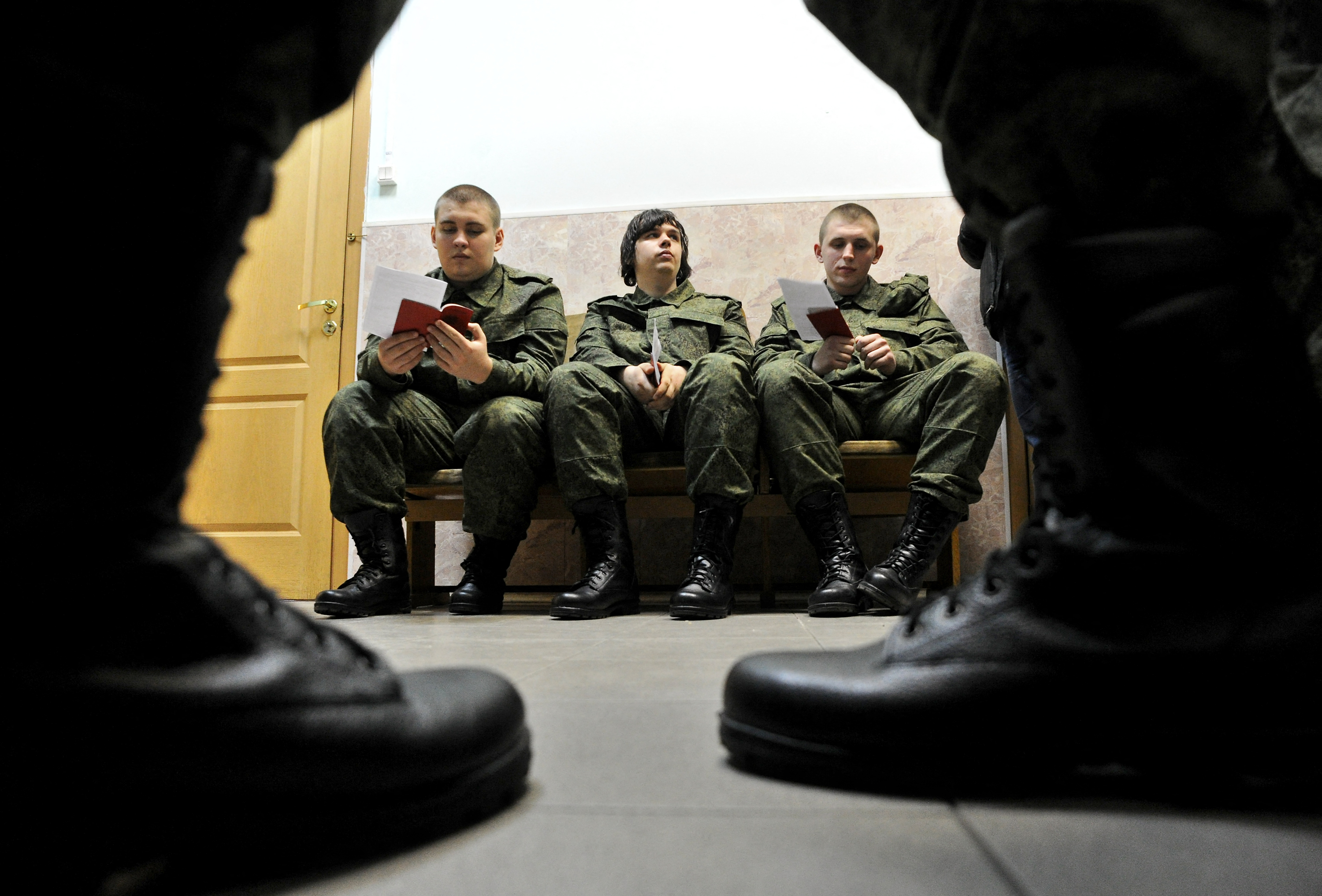
20 conscript soldiers from Yakutia, serving in Komsomolsk-on-Amur, were forced to sign a contract with the Ministry of Defense - some by threats and coercion, others by deception. Their relatives drew up a collective appeal demanding the termination of the contracts and went to court.
“We, mothers of conscript soldiers from different parts of Yakutia, having left home, work, family and our entire lives, arrived and rallied in the city of Komsomolsk-on-Amur, where our sons serve in military unit 98561 Railways. We were outraged and horrified that our sons, who had barely served 2 MONTHS, were forced by command officers BY DECEPTION or UNDER FORCE to sign contracts for military and military service and continue to put moral pressure on them, taking advantage of impunity, so that others continue to sign under pressure! We are fighting to recognize these contracts as illegal!” – write the mothers of conscripts from the Republic of Sakha in their appeal, distributed online (spelling preserved), and ask for help from everyone who can influence the situation.
They have already written collective statements to the prosecutor's office of Komsomolsk-on-Amur and Khabarovsk, to the president's reception, to the head of the Ministry of Defense Belousov, the head of the Investigative Committee Bastrykin, the Commissioner for Human Rights of Khabarovsk and the Republic of Sakha and deputies.
"I was afraid of being accused of treason"
The relatives of some conscripts specially flew to Komsomolsk-on-Amur, where their sons are serving, in order to get their contracts terminated before the soldiers were sent to war.
“Our Tema only turned 18 in October,” says his relative Svetlana (we do not give the real names of the interlocutors for the sake of their safety) “They told him: if you don’t sign the contract, we will put information on your phone that you support Ukraine and help the Armed Forces of Ukraine.” And this is immediately treason. Another was threatened with a guardhouse for 30 days. Someone was simply deceived: “You are boys from the uluses, right? Maybe you’ve never even left in your entire life. So you’ll go to St. Petersburg to study as a military officer or as an FSB officer or somewhere else.” And the boys believed. Until we found ourselves in Mariupol, we were getting closer to war.
According to Irina, the military “processed” about 20 conscripts this way. Tema, afraid of being accused of treason, signed the contract on January 8. It was the same with the others. At the same time, everyone was summoned one by one for several days in a row “for conversations.”
“All these warrant officers will stand around, take one into the office and start scaring them, so that the children’s hands are shaking. And they give you paper, five or six sheets. Sign, sign, sign. Everything was already printed there, but they were not allowed to read it. The subject says: "I don't know what I signed." And then I saw the word “contract” at the top,” says Svetlana.
The relatives got together, rented an apartment in Komsomolsk-on-Amur, where the military unit is located, hired a lawyer from Khabarovsk and went to court. They are in a hurry to get the contracts canceled before the guys are sent to the front.
“Mothers visited their sons at the checkpoint, sat with them, talked, and they were allowed through. They warned everyone at home that they would force them to sign a contract; they said don’t sign anything. And yet they could not stand it. When Tema called home and said that he was being forced, we told him - Tema, wait for us, we will come. We all immediately gathered to see him and flew out. But while they bought tickets, while they were flying, they took his phone, and he was without contact for a day. He says: “If I had known that you were coming to me, I would have stood it. I simply did not believe that you would fly from Yakutia.” Mom doesn't have money to fly. I took her twice, and now I’ve flown in myself. Tema made a power of attorney for me and the lawyer,” says Svetlana.
According to her, the unit commander misled not only him, but also his mother and other relatives, saying: “I will send Tema to St. Petersburg to study as an ensign.”
– Those who signed contracts in December have already left for Ukraine. Some signed at the end of January, others on February 14. The topic was January 8, and on the 11th we already arrived here, in Komsomolsk, got a meeting with the commander, two days later he gave us a contract - no date. I immediately called him: “Tell me, why is the contract without a date?” And he says: “Well, you understand, it’s just a matter of time, two or three days.” They then gave it to Tyoma, signed in retrospect,” says Svetlana.
Relatives of conscripts who signed the contract under pressure really want the local media to tell about what is happening. Svetlana says that she called all the TV channels in Irkutsk - to no avail, she turned to her friend from State Television and Radio Broadcasting Company Sakha, but she also refused: “Oh, what are you saying, they won’t allow us to do this.” Svetlana also called the newspapers of the Republic of Sakha, they answered her: “We’ll think about it, if anything happens, we’ll call you back.” But they never called back. In order not to find themselves in absolute information isolation, relatives of Yakut conscripts send out their appeal online.
"What did you eat? - Cookie"
– Yesterday, Tema saw a psychiatrist from Komsomolsk-on-Amur, in conclusion he wrote that he has suicidal tendencies, that he cannot go on business trips, go to the shooting range, and cannot hold a machine gun in his hands. The lawyer is also counting on this, he said that the contract can be terminated by the command of the unit, - Svetlana hopes, - We had two witnesses to the moment when Artyom was forced to sign, but they are now refusing, they say that this did not happen. That is, they were also intimidated. Other boys say that they saw Tema being taken into the office, that he came out in a depressed state and said that he was forced to sign. They didn’t hear the conversation itself; they were all brought in one by one.
The command has many ways to intimidate and humiliate conscripts so that they sign a contract, their relatives say.
“Another boy was humiliated in front of the entire platoon in formation; they said that he was a traitor and that he would be sent to prison. Another one was placed in front of the platoon - you are the culprit, everyone will do push-ups because of you. Someone lost consciousness at the same time. And he had to go and sign. Others were caught while they were eating something: “Why with your mouth full? What did you eat?” "Cookie." “I’m going now, asking if you ate something else, then you go and sign.” And the boy signed - just like in kindergarten. And ours only finished the ninth grade, basically a child, just yesterday’s schoolchild,” says Svetlana.
Human rights activists from St. Petersburg are helping Yakut conscripts. One of them, Maria , says that the case of forcing conscripts to sign a contract is typical.
– But in this situation with Yakut conscripts, the behavior of their relatives and friends is atypical - very active people, united, constantly flying from region to region. They escaped from Yakutia, arrived, abandoned everything, and filed a collective appeal to the prosecutor’s office. They contact those who also post their stories online and ask for help, even if their children are not from this part. They managed to get the conscripts to make powers of attorney for them, find a lawyer who came to Komsomolsk-on-Amur, and file a lawsuit. They really want publicity and are in a hurry: the procedure for changing the status of a conscript soldier to a contract soldier has been accelerated, shipments to Ukraine are going very quickly,” says Maria.
She recalls a recent case when conscripts were forced to sign contracts on a train to Ussuriysk; their relatives are also trying to challenge this.
– We managed to fight off two guys thanks to publicity and the fact that the signatures were fake. They used a lie detector and managed to cancel the contracts. But we also had an appeal regarding a contract with an obviously forged signature, and we were unable to cancel the order, even with a handwriting examination. So there is no panacea here. The story in Komsomolsk-on-Amur is more typical, they were forced, deceived. They need to take a very clear position that this was involuntary.
But, Maria notes, there is a problem with the evidence base. The main evidence is the statement of the person himself, his report, so the outcome of the case largely depends on the firmness of his position.
– The procedure for concluding a contract is very important; a report cannot be written and a contract signed in one day. The commander conducts an attestation commission, an internal military inspection is necessarily carried out, the documents are sent to the Ministry of Defense, where they are approved on the list - that everyone meets the selection criteria, an order comes from the Ministry of Defense. Only then does the command sign contracts and issue orders for the unit,” explains Maria.
She believes that the lawyer will have to go through the court to request various internal documents of the military unit, which may show that the procedure was violated.
– There must be orders, extracts from journals, military military examination results, conversations with a serviceman, characteristics, psychological tests - a lot of documents for one person. The results are difficult to predict, but the determination of the families is encouraging. Although, of course, they will put pressure on the guys, separate them so that they do not agree on anything.
"I gave away military secrets"
Tamara is a relative of 21-year-old conscript Alexander (name changed for security reasons) from the city of Mirny, Sakha Republic.
“He was on a business trip, and when he returned to the unit, they put him in front of the line, there were three companies there, and they called him a traitor - he allegedly gave away a military secret about the location of the unit, although there is no secret information there. Sasha was forced to read the charter in front of everyone. On February 13, psychological pressure began on him, and he was already a suspicious boy, and he took all this very hard. He was periodically called into the office, the boys saw him. He didn't have a phone to call home. But on the 13th he still held out and didn’t sign anything. And on the 14th they pressed him, he signed, and after that they gave him a phone number,” says Tamara.
The relatives immediately contacted the military prosecutor's office and the investigative committee; Tamara took the petition to terminate the contract to the unit for registration and, just to be sure, sent it by mail.
“But after that, the military approached Sasha again and put pressure on him. One of them got Sasha to write a waiver of claims against him. There are two more people left who are listed in the report - I don’t know whether they will finish him off or not. But we hope that we will have time to terminate the contract. Yesterday, when we were sitting at the checkpoint, the company commander brought us his personal file. There is no order yet to send him somewhere from the unit.
"Some of our own people passed it in"
Natalya is a relative of another Yakut conscript, 22-year-old Anton Vinokurov from the Nyurba district of the Sakha Republic.
“He also signed the contract under brutal pressure. He was dressed at the checkpoint. And next to the store, I saw it myself, and contract soldiers and conscripts were carrying energy drinks from there. And he bought an energy drink, put it aside, didn’t even open it. And one of his own people turned him in, went and told his senior ranks. Well, the senior lieutenant and the warrant officer called him into the quarters and began to process him; your disorder is so terrible that there are only two options left. Or transfer to Sergeevka, to the 5th Army, where attack aircraft are trained and sent. Or a contract, as they explained, to study at a school for warrant officers. In short, they deceived us. He thought it would be better this way and signed,” says Natalya.
According to her, the same tactics were used against Anton: they were not given a phone number before signing the contract, so that he could not consult with his family. Having learned about what happened, Anton’s mother called the senior lieutenant.
“He rubbed it in on her too: “We are having conversations, your son has expressed a desire to study.” Like we showed him on a map where the military academies are located in Russia, he chose Vladivostok. But in fact, there is also some kind of collection point in Vladivostok, from where everyone is sent to Ukraine. He talked for a long time about the training processes, what their salary would be, that he would be a cadet, what rank he would graduate with, what the advantages were. That is, he deceived not only Anton, but also his mother,” says Natalya.
She believes that not all mothers and other relatives of conscripts who signed contracts under pressure came to their aid on time.
– One boy, Anton Avakumov, signed it back in December, his mother called, and they told her: “You couldn’t do worse.” She got scared and sat there, didn’t turn anywhere, and they were just stalling for time. And the money had already dropped into his account, 1,800,000, then some presidential money. And when she contacted us, she arrived in Khabarovsk, and her son had already been sent to Ussuriysk. And there 2.5 weeks, practically no training - and immediately to Rostov. He is now somewhere in Mariupol, they wrote to us. And there were three other guys with him.
According to Natalya, groups have already appeared on the network, where more and more new people are being added asking the same question: “Did your sons sign what contract, for CVO or for study?”
“We write to them: “There is no such thing as for studying or for the SVO, there is only one contract.” They don't even understand. One mother sent us a piece of paper that they sent her - a certificate from Filka that her son will take entrance exams somewhere, but they will still send everyone there, - Natalya is sure.

"The fool was found and deceived"
20-year-old Igor (name changed for security reasons), who arrived at the unit for military service on November 14, was also persuaded and intimidated for a long time, but in the end he was simply deceived. “What should you do here? Let’s go study for one year at a higher educational institution,” Sergei , Igor’s relative, reports the words of the commanders.
“He didn’t even understand the name of the institution where he wanted to go.” They said he would study to become a signalman. He didn't realize he was signing a contract. He was confused, papers were placed on top and bottom, and he was not allowed to read. They talked sometimes kindly, sometimes aggressively. The fool was found and deceived. We didn’t even learn about it from him: his colleague called a friend, and this friend told us,” says Sergei.
When he got through to Igor, he assured him that he had signed a contract to study. Sergei suspects that other documents could have been slipped to him to read.
– When I arrived, I ran to him, we looked at the contract, he didn’t even recognize it. And his signature. Then I walked around depressed. These lieutenants and officers came to him and called him a fool, a moron. They asked if he had written anything bad about them. They pressed. They said that if you don’t write this report on the contract, you will be sent straight to the hot spot. His friend was already sent when we arrived here, Anton Abakumov. Igor cried with me when he realized what he had signed.
Those who signed the contract, says Sergei, were forced to say on camera that it was done voluntarily.
“When I complained to the military prosecutor’s office, they came and he told them everything as it happened. They told him: “Well, you see, you signed voluntarily.” When we were coming here, we learned on the way that the boy first had to submit a refusal report himself. But he was not accepted. He tried to submit it for three days, they called him names in every possible way, they didn’t take this report into their hands, they drove him away. Only when I arrived did they seem to accept me on February 9th. I sent it two more times by registered mail. And just yesterday Igor wrote down the incoming number of this report. We are sitting here waiting to see when they will consider the report and what decision they will make.
If the contract is not terminated, Igor’s family intends to sue.
– True, I don’t know whether deception is a serious reason for terminating the contract? They only consider good reasons - if there were threats of beating, if one of the parents is disabled, if someone died. But here everything looks as if he signed voluntarily and joyfully. Although he was simply deceived, says Sergei.
"I will fight for them"
The first judicial authority in such cases is the garrison military court of Komsomolsk-on-Amur. Lawyer Dmitry , who is defending three conscripts from Komsomolsk-on-Amur in court, speaks of numerous abuses by commanders.
– I found many violations of regulations on the part of the unit’s command and authorized persons. Many questions were not raised, many procedural rules were not voiced. The servicemen were not told about some of the actions of the contract. The professional selection was not done properly. The psychologist indicated that one of my clients should not serve with weapons. But somehow he signed the contract.
We are talking about Igor.
– The psychiatrist examined him on February 19, the conclusion stated that he was mentally healthy, but “not recommended for entering the service with weapons, going on a business trip, or being included in groups.” It is indicated that he is unbalanced, has poor communication skills, does not adapt well, and has symptoms of borderline mental disorders and maladaptive disorders. Well, how do you allow such a person to serve? He must go through a commission before signing the contract. He takes a test, it shows that he is psychologically unhealthy. Further examination is required. Why is it not assigned? How did you approve his professional selection?
Dmitry emphasizes that, in violation of the regulations, the examination of the psychologist was carried out not before, but after the signing of the contract. And yet he admits that it will be very difficult for his clients to win in court.
- Let's have some garlic. In the entire history of the Ministry of Defense, there are no precedents in Russia for declaring a contract invalid. With the exception of a few cases when, for example, it turned out that it was signed for other people. Yes, there are obvious procedural violations in the case, many of them. But I don’t believe that the decision will be in our favor - the court of first instance does not have such weight in the judicial system.
However, he says that he has discussed everything with the relatives of the conscripts and is going to go to the end.
– The First Eastern District Military Court is the appellate instance of military courts. If we don’t decide there, we’ll go to the Supreme Court, which can take responsibility. Adult military personnel who force conscripts who have not served for 2 months to sign a contract understand perfectly well that untrained guys on the front line have no chance to survive. There will always be those who sign - they will get worried, doubt, put a lot of pressure on them, and the guys without moral support, alone, will break. That's all. Sorry guys. Of course I will fight for them.
Forced conscripts to sign contracts has been happening throughout the years of the Russian invasion of Ukraine. For example, back in 2023, Sergei Gridin, a conscript from the city of Pechora, committed suicide, unable to withstand the bullying of his seniors who forced him to sign a contract. On October 21, 2024, at the Ilyinsky training ground of the 60th motorized rifle brigade in the Primorsky Territory, 19-year-old conscript Artem Antonov from Tatarstan was shot in the head. His relatives are sure that the lieutenant opened the line from the machine gun for conscripts after yet another refusal to sign a contract. In recent years, forcing conscripts to sign contracts has become a widespread phenomenon. Thus, conscripts from Chuvashia were intimidated that they would return home with a load of 200 if they did not sign a contract. In military units in Chebarkul, conscripts were forced to sign a contract, explaining that then they would be left in the unit, and if they did not sign, they would be sent to hot spots. This tactic is used everywhere. Conscripts from Miass were forced to sign a contract through moral humiliation and physical pressure. Some conscripts even began to record videos in advance, where they declare that they are not going to sign the contract and go to war, and if it turns out that the contract was signed, it means that it was not done voluntarily.
"Tyoma, wait for us, we will come." Mothers of conscripts from Yakutia are fighting for the cancellation of contracts