
Translated material
"We are advised to remain silent." What is happening in the Smolensk region after the attack on a chemical plant
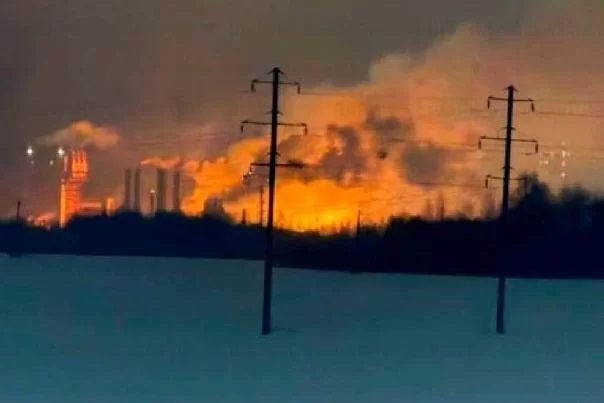
Early in the morning of February 25, drones (UAVs) attacked the Smolensk region. As a result of the strikes on the Dorogobuzh PJSC enterprise, which produces ammonia and saltpeter, seven plant employees were killed. Residents of the city of Dorogobuzh and surrounding villages in the first hours after the attack bought up bottled water and essential products. The regional governor, Vasily Anokhin, promised to evacuate residents. But by the evening of February 25, no evacuation had been organized.
"War and earthquake at the same time"
Residents of Dorogobuzh and the villages of Polibino and Novo-Mikhailovka closest to the plant say that the attack began between 4:30 and 5 a.m. on February 25.
– We live on Mira Street. It was not yet 5 o’clock, I heard a sharp, grinding sound - something drove along the house,” says Marina (the names of all interlocutors have been changed for their safety) from Dorogobuzh. “I wake up my husband, and while I’m collecting the children, he runs to the window. And there is already a blaze above the plant. We wondered what it was, whether we should run, because there was nothing on the Internet yet. What is this? Did something go wrong at the factory? Then why is it flying through the streets? Half an hour later there was such a wave, such a roar, everything rattled, what they really thought was an earthquake. Then the windows literally flew into the apartment. At the site of the plant there is not just a fire, but a huge bonfire. The sleep suddenly disappeared, we began to think where to run. And is it really necessary right now, because there were drones flying right outside the window, and they were shot down from time to time (by missiles, apparently). They shot him down right above the house, which means it was also scary to run. And then it became clear that it would be impossible to escape: all the roads were blocked.
Later, the Investigative Committee and the regional governor confirmed that about 30 UAVs equipped with explosive devices attacked Dorogobuzh PJSC. The plant is located 120 kilometers east of Smolensk and about a hundred kilometers from Vyazma.
Officially, this enterprise produces mineral fertilizers. However, ammonium nitrate, which is included in the production list, is also used in the manufacture of explosives. According to information on the company'swebsite , the annual production of ammonia reaches 810 thousand tons, NPK (nitrogen-phosphorus-potassium) - 850 thousand tons, ammonium nitrate - 1.5 million tons, nitric acid - 1.5 million tons. PJSC Dorogobuzh is part of the Acron group of companies, 94% of whose shares are owned by billionaire Vyacheslav Kantor.
– The plant has always been classified as a military plant, it’s difficult to get a job there. My father was refused at one time, presumably because of his criminal record,” says Elena, a resident of Smolensk. – But another relative has been working there for more than 10 years. Or rather, he worked. He died today (on the day of the attack) . He worked in the security service, they had a special unit, he rushed into the ammonia workshop and burned out. Two more colleagues died with him. And also the workers of the workshops where the explosions occurred - fires were burning there for several hours. The technological line where “big ammonia” was produced was destroyed, says the aunt. There was an explosion right in the workshop. Many [plant employees] were pulled out of the fire and taken to the district hospital. But then some died after hospitalization. Three rescuers, like my relative. The rest worked in the ammonia shop.
The prosecutor's office of the Smolensk region reports the following about the fires: “When debris from the UAV fell onto the territory of the plant, a fire occurred. Infrastructure elements, the fire department building, and special equipment were damaged.”
“Seven people were killed. Ten were injured. All the victims were employees of the enterprise,” reports the regional Investigative Committee.
“After all, this is a disaster on a regional scale”
Residents of Dorogobuzh admit that they are afraid to stay in their hometown, but there is no evacuation promised by the governor.
– How could you be so negligent about safety? What were you waiting for? Less than 200 kilometers to Ukraine. To Shchors (a city in the Chernigov region of Ukraine, now its name is Snovsk - SR) , if the crow flies, it’s 150 km from Dorogobuzh, says local resident Sergei . – The plant is essentially a military facility. And they don’t even have protection against 30 birds. But this is a disaster on a regional scale - chemicals, fire. This [ammonium nitrate] is a huge bomb if you mix it with TNT and dinitronaphthalene. We also escaped with minor explosions.
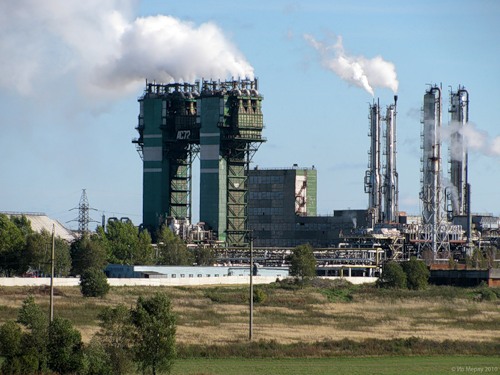
The interlocutor’s neighbor from Uritsky Street says that the water was turned off in the entire area almost immediately after the explosions.
“I don’t understand their rescue strategy.” So far, everything has been blocked for us, closed (even kindergartens and schools), there is no water, there is no bread in the stores in the area, the exit roads are blocked. How will they save us? Which city or village was he [the governor] planning to evacuate? – Svetlana is indignant.
In the village of Polibino (12 kilometers from Dorogobuzh) they say that they know nothing about the evacuation, but note that they have been “suffering from the plant for a long time.”
“We have a wind of chemicals coming from that direction.” I don’t know what kind of filters they put there, but every second person in the village is asthmatic. Because of this, my family and I eventually moved to Vasino, which is about a hundred kilometers from Dorogobuzh in the opposite direction from Smolensk,” says Kirill, a former resident of Polibino. – Now, apparently, everyone from Polibino and Novo-Mikhailovka will be rounded up (evacuated) to us.
The government of the Smolensk region, five hours after the emergency , promised to provide “all necessary assistance to the families of the injured and dead.”
“In order to minimize possible threats to the population, the issue of evacuating residents of a nearby settlement is being considered,” said Governor Vasily Anokhin.
The head of the region did not specify which locality could be evacuated. Within a radius of 3-5 kilometers from the plant there are villages (from north to south clockwise): Filino, Eliseenki, Pushkarevo, Mamyrkino, Novo-Mikhailovskoye, Egorievo.
11 hours after the emergency, the regional governor Anokhin announced that the fire had been extinguished.
“Small pockets of smoldering are being drained,” the head of the region said in his telegram channel. “Rescuers continue to work at the site, ambulance teams are on duty. A team of clinical psychologists has left Smolensk, they will work with the relatives of the victims.”
The Investigative Committee of the Russian Federation announced the initiation of a criminal case regarding a terrorist act (clause "b" part 3 of Article 205 of the Criminal Code of the Russian Federation).
Residents of Dorogobuzh and surrounding villages stopped commenting on the emergency several hours after the explosion. In private conversations they admit that they are “strongly recommended to remain silent,” threatening, among other things, “an article for dissemination.”
Former residents of the area or neighboring regions continue to comment online.
“It looks like they’ve already changed their mind about evacuating. They say everything has already been put out”
“One of the most dangerous factories in the region, if not the most dangerous. Worse than chemical weapons. God forbid, ammonia from there gets into the Dnieper (which already happened once in Soviet times). Then an environmental disaster for the entire region.”
“there is a village called Polibino in the direction of Boldino, it’s worth going to see what the constant blowing from the factory does to people over 60 years old. You can make films about zombies”
“So 6 hours have passed. Can you be more specific? Has an operational headquarters been created, what is the situation around the plant, is there an ammonia leak?”
"and the head of the region? The heads of the border regions announce events immediately and go personally to the places?."
"it's hard to go there"
Arrivals in Russia in 2026
Moscow
In 2026, drone attacks on Moscow began to occur much more often than before, and sometimes they affect not only airports and suburbs, but also the airspace of the Russian capital. According to the Ministry of Defense and Moscow Mayor Sobyanin, UAVs are sent towards Moscow almost every day, and air defense systems regularly shoot down dozens of such devices over the capital region and central Russia - for example, during the massive attack on February 22, according to various estimates, from seven to several dozen drones were intercepted, as a result of which restrictions were introduced at all Moscow airports, and flight traffic in the capital was suspended for several hours.
January 1 – Kazan (1400 km from the border), Lyudinovo (170 km), Ilsky (500 km)
On the night of January 1, several regions immediately reported a drone attack. In the Kaluga region, according to Governor Vladislav Shapsha, a drone hit the territory of an enterprise in Lyudinovo - a fire started there. In Kuban, the operational headquarters reported a fire at the Ilsky oil refinery after the fall of UAV debris: the fire was extinguished by the morning; according to official data, there were no casualties.
In Tatarstan, on the same day, the “unmanned danger” mode was introduced and a fire was put out on the territory of the oil technological system. The Ministry of Defense also reported that on January 1, 58 Ukrainian drones were destroyed, including 24 in the Belgorod region, 10 in Crimea and 10 over the Sea of Azov.
January 10 – Volgograd region (390 km from the border)
On the night of January 10 in the Volgograd region, after a drone attack, the Zhutovskaya oil depot in the Oktyabrsky district caught fire, said the regional governor Andrei Bocharov. No casualties were officially reported, but power outages occurred in the village of Oktyabrsky near the Zhutovo station. The authorities separately stated that in case of evacuation they had prepared a temporary accommodation point at Oktyabrskaya School No. 2."
January 11 – Voronezh (280 km to the border)
On the evening of January 10, Voronezh experienced a heavy drone attack: residents spoke of a series of explosions in different residential areas of the city. According to Radio Liberty, several high-rise buildings were damaged, one of the drones exploded next to houses and damaged apartments, and in the private sector a house was damaged due to falling debris. By the morning of January 11, it became known that a woman, seriously injured when UAV debris fell on a private house, died in intensive care.
January 14 – Rostov-on-Don (about 200 km from the border)
On the night of January 14 in Rostov-on-Don, after a drone attack in the western industrial zone, two buildings caught fire: one for industrial purposes and one for storage. Damage was also recorded in residential areas and the suburbs - broken windows and damage were reported in the private sector. By morning, the authorities confirmed: there was a dead person, four wounded, among them a small child, some of the victims were taken to the hospital .
January 21 - Krasnodar Territory (Afipsky Oil Refinery)
On the night of January 21 in the Krasnodar Territory, according to the regional operational headquarters, fragments of a UAV fell on the territory of the Afipsky oil refinery in the village of Afipsky, and a fire started, which was quickly extinguished. Officials stated that there were no casualties and the infrastructure was not damaged. But next to the plant, according to the authorities, debris with a warhead fell near an apartment building, so the residents were evacuated, and the area was cordoned off for inspection and demining.
January 28 – Voronezh
On the night of January 28, a drone strike hit the Khokholskaya oil depot in the Voronezh region. The General Staff of the Ukrainian Armed Forces stated that the ignition of oil products was confirmed, but the Russian authorities, in the usual formula, spoke about the fall of “suppressed UAVs” and the ignition of oil products.
February 5 – Rostov region
On February 5, an attack was “repelled” in the Rostov region on a long list of cities - drones were shot down over Rostov-on-Don, Taganrog, Bataysk, Novoshakhtinsk and Azov regions. The Ministry of Defense reported dozens of UAVs shot down overnight. In Bataysk, debris damaged a truck; the driver was hospitalized with an injury - his condition was assessed as moderate, not life-threatening. There, according to authorities, five cars in the parking lot of an agricultural enterprise and a warehouse building were damaged. In Novoshakhtinsk, a private house suffered damage: the facade was damaged and the windows were broken.
February 11 - Volgograd (400 km to the border)
On the night of February 11, Ukrainian drones struck Volgograd - the Lukoil-Volgogradneftepererabotka oil refinery caught fire in the south of the city. Governor Andrei Bocharov confirmed the fire on the territory of the plant, without reporting casualties, and videos of the fire over the industrial zone circulated on social networks. This is one of the key oil refineries in the south of Russia: it produces gasoline, diesel fuel, aviation fuel, and fuel oil, which is also used by the Russian army fighting in Ukraine. Officials did not officially confirm the shutdown of production due to the fire, but industry sources cited by Reuters reported that after the strike, a primary oil refining unit was damaged and the refinery suspended operations.
February 17 – Krasnodar region (500 km to the border)
On the night of February 17, the Krasnodar region again found itself under attack from drones: the regional operational headquarters reported a fire at the Ilsky oil refinery. A tank containing petroleum products caught fire; flames and smoke were seen from afar. At the same time, on the coast, near the port of Taman, authorities spoke of a fire in the oil infrastructure , also due to a UAV attack. According to official reports, there were no casualties. The Ilsky refinery, along with the Krasnodar and Afipsky ones, plays an important role in supplying petroleum products to both the south of Russia and the Russian army at the front.
February 14-18 – Bryansk region
In mid-February, the Bryansk region suffered greatly. On February 14, in the village of Azarovka , Starodub municipal district, a driver was killed due to a drone strike, said Governor Alexander Bogomaz. On February 15, the governor spoke of more than 170 downed drones and power problems after the attack. On the morning of February 18, kamikaze drones attacked the village of Aleynikovo in the Starodub municipal district. A civilian died, the authorities promised to provide assistance to the family.
February 19 – Velikiye Luki (500 km from the border)
On the night of February 19, in the southern part of the Pskov region, Ukrainian drones attacked the Velikolukskaya oil depot . According to Governor Mikhail Vedernikov, one of the tanks with petroleum products caught fire, and no one among the residents or staff was injured. The authorities deployed a permanent task force of the emergency commission on the spot, and the heads of the regional Ministry of Emergency Situations and the government apparatus went to the oil depot. Local residents posted epic footage of the fire on social media.
February 21 – Votkinsk, Udmurtia (1400 km from the border)
The strike on the night of February 21 against the Votkinsk Machine-Building Plant in Udmurtia is one of the longest and most effective strikes by the Ukrainian Armed Forces. The Ukrainian General Staff announced the successful use of FP-5 "Flamingo" cruise missiles. The Votkinsk plant is one of the key producers of Russian ballistic missiles, from operational-tactical to intercontinental. In particular, the plant produces the famous Iskanders. Russian authorities said eleven people were injured in the strike. The research group Conflict Intelligence Team, citing satellite images, notes that there was at least one precise strike on a metalworking shop. However, there is no confirmation of the shutdown of the entire plant in public official sources.
February 21 – Neftegorsk (900 km from the border)
On the night of February 21, drones attacked the Samara region : Governor Vyacheslav Fedorishchev reported an attack on two industrial sites and emphasized that there were no casualties. Due to the threat of UAVs, the “Carpet” mode and restrictions in the airspace were introduced in the region. Ukrainian media and monitoring channels wrote that one of the targets could be the Neftegorsk gas processing plant; the damage was not assessed in open sources.
February 23 – Tatarstan, NPS “Kaleikino” (1200 km from the border)
On the night of February 23, drones flew to Tatarstan and struck an industrial zone near Almetyevsk. An oil pumping station near the village of Kaleikino, owned by Transneft-Prikamye, caught fire. Kaleikino is a major hub of the trunk system, connected to the Druzhba pipeline, where oil flows from different regions mix before leaving further along export and domestic routes. Local authorities, as usual, spoke of “falling debris from downed drones.” The next day it became known that after the attack, Transneft reduced the intake of oil into the system by approximately 250 thousand barrels per day. Sources reported that due to the consequences of the attack, two tanks of 50 thousand tons each burned down.
25.02 – Dorogobuzh, Smolensk region (533 km from the border)
On the night of February 25, reports arrived about a massive drone attack on the Smolensk region. In the city of Dorogobuzh, the nitrogen fertilizer plant of Dorogobuzh PJSC was hit. The chemical plant also produces ammonia, which is widely used not only in agriculture, but also in the military industry. According to Russian authorities, seven people were killed and at least ten more were injured. The Investigative Committee claims that the enterprise was hit by at least 30 drones.
"We are advised to remain silent." What is happening in the Smolensk region after the attack on a chemical plant