
Translated material
“You know where all the money is.” Why gasification fails on gas-producing Sakhalin
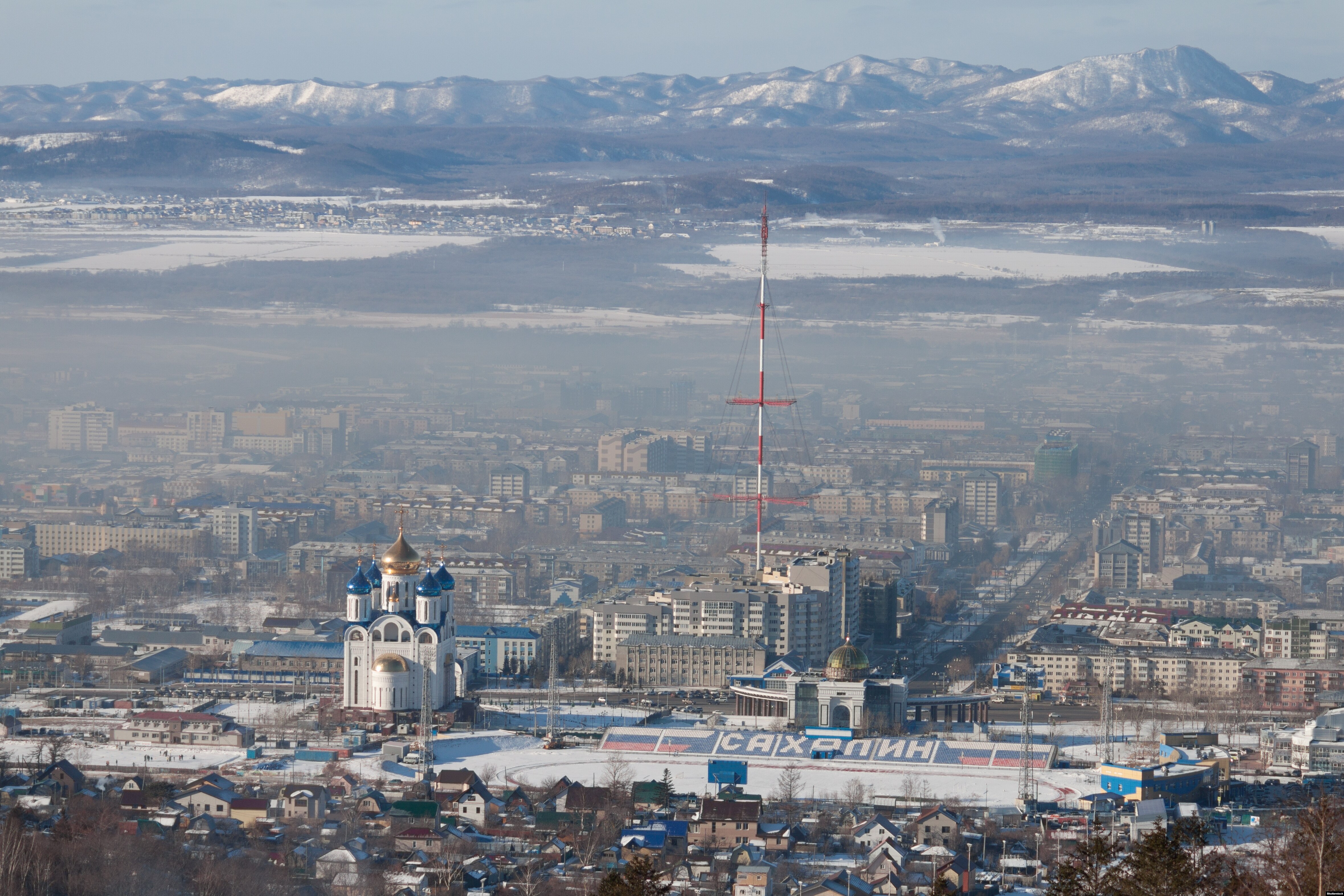
At the end of December 2025, the government of the Sakhalin region reduced funding for the region’s gasification program by 14.8 billion rubles. Natural gas for domestic needs is not available to a significant portion of the region's residents. At the same time, tens of billions of cubic meters of gas are produced annually on Sakhalin, including for export.
"We've been scammed again"
When the government of the Sakhalin region and Gazprom signed a five-year gasification program for the region in 2020, the level of gasification here was one of the lowest in the country - about 14%. In 2022, right before the war, it exceeded 56% and the authorities promised to finally solve the problem by 2027. But with the outbreak of the war, the pace of gasification decreased sharply. As of 2025, its level on the island is approximately 64–65%.
- Over the past two years, we have only seven districts connected to gas - six in Yuzhno-Sakhalinsk and one in the Korsakovsky district of Sakhalin. It turns out that they need to connect another 151 districts in Yuzhno-Sakhalinsk alone! Of course, it was clear that the deadlines would be postponed again, says Olga from Yuzhno-Sakhalinsk ( the names of the interlocutors are not given for reasons of their safety - SR ). - The reason is obvious. They started a new gasification program in 2022 and immediately slowed it down because there was no money. Now you know where all the money is.
Olga says that her family submitted an application for a gas connection in 2022.
– Because bills for heating were already going through the roof. Now people from other regions are complaining about utility bills of 10-15-18 thousand, equal to the mortgage payment. And we were already sick of the numbers in our electricity bills. They reassured us with one thing: let’s switch to “more environmentally friendly and cheaper” fuel and you’ll breathe out,” Olga recalls. “But we’ll soon die.” Because we have been cheated again - our Iskatel district has again been “advanced according to the deadlines” for gasification, which they only have on paper.
This time, the transfer of “one hundred percent technically possible additional gasification” (gas pipeline supply to land plots) of the region is dated 2032 - new dates were set by the Sakhalin Ministry of Energy.
“The last time I still believed in these “gasification programs” was 2009,” says Elena , a resident of the Kommunalnik district (located within the city boundaries, 20 kilometers from the center of Yuzhno-Sakhalinsk). “Then they promised to gasify the entire region from 2010 to 2020.” As a result, by 2021, only new microdistricts of Yuzhno-Sakhalinsk have been gasified - and that’s all. As you can see, after those ten years of waiting, another five years have passed, and we, the capital of the region, are still heating ourselves with coal.
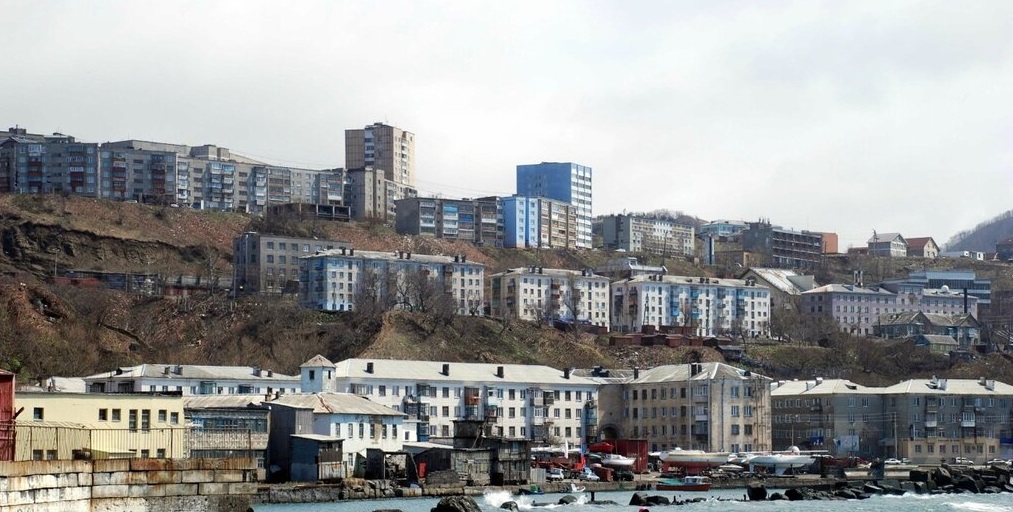
Two parties are responsible for implementing the gasification program. Gazprom is building gas pipelines. And then we need to supply gas to the houses, ensure the operation of boilers and other equipment. At the same time, Sakhalin is an island (area - 87,101 km²), cut by mountains and swamps, seismically unstable. Settlements are located far from each other. Extending a pipe to a small village of hundreds of houses is often extremely unprofitable economically.
The costs of this fall on local budgets and the users themselves (on average, connecting one private house to gas is estimated at approximately 200 thousand rubles). As a result, a situation often arises when there is a pipe nearby, but there is no gas in the house. You have to use coal, diesel or electricity.
In 2025, the governor of the Sakhalin region, Valery Limarenko, stated that the next postponement of gasification dates was caused by an increase in the number of subscribers.
– In fact, since the 90s, our population has only been melting ( the population of Sakhalin, indeed, has decreased from almost 710 thousand in 1989 to almost 458 thousand in 2025 - SR ) And it’s getting smaller every year. What is the subscriber growth? - Marina, a resident of the city of Kholmsk, is indignant. – We have a frantic outflow to other regions ( the population of Kholmsk decreased from almost 51 thousand in 1989 to almost 25 thousand in 2025 - SR ). And with the beginning of the war, the death of men increased. Only about a dozen of my friends have already been buried. At one time they buried one after another - Sasha Mishin, then Sasha Samokhvalov and in the same month Oleg Kostenko. A little earlier, Sasha Lebedovsky. There was no time to remove the coffins from the cultural center. It's amazing how many people have increased.
At the same time, the budget of the Sakhalin region for 2026 was adopted with revenues of 190.9 billion rubles and expenses of 218 billion rubles (deficit - 28 billion rubles). According to a report by the Accounts Chamber , over the nine months of 2025, the region became an anti-leader among Russian regions in the fall in budget revenues. The document emphasizes that the key reason was the “drawdown of income taxes in commodity-exporting economies against the backdrop of sanctions and worsening external conditions.”
– Income tax alone was reduced in 2025 on Sakhalin by 25% due to falling hydrocarbon prices. Expenses were reduced by 7%, but the budget deficit is still large, explains the reasons for the failure of the gasification program, economist Vladimir Kedrov , who works with Russian statistics (a pseudonym is used due to the law on undesirable organizations - SR) .
Against the backdrop of falling gas prices, according to analysts, its production in the Sakhalin region at the end of 2025 decreased by approximately 1.5 billion cubic meters. m compared to the previous year. (28.5 billion cubic meters versus 30 billion cubic meters).
Sakhalin is one of the few Russian regions where the budget for many years was directly dependent on large international oil and gas enterprises. We are talking primarily about two projects on the shelf of the island - Sakhalin-1 and Sakhalin-2. The first produces and exports oil, the second produces oil and gas, and also produces liquefied natural gas (LNG), which is exported, primarily to Asian countries, mainly to Japan.
Until 2022, these were international consortia. In Sakhalin-1, the American concern ExxonMobil played a key role - it was the project operator and was responsible for technology and management. In Sakhalin-2, among the shareholders were the British-Dutch Shell and the Japanese Mitsui and Mitsubishi. It was foreign companies that provided much of the technology, financing, and access to foreign markets.
After the start of the war and the introduction of sanctions, the situation changed dramatically. Exxon announced its withdrawal from Russia and actually left Sakhalin-1. After the departure of ExxonMobil, the project actually lost an operator with global expertise, access to some technologies and services, usual sales channels and financial settlements. In 2022, after the introduction of the first sanctions and the departure of ExxonMobil oil production and exports from Sakhalin-1 have decreased sharply; in some months deliveries practically stopped. Then in 2023, production and supply volumes gradually recovered, but market competition, logistical difficulties and price discounting reduced actual revenue per barrel. Exact official figures on project income are not published separately, But overall, according to CREA (the non-profit Center for Research on Energy and Clean Air), Russia's oil export revenues are down 18% over the past 12 months compared to the same period last year. At the same time, oil export volumes remained 6% higher than the pre-crisis level and amounted to 215 million tons.
Shell withdrew from Sakhalin-2 after the start of the war. The Russian authorities reformatted the ownership structure of both projects: new Russian operators were created, shares were redistributed, management came under the control of Russian structures. Formally, production continued, but working conditions became different. Oil from Sakhalin-1 is now sold under conditions of a limited circle of buyers and complex logistics schemes. Gas and LNG from Sakhalin-2 continue to go to Asia, but each such contract exists under the regime of sanction risks (associated not with the product itself, but mainly with logistics, insurance, and financial settlements).
Some operations - from tanker insurance to settlements and services - began to depend on special permits and exceptions. The United States has repeatedly extended the license, which exempts from restrictions operations related to the supply of Sakhalin-2 oil to Japan , emphasizing that we are talking about the energy security of this country.
In addition, the supply of equipment and technologies has become more complicated. Offshore LNG production and production require specialized technical solutions, which were previously supplied by Western companies. In addition to this, the fields themselves are gradually aging: maintaining production at the same level requires increasingly large investments. All these factors together make oil and gas production on Sakhalin much more expensive, which entails a decrease in profits and deprives the regional budget of significant amounts. Profit tax from oil and gas projects is one of the key sources of income for the Sakhalin region.
– And it’s not just that world prices for oil and gas are falling, and the sanctions pressure on Russia continues. Now is a period of cyclical cooling of the economy, but there is no external investment due to the same “SVO”. But the main thing is that the main flow of money is redirected to the military. That is, the federal budget does not help with the gasification program, and regional authorities cannot physically fulfill their promises, says Doctor of Economics, teacher at one of the Siberian state universities Alexey Vyunov (a pseudonym is used due to the law on undesirable organizations - SR) . – In the region’s deficit budget , of course, they did not openly show us exactly how much money was spent on the war. But one figure is enough - in 2025, the Sakhalin authorities increased the payment for the contract with the Ministry of Defense by another 500 thousand, the total amount reached 2.5 million. And in a year, more than 7 million rubles were spent on just one (!) contract soldier.
"Average temperature in the hospital"
In 2024, authorities reported that Russia had become the most gasified country in the world.
However, the “average hospital temperature” hides significant regional differentiation. There are territories in Russia where network gas is available almost everywhere (for example, in the Central Federal District, many regions are 90% gasified). At the same time, in the Far Eastern Federal District (which includes Sakhalin), the gasification level is about 28%, which is approximately three times lower than the Russian average. In general, 75 thousand households were included in the social gasification plan of the Far Eastern Federal District at the beginning of 2025, but only about 23 thousand connections were actually completed . This means that about 70% of applications remain unfulfilled. The situation is even worse in a number of regions of Siberia. The Irkutsk region, Khakassia or Tyva are virtually not provided with natural gas - the level of gasification there is below 1%.
The contrast is not only between European and Asian Russia, but also between regions within the European part of the country. Thus, not far from the Republic of Tatarstan - the leader in gasification with 99.5% - there is the Kirov region , where natural gas is available to 56% of residents. Next to the Moscow region with a level of 98.3% there is Tverskaya , where the level of gasification is below average - about 71%. Next to St. Petersburg (about 95–96%) are the Republic of Karelia - 35.2% at the end of 2024 and the Pskov region , through which there are main gas pipelines that supplied gas to Europe before the war - 52.21% as of December 31, 2024.
There is no natural gas at all, for example, in the Plyussky district of the Pskov region. For the third winter in a row, a real communal drama is unfolding there: in the large village of Zaplusye, the local boiler house using wood chips is not able to supply hot water to the radiators and water supply system; due to frequent accidents, the heating is turned off completely. This year, the Investigative Committee opened a case under the article “negligence”.
“You know where all the money is.” Why gasification fails on gas-producing Sakhalin