
Translated material
How Belgorod and the region live under shelling and without heat
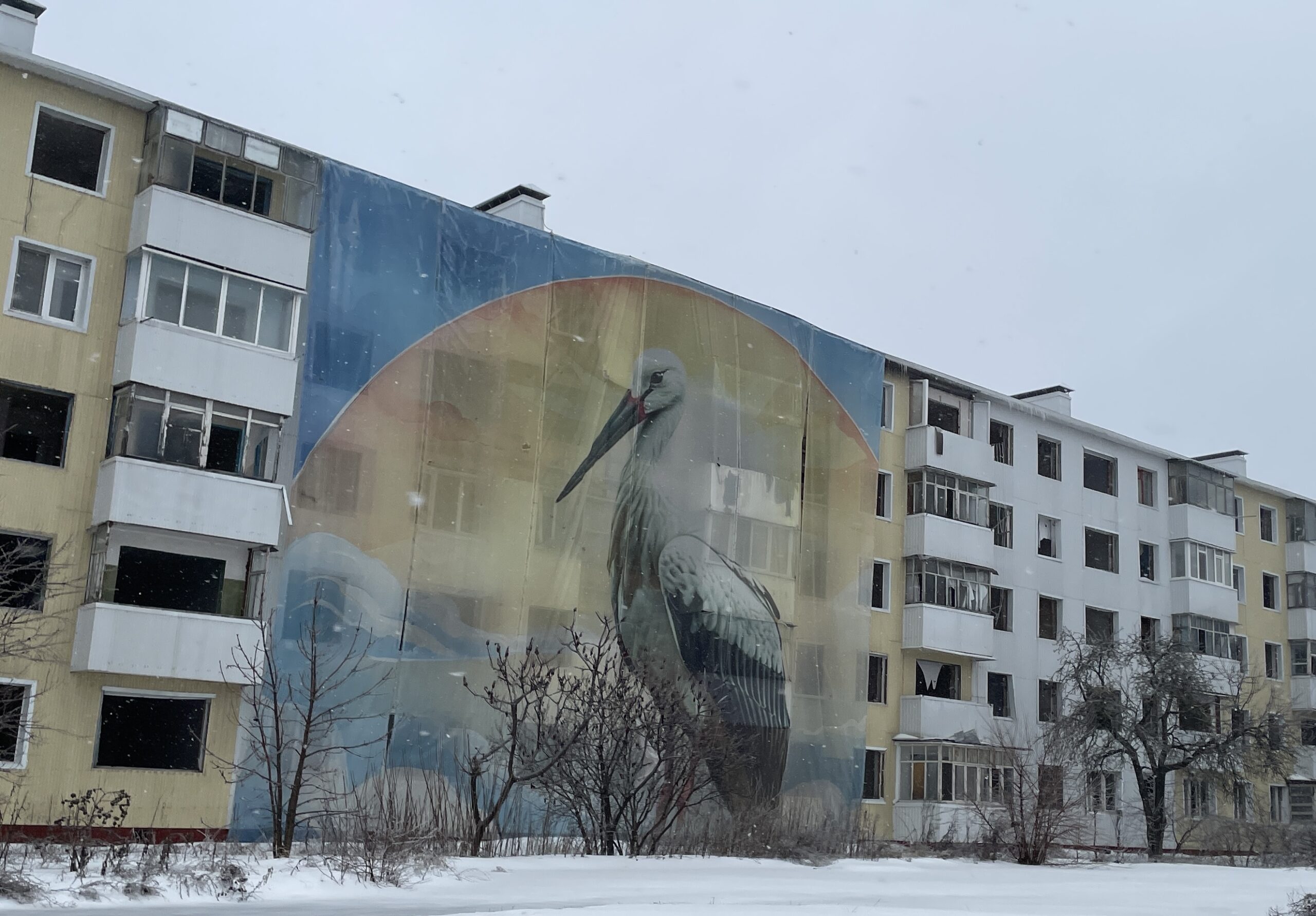
How the Belgorod region survives under shelling and without heat
The last winter for the entire Belgorod region became the worst in four years of war with Ukraine. Increasingly, the Ukrainian Armed Forces, in retaliation for attacks on their energy facilities, began, as locals say, to “put out the lights” in the region. A Cherta correspondent, as part of a group of volunteers, went to the Belgorod region to understand how people survive there and what it’s like to live constantly under shelling.“UAV attacks no longer impress anyone”
Four volunteers enter Belgorod in the evening, the roads are dark: the streets and highways are not illuminated, and the lights in houses and shops go out every now and then. In the distance is a yellow glow from the greenhouses occupying several hectares of fields under the city.
“Is this a city that has no electricity?” - asks one of the passengers, 30-year-old Marat from Moscow.
The young people have 15 gasoline generators in the back of the minibus. They plan to give them to the most vulnerable people in Belogorye - large families with disabled children, lonely refugees and the elderly.
The news writes that Belgorod could be evacuated , but this idea was quickly abandoned, even though the shelling and rolling power outages did not stop. Sasha, the most experienced of the volunteers, this is not her first time in the region, comments on the news: “Governor Gladkov doesn’t want to look like he’s losing control, so he says he’s coping.” And he adds that in temporary accommodation centers in the Kursk region, floors are already being vacated for Belgorod residents.
Volunteers arrive at the warehouse where humanitarian aid is distributed. This is a basement with a corridor and several spacious rooms. One is already completely stocked: diapers, wet wipes, clothes of different sizes, which still need to be sorted so that it is clear where everything is. On the iron shelves in the middle of the room are more expensive humanitarian supplies: power banks, flashlights, gas burners and cylinders for them. The least amount of special medical equipment: only two wheelchairs, one walker, a couple of ducks. In closed cabinets against the walls there is a shelf with glucometers and tonometers. The cabinets are not yet full, humanitarian aid continues to arrive from all over Russia in small batches - donors order it at the nearest distribution points of SDEK, OZON, Wildberries.
Suddenly, a siren starts howling and popping sounds are heard in the sky.
“Four,” summarizes Marat, who counted the explosions. This is how air defense works, but not everything was shot down that day.
“It looks like the night will be “fun”, there will be deaths,” Sasha suggests.
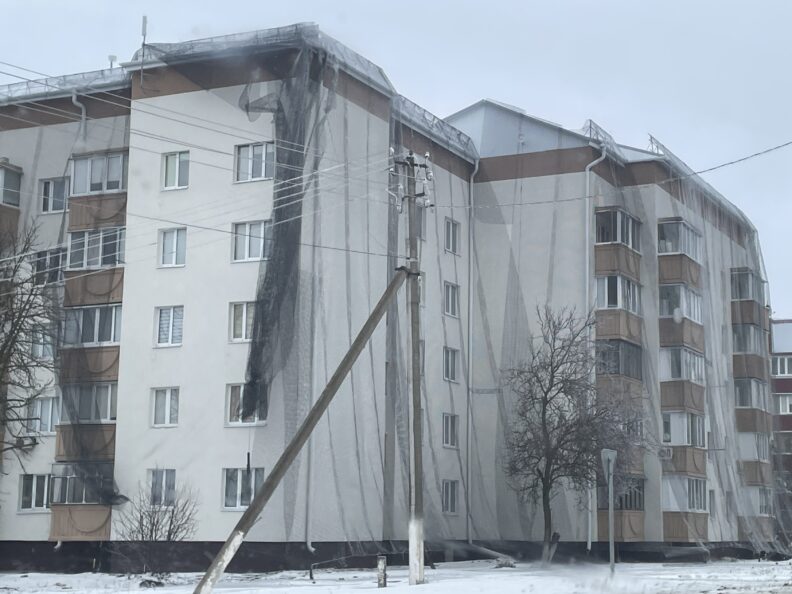
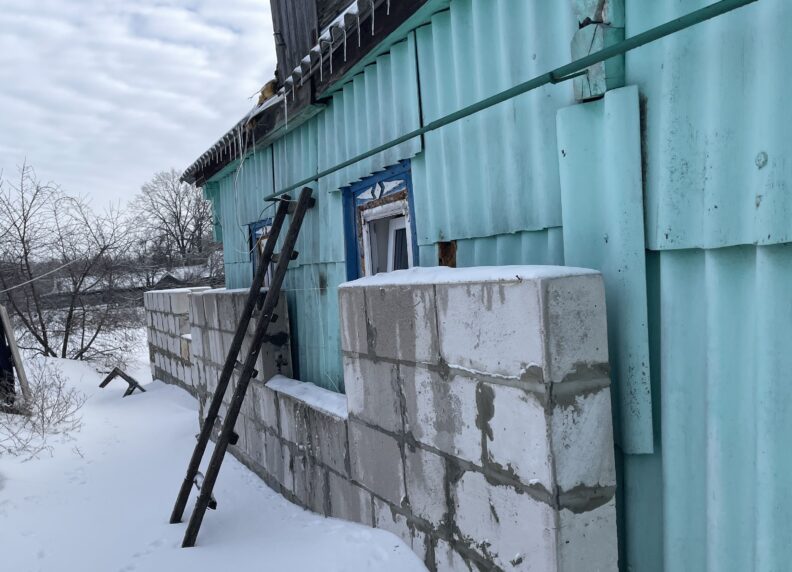
No one was actually killed that night, but at least one missile hit its target. Somewhere the lights were turned off, but everything was restored in three hours. The warehouse is located underground, so we are safe, just blinked the light. The siren is replaced by a “Missile Danger” voice notification. Experienced Sasha says that they used to turn on the siren during drone raids, but they happened so often that the authorities decided to warn about drone raids only in the Telegram and MAX channels.
“UAV attacks no longer impress anyone. As a rule, they are shot down better than missiles, and they fly clearly at thermal power plants. The likelihood that he will dive in the city center is minimal, so they don’t turn on the sirens anymore,” she explains.
Ukrainian drones regularly hit energy facilities in the region, although they often hit civilians as well . Ukrainian drones regularly hit civilian vehicles and civilians. Thus, on March 2, 2026, in the Grayvoronsky district, a local resident died after a UAV raid. . For example, on the night of February 27, after another attack, 60 thousand people were left without electricity. Governor Gladkov promised that power would be restored to about half within 24 hours, but for 25 thousand Belgorod residents the outage will probably last several days. In this regard, the city government and municipal institutions opened their doors to those who need to stay warm, charge their phones, power banks and flashlights.
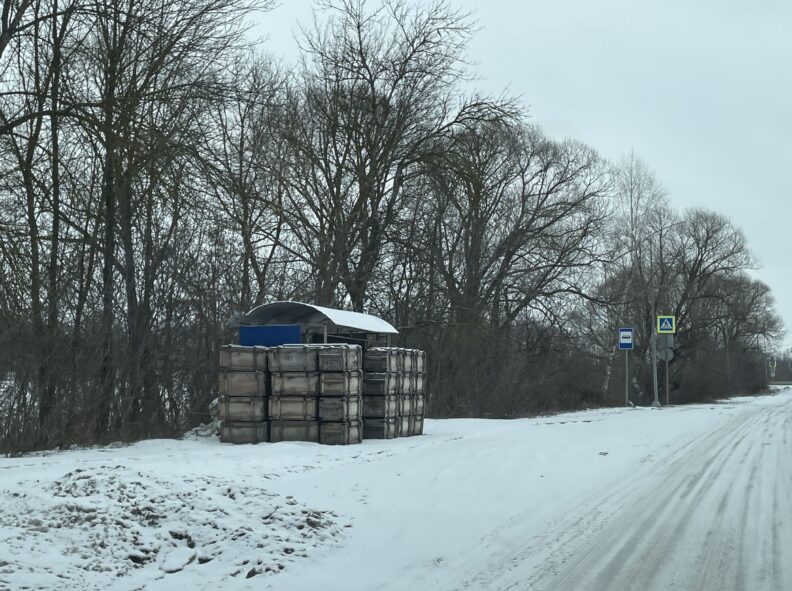
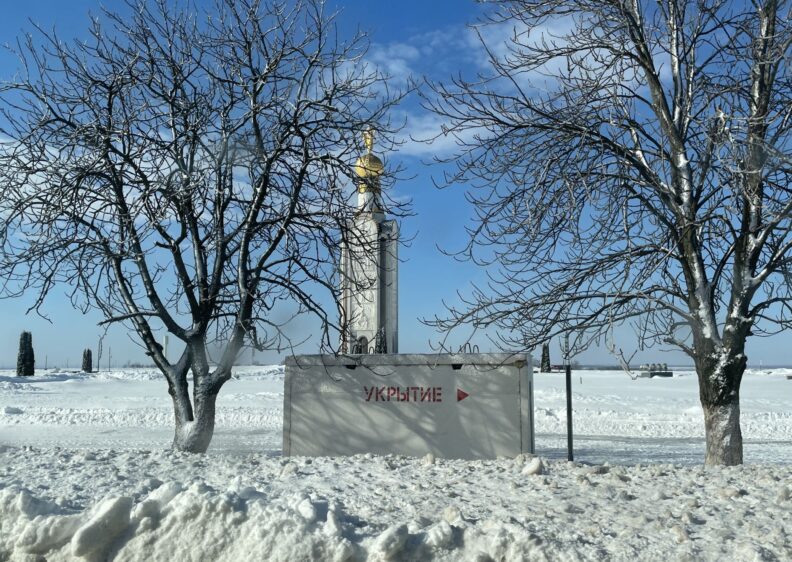
Despite the fact that attacks have become more frequent, and the number of messages about threats in the UAV Information Belgorod channel is growing, many shelters in the city remain closed. You can only be guaranteed to hide in white concrete shelters at bus stops. People hide in them if a raid catches them in the open. However, they are used in other ways - often they just go there when needed.
“I'll tell you the truth. For four years, not a single basement in Belgorod has been prepared for hiding,” complains to volunteers Irina, a mother of many children, who has been helping Donbass since 2014. “You won’t find a home where it’s really safe.” It’s okay to hide there from fragments, but even if the accelerator block just falls, it will crush you under the plates. You have to hide in the hallways. Recently, my son and I went to the store in the evening, and it hit the neighboring house - we are at the entrances, and they are all closed, nothing opens. Well, a local girl walked by, opened it, and we sneaked behind her.”
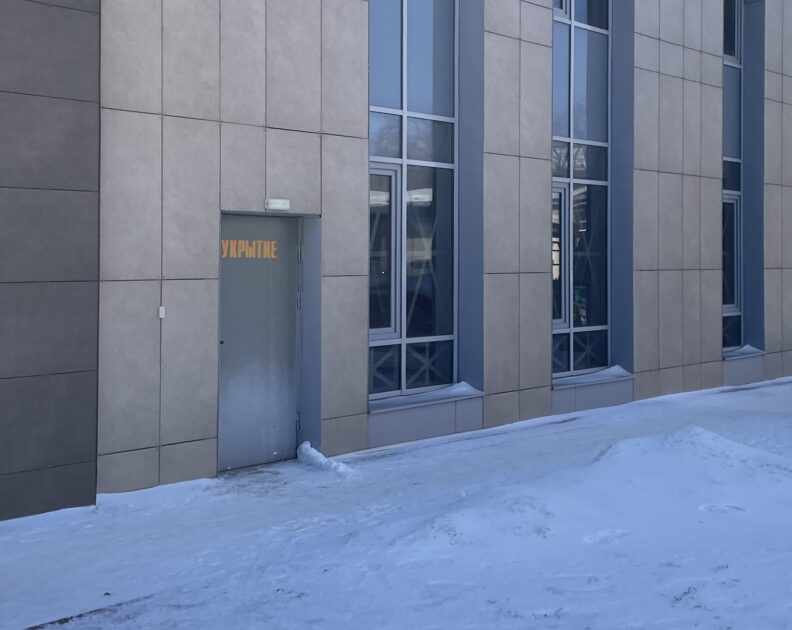
Residents of Belgorod publicly complain about the quality of the shelters, and the mayor of the city admits that it can save you from shrapnel, but, for example, it will not save you from a collision with a car. Moreover, the report of the Ministry of Internal Affairs admits that in the border areas there is “an acute shortage of shelters.”
Irina is one of the prosperous representatives of large families in Belgorod. She has a large four-room apartment with a decent renovation, there is a coffee machine, a dishwasher and a plasma TV - provided by her husband, a contractor. But she earns only 32 thousand rubles a month, despite the fact that she works in the Ministry of Defense. Without trips “behind the tape,” salaries in the department are tiny, just like before the war.
“I’ll quit,” she answers when asked what she’ll do when the war ends. “There’s nowhere to go now.” I used to teach at the university. I can’t stand it any longer, because my brother was buried, he died near Avdeevka. He had a fight with his wife and left on emotions, but I didn’t have time to drag him to me. I served for a month, then they searched for six months.”
Now Irina does not have her own generator - she gave everything to the soldiers, and during powerful attacks she and her family sat without electricity for more than a day.
“There is some kind of resentment towards the authorities”
Belgorod residents do not particularly trust the regional authorities. An indicative situation is when a resident of one of the villages near Belgorod refused to give Governor Gladkov a ride. He was sincerely surprised, and it even seemed to him that “there is some kind of resentment towards the authorities.”
And this is not surprising. When the same governor says that the problem with the lack of water in the BelSU dormitory has been solved and opens ten new showers, but immediately after his departure it turns out that there is still no water, and they refuse to transfer students to distance learning.
For example, the liquidator of the accident at the Chernobyl nuclear power plant, Alexander, has not believed the authorities for a very long time. He built his house in the Belgorod region thanks to a housing certificate that he was given after he helped save the world. At first he was issued, then the USSR collapsed and his certificate became worthless.
“We have our own water here, our own sewerage system. I have been at loggerheads with the state for a long time after I bought this house with a fight. Then we were forced to buy commemorative medals for the liquidators, and also pay fees for membership in the Union (meaning the “Chernobyl Union” - “Devil”). Some of our liquidators wear medals as if they were for the revolution, like Brezhnev’s chest.”
Now, when there are power outages, he has nothing to heat the house. He turned to volunteers to give him a generator. There is no extra 15-20 thousand for this.
There are, however, those who were told by friends that they are giving away heaters and can get them for free. Together with Marat, we arrive in the village of Stroitel, which is located outside Belgorod towards Moscow. After a call to the recipient, a mother of many children, the retractable gate opens. There is a garland on the house, on the right there is an open garage with two well-polished foreign cars: a Nissan Tiida and a red Nissan Qashqai. There are children running around the house, girls about ten years old, six of them and two boys a little younger.
During the conversation, it turns out that 40-year-old Maria’s daughter has a birthday, so classmates came, and there are only three children. Maria does not know that the generator should not be in the house because it smokes and makes noise. When she finds out about this, she replies: “Then I’ll put it in the garage for now, it might come in handy.”
After this visit, Marat spits. We decide to talk to Sasha, because such people clearly cannot be called needy.
“I checked this family. “They have a father in SVO,” she replies, which provokes even greater anger from Marat, who is convinced that with “SVO’s salary you can afford to buy your wife a generator.”
Sasha only suggests not to argue with her, but to quickly go to the distribution point, because a large order has arrived for nappies and nappies and they need to be photographed in front of them to report to the donors.
One of the families who was waiting for a generator from our team had just been discharged from the hospital. Parents Valery and Marina had an accident on the highway, both with fractures. During inpatient treatment, the younger ones had to be placed with them. The three older children, 12-14 years old, remained on the farm.
“There was heavy shelling at night. And we have heating through a pump. And that’s why they didn’t even contact the administration. You won’t get anything from them except an armful of firewood, they complain. “And it was just frosty, about twenty degrees, maybe.” There was no light for two days. They ran around the administration for two days, to no avail.”
At this moment, one of the sons runs up to them and bumps into his mother. She reminds him that it would be nice to say hello to the volunteers.
“Yes, they said hello,” Marat recalls doubtfully
“No, this is another one, we have six of them,” Marina laughs.
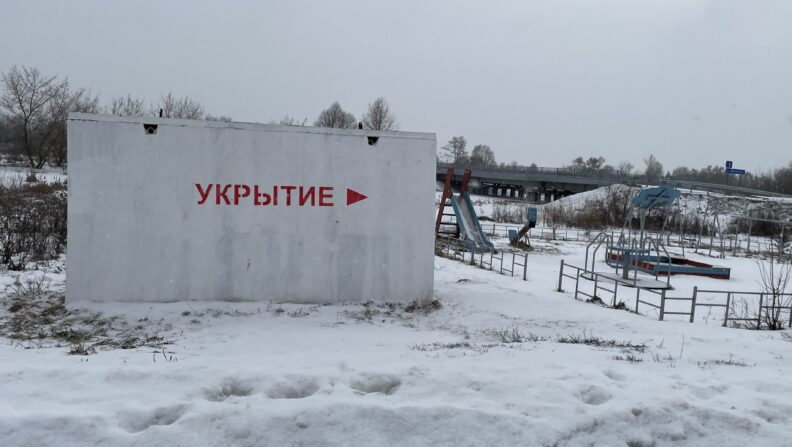
Not far from the village where the family lives there is a forest belt in which the Russian armed forces are stationed. From there, missiles and UAVs are launched towards Ukraine, and retaliatory shells fly back “to the square”. Valery says that because of this he is afraid for the children: “a crazy answer and we will stay here.”
Not far from Valery and Marina’s house there is a children’s playground - colorful slides and swings, and at the very entrance there is a concrete block - a shelter. On the way back, the volunteer driver Artyom sees a rocket taking off from that same forest belt. No one except him has time to see her.
“Such a red trail, what are you talking about?” — the driver laments that only he saw the volley.
"A shock wing is flying towards you"
Irina, who has many children, told us where to look for information about UAV attacks when we travel out of town.
“Attention, Tavrovo, Dubovoe, an attack wing is flying in your direction. Take safe places,” notifications from the UAV Information Belgorod channel pop up every few minutes. Only populated areas and the types of drones that threaten people are changing.
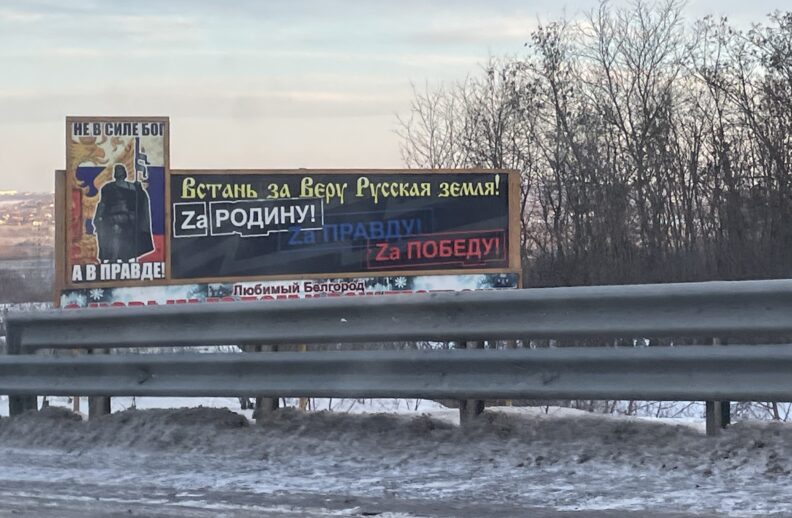
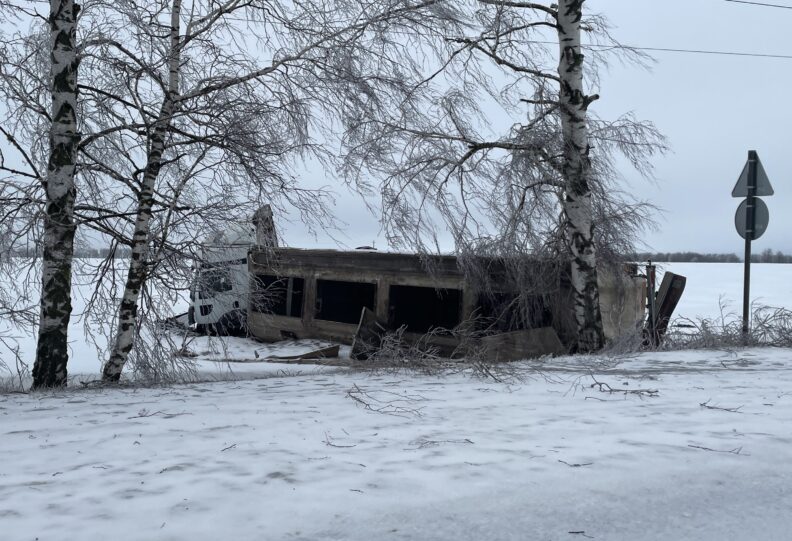
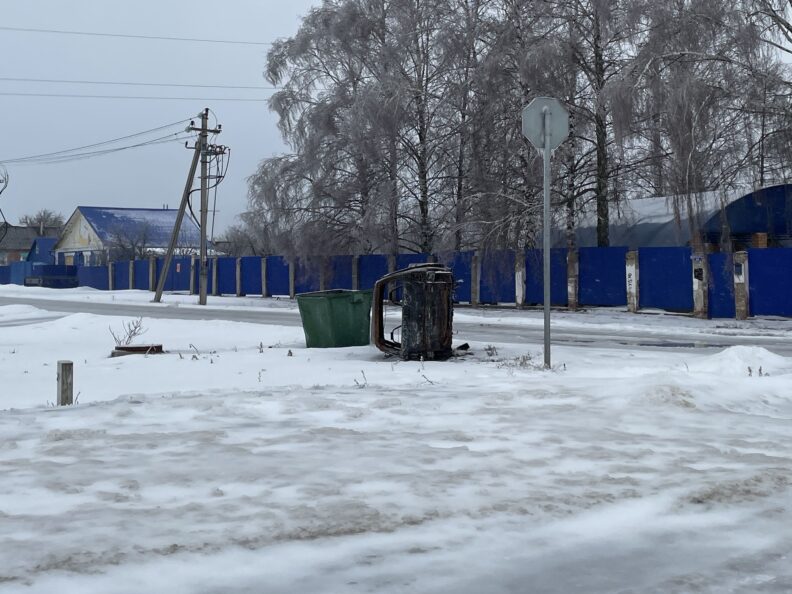
The most difficult situation is in the settlements of the Grayvoronsky and Shebekinsky districts. Already on the road you understand that it is dangerous here: burnt-out cars, from trucks to cars, appear every now and then on the icy highway. It is clear that they are hitting indiscriminately. The driver Artem, with his characteristic optimism, says that luck will smile on us, because the car is white and it will be more difficult for a drone to aim at it on a snowy road.
We pass another burnt-out KAMAZ truck, with branches lying around it that fell from the birch trees after the explosion. In the fields, if you look closely, you can see machine gun emplacements from which they shoot at drones; they are camouflaged, even the barrels of the weapons are covered with white cloth.
Nina lives in the village of Artelnoe, Shebekinsky district; she meets us in a dirty white hat and the same shabby burgundy down jacket, with sweatpants and gaiters on her feet. She lives in the house of neighbors who have moved away and asked her to look after the property. Her house is across the road, but there is no electricity. It so happened that after the shelling only one side of the street was without power.
“Drones fly over us quite often. Everything is towards Belgorod,” Nina talks about the situation.
Her eldest son comes out of the house, the tall guy helps carry the heater and stands up to be photographed for reporting. With his right hand he shows “jamba,” a gesture popular first among the Wagnerites, and then among all those who support the war.
“We live from paycheck to paycheck, from benefit to benefit. It happens that there is not even bread at home. But at least there is flour. The [Russian] Red Cross used to give us two cards worth 10 thousand rubles. But you understand what this amount is when you have eight children,” she complains.
Just ten kilometers from the city, and there is already a danger from FPV drones, which do not have such a long range. On icy roads, which no one clears precisely because of the danger of drones flying in, you see signs every now and then: “increased danger of UAV attack - travel prohibited.” Cars scurry past these signs in both directions.
The village of Razumnoye , where the drone about which we received an alert was flying, looks prosperous. There are also high-rise buildings that are no more than ten years old, decent red brick houses and new fences. We came to a large family with six children, one of them very small, not even six months old.
“Yesterday they turned off [the electricity], but they turned it back on quickly, it probably didn’t last for about an hour,” says the father of the family, Eduard. “So it doesn’t seem to be visible, but as the snow melts, there are fragments everywhere.” About two dozen were collected last spring. This year there will probably be even more.”
He recently expanded his housing, as his family grew and he needed a nursery for the baby. When asked about moving plans, he answers ironically: “Will you buy this house?” There is no money for moving.
Many people have gas boilers in their own homes; they run on electricity. Due to its shutdown, as well as severe frosts that occurred in mid-February (down to −30 degrees), some people’s water in their pipes froze.
Frozen water bursts pipes - this happened to Inga, the mother of ten children. The consequences are a flooded basement. Her house in the village of Streletskoye stands on an overgrown plot. There is no external finishing, and instead of steps there are wooden pallets. At the time of the visit of the “Cherta” correspondent, there were nine children in the house. The eldest is in the army. It's spacious inside, but only because there's minimal furniture. The woman asks what else she is entitled to as a humanitarian aid worker. Volunteers ask her not to be shy - they will call her to clarify her needs, she should ask for the maximum.
Zhenya from St. Petersburg, a volunteer who came to the shelled region for the first time, sleeps at every opportunity. He is the only one on the team who is woken up by missile alarms at night. Because of this, he does not get enough sleep. At the next address he stands in the corridor with his eyes closed. Upon returning to Belgorod, whims begin. He constantly wants to eat somewhere, and after eating he always wants to sleep.
“It happens that I cook a bone”
A special category of people in the border region are refugees from the war-torn territories of Ukraine. In the Belgorod region these are mainly former residents of the Kharkov region.
40-year-old Anna opens the door of her house in the village of Tavrovo. She came from the completely destroyed Volchansk. Officially, the city is under the control of the Russian army, but in fact it is a “gray zone”. Anna's house is destroyed. During the battles for the city, she decided to go with the Russian military to Belgorod, and not to Kharkov with the Ukrainian ones. The woman says that Russia has always been closer to her.
The new house that Anna managed to buy in the Belgorod region has been empty for seven years. Because of this, it froze and subsided, and constant “exits” from air defense installations operating nearby finish it off. In the small room where her eight-year-old son with cerebral palsy lies, a gray corner catches the eye - his color is due to the constant application of primer. A crack is growing in the wall. In the same corner are blue bags with boxes of chocolates and a calendar for 2026 - a gift from the Kharkov VGA, the Russian occupation administration of the Kharkov region.
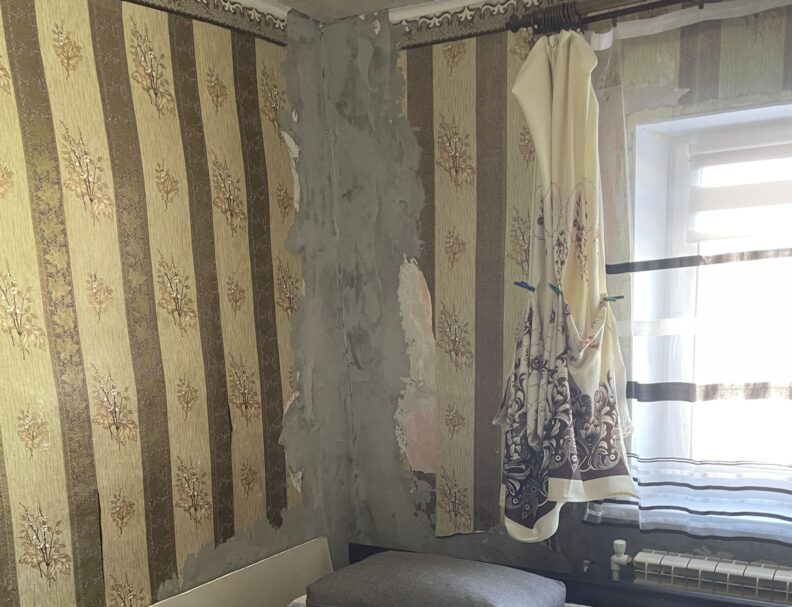
“It [the wall] burst and went straight down. We puttyed and plastered. There is air defense nearby and sometimes it takes off so that everything falls apart. But, as my husband says, the house may be old, but when we pay off the mortgage, it will be something of its own. We’ll finish it,” Anna says humbly.
There used to be a stove in the house, but it was removed. But we managed to install new, good pipes that heat the room properly. When it's warm, of course.
Another refugee from the Kharkov region, Lyudmila, is lonely and does not have the opportunity to get a mortgage. She came from Cossack Lopan, and her house was also destroyed by the war. Lyudmila rents a room in a hostel in Belgorod for ten thousand rubles a month with a pension of 17 thousand. The pensioner spends another four thousand on medicine. There are three thousand left to live on.
“Basically, of course, I have a lack of nutrition. When I came here, I walked normally, without a cane, and even worked. I am an x-ray technician and generally a hospital nurse. But first I caught pneumonia, and then I had a heart attack. When they took me out of Kazachka, 60 shells a day flew overhead.”
At the Red Cross, Lyudmila notes, they are already making comments to her that she comes too often: “But I only ask for bread. They also give you cereals. It happens that I’ll boil some kind of bone.”
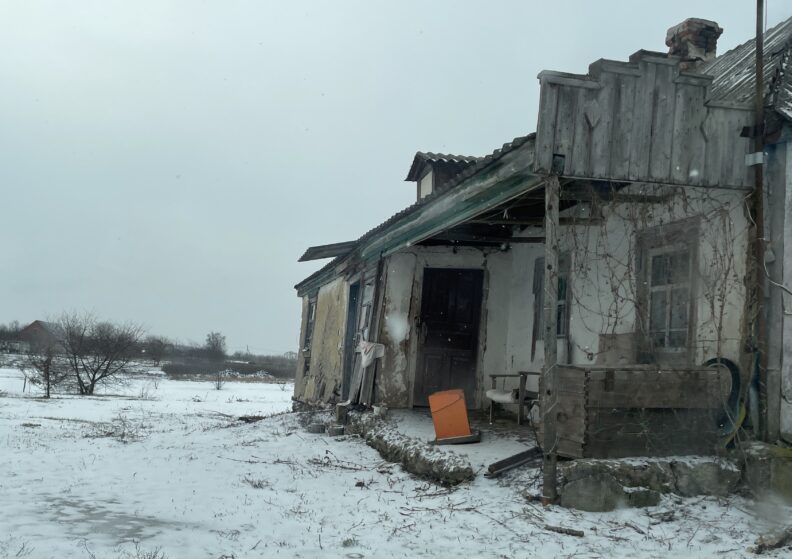
Lyudmila lived under shelling in Cossack Lopan for six months. Then the Russian military came and took her to Belgorod.
“All my life I tried so that no one would kick me out of the house. I had a nice two-story house in Kazachka. They helped me build it - my parents, relatives, neighbors helped me. Only ruins remained of this house. People lived in cellars, children were screaming, dogs were dying from heart failure, there was such a roar, the earth was humming. I remember standing on the porch, and the threshold was shaking under my feet, I stood and prayed that the ground would not fall under the house. My neighbor, a young guy, rushed to help his neighbor, whose house had collapsed, began to pull a log, and a shell blew his head off.”
Lyudmila is the only refugee “Cherta” met in the Belgorod region who is not afraid to call herself Ukrainian: “Excuse me, of course, but for me everything is the same. Everything that happens is wild. We all should live and enjoy life. Politicians have come and gone, but the people remain.”
At the same time, the situation of refugees is complicated by the distrust of Belgorod residents towards them. For example, the clergyman Sergius, who himself comes from Ukraine, sees saboteurs in many of his fellow countrymen.
“I lived in Ukraine, in the city of Belitskoye. Now there are battles there. I discovered my city on the Internet - a Martian landscape. My father was the general director of the mine, he lies in the cemetery there. I’m sure he sees what happened to his work,” says the clergyman.
Sergiy did not learn Ukrainian. His father did not want Ukrainian speech to be heard in the house. The fact is that his brother, Sergius’ uncle, was a SMERSH officer and caught “Bandera” in the Carpathians after the Great Patriotic War. He was buried in the Lviv region, where Sergius never reached.
After school, Father Sergius chose a military career and managed to visit the Congo, Egypt, Somalia and other hot spots. Worked in the GRU, was a sniper. For the last 40 years, he has been trying to clean up all the corpses, of which, according to him, there are dozens left behind. Now he is “nursing” the believing military men. At the same time, he writes letters to the administration to return the death penalty for saboteurs.
“My things are packed, my clothes are ready”
After talking with the priest, the volunteer team wants to have a drink. Not far from the warehouse there is a Czech restaurant “Pitnitsa”. As we sit at the table, the missile alert siren sounds. The conversation at the neighboring tables is not interrupted, only ours freezes.
“A missile threat has been declared. You can go to the back room, or you can stay here,” the waitress says quietly as she approaches. She goes to the back room with other staff. Not a single visitor follows them.
The next day, the religious theme haunted our group. Natalya, 50, was forced to move into the premises of a Baptist church after her own house in Oktyabrsky was left cut off from communications after shelling. This is literally 30 kilometers from Belgorod.
“Everything is off. I had gas there, there were pipes, a boiler. It so happened that he broke. One of my sons has fallen ill, the other is studying and there is no one to help. We drained all the water and moved here temporarily,” she laments.
Six of Natalya’s eight children went to Mordovia to visit their grandmother while it is cold in the Belgorod region. But they will return in the spring to help their mother in the garden.
The church itself is also cool; there is heat only on the second floor. There are two living rooms there. Dinara lives in one with ten-year-old Slava, and in the second, 12-year-old Artem. He is disabled; two years ago he dived into a pond unsuccessfully and broke his spine.
They live out of suitcases. Things have been collected in case of increased shelling, which is quite strong in Oktyabrsky. Drone strikes are also frequent there due to the fact that military personnel constantly stop in the populated area.
“My things are packed, my clothes are ready. Here in our village there are military personnel driving around, walking around with machine guns - all this makes it scary. I have a cousin in Grayvoron, he says: “it flew in and destroyed the house.” There is an empty space left from the house, imagine. What was left in the house intact after the arrival burned down. And they live on the edge of the city. If something happens here, I don’t want to injure my son. I already found out from the administration where we could be moved - to some temporary temporary detention facility.”
Natalya asks the children not to come for now: “The situation here is terrible, it’s loud... Windows were only recently installed here on the first floor. In a neighboring house, a rocket flew into the garden, killing a woman. Here they beat you right next to us, because here is Magnit, where the military goes. They shoot at them. The store even stopped installing windows, they just installed iron sheets.”
Air raid alerts in Oktyabrsky are a constant background.
“The siren sings all the time. But you don’t know where it will fly, so you sit and listen. I don’t even pay attention anymore, I’m nervous,” Natalya complains.
In the best pre-war years, she and her family could feed themselves. They had a large vegetable garden and even a cow. Now she has nothing.
“As long as the Most Holy Theotokos helps Russia, no one will defeat her”
— The most important thing, what won’t we have? — Irina from the Ministry of Defense cheerfully asks her schoolgirl daughter Vasilisa.
- OGE! - the girl is happy.
For those children whose parents cannot send them to safe regions, the OGE test was canceled. Irina explains that at first they wanted to take the children to “safe” areas to take exams, but this seemed illogical to parents: “Well, imagine what it would be like to take the children somewhere on a bus for two hours before the exam, then they take the exam, then back. And where is the guarantee that a drone won’t fly into the bus?”
But in Artelny, where Nina lives with eight children, there is no school. The closest one is in Bely Kolodez, to which you need to take a bus along a road riddled with drones.
It is unrealistic to leave at your own expense to another region when there is no money even for food. Therefore, Belgorod residents who are forced to remain in their towns and cities are only wondering what will happen next.
“We live near a power plant, which is powered by the Kursk nuclear power plant. There are a lot of things connected to it. If they put it out, that will be all,” fears Daria from the village of Blizhnaya Igumenka.
While she is sharing her fears , a machine gun starts working in the background. Daria believes that the Ukrainian Armed Forces are attacking that same station with drones. But soon the shooting stops. The light continues to burn.
“The boys all say to us, ‘We won’t let them through,’” Daria hopes.
Father Sergius even believes that with statements about the possible evacuation of the region, “the enemies are raising panic”: “As long as the Most Holy Theotokos helps Russia, no one will defeat her.”
Before we leave, a Darts drone flies over the warehouse. Tracer bullets are flying at him. Zhenya is filming in fascination, and at this time a woman passing by, who cannot see where the danger is, approaches him. Zhenya points to the sky, explaining where the UAV is. It is impossible to shoot him down.