
Translated material
Foster parents molested children for years
Now the idea that parental care could include sexual intercourse with a child seems outlandish. But in Germany in the late 1960s, the famous sexologist Helmut Kentler insisted: for some boys from the lower social classes, this could be “therapy.” To prove this, he, having received support from the Berlin Senate, placed several children in foster families, where the adult was known for his pedophilic tendencies. Some of the former pupils are still suffering from the consequences. Kentler's experiment - in the material "Cold" .
This was part of an experiment by a famous sexologist who sent boys to be raised by pedophiles. He believed that nothing bad was happening 
At the time of publication, Marco was 39 years old . He grew up in Berlin. Marco did not achieve great success in life: he simply lived with his girlfriend and raised his little daughter. He was unemployed - he tried to work as a postman once, but quit after a few days.

Marco grew up in a foster family. He ended up there after being hit by a car. He was not injured, but the incident attracted the attention of social workers. They decided that their family did not pay enough attention to the boy. Marco's mother worked as a saleswoman at a sausage stand and raised her children alone. According to The New Yorker, she once sent Marco and his brother to kindergarten in dirty clothes and left them there for 11 hours. Therefore, social services recommended placing the boy in a foster family. He was sent to live in his new home - with engineer Fritz Henkel.
This was in 1989, when the boy was six years old. Henkel was 47 years old, a bachelor, and worked part-time as an electronics repairman. Marco became his eighth adopted son. He lived with the Henkel family until 2003, when he was 21 years old. Growing up, Marco did not like to talk about this time.
One day in 2017, he came across an article in a Berlin newspaper with a photograph of a man he had known since childhood. He remembered that his adoptive father often took him to see him. This was one of the most influential sexologists in Germany - Professor Helmut Kentler.
The article was about his project: he sent socially vulnerable children to live with pedophiles. Kentler insisted that these men were perfect for the role of foster parents. After reading the article, Marco realized : he was part of an experiment.
“I was so grateful to him.”
A few months after reading the article, Marco tracked down the number of Therese Nentwig, a political scientist at the Institute for Democracy Studies at the University of Göttingen, who had written a report on Kentler. Later in an interview with The New Yorker, Nentwig said that before talking with Marco, she thought that the experiment ended back in the 1970s, and was shocked when she heard that he lived with his adoptive father until 2003.
Then Marco contacted one of his adopted brothers - in the media he is called Sven, although this is not his real name. He told him about Kentler's experiment, and in December 2017, the brothers gave an interview to the German publication Spiegel, where they told their story for the first time.
According to Marco, when he got to Henkel, he liked it there. As he recalled , he had a large apartment with an area of 170 square meters. Marco was given his own room, he had a computer and two rabbits - Hoppy and Klopfer. At first, Henkel’s two other adopted sons lived in the apartment with him.

But at some point everything changed: Henkel began shouting at Marco and hitting him with a hanger. And in the fall of 1989, he raped a six-year-old boy. As Marco recalls, he said that “sons and fathers do this when they love each other.” The boy believed it.
According to Marco, his adoptive father abused him for 10 years. At first, Henkel called him into his bedroom once a week or waited for him near the bathroom when he brushed his teeth before bed. When Marco turned 12 years old, he began to come to his room less often - once every few weeks. The harassment stopped when he was about 17 years old.
Marco also claimed that Henkel gave him sleeping pills, and possibly raped him when he was unconscious. Marco lived with Henkel for a year and a half when Sven was sent to them. Police found him in 1990 in the Berlin subway. He was seven years old, begging and said he came from Romania. It turned out that he had hepatitis B.
The Juvenile Justice Department began looking for a foster home for him. “Mr Henkel seems ideally suited for this difficult task,” doctors from the Free University Hospital in Berlin wrote, according to The New Yorker.
Sven recalled that Henkel told him: “Nobody wanted you with your illness.” “I was so grateful to him,” Sven told Spiegel. “I finally have a home and a life again.” However, after waiting some time for the boy to get comfortable, Henkel began to rape him.
Christmas in Hannover
According to Spiegel, Fritz Henkel grew up in an orphanage. For some time he worked as a welder and telecommunications technician. He took in his first foster child in 1973 and completed his foster parent training program 11 years later.
In just 30 years, 10 minors lived with Henkel. According to The New Yorker, Henkel had already aroused the suspicions of social services in the late 1970s and early 1980s, when Marco and Sven were not yet living with him. The social worker then suspected that he might be "in a homosexual relationship" with one of his adopted sons. An investigation was launched against Henkel. But an authoritative scientist, Professor Helmut Kentler, intervened in the matter. And the investigation was stopped .
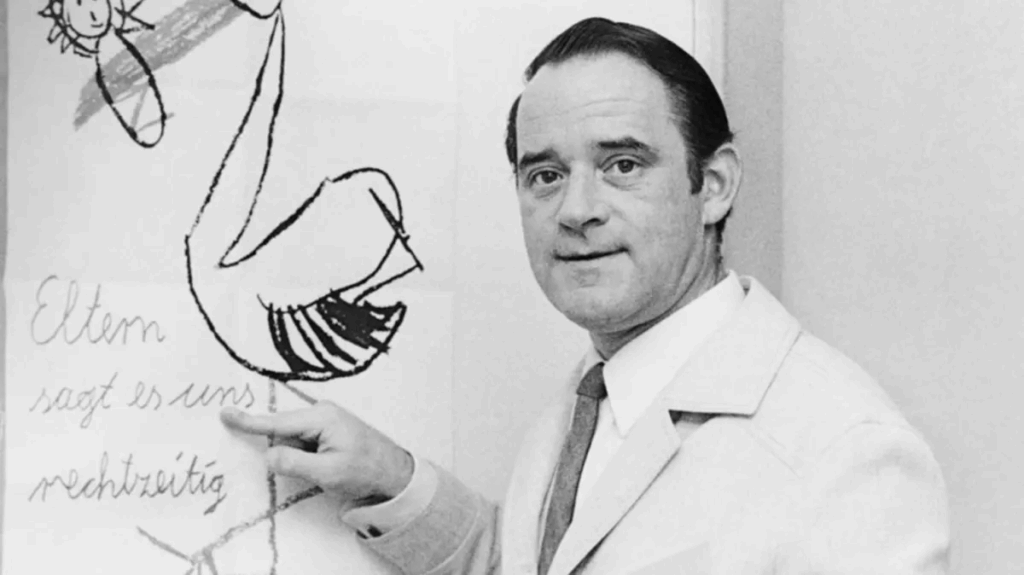
Kentler repeatedly supported Henkel. He called himself his “constant advisor” and praised his parenting skills.
“Based on many years of observation of his work, I can say that Mr. [Henkel] fulfills his teaching tasks so well that I am constantly surprised,” Kentler wrote . He lived and taught in Hanover, a city more than 250 kilometers from Berlin. Every few months, Henkel and his adopted children visited him. Kentler talked with them about how they were living with their guardian.
Marco and Sven also often went to see Kentler in Hannover. They even spent Christmas there in 1991.
Innovative scientist
From the publications of scientists who studied Cantler's activities, it follows that he began his experiment in the late 1960s. However, he first spoke about it only in the 1980s: first he published reports in a magazine, and then spoke to members of parliament from the Free Democratic Party of Germany.
But who was Helmut Kentler and why was he allowed to experiment on children like this? According to Spiegel, friends called him a charismatic person.
Kentler was born in Cologne in 1928. He had a harsh upbringing: in his articles and books, Kentler mentioned how he lacked support and warmth in his relationship with his father. “I had only one wish: for him to hold my hand,” Kentler wrote about his father in 1983.
According to The New Yorker, his father used the methods of Daniel Gottlieb Moritz Schreber, a German educator of the mid-19th century. They involve suppressing “unwanted emotional manifestations” in children. If Kentler spoke out of place, the father would hit the table with his fist and shout: “When father speaks, the children must be silent!”
Kentler did not choose his profession right away. In 1948, in devastated post-war Germany, he first worked as a mechanic's apprentice and then went on to study to become an electrical engineer. However, he was interested in the humanities: from May 1953 to October 1954, he took courses in English and French, and then went to study as a philosopher at the University of Zurich. But he soon left there for the University of Freiburg, where he received a degree in psychology.

Later, Kentler began working at the Pedagogical Center of West Berlin (Germany). He quickly became involved in the political life of Berlin, becoming a member of the local left-wing intellectual association “Republican Club”. In the late 1960s, he publicly announced his homosexual orientation.
Kentler decided to specialize in sexology. He treated his scientific activity more like a political mission: he defended the thesis that human sexual emancipation frees up energy for political activity and changes ideas about freedom and power. Kentler believed that sexuality education should be part of political education.
Kentler's dissertation, which he defended in 1975 at the University of Hannover, was devoted to sex education for children. He wrote that in this process the main role is assigned to parents: it is they who, from early childhood, must explain to the child the meaning of sexual relations, not only as a way of procreation.
As The New Yorker writes , Kentler probably wanted to educate a new generation of Germans: their sexual energy would not be suppressed and would not be sublimated into the desire to subjugate and destroy. That is, the nation will not again strive for war, and sex education, as he wrote, “will prevent a new Auschwitz.”
What else is Kentler known for? Kentler has repeatedly raised the topic of decriminalizing male homosexual relations in Germany. He was one of the first in the academic community to publicly say that homosexuality is one of the norms of sexual orientation.
"Children of Zoo Station"
In the 1960s, Germany, along with the rest of the Western world, entered the era of the sexual revolution. Then Kentler's ideas turned out to be in demand. He was considered a visionary and one of the most prominent sexologists in Germany. His books on topics related to education sold well, and he was often called upon to appear on radio and television.
One of Cantler's ideas seems unimaginable now, but was then considered progressive in some academic circles. Kentler believed it was possible - with certain reservations - to normalize sexual relations between adults and children. It was this idea that formed the basis of his experiment.
Kentler came to the conclusion that street children who find themselves in a difficult situation can be placed under the care of pedophiles by observing the lives of the “children of Zoo Station.” This was the name given to the children who lived near the main train station in West Berlin (the station was located next to the zoo).
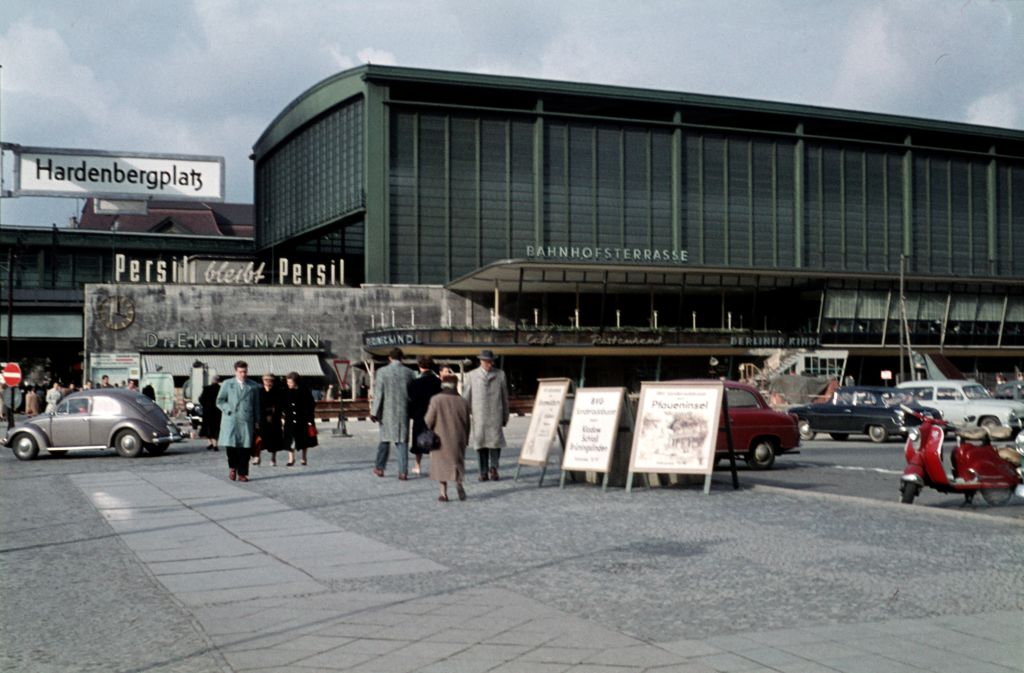
Then Kentler decided that this was a good sign. He emphasized in his stories that boys could stay with adults at home, even when they refused sex, that is, they were not looking for income, but a form of care. According to his conclusions, this was not prostitution in its pure form.
Kentler suggested that three pedophiles take street children into a foster family. The young men who visited their “mothers” did not agree to live with them permanently. Then he offered to take the care of pedophiles to three other teenagers who had escaped from the shelter. He enlisted the support of a certain West Berlin official. Who it was is still unknown exactly.
Are there any versions? Several of Kentler's associates suspect Eva Nolte, an official in the Senate administration of West Berlin in the late 1960s and first half of the 1970s (then the Berlin Senate was under the political leadership of the Social Democratic Party of Germany).
“It could have been me,” Nolte told reporters. “But I don’t remember it.” After all, then, according to her, there were “so many projects, so many experiments.”
Therapy
According to Cantler, at the time of placement in foster care, two of those boys had difficulty reading and writing, and one was completely illiterate and could not tell the time with a clock. Kentler himself visited the children, held a general conversation and individual conversations with adults and their charges. He was pleased with the result. In 1980, he said, three of his wards “led a quiet, dignified life” after receiving permanent jobs. Two allegedly started families. Only one had problems: girls often left him, noticing obvious signs of mental retardation.
Kentler did not hide the fact that adoptive fathers could count on sex. But he didn't see anything wrong with it. In one report, he wrote : “It was clear to me that these three men did so much for the boy primarily because they had a sexual relationship with him. However, they did not put any pressure on the boys, and I, while supervising, especially monitored this.”

In later publications, he pointed out that if the boys themselves agree to have sex, then they tolerate it without any special consequences, and any difficult moments are smoothed out after puberty. Moreover, according to Kentler, in such cases it was usually not about sex with penetration, but about various forms of sexual games. Through them, Kentler wrote, boys can process their traumas and feel the care and love they were deprived of.
After a trial experiment with three boys, Kentler did not stop : new charges and guardians appeared. And the city authorities (Senate) of West Berlin began to cooperate with him to arrange the future of these children. According to The New Yorker, in 1988, Kentler assessed the results as successful.
For much of his career, Kentler spoke of pedophiles as do-gooders, The New Yorker writes. They offered abandoned children “the possibility of therapy,” he said in an interview with Der Spiegel magazine in 1980. And many believed him: for example, Günther Schmidt, former president of the International Academy of Sexological Research, said years later that he “sincerely respected the experiment.”
“I thought: these are young people who are in a terrible situation […]. If Kentler is nearby, everything will be fine <...> And the Berlin Senate is also nearby,” he explained
Schmidt not only believed in Kentler’s project - they were friends with him for a long time. And so in the mid-1980s, Kentler, then over 50, admitted to Schmidt that he himself had an adopted son. In the letter, he indicated that he was already 26 years old, and their “very happy love story” lasted more than 13 years.
No emotions
As modern researchers note , the premises of Cantler's experiment were not only provocative, but also scientifically untenable. When he asserted that “nothing could be better for a boy than to fall into the hands of an older man,” he in some cases resorted to outright falsifications.
According to The New Yorker, if there were ever records in the city archives documenting how Cantler's project was approved and how he found the men who became foster fathers, they were lost or destroyed. Therefore, the exact number of children who underwent the experiment is unknown. Kentler himself spoke of only three guardians.

Researchers have determined that what happened cannot be reduced to the activities of Cantler alone, even with the support of Senate officials. In this case, under the auspices of the state structure, an entire network operated to transfer children under the roof of pedophiles. Sometimes boys were taken in by influential men in the German academic environment.
The researchers also write that some "Senate figures" were "part of this network." The testimonies of Marco and Sven now remain the main source of information about how Cantler's experiment turned out for the children. As Marco told The New Yorker, among other things, his guardian Henkel often disrupted the boy’s visits with his mother and brother, who were allowed to see him once a month. Kentler supported him in this: he reported to the guardianship authorities that, in his opinion, even short contacts with his mother had a negative impact on Marco’s success at school.
According to The New Yorker, in 1992, Marco's mother tried to get more time to communicate with her son through the court. The judge insisted on speaking with the boy alone, but Henkel stood at the door and insisted that Marco should call him if he felt threatened.
As a result, as The New Yorker writes, under this psychological pressure, Marco told the judge that Henkel loved him, but his biological family did not. When asked if he wanted his mother to still visit him, Marco replied, “Not often.” He also said that now that he is with dad (as he called Henkel), he is no longer afraid of anything.
“Only sometimes at night,” Marco said.
Kentler also convinced the court that for the benefit of young Marco, all his contacts with his family should be limited for at least two years. All further meetings with his mother were very painful: he constantly asked her to leave. Soon all communication between Marco and his family was severed.
When Marco turned 18, he received the legal right to leave Henkel's house. But he stayed there until he was 21. According to him , he was completely unprepared for practical life outside his guardian’s home, and he also did not achieve success at school. Хенкель, как считает Марко, сознательно поощрял вызывающее поведение Марко на уроках, предоставляя ему после различных выходок возможность играть на компьютере. Позже он сепарировался от опекуна, но, по собственному признанию, остался не способен испытывать чувства.
У меня есть стена, и эмоции разбиваются об нее
Марко хотел бы ходить на работу, но не может этого делать. Это, как пишет Spiegel, подтвердил психолог. Он рассказывает, что у него случаются панические атаки, когда он видит пожилых мужчин с боковым пробором или опущенными уголками рта, как у Хенкеля.
«Что бы со мной стало, если бы служба по делам несовершеннолетних не поместила меня к нему? Я бы не был самым умным, но, возможно, стал бы неплохим кормильцем», — говорил он журналистам.
Подробностей про Свена меньше. Он много лет работал посудомойщиком в берлинских отелях. Но в разговоре с Der Spiegel он жаловался, что у него постоянно болит левое бедро, из-за чего к 2017 году он уже не работал. Тогда он жил в крошечной квартире, которую оплачивал за счет социальной помощи.
Disorder
В 2017 году в разговоре с Der Spiegel Марко и Свен говорили , что хотят справедливости — для себя и для своего погибшего брата. В материале The New Yorker его называют Марсель Крамер. Тот приехал жить к Хенкелю, когда Марко исполнилось 11 лет. Марсель был на полгода младше Марко и страдал врожденным заболеванием, из-за которого не мог ходить, говорить и есть самостоятельно.
Марко и Свен заботились о Марселе, кормили его с ложки и удаляли слизь из его легких с помощью отсасывающего шланга. Когда они приезжали в загородный дом Хенкеля, Марко часами качал Марселя на качелях из автомобильной шины.
Но однажды, как рассказали Марко и Свен , Марсель заболел — у него развилась респираторная инфекция. Хенкель никогда не вызывал врачей для мальчиков, но положение Марселя ухудшалось. К тому времени, как он согласился вызвать врачей, Крамера уже не удалось спасти.
«Это произошло у меня на глазах, — говорил Марко. — Я смотрел ему в глаза, когда он умер».
Как пишет The New Yorker, в документах приемной семьи содержится лишь краткая запись о смерти Марселя Крамера. «Звонок от г-на Хенкеля, который сообщает, что Марсель неожиданно скончался прошлой ночью, — написала сотрудница управления по делам несовершеннолетних в сентябре 2001 года. — Ранее никаких признаков инфекции не было». В последующей записи говорится, что Хенкель, которому было 60 лет, искал возможность взять к себе еще одного ребенка.

К тому моменту — это был конец 1990-х годов — Кентлер перестал видеться с приемными сыновьями Хенкеля и участвовать в их воспитании. Как пишет The New Yorker, вероятно, он переосмыслил свои взгляды после того, как его приемный сын покончил жизнь самоубийством в 1991 году. Тогда он стал изучать литературу о том, почему сексуальные контакты между взрослыми и детьми могут быть разрушительными для психики ребенка. Позже он говорил, что пожалел, что не знал об этом раньше.
Как пишет The New Yorker, в 1999 году в одном из последних интервью Кентлер признал педофилию сексуальным расстройством.
Кентлер умер в 2008 году. При жизни ему не предъявляли уголовных обвинений Хенкель умер от рака поджелудочной железы. «Когда я получил сообщение о его смерти, я много плакал, — говорил Свен в интервью Der Spiegel. — Я почувствовал какое-то облегчение». Он сказал, что тогда подумал, что наконец-то сможет поставить точку в этой истории.
Photo: Getty Images